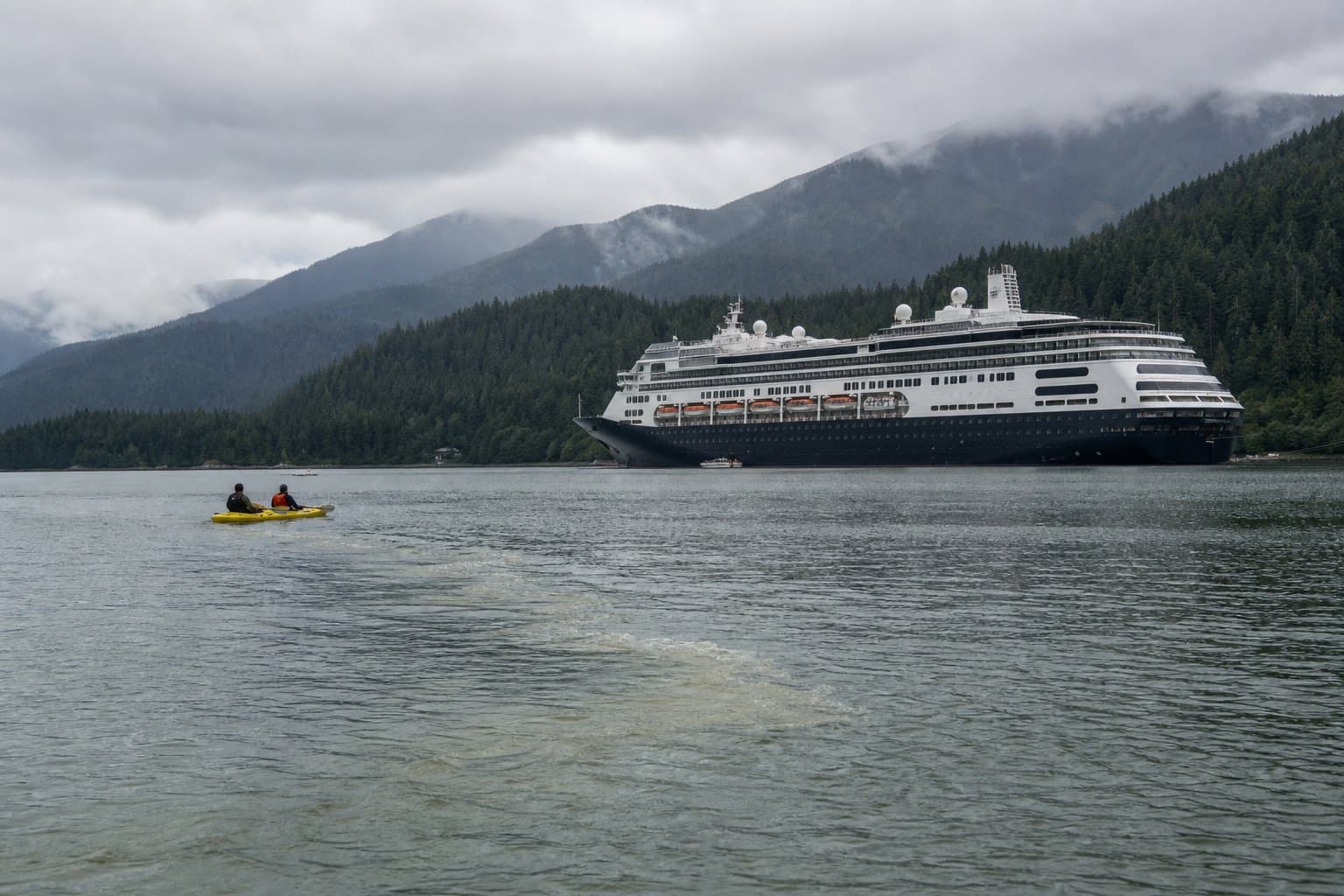
AI image
Alaska's cruise ship wastewater permit expired in 2019 and is still in force
Twenty-eight large cruise ships discharged treated wastewater into Alaska waters last season under a state permit written in 2014. Nine of those discharge events were unauthorized, according to the Alaska Department of Environmental Conservation's own compliance report.
The permit expired in 2019 and has never been replaced. It remains in force through administrative continuance, a routine mechanism that holds an expiring permit's terms in effect while a renewal is processed. A July 2021 letter from program manager Gene McCabe told large vessel operators the permit "remains fully effective and enforceable" until a renewed permit takes effect. The letter named no date and described no process for producing one.
The regulation allows this on one condition: the permittee must have submitted a renewal application on time, and the department must not have denied it or revoked the continuance. The department's published material does not say who filed an application, or when.
Residents of Juneau, Skagway and Ketchikan have no open process in which to comment on the terms. As of Aug. 19, Alaska's Online Public Notices carried no draft renewal, comment period or renewal schedule.
The nine unauthorized events are each named to a vessel. The largest was the Disney Wonder, which reported 4,210 cubic meters of treated wastewater going overboard from holding tanks between May 21 and May 28 without the advance arrangement the permit requires. The department issued a notice of violation, and the operator changed its procedures. The Norwegian Joy discharged 412 cubic meters at the Skagway Ore Dock, outside permit coverage. The Norwegian Jade released 17 cubic meters of food waste in the Alexander Archipelago. The Ruby Princess released 42 cubic meters of swimming pool water through a valve its automated system had reported as closed.
Sampling exceedances rose modestly. Six vessels exceeded the pH limit in 2025, against two in each of the two prior years. Six exceeded the fecal coliform daily limit, within a range that has run between four and six since 2022. The number of ships registered to discharge also climbed over that span, from 23 to 28. The department says most sampling violations were minor and quickly resolved, and that every vessel returned to permit limits on subsequent sampling.
Forty-four large ships operated in state waters last season, carrying about 1.8 million passengers, 98.8 percent of all cruise passengers who visited Alaska. State inspectors made 76 inspections, 26 of them underway, with an inspector staying aboard overnight to watch operations at sea.
Every fact above comes from the department's own permit file, extension letter, compliance report and regulations. No current response from cruise operators or industry groups appears in that material.
What did you make of this story? (no account needed)
Made by our human newsroom with AI. How humans and AI work here · Grow with our newsroom ·
Keep Alaska News free for everyone.
No paywall, ever. Members pay so everyone can read the meetings and records Alaska News covers.
Get Alaska News in your inbox
Create your free account and get the day’s top stories around 6 each morning, in a few minutes’ read.
Top stories, around 6 each morning.
Stories on what you follow, on Sundays.
Source: Alaska Department of Environmental Conservation, Alaska's cruise ships still discharge under a 2014 permit the state never replaced.





Comments
Sign in to leave a comment.
No comments yet. Be the first to share your thoughts.