
Photo: James Brooks via Wikimedia Commons · Photo source · CC BY 2.0
Alaska Supreme Court will weigh state search warrants for Metlakatla tribal property
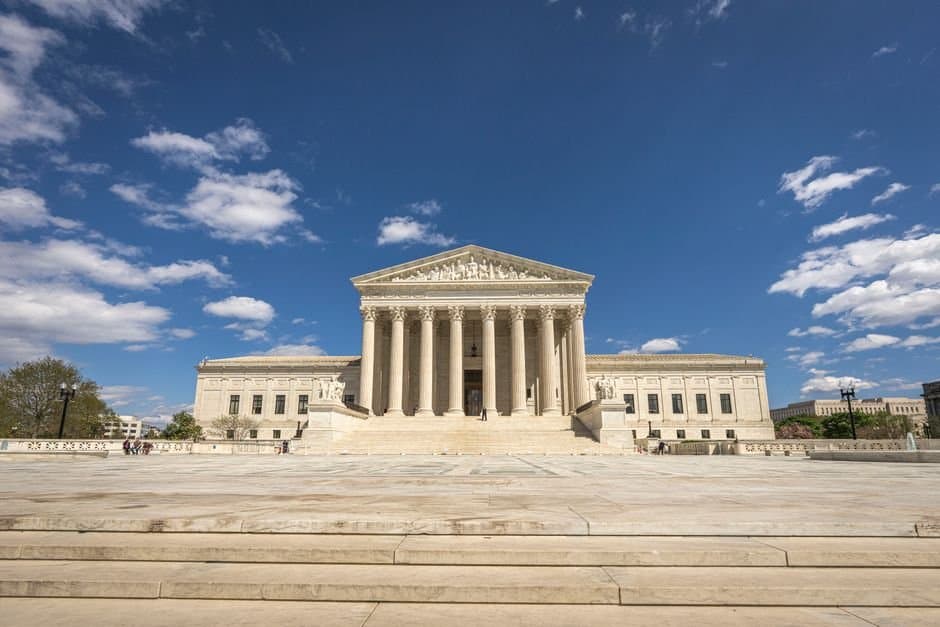
The Alaska Supreme Court will hear arguments Jan. 6 in Anchorage on whether state judges can authorize police to search and seize property belonging to the Metlakatla Indian Community, in a case that grew out of a state investigation into how the tribe's police handled child abuse reports.
A Ketchikan judge ruled in March that they can't. Superior Court Judge Katherine Lybrand found that search warrants another judge issued in February 2025 for the tribe's police department, social services office and behavioral health clinic violated the tribe's sovereign immunity, which generally shields tribes from lawsuits and other court process unless Congress allows it or the tribe clearly waives its immunity.
The state challenged the ruling. The Court of Appeals asked the Supreme Court to take the case, and in July the justices agreed and narrowed the question to "whether a state court has jurisdiction to issue warrants authorizing state police to search and seize tribal property of the Metlakatla Indian Community."
The Metlakatla Indian Community, on Annette Island south of Ketchikan, is the only tribe in Alaska with a reservation. Lybrand wrote that the state and the tribe have "concurrent jurisdiction to investigate and prosecute any crimes occurring on Metlakatla." The fight is over whether state courts can order searches of the tribe's own property to do it.
The state described the operation at a hearing, and Lybrand summarized it in a January order. In October 2024, state investigators met to review allegations that Metlakatla police weren't adequately investigating reports of child abuse and sexual abuse. In February 2025, well over 40 people, including state and federal law enforcement, traveled to Metlakatla aboard a Coast Guard vessel to carry out the warrants. The state says it seized more than 20,000 pages of records from the police department.
In an unrelated case three months later, another Ketchikan judge threw out a murder charge from a 2021 shooting after finding that misconduct by Metlakatla police made a fair trial impossible.
Tribal officials helped officers find and gather the material, Lybrand wrote. The tribe says it authorized the search, and the state says the mayor, tribal council and acting police chief consented and the mayor thanked troopers. Lybrand found no evidence that anyone with authority to waive the tribe's immunity had done so. "It is impossible to consent to an invalid warrant," she wrote, treating the tribe's cooperation instead as a later, voluntary decision to share its records.
Lybrand ruled in the prosecution of a man charged with sexual abuse of a minor, a case built mainly on the seized evidence. He hadn't raised the sovereignty question; she raised it on her own. The state says the investigation has led to arrests of multiple people on felony charges.
She didn't order the evidence returned or thrown out, because the tribe has since agreed to let the state keep it. But she wrote that she expected the state not to seek such warrants again unless the law changed, and judges on her court to deny any that it did.
The state told her the ruling would chill criminal investigations. She disagreed. In denying reconsideration, she wrote that her order doesn't bind other courts, that other judges may reach a different conclusion and that her comments about future warrants were perhaps "inappropriate." The state can still share information with tribes, seek tribal court warrants or get warrants for tribal citizens' property, she wrote.
In its Supreme Court brief, the state imagines an off-duty Metlakatla officer shooting his wife with his tribally issued gun. Under the ruling, it says, a warrant to seize the gun would violate tribal sovereignty "even if the tribe consents and supports the investigation. That result defies common sense." Alaska has 229 tribes, the state notes, and some will hold evidence of crimes.
The Native American Rights Fund, which Lybrand invited to weigh in, says tribal sovereign immunity bars state courts from issuing warrants against tribes and their property, and the answer to the court's question "must therefore be an emphatic 'no.'" If that gets in the way of investigations, NARF argues, citing the U.S. Supreme Court, "a State must resort to other remedies, even if they would be less 'efficient.'"
The tribe, in its own friend-of-the-court brief, sides with NARF but makes a practical case. It says it has a history of working with state law enforcement on serious crimes, and that respecting its immunity "has not prevented the investigation of serious crimes." Cooperating in an investigation is "an exercise of sovereignty, not a broad waiver" of its immunity, the brief says. It asks the court to rule narrowly, on searches the tribe hasn't agreed to, and takes no position on the defendant's guilt.
The justices also asked the parties to address whether the case is moot. The state concedes it is, since it already has the evidence and can use it, but says the court should decide the question anyway because it is important and likely to come up again. NARF takes no position on mootness but says that if the case is moot, the court could still rule and uphold Lybrand.
Neither the defendant nor the Alaska Court System, which represents the superior court, has filed a brief. NARF will argue as a friend of the court, with the same 30 minutes as the state. Justice Jennifer Henderson isn't taking part.
What did you make of this story? (no account needed)
Made by our human newsroom with AI. Reviewed by Cale Green. How humans and AI work here · Grow with our newsroom ·
Get Alaska News in your inbox
Create your free account and get the day’s top stories around 6 each morning, in a few minutes’ read.
Top stories, around 6 each morning.
Stories on what you follow, on Sundays.
Source: Alaska Supreme Court.











Comments
Sign in to leave a comment.
No comments yet. Be the first to share your thoughts.