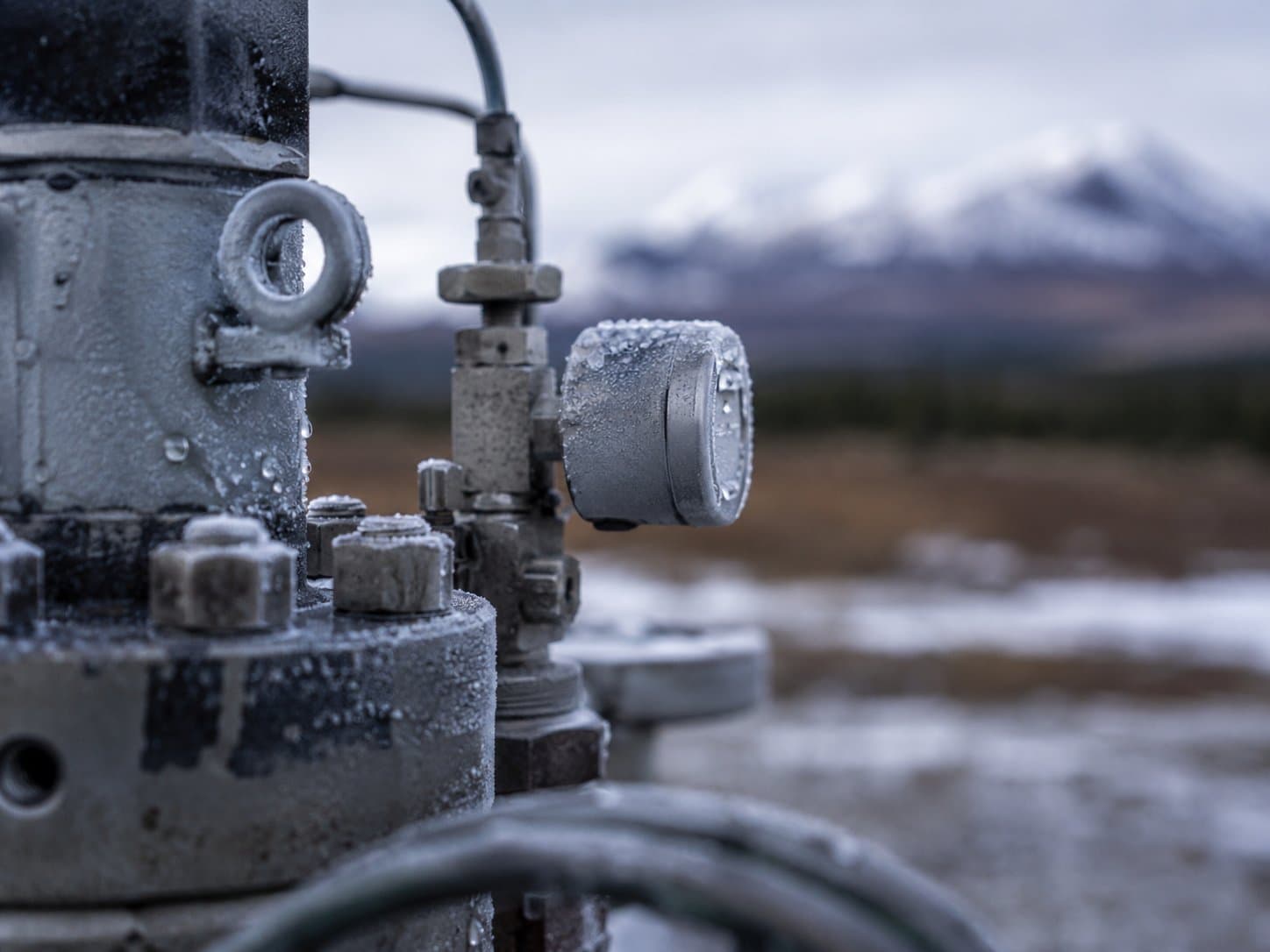
Photo by Cale Green
Alaska seeks federal approval to regulate carbon storage wells
The Alaska Oil and Gas Conservation Commission plans to submit its primacy application to the Environmental Protection Agency by the end of May, seeking authority to permit Class VI carbon storage wells in Alaska. Approval could come by the end of 2026 or early 2027.
Primacy would allow the state to manage carbon storage locally rather than through EPA Region 10. The commission completed 110 pages of regulations in April 2026, designed to mesh with EPA requirements.
Tom McKay, who chairs the commission, said the state would be able to permit carbon dioxide disposal wells and manage underground storage. The commission held a required public hearing on May 14. No one testified in person; two written comments arrived, one from Arctic Slope Regional Corporation and an 11-page joint submittal from six environmental groups.
The regulatory framework covers site selection, permitting, well construction, monitoring, drinking water protection, financial responsibility, and closure. Operators remain responsible for monitoring storage for 50 years; after that, the state takes over ownership indefinitely.
Alaska's geology offers significant void space in aged gas reservoirs. The Kenai Gas Field and Prudhoe Bay Reservoir are prominent examples. McKay said Alaska's gas reservoirs are several thousand feet deep and have held gas for thousands of years.
Potential applicants include Santos, which brought the Pikka field online and has stated a goal of net-zero operations. An LNG export pipeline would create another opportunity. Gas at Prudhoe Bay contains roughly 15 percent carbon dioxide; LNG export requires scrubbing that down to 5 parts per million. The scrubbed carbon dioxide would need storage or use in enhanced oil recovery.
Frank Paskvan, a professor at the University of Alaska Fairbanks, said the Alaska LNG project would generate a 400 million cubic feet per day carbon dioxide stream - and that a key benefit of primacy is that the state would have people reviewing projects who know the local geology. Local expertise matters in south-central Alaska, one of the most seismically active regions on the planet. McKay said Alaska did not see large-scale hydrocarbon migration during the 1964 Good Friday earthquake.
House Bill 50, signed into law in 2024, set the legal framework. The Department of Natural Resources set licensing and leasing regulations in February 2025. The commission spent more than a year on the primacy application.
This article is based on a public meeting — Primacy, Licensing, and Pore Space: The Latest on Alaska's Carbon Capture, Utilization, and Storage Program ().
AI-assisted. How we use AI Transcript byLucas Brown
Stay informed. Support what matters.
Free, permanent access to local news you can verify. Subscribe to support Bill AlaskaNews and go ad-free.
Related Coverage
Alaska clears the way to bury carbon — over water-safety fears
Alaska News · 4mo ago
Hilcorp, ENSTAR seek leases for three Cook Inlet gas storage sites
Alaska News · 4mo ago
ASRC Energy Services gets $13.9 million toward North Slope carbon storage hub planning
Alaska News · 1w ago
Two firms seek competing gas-storage leases at Kenai Loop field
Alaska News · 4mo ago
Three Cook Inlet gas storage plans pending for winter demand
Alaska News · 1mo ago
Comments
Sign in to leave a comment.
No comments yet. Be the first to share your thoughts.