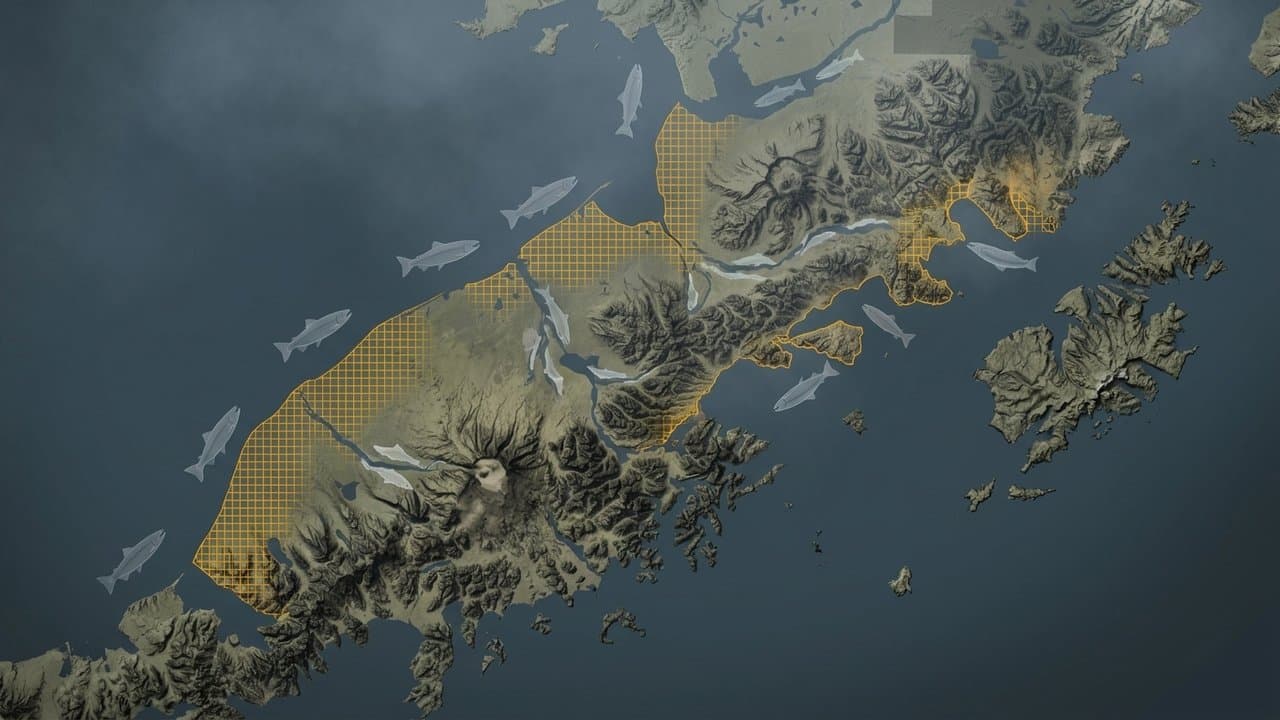
Editorial map (Gemini + Google Maps)
Alaska Peninsula Bering Sea drainages: non-residents banned from keeping king salmon starting July 18
Starting July 18, non-resident anglers fishing Bering Sea drainages of the Alaska Peninsula and Aleutian Islands may not keep any king salmon; any fish caught must be released immediately. Alaska residents fishing the same waters face a new cap of one king salmon 20 inches or greater per day, with an annual limit of two fish, and are required to carry a harvest record. The rules take effect with little advance notice for anglers already in the field.
The regulations come out of the Alaska Board of Fisheries' February 2026 meeting, which addressed Alaska Peninsula, Aleutian Islands, and Chignik finfish regulations on the board's three-year cycle. They fit within a broader pattern of 2026 king salmon restrictions across the state: on the Nelson (Sapsuk) River, king salmon fishing is catch-and-release only through July 25; on the Sandy River, the limit is one fish per day with an annual limit of two fish; and in remaining North Alaska Peninsula drainages, the limit is two per day with an annual cap of five through July 25. Gear restrictions also apply in Bering Sea drainages: from January 1 through July 25, only an unbaited, single-hook artificial lure or fly may be used, with the Sandy River restricted to that tackle year-round.
Non-resident anglers pay $100 for a sport fishing license and another $100 for a king salmon stamp to fish waters where they now cannot retain king salmon. Non-resident-oriented lodges and charter operators argue that retention bans cut demand and can significantly harm their businesses. Some resident anglers, by contrast, support stricter non-resident limits as a conservation and access measure. The 2026 Southwest Alaska Sport Fishing Regulation Summary booklet, in print and online, reflects the new rules; anglers are encouraged to review it.
Regulations can be modified inseason by emergency order; anglers should monitor Alaska Department of Fish and Game hotlines and the agency website at adfg.alaska.gov before heading out. Tyler Polum, Sport Fish Area Management Biologist with the department, is the contact for questions.
Based on a press release from ADF&G.
Made by our human newsroom with AI. How humans and AI work here · Grow with our newsroom
Stay informed. Support what matters.
Free, permanent access to local news you can verify. Subscribe to support Bill AlaskaNews and go ad-free.
Related Coverage
Fishing Prince of Wales for kings? The nonresident limit just dropped.
Alaska News · 3mo ago
Bristol Bay tightens the rules on its king salmon again
Alaska News · 3mo ago
King salmon sport fishing closed in Norton Sound fresh waters
Alaska News · 2mo ago
Southeast anglers get a bump in the king limit
Alaska News · 3mo ago
Why Alaska is giving out-of-staters more kings as the runs falter
Alaska News · 3mo ago
Comments
Sign in to leave a comment.
No comments yet. Be the first to share your thoughts.