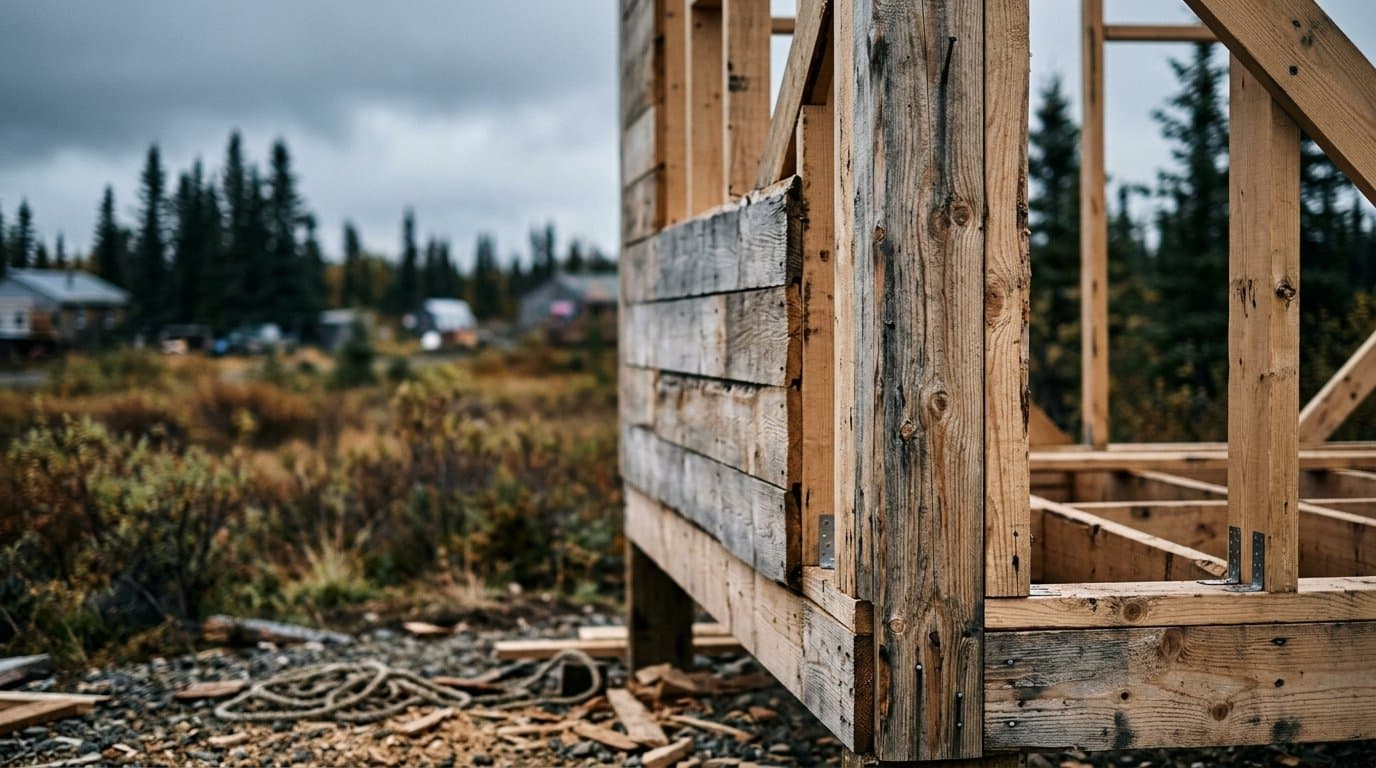
AI image
State puts $4.2 million toward housing for teachers and other professionals in rural Alaska
Alaska's housing agency has a blunt explanation for why some rural schools can't keep teachers: there's nowhere decent for them to live.
Akis Gialopos, deputy executive director of the Alaska Housing Finance Corporation, told the House Finance Committee on May 1 that the agency was seeing too many teachers in remote communities "flying in, flying right out" because they couldn't find adequate housing.
AHFC's answer is its Rural Professional Housing grant program, which has $4.2 million to hand out this state fiscal year. The money helps communities build, fix up or buy rental housing for teachers, health workers and public safety staff, including Village Public Safety Officers.
Communities that haven't already signed up are too late for this round. Applications are due Nov. 6, but only from communities that registered between July 10 and Aug. 14 and took part in a mandatory all-day applicant training, which AHFC scheduled for September at its Anchorage headquarters. AHFC expects to name winners around Nov. 20. The agency has said that timing lets some grantees order materials in time for the spring barge.
Each application can get up to $700,000, a cap AHFC raised from $500,000 in 2024. Communities have to cover at least 15% of the cost themselves. The grant is meant to fill the gap between what a project can borrow against and what it actually costs to build.
To qualify, a community has to be small: 6,500 people or fewer if it's off the road and rail system, or 1,600 or fewer if it's on the road system and well outside Anchorage or Fairbanks. School districts, local and tribal governments, regional housing authorities, health organizations, nonprofits and public colleges can apply.
The biggest share of the scoring goes to showing need. Applicants can earn up to 60 points for describing their unfilled teaching, health and public safety jobs and how housing affects hiring. They also have to say who will live in the new units. One of the options on AHFC's list is professionals who are "on contract pending housing availability," hired but waiting for somewhere to live.
The program started in 2004, after an AHFC-commissioned study found that up to 30% of rural teachers who left their jobs each year did so because of housing. The first projects went to Kotzebue, where Mike Dunleavy, then the Northwest Arctic Borough School District's superintendent and now the governor, championed it, along with Savoonga, Togiak, Chefornak, Nightmute and Tuntutuliak. AHFC says some districts that had been losing half their teachers each year reported no turnover once the housing went up, a change school officials credited to the program.
Over 21 years, AHFC says, the program has put more than $118 million in grants into 592 housing units, and it puts the statewide economic impact at more than $190 million.
Recent projects show how communities stretch the money. In 2024, the Hoonah Indian Association found it cheaper to renovate an existing building than to build new. The Yakutat Tlingit Tribe planned three 720-square-foot homes for teachers and health workers, heated largely with waste heat from the local power plant. AHFC says grantees have also been trying fully furnished manufactured homes shipped in, and tiny homes.
Questions go to Regan Mattingly, AHFC's development program lead, at 907-330-8235 or [email protected].
Source: Department of Housing and Urban Development ().
Drafted with AI. Edited by Cale Green (1 revision). Reviewed by Cale Green. Who is accountable.
Stay informed. Support what matters.
Free, permanent access to local news you can verify. Subscribe to support Maggie AlaskaNews and go ad-free.
Related Coverage
Housing projects can compete for Alaska CDBG grants, with applications due Dec. 4
Alaska News · 2w ago
Alaska towns can build housing with this grant now, up to a point
Alaska News · 1w ago
Alaska streamlines the fall round of its $272 million rural health fund
Alaska News · 2w ago
Housing agency buys 600+ acres statewide to spur development
Alaska News · 4mo ago
Alaska will score rural health grant applications on cost-effectiveness
Alaska News · 2d ago
Comments
Sign in to leave a comment.
No comments yet. Be the first to share your thoughts.