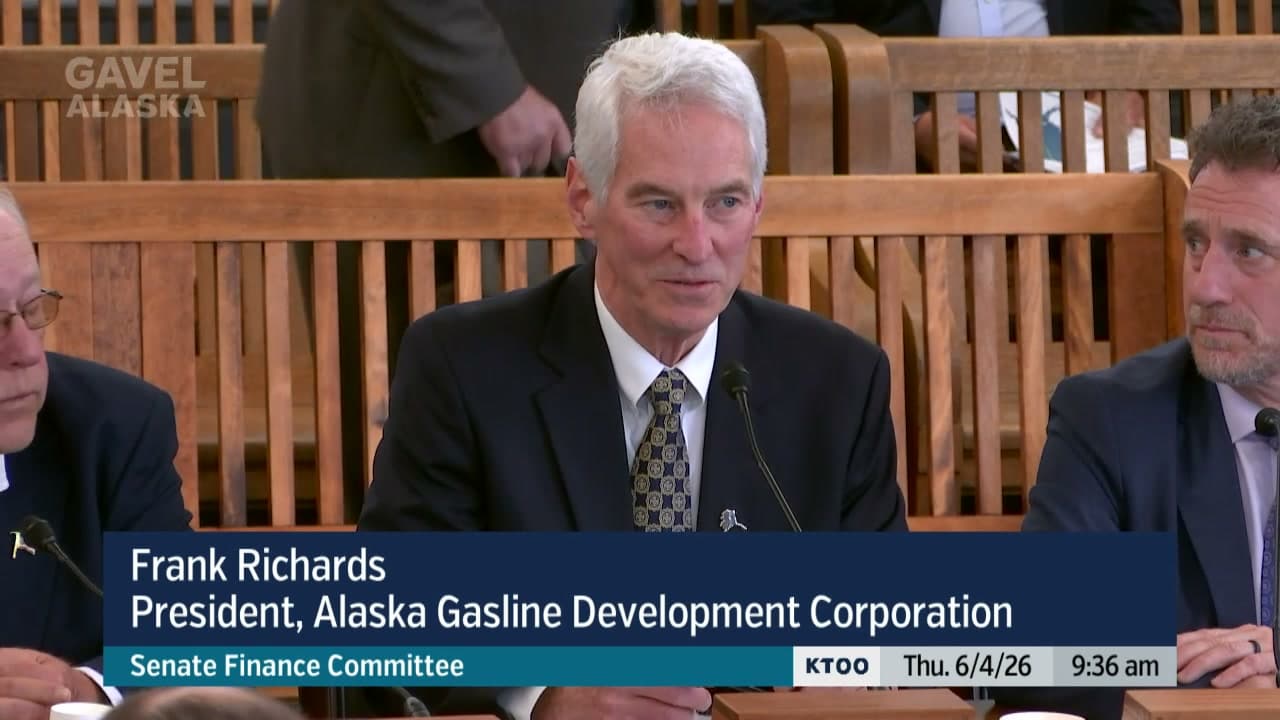
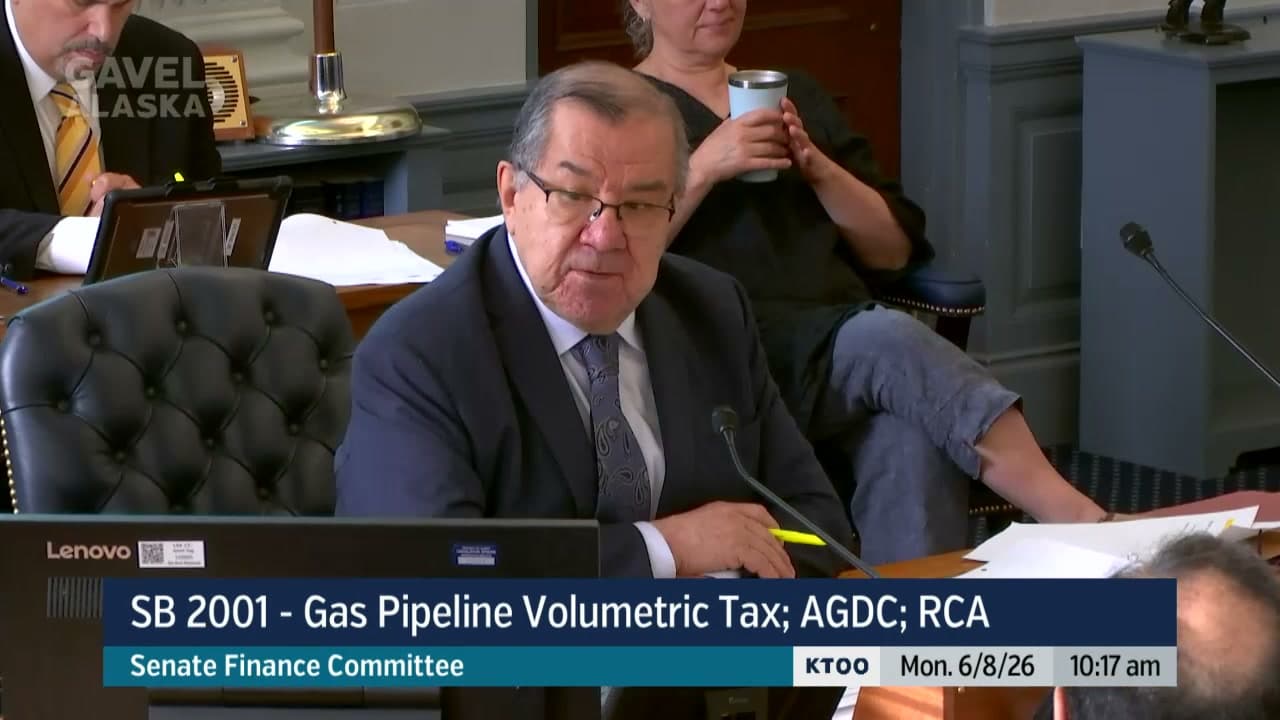
Frame from "Alaska Legislature: Senate Finance — June 4, 2026 10:00am" · Photo source
Glenfarne's own cost estimate for Alaska LNG is now significantly higher than AGDC's — and the state's equity option sits in the middle of the new math
The private developer building Alaska's LNG project just told state lawmakers it could cost meaningfully more than the figures the state has been using.
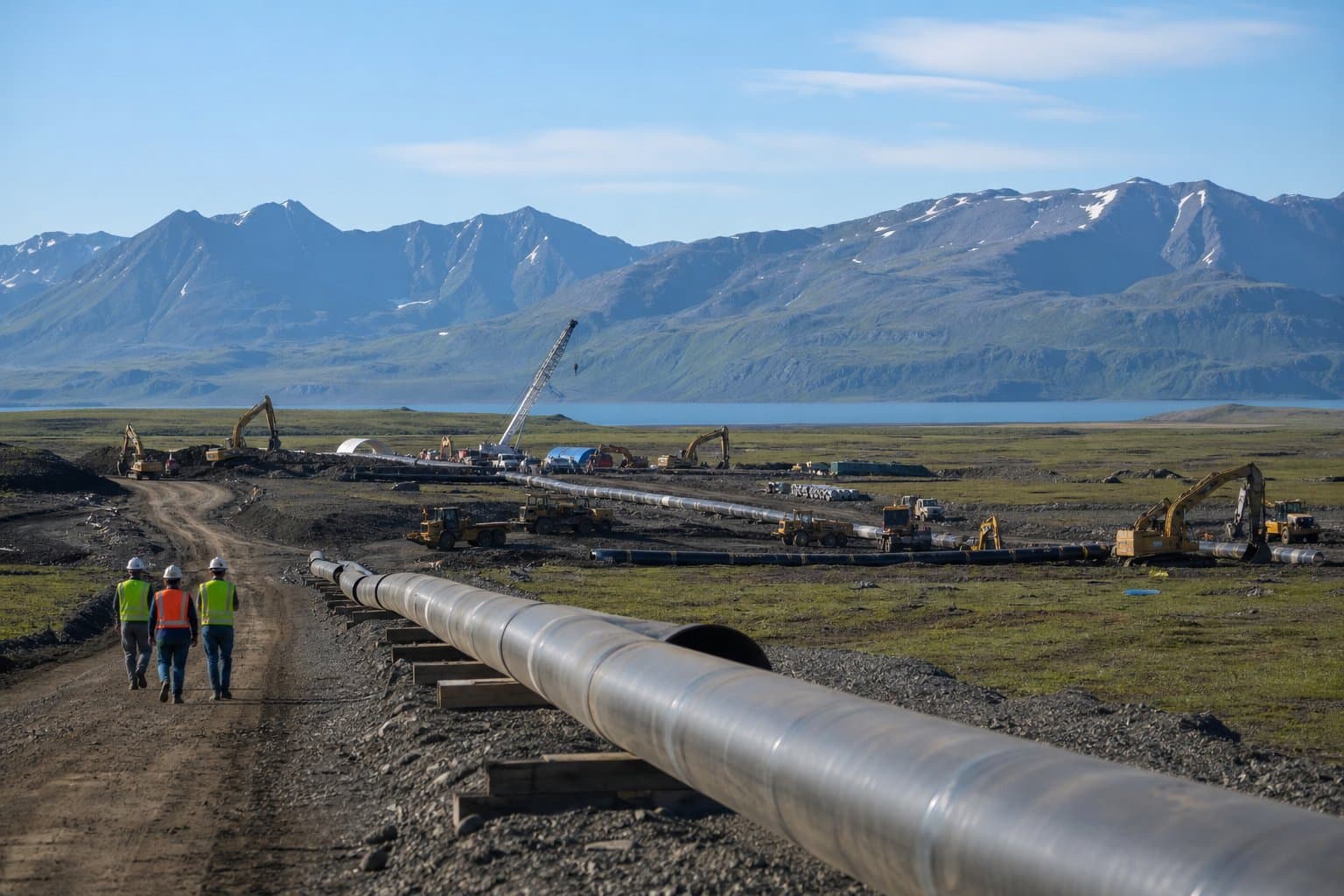
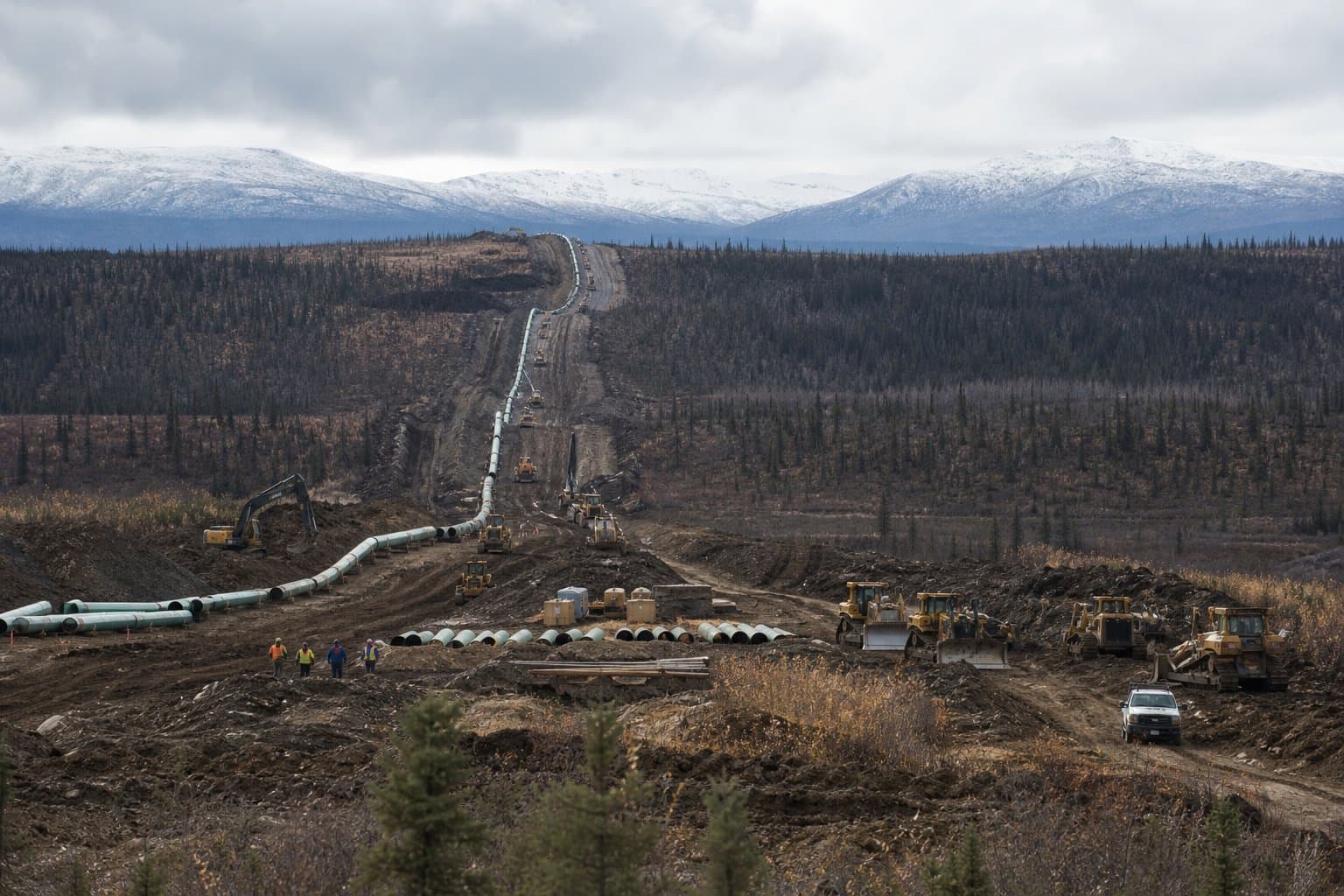
In a June 3 presentation to the Senate Finance Committee, Glenfarne — which took 75 percent ownership of Eight Star Alaska from the Alaska Gasline Development Corporation in March 2025 — pegged total project costs at $44.5 billion to $54.5 billion. AGDC's most recent number, by contrast, was $38.7 billion. The Glenfarne range covers Phase I (the 807-mile pipeline) at $13.2 to $16.9 billion, with Phase II (the Nikiski LNG terminal and North Slope gas treatment plant) accounting for the remainder.
That higher number lands in the middle of a live equity conversation. AGDC president Frank Richards told the same committee that the state retains a 5 to 25 percent equity buy-in option, exercisable within a 180-day window after final investment decision. "We've reserved that for the legislature between 5 and 25% equity option," Richards said. If the legislature passes, the option opens to Alaskans and Alaska corporations. AGDC also receives 25 percent of developer-economics fees from sub-projects either way.
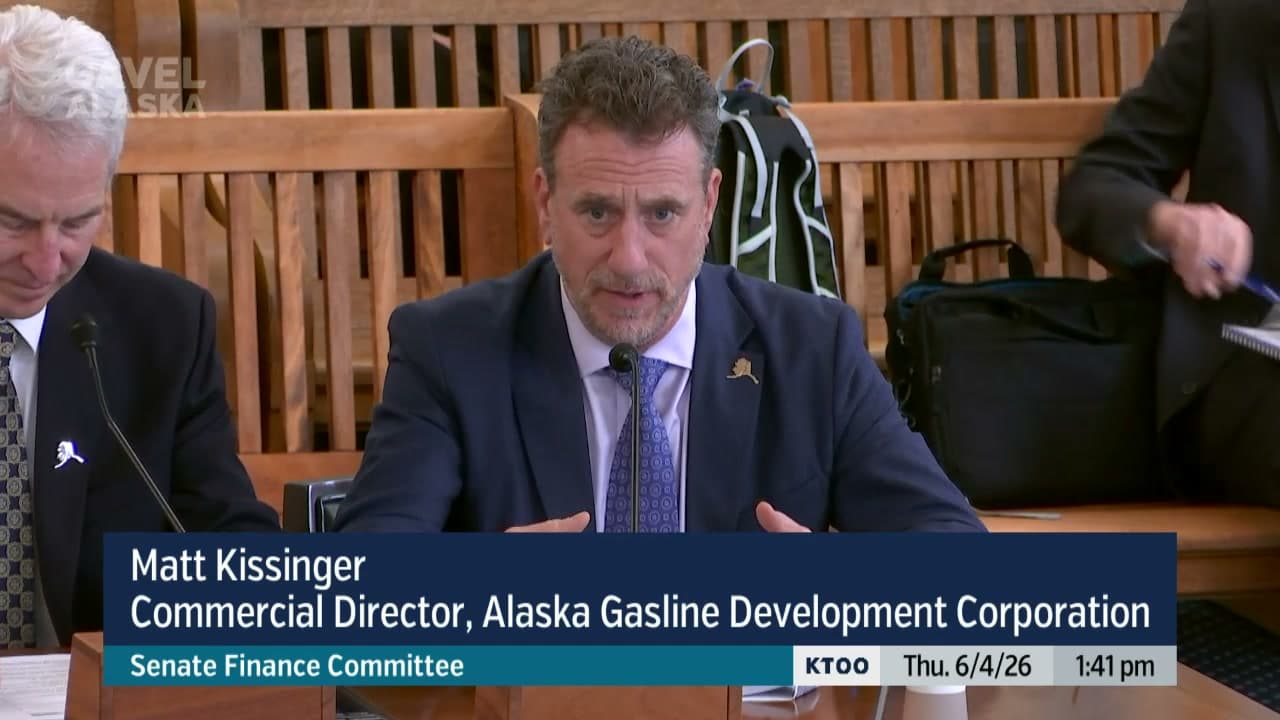
Matt Kissinger, AGDC commercial director, said FID requires sufficient funding to construct the project, including contingency reserves. Sen. Lyman Hoffman flagged the timing risk if FID falls between legislative sessions and suggested the equity clock should start when the legislature convenes.
Glenfarne used the presentation to push for property tax reform — the issue at the center of the Senate's broader review. Under the current 20-mill rate, Sen. Bert Stedman has noted, the project would owe roughly $380 million a year during construction — nearly $2 billion over five years. Glenfarne argues the project isn't financeable that way. Department of Revenue figures cited by Glenfarne project that the proposed Alternative Value Tax would unlock $22.5 billion in state revenue, support 12,000 construction jobs, and deliver up to $1,450 a year in residential energy savings.
Glenfarne also pointed to commercial momentum since taking over: signed agreements for engineering, steel, pipeline equipment, and LNG compression between July and November 2025, plus roughly 13 million metric tons per annum of accumulated buyer interest against a 20 MTPA design. The developer pledged to support language barring the state or regulated ratepayers from absorbing cost overruns, anchored by an RCA-approved $16 per MMBtu locked in-state pipeline tariff.
Glenfarne runs the project day-to-day as managing member. The 8 Star Pipeline board has four seats — two for Glenfarne (CEO Brendan Duval as chair, Adam Prestidge), one for AGDC (Richards), and a non-voting independent Alaska seat held by Janet Weiss. AGDC's consent is required on 11 categories of major decisions, including scope changes, capital calls, M&A, and tax choices.
The state no longer fronts construction costs. But the equity window, the property tax fight, and a developer cost estimate $6 billion to $16 billion above the agency's most recent figure all converge on the same question the legislature has to answer this year: how much of this project does Alaska want to underwrite, and on what terms?
What did you make of this story? (no account needed)
Made by our human newsroom with AI. How humans and AI work here · Grow with our newsroom · Transcript byLucas Brown
Keep Alaska News free for everyone.
No paywall, ever. Members pay so everyone can read the meetings and records Alaska News covers.
Get Alaska News in your inbox
Create your free account and get the day’s top stories around 6 each morning, in a few minutes’ read.
Top stories, around 6 each morning.
Stories on what you follow, on Sundays.
This article is based on a public meeting of Alaska State Legislature — Alaska Legislature: Senate Finance - June 4, 2026 10:00am ().
Watch key moments from the source meeting. Click to expand.
Earlier in this story
Alaska LNG could cost $70 billion; state's 25% stake faces dilution
The Alaska LNG project could cost $70 billion, not the $46 billion the state has been using in its planning. That is what the Senate Finance Committee heard Wednesday from Nicholas Fulford, a gas consultant with GaffneyCline. The higher number matters because it changes how much the state might have to invest and how much its ownership stake could shrink when private investors come in.
Senator Bert Stedman (R-Sitka), who co-chairs the Finance Committee, said the $46 billion estimate is outdated. He pointed to years of cost overruns on state construction projects. Fulford confirmed that economic models still use the old $46 billion figure, inflated from earlier reports by Wood Mackenzie.
The state owns 25 percent of a holding company called 8Star Alaska. That company owns three sub-companies for the gas treatment plant, pipeline, and LNG facility. When those sub-companies reach final investment decision, they will need billions in new capital. The state's 25 percent of the holding company may not translate to 25 percent of the operating projects.
"Once FID has taken on those 3 subunits, the state's 25 percent of the holding company may or may not have significant value," Fulford said.
Stedman pressed on how much the state's stake could shrink. The project could require $10 billion to $15 billion in equity. "And then when they go out to bring in other investors, we'll suffer a dilution issue. And the question is, how big is the dilution issue?" Stedman said.
AGDC has said the state does not have to invest more money to keep its 25 percent ownership. But if the state wants to invest up to 25 percent in each subproject, it could contribute about 7.5 percent of total funding under Glenfarne's stated financing approach.
Fulford said confidentiality concerns limit what legislators can see about project economics. That is different from the previous Senate Bill 138 framework with major producers. The current merchant structure requires separate negotiations over gas supply, equity participation, and LNG sales. "With the current arrangement, it's not surprising, frankly, that there is some degree of concern over confidentiality, capital costs, and so forth," Fulford said.
Fulford said federal loan guarantees could save hundreds of millions of dollars annually by lowering the cost of debt from 6.5 percent to 5 percent. Federal tax credits for CO2 removal could generate approximately $600 million per year over 12 years at $85 per ton.
Senator Lyman Hoffman (D-Bethel) asked why the federal government has not taken concrete steps to support the project despite presidential statements calling it important to the nation. Fulford said that while there has been support for trade missions to Asia, "currently there doesn't appear to be a tangible federal step to help the project."
The committee is reviewing Senate Bill 2001, which would establish a volumetric tax structure for the Alaska LNG project.










Comments
Sign in to leave a comment.
No comments yet. Be the first to share your thoughts.