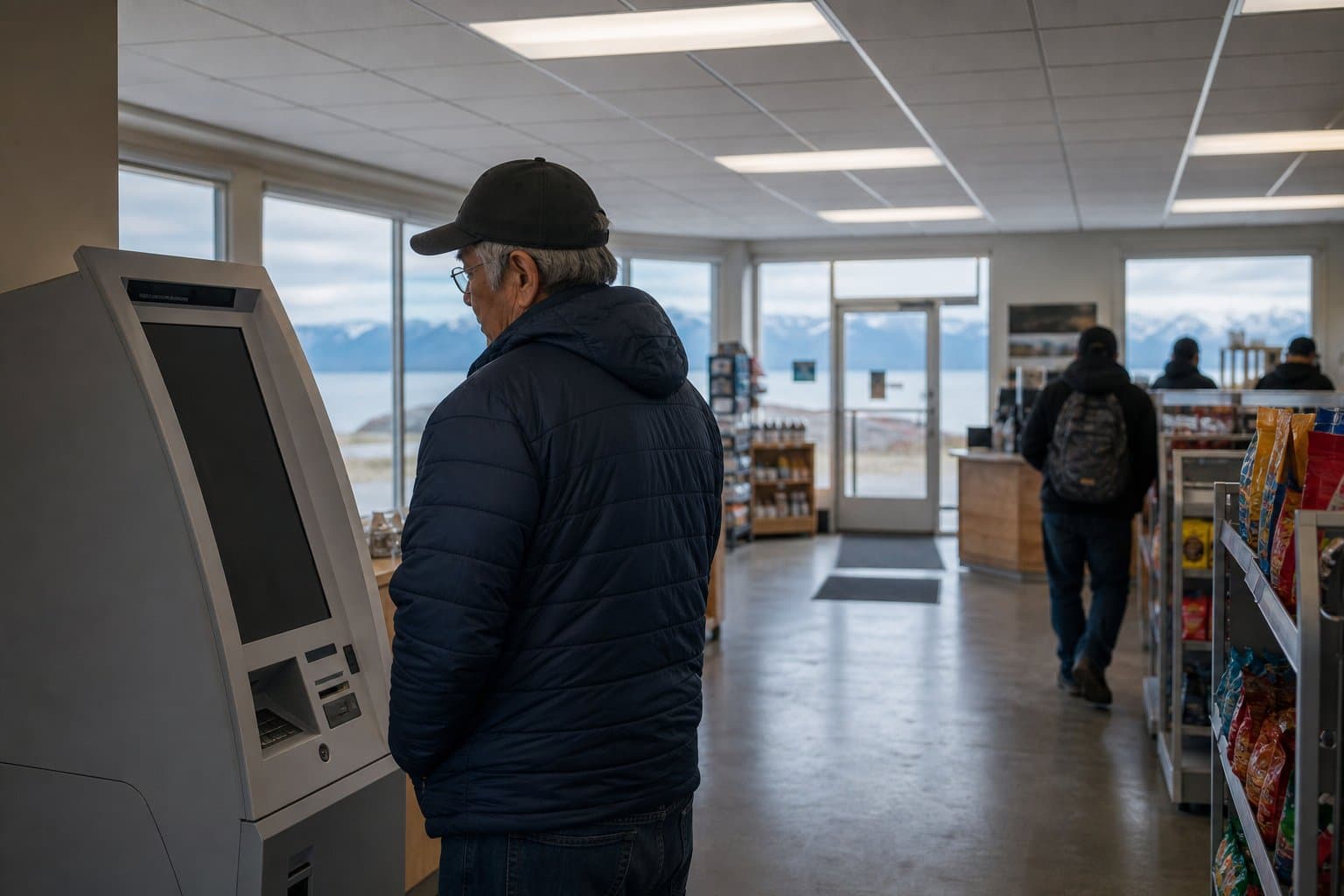
AI image
After a lawmaker's mom lost $8,000, Alaska cracks down on crypto scam kiosks
A Wasilla lawmaker's mother lost $8,000 in minutes to a scam run through a cryptocurrency machine. On Wednesday, the law meant to stop that from happening to other Alaskans took effect.
SB 249, sponsored by Sen. Cathy Tilton, cracks down on the crypto kiosks — ATM-like machines that convert cash into cryptocurrency — that scammers have turned into their favorite tool for draining Alaskans, especially seniors. The con typically works like this: a caller convinces a frightened victim to withdraw cash and feed it into one of these machines, which instantly sends the money to a digital account the scammer controls. Once it's gone, it's gone — the transactions are fast, irreversible, and nearly impossible to trace.
That's exactly what happened to Tilton's mother. "This legislation was inspired by my own mother's experience as a victim of a cryptocurrency scam," Tilton said. Rep. Elexie Moore, who carried the House version, put it bluntly during debate: "Traditional banks have guardrails. Crypto kiosks have none — until now."
The new law builds those guardrails. Kiosk operators now have to be licensed and registered with the state, post fraud warnings on every machine, cap fees, and limit how much money can move through in a day or a month. Most significantly, victims who can prove they were defrauded now have something they never had before: a legal path to get their money back.
The urgency is in the numbers. Alaskans lost more than $26 million to online fraud in 2024, with seniors bearing roughly a third of it — and crypto kiosks, lawmakers said, had become the scammers' method of choice precisely because the money vanishes so cleanly. Alaska now joins a handful of states, including South Dakota and Nebraska, that have moved to rein the machines in.
Based on a press release from Alaska Legislature.
AI-assisted. How we use AI
Stay informed. Support what matters.
Free, permanent access to local news you can verify. Subscribe to support Walter AlaskaNews and go ad-free.
Related Coverage
Wasilla Senator's Mother Scammed, Sparks Crypto Kiosk Crackdown
Alaska News · 4mo ago
Senator's Mother Scammed: Personal Loss Drives Crypto Kiosk Bill
Alaska News · 4mo ago
Senate passes cryptocurrency kiosk consumer protection bill unanimously
Alaska News · 4mo ago
Alaska House Committee Advances Cryptocurrency Kiosk Regulations After Scam Victims Lose Millions
Alaska News · 4mo ago
House panel cuts cryptocurrency kiosk limits to protect seniors from scams
Alaska News · 5mo ago
Comments
Sign in to leave a comment.
No comments yet. Be the first to share your thoughts.