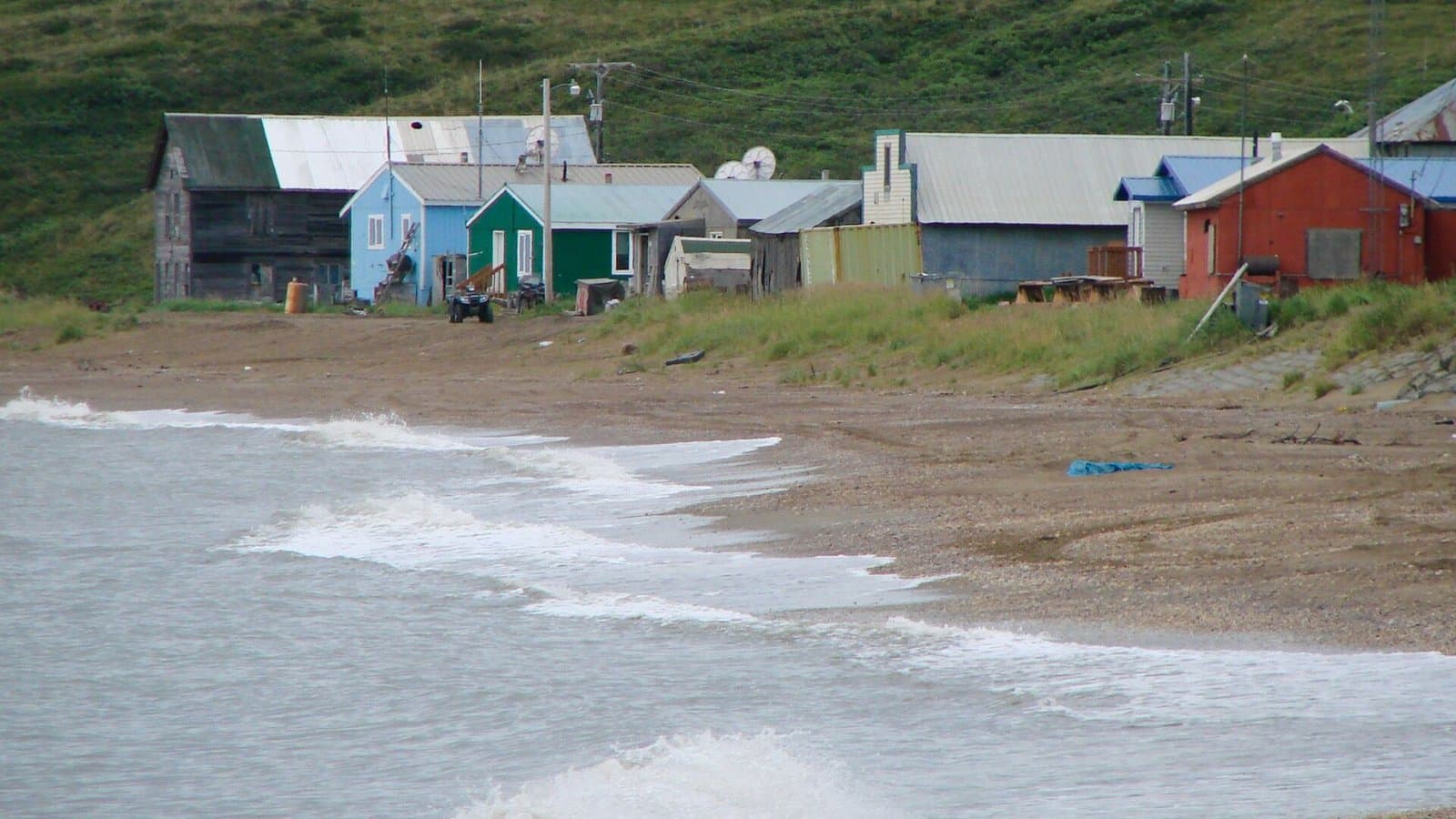
Photo: Bering Land Bridge National Preserve via Wikimedia Commons · Photo source · CC BY 2.0
A new Deering school is estimated at $64 million, and the building isn't funded yet
The Northwest Arctic Borough School District puts the cost of a new K-12 school in Deering, a village of about 180 people with about 50 students, at $64 million.
The district says the current school, built in 1984, is overcrowded and worn out, with many building components past their useful life. It plans a new school on a new site, saying the current one is too small for an addition unless the playground is removed and teacher housing is moved.
The state ranked the project second of 14 on its school construction list for this fiscal year. It counted $59.4 million of the district's $59.9 million request as eligible and put the state's share at $41.6 million. It awarded $6 million.
Deering's eligible cost fell in the middle of the five replacement schools on the list, which ranged from $32.6 million in Hughes to $117.9 million in Nunapitchuk. Every other project in the top seven carries a 2% local share. Deering's is 30%.
Add the water and sewer lines and teacher housing the new school would need, and the district's estimates run past $80 million. The money for the building, the lines and the housing isn't secured.
That $6 million, with a local match, would take the design to 65%, build the gravel pad the school would sit on and install the piles it would stand on.
The school board was asked Sept. 29 to accept the money and commit up to $2.6 million, the 30% local match. Minutes from the meeting haven't been posted.
The district had about $433,000 of that match set aside in September, a district match table shows. A district memo names one possible source for more: about $850,000 left over from the borough bond for Kivalina's replacement school, which the district could ask to reuse.
The building is the big piece. The district applied again in September for next year's list, at $64 million. Under the state's formula, the state would pay about $44.9 million.
District figures list the borough as the source of the other $19.3 million, and that isn't secured. If the grant comes through, construction would start in summer 2028 and finish in 2029 or 2030.
The construction costs are all estimates, Capital Projects Manager Dena Strait cautioned in a Sept. 28 report to the board. Costs "will change with time due to escalation, tariffs, wars, oil price fluctuations and changes in the design, bidding market and other impacts," she wrote.
An earlier $2 million phase, mostly state-funded, covers surveys, site design, permits and gravel for the site, and the survey work is done. The gravel pad goes out to bid this fall, and the district's schedule would have the pad and piles in by spring 2028.
State school construction grants don't pay for work off school property. That includes the lines that would connect the new site to the existing sewer and a pending water line on the main street, which Strait estimated at $8.4 million.
"A separate funding source is needed for this work, at this time, there are no leads for that source," she wrote. Ideally, she added, at least the utility piles, estimated at $3 million, would ship in summer 2027 and go in with the school's.
The grants don't cover teacher housing either. Strait put the need at seven units at minimum, costing $8 million to $10 million, and none of Deering's existing units can be moved to the new site.
The grants do pay to house construction crews, often in shipped-in man camps that leave "nothing tangible of value" when the job is done, she wrote.
If teacher housing went up first, state construction money could pay rent on it during the project and leave behind partly paid-off homes. That would take a funding source this fall to build in summer 2027.
The alternative, Alaska Housing Finance Corp. grants for about four units a year once the school is done, assumes every application succeeds. It would take several years to get all the teachers living on campus.
Source: Deering's replacement school gets $6 million for design and a gravel pad, but the district is about $2.1 million short on its share and the $64 million building is unfunded.
Made by our human newsroom with AI. Reviewed by Cale Green. How humans and AI work here · Grow with our newsroom
Stay informed. Support what matters.
Free, permanent access to local news you can verify. Subscribe to support Walter AlaskaNews and go ad-free.
Related Coverage
State proposes five-year lease extension for Noatak school site at airport
Alaska News · 2mo ago
A vacant Fairbanks school's fall reopening hinges on a vote — and an unsigned charter
Alaska News · 3mo ago
Three Mat-Su school roofs are failing, and the money may take years
Alaska News · 1mo ago
Anchorage superintendent says April school bond should stay under $60 million
Alaska News · 4d ago
Who pays when the state underfunds school construction debt?
Alaska News · 3mo ago
Comments
Sign in to leave a comment.
No comments yet. Be the first to share your thoughts.