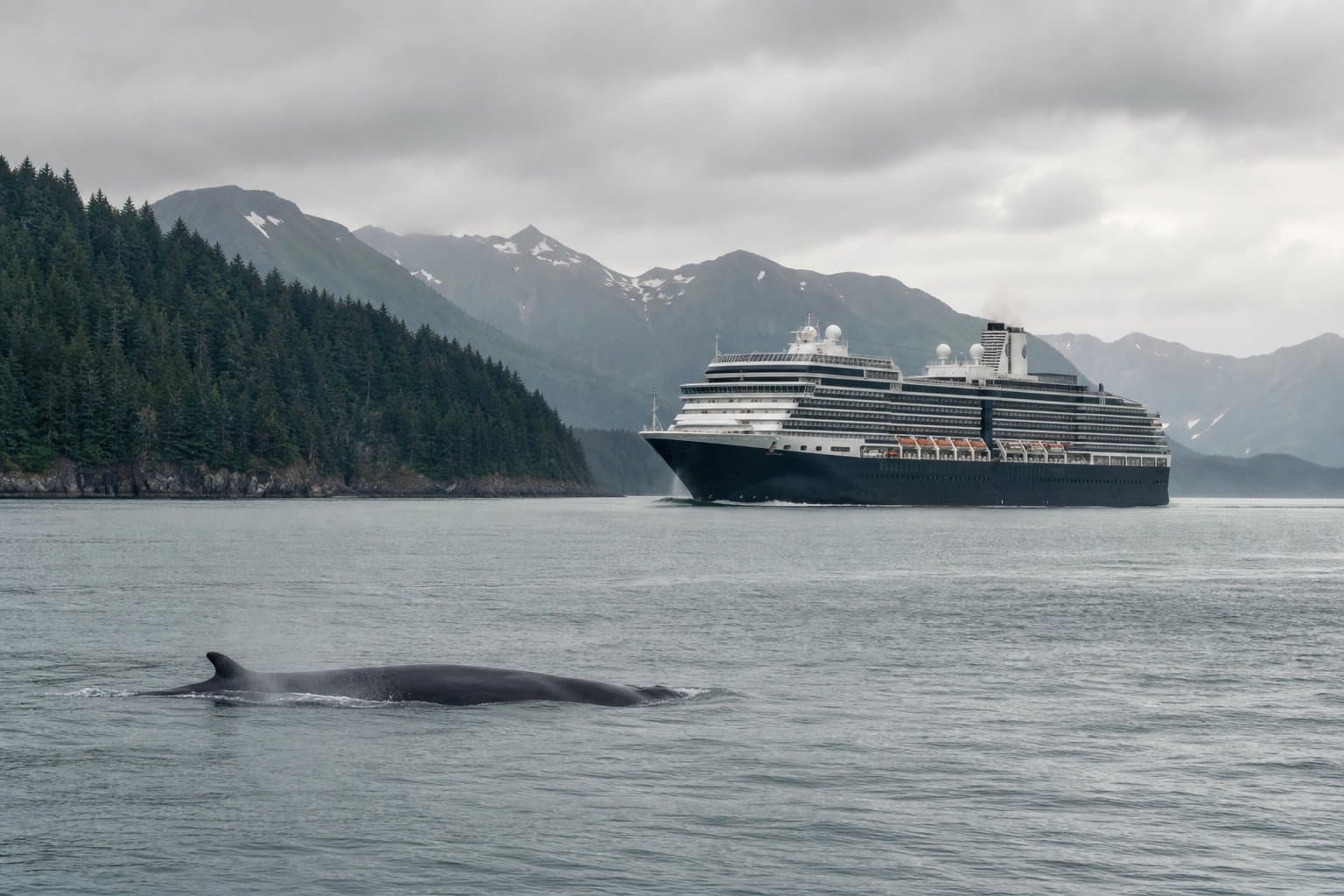
AI image
A fin whale's death near Seward reopens Alaska's vessel-speed debate
A 61-foot pregnant fin whale was found dead on the bow of a Royal Caribbean ship as it neared Seward, and a federal investigation is now working to determine how it died. A necropsy found the animal was killed by blunt-force trauma consistent with a vessel strike. What investigators have not determined is which vessel struck it, or when — questions that could take months to answer, if they are answered at all.
The whale's presence on the cruise ship's bow does not, by itself, establish that the ship caused its death. A carcass can be carried into port by a vessel that did not strike the animal, and NOAA Fisheries has not publicly identified a responsible vessel. The agency's investigation remains open.
The death has nonetheless energized conservation groups, which are calling on Royal Caribbean to voluntarily slow its ships near important wildlife areas and pressing federal regulators for mandatory speed limits in Alaska waters. They point to NOAA's position that slower vessels are less likely to kill whales, both because crews and animals have more time to avoid a collision and because a slower strike carries less force.
There is precedent for that approach. In 2008, NOAA established Seasonal Management Areas along the East Coast requiring vessels 65 feet and longer to slow to 10 knots or less at certain times of year, a measure aimed at protecting endangered North Atlantic right whales from lethal strikes.
But mandatory limits are contested. Some in the maritime industry argue that fixed, blanket speed limits ignore where whales actually are at a given moment and the realities of navigation, and that more flexible tools — zones that shift with current whale sightings, and voluntary guidance — can cut risk without slowing all traffic across the board. NOAA itself lists dynamic management among its options.
The stakes for Seward are not abstract. The town is one of Southcentral Alaska's main cruise gateways, with ships crossing Resurrection Bay to reach the Gulf of Alaska and Kenai Fjords National Park. Thousands of passengers move through the port each summer, along with the lodging, restaurants, tour operators, and shops that depend on them. Mandatory speed limits in those waters could affect cruise schedules and the businesses built around them.
Royal Caribbean, whose Alaska itineraries run through Seward and other ports, had not publicly responded to the conservation groups' demands as of publication. The federal investigation into the whale's death continues.
Assembled from public records the newsroom collected ().
Drafted with AI. Edited by Cale Green (1 revision). No full editor review is on record. Who is accountable.
Stay informed. Support what matters.
Free, permanent access to local news you can verify. Subscribe to support Maggie AlaskaNews and go ad-free.
Related Coverage
NOAA says dead fin whale brought to Seward showed trauma consistent with vessel strike
Alaska News · 3mo ago
NOAA says dead pregnant fin whale arrived in Seward on cruise ship bow
Alaska News · 3mo ago
NOAA proposes letting Seward cruise dock pile driving run into 2027
Alaska News · 3w ago
Whale permit for Juneau's fifth cruise dock issued with no public comment
Alaska News · 2mo ago
Juneau is weighing its first cap on whale watch operators
Alaska News · 3w ago
Comments
Sign in to leave a comment.
No comments yet. Be the first to share your thoughts.