Alaska Labor & Workforce: Construction Industry
Alaska News • • 59 min
Articles from this transcript
Insurance limits teen construction hiring, though that is changing, Alaska contractors say
Alaska construction employers say insurers have long made them wary of hiring workers under 18, but that is starting to change.

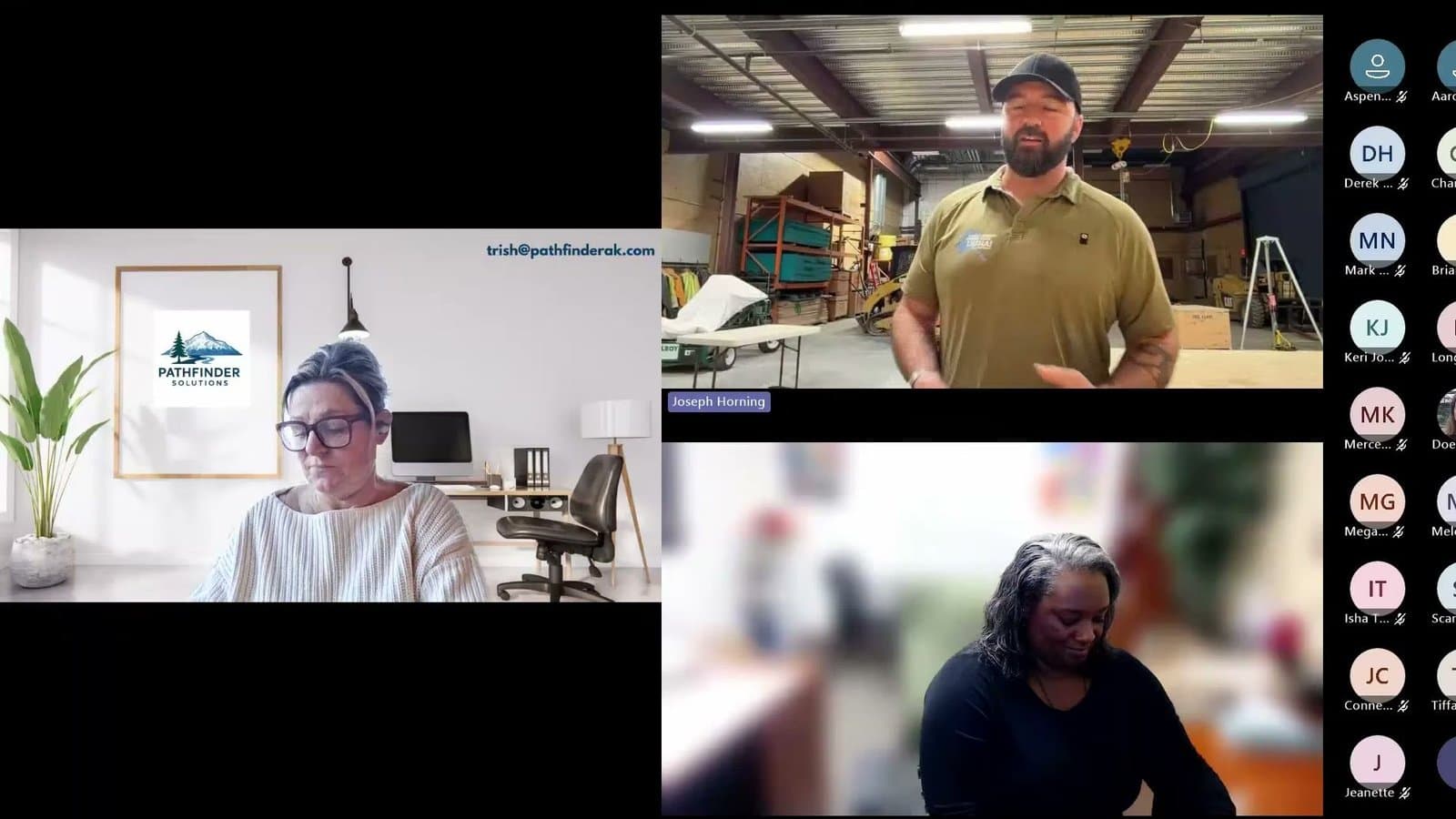
I'm Trish Zug. I am here to somewhat facilitate your Lunch and Learn today, but also Ms. Demetriovici is with us and she is with the Department of Labor and Workforce Development. She is actually the sponsoring agency for this today. You can see the beautiful flyer on your screen that they have developed for our series of Lunch and Learns this year, and this is really being I guess, attended by our, what we call our Career Guide Project. And those are career guides working out in many of our schools across Alaska.
No audio detected at 0:10
But we've also opened this invitation so that, you know, to just any others that want to join us, various school districts, whether they're participated in our Rooted Career Guide Project or not. We've put it out on listservs and different CT professionals, employers. So I guess that's to say you're welcome as you see these flyers show up to invite others to join us as we continue this series. So that's a little lay of the land. I don't want to take up too much time with that, but I think it's important because this is only our second one this year.
I will let you know that they are being recorded. Many of our folks in schools are at various, you know, in different classes, various parts of their day, so they can't always join us live, but we will have these for them to enjoy, and they'll be in several places, but most recognized will be on the Department of Labor's site. So we can put that in the chat, Demetria, a link to that after, after we get started here. It's maybe even on the flyers, but so I think that's enough to get us started, and we'll have some time for questions with each of our presenters as well as at the end. So With that, I will let our presenters know too that sometimes you'll see some attendees on here, but they may have their students joining us like in a, in a group setting or in a classroom setting.
So it doesn't necessarily mean just one participant with each of these that are showing up on your screen. So with that, I think I pre-gamed with our presenters, so they should be here and joining us. I'll check in. I did see Aspen on here and Aaron Bartell is our first presenter and that's going to talk to us. Really, these are pretty informal.
We call them Lunch and Learns because we just want to hear from folks about different industries. So is Aaron on with us yet? I'm here. Awesome. Okay, so Aaron Bartell is joining us.
He is the Vice President. I put some extra little descriptors there for Aaron. He's an Iron Dogger. He's been a project manager for BC Excavating and he's evolved through that company. And he's now Vice President, and he has worked with many school districts and done this type of platform before, so he certainly came to mind.
So thank you for joining us, Aaron. He's gonna talk to you a little bit about some of the questions we posed, and then students and instructors that are out there, we'll give you a little time to ask questions of Aaron too. So Aaron, did you pick a few questions you're gonna address for us, or did you want me to pose a few to you? It's completely up to you. I mean, I could go through any one of the questions.
I've got a few that I've probably been asked a few times that I love talking about, out, but it doesn't matter to me. Nope, that's perfect, Darren. Why don't we jump in and you can just start with those? Perfect. Well, thanks, Trish.
Thanks for the introduction. For those of you who don't know, Trish is an amazing human being that's done a lot for our construction industry and for getting people into construction. So she's a good role model. One of the misconceptions, I'll just jump right into that, is that construction, you know, is the whole janitor or something like that, right? And it's an industry you don't want to get in.
Construction's a lot of just everyday people like you and me. There's a lot of people giving back, like Trish, who spent her whole life giving back to construction through one form or another. We're all surrounded by it. I do, like Trish has mentioned, I've done a lot of presentations in schools. One of our favorite things to do is when we open up, we say it with a raise of hands, who here knows someone in construction?
And virtually everybody knows someone in construction. It makes up about, I don't know, 10 to 15% of our workforce on average. So, it's, you know, 1 out of 10 people do it. I would say I hope that's growing in the future because there's a huge demand for it. And then it's also a pretty secure job in the future.
As we all know, with a lot of uncertainties in the world, we still need to build things and maintain things. So, the trades are a wonderful thing to get into. So, I guess a little bit about me, I'll start with. I'll just, I'll keep it short and brief, but been doing construction my whole life. Started out at BC Excavating I was a, you know, pretty young kid, probably 12 to 14, coming in and sweeping floors and doing whatever I could to get into the, you know, get in the door.
And then over my life, I've just worked up, done every position here. I've been, you know, a pipe layer, an operator, a laborer, a truck driver. I've done it all. So I always joke that that was me getting to learn all the jobs that I don't want to do so then I could find the one I do want to do, which I do recommend. It's a great way to live your life.
Go try different things. Don't be afraid of it. It's treated me really well, and the worst thing I got is I got experience out of it. So, which has been most of my experience of the people I've worked with is we just get into construction through all kinds of different avenues. I went and tried college for 2 years and it wasn't for me.
Some of my friends, the estimator for Klebs Mechanical went and got his degree. He was working through, you know, a professional career, and then he backed up and went back to clubs and, you know, worked up through clubs to become their estimator. So, you know, some of us drop out of college, some of us go get degrees, some of us don't go to college at all. There's a lot of avenues of people that get into construction. I literally know people from master's degrees, bachelor's degrees, and high school dropouts.
So there's no magic answer of do this and you'll get into construction and be successful. Um, at BC, our main motivation when we're looking for people is actually your quality of person. Over your skill set. So, right now, over half of our company, when they were hired at BC, had no construction experience. Some of them were cooks, they were line cooks.
Some of them, you know, had troubled pasts and we helped find them, you know, coming through different drug rehabilitation programs that we sponsor. Some of them are, yeah, out of college and couldn't find a degree or, you know, something in their business degree. So, they came to us and said, hey, well, you know, we'll work as a laborer. So, we literally, at our own company, have people from all different backgrounds that have come to us. And what we found works best is if you're a good person and you have a work ethic and you show up on time and you'll learn, I'll teach you the skills.
I know the job. I just can't teach you to be a good person. So that's literally what I just did is that's our sales pitch. When somebody comes to get hired, that's what we tell them. I mean, it's pretty much per verbum how that works.
So that's a little bit about me, how I came into the industry. How our company works in a little bit. You know, I guess I could tell you BC Excavating, we're a civil contractor. That means we play in the dirt. So we have excavators, we have dozers and dump trucks, and, you know, we install water lines and sewer lines and we build parking lots and, you know, do all kinds of stuff, demolition.
So basically, if it involves an excavator, we do it probably, even though sometimes we shouldn't.
Getting started. So one of the biggest questions we get is how do we get into construction, right? How do kids get into construction? Which is a tough one. I will tell you one thing is the industry is changing and we're trying to be more open to hiring people under 18.
One of the biggest turnoffs it's been for us over the years has been insurance. Our insurance companies have always been pretty anti, you know, anybody under 18. We're just told to stay away from it. So that's a barrier to entry that has existed for a long time that the construction industry as a whole is actively working on changing. So that's something that— bear with us a little bit.
You're probably going to hear some, you know, people say no, but when you get told no, that just means you're asking the wrong person. So go ask the next person and someone will say yes if you want to work somewhere. Between me and all my friends, all of us pretty much hire somebody under 18 now. When that didn't used to be the case 5 or 10 years ago. So, you know, basically start knocking on doors and look for, you know, I joke, if you want to work in construction, go find the owner and tell them you'll be the hardest working person that they've ever met and you'll be no problems, and everyone will hire you just to find out if you're lying or not.
There's your pitch on how to go work in construction. It's all you have to do. You don't have to go say that I know this much stuff, or, you know, my dad taught me this, and those are good things, but It's back to the being a good person. If you say you'll outwork everyone in my company, I'm going to hire you just to see if you're truthful because it's worth it. We, all of us civil guys, we pretty much hire summertime-only people for sure.
So those of you that are in, you know, high school or looking for college, that's a pretty easy one. Go find a civil guy. Anybody that does horizontal construction, meaning dirt work, you know, not going vertical like building buildings. We all need civil, we need people to either shovel. So there's really easy entryways into construction in that route.
A great location for that is if you look at, there's two websites which I'll mention these a couple of times. We Build Alaska is a great resource for you guys. So webuildalaska.com has a lot of resources that we've put together over the years that you guys can look through for construction, getting into construction. And then also AGC Alaska, if you go to their website, there is a list of all the AGC members in Alaska. Go look through that list and find out people you'd want to work for.
So there's a compiled list of hundreds of contractors ranging from, you know, you can look by what city they're in, you can look by what type of work they want to do. And all you do is just start cold calling them. Just call them up and say, hey, are you hiring next summer? You know, if you are, can I go work with you guys? Can I interview with you guys?
You're going to get some nos, but you're going to get a lot of yeses there. So those are great ways to get in, great ways to connect. And then you never know where those go, right? There's a lot of stories in construction where somebody started out as an intern and now they own the company. I personally know a couple of owners that started out as interns and they own the companies now.
So that's how a lot of that gets started.
Am I doing okay? Are we going too fast? Is this, you know, with the online, I just want to make sure it's okay. So with skills, technical skills versus soft skills, of course everybody loves to talk about technical skills, right? Because that's what, you know, you want to go to get school, you want to get trained up for, you want to have those abilities.
We make more money. The reality is, like I already mentioned, the soft skills is what really I care about because so many people that have the technical skills that come to our company also come with a lot of baggage. What I mean by that is they can't show up on time, they don't work well with others, They have an attitude. They think they're worth more than they actually are. I mean, there's so many— I could go down the list of all these negative attributes that a lot of people come with, where when we get good people that come with us that, you know, they came as a cook or fresh out of high school, they were 17 years old when they started working with us, or, you know, they changed career fields.
They were— we've got one guy that was a salesman for a 40-year career, and then he quit and became a laborer. Literally, he's 56 years old. I mean, we have all these different avenues into us, but the common denominator is, is they're good people. So being a good person, I'll teach you construction. We got guys that are now project managers that didn't— they came to us and didn't know anything.
We'll teach you the entire job as long as you're a good person. So we really emphasize the soft skills are so much more important to me. And the definition of soft skills is basically the things that are universal across all of construction is what I would say. And what I mean by that is going to be showing up on time, being able to fill out a time card, being honest, you know, so if you break something, tell me about it. Communication is a huge one.
So, can you communicate with people? Meaning, can I have a conversation with Trish about what our job is today? Trish, I need you to go grab a shovel, go over there and dig a hole 3 feet deep. That's a, that's a skill that we don't talk about enough and we underemphasize, right? People have a hard time communicating and we're seeing that a lot more in the world now with the cell phones.
People just want to text each other everything. We can't pick up a phone, we can't call each other and we can't talk to each other. So learn how to communicate.
Learn how to go do— when you have an opportunity to go do a presentation in your class, go do a presentation and talk in front of 10 people or 15 people. Because that's what construction is. And we have safety meetings, we got to go talk to, you know, between 10 and— I've been in meetings where we had 100 people before, and I have to go present to them what the topics of the day are, be clear and concise, and have those communication skills that if I didn't learn those, right? And that's an ongoing thing. I still read books, I still learn about how to be better and be a leader.
No audio detected at 13:10
If I'm not learning, then I'm not going to be able to communicate and do my job.
Some honest employer advice. Ooh, this was one. What was there? A couple questions there that I liked.
Misconceptions. These ones I love. Yeah. So there's a ton of misconceptions in construction, right? Everybody thinks that, you know, you're kind of the guy that it was a fallback career.
I think that's probably one of the most common ones is you weren't capable of something else. And I can tell you, yeah, that couldn't be more far from the truth. I know some people that have been extremely unhappy with their careers, other careers, that came to construction and find out it's so fulfilling for them because they like building things and working in teams and working, you know, towards common goals. Where, you know, some other industries, which may be, you know, great for some people, that just wasn't good for them. Like salesmen, right?
No audio detected at 14:00
Being a salesman can be a very isolated job where it's all about, I'm going to outperform the next guy. And again, I'm not— this isn't me saying anything's better or worse than anything else. It just might be better or worse for you. So finding, you know, what industry and what career fits you best. We do a lot of teamwork.
We do a lot of building. You can actually look at something you accomplished at the end of the day. And the pay, I mean, we have guys that are making 6 figures without a degree and they're sub-25 years old and they get paid time off and they have medical and they have, I mean, there's some wonderful things they get. Yes, they had to go work their butt off to do it. Absolutely.
It's hard work. They get their hands dirty. But it's very rewarding and they have no college debt. We, we pay to learn here, right? We pay to play, meaning I'm paying them a wage, I teach them on the job, and then as they learn more, I give them a raise.
So then they make more and then I teach them the next job and then they learn more and then I pay them more. It's not the other way around where I say go into $100,000 in debt to go learn the skills and then I may give you a job. We pay you right up front. We pay, you know, so at our company we do what's called a SEP, which is a simplified or a simple employee pension plan, which what it means though is that I write a check to our employees for their retirement. So there's no match, there's no nothing, there's no— the requirement is, is you have to be here for 3 or more years.
And then we have— and then after that, that means that we like you, we keep you around, we start writing you a percentage of your paycheck goes into your retirement plan. I mean, not a lot of industries do that, and it's not 1%. A lot of ours are 15 or 20%. They're substantial. So the benefits are wonderful.
You know, the skill set people learn are wonderful. The teams we get to work around are some really amazing people, problem solvers. So really rewarding work for sure. Again, another thing that I love is a friend of mine taught me this. We talk the difference between what pay you're given and what pay you're earned.
A lot of people ask, what pay can I be given? And you can't be given any pay. I don't give away pay. You earn a pay. So, that's something that is a really good mindset that'll take you a long ways in life is if you can switch your mindset from what are you going to give me, right?
Are you going to give me paid time off? Are you going to give me medical? Are you going to give me a raise? It's instead, it's what am I going to earn? Am I going to earn some paid time off?
Am I going to earn a raise? And when you can get that mindset, it'll take you a long ways in life. And, you know, we have some young kids working here that are just wonderful people. They'll get 3, 4, or 5 pay raises in a year sometimes. And these are $2 pay raises.
In one year, they'll get $10 in pay raises just because— per hour— because they're doing that good and we appreciate them that much. And that's— they don't come to me and ask. They're the ones that just show up and work. They put their head down, they make the jobs happen, and they solve problems. The guys who come to me and say, can I get a pay raise every week?
They never get one because they want to be given one. And that's not how it works. So those are some mindsets. And these, again, a lot of these are soft skills that will take you through any industry. I mean, if you want to go be a doctor, a nurse, you know, psychiatrist, all this, if you have this ownership of yourself and you go learn these, these soft skills, they're going to take you a long ways in life.
And then, yeah, how to prepare. You guys are probably seeing a theme here with me. It's going to be back to soft skills. Sure, it's great if you can get into something construction-related. You know, for our industry, when I bring somebody out of high school, it's 5 years for them to be truly useful for me, right?
The first year is just learning some terminology, and I'm telling you what to do every day. You got a shovel here, you got to do this, you got to pick that up. The second year, I can start delegating some things, and I can— instead of me saying, go sweep the shop floor, you'll know to go do that by yourself. And instead of me saying, you know, shovel from left to right, because people don't know which direction to shovel dirt, you can do that by yourself. And it takes 5 years for me to be able to say, go do this job, go install this water line, go do this.
That's— it's actually a big building block. So, but you can shortcut that if I don't have to tell you how to clock in, right? And I don't have to explain to you for the 10th time to show up to work on time. So again, There's things you could definitely learn on the skill side if you can be around it. If you could do summer jobs, come get hired, and just being around it's going to help, you know, accelerate some of the technical skills.
But again, I'll teach you the technical skills. You'll get fired if you can't do the soft skills, if you can't communicate with people, you know, if you can't work with others. Those are skills that you just have to be able to do in our industry because we're not a solo industry. We're not, you know, a salesman selling cars works by himself selling a car. A carpenter or excavator guy building a building has to work with a team of, you know, 4 to 100 people.
So we can't have these rock stars out there by themselves, you know, that are isolated. So, okay, that was kind of the questions that I'd highlighted that I wanted to go through. A lot of information. Hopefully it meant something to you guys. Um, I don't know if anybody has questions for me.
Yeah, excellent. I was going to ask that. Thank you, Aaron. Really, you hit the No pun intended, hit the nail on the head with this, just emphasis on soft skills. And I'm sure that Aspen and Joseph will be speaking— they'll be pretty redundant with that message.
It's just vitally important in all workforce, but especially construction is just the gap's so large for need. So anyway, I appreciate your time. You're welcome to stay on and listen or go. We can take a few questions now for Aaron in case he needs to drop off, but we'll also maybe have a few at the end, but I think we're divvying up our time just about right now for our next presenters. So anybody want to pop on the chat or unmute yourself?
And presenters, don't— if you don't get questions, you know, it's there. We just— students sometimes can be a little shy. And instructors, if you have a student that feeds a question to you, we had that last week also. You're welcome to ask questions. The questions I would have had for you, Erin, you really covered well.
Really about, oh, somebody's on here on the call, or we pass instructors— career guides pass on information, and that would be like, hey, how do we get a hold of that presenter that said they hire in the summer? Do you use AlaskaJobs? Do you have folks look at you through what platform if they just left this meeting and said, I want to talk more to him or sell myself for a summer position? The most common way people come to us that's actually successful is someone looks us up online, finds our phone number, calls our front desk and says, hey, I want to work there, can I set up an interview? That's by far the most common way that it actually works.
We're on a few of the different online platforms. The reality is, is we get so much spam through those and we get so many people that are looking to— I don't know what their motivation is, but if we try to set up interviews, they won't accept or whatever happens. I have a lot of probably negative feedback towards a lot of those, you know, just trying to send out emails that say, I want to work there. I think in my opinion, picking up the phone call and calling us is by far the best, you know, way to actually follow up. And then don't be afraid to follow up.
I don't get mad if you call us 3 times. You know, sometimes, you know, my office manager might, but we love the enthusiasm, right? Like, if you care enough to call me 3 times to say I want a job, that just shows me at least you have motivation. So step 1, check, right, for soft skills. Yeah, for sure.
No, that's excellent. And thank you because it does reemphasize your need for somebody that can communicate. And you talked about in the beginning, it's not always text-based world out there. Really important to learn how to pick up the phone. So thank you.
We do have one question in the chat that says, and then if you can just be quick on this, we'll move on to, to our next presenter. And again, not to minimize your time, it's been amazing. You may have gone over this, but what are some of the most frequent barriers to the industry? So yeah, barriers to our industry, I would say it's probably a misconception because if you want to come in and just be a laborer, as long as you have your expectations correct, It's pretty easy to come in. Again, I mentioned the, you know, under-18 barrier.
That's a tough one that we're working on. We're getting better. I acknowledge that. If you're over 18 though, probably the biggest barrier is people want the next job, not the job that's available. So people will come to me and say, I want to be an operator, and it's like, well, I have a laborer position.
Why don't you try that first? And if you prove yourself, we'll move you up. And they don't want to do that. So then those are self-imposed barriers. Excellent.
Those are great points. Some of the HR barriers we hear about too, you know, coming to work drug-free and some of those things. We'll kind of elaborate that maybe at the end, because I know that each and every one of you will have those expectations. So, but that came to mind for me. And then the last question for you before we move on is, is this work seasonal?
So we have both. We do, you know, civil work is traditionally seasonal because it's in thawed conditions and the ground freezes. We do do a fair bit in the wintertime, so we keep our core guys on, which would mean our probably more of our technically skilled guys. We'll keep them on in the wintertime, and we do do some work in the wintertime. So that's, that's usually something we have to work up to though.
No audio detected at 23:30
Excellent. And again, that may be a common theme across construction in Alaska. So depending on the trade. So, okay, well, thank you again. You're welcome to stay on.
We're going to move on to our next presenter. And I see that Joseph is on. We're going to hear from Aspen with Steppers Construction next, but Joseph, I wanted to ask you, are you on a— I know you're teaching. Are you on a time constraint? Do you want to switch with Aspen?
Are you going to stay on with us till 1? I have a backup instructor that can go over the next module in the lesson that we're doing right now, so you've got me until the end. Excellent. OK, well then we'll just keep with our plan here. I know Aspen's on with us, so Aspen Sanders is the CEO Director.
I'm sure she's had every position there is in construction, and so, meaning everybody starts with a shovel in the hand, so to speak, or a hammer. So anyway, we'll let her elaborate on that. So Aspen from Steppers Construction, if you are on with us, you can talk to us a little bit about— and I think you again can let me know whether you pre-gamed on some questions or I can ask some also. So thank you. Problem.
Well, first off, thank you for the invitation to join you guys, and I will try not to piggyback too much on what Aaron already talked about. He covered a lot of great things, so thank you for that. So I'll just kind of try and fill in from my perspective and where some differences on our company and how we work. But yeah, I am the CEO director of Steppers Construction. I actually started as just an office manager and worked my way up and now am primary owner of the company.
So yes, you start from the bottom and work your way up, kind of the concept. But that doesn't mean that I haven't been a laborer too, and I've picked up the shovels and I've swept the houses that we've cleaned and, and done everything in between, even excavator work. So yes, but as far as my background, I actually do have I have a bachelor's degree in marine biology, but life takes fantastic turns. And so, here I am now working in construction. The company that I worked for, for an environmental firm, became a construction company, and I discovered that I love construction.
No audio detected at 25:30
No audio detected at 25:40
One of the things that is the most rewarding to me, kind of, I'll jump to the closing question that you've got there, you basically like have, or one of the benefits, I guess I should say, that you basically have this great opportunity to be on something from start to finish. And so we get to go from plans to an actual constructed building. And some of these are commercial structures that people know. Steppers recently did the Gateway Visitor Center. We're doing the Alaska State Fair Amphitheater that people will come and visit.
No audio detected at 26:30
And we got I got to be a part of that, and it's really cool to get to see those kind of things come to fruition. So that's one of the things I love about it. Erin's right. One of the things that we typically look at when people are wanting to get started in the world of construction is those soft skills are super important. Yeah, like you said, you can teach skills, but you can't teach people how to show up and work on time.
No audio detected at 27:00
Um, or be responsible or be a good communicator, um, as much as you would like to. Those are definitely skills that I would recommend that people really try and focus on if they're wanting to get into construction, because that will make you successful as you move up the ladder from the guy that is expediting materials to the one that is leading an entire crew framing a multi-million dollar building. Um, it's really important to Another thing I would like to emphasize is the fact that, yeah, no, you don't have to have that college degree, but the skills that you learn in those kind of environments of being able to pay attention to detail and think outside the box, different ways of looking at a problem are huge. Those really help with making a successful career in construction. So, definitely, and like you said, Mr. Public speaking.
No audio detected at 27:20
No audio detected at 27:30
Yes, we deal with various clients, other subcontractors, other workers, and to be able to communicate both for a progress or a job moving forward, but also challenges that you may be facing and needing assistance with those. We're more than welcome to answer questions, but if you can't present the question clearly, it does make it more challenging. Or if you just don't say anything at all, then it becomes really frustrating for a business owner or Bob for us to be able to remedy those situations. I was trying to kind of think of— so yeah, I definitely agree with the soft skills concept. We do have the pretty much you have to be 18 to start, but that's not being without question that we aren't also trying to move into that field where we can hire younger kids.
No audio detected at 28:50
You just cannot because of insurance reasons. Operate power tools and air guns and things like that. So it does get a little more complicated. Um, but we also do have a lot of kids that, um, are actually going to school for business management, and it's a great field to know. It teaches you kind of those overall principles of business that you can utilize in construction.
So if the college is your thing, it's definitely a career path to go with. Trainings as far as like equipment operation and things like that. They're very helpful, but again, like Aaron was saying, we'll teach you those. We're very big in teaching, and most of our guys just come and start as labor and then work their way up to where they're, they're running the projects.
Um, let's see, I was trying to think, um, as far as misconceptions, I think Aaron He did mention a lot of them, but I think a lot of too, like, it's just, oh, it's just the physical. Like, it's just going to be really, really hard labor, but I'm never going to learn any technical skills. Well, that's not true. There's both aspects of it, especially nowadays as more and more things are being run by electronics and programs and time cards for us are electronic. So being able to operate a time card isn't hard, but it is, uh, if you have the ability to emphasize or utilize electronics, then it actually puts you a step ahead.
Um, and then our plans are becoming more digital, um, and we use programs like that for being able to read plans. So definitely a good skill. Even filling out daily reports are no longer on paper, they're electronic. So being able to safely navigate simple programs and utilize those benefits and learn on them, especially for anyone that is interested in like the financial side of a business in construction. And that is incredibly important to be able to do those basic math skills and be able to utilize those programs to be able to understand the procedures that are involved with that.
No audio detected at 31:00
You asked how important are communication, teamwork, and problem solving. They're incredibly important, and especially if you want to advance in the industry. So, I definitely— we are always talking with our guys about communication, communication, communication, because it really makes the project go well as long as there is open communication.
As far as the hiring concept, like Karen, we, we pretty much got away from all of those little side programs and platforms. And the person that calls the office or comes in and says, hey, I want to work. And again, persistency is, is something that I like as well. Showing that interest, showing that drive, self-motivation. Come in, call, say, hey, I'd like to interview.
Are you hiring? It's definitely something that we, we definitely appreciate. We do utilize the resumes. Uh, Erin didn't talk a whole lot on this. I like them because even if it's just a basic one of this is my name, this is my background, if I don't have any work background experience, this is where I went to high school or, or I'm going to high school.
Um, these are the programs that I've been involved in, my interests, simple things like that definitely help with us having something to talk to you about in the interview and kind of get where you're coming from and be able to judge what skills you have and what skills— what you would do as far as skills going forward and where you would be the best fit. So definitely have a good resume, clean, precise, doesn't have to be a whole lot. Don't— keep honest on it. And then we can go from there. So it does give a good basis.
No audio detected at 32:40
So I'm trying to think.
Construction careers that are in high demand are definitely skilled carpenters. We do start out as laborers and we train, teach along the ways, but if you have carpentry experience, it's always in need. But like Erin said, I'd rather you came in as a laborer and more teachable than to come in knowing that you— or thinking that you know all of the skills and all the tricks. And you're not able to just take instruction or take a different point of view on a way of doing something. So teachability is definitely a big factor for me.
Um,. We had, um, Aspen, I'll help you out a little bit if you don't mind. This is Tricia, um, because we had a question, so this will be kind of a good pivot. You're doing awesome too, and thank you. And especially this one, I, I caught my attention since you were able to join us as a what we call a non-traditional career.
This is a technical term in labor, and that is when the threshold— I believe, been out of it for a little bit— but 20 to 25% of the workforce is dominated by a certain— so like men in nursing or males in nursing, females in construction, females in welding. And so thank you for joining us and showing us that, you know, this is a demographically diverse career field. And so the question was, do you have any women working in the field, and what do you encourage about— what do you encourage for female applicants? Uh, we have not had a lot of female applicants come through. We would actually love to see more, um, but I've— the few, uh, women that we have had working here at Steppers were operators of equipment, and they were some of the best that I'd ever seen.
We actually, uh, I ended up going to one of the high school career things and talking to a couple of young ladies that were looking to be diesel mechanics. That kind of skill I think is incredible, and I would love to hire someone along that lines, especially if they're just willing to learn, even if they don't know everything about mechanics or operating. So those are definitely ones I would love to see happen. It is a primarily male-dominated I mean, more and more people in the field that with subcontractors and engineers and architects that are females in the industry, inspectors. So the field is wide open.
No audio detected at 35:10
It's not what it used to be several years ago. So I definitely encourage it. Excellent. Okay. Yeah, thank you for that.
I just, back to your, one of your current projects, the amphitheater at the fair. Next time we all go to our concerts or attend the fair, You're right, it's fun to go, hey, I know somebody that worked on that project, the different buildings. And so is that going to be slated? Well, I'll end with this little kind of attaboy and celebration, but then also there's a couple of comments that I'll read to you. But is that slated to be done for this 2027 fair season?
Correct. Yes. So we are working very hard and we started 2 days after the fair closed and the only reason we waited was for vendors to be able to move out. So, which actually does lead to one point I didn't want to forget. For us, since we do commercial construction from the ground up, we actually work year-round.
And it— and like Aaron, we keep our core guys, but most of the time our core guys is our entire crew. We usually run about 15 to 20 employees and they are employed year-round and have been ever since I've been here. Excellent. Yeah, thank you for— because that was a question earlier. So, We had a comment that says that we have Ahtna Native women that work in the laborers union, and some of them have started in their mid-30s and are still going now.
They used to go— they were in the apprenticeship program, which is a great segue as we go to Joseph because he's going to talk about— yeah, a couple of people said you can come to us with soft skills and we'll train you. But I love that Joseph's going to also talk about a very valuable opportunity for really hands-on training And I know that you folks in the industry, you might be okay training yourself, but boy, is it nice when they come with a recognized and expected skill set. So there was also— we do have women in the company currently from Erin that just spoke to us. They are wonderful and encouraged to join the industry. And then Mercedes was in the labor union for 10 years as a female, and it was wonderful work until I switched to workforce development.
So that's an awesome commentary. And then Tiffany just said, thanks, Aspen. I would love to refer some of the women that we train to your organization. I coordinate a Women in Trades program at the Alaska Works Partnership. So there's even— that's what we hope that you employers also get out of this, is that you encourage and we help you grow your workforce.
So Aspen, thank you so much. We're going to move on to Joseph. Our timing's almost perfect. That doesn't happen every time. Cheryl Sweet, you're welcome to stay on with us, and if not, we just thank you again for, for just sharing about STEPPERS with us and your journey.
So moving on, we are going to hear from Joseph Horning now. Joseph is an instructor with the Alaska Laborers Training Center. So we did pregame with some questions. Joseph, if you want to hit on some of those, but again, it is a nice segue also to talk about about the training side of this industry, and there's so many various training providers, and you have a unique— certainly your facility is unbelievable out in the Chugach area, but I will let Joseph take over from here.
Yeah, thank you. So just to introduce myself, my name is Joseph Horning. I'm a lifelong Alaskan. I was born in Kodiak, I grew up in Valdez, and then I moved to Anchorage '04 for the apprenticeship program. Actually, I did attend some college in Valdez, and I still remember the aha moment at 3 AM where I was zombied out staring at a computer screen and realized that's not really what I wanted to do.
No audio detected at 39:10
And so I joined the apprenticeship and moved to Anchorage, and then 22 years later, I've kind of come full circle, and now I'm a full-time instructor here and then also managing the apprenticeship leadership as an administrator. And right now we've actually got a math class going on for all of our apprentices, so you have an opportunity to get back into the classroom and relearn some of those math skills that you picked up in high school, and maybe some people in college a decade ago. That— and so a lot of that, we use that as a practical aspect to the construction industry. And learn how to apply it out in the field. And then right behind me, this is one of our shops.
No audio detected at 39:30
No audio detected at 39:40
I'm gonna bring the light back on. I don't know if you all can see it, but I mean, we've got a big dirt floor shop. Next week we're gonna have concrete class going in here. We're going to be pouring some sidewalk as part of our training. We're going to have a pipe laying class where apprentices are going to be learning how to install water, sewer, storm drain.
Train and learn about the math involved and how to make sure you get all the right angles. A lot of different opportunities here, and I can definitely go on and on about all the different classes that we teach here. But to get back to your questions, the rewarding aspects of being in construction, for me personally, I, you know, I can drive around Anchorage and visit places all over the state, I can see projects that I've worked on, or I can see the big retaining wall going down Muldoon. I built that as an apprentice. I've poured concrete, I've installed water main.
No one really appreciates the nice and plumb fire hydrant sticking up out of the ground, but I know I did a good job and made sure that was nice and straight.
The, I think besides looking at the aesthetics and being proud of the work that I've done, I'm really proud of being able to support my family. You know, I've got 3 young boys that are active and interested, and that's probably what drives— drove me to be successful in this industry and continue to succeed and continue to learn and to be able to pass on my knowledge to the next classes. Man, Aaron covered a lot of really important things, and I don't want this to be repetitive, but the communication skills, how important are communication skills, teamwork, and problem solving? Communication is definitely a hard one to instill when people, they are glued to their phone, they are And I'm losing my track of thought here. Give me 1 second to— showing up to work on time is kind of what's bouncing in my brain right now of my biggest impediment for apprentices when they are getting reprimanded by their contractors or they're not showing up to class on time.
No audio detected at 41:20
Being there is, for me, the most important form of communication that you can display. Being there on time and ready to work so that the rest of the crew is able to start on the project for that day. And that goes along with teamwork. Another question you had on there, volunteer opportunities that can help students explore construction careers. We are an 18 and over program.
We do accept applications if you're under 18 or you're going to be turning 18 soon. I'll still accept your application. I can put a pin in it until you turn 18, but, again, it's the insurance thing for the contractors that we send you to go work for. You have to be 18 and over, but that doesn't stop you from preparing for a career in construction, getting out there and You know, shoveling snow is our bread and butter in the wintertime when a lot of the construction jobs kind of freeze up, literally when the ground freezes and they can't dig anymore. We send a huge majority of apprentices down to Valdez because they're in constant need of people shoveling snow down there, and as well as some of the contractors that we have in the Anchorage area and the valley for shoveling snow.
The interview process. I think I'm gonna— I know I'm gonna be jumping around a lot here, but it is very competitive. How do you become an apprentice? It is competitive. We get hundreds of applications for our apprenticeship.
Out of those hundreds of applications, we might see between 70 to 90 people actually show up for our tryouts. And I say tryouts because those are coming for the interviews. When people come here and they express interest in becoming a laborer, first of all, we want to make sure that you can actually physically do the work. This dirt floor shop here is one of our tryout areas. We give all applicants— you get a pickaxe and a shovel and you dig us a trench, and it's timed, and we want to see how quickly you can do that.
No audio detected at 44:30
And then out in the parking lot, our second challenge is we have a pallet of cinder blocks where we have the applicants restack cinder blocks, and it is very— it's trying, it's monotonous, but it serves a purpose. It tells us, one, you know, can you physically do the work, but two, can you finish what you started? You know, we're engaged by your commitment to finish a job. So when we get applicants that— and I say, you know, there's no hard feelings if you want to throw in the towel, and try again next year because you showed up here unprepared. You know, go, go and get a job shoveling snow or splitting firewood.
Do some farmer's carry. You know, I'm really encouraging for people to give it a second shot. And 9 times out of 10, the people that do show up a second year for our tryouts end up being, being successful. Then once you can do complete the tryouts, then you're eligible for an interview and you come in the next day and you'll sit set in front of our, the training director of the facility, our apprentice coordinator, and then some of those signatory contractors that I talked about. You got superintendents or project managers for these different companies, Alaska Concrete Sawing, maybe Granite Construction.
We'll have some of those people here and they'll be in part of that interview. And if it sounds stressful, it is. There's no way to sugarcoat it. Interviews are really important part of this process. But one of the benefits of joining the laborers union and getting accepted to this apprenticeship is that it's the last interview you'll ever have to do.
Once you become an apprentice and a union member, we have a team of business agents at our hiring hall that are in constant communication with all these different contractors and working to place people on jobs. So there's no more calling companies. You can, obviously we encourage people to hustle if you wanted to, but usually, you know, there's a list of union members. You're on that list, and when your name is called, it's time to go to work. I also wanted to— a good point about female laborers.
Women laborers are, I think they are amazing, and I talked about our tryouts that we have. That cinder block challenge, That record is 45 minutes long, 45 minutes, and it's— that record is shared by both a man and a woman, which I think is amazing. We actually have in our classroom right now, we have 4 female apprentices that made it through those tryouts and went out to work this summer as first-year apprentices, and we've gotten amazing reviews from their, their employers, and then now they're back in and you're taking classes. And then another thing about, uh, I wanted to talk about LIUNA is the Labor International of North America. It's a huge organization, you know.
No audio detected at 47:00
No audio detected at 47:10
No audio detected at 47:20
No audio detected at 47:30
I'm focused here on the school, but they have a— it's Women Build Nations, uh, conference every year down in the States. And Tiffany, I think, who's on with us, has bend to that, and it's amazing to see that level of solidarity for women in construction.
No audio detected at 48:00
And, you know, I would be happy to take any questions. I agree. Yeah, thank you, Joseph. That was awesome. I'm going to open it up for some questions.
Thank you. Tiffany was going to jump in here, I think, and then And also, yeah, go ahead, Tiffany. Okay, thank you. It's not letting me turn my camera on, but that's okay. So I did just attend Trade Women Build Nations, and I am also a proud laborer by trade for 18 years.
I've never worked in the field. I'm not that cool. However, I am the biggest cheerleader for women in the trades, and I just went to Trade Women Build Nations in Houston this month. Month, and there were 900 women from the Laborers' LiUNA alone. And I feel like the plumbers were a close second, but we were— we definitely were high up there.
And the most amazing part was just seeing women in all the trades, honestly, at this conference. And now I'm on fire. It's my mission to keep getting women into all these trades. And I have to give a shout out to Joe. He's been amazing to work with over at the Laborers', He kind of coordinates with Many Hats even though he's not the official coordinator, and Gabe is also amazing.
But, uh, Joe really, um, does what he says he's gonna do, and he's worked with like rural women that really needed just kind of a hand up. And a single mom, um, he's helping, and so she's, you know, just doing what she can with the work because they can't just make work appear, right? Right, in rural Alaska, but they really do work with people and we do free training with all of the trades and we promote all the trades including ABC, the non-union apprenticeship. We've had success on all sides of the book. And so my coworker Carrie did put our training schedule in there and we do training with the laborers.
We've got concrete and scaffolding this year and we're doing Spring Break training for high school kids only in Matsu. During their spring break is different this year, FYI. That caught me off guard, but we caught it. So we're going to do one at our, at our Wasilla Training Center and also in Anchorage. We're doing a power tools class this time.
And then hopefully we're doing a Girls in Gear with ASD. So we're always trying to train as much as we can despite any kind of grant cuts. Department of Labor is our best friends. Demetria knows I love Demetria also. She's great.
We— and Trish, you and I go way back. I miss you. I'm so glad you're still doing all the good work despite retirement. You look amazing. And so yeah, there's a lot of love here for the trades in all aspects.
Ish is on here from Cook Inlet Tribal Council. So we partner with a lot of organizations for the greater good to try to help people find their path. So Yeah, sorry, I'll, I'll stop talking, but I'm just excited for this meeting and thank you for having it. And thank you, Joe, for going that extra mile. Oh, thank you.
No audio detected at 51:00
Yep, that is awesome. Thank you for supporting Joe too. He clearly loves his job too. Go ahead, Joe. Oh, you did remind me also for our rural applicants.
So we have a gentleman in class right now that Alaska. He's in a very remote village and we were able to bring him here for our apprenticeship. Once you're accepted to the apprenticeship, we will provide transportation to get you here to our training school, which where we also have a dormitory with individual rooms. So each person will get their own bed, and then while you're here taking training as part of the your benefit of being a union member. We provide lunch while you're here from training.
So, you know, you get— we have a pretty amazing cook on staff too that makes some very high-calorie, high-density meals because you're going to be burning it off while you're here building scaffold or digging pipe. And I did want to talk about some of the other classes and the diversity of what laborers do. Like my specialty was scaffolding, concrete, pipework, grade checking, which is like surveying for construction sites, and then I've been on building trades all over the city.
And, sorry, classes. Grade checking is one of those fields that a lot of people don't quite understand. It's when you're driving down the road and you see surveyors out there for the municipality and they got their GPS. Well, when you put that same worker on a construction site that's surveying for construction, and that's the highest paid scale that you can make as a laborer. I think the grade checkers make $57 an hour as well as benefits.
And I don't know if you wanted me to discuss what the solid— and these are solid wages. When you come in as an apprentice, apprentice, you— there's a pre-negotiated wage that you're going to start at no matter what your skill level is, which right now it's $28 and some change. So that's your first day as an apprentice when you're on the job site. But on top of that, though, without getting too, too complicated, there's also your benefits that are paid by the employer. So an employer is also going to be paying on top of your wage, an additional $34 an hour that's going to be going into your retirement, your medical, your vision, dental, hearing.
No audio detected at 53:20
There's a legal fund which is like insurance for lawyers that's part of your benefit as labor. And then, and then the training center. So all that's paid by the employer. They're not taking that off the top of your check. And that's why it's free to join the apprenticeship is because it's all paid for by the employers that We want to have a trained and skilled workforce.
So, all that training's got to start somewhere, and it starts here.
Yeah, thank you, Joseph. I think that— I'm glad you did share that. I think it's important for us to kind of talk about what a great career can be built around construction and not just a job. You know, I think that we don't always delineate for young folks the difference between a job and a career. And so really you're building a workforce around folks that are going to live that as a career and the benefits that are kind of, that are associated with that.
So thank you. And you also mentioned, I'll just in the chat, Alaska Works Partnership did put their schedule in there. So I wanted to point that out. Amanda lets us know that they have intensives in Southeast Alaska. Alaska, and they focus on hands-on learning and using tools of the trade.
But we need to be just as intentional about teaching workplace skills, which is time cards, incident reports, client communications. I'd love to connect with industry partners to help develop soft skill training that can be used across the trades. So, Erin, if you're still on, some of those folks that— all of you have emphasized soft skills. So if you have a desire to collaborate on what that might look like in some— in a training module, There is Amanda Triplett is on here. It's similar to university level communication class, but very specific to the trades.
No audio detected at 55:20
So anyway, she put that in there as an offering. Demetria also said that— sorry, that was just for Tiffany to turn her camera on. We did have any advice for young people coming in from the village. So Joseph, you actually addressed that. So thank you.
You that they have— that you actually will cover that cost if they reach out and get chosen as an apprentice. But you can find out more about that, obviously. Just have them reach out to the laborers. I'm sure Joseph will even take their, their call or send them in the right direction. So Demetria put here the recordings where they're going to be, Department of Labor and the Lunch and Learns.
And again, I'm just kind of going down to make sure we didn't miss any questions. Yeah, there's kind of some question on here, Joseph, about childcare for folks that are coming in with, you know, family. So many of our trainees across the board really are balancing. It's quite a balancing act to have a family and still be involved in training. So I might just say we're kind of in the interest of time, we only have a couple couple minutes, but that's asked by Lori Long, so possibly they can reach out and ask about that of you.
But if you have any last minute questions, and then also Demetria answered that a little bit in the chat also. So anyway, we'll kind of cap it here. We only have about a minute left, but we want to definitely thank you. If there's anything I mentioned you want to comment on, And again, talk about an amazing facility. A view of McKinley, better than a hotel room, better food than a restaurant.
It's all so, so true. I've experienced it. So excellent work you're doing out there, Joseph. Thank you. Mm-hmm.
Yeah, so some of those questions, again, reach out directly and if not, reach out to myself, Zach, even Ms. Demetria, and we can probably guide your question. Questions. Oh, there you go. Got a screenshot there, and this is being recorded, so there's contact information. Perfect.
Thank you, Joseph. Okay, any— yeah, any last words, Ms. Demetria, for our audience today? No, I just want to say thank you everyone for joining us, and if you have any questions or concerns in the future, I will put my email address and contact information in the chat. Please don't hesitate to reach out. I will be happy to guide you.
No audio detected at 58:00
No audio detected at 58:10
Yes, and feel free to share for the future Lunch and Learns that it's open for schools, industry partners, all of the above. So with that, enjoy the rest of your week, and thank you so much for our presenters, especially for sharing with us today. We really do treasure that— your time.