Anchorage Assembly: HHAND Commission Monthly Meeting October 2026
Alaska News • • 59 min
Articles from this transcript
Formerly homeless man tells Anchorage commission hospitals left frostbite patients outside
Jamie Lopez told an Anchorage commission that Alaska Regional and Providence hospitals discharged frostbite patients onto the street.

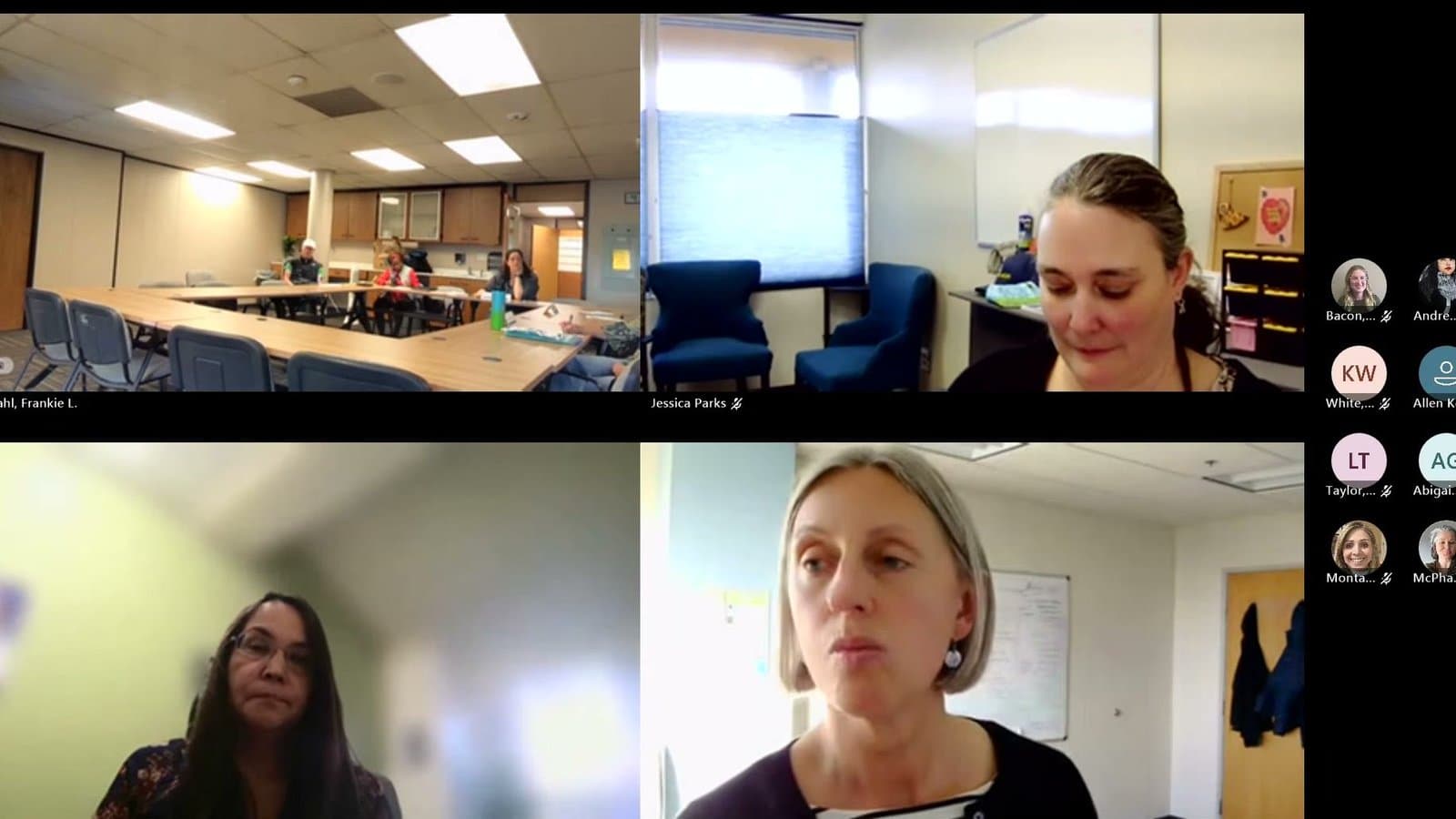
We don't have very much energy. Rules of order, and I am chaotic.
Hello, friends. Do you want to start us off with an introduction to yourself and we'll go around the room?
I am Marvin Johnson.
I'm Julie Graham.
I'm not Frankie Dahl.
I'm Chase Purdom.
All right, who do we have online?
Kimberly White, Anchorage Health Department.
Uh, Harley, do you want to introduce yourself?
Harlan, uh, Harlan Andrew, Anchorage Health Department.
Thank you, I apologize. Uh, Leila, do you want to introduce yourself?
I'm Lila Taylor. I'm with the Anchorage Health Department.
Great. I see Alan. Introduce yourself, friend.
Yeah, Alan Kemplen, Fairview Community Council.
Abigail, have you introduced yourself? Not yet. My name is Abigail Gudjolo. I work at the Disability Law Center of Alaska.
Darcy? Hi, I'm Darcy Montalvo. I'm the Human Services Division Manager for the Anchorage Health Department. The other person I see is Thea. Hi everyone, Thea Agnew-Bemben with the Mayor's Office.
All right. My name is Laura Rains. I'm also a commissioner.
Um, next step is the approval of the order of business.
Everybody want to glance over that? See if that looks correct.
Does anybody want to move to accept? Is that right?
I move to accept.
Okay, we have a second.
Second.
All right, and then the approval of minutes from September.
I move to approve.
Second.
Thank you, Brent.
You have any disclosures?
Seeing and hearing none, I'll move on to Section 8 items. Is there any online business meeting to discuss.
All right, seeing and hearing none, any new business? I see that we have a conversation here about Commissioner attendance and community councils. Uh, yeah, I think I Just wondering about ways that we can get more input from neighbors. That's a way to do that. And what's a good way to do that?
And what is allowed with number of people or number of commissioners at a meeting? And then I was even thinking maybe loosely assigning commission members to reading the minutes from meetings or agendas, if we could get to them all, so we would have a better sense of what the great leader of the public is coming to. That was just an idea. Yeah, I know Alan has wanted us for a while to be more involved in what community councils are doing. Yeah, I hear that.
Yeah.
Anyone have any thoughts on that or ideas about that?
If I remember correctly, if there's more than two of us meeting somewhere, it has to be— oh, how does that work? And I don't know how that rule works around community councils.
I mean, probably find a full list of community councils and split that up. Yeah, there is a list on the Federation website. Yeah, I think we need that.
Yeah, um, I'm sure the district— Kyle just mentioned that community councils are public meetings. Yeah, so we don't probably, um wouldn't run afoul of the— since they're already open to you commissioners adding names. But it also wouldn't if you're not, um, discussing your own— I mean, if you're just there to like listen, observe, I don't think there would be really How many people you have getting together to do business?
So, but, you know, it's fun to be maximum safe.
Yeah, and Jessica both have their hands raised. Thea, if you want to talk. Thanks. Yeah, I was just going to say that here at the mayor's office, we divide up the community council so that we are trying to get to all of them as much as we can, and some of them we go to more often than others that, you know, like I go to a few of them, you know, usually every month. And I do think there are frequently questions around housing development and also just gathering ideas and sharing ideas around neighborhood development.
And then of course homelessness is often an issue depending on where you are in the communities. So I, I think it is a really good way for commissioners to kind of hear more from other parts of the community that you could bring back to this group that would inform the work you're doing here.
Jessica, did you have something? Yes, sir. I was going to say the exact same thing as Thea. I think if we What we talked about at the meeting when this first came up was that each of us could maybe attend our local community council meeting and then see what was left after we looked at who is in which community council district and then divide up what was remaining and then report back to everyone here if there were any any items that needed to be brought back to the Commission.
And I guess I would say I'm in favor of that.
Love it. I'm looking at their website now so that we have a list somewhere in front of us.
Um, While that's trying to pull up, we could— at least I am on the scenic, uh, scenic foothills, so I'm happy to go do that one.
Um, what community council are you in the neighborhood of?
Okay, yeah, that's what I'm trying to pull up.
Yes, probably easier if you go to—. There's a sign for council future if it will load.
I usually go to Centerview because that's where our internet service is located, but my local one would be Russian Jag.
I believe Jessica also is Russian Jag. Oh, right. Yeah, she is.
Okay.
Okay, so was— who was— did I hear that somebody's doing Russian Jack?
Jessica.
Jessica, okay.
Two other kind of big ones are Northeast Community Council and the Taku Campbell. Those might— those are pretty well attended. And then of course Mountain View. I go to that one every month. And Fairview, I think we talked about that already.
Those are also really— and Spinard. Those are all really well attended too. That's my local. Okay. Then I also attend them every month.
That's where I work. Oh, okay. So I work one. Yeah. But I live in Tulsa.
Okay. And some are not every month. So like Midtown. Midtown has a lot of business members, but honestly they could really benefit from from having more dialogue with people who are a little more well-versed in housing and homelessness and neighborhood issues. And Chris Donner's the chair there, and she's a really active chair, and she's always open to having people there.
Yeah, and I find it— I heard— what was that? Thea said about the talk from Carolyn North. It's very well attended.
We should have representation there, or what? I didn't— she said that very well attended by the members, by the members of the community. So it might be a great one to pop into. I know the last time I was at a CDOT Foothills one, I was one of 5 people. Yeah, so Um, community councils tonight, 7:00.
I can also pop into the community council, not this one but the next one. It's, it's super open. They sort of have a semicircle in the hall, so you see that they have— it's, it's one of the—.
So, all right, so you got 1, 2, 3, 4, 5, 6, 7 that we're planning on tonight to attend. Next little bit, can report back on what we're hearing from the community.
Definitely. And then I'll try to get us a list for next time so that we can also have in front of us what we're— what we haven't visited yet. Yeah, we can talk tomorrow, 6 to 8 PM. You find communitycouncil.org, right? So if you click on attend a meeting, Kevin.
Um, so we, we can— unfortunately Frankie's not here. Frankie does— several of the meeting councilors, Frankie often attends meeting council. They regularly attend several of them that are high priorities for us, and so we want to meet with you guys to, um, probably what our experience has been with attending them. I went to the Midtown one recently with our mentees, and we got really good discussion on social groups. I was—.
And to get over to myself.
Anything else you want to— you need to talk about in the new business section?
If, if this is the plan, I believe you will have to make a motion and second that in order to, um, there be like a session. Okay. Yeah, we don't have like a Okay, the idea is to go listen, to leave with feedback, issues or concerns, and I think that'll help us to get a better— at least be a better understanding what other parts of Anchorage are talking to that one.
That's— oh yeah. He's another band help with leading us. A daddy. Yeah, I mentioned this before, but he wanted to pass along how much he enjoyed working with everyone. You know, that's okay.
I didn't know he was here.
Any announcements for brownies or— um, All right, all right, we'll move on to informational items with our ongoing business. An update from the Community Safety and Development.
Um, yeah, I don't have a whole lot new to bring to the, uh, commission. Um, one thing I will mention is, um, our team is going to be presenting at the Assembly Housing and Homelessness Committee meeting on October 21st about the Home Assistant Housing Voucher program that we're setting up in Anchorage.
I've seen Um, I am actually the RDR staff lead, so some things— I'm not sure who yet. Um, but anyway, that's the— that's it. Um, on the 21st of March. Um, otherwise we're just kind of continuing work on the various projects that we talked about across a few meetings.
Um, the mission thing we have, um, no details to report.
I have a question, maybe surprise some people online too. Um, does she have a microphone on there? Because there is this unit behind me that's running. There's ambient noise in the room with the HVAC system sometimes, and I don't even know if they can hear what is being said, because clearly I can't hear what's being said. And especially on the recording, It's hard to hear stuff too.
So how is the audio for those online right now? Can you, can you hear Jamie, for instance? It's actually so much better than it normally is. I was actually going to comment. Must be the fan.
Also this giant book here. We do now have another conference room that is smaller than this one. It might be too small for this commission, but soft voice. Yeah. But yeah, so I'll just give a— yeah, standing a little closer to the microphone now.
I don't have a whole lot to report from CSD this month. Main thing is that we're going to be presenting at the Assembly Housing and Homelessness Committee meeting on October 21st about the Homeless Assistance Housing Voucher program that we're setting up as a collaboration with Alaska Housing Finance Corporation. I've mentioned that at these meetings before as well. I am going to be out of town, so it's going to be someone else from the team. Determined who will be giving that presentation.
But yeah, if you want to learn more about that program, definitely attend that. That's, I think, at 11 o'clock. Anchorage. Otherwise, we're just kind of moving along with the various projects and programs that we've talked about previous meetings. No particular news on any of those, but we will update you when we have more say.
I have, um, you have any information on— I've been hearing about the— well, HUD came out with the new approach to permanent housing, nothing being permanent housing and everything, something always being— now everything considered transitional housing. I heard something a little bit about that. I spoke with somebody at HUD. It— that's not— so that's not, you know, that's not really our part of HUD. In fact, I think Jessica would know a lot more about that than me because that's really their side of things.
However, I am on that review committee, so what I can report is that it has been a messy process and there's been a lot of back and forth and stop and go. And legal rulings that have like told us to stop or told us to move forward. And so the latest on that is that the continuum of care collaborative application was submitted to HUD under their new priority ranking system using the criteria that they told us to use, basically. Not really clear what's going to happen because the litigation over it is still happening. So something new could come up that stops it again, as it stopped it last time we were at this point.
But for now, my understanding is that that process is moving forward and our application has been submitted. Um, Jessica, did you have any additional—. And my question wasn't specifically on Anchorage Community Care, but more on is this a nationwide— it is a nationwide push from HUD that all permanent— how nothing be considered permanent, that more of a push to everything that's considered transitional. Yes, it is a national policy shift by HUD. Specific to that program, and it is affecting our process here and everybody, everybody else.
That's what I was—. Yeah, yeah, yeah. I didn't know if it was rumor or, you know, it is very, very—.
Jessica, did you have anything to add about that? Yeah, I would just share that's correct. The collaborative application that was submitted is on the website. So if anyone is interested in taking a look at it, that is there. We did have a CoC meeting where we talked about the collaborative application, and I kind of walked through the scoring of that application and where I think our community was strong and where I think we have room for improvement.
So we definitely have some strategies over the next 6-7 months before the fiscal year '27 NOFO is released to to think about how we can strengthen some of those parts of our community to help make that application stronger, but also think as a community about where those priorities lie and what, what do we value in our community and how do we want to prioritize projects going forward. I think that with, as Jen was saying, with some of the stop and go that happened this year, We had to react pretty quickly to HUD shifting those funding priorities, and I'd really like leading up into fiscal year '27, uh, us to be able to, uh, have good community conversations about how do we align HUD's priorities with what we as a community feel is valuable, and how can we best respond, um, to some of these shifts, uh, in a way that doesn't, uh, negatively impact the people that we're serving.
The other question that I had is, is this— how, how would this impact other programs like Section 8 moving to a transitional program? Uh, good question. I mean, that would really be a question for like AHFC to Section 8. Um, it— yeah, I don't know, it, it could well impact some of those other programs if the structure of the program is tied into funding sources for rental vouchers or whatever, but that's not something that— yeah, yeah, that's just not something we really know. It has so far not affected any of our HUD programs that we run within the municipality for whatever reason.
The focus on recent shifting priorities has been really heavily on a continuum of care program rather than different alternatives. So we've, we've been kind of business as usual in our program so far.
I haven't seen any indication of that slightly to change. So, yeah, the impacts seem to be pretty, pretty narrowly to that program. But yeah, it does intersect with a lot of other programs. And so something like Section 8 could be affected.
Sorry. Uh, yeah, I just wanted to point out that in Alaska, you know, what kind of gets described as Section 8, or a big part of that is called a choice voucher for families, and those are already time-limited to some degree, not for everybody, but for a lot of participants, they're already time-limited. And so You can go on AHFC's website and look at all their different voucher programs that they have. Some of them are statewide, some of them are just in Anchorage, some of them are just in other communities, and they, they also have vouchers that are specific to different groups of people. So for example, people, young people coming out of foster care, there's a voucher program from there.
There's a DV survivors voucher program, so you can look at all those different ones and they do have different time limits. I think the the change that you're describing, Shané, is primarily has the biggest impact on the CoC funding, which is what Jessica's organization manages. And really, I think one way to— Jessica, I think you described it really well when we were going through that process, and correct me if I'm wrong, but in some ways it's taking what had been permanent supportive housing, which we know in Alaska the turnover of, or in Anchorage, the turnover of a unit is about on average 5 or 6 years. And so it's saying we're gonna serve more people with a shorter time span instead of serving a smaller number of people with a longer time span. And so if some of those beds convert to transitional, it means then we have to work harder to make sure that by the end of that timeframe, they have, You know, for example, like Home for Good, their strategy is to get people onto a voucher and then enroll them in services with Michelle's organization, South Central Foundation, for those supportive services.
No audio detected at 24:30
No audio detected at 25:00
So, um, and, and I'm paraphrasing Jessica because I think you did a really good job of explaining kind of the pros and cons of this change.
Yeah, I think HUD is really focused right now on strong community responses and less about this program, particularly the Continuum of Care program, intended to be the end-all be-all for people in that, in those assistance programs. So HUD really wants to see that somebody who needs a level of support that goes beyond 2 years, which is what the limitation for transitional housing would be, that during that 2-year period they're connected with those other resources. They're, you know, moved into a higher level of care at, say, an assisted living, or they're transitioned onto a longer-term voucher support, or they move into a public housing or a subsidized housing unit if their income, say, is only Social Security, which we know isn't enough to afford a market-rate apartment. So their intent, I believe, is to really kind of push communities to think holistically about how they wrap around that support for that person and not just depend on that one HUD program to provide everything to them.
Thank you. Any other questions?
Thank you. Thank you. Update from Housing and Homelessness.
Hello. So I have a few updates. So one is our three shelters continue to be full. I know none of us are surprised. We have activated some surge beds at the two congregate shelters, so currently each place is at 140 beds.
On the 12th, so I believe that's this coming Monday, We are adding another 10 beds to each location, so they'll— each place will be at 150, and then the non-congregate will remain at 100. Yesterday was an oh-so-exciting assembly meeting, and we were actually able to get a few things passed. The, the one that I was most excited about is they approved a change to the code, so we now have the ability to increase beds up to 200 at East 56, should the need arise.
And it got approved and nobody opposed it. So that was great. And also kind of surprising. And then the last thing is that the Housing and Homelessness team has put together a series of lunch and learns that I believe are the first Friday of every month. So the next one is on November 6th, and that one is going to be covering cold-related injuries and prevention and identification of those types of injuries.
I believe Dr. Conway, who's our chief medical officer, is going to be presenting that. So if anybody wants the link for that, please let us know and we can get it sent out to you.
Those are all of the updates that I have. Got a question. Yeah, um, so this is in person or it's virtual or both? Just virtual. The lunch and learns are only virtual.
That's a good question.
Thank you, Lyla. Update from the mayor's office.
Hi everyone. Yeah, there were a few other things that are pertinent to this group on the Assembly agenda last night. We also got their approval for accepting some money from the state, which is allowing us to add our surge beds earlier this year than we did last year. So last year we started to add surge beds at shelter kind of like around October 20th, I think, was our first batch and then we kept adding and the last batch was not until December 22nd, I think, and you all remember that was a very cold time of year and we were kind of scrambling because we, you know, like Laila said, we really weren't supposed to go over 150. We had to get an emergency approval to do that.
And also we're scrambling to find the money. So I feel like we're much better set up this year thanks to accepting the state money and the Health Department did some really good budgeting and planning to add beds. We're going to be adding beds now from between now and the end of November to get us up to our full surge. So I'm really happy that we have that funding in place and then in the Mayor's budget, we've asked for that funding for, so we can carry that on in the, in the first part of 2027. The other thing that we're doing pretty diligently is using our coordinated outreach teams to do outreach in areas where we know we have people sleeping outside so that we can prioritize them for these beds as they come available.
So about 3 weeks ago, we did our first push focusing on Midtown because we knew there were a lot of people sleeping out in Midtown. The next one we went to Beens and downtown and Mountain View, and then in this next one that Lila was just talking about, we're going to focus on people who are kind of using the safety center every night. And then we also have an abatement that's going to happen next Tuesday, so it's posted right now, and that's in the far north Bicentennial Park area. So we have outreach going out there already. I talked to them today and they made contact with a few folks in that area today, so we'll be also saving some of those beds for people that want to come in from that abatement, um, and then we have a few other places where we know we've got folks ready.
So we're just trying to be really strategic about, as we add beds, making sure we're really trying to get the people who are most vulnerable, who want to be in those beds, into those beds. So that's been something we've worked on for the last few weeks together. We also did last night get approval to accept the Rural Health Transformation Program funds. So that's just over $3 million between now and the end of June. So we really have to work diligently.
It's gonna cross our departments of health, police, and fire. The goal is to get us all onto electronic health records for all of our clinical teams and then to be able to sign those onto the Health Information Exchange so so that we can have a really efficient and confidential way of, for example, sharing information with South Central Foundation about common clients. We're also gonna be piloting a referral tool through that, which will hopefully really improve the way that hospitals can interact with our shelters and some of our other community partners and make that system just much more of a system and less of an ad hoc. And then we'll also be doing a few pilot projects. One is really focused on our mobile, mobile integrated health.
So getting more medication-assisted treatment out into the community to people who need it and then connecting them to longer-term treatment. We're also gonna pilot a, the health department's gonna pilot with their WIC program, getting behavioral healthcare integrated with WIC so that we're helping pregnant moms and moms with young children. And then we're also going to try and crack the net around assisted living. So we have some funds to help us move people who are in our shelters but really need assisted living into an assisted living bed. That's something that Darcy's spent a lot of time on and we've all worked on for the last year and we're actually getting better, but we're hoping this will, will move us along.
No audio detected at 33:20
So that's starting today since we got approval yesterday, we're, we're full steam ahead on that.
Yeah, those are my main updates unless I'm forgetting something. Happy to take feedback or answer questions.
I have a question. So shelter capacity is going to be 450, no more? Yep. Well, we do have— we also did put an RFP up for a night-only shelter. So that's still in the works.
So that could give us a little bit of extra if, um, if we can get those in place. So, so that, that was the question. Because obviously last year what happened is there were far too many people. People were being vaccinated as they were being packed into the downtown bus terminal. They were being packed into things during the day.
And then there were any number of extras that were not. Available to get in. And so, you know, the bus certainly used to this— or the bus system was being used as a mobile warning center, not save lives, in my opinion, to some of them. But, um, that needs to be considered as well. It's something, you know, it gets super cold because when the people are decentralized all over town, you can't find people, and, and they literally roam, they go wherever they can at any given day because the police are displacing all over the place, and they don't even do it.
So we see that, uh, please consider the PeopleMover option as a permanent thing during the winter and save lives from cold temperatures dip below 20°. And then on top of it, I know it's budget season, I know you don't have this sort of sway, but really, um, the meeting needs to consider how they're going to approach outreach efforts. And not just to other police but to other people. And that means, and building the trust with the area, you have to separate. I beat that dead horse any number of times, but I, I seriously think you get better results if you attempted that.
So, uh, so what I'm saying, all right, thank you. And just that, that reminds me, Jamie, um, Jed might want to speak to this because we have been working on using some of the CSD funds to increase the hours for transportation for people who are using shelter or are needing, you know, kind of rides in between those locations. So, Jed, do you want to share any update on that? Yeah, I could just give a quick update on that. We're working on, yeah, putting together a shelter transportation project that would basically cover the need, mostly to like, I'm thinking of it like a sweeper at a time when they're trying to fill all the beds each night, um, to, to get people either into shelter or if they need to be free of shelter to another, um, and, uh, also potentially to get people who are identified as being out on the street to get to a shelter, um, could be a component of it.
But yeah, we are working on putting together exactly what the scope of that's going to be. Um, it's not exactly the same issue as Jamie was mentioning about people using buses as shelter, but, um, it does hopefully address a small part of that need for transportation within the shelter system, which does exist but is pretty marginal, especially with buses in Anchorage.
Yeah, I was wondering if you could mention a little bit about what maybe you said, or maybe someone in the Health Department at the faith community meeting about making it easier for churches or other organizations to do a blood donation altar or an emergency Yeah, thanks for the reminder of that. So, and that is something that's been made easier for quite a long time now, and McKenna made the flyer that I shared with the group, and we can share it here too. Really, there is a pretty simple online application. I can drop the link in the chat where faith communities can sign up with the Health Department. The documentation is pretty limited.
It's really like your fire inspection, your building insurance, things that most people would already have, and you can really just just let us know, like, this is a number of people we could take, these are the types of people, you know, we want to take, you know, families with children, like, whatever. The one caveat in code is that you can't take people who are intoxicated. So we would love to have faith communities that have buildings that are already heated, you know, volunteer to take people into their facilities, you know, for whatever hours they can do. That is a volunteer-based activity, so we don't have funding for that. I mean, we did put out the night-only shelter RFP hoping that we would get faith communities responding, and I'm not part of that process, so I don't know where that ended up, but, you know, even if you didn't respond to that, we would love to have you volunteer to take folks and, you know, you could even say like, we're willing to do this when it's below zero, or, you know, you can, you can put limits on it.
It's not a— and even, even if you sign up, it doesn't mean you have to do it. Like, you know, we just, we would love to have some extra capacity, like, like Jamie was saying, like, you know, last year because it was so cold, we did just, you know, we hit the wall and we had people in, you know, the heated doorway of Brother Francis and, you know, just any which way.
So thanks. I have a question about Heather. How is that communication being spread through the city? Which communication? That faith community could offer this if they wanted to.
How does the faith community— I know you have that meeting and you had one the other day, but how is it— how does everybody get to hear about this? How is it being communicated? Well, I mean, this is a perfect example of a good forum for sharing the information out. I mean, it's on the Health Department website, you know, we try and publicize it through that faith communities, you know, I usually try and remember to say that when I'm, you know, presenting at assembly committees or community councils. I mean, so, you know, I'm one person kind of going around talking about this stuff all the time but I mean, that's a great example of why it's really helpful to have more folks doing that because, you know, there's more opportunities than I think a lot of people realize to get involved.
Oh, and that's the other thing I should have mentioned. Good Neighbor Fund is going really well. We were doing really well and we really want to pump up the fund as we go into winter because, you know, during the winter is when we really use a lot of it to kind of get people indoors on a kind of emergency basis or get them home to family or whatever they need. And so this month we're going to be doing a lot of, you know, press and fundraising. There's an event on the 15th and we're just trying to really pump it up.
So more you can tell people about that, the better too.
I think you know where I'm going with this. Yeah, um, and technically you're not in charge of it because two people are, but could there be some sort of quality control standards on the housing that they're putting people in? Um, because yeah, the one place that somebody was just put in, uh, it was known for bad things.
That needs to be discussed.
Be ready to move on to 2027 municipal budget priorities, or has that been covered in a period of different—.
No, we— I think we— okay, well, yeah. Here. I'm back up here. I, so I, I guess the, um, I'm not really the best person to talk about this.
Maybe Thea knows more, but the— so the mayor's proposed budget was released. So we are now at the point where we have a proposed budget to discuss. Um, my understanding is that it's kind of a status quo budget, that it's not hugely different from what's been done recently, but I don't know all the details. Um, so yeah, it's open. That kind of opens up the the process for the Assembly to kind of weigh in on the, um, budget proposal.
And usually that goes to the Assembly for finding of approval in November. Um, so next few weeks there'll be some, some work sessions in Assembly Commission. Um, Thea, do, do you have any more specifics about that process? I, I just know it is—. Yeah, it really is a status quo budget.
I mean, um, I don't know that everybody knows this, but since the mayor took office, we really haven't increased the amount of funding that we have to spend on these services. So we have the same amount of general government funds that we've had previously. We, we actually have a little bit less alcohol tax money because the alcohol tax is kind of working and people are drinking less. So we have less alcohol tax funding and then we are really heavily kind of leveraging other funding. So, you know, the funds that Jed's program manages, getting the state money that we just got, getting the rural health money, we're really trying to use those as much as we can.
But as far as muni money, it's the same or actually a little bit less. So I think the role for all of you is really just to, you know, have your voices heard around whatever your priorities are. And, you know, I mean, I would love to have 450 shelter beds year-round. I think, I mean, I certainly saw this summer what it's like when, you know, those beds don't turn over very often and we just have people outside. And I would like to live in a community where we didn't have people sleeping outside, but, you know, right now we have what we have.
So, yeah, I think, you know, the Mayor's message is there isn't any more money. We actually would have had a big gap this year if they hadn't have found some additional one-time money and made some cuts. And so next year there's going to be major cuts, and unless we figure something out. So I think the other thing to do is just get engaged on those conversations, learn, and get your voices in there.
Currently don't have anything under new business, so we have general public comments. Oh wow, we're already at—. We're already there.
4:47. Okay, so this will be relatively quick. I don't even think, uh, there we go. Chase. Uh, Jamie Lopez, the state representative for the formerly homeless.
So, um, yeah, I was not prepared to say anything today. I came to just watch the exception. Why? I've just got— spent what I was going to say at the two meetings earlier today. Uh, so one thing that sort of didn't get brought up during this sort of topic was frostbite-related injuries.
I mean, there was discussion about how to identify and talk about those things, but literally there were people being discharged from Humana Hospital excuse me, Alaska Regional and Providence. And as far as I heard, Alaska Regional was the worst of the two. And if they didn't have a bed, they just dropped the person and, you know, they're left outside. And there was a guy I know who had 3 limb amputations where they just take a little bit more and a little bit more. And then, and so I'm hoping to some extent that that does not happen again, there is a plan for it.
Likewise, I hope there is a plan to sort of provide outreach in such a way Or it's not the telephone response model because people outside don't have phones and they can't charge the phones and phones are lost, broken, stolen, not charged. And then people are so paranoid now to the simple fact of being constantly displaced by, you know, police that sometimes random people start coming up and sort of compromise the thing by having MDOT with all the providers on it, because it's crowdsourced intel. And it reports to groups that, you know, people are apprehensive to even tell the nice person coming up to them where they were staying. So, you know, the only way you fix that is by getting people they're trusting. They've been outside for a while.
They know that they're not going to screw them. And you get those people to go out, you go out on some numbers and help. But you have to be more than paid to do that work. And that means finding the funding to give it to keep people alive. It is much harder to do it than years ago.
A lot of people are centralized in one location, just like many people here that try to help people. They're spread out everywhere. So I'll keep it at that. But again, the frostbite-related injuries, please find a way to make sure that those people are not left in the community. That was the end.
Thank you very much for your time.
Any other public comments?
Any commissioners' comments?
I have a comment. Yeah, I, um, first it's a question. I can see from the minutes that there was comments during the last meeting. Is there a way that a commissioner that missed the meeting, we have an idea of what those closing comments were? Um, the videos are on the— they're recorded.
They're recorded. I've had to personally go through all of them from annual report once. Yeah, they— so videos are, are generally on our about the future general, which I believe is a link from the, um, FAN Commission page on the website. We are hopefully going to be launching the revised, uh, uni website soon, um, which will look a lot nicer, but the organization of it's basically the same. So if you don't know how to find stuff on there now, you will still be able to.
If you have trouble finding stuff on there now, which, um, do you working on? Um, but yes, these meetings are all recorded, um, so you can go back and see exactly what they said.
The second part of that is— and I don't know, I've heard it's a pretty wide— the comments. Is there— I guess the question is, is there a way that the commissioner can the HAN Commission can at least acknowledge what was heard in those comments, not to necessarily agree with them, not agree with them, but is there something that we should do as a commission to at least let the persons that are making them know that we heard them? Or whether there's nothing that can be done about it, we're looking into it, but something on the agenda when we have public comments to say, Yeah, you could do a resolution, resolution. But I, I guess I'm asking more that, who's that talking? Um, not, not that we could do what they're— but, but make it a, um, a normal process that we address what people see, not necessarily make a resolution to say one way or the other, you know, that we agree or disagree, but something within our agenda to say these people spoke about this and we heard them, we don't think it was addressed, something, just something to know.
Because if I was coming to a meeting doing public comments and then I came back to the next meeting and nothing was mentioned about what I said people speak. That's like a waste of time for me, people to come. That's right, people. You know, so, and I'm pretty sure people think like that, you know. So if people are coming to talk to us, at least acknowledge the word.
There— I think there should be something that we adopt, and every committee should adopt that, that you heard people say. Anytime there's a bureau coming Would that go under part of the approval of minutes process, or are we introducing— are we talking about introducing it in business minutes? Do you address how to do that? That's what they own the guidelines, because I agree with you that when people come on, you know, you we go when other people come on and speak, it would be nice to say something, you know, we heard within— I mean, or something. I don't know, I, I give a bunch of—.
Yeah, you think— I think could do that probably, uh, like for, for next meeting, anything about next year business to formalize some sort of—. Sarah, I can't hear. Um, yeah, you could put Yeah, for the next meeting, you could put that as an action item on the new business to formalize some—. A review of the public comment. Yeah, something like that.
And yeah, you could totally do that. And there's, there's, you know, I, I know there's like bodies that do just a standard thing where when they get comment, they can, they, they acknowledge it in some form of way, whether or not they accept it or, you know, approve it, just to, you know, that is definitely a thing that some places do. So, yeah, I would say put it on as an action item next meeting and discuss how you would do that. Jessica's hand is raised. Sorry.
That's okay. Yeah.
It wasn't— it was Commissioner comments, so it wasn't a hand raised for that conversation. Whenever we're done. Okay. All right. We'll go back to you, Julie.
Oh, I was just going to Add to, is there a reason why under general public comments, what says JB provide comment, that there isn't anything and then you have to go to look at the video? I mean, and then I, you know, I had comment, is it possible to just put like a couple of bullet points and then if we want to go back and rewatch it, we could just to jog our memories or is it a reason not? I just wonder. Yeah, it is guidance that we got from the school attorney or the clerk's office or something about how the format for the minutes should work. Okay.
I believe Frankie said something along the lines of you don't want to read a tone or opinion into something. That is hard to do when you're like—. Yeah, that was the idea, is to keep the minutes very like neutral and objective. Does have this downside. Just what happens.
So, unfortunately, yeah, that's the guidance that we've got. But that is going to come up, you know, if we're going to offer, if we're going to have that standard, like you said, some communities adopt a standard where they acknowledge what was said in the public comment, then that's going to make it a requirement that all of us have to go back and listen to the video. I know, you know, so how do— I guess it would be good to know how did— how do they do that? Assembly minutes are almost the same way. It looks like somebody said comment, people know what you would say.
It just puts the onus on us doing our own homework. Yeah, it's trick— it's kind of a tricky road that you have to navigate because you travel a long hour. Just, but, but you want to, you know acknowledge people's contributions to the discussion. So, um, you know, the— I guess the compromise the community has sort of landed on is this, where the minutes are very cut and dried but everything's recorded. All right, okay.
So we're going to list on the agenda for next month that we're going to discuss follow-up. Yeah, under the business.
Jessica. Yes, I just wanted to share, if you've been around Anchorage for a while, you know about Project Homeless Connect, but if you have not, Project Homeless Connect is coming up this month. It is a community resource fair for people experiencing homelessness. It is on Monday, October 26th this year. It's coinciding with the schedule change for the PeopleMover, so it's a free PeopleMover day, which is yay!
But right now we have— oh, I don't know what the count is right now, but it's over 70 service providers that are going to be there along with our team. We are anticipating about 1,200 people visiting the event this year. So I put two links in the chat. One is to find out more information about the event. The other is if you want to volunteer at the event.
We have many different roles that people can play, but the one that we need the most support with right now is serving lunch. Beans Cafe is going to be serving a hot lunch to 1,200 people at this event. So as you can imagine, that takes quite a bit of support from volunteers. So there's spaces on this link that people can sign up. There's all day, serve lunch, morning, only afternoon, or actually that one's full.
So those four still have availability, but if you have any questions or want to hear more about the event, definitely reach out to me. I believe everyone who's on this call is a provider that is attending and tabling at the event, but I'm really excited. This year we'll have haircuts, all of the different ID supports. We'll have the DMV, we'll have Vital Statistics, we'll have BIA and the Social Security office, all 4 on site to help people with identification documents. The lunch, and then we'll have some winter gear.
We'll have winter coats, hats, gloves, nice thick socks for people available there. The mobile health clinic will be there. The Lions Club Vision Clinic will be there, as well as vaccinations.
Any other comments?
I don't know what report is. Maybe I do have my brain just perfect. Uh, yeah, it's a spot for report.
Oh, all right, sweet. All right, so, uh, does anybody motion to adjourn?
Motion.
That's a good thing. All right, I think Shan got enough for any pushback on that.
You all ready to go home? It's not debatable.
All right, thank you, friends. All right, we'll grab a brownie if you want. Thanks, everyone. Yeah, thank you. Thanks.
No audio detected at 59:00