House Science, Space, and Technology: Weathering the Solar Storm
Alaska News • • 99 min
Articles from this transcript
NASA official tells House panel Alaska is 'ground zero' for space weather research
NASA's sun research chief told Congress Alaska is "ground zero" for space weather. The weather service chief said space weather is what frightens him.

No audio detected at 0:00
No audio detected at 2:00
No audio detected at 4:00
No audio detected at 6:00
No audio detected at 8:00
No audio detected at 10:00
Good morning. Good to see everybody. Uh, the Committee on Science, Space, and Technology will come to order. Without objection, the chair is authorized to declare recesses of the committee at any time. Welcome to today's hearing entitled Weathering the Solar Storm: Advancing America's Space Weather Capabilities.
I'd like to now recognize myself for 5 minutes for an opening statement. First off, I want to welcome our expert witnesses for being here today as well. We'll introduce you in just a little bit. Today's hearing presents the committee with an opportunity to examine an issue that is critical to our nation but is often overlooked, and that is space weather. Simply put, space weather is the term used to describe the interaction of solar activity with Earth's atmosphere and any resulting effects therefrom.
While many think of beautiful displays such as the aurora, space weather can have serious effects on our daily lives. Space weather also raises significant national security questions as well. And can we, can we accurately predict and identify a space weather event and in an upper atmosphere and properly attribute it to a natural phenomenon, or do we risk misattributing it— the effects of it— to a hostile act? Vital components of our nation's infrastructure are vulnerable to the effects of a severe space weather event. For example, such an event could seriously damage transformers, disrupting the power grid and potentially leaving millions of Americans without electricity for extended periods of time.
Solar storms can also disrupt positioning, navigation, and timing, or PNT systems, which can affect shipping and aviation routes as well as financial systems. The loss of PNT capabilities can have profound consequences, particularly for agriculture. A severe geomagnetic storm in May of 2024, known as the Gannon Superstorm, is estimated to have caused up to $500 million in losses for farmers due to the inability to use PNT for precision planting. Earlier this year, the Artemis II mission launched, sending 4 astronauts farther from Earth than anyone has ever traveled before. Many members of this committee were in Florida for that launch.
And while we were keeping an eye on potential storms on the Space Coast, forecasters were monitoring solar activity to ensure that it wouldn't interfere with the mission. Closer to home, we must be mindful of the risks posed by space weather as we expand our activities in low Earth orbit. We are increasingly dependent on space-based assets for communication, navigation, weather forecasting, and so many other daily activities. This is the first time the committee has held a hearing on this topic in over 7 years, giving us a chance to assess the progress made during that time and the challenges that remain. In 2020, the Congress passed and President Trump signed the Promoting Research and Observations of Space Weather to Improve the Forecasting of Tomorrow Act, more commonly known as the PROSWIFT Act.
This law provided congressional direction regarding the federal government's role in observing and predicting space weather events for the first time. In late June, President Trump released an updated National Resilience Strategy. The strategy identifies space weather among the threats facing our nation, recognizing its potential consequences for national security. In just the last year, our agencies have taken steps to advance our understanding of the Sun. Last September, NOAA launched the SWFO-L1 spacecraft, now known as SolarOne.
Which provides continuous observations of the Sun in greater detail than ever before. These observations will help us issue earlier warnings, giving emergency responders more time to prepare for potentially disruptive solar events. As part of that same launch, NASA sent two spacecraft to Lagrange Point 1 to expand our understanding of solar activities and improve our ability to forecast future solar events. I look forward to working with Ranking Member Lofgren, the Trump administration, and external stakeholders to ensure that the United States is better equipped to anticipate and to respond to future solar storms. Again, I'd like to thank our expert panel of witnesses for being here today and for their willingness to share their expertise, and I welcome a productive discussion.
So with that, in fact, before I recognize the ranking member, I ask unanimous consent to enter into the record a letter from the University Corporation for Atmospheric Research. So without objection, so ordered. I'd like to now recognize the ranking member, the representative, Ms. Foushee, for her opening statement. The floor is yours. Thank you, Chairman Babin, and good morning.
Thank you for hosting this committee hearing to review our national efforts to research, forecast, and mitigate the effects of space weather. I thank our two witnesses from NASA and NOAA for attending today as well. We live in an increasingly technologically dependent society. If we did not realize this already, I think that all of us who had our email communications disrupted, planes grounded and delayed, and bank accounts made inaccessible just in the last week have been reminded of it. And through my work on advancing responsible AI policy, I have emphasized the importance of ensuring that emerging technologies and the critical infrastructure we increasingly depend on are safe, secure, and reliable for the American public.
None of those disruptions were due to space weather phenomena, of course. But as it turns out, they are all examples of the kinds of disruptions that can occur if a severe space storm hit Earth. Such as— well, such an event could degrade our power grid, aircraft radio communications, GPS satellites, and other critical infrastructure with implications across our society. It has become important for operators across sectors as diverse as finance, Transportation, agriculture, defense, cybersecurity, and communications to monitor space weather forecasts and know how to respond when an extreme event is predicted, just as they do for potential extreme terrestrial weather events, such as those we have experienced in my district and across North Carolina. And although they share the term weather, Terrestrial and space weather are fundamentally different, and each requires specialized observations, models, and advanced forecasting capabilities to provide accurate predictions and protect lives, property, and critical infrastructure.
NASA and NOAA, who we will hear from today, as well as NSF, lead and support essential components of a robust space weather ecosystem including the scientific foundation, observation systems, and the development of operational forecasts and predictions. These essential efforts require a considerable amount of coordination and collaboration across the federal government beyond these core agencies, as well as the necessary funding to sustain these critical activities. The Science Committee, which many of us often fondly refer to as the committee of the future, has been on the case. In 2020, after many years of effort, Congress passed the Science Committee's Promoting Research and Observations of Space Weather to Improve the Forecasting of Tomorrow Act, or the PROSWIFT Act, which codified the roles and responsibilities of many of the key agencies involved. The law also directed new activities to improve coordination across the federal government, um, the research community, and the end-user community while ensuring the advancement of basic research and the continuity of critical space weather observing system.
This hearing provides an opportunity to assess progress in implementing ProSWIFT and to identify any remaining challenges and potential opportunities moving forward. I am concerned that much of the momentum for space, space weather activities that have been maintained under multiple administrations and supported by Congress on a bipartisan basis may be stalled as activity seems to have slowed or even halted altogether under the second Trump administration. I think we all know that simply we cannot afford to slow down here. Again, I thank our witnesses for appearing today, and I look forward to their testimony. With that, I thank you, Mr. Chairman, and I yield back.
Yes, ma'am. Thank you, Ms. Foushee. Uh, and I'd like to introduce our witnesses, uh, today. Our first witness today is Dr. Joseph Westlake, who serves as the Heliophysics Division Director of NASA. Thank you for being here.
And our second witness today is, uh, Mr. Ken Graham, who serves as the National Weather Service Director of NOAA. We thank you for being here as well. So I'd like to thank our witnesses, and, um, now I'd like to recognize Dr. Westlake for 5 minutes to present his testimony. Brian Babin, Ranking Member Foote, Mr. Kennedy, and distinguished members of the committee. I'm Dr. Joe Westlake, director of the NASA's Heliophysics Division.
Thank you for the opportunity to discuss NASA's vital role in America's space weather enterprise. The committee titled this hearing Weathering the Solar Storm, and I'd like to raise the bar. We live within the atmosphere of a star. And its storms will keep coming. Our goal is not just to ride them out, but to keep working, flying, and exploring straight through them.
American superiority in space weather knowledge will safeguard our path into the solar system. Imagine astronauts on the moon receiving a real-time alert from mission control made possible by missions like NASA's Interstellar Mapping and Acceleration Probe, IMAP, giving them time to secure the new lunar fission reactor and retreat to the shelter of a moon base. Now picture space weather stations at Mars and at the Sun-Mars Lagrange Point 1, built on what we learned from NASA's ESCAPADE mission, watching solar storms while American explorers set foot on the Red Planet. Across that whole frontier, our crews will set out with a forecast and not just a guess. Space weather already affects Americans at home.
In May 2024, the strongest geomagnetic storm in more than 20 years, hit in the middle of planting season. GPS guidance on tractors across the Midwest degraded, and many farmers had to park their equipment at the worst possible time. Better forecasts let them plan around the next one. From farming to flight, a growing space economy depends on accurate, real-time space weather information. Improving that forecasting is core to the President's executive order on ensuring American space superiority.
And it is directed in the 2026 National Resilience Strategy. It requires the all-of-government, commercially integrated approach of the PROSWIFT Act. Within it, NASA is the tip of the spear for research, and we have 3 jobs. First, delivering new insights from space. We cannot forecast what we do not understand, and we cannot understand what we have not observed.
In 2025 alone, NASA launched 6 missions that advance our understanding of space weather, including PUNCH, which advanced— which tracks solar eruptions in 3 dimensions all the way back here to Earth, and IMAP, which samples the solar wind 1 million miles upstream of the Earth. IMAP shared its rocket with NOAA's Space Weather Follow-On, or Solar One spacecraft, exactly as ProSWIFT intended. This year, those missions moved from launch to full science operations, and we are now reaping the scientific return. Data that is already sharpening our picture of how storms leave the sun and travel to Earth. Our model and superintelligence turn that data into predictions that can safeguard power grids and astronauts.
Second, getting that knowledge, getting the research into our forecasters' hands. NASA leads the Space Weather Research to Operations to Research program, building predictive tools that meet the needs of forecasters and society. In 2025, we opened a program office at Langley and launched a solicitation that puts scientists, forecasters, and end users at the same table from day one. It is delivering. During recent solar storms, the U.S. Air Force used a NASA-tailored radiation model to protect the crews of its high-altitude aircraft.
Emergency managers now get 10 to 30 minutes more warning of these radio blackouts, and new data is flowing into the nation's operational models together with our colleagues at NOAA. For when a storm will arrive and how hard it will hit. Third, we protect our explorers. Keeping astronauts and robotic explorers safe is a responsibility that NASA cannot outsource. As ProSwift directed, we established the Moon to Mars Space Weather Analysis Office at the Goddard Space Flight Center, which works in lockstep with NASA's Space Radiation Analysis Group at Johnson Space Center and NOAA's Space Weather Prediction Center.
Those three teams kept our Artemis II crew safe on their journey, journey around the moon. The first humans beyond Earth's protective magnetic field in more than 50 years. And Hermes is built and ready to fly as an autonomous space weather station on future missions. The same knowledge that keeps an astronaut safe on the moon keeps a tractor on its row in Iowa. Weathering the storm is where we start.
Our aim is for America to thrive through it. With this committee's support and ProSWIFT's direction, we are going to the moon and on to Mars and bringing the benefits of that grand adventure home to every American. Thank you for the opportunity to testify, and I welcome your questions. Thank you, Dr. Westlake. I'd like to now recognize Mr. Ken Graham for 5 minutes to present your testimony.
You're recognized.
Turn on your mic. There we go. Projects better with the microphone. And members of the committee, Chair, and, you know, just looking at Ranking Member Foushee, just thanks for the opportunity to testify today. You know, a solar storm may begin 93 million miles away, but its effects rapidly reach us here at home.
It can disrupt the electric grid, aviation, satellites, navigation, human spaceflight, precision agriculture, and national security missions. Many people are excited to see the aurora, yet at the same time, NOAA is safeguarding us from the hazards behind us. Not unlike a hurricane, a tornado, flood, or tsunami, early warning is key to mitigating those impacts. For more than 60 years, NOAA has turned solar and near-Earth observations into warnings people can use. At the center of that mission is NOAA's Space Weather Prediction Center, or SWPC, with the National Weather Service, the nation's 24/7 civilian operations space weather center.
Its forecasters work around the clock giving grid operators, pilots, satellite owners, astronauts, emergency managers, and national security leaders the precious time that they need to act. We work as one to ensure mission success. NOAA's National Environmental Satellite Data and Information Service, NESDIS, delivers those observations. SWPC combines them with modeling and expertise to issue those forecasts, those watches and warnings, and the provision of that decision support to our partners. NOAA preserves the record so each storm can prepare us for the next one.
The PROSWIFT Act gave the federal government a clear playbook. It clarified responsibilities, strengthened partnerships, brought users and industry to the table, and called for a stronger bridge from research to operations. NOAA built that bridge through the Space Weather Prediction Testbed. This testbed is where promising science and operational trust comes together. Scientists, forecasters, industry, and users develop new capabilities before they reach the warning desk.
The goal is not more products, it's about ensuring meaningful services that highlight the potential threat so actions can be taken to minimize that impact. We saw that, why that matters in May 2024. I was there at the exercise. I joined federal agencies and infrastructure partners for the nation's first end-to-end space weather exercise. As it ended, the real G5 Ganymede storm began during the exercise, the strongest solar storm in 20 years.
The exercise tested the plan. The storm tested the enterprise. Together, we succeeded. Readiness cannot be improvised. It takes the whole team.
Partnership is not a side agreement. I want to call out our partnership with NASA and NRL and thank them for the incredible partnership that, you know, PROSWIFT kicked off and us working together across NOAA. It's the operating model for Artemis II. NOAA, NASA, NSF, the FAA, Department of War, academia, and industry rehearse together so we can operate together. We've applied the same testbed approach to the electric grid.
In August, we conducted the 2026 Space Weather Prediction Testbed Bulk Electric System Exercise. It was a simulation of significant geomagnetic storm affecting the electric grid operations. The exercise brought together reliability coordinators, transmission operators, precision agriculture balancing authorities, researchers, and NOAA forecasters to, to evaluate prototype space weather services under realistic operating conditions. The current space weather scales tell us how large a storm is. The next generation of space weather services must tell them what it means and how to act.
We're all investing in an effort to revamp the scales and really provide actionable services to stakeholders. We are well underway to make this a a reality. Early warning starts with an observation. No single vantage point tells that whole story. SolarOne gives SWPC the purpose-built operational lookout near a million miles upstream.
It's like an ocean buoy in space with the ability to give an early measurement of Earthbound energy. GOES-19 satellite not only watches for hurricanes in the Atlantic, but also for storms erupting on the sun. The compact coronagraph gives SWPC the best look yet at the size and the nature of eruptions blocking out the bright center of the sun. The platform can change. Space or terrestrial observations cannot.
They're crucial to our ability to be able to safeguard our increasingly technological society. The challenge ahead is turning better observations, science, and modeling into increasing reliable forecasts, warnings, and decision support. This requires innovation across the full operational chain. Better observations, stronger models, rigorous validation, faster transitions, to operations and decision-ready services for the space weather enterprise. A mature space weather prediction testbed and continuity of operational observations at L1 and in geostationary orbit are essential to national resilience and helping critical sectors prepare and respond and recover from weather events.
This space weather is a national resilience challenge. NOAA continues to turn observations into actual information. That capability helps decision makers infrastructure, national security, and the economy. So thank you for this opportunity, and I really look forward to the questions. Thank you, Mr. Graham.
Appreciate it very much. And now, uh, I recognize myself for 5 minutes of questions. Dr. Westlake, NASA has long served as the nation's premier heliophysics research agency, while NOAA is responsible for providing operational space weather forecasts. As Congress considers the future of the nation's space weather enterprise, it may be appropriate to examine whether existing organizational structures best facilitate the transition of scientific discoveries into operational capabilities. Uh, how could NASA best contribute to a more consolidated federal approach to space weather that leverages heliophysics expertise to support NOAA other federal agencies' operations and broader national security needs?
Briefly, please. Thank you so much for the question. Uh, when I think about that, one of the best things that we at NASA can do is be able to translate the, uh, wonderful research, the, the things that we're doing to push the boundaries, to push the edge of our knowledge into operational capabilities. And we do that every day when we're trying to take our space weather research to operations to research. The best possible thing that we can do is actually have sort of blurred lines that are happening between the NASA and the NOAA activities so that our friends over on the operational side of things can tell us what research they really need, what capabilities they really need to put in the hands of the forecasters.
And our researchers have a view into what is going on on the forecasters. What is, what is their biggest challenges? That allows us to get the two of them together in the room at places like the testbed to be able to actually put those things together, bring the most cutting-edge research into the operations for the American people. Thank you very much. Mr. Graham, Pro Swift directed NOAA to establish a non-federal space weather advisory group, or SWAG, to inform SWARM.
SWAG's current charter was signed in 2025, and according to its website, SWAG last met in September of 2024. What is the current status of SWAG? Thank you, Chairman. I was very fortunate to be able to— one of the co-chairs on, on SWARM. So I knew it was very up and close with the activities.
So we started the activities, you know, since ProSWIFT, an important act for our agency. We've been looking at those swim lanes. We've been looking at the space weather scales and that activity that we started with the PROSWIFT Act continues today. So a lot of those activities we are continuing today. So it's really improving the space weather scales.
It's also getting the user survey, understanding what industry needs. And I think that's important to connect what we just heard from Dr. Westlake as well as we're looking at industry talking about what they need. We're connecting that to the operational needs and connecting that to the research. Sure. And that's the importance of the PROSWIFT Act that brings all that together.
And I think we're continuing— we continue that work that we started before. And to follow up, have other federal advisory committees or groups such as the National Academy Space Weather Roundtable, have they provided advice to SWARM as well? And if so, what topics? Yeah, you look at the roundtable, a lot of that looked at the, the decadal survey. So it was really looking at the research needs in the space weather program.
So having those needs, we're continuing with those needs to build that research and form research and also listen to industry. And that's what we're building at SWPC, to listen to that, build that into our modeling, and most importantly, build that into how we communicate with industry. Because if we know what they need, we can communicate that science to them so we can get the action that's needed to keep people safe. Thank you. Um, let's see, Dr. Westlake, the PROSWIFT Act of 2020 directs NASA to transition findings from research models and capabilities and operational use by other agencies.
Please describe how NASA has implemented this direction and the results of these efforts and which areas you believe still need to be improved. Yeah, we've taken that on to go after a couple of specific research topics in which we've started up what we call the Space Weather Centers of Excellence. And what those do is, is that we have our researchers actually running with, with direction, with input that is coming from the applications users, from the folks who are really going to put these applications to bear. And in that program, we've actually taken some of our research activities and increased their readiness level multiple-fold. We also in that add to it our Research to Operations grant program.
No audio detected at 37:40
So the grant programs that's going out to individual researchers or research teams to be able to bring their research into, you know, the operational testbed, into various places to actually put it in the hands of forecasters. Thank you. 14 Seconds, Mr. Graham. Congress has invested substantially in federal space weather observing systems and modeling capabilities over many decades. As new technologies emerge, it is important to ensure those investments continue to encourage innovation rather than inadvertently discourage it.
Do institutional incentives ever create resistance to adopting external capabilities? That may outperform or complement existing federal investments? And if so, what can Congress do to ensure that the best available science and technology are incorporated into the nation's space weather enterprise? Across the National Weather Service, we— I'm the first director to ever run up through the chain from the beginning to this position from an intern. As an operational forecaster, whether it's space or hurricane, we'll take any information we can get, whether it's federal information, commercial information, We just want that information incorporated into the models because in the end we want the mission to succeed and give the best forecast that we can.
You bet. Thank you. I'm out of time. I yield back. And now I'd like to turn to the ranking member for her 5 minutes.
You're recognized, Ms. Foushee. Thank you, Mr. Chairman, and again, thank you to our witnesses for appearing before us today. Dr. Westlake and Director Graham, space weather forecasting depends on strong observations reliable long-term datasets and the science missions that help us better understand our sun, solar activity, and its effects. As algorithms and advanced modeling tools become more important for space weather forecasting, how should Congress prioritize sustained investment in NASA Science Mission Directorate research? Heli— this heliophysics submissions and federal authorization systems so that these models are built on high-quality data and not just better algorithms?
I'm happy to take that one. Uh, thank you so much for the question. When I think about the data that we need in order to, uh, to really understand the space weather enterprise, you know, we're working with a fairly limited set of data that comes from like the Solar Dynamics Observatory, our assets at L1, and other things. Improving those datasets is something that we continue to push forward at NASA. For instance, the 6 missions that we launched last year, one of which was PUNCH, which is actually taking and getting the full solar wind observe— observations all the way back as they come to the Earth.
This is sort of a cutting-edge technology and a cutting-edge new dataset that we're just starting to reap the benefits of and have actually been working to create space weather outcomes from that mission itself. So one of the best things we can do is to continue to support that forward-leaning progress on the cutting edge of science to bring that back as far as our space weather observations and forecasts.
Director Graham. And the question is great and I appreciate it because it really— I started thinking about the end-to-end chain. So everything, no matter the weather phenomenon, space or terrestrial, It begins with an observation. So just the critical nature of supporting those observations, you have to detect. The quicker you detect, the quicker our Space Weather Prediction Center can issue that watch, you know, really analyze that data to issue a watch and eventually leading to a warning.
And as I mentioned, at L1, it's like, it's almost like an ocean buoy. So at that point, you can, you can see the flare, but then at that point detect what's coming at us. And the earlier you can do that, the better we can get the information to industry. But the other part of it is, it's not just the observation, you have to do something with it. So it's interpreting the observation, it's putting that into a model to predict the type of flare and the polarity, the type of energy coming towards the Earth, and then converting that into actionable information.
And I think that's the end-to-end, getting that warning out. And one thing we have to definitely work on going forward is those local impacts. You know, we talk global, But there's very local impacts that can impact local communities that we need to work on going into the future as well. Thank you. And this for both of you as well.
Space weather can disrupt satellites, GPS, communications, and other critical infrastructure. To what extent could space weather affect data systems, data centers that power AI-enabled decision-making systems? Some companies have also proposed putting orbital data centers and AI compute satellites in space. So how should space weather risk be incorporated into AI safety testing, resilience planning, and infrastructure preparedness?
And I think of all the weather phenomenon over the years, space weather probably I've got the most fear on. I think of hurricanes, I think of tornadoes. I've been through a lot over 32 years at NOAA, and it's space weather that Frightens me. So if it's electronic, there needs to be protections. So if you think about anything electronic from computer systems, we're so dependent on technology today.
So if it's anything electronic, if it's anything that— some sort of compute, then there's got to be safeguards built in to protect from space weather because those impacts could impact all of that across the globe severely. And Dr. West, what? I was just going to say our capabilities in low Earth orbit where a lot of these programs, a lot of these capabilities are being brought up, whether it's, you know, data centers or these larger fleets of, of spacecraft, you know, one of the biggest things is that we're flying into a, you know, upper atmosphere that's fairly unknown, right? Where we have drag concerns, we have ionospheric, uh, uh, density and things like that that, that interact with our GPS, that interact with communications. The best thing that we can do is to be able to get a better understanding of where we're actually operating, get the real weather report there.
And from NASA, what we're doing is being able to put forward The new GDC mission, the Daphne dynamic mission, to be able to actually understand that low-Earth orbiting region and be able to actually get to prediction capabilities for drag, for ionospheric capabilities, so on and so forth. Yeah. Thank you both. I yield back.
Thank you very much. Now I would like to recognize the gentleman from Utah, Dr. Kennedy. Thank you, Chairman Babin, and thank you, Dr. Westlake and Mr. Graham, for being with us today. Appreciate your testimony. I am glad to have some of my committee join me.
I guess Grand Theft Auto probably last night took over many of my committee members, and they are playing the game right now. As far as I understand, it was released at midnight, and the whole world is supposed to be playing that today. In Utah, we are proud to host the Space Dynamics Laboratory at Utah State University, and they serve as a key partner to NASA in developing cutting-edge instruments and spacecraft for heliophysics missions. I'm glad to hear that the work that NASA is already doing in Utah looks forward to continuing a leading role as we push the science and technology even further. Dr. Westlake, I just have a couple questions for you.
Currently, our ability to observe the sun is largely limited to certain viewing geometries, leaving important gaps in our understanding of solar activity, particularly at the poles and on the far side of the sun. What scientific discoveries and improvements in space weather forecasting might be possible if NASA could observe the entire sun, including its poles simultaneously? Yeah, that's a great question. When we think about what we've had, our image of the sun, it's very limited to just basically where we're at from the Earth, right? We can only see edge-on the sun.
We've never fully observed the poles of the sun. It's actually a wild thing to think about, in my opinion, wilder than GTA 6, right? Yeah, right. We've never seen the poles of these, of the sun, of this, this, you know, body that we've lived with forever. But what that gives us, it's this giant spinning magnetic ball of gas.
And that, the polar regions actually tell you what's gonna happen longer than a day. It tells you what's gonna get out into a month, into a year worth of forecasting. And when we're thinking about, you know, our astronauts going out on long sorties at Mars, or things where they're gonna be independent of the Earth, They need that kind of forecast. So getting up over the poles is a really big deal. But then the whole Earth-independent observation network that we're going to need both for the moon and for Mars is critical.
We've had that with this, with the STEREO mission. We only have one of those spacecraft that's still operational. But the next thing for us is to really get some Mars capabilities. We just sent the ESCAPADE, the twin ESCAPADE spacecraft out to look at space weather at Mars. I think we've got a lot more work to do there.
So from other planetary perspectives, we actually could get a better view of the poles if we had the same equipment on Mars, for example, is what you're saying? Yeah, getting out over the poles is a challenge. The Sun's a very large object, so actually doing the gravity turn to get yourself up over the poles is significant. We have teams that have been looking at, you know, trajectories, mission concepts, and other things that could do that. We're very interested in that one.
It's one of the top priorities in our decadal survey. And we're very interested in the science. It's been a huge scientific driver for us in heliophysics. That's excellent. Also, with the advances that we have in small spacecraft, distributed constellations, and instrumentation, is NASA considering more affordable approaches to obtaining the comprehensive 4π steradian observations of the Sun?
And could such an approach help address both NASA's heliophysics science objectives and the nation's space weather needs? One of the critical things that we've been able to do in recent days is use that commercial infrastructure, use the commercial spacecraft industry to be able to get more science to space faster. With the GDC Sword and Shield, what we've been doing there is getting as much as possible into space, as much of our science instruments on the taxpayer dollar. And that's really been transformational. We're trying to go faster in that regard.
No audio detected at 48:00
And I think that's going to be able to drive more deep space exploration and more ability to get out towards that 4π, you know, observation capability. Thank you very much for those answers, Mr. Chair. I yield back. Gentleman yields back.
I'd like to recognize, uh, the gentlelady from Michigan, Ms. Stevens. Thank you, Mr. Chair. Um, and thank you both for your talents and your testimony today. Um, Dr. Westlake, I am curious, um, about the workforce and human capital.
And when we talk about heliophysics, how many trained personnel do you think we have in this country that can assist with the research, the monitoring, the interagency coordination, and what goes into becoming a recognized heliophysicist? Thank you so much for the question. So when I think about our workforce, it spans all the way across the country, it spans the world, right? We have researchers from across the nation at a multitude of universities. We have a significant heliophysics group at the University of Michigan, and we have a significant significant group here in the, in the D.C. area at the Goddard Space Flight Center.
No audio detected at 49:00
We also have folks in all sorts of different research areas. For the most part, we've been able to continue to support, you know, these researchers, continue to support their discoveries and knowledge base. And we've actually been looking for ways to build these sort of broader coalitions in which we're looking across the entire research enterprise to be able to drive, you know, new, new insights, new capabilities. And we, we've called these our DRIVE Centers. They're larger collaborative centers of excellence, as well as our Space Weather Centers of Excellence.
No audio detected at 49:40
And they've actually reaped some really wonderful rewards for us in recent days, including things like better predictivity of geospace storms and other things. Great. And are they using superintelligence or new technologies that have been developed over the last 5 years? Yeah, one of the big things we did most recently, we have one of the largest data sets inside of NASA on the sun. This, the Solar Dynamics Observatory, has been observing the sun since the mid-'90s in multiple wavelengths.
So we actually took that data set and put it into one of these foundational models, is what we call them. It's, uh, we call the model Soraya, and that model actually has labels, it has conditions, it has the different things that you put into a superintelligence model to allow researchers to better tie the data that we have to insights all across, you know, whether it be atmospheric or other things. And what type of star is the sun? Oh, stars. It's unfortunately, you know, our stars— How do we classify?
Right, right. Main class star. It's pretty average. It's pretty standard. I mean, we love that it's standard and average and it's kept us alive for all of these, you know, millennia or whatnot.
But yeah. Yeah, yeah. And we can get into those observations later, but I was actually just curious that obviously we know our solar system and our Sun the best, but is, is there any opportunity for comparative analysis with other types, you know, suns or stars out there? Yeah, we've, we've actually started a lot of that with the capabilities that have come on from our astronomy, our astrophysics groups. They've been able to, with, you know, various other assets, be able to actually observe other solar systems and other planetary bodies.
And they actually just witnessed the first coronal mass ejection that we've been able to see from another stellar system, which is pretty cool. So we're getting farther beyond it. It turns out one of the challenges that you have when trying to detect another planet in another solar system is differentiating between something that would be a sunspot on that star from what is a planet that is actually going in front of the star. Oh yeah. So we've had a lot of neat back and forth there.
No audio detected at 52:00
Well, measurement, you know, is—. Data is better. Yeah. And it's a key part of heliophysics. And, you know, I actually wanted to ask Mr. Graham something because I really, you know, I'm inspired by your body of work.
And it's a huge, huge deal to have you in this specific hearing. And I think instead of asking you a question, I'm just going to give you a note of recognition. Because we really— your workforce and your purview is quite important for this whole country. And, you know, to hear your testimony and what you just said, particularly about what we're dubbing space weather, you know, has captivated our attention. Just lastly, Dr. Westlake, I just wanted to ask you about air travel, actually.
And the aviation industry as it's becoming more, you know, aware of potential adverse impacts on space weather, particularly on operations. You know, we passed in this committee a clear air turbulence bill a handful of years ago, but we're curious about radiation exposure, risks to consumers, anything that NASA's doing to kind of evaluate on those elements. As well? Yeah, we've actually been able to take a lot of our space weather measurements and start to produce applications and test out applications that'll work for various industries like the FAA, like, like airlines, like other things. Now, that's not necessarily our direct responsibility.
No audio detected at 53:20
We're looking for ways that we can actually create cutting-edge technologies to be able to bring over to the application side of things. One of the best things that we had in the aviation side in the most recent challenges was to be able to actually look back to our space weather dashboards. You know, the first thing that happened when I saw, you know, a ground stop at various airports was to pull up spaceweather.gov, our, you know, NOAA-hosted and our NASA dashboards and be able to say, no, that was not a space weather event that caused that. Right. That was not.
And that's really testament to the dedication that, you know, this committee has brought to NASA, to NOAA and the work that we've done over the years. Well, thank you so much, Mr. Chair. Here's to interagency cooperation. I yield.
Thank you very much for the question. Now I'd like to recognize the gentleman from California, Mr. Obernolte. Thank you. Thank you, Mr. Chairman. And thanks very much for the hearing.
I'm actually delighted that we are here talking about space weather. I think many Americans don't realize the potential impact of space weather.
Particularly as our economy and our national security get more and more space-based. And I wish more members of Congress would. I'm honored to be the co-chair of the Congressional Space Weather Caucus, which a lot of people don't know we exist. In fact, show of hands in the room, how many people knew we had a Congressional Space Weather Caucus? I think we got about 10%.
But, you know, the reason we exist is to try and raise awareness of how important these issues are. And that's why this This hearing is very important to me. Dr. Westlake, I'll start with you.
What we try and do in the caucus is to spread awareness amongst members of Congress about the work that you do. Let me ask you what we can do as members of Congress to better support you. What congressional policies should we be following to better support the work that you are doing? What are we doing right? What are we doing wrong?
I mean, I'll say thank you so much for the support in general, right? I think that in this case, having things like the PROSWIFT Act, having direction in which it puts space weather at the forefront as a part of, you know, the resilience strategy, as a part of various other strategies, it gets us into the point where, you know, space weather is seen as an important aspect. I think you noted it crucially where when we think about our technological society, I think about, you know, we're going to go in from a solar maximum into a solar minimum at this point. But then think about the next solar maximum. Where will technology be at that point?
And will we have progressed enough in our knowledge to be able to actually protect society at that point? Um, that's the best thing that we can do from NASA, and we'll push as hard as we can. Thank you. Uh, Mr. Graham, uh, Chairman Babin asked you a question about, uh, commercial data sets, and I was very interested in that interaction because I view the work that you do as very much data-driven research and Your answer to the chairman was, I thought, the appropriate one. Hey, the more data, the better.
But as a data scientist myself, it got me thinking about how one would actually incorporate disparate datasets into research. How do you think about things like validation and calibration when you're trying to take a commercial dataset that might not be collected the same way that government datasets are? Yeah, it's a great question, and we're already really getting active in that. So we're doing commercial data buys and radar information, and we're actually take that into the testbed and start looking at that radar, validating that information, looking to see how forecasters can use it. So that's one aspect of it, but it's no different than any other observation that we look at commercially.
It's got to be validated. We have testbeds to be able to look at that data, validate that data, and look if there's any biases, because if there's biases in that data, the operational forecaster on the front line needs to know those biases so they can course correct as they put out watches or warnings. Sure, that's important. Another question for you, Mr. Graham. When I think about terrestrial weather prediction, artificial intelligence has completely revolutionized it because what AI does best is take large datasets like the ones we've been discussing and use it to make future predictions with limited information.
So we've, we've made exponential gains in our ability to predict terrestrial weather, but we haven't really had similar gains in our understanding of what causes terrestrial weather, because that's not the way AI works. It can tell you, it can tell you the what, but you can't tell you the why. And when I think about space weather, I think, I suspect that we might be having exactly the same problem. Is that the case? It's very similar.
We've been using, you know, SI to be able to— we're looking at the hurricane models. We've already looked at using that type of information in the hurricane models, and it's very promising. It's been really interesting to see the last 2 years, and it doesn't take place of the physics models. You still have to have the physics models, but SI could get in there and help refine that and make it better. We're seeing that.
And the other part that we don't talk about a whole lot is looking at the computational space that it takes to run these very complicated models. SI can actually help us within there to loosen the load, so to speak, on the calculations to make it easier so we could get better resolution. But I think, you know, you start taking that into space weather, I think there's an incredible amount of work that we could take into space weather, and not just that calculation of predictions, but also the impacts. I think it could be used to actually predict the impacts of that energy reaching the Earth. Right.
Well, I see I'm out of time. I could ask a million questions, but let me thank you both again for being here, and thanks for the important work that you're doing, not only to support the national security and economic implications of what goes on in near space, but also future American space exploration is completely dependent on the work that you're doing. So I appreciate you being here. I yield back. The gentleman yields.
I'd like to recognize the gentleman from Texas, Mr. Menefee. Thank you very much, Mr. Chairman, and thank you to our witnesses for being here. And thank you to my friend on the other side of the aisle. I was not aware that there was a space weather caucus. So I have been learning about this over the past a couple weeks or so, and it sounds like you might have a new potential member.
Um, I represent the Houston area, so I'm heavily focused on natural disasters. It is something that we have known all too well in the Gulf Coast. Mr. Graham, before you were Director of the National Weather Service, I understand that you were the Director of NOAA's National Hurricane Center, and I think before that you were a meteorologist in the Gulf Coast area. So you know some of these storms. We probably have a shared experience.
I think I read in your bio that you were active on the ground during Hurricane Ike, which was a very, very big deal in the area of Houston. And, you know, we both know the devastation that those storms can bring to communities. So getting timely and accurate information from NOAA can be life-saving. But we can't get that information if a solar flare damages or shuts down a satellite. So there's a task force, the Space Weather Operations Research and Mitigation Task Force, which was formed to help agencies work together to predict and prepare for these space weather events.
But my understanding is swarm activities— so this task force activities have come to a near screeching halt under the Trump administration. So for Mr. Graham, how are you working with groups like NASA and FEMA right now to prepare for natural disasters and space weather given the stoppage that we've seen in the work from the task force? I appreciate that question, and I'm sure we've dealt with the same weather systems over the years, so a lot of time on the Gulf Coast. I think we're taking the knowledge that we have with, you know, 150 years of working with terrestrial phenomenon. So we take that, the knowledge that we have there to really look at how we collect observations, how we model, how we get that information out to communities.
And we're using that knowledge to be able to take that into space weather as well, because they're very similar. One's in space, but if you think about, it's the same forecast process that we have with the terrestrial event. So that after the PROSWIFT Act in 2020, it kicked off, you know, the SWARM and the SWAG, and the things that we did from looking at the space weather scale, similar to a hurricane scale. If you think of a Category 4, I can't think of 5, there's some visualization that you have in your mind of that category. And we're revamping those scales.
That was one of the results that we had from ProSWIFT. The other is the user survey. So we really have spent decades knowing what those impacts are when it comes to a hurricane or a flood event. To gather that information in that user survey to see how a space weather storm really impacts the users, it's priceless type of information. And we're translating that into the research needs.
We're translating that into operations. So even not meeting in some of those, those groups, we're continuing that work. We're continuing the work that we, that we got out of the gate quickly with, and we're continuing to refine those scales. We have work to do to, to really look at some of the local impacts associated with those scales, and that's the work that we're doing there. So that continues in the research.
We're still running hard. No, very, very grateful for y'all's work, and I couldn't agree with you more. That information is priceless. Uh, and so ensuring that that continues and that we can save lives on the Gulf Coast is going to be, uh, very, very, uh, appropriate and, and necessary. So asking it a different way for you, Dr. Westlake, um, what gaps are you identifying between, uh, space weather and natural disasters?
And, you know, what additional information would you like to see that's gonna, uh, put us in a better position to be prepared? Yeah, one of the critical things that we need at this point is to be able to go from you know, this sort of global aspect of the space weather side of things, thinking about it as being, you know, a singular impact that is across the entire globe to the actual regional impacts, the things that are, that are taking it to the local, you know, level and things like that. The other piece of that that I think is exceptionally important is for us to get to a point where, you know, when we get to that regional side of things that we are not just communicating across, you know, the United States as a piece of this, but to think about, you know, the different users in their different localities and what that means, right? The folks on the East Coast that are in Appalachia have a different impact from induced currents because of the difference in the geography that are out on the East Coast than the folks who are out on the West Coast. It's a meaningful difference that we've found over the years, and that impact is significant between the two of them, and those are very different situations.
So we've been able to sort of, you know, suss out some of these conditions and find ourselves in a position to better serve the American people that way. Yeah. Well, look, I appreciate y'all's time today, and I appreciate the work that y'all do. My ask is that as we head into January and a new Congress, that you all continue to beat the drum to make sure that these task forces are continuing to move forward in the right direction to get the information we need to keep people safe and that the administration is also invested in that same outcome. And with that, I yield back.
The gentleman yields. I'd like to recognize the gentleman from Colorado, Mr. Hurd. Thank you, Chairman Babin. One of my favorite movies is Groundhog Day. It's actually got quite a profound message, I think, in it.
Bill Murray plays this egocentric weather forecaster who thinks he understands the weather better than anyone else. And early in the movie, he's trying to get back from Punxsutawney after covering Groundhog Day, and he gets trapped in a blizzard that he predicted would never happen, and he's trying to reach people at corporate headquarters, and he's calling on a phone, and apparently all the lines are down. He's told all the long-distance lines are down. He's like, well, what about using a satellite and connecting through space? Is it snowing in space?
And I thought of that great movie when I saw the topic of today's hearing was advancing America's space weather capabilities. Different type of space weather, but anyway, thank you, gentlemen, for being here. Mr. Graham, I want to start with you. What is the biggest gap today between detecting a major solar event and providing a grid operator or a farmer or a satellite operator with actionable information?
Yeah, I think we've begun the journey to start filling in some of those gaps. So when ProSWIFT came out, it really had the swim lanes of research into operation. So I look at what we've done in the hurricane program, tornado program, and the advancements we've done there with detection and modeling and getting that information out. We're on the same path with space weather. So it is having those observations and looking at, you know, being able to run the models to be able to look at those impacts.
But one of the big gaps has been the understanding of what those impacts are. We have a society that can see the impacts of a tornado. We have a society that can see the impacts of a hurricane. We don't have a society that fully understands the threat of severe weather. So with these user groups and getting into the testbed and the exercises that we're doing, we're really collecting the data and understanding the gaps that at least industry knows to be able to protect the public.
So I think it's to continue that work. We have to be able to continue that work. And I think the other thing that we have to think about— Dr. Westlake, you got me thinking about it— we think so global with these. But in the end, it is how does it impact a community? How does it impact different power sectors?
What if your phone goes out? As a country, I went through Katrina, and if you were a ham radio operator, WX4KEG, it's all you had. So to be able to look at the threat and be able to understand from a national security perspective, a lot of what we're used to won't work. So it's severity prediction, it's geographic precision, it's translating how this will effect operational consequences or things, things of that nature. Correct.
Okay. Dr. Westlake, NASA, you guys are really good at producing new science. Where does promising space weather research most often get stuck before it can become something that an operational forecaster can use?
There's a lot of different ways that, that research can get stuck along the way. One of the biggest things that we found is, is having a research topic that actually has a sight line out to operations that is thinking about what the end result is, right? Research and applied research are sort of one in the same in that way. You know, figuring out ways to take our research, build applications, build operational capabilities is a key point. I mean, you mentioned it and hey, what are some of the big gaps that we're running into?
You know, things where we're witnessing solar storms coming, CMEs, flares, and other things. And we know what some of those critical gaps are where, you know, for instance, as that storm comes to L1, is the magnetic field facing north or south? That's a big deal, right? The pitch leaves the pitcher's hand. Is it a curveball?
Is it a fastball? As soon as you can see that pitch leave the hand, you know, with the sun, the pitch leaves the hand, we still don't know until it's right on our doorstep at L1. And, and when we get to those sorts of critical pieces. It's right now the biggest limiting factor is data. Let's get to data.
Let's get to more observations, more of this critical capability. But then also let's get that data into the hands of very capable researchers to get us ourselves to the next level of capability. Can you, Dr. Westlake, I'm going to stick with you for, for my remaining 45 seconds. Can you talk a little bit about the partnership between the federal government and academic institutions to advance space weather capabilities? How can we better leverage that partnership?
Yeah, we actually have a very vibrant, fruitful research, uh, uh, um, society research groups that work with us within heliophysics. We have these sort of research groups all across the nation, and what we've been trying to do is to get the best and the brightest to bring forward research topics, to bring forward the best possible science in relation with our, with our missions, with our data, with our with all of that. And we do that in a competitive nature, right? We ask the researchers, propose to us your, your best science topics, your best capabilities. And we go through, we select, we very carefully try to assemble a research program that has meaningful impact for the American people.
The best way to use that is to continue to make those folks as a part of our research enterprise moving forward so they can pull all of the great data that we're pulling down, all of the great insights and build that out into a much broader, more capable outcome. Great. Thank you so much, gentlemen. Appreciate you being here. Mr. Chairman, my time has expired.
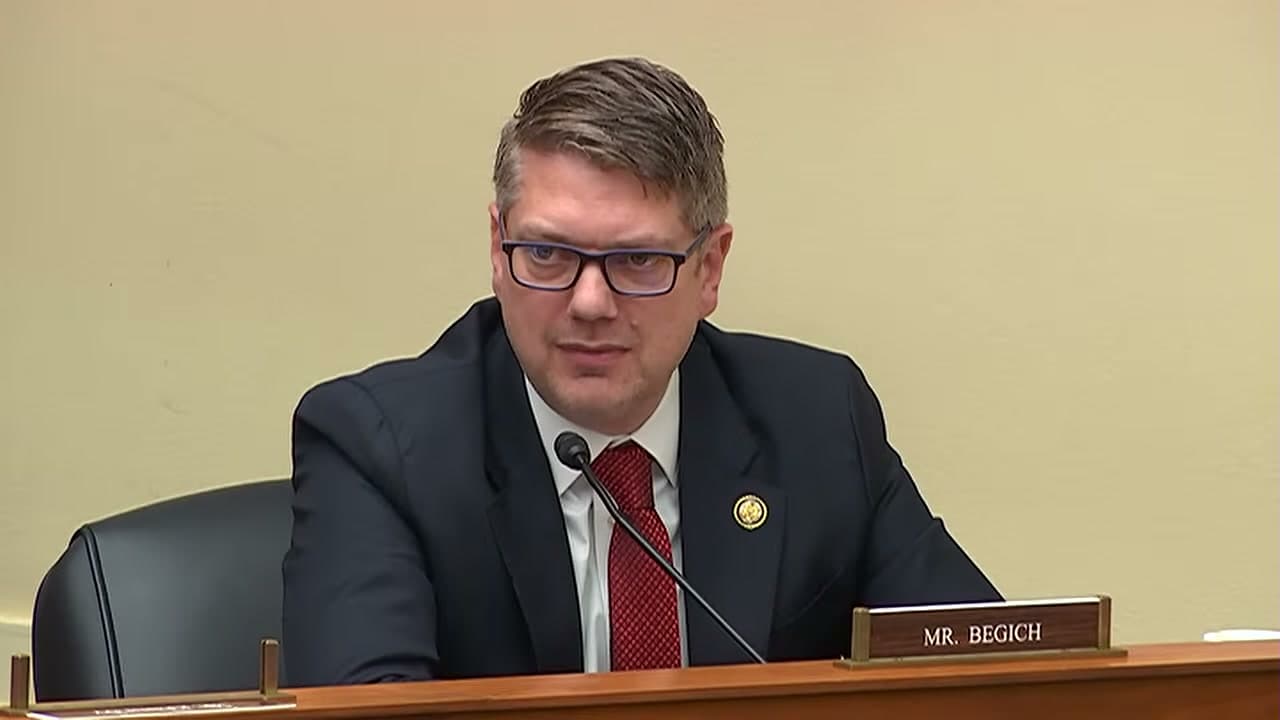
Thank you. Gentleman yields back. And I'd like to recognize the gentleman from Alaska, Mr. Begich. Thank you, Mr. Chairman. First question to Dr. Westlake.
You know, I'm going to pick up where where Representative Hurd left off. What ground-based or satellite infrastructure do you recommend be added to the national portfolio that would improve accuracy and long-range forecasting capability for space weather? Because at the end of the day, I can't analyze data that I never collect in the first place. Yeah, I mean, we have a ground-based and, and infrastructure basically across the U.S. You in Alaska have a significant amount of that, whether it's our communications dishes, the various launch ranges and other things that are going on up there. That's a key capability for us to be able to get global coverage, for us to be able to get our data down.
No audio detected at 1:10:40
A lot of that data that comes through things like the Deep Space Network and other pieces which sort of span the world and our ability to use, you know, this larger satellite infrastructure. And then you'll see the infrastructure as it's been built up in LEO. And things like that are really, you know, adding to the capabilities. And across the nation, you know, some of the things that we've been looking at are things that, for instance, our colleagues at the NSF and other things are looking at, like trying to understand the ionosphere, trying to understand the upper atmosphere from our position here on Earth.
One of the things that deeper history tells us is that there's— There's often events, Carrington event being the most famous of these, that indicate that we need to be doing more to harden our core infrastructure, that the, that these kinds of events in a modern setting would be extraordinarily dangerous.
And it's one thing to analyze the data, it's another thing to create an information product, but they have to lead to action. They have to lead to actual on-the-ground physical infrastructure hardening in my view. What's your view on that? I totally agree. One of the things that we actually saw in the, in the Gannon storm that happened in 2024 was, you know, we were at the, we were up at Johns Hopkins Applied Physics Lab actually running a tabletop exercise on how those impacts would actually percolate through systems all the way down to the local enterprise.
And as, you know, NASA responded, as NOAA responded, as FEMA responded, as other agencies responded, We're able to actually test out all of those pieces of the chain. I think we need to continue to do that kind of activity. I think we need to be thinking about what additional activities run into, you know, how that knowledge chain goes from, you know, the minds of researchers, from the minds of academics into the world of operations, into the world of actionable information. And Mr. Graham, I'll give you the same question. What are your thoughts?
I think, you know, I equate it to, you know, in the early stages of terrestrial weather when we started forecasting, it was global, it was synoptic, it was big scale. And it took a lot of research to operations and understanding to get that to more of a mesoscale and even a microscale. We have got to, as a community, get space weather also down to those type of scales. How does it impact a bush pilot? How does it impact, you know, somebody right there on the ground?
No audio detected at 1:13:20
And I think that's where we have to go, and that's where the these user surveys, understanding that, and these focus groups, getting into these communities to not just say these are the impacts. I think there's a fundamental education that we have to do to make sure everyone understands what those impacts could be. And once you have that education, really get into how to protect yourselves and mitigate those impacts. We really got to lower the scale on those impacts. So I'll stay with you.
Um, the Geophysical Institute in Fairbanks, Alaska, is one of the leading research institutions worldwide when it comes to space weather. As was pointed out by Dr. Westlake, uh, we have sounding rockets that go up. We've got Poker Flats that provides us with that capacity in Alaska. It's important for Arctic space weather, but it's important for global space weather and our developing understanding of what the impacts of space weather can be, uh, terrestrially. Do you believe that the that the efforts that have been deployed and are being deployed right now in Alaska and throughout the country are sufficient?
Do you believe that you're properly resourced? What recommendations would you have for Congress in terms of resources for this endeavor? I think we have to continue to get Congress's and the committee's support to be able to really— it's the end-to-end. It truly is to make sure that we have the ability to have the observations that we need. And think about the research and think about observations we don't have that we, we may need.
So really getting ahead of that fundamental core foundation of the observation. After that, we continue to support the modeling. You look at that, the type of wave, you know, you have to wait till L1 to get to determine that polarity. Well, the countdown is already on, the clock is ticking at that, that point. So we have to start looking at the end-to-end for the observations, the modeling, the but then fully support a ground, you know, grassroots efforts to get down on the ground to say, educate, this is what it is, this is how you mitigate it, and then make sure that we also fund the ability to harden the infrastructure, because that's the last part of it.
If you can't fortify the infrastructure, it doesn't matter what we all do, you still have impacts. You have to think from beginning to end to truly mitigate these impacts. Sir, can I add to that? I know we're out of time. That— so one of the key things in Alaska specifically is that you're dead center in the auroral oval, right?
You have locations on the North Shore, on the South Shore that are subauroral and in the auroral zone, and then from Fairbanks you go directly into the aurora. So when you think about like dead center, uh, space weather, dead center the, the ability to understand how currents actually drive our atmosphere, how all of that works, Alaska is ground zero in that regard, right? We were out there looking at different capabilities from Kodiak, from Fairbanks, and from Deadhorse in the area in the North Shore, and being able to really, you know, suss out and understand the fundamentals of how the aurora work. That's why the Geophysical Institute is so critical in a lot of that. Yeah.
No audio detected at 1:16:20
Thank you for underscoring that, and thank you for your leadership in helping ring the bell on these important issues. It greatly— it's greatly appreciated. My time has definitely expired, and I appreciate the leniency. With that, I yield back. You got it, Mr. Bagich.
Thank you. Now I'd like to recognize the gentlewoman from North Carolina, Ms. Ross.
Thank you so much, Mr. Chairman, and thank you so much to the witnesses. It's been a crazy morning, but we're thrilled that you took the time to be with us. The committee has repeatedly heard from members of the administration, on the President's budget request this year. And gathered here today, we have representatives from NASA and the National Weather Service who are all too familiar with the President's proposed funding cuts and the devastating impact that they'll have on our nation's space weather research operations.
No audio detected at 1:17:20
In previous administrations, the federal government has played an integral role in conducting and coordinating space weather activities to improve forecasting abilities. This committee has also been a key player in guiding our nation's space weather activities, and in 2020, it codified roles and responsibilities across the government with the PROSWIFT Act, as I'm sure you've discussed. Space weather phenomena can damage satellites, GPS navigation systems, aircraft radio communications, electric power grids, and wind turbines. And extreme space weather, like extreme weather on Earth, can disrupt vital infrastructure and have a severe economic impact. As we have seen in the past week, our country cannot afford to take any risks when it comes to infrastructure.
No audio detected at 1:18:00
Americans cannot afford an administration that abandons expert recommendations, trims down critical science programs, and pushes agency work off of this committee and previous administrations. And we should be encouraging more interagency collaboration to build a more resilient tomorrow. Now, I understand from my colleague here that you've talked some about workforce. Um, so after I ask my first question, if there's anything that you have to add about workforce, that would be great. But because Congresswoman Foxxi and I both represent some of the most prestigious research institutions in the country, and those institutions do a lot of work on weather-related and space-related things, I'd like to ask Dr. Westlake first.
The fundamental research underlying space weather that agencies like NASA support are inherently multidisciplinary and do not fit neatly into one discipline, subdiscipline, or academic department. As I said, Congresswoman Foushee and I both represent the Research Triangle. I represent the 2nd Congressional District, home to NC State University, visited the National Weather Service frequently there. What are the disciplines that define your research fields? And how do students encounter this field through, through their academic career?
And what is the state of that scientific research? I'm very concerned that they go to school and then there won't be those good jobs when they get out. So across our research enterprise, I've come through the, through the academic institutions myself. A lot of the folks that we work with inside of space weather, inside of heliophysics, come through it through a physics background, right? A physics background, a mathematics and engineering background.
No audio detected at 1:20:20
One of the things that we've been so proud of in our NASA capabilities has been building that community of heliophysicists, of folks who don't just say, hey, I understand something about our space environment, but I am a true heliophysicist. And we've been able to build that out in a multitude of universities across the U.S., including those in North Carolina. And been able to see, you know, sort of the fruits of that, of that labor as we've been able to actually apply their minds to the research topics, to the science, to the hard tasks that we need. And you've heard from Administrator Isaacman, he's talked about, you know, pushing the boundaries, pushing the edges and finding ways for us to further build that out, whether it be like with the U.S. Space Academy or other things to be able to really build capabilities there. Mr. Grimm, do you have anything to add?
I think looking at, you know, the next generation of meteorologists too, I am excited to say that when we, you know, as we're hiring to have several thousand applicants and many from your district, just the amount of knowledge that they have with modeling and looking at future ways to do services as well. I'm pretty excited about the next generation that we're hiring. So, and it's a different type of person as we transform the agency to get more eye-to-eye with the decision makers. It's having that science, but it's also having somebody that can communicate. And I think that's been the magical recipe to make sure that we get the best decisions in this country.
Thank you so much, and I yield back. Gentlewoman yields. I'd like to recognize a gentleman from Indiana, Mr. Baird. Thank you, Mr. Chairman, and thank you, witnesses, for being here. You know, I've been in agriculture all my life, so I'm interested in the impact of the solar system has on— and you know, we've always been subject to weather.
I mean, you pray for rain and you swear if you don't get it. But anyway, I'm interested, I'm really interested in the impact that has. And Dr. Westlake, you mentioned that farmers in the Midwest depend on precision GPS to plant and harvest crops. And in districts like mine, many producers rely on GPS accuracy to maximize yields and minimize the input costs. And, you know, to put that in perspective, when you've got $1,000 or $1,000-plus an acre, in every acre you got out there, you put 1,000 acres, you got a lot of money tied up.
And so accuracy from weather prediction and solar impact is important because you could make adjustments if you— the earlier you got that warning. So anyway, my question is, What additional research or technologies is NASA developing that would provide earlier warnings or more resilient navigation for farmers and ranchers during those major solar activities that we've had? So, Dr. Westlake, I'll start with you. Yeah, that's a great question. One of the things that I've been surprised with coming to NASA has been the impact that space observations have on the farming, farming industry.
On agriculture across, across the nation, whether it be trying to understand the water in the fields by measuring the local gravity nearby. That seems very sci-fi. That seems sort of a wild topic. But the NASA data that we've used, the NASA Earth science data, the NASA heliophysics data, has been able to do things that increase the yields across the nation. I think for us, as far as heliophysics physicists go, and space weather aficionados, we think about how can I give enough warning to a, to a farmer in the Midwest so that they can have the appropriate amount of planning?
How can I give them a weather report? You know, how can I deliver information that goes to our colleagues at NOAA so they can have the appropriate amount of information to be able to plan their planting season, to be able to plan all of the activity and make sure that the investments that they make in their planting, in their rows, in their crops are harvested in the end because they were able to have that kind of knowledge.
You know, you make a good point because you have, you have the option on the farm to plant longer season corn or shorter season corn depending on what you think the weather is going to be. So that's, that's good. Mr. Graham, during the May 24th solar system, GPS disruptions reportedly caused more than $500 million in agricultural losses. So in Indiana, my farmers depend on GPS-guided equipment to plant crops and to apply fertilizer accurately. So what has NOAA learned from that storm and what improvements have been made to help farmers prepare for similar disruptions in the future?
You know, that event really teaches us that no different than a hurricane where we've increased— we've doubled the lead time on hurricanes in this country through research, decades of research. We've been able to give lead times from tornadoes and droughts and floods. We need to think the same thing when it comes to the space weather program. So we've got to be able to work towards and have the ability to have the observations, the modeling to be able to give more lead time. And it's not easy with space weather because, you know, you start thinking about where the first buoy is at L1, you know, a million miles away from the Earth.
So we've got to figure out ways to be able to detect quicker, analyze quicker, model quicker, so we can get those watches out, just like no different than a hurricane or tornado, to allow farmers to say, "I need to adjust. I need to do this." Because if they could adjust ahead of time, you could probably minimize some of those losses, even if you have an impact at the warning time. And that's exactly right. I mean, we have the ability to make some adjustment, but you got to have an early warning in order to do that. You can't do it just the next day, so.
Uh, Mr. Graham, you know, the— NOAA provides important space weather forecasts, uh, and— but those warnings are only useful if they reach the people that need them. So how are you working with agricultural equipment manufacturers and GPS technology companies to integrate space weather warnings directly? And we've got about 35 seconds, so that's—. Yeah, I'll do it quickly. If you think about the space weather watches and warnings, we disseminate no different than all the other watches and warnings that we have in the Weather Service.
So I think we have the dissemination systems to get that information out there, but we have to as a country get really down to that microscale. We need to fully understand what those impacts— get those folks in a group, understand what their needs are, get that to the researchers so we can convert that over to operational services. That understanding is critical as we start developing future capability. Perfect. You did that in that 35 seconds.
No audio detected at 1:27:00
So thank you very much. I yield back. Gentleman yields. Thank you very much. And now I'd like to recognize the gentlelady from Maryland, Ms. McClain Delaney.
Thank you. Thanks to the chairman and the ranking member for convening this critically important, important hearing on space weather. And it's been a crazy morning, but I'm so happy to be here. I'm a former deputy assistant secretary at NTIA, and I worked actually early in my career for almost 6 years at Orion, an international, um, satellite services company. And I know how agencies face urgent mission-critical challenges with our assets in space.
I believe it's our job in Congress to make sure that civil servants have the resources and expertise necessary to meet those challenges, including interagency relationships to make government work better. Earlier in the year, when this committee voted on the NASA Reauthorization Act, I introduced an amendment to do just that. And I should say that I represent Maryland 6, and it's Maryland research institutions, NASA Goddard and, and obviously NOAA. And my amendment would have strengthened coordination between NASA and NOAA by establishing an integrated program office at the Goddard Space Flight Center in my home state. NASA and NOAA builds and NOAA operates our international satellites to provide weather forecasts, as we talked about.
Um, but building on Rep. Ross's comments earlier, the actions of this administration have stripped some critical funding and capacity from our government agencies, and these cuts have hurt some of our communities in my district and across the nation, but they've also drained some agency resources necessary to create jobs and advance weather capabilities. And I have to say, I commend the civil servants at NASA and NOAA. They are unbelievable in what they do for our economy and our national security. So, Dr. Westlake and Mr. Graham, how do your agencies work together? Ensure that our assets in space are maintained and operational when we need them?
And how has that partnership changed in the past 2 years? And Dr. Westlake, how do heliophysics experts at Goddard, uh, what do they need in order to advance new capabilities? You get like 90 seconds, then I've got another one. Okay, I can, I can go at this one. Um, so, you know, when I think about the work that we're doing at NASA's Goddard Space Flight Center, especially the work that we are doing in heliophysics, that is the, the largest collection of heliophysicists that we have in the world.
It is our center of excellence in this. It is, it is the work that we are doing on a daily basis. And that team is more dedicated than any that I've ever seen. They are so wonderful to work with. Our Moon to Mars Space Weather Analysis Office there at NASA Goddard, they supported our Artemis II launch.
They supported— they've supported all of our missions as we've gone forward. They supported you know, the Nancy Grace Roman Space Telescope launch. They supported all sorts of different things. And that's been really essential to work with those folks. But I'll talk a little bit about the NASA-NOAA collaboration, which frankly, in my opinion, hasn't been better.
You know, we speak on a regular basis between NASA Space Weather, our Space Weather Office, the folks sitting behind me, as well as into the Space Weather Prediction Center, into NOAA NESDIS. And we try to work across those boundaries so that we can get something better done on behalf of the American taxpayer because we are working together in that goal. So I applaud that effort. And I think our teams are doing much better these days than we ever have in that regard. That's awesome news, Mr. Graham.
And I was just humbling—. 20 Seconds—. Humbling to lead this agency. And I'm just so proud. And it's not just meetings where we get together and say, hey, here's NASA, here's NOAA.
We are in the testbed together developing products and Services. We exercise together. The Gannon storm, we're in the same room when the Gannon storm took place. But the other part of it is we deployed to Mission Control, like we're intertwined with Artemis II to get the job done. I think that's cool.
I think it's the best of government, and I really—. Awesome, that makes me happy. Okay, national security, um, understanding and predicting space weather is scientifically valuable but critical for national security. Like we predict hurricanes, you know, we also need to be able to predict when solar activity might threaten critical infrastructure. Solar activity can impact an electrical grid or telecommunications equipment.
NOAA and NASA need to coordinate with the Space Force, the National Reconnaissance Office, and other parts of national security. In the past week, you got a taste of the impacts telecommunications systems can have. Hours of ground stops at FAA last week was caused by malfunctioning telecommunications infrastructure, and two days ago, the communications systems at the National NSA went down. These specific incidents were not weather-related or space-related, but they do highlight the need for putting in backstops and understanding how consequential space weather can take down communication systems. How do NASA and NOAA currently coordinate with national security agencies on space weather concerns, and what can Congress do to make it more effective?
You got about 30 seconds, maybe 40, 22. I'll take half of it. I think it goes back to the way we're doing the testbeds. We have also DOW in there. We have FEMA in there.
We have— it's not just us together in the testbed and these exercises. We're all there together. And part of NOAA's, you know, charge here and the Weather Service, we have a public safety and national security mission. So with that, we have the right people in the room and we're exercising and practicing before the big one. I might follow up with another on the record afterwards about that because it's really important.
I just want to say thank you for coming, and I know the importance of resilient communication systems. Um, I yield back. Thank you. Gentiletti yields back. And, uh, what a fascinating, uh, bunch of questions and answers.
I want to thank you both again for being here, and I'm very satisfied that your two agencies are working together. And I think one of the most sobering things I heard was, Mr. Graham, you were Brian Babin, head of the National Hurricane Center, and I heard you say at the beginning of this hearing that you're much more concerned and fear of solar events than you are of natural storms. Very sobering. Okay, I want to thank our witnesses for their valuable and fascinating testimonies today, and members for your great questions. And the record will remain open for 10 days for additional comments and written questions from members.
No audio detected at 1:33:00
And with that, I'd just like to wish everybody a very, very happy and blessed Thanksgiving and safe travels. Glad we had this, this hearing. Thank you.
No audio detected at 1:33:40
No audio detected at 1:34:00
No audio detected at 1:35:20
No audio detected at 1:37:20
People in this meeting
April McClain Delaney
Brian Babin
Chairman · Committee on Science, Space, and Technology
Gary Stevens
Senator · Alaska State Senate
Nick Begich
U.S. Representative · U.S. House
And 7 more speakers.