Cordova: November 12, 2026, Special Meeting & Budget Work Session
Alaska News • • 138 min
Articles from this transcript
Cordova council members back 10% facility fee for youth nonprofits, down from 25%
Cordova council backed a 10% facility fee for youth only nonprofits like Little League and the Iceworm Swim Team, down from a proposed 25%.

Cordova council approves no-bid contract to replace Public Safety Building boiler
Cordova council skipped competitive bidding to hire Caliber Mechanical for a Public Safety Building boiler replacement, citing urgency. • Boiler serves jail, dispatch and law enforcement, with a rough $65,000 estimate floated earlier. • Council also waived its buyback right on Lot 4A so owners can sell to a new buyer.
There might be a setting in the— like in the YouTube, so I don't remember how I turned it on last time, so maybe it's—. Sure.
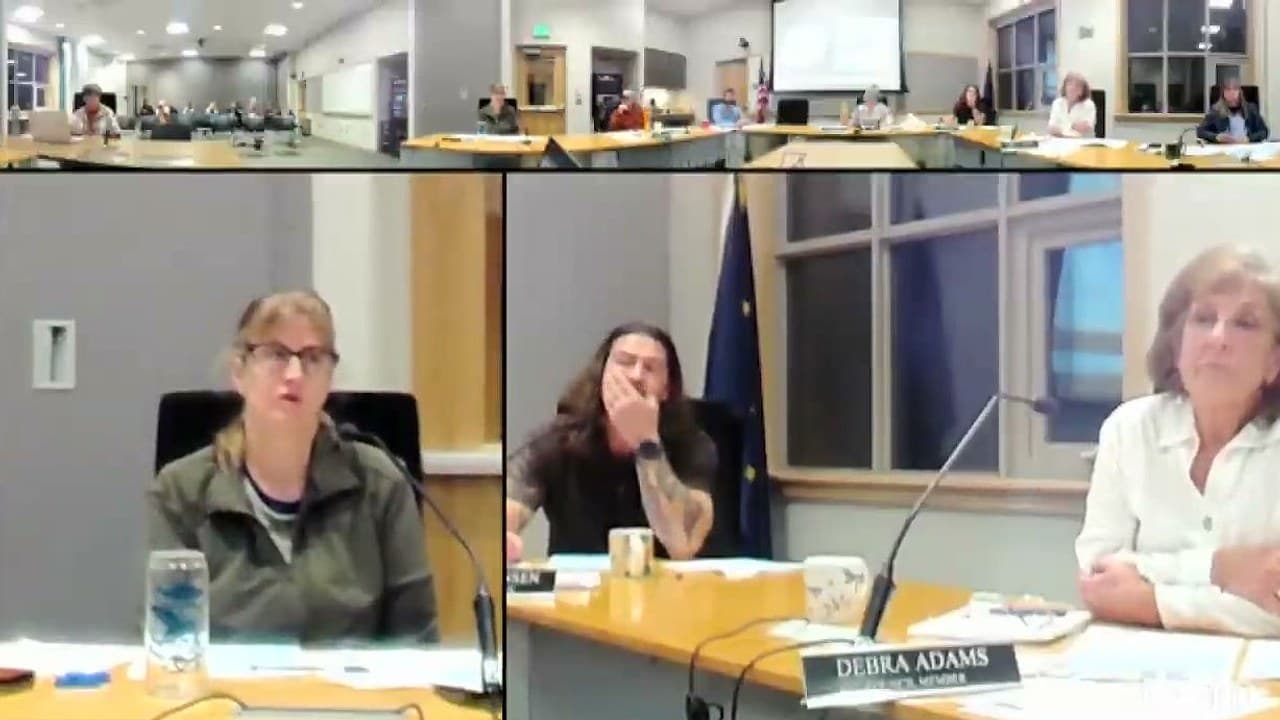
We're going to call the special City Council meeting of November 12th to order. Can we get a roll call, please? Mayor Smith is absent. Debra Adams? Here.
Lee Collins? Here. Aaron Hansen? Here. Kasey Kinsman?
Here. Mike Mickelson is absent. Wendy Ranney? Here.
Okay, um, do we have any— hearing none, we'll consider the agenda approved. Do we have any disclosures of conflict of interest or expert— okay, uh, communications by officials Visitors, do we have any audience comments on the special meeting? Not the work session, this is the special meeting. So it would be on Resolution 112634, the council lot 480, lot 3, USS 3345.
Nobody's rushing the stage, so we'll call that clear and move on to new business. Next, for new business is Resolution 11-2634, Resolution of City of— Council of the City of Cordova, Alaska, authorizing the city manager to enter into a contract with Caliber Mechanical for public safety zoning trailer replacement, heating and repairs. Madam Chair, I move to approve Resolution 11-2634, a resolution of the Council of the City of Cordova, Alaska, authorizing the city manager to enter into a sole source contract caliber mechanical to obtain and replace the public safety building boiler and perform associated repairs and inspections.
Okay, we have a motion and a second. Member Adams, do you—. It—. This comes with a pretty hefty price tag. However, I don't see that there's an alternative.
We need to exploit And I think the rationale that with timing, considering timing, and also considering that Caliber Mechanical is familiar with the building boilers, that we should follow through.— Do you have anything to add?
Uh, no, just thanks to staff for, I mean, outlining it. They, they answered all the questions I had. So I think it's no secret that I definitely support our, uh, EMS firefighter team. So, and even this looks like it also will affect, and, and, uh, this boiler supports jail and our law enforcement as well and dispatchers. So Unfortunately, I guess fortunately it's timing, I guess, but also unfortunately of the timing.
So you make it happen. So thank you. No, okay, okay. Um, if that's all the comments, we can move into a voice vote.
So on Resolution 11-26-34, all those in favor of approving the resolution of the City Council, say Cordova, Alaska, authorized the city manager to enter into a sole source contract with Caliber Mechanical for public safety building boiler replacement and associated repairs. Say aye. Aye. Aye. Aye.
Post, Sam? Aye. Aye. Got it. Okay, we will move on to Item 3, 3, 3, Item 3, which is the decision on right of first refusal.
So if we could get a motion.
I move to waive the city's right of first refusal for Lot 48, Lot SS-3345 to allow, uh, to sell the property to a third party who submitted an offer to purchase the property. We have a second. Okay, Council Member Zastrow, to your motion. Yeah, we, uh, we spent a lot of time on this, um, helping the, uh, proponent to plot the property, get it into a condition where it's They did a lot of pre-work to that as well. It's pretty ready to build on.
This is not something I think the city wants to or can afford to take back. Why would they? They would buy it and move forward with building on it and add to our tax structure.
So, Member Collins.
Yeah, similar, similar feelings. The city, there's a need to buy this property back. I know it's another— there's an interested party who's still willing to sign the, the same agreements the previous owners did. That's a positive. Yeah, hope something will continue on that lot.
Um, and something to note is the right of reentry does require anyone who purchased the property to stick with the substantially, um, completed timeline that was set up with the previous buyer. So that will still need to be followed through, whoever purchases. Um, Council Member Hansen, you— The council member Kinsman. Yeah, thank you. A couple questions.
Um, I'm in favor of it, I just— some points of clarification. One, are we owed any money from this piece of property? I think that was all settled, correct? I was trying to review some things, but we are not owed Amanda's gonna come up for the next question. Okay, no, that's great.
The next question is for the design. I know the timeline sticks the same. Is it required for the third party to build exactly the same structure, the same plans?
Not exactly the same structure, same plans. They can go better. They just can't go smaller than we agreed on. Okay. And then I guess this is probably for Susan, the clerk.
Are we going to take this sale into consideration when we do property evaluations next year? I know it's difficult given the state laws and statutes to get any kind of property value. Just curious if this will be taken into consideration. Assessors use every single sale that they're able to get a full value of the sale. Yes, they will use it.
Okay. No, I think that's great to see that they've done— they have done a lot of work on this property as I've driven by. I've never gotten out, but just driven by. So that's great to see and a heck of a return on investment for them. So, and hopefully we can see us getting closer to 100% of property and home values as we have access to some more of these type of cells and information on cells.
So that's all I have. Again, I'm in favor of it.
Any other comments? I just have one question. Councilmember, can you refresh my memory? What is the timeline for a substantial completion? Construction.
On this one, it's 5 years, and that's from, I believe, January 2nd. So it'll be January 2nd, uh, 2031. So does the 5 years start on signing the agreement? Okay, so it doesn't go back to the original purchasers, it goes to the new purchaser, has 5 years? No, it, it goes back from the, from the original contract that we signed.
So they have until January February 2nd, 2031. So that's 5 years from, uh, when Mayor and Kylie signed. Okay, thank you. My comments, I mean, at this point the property is cleared and ready for build. I'm just pleased to see something's going to be going on because there's a huge wind tunnel there.
Having all those trees down, it would be a shame to not— for the other property owners in the area— to not have a building go up to be able to block. So I'm just happy they were able to find a buyer to take it over, probably deal with their issues.
Um, okay, so if there's no other comments, I think we're ready for a voice vote on this. So all those in favor of waiving the city's right of first refusal for Lot 4A, Block 3, USS 3345, Diana Rydell and Kyle Burton sell the property to a third party. Purchase the property. Say aye. Aye.
Opposed? Same.
Okay, and that is approved.
Okay, moving on. There is audience participation for this special meeting. Again, this is just for the special meeting happening right now. Do we have anybody who would like to to pieces of business that we just— Well, audience participation can be anything. Oh, it can.
Okay. Or if y'all want to talk about anything, come on up. We know you do.
Oh, come on.
Nobody?
Is it me? Okay. All right, no executive session, so I just need one other thing for this special— Even registered. Taking a minute. Okay, switch it over.
He's gonna try to get in. Yeah, hard crash it. Like pull the power out of the— like hard crash it or reset it.
No audio detected at 13:40
No audio detected at 14:40
No audio detected at 15:10
No audio detected at 15:40
No audio detected at 16:10
No audio detected at 16:40
Ready? Yeah. Okay, we will call the City Council work session of November 12th to order.
And you could make a roll call, please. Sure. Um, Mayor Smith, leave absence. Debra Adams. Here.
Lee Collins. Here. Aaron Hansen. Here. Kasey Kinsman.
Here.
Wendy Ranney. Here. David Zastrow. Here. That's a formal council.
Um, so one more time, because this is more people than we usually get, if anybody has any comments that they would like to make on the general fund or the fee schedule Please come forward. You have 3 minutes, and we will hear that now. Otherwise, we're going to move forward.
My name is Sherman Powell again, and I'm here again. I don't have a real prepared speech this time, just to quickly say that I'm opposed to the increases in the fee schedule. I don't think this has been looked at enough. The field fees for the league are set to be the highest in the state, and the numbers that we're seeing right now are not— they're a baseline. It's going to only go up.
These are for all fields. My wife runs practices with her when she coaches a team, and the kids need to learn at some point how to slide. You can't slide on the sandlot. You can't get a kid to slide 15 feet times and get the sliding motion down on the sandlot, the gravels. Will hurt them.
So if she takes them over the grassy field, that will be an additional charge under this fee schedule. So what we're seeing and the estimates we're seeing are the very base numbers for what Cordova literally will be paying, which again will be the highest in the state. I'd also like to point out that the kids are not pooping on the fields. People's dogs are pooping on the fields. That's a different user group.
Keep going, I said it wrong. That is a different user group that's as adults with, you know, or even with bad manners having dogs. That's not children. And so the children are being asked, the families with kids are being asked to pay for a user group of dog poopers. So that is unfair and it's not being looked into.
So I just want to reiterate, I don't know the nitty-gritty of it. It appears like the labor costs are out of control. I would like the city to seek an MOU, um, with Cordova Little League. I've heard both sides of this, that communication broke down sometime between the spring and now. I was busy fishing, so I didn't pay a lot of attention to it, but I've heard both sides accuse the other of a breakdown in communication, um, and I just want us to be the adults in the room and to help kids have Little League season.
No audio detected at 19:40
Um, any fee increase— baseball for me is very fragile. There's 9— you have to have 9 kids on each team. Little League won't let you play a game without 8 kids on each team, or on a team. So there's 9 on one team, you could have 8 on the other. Um, and you can't record a game if that— those numbers fall below that.
Every—. $16 Is not a lot, but that's money that fans could put towards a glove. It's money that might tip the scale of I'm I don't want to pay for this. And then those kids don't play. And if we don't get kids playing, then none of the kids play.
So that is just— I have continued opposition to the fee schedule. I think it is out of the norm for the state. And I think you're seeing some of this in the lower 48, uh, where there's a rise of competition for field use among, uh, like for-profit travel ball teams. That, that's not a problem here. Down there you're getting these teams that make money there doing it.
We're not having that problem. My 3 minutes are about up, and I just want to thank you all again. And yeah, look forward to hearing more. Thank you. Thanks.
Anybody else?
I'm Pete Hefner, 100 Orca Circle, I believe, is my address. I'm here speaking on the behalf of the Cordova Family Resource Center. I'm the board Nicole is up in Anchorage at ANDBSA, Alaska Network on Domestic Violence Sexual Assault, meeting. Good evening, City Council members. On behalf of the Cordova Family Resources Center, I'd like to sincerely thank the City Council for continuing to include the $10,000 funding allocation for CFRC in the city's budget.
We recognize the difficult decisions involved in balancing the city's financial priorities, We truly appreciate your continued commitment to our organization and the individuals and families we serve. I want to emphasize that the city's $10,000 investment goes far beyond the dollar amount itself. Uh, this funding helps CFRC maintain essential operations while strengthening our ability to secure additional funding through the state, federal, and other outside resources. Several of our grants require a 15% match, which could be met through the combination of eligible cash and in-kind contributions. While in-kind support is extremely valuable in meeting these requirements, having direct financial support from our local government demonstrates community involvement or community investment and strengthens our position when competing for outside funding.
Today, CFRC is fortunate to receive funding from a variety of sources, including the Council on Domestic Violence and Sexual Assault, which has 2 grants supporting victim services and prevention. We have a grant from the Alaska Housing Finance Corporation, 2 grants supporting the Basic Homeless Assistance Program and the Next Generation Stabilization. Denali Commission, we have a capital improvement funding. We have a congressionally directed funding through Senator Murkowski which supports CFRC's facility and service expansion efforts. The Rural Health Transformation Program grant, which is a recently awarded grant through a highly competitive process with approximately 200 applicants selected from more than 1,800 applications across Alaska.
United Way of Valdez, the DART with the UAA, Cordova Community Foundation, Alaska Community Foundation, and multiple other smaller grants and community funding opportunities. These funding sources allow us to bring a substantial outside resource into Cordova to support victim services, emergency housing, youth prevention programs, family support, and other essential community services. However, securing these grants is only one part of the process. Maintaining them requires ongoing financial responsibility, local partnerships, and the ability to meet matching requirements. The city's continued financial commitment plays an important role in helping CFRC sustain and leverage these resources.
Again, I'd like to thank everyone at the city for their many forms of in-kind support throughout the year. The Cordova Police Department, with assistance of the Girls on the Run, let me run events, the fire department for donating space. And we appreciate the city center for the annual dinner, along with the city's ongoing willingness to collaborate through MOAs, letters of support, and other participation. And I had a little bit lengthier— I'll go ahead and stop this quite a bit. CFRC really appreciates the support of the city, and Nicole is unbelievably hardworking.
Reaching out and getting all sorts of grants for the organization. Thank you, Pete. Thank you. Thanks, Pete.
Anybody else?
Good evening, uh, my name is Mike Glover. I live at 508 Third Street. I just had a couple things. One, I came down in part because I wanted to speak to the fee schedule and just to As a community member who has seen the benefit of our Little League and the impact that it has on students, that it has in our community, and that it has on families, want to encourage y'all in the midst of an unenviable task of trying to make the budget work to try to say, how can we make sure, especially when it seems like there's a breadth of volunteers who are eager to help lower the city's cost by helping with maintenance on the fields wherever, that it feels like there could be some common sense arrangement to say we can lower the city's costs in exchange for doing that. It may have been addressed at something else.
I was also just personally curious, looking through the budget, on the facility utilities. The professional services went from $20,000 to $89,000. This year, and I was just curious as to the reason for such a large increase. Um, that is on page 16, the second from the bottom on the account there. Um, and so I was just personally curious as to that, um, of why such a large increase on it.
But again, I'll cede the rest of my time. I, I appreciate the work y'all are doing, and I just wanted to speak on behalf of the Little League and try to make sure that we can keep that as affordable as possible for all of our families. Thank you very much. Thank you. Thank you.
Um, the mayor, as far as, uh, the additional—. Use your mic.
Um, we got an additional bit of information, uh, from Public Works about the Chase Avenue proposed, um, work. Where do you want to fit that into this, these topics? You want to put it in? So maybe we should start with— we'll start with the budget and then we'll go to fee schedule, so you know what order we're talking about things in. Um, I think generally what Cheryl and I would like to talk about first, and then we'll be open for any question you want me we'll just answer them now and move on.
So after that, yeah, so I was just, um, wanted to make sure we're still on board, everybody's on board with the timeline. So this is our 11/12 work session special meeting, wrap up of general fund and the fee schedule. Now is the time to let us know because at the next meeting we're trying to have a final budget so that we can do our special advertisement and then we can pass it on December 3rd.
Second. Second. I got it right once. Last year, December. So just want to make sure that we understand how we're moving forward.
It is an extra amount of time to advertise, so we simply need to be coordinating that. And I think everybody would love to have Thanksgiving week off, but you all will keep talking about it. Oh my God.
Um, and then do I miss anything, Cheryl, on that? Yeah, tonight's the night to hash this out. Yeah, there's anything.
So, um, I believe this is Kevin got this back there over there too. Yes. Okay. Um, so yes, we did get a write-up from Kevin. It is on the table over there.
And if that's the first question, we'll start with anything. No, no, Kevin.
Well, you might be on first.
Um, just a couple questions. Uh, I just start out with just a general question about, uh, Chase Avenue. When was the last significant construction or heavy maintenance that was done on that I believe it was '84. It was the '80s though, '83 or '84. That was the last time it had its last major rebuild.
1884. I agree. And, and since that time there's all that subsiding occurred a little while ago there. Um, you noted in your write-up that there's likely going to be some contamination there. Was that the from the last time?
Maybe there's no information from the last time the work was done out there. Is that where you're getting that from, or just there's assumption there's going to be? We don't know if there is, and that's why we want— that's one of the many reasons we want to do this exploratory work. We know that there was contamination at the Roundhouse site, which was located on Center, um, and that did obviously, you know, it wasn't just contained there, it seeped out. And, um, the state and, um, other entities did a huge cleanup effort.
And I mean, that specific location is considered close from the environmental perspective. That doesn't mean that there's not, you know, contamination on the fringes of that area. Also, with the landfill being where the park is now, you know, we don't truly actually know what the extent of that is, how much of that, you know, got over into the Chase Avenue area. So this would allow us to have a better idea of if there is contamination, because if there is contamination, you know, we've all seen what happened with the Netloff Building. It goes from a mildly expensive project to a terribly expensive project.
Yeah. And so we kind of need to know that information ahead of time. So when we are applying for grants in the future, first, we're applying for the correct amount of money, and we have that background information to show the funders that we do have an understanding of what we're getting into. Sam had applied for a grant of $1.4 million for Chase Avenue. When she was in the public works director's position.
And the state did start doing some looking into whether they would want to fund the project or not, but because of the unknowns, it was one of the reasons we got heavily dinged and didn't get to move forward with grant funding for a rebuild on that project, on that street. Excellent, excellent. Um, so you're looking at Dow doing the investigation, it sounds like? Uh, Dow would be the ones doing the report analyzing the test results that come back. They're the company— so the TCP grant, the Tribal Communities Partnership grant, it's a layered grant.
So the main grant was awarded to Alaska Municipal League. Then Alaska Municipal League found multiple contractors that would be part of the program. And then when we were awarded grant money through that program, We were allowed to request which of the many contractors we'd like to work with, and since Dowell has done a lot of work in Cordova, including they're our main contractor, our consultant for the Second Street rebuild, they have pretty good knowledge of the area. And so we decided that it was best to work with them since they already have history with us. Yeah.
And you're— as you're saying, Alaska, in this fully, they would be— so for a second round of funding, they would be handling those funds, they would be distributing those funds. They're handling all the administration of the grant itself. We are a, what they call a subrecipient. So we're basically, we get all the benefits with none of the administrative headache. Yeah.
And the hope is after this amount of funding, what we get through the second round, that should produce a position where we have a bit of a shelf project to go out there from there. Yeah, it would give us, the end result is we're going to, we're going to receive both a report on what sort of, um, environmental conditions were found when it comes to contaminations. Um, if any are found, what we would need to do to mitigate them, whether they're low enough grade that they can be dealt with, with the in-state facilities, or if they are heavier contaminants that will need to be shipped down south, which is where really where your project costs start skyrocketing. We start shipping. Yeah.
And then also they would be looking at the, uh, the actual subgrade the base material of the roadway. Again, you pointed out there's the whoopty-whoos by the hospital. So we got to figure out why is that settling occurring? What's it going to take to rebuild the base course to actually eliminate that in the future? And then in that Center Drive and Chase Avenue intersection, we've all seen the pretty bad potholing and erosion of that road there.
Our assumption is it's a pretty high groundwater area because that is a pretty low elevation. It's pretty much flat with heading out to the lake. Yeah. And so we need to figure out, you know, what is the groundwater issues, what is the drainage issues, so that when a project does go toward design, we can figure out how to mitigate those issues so that we don't have continued, uh, poppling and erosion. Yeah, I mean, during the uplift of '64, before that, yeah, it was a lot wetter over there.
Yeah, yeah. And it's still pretty, pretty wet in that area. Yeah. I think a recognition to you that that's the access to our emergency hospital. Yeah, and that's something that when we do apply for grant funding in the future, we're going to lean heavily on, you know, it's the access road to the hospital.
So we need to be able to get patients there safely without, you know, taking them on a roller coaster ride while they're already dealing with whatever they're going through. Um, we'd also be dealing with utility issues. Um, right now we don't have a way to shut off the water in the area without cutting the hospital off from the water. So we would be installing a looped water system so that we could shut the water off on one side or the other, and the hospital could continue to have water while we shut their water off in one side or the other to do work that needs to be done. So when we had that water main blowout, I guess maybe it was last year down by Wilson's, we had to shut that entire street off and had to coordinate with the hospital.
Luckily, they have a backup water tank for these types of situations, but again, that water only lasts them so long. We were lucky that it was would repair in that situation. Thank you, Madam Chair. I mean, worst case scenario, I'm being, being fine with all kinds of contamination. Would that preclude this project becoming far too expensive for a grant?
That would be the decision of a future council once we are able to apply for a grant. This project isn't going to be something where, oh, we find contamination, stop doing it. We're doing this to know what are are we going to get into in the future? And so, you know, we'll apply for grant funding, and then if, you know, we find out, okay, because of these contaminants it's going to cost $50 million, and we're going to have to pay 10 to 15% of that, whatever the grant match is at the time, the council at that time is going to need to decide, do we just let the road continue to deteriorate and we just keep patching it, or do we move forward with the project? But this is what's going to at least give us a better idea of what is that, you know, rough order of magnitude of the project cost in the future.
No audio detected at 37:10
There's, there's also cleanup grants that, yeah, with a little more information, we would understand where we fall in the line of work for cleanup. So that's important too. Is there, is there a potential for like a Pandora's box? Like we find out all this and then we have other projects that are taking funding all of a sudden now we know this area is contaminated, do we have to move quickly to clean it up? And I mean, what's— are we opening a box of—.
I mean, until we actually would do a project where we're ripping the road up, that's when we would be forced to do anything. As long as it's being left in an as-is condition, it's not a situation where we would be forced into doing a cleanup effort. Okay, at least that's my understanding. And one other question is the timeline for drilling and, and looking and investigating. What are we looking at?
So the grant requires that all of the grant money and work be completed by the end of March.
Okay, and we can drill in the winter? We have to—. Yeah, we have, we have checked with the company that gave us the quote for the doing the core sampling. And they said that winter conditions aren't an issue.
Yeah, they're basically taking a big hollow drill bit, just going down into the ground, pulling a big soil plug out. And so whether it's frozen or not, they can still get the information out of the material that they pull out that they need.
Any other questions for Kevin? Kasey, do you have anything?
No, I think this is really well planned and thought out and a great opportunity. I mean, that's— and I appreciate what the city's done to put together a very creative way of how we can pay for this, or mostly pay for it. So I appreciate that, appreciate the efforts. And again, my questions were answered in reading through your memo, Kevin. So Great work on that.
Thanks, Mike. There is a copy of this memo over there, and that should answer your question about that line item. Okay, thank you. Yeah, um, and I guess just, you know, assuming that there's no other questions, kind of like Kasey just said, my biggest point would be that whether we do this now or we do it in the future, this is information that we're going to need to have at one point or another, and now's our opportunity to have almost half of it paid for by somebody else.
So sounds like a no-brainer then. Uh, Council Member Ranney, is there any expiry on this data or information? I would assume no, but I just want, you know, if it takes 20 years before we can actually get the funding, or we know how long it's taken us to make progress on Second Street and White Shed, so Just want to verify that. I don't have an exact answer to that question. I think whether it would be considered expired or not, it still gives us the information that we know it's there.
There just might need to be an update at some point, and it would potentially not have to be as intrusive of an exploration because we would already have gotten most of the information. The information related to like the subgrade when it comes to settling and drainage and that information, that's always going to be valuable because those conditions aren't likely going to change. What may need to be reinvestigated is the contamination, if any is found. But again, that'd be a lower level of investigation at that point because we would know what's there and it would just be reconfirming what are the levels at that time. Yeah, thank you.
No audio detected at 41:10
Okay, yes, so I guess We're just open for questions. If anybody has any questions on what's in your packet on the budget part of it, just let us answer them.
I have a couple questions.
So the rural school funding, uh, I know that the school's fiscal year is different from ours. So 26 was passed, we were going to receive local school funding. Was that already received or will be received?
No, this is just questions kind of outside of—. The, the revenue that we receive isn't from the school district, it's a federal Correct. Federal funding. Um, was that for the year what we received in '26? Was that for '25, or—.
Yes, we received 2 years' worth in '26. Um, and it was '24 and '25. And currently it is not on the federal—. It has not been approved for '26. They're '26.
All right, '26.
So we're not anticipating it again. We're, we're—. I, I, I was under the impression that Congress passed '26, not '27, but I could be wrong.
The timing of years is really confusing, but the last time that we checked on what we would be receiving in '27, that has not been passed. And I could be misstating whether that was '26 or the federal '27. Because timelines are different, I don't know. Yeah, right. Yes, because their fiscal year is different than our fiscal year.
And then there was a lot of back and forth when they stopped and then they combined, reduced. So, but what's been approved from, from the last time I checked, which was like a week and a half ago. So unless it something new has been approved, but I don't think any federal funding has. It was, um, the amounts that we had received this year already in hand. Um, and then based on direction from Council, we were being conservative and not, not planning on something we did not know and that has not been reliable.
Absolutely. And so when we receive technically reimbursed in, right, for the, the school. That's what they're funding us for.
The rural school, they're funding them in our budget. It's under forest receipts, and a portion of that is for schools, yes, and a portion is for streets, public safety, um, one other thing that's slipping my mind. But it's not a reimbursement per se. It does go towards what the city has already funded, um, our, our annual contribution to the schools, um, insurance on the buildings. It, yeah, it goes towards that in a variety of ways.
It's not a direct pass-through. It's an interesting thing. Siguro School is based on, of course, uh, timber receipts, right? And then most recently it was funded through the Farm Bill. So that funding comes from a variety of different legislations.
There's a metric that's used to determine what each geographic area gets. But yeah, I don't— there's not that I— there's no mechanism that I know of so far that's been approved for funding.
Dave, did you have any questions on the budget?
Maybe just some comments, I guess.
As we set out initially, we have some, some things that we were going to hold to as far as maintaining a budget that kind of kept us, um, steady and current with last year. Um, I'm, I'm happy to see that we're looking at the different, um, maintenance needs, operational maintenance needs, um, and in particular staff needs. I— one of the things I think about, we're going to keep current, try to hold our own, get through the next fiscal year so we're better prepared for 28. That also includes staff, and I was happy to see a little bit of funding in there for staff to maintain certifications and that type of thing. So when we talk about— Council Member Hanson is always bringing up operational maintenance needs.
No audio detected at 46:10
We don't want to— we don't want to have that be zero because that's what's going to create deferred maintenance needs and a capital improvement need. Then it's the same thing with personnel. We got to make sure we're getting our staff the required trainings they need so they stay current with certification, especially when it comes to public works and things of that nature. So I was happy to see there's a little bit in there. My question, I guess, would be, as we look at those things— facility maintenance, for operational costs, for staff needs— how do you feel about what's in there right now?
Does that keep us at least at an even keel going into the next year? Kevin, I mean, I want to talk about one little point that you just mentioned. Operation and maintenance is a very different thing for different departments, and I'm going to use the library as an example because I think it's a good example. So they have some travel money in there that they haven't had in the past, and the reason is to go to training that will help them in their maintenance of their books and their things. You know, it's not all about getting PM checks on the boilers and those kind of stuff.
It is important in a variety of ways, and some of Samantha's training for lifeguard and that good stuff is Terry, yeah, it's awesome. I mean, this kind of thing. And so I'm glad they brought that up because it is—. We try to do—. And Sydney, you know, has some dishwasher issues, and which is more of an operational maintenance thing that you think about, but you know, everybody has it, and sometimes it's just a little bit of a different way of things.
I don't know where you get to fix— of course, you didn't clean most of this. So I look at that, I don't want to misunderstand people, misunderstand, or, or, or council misunderstand what I'm saying is what's needed, not fluffy happy, you know, going to symposiums, you know, these are requirements to stay current, be able to do their job. I think the police budget is another good example of that. They have fairly large— they always have a very large training because they have to be certified in a lot of things, but they also have to send unwilling to, uh, train you. Um, it's not academy because it's going through the university because one item in her original, um, certification wasn't met, so she has to go through the whole thing.
No audio detected at 48:40
So it's, you know, those things we never know are going to happen. So it's—. We were able to get some, um, required training in and some, um, development and event, uh, evidence training, which is really good.
So Kevin, how's Public Works? Well, they got the list. Yeah, I guess you asked specifically about facility maintenance. Are we talking about, uh, page 17 of the budget, or were you— which specifically? I, I guess I was just, um, 17, yeah, facility maintenance for cities, 51 or 5, and there's a whole list of things that would be upgoing, parts repaired equipment maintenance, right?
More predictive structure maintenance, the $40,700. I think you touched on that last time, but that was, if I remember right. Yeah, so the, the main, the main item that's in that line item is we have a, uh, preventative maintenance, uh, contract with a company that handles all of the, uh, overhead doors, like the, the bay doors We have, say, 20-something. They also do the sliding doors as well. So that's a large chunk of that.
No audio detected at 50:10
And that's— you can see our number for that line item is usually in the $20,000 range. There's—. Can you just tell me where that is? Page 17. Page 17.
Yeah, structural maintenance. Um, let's see, there is additional, uh, money in there for some repairs of the Prince William Sound Science Center— old Prince William Science Center roof. Um, there's been, uh, persistent leaking in that building. If we're ever going to, um, rent it out again, we need to make sure that it's not falling into further disrepair. Um, it's probably also a conversation that we need to have next year also, is do we also maybe instead of just putting money into that building continually, if no one's going to rent it or we're not going to rent it to someone, do we just tear that building down?
Right, that's a different conversation that we can have during next year to then discuss for the '28 budget. Um, but there's also money in there, there's light, um, there's some lighting repairs, um, and things like that. So, um, you know, as for the staffing, I mean, I would— I do want to point out, you know, it says 2 full-time employees for that, um, that division. Um, you know, not discounting what anybody does, uh, one of those employees, their main focus is on facility, um, like daily clean, you know, so cleaning the bathrooms. Same, they do the public safety building, they take out the garbage, uh, clean up after events and things like that.
That is their main duties. So which means we have one employee that is truly actually responsible for facility maintenance. And I just want to make sure everyone's aware, he regularly clocks 90, 95-hour pay periods. I mean, he is a salaried employee. So he is just very dedicated to making sure that this— the structures that are within our care are kept up.
And so it does say two full-time employees, but realistically, we have one employee that's putting in at least usually 90-hour pay periods, uh, to do what he can to keep up the maintenance of these buildings.
We got in some temp, extra temp. Um, yeah, we did put in some temp. You'll see the temp employee last year, we had only put in $3,000. Again, we have that one employee whose main focus is more of the, uh custodial duties. They take off usually, you know, a month every year, and so we need someone to backfill that position.
Last— this last year, there was some additional circumstances where they were gone additional times, so that temp employee budget went over what we were expecting.
We are asking for $6,600 this year. That is even anticipating we will probably be reducing for custodial duties from, you know, 5 days a week down to 2 or 3 days a week during that regular employee's absence. So, you know, people's garbages aren't going to be getting emptied regularly, um, you know, unless the toilet paper needs to be changed, you know, there's extreme cleaning that needs to be done. A lot of that will get— for that month period, it's going to— we are going to have reduced custodial services in our building as well. Not just our building, the Cordova Center, um, and Public Safety Building, things like that.
So you know, we are— we do have some reduced coverage built into this budget. So, and also help for the facilities person to help with projects. Yeah, yeah, because that, that, that custodial employee does also— our main person and them, you know, they clean the floors once a year, like a deep cleaning, whether it's shampooing the carpets or buffing the, uh, non-carpeted floors, and it takes both of them, and they're here overnight doing that work. I mean, they, they put a lot of effort in between the two of them trying to just maintain the visual— the visual appearance of this building and the stuff that you don't see as well.
Um, I guess if we just want to keep talking about Public Works, and when it comes to coverage We have the cemetery maintenance.
Um, as we all know, we were very lucky to have the, uh, National Guard and Reserves in town that help with the brush cutting and trimming and cleaning of the cemeteries. Um, typically for that, you know, you can see in past years it's usually a budget of $6,000. Um, that covers enough to get both of the cemeteries brush cut twice a year because they need at least a minimum of 2 cuttings and clearings. You know, you got to do it in spring to get all the spring growth, and then you got to do it at the end of the season for everything that grew during summer. Um, so realistically, with the money that we're putting in for this year, we will only be doing one full cleaning of the cemeteries this year versus the 2 that they would normally be getting.
Can we schedule that on Cordova? We can try our best.
If the sun is shining, it's going to be all hands on deck with the check ceiling, assuming that that stays above it.
Back on page 18. Yes, that is maintenance, um, halfway down. Prepared to maintenance $45,000 people? Yes, um, let me just pull my other spreadsheet, make sure I'm talking about the right item. Yeah, so that item, you'll see that we normally have about $20,000 in that line item.
Um, we are asking for additional money this year because we have run out of, uh, road topping, um, and so we need to hire Wilson's to crush rock for us. Um, it's something that we usually do every other year. Sometimes we can stretch it every 3 years. Um, however, with the slush winters that we had these last 2 years, it really ate into our road topping supply because, as we all know, the potholes are pretty great in winter because they all fill in with snow and freeze over. We did not have that benefit these last 2 winters, and because there wasn't any ice or snow to fill them in, we were having to continually put in road topping to keep them full because we can't do patching during the winter because it's too cold.
No audio detected at 56:40
But then that slush and rain washes them out, and so we're just constantly putting that stuff in it. So we really ate through our road topping supply. So that's what that additional money for is for, is to just get a, a new supply for that. Yeah. And then some, some folks— got you here, page 19.
Under equipment maintenance, didn't take this last time, but the vehicle parts and repair, $50,000. Uh, yes, so with the council's desire to emphasize on operational maintenance, um, our large equipment has some overdue, um, maintenance that's needed on them. The loaders and the graders, they need, um— they don't have the actual list in front of me, so I'm not going to say the right terms here, but, uh bushings rebuilt and pins replaced and just, you know, hydraulic hoses that are, you know, getting towards the end of their life. And so trying to get ahead of those hoses blowing out so we're not having blowouts on the roadways. And so that's really to just cover some of those large equipment, you know, regular maintenance needs that haven't been happening the last couple years.
A little bit more deferred vehicle maintenance. Equipment maintenance, it sounds like. Sure, that's— yeah, yeah, it's, it's what should be regular operational maintenance, is keeping up on those things. And so we, uh, are requesting some money to get some of those items done this coming year.
Casey, did you have anything for Kevin?
Sorry, coming off mute. Uh, no, I just thank you for putting some intentional, uh, energy and effort into allocating, uh, resources, money into some well-thought-out plans on what we can do for next year. Again, it's just what Council Member Zastrow said. This is some deferred items here over the past few years, but this is— it's not the fluff. It's what needs to happen and realistically what we need to be looking at happening in years to come.
So glad this gives us a baseline. Look forward to seeing all that we get accomplished next year and using that hopefully as a template moving forward. Thank you.
Excellent. Councilor Hansen. There you go.
No, just, uh, thank you. And I'm glad to see deferred maintenance because if we don't take care of our machinery now, it will surely cost much more. Um, and, uh, I think we've all seen what deferred maintenance looks like with the very. So, um, I'm glad that we're staying ahead.
Okay, Samantha's here. Are we going to put her on the, on the block? Um, I, I have a question before we hold that one, um, with, with respect to law enforcement, and I think it's just a quick answer, Sam. Says that there's 9 FTEs in this budget for law enforcement. Does that— I'm looking at the— what page?
I want to know who the 9 is. Does that include the 2 officers who are not— who are vegans? Yes. Yes. And an admin is issued.
It's 12 total because, um, looking at law enforcement and then the jail portion, each of those positions, um, codes their time either an 80/20 split or a 70/30 split. So that's why there's 9 in law enforcement and 3 in jail, but they all do a mishmash of those two items. Okay, so the 2 officers that we do not have right now, are they included in these numbers? Yes. Is there any prospect of filling those positions anytime soon?
No audio detected at 1:01:40
Um, it's fine. We've been putting it out. Cam's been working on getting the word out there. It's, it's a problem across the nation to get police officers, so we're doing the best we can. So the money that's been budgeted for those two positions would be a surplus at the end of the year?
That's a Unloaded board, I guess. Yeah, if you look at the overtime on the actuals for the past 3 years, you'll see that it's gone over budget significantly. That's due to us being down 2 officers. So it's kind of like maintenance. If we don't pay for it now, we're going to pay for it later.
If we don't have those officers, somebody's still doing that work and they're in overtime and they're getting burnt out and they're There's a lot of risk there. So, oh, I, I understand, but, uh, so that overtime doesn't— that doesn't reflect the, um, insurance premiums for a full-time employee, correct? Yes. And certainly that $55,000 isn't a police officer. We still budget, um, with the assumptions made that we were fully staffed It—.
So if we were fully staffed, the $55,000 for overtime will still be happy. Um, that's just their projection for a normal schedule, fully staffed. We go well over that when we're not fully staffed. Council Member Hansen. I got, uh, questions about a couple items for fire EMS, a shirt.
Okay, Sam, Samantha, I lied.
I'm—. Okay, um, Aaron is out of town. I could try to do my best to maybe—. I'm not sure, but whatever. Um, what page?
13.
Children. I have one that says see his notes on his submittal. That's not super helpful because I don't do that. Okay, go ahead. So I, I did notice that there isn't, uh, like a, a training line item, um, but I was curious about the $8,000 for travel.
Oh, so they go to the, um fire conference. And at the fire conference, there's multiple trainings that they can do there. And so that's what that travel is for. So it's, um, often 2 out of the 3, and then volunteers will go too. And a lot of times they can get scholarships and do things like that.
And then, um, they pay their fees if they have them. Out of professional development, it is our term for training. Okay, so yeah, I see that right underneath that. And then $9,000 for on-call. Yep.
Is that for— that's both fire and EMS, or how? They are one and the same, yes. Okay, so they're on call. You do both when you're the— all three positions do both fire and EMS. And we now have both paid staff all paid staff at the Indian Tinktins, which is awesome.
That's, uh, that's all I have. Thank you.
Anything else for fire, EMS, or police? I think just to call out, because I know there has been confusion in the past, is the difference between the on-call and the volunteer firemen. Um, so the on-call is just for the 3 staff, correct? I mean, that's how I understand, that's how we've talked in the past. I just want to make sure everyone at the table and anyone listening understands that versus the volunteer firefighter or firemen, fire people.
Um, That is for the volunteers who are on call, correct? And really, is it firemen or EMS? I thought it was really the EMS staff that received that. Just, I guess I'm trying to track this because I know we approved that like 3 years ago, which was great, and I've received a lot of positive feedback from that. Okay, so volunteer firemen, which is at $110,000.
That is the EMT on-call time that we pay your staff, as well as some payment to the firefighters, um, who come on call and aren't necessarily EMTs. Uh, that has— was in place long before the, um, EMT on-call became in, so we just put it into one line. It is not paid staff. Paid staff on call is the fourth line down, and that's by the city, or paid as wages. Does that help?
So that's great, and I just wanted to call it out as to how I understood it. But, uh, that—. Yes, that does help. And hopefully if there's questions, they can be asked now. But thank you.
Are the staff being paid to be on call during their regular shift? No. So the staff is on call, I think, I think it is now 3 hours, 1 hour in the morning and 2 hours in the evening, or vice versa. Um, it used to be 4 there, now they're bringing in more shifts. So, so they, that way The volunteer EMS crew does the night shifts and we have paid staff 5 to 7 days a week covering days.
And that just helps to keep both sides in a schedule that works for them. And so they work together to, you know, somebody's on vacation or They can volunteer as a volunteer fireman or EMS to go on call through volunteer fire department to help them. So it's a way we keep—. We wear our badge. Okay, thank you.
Anybody else? I have a question going back to law enforcement, and just for those two vacancies that we have, do we know— I know we've done some work with the union and in their contract contract to allow for traveling to on-to-off, or those— do we know if those two positions are advertised under that language? Yes. Okay, they are. Okay, thank you.
One of those positions open, we already have one person working to himself.
Perfect, thanks for clarifying.
Okay, we're going down the list. Next up is Library Cordova Center.
Anybody want to tell anything out on this?
I just have a question, Sam. Um, on page 14, close to the— nearly at the bottom of the page, um, we went from $5,000 for equipment and furnishings to $17,000. Is that replacing furniture? Is that the sound system? Is that—.
That's the Cordova Center. That's the dishwasher, the refrigerator, some maintenance that needs to happen on those. Right now we spend a large amount of time with sterilization issues on because we don't have it dishwasher set up, so we're fixing that. That will save us. I think there'll be a celebration amongst the people who wash dishes when that thing gets— and then the fridge just needs a tune-up.
Sounds like it's not keeping things cold enough.
So we have to bring somebody here and get all the parts.
And the things that Mary Ann mentioned last meeting are in this budget. Thank you.
Casey, anything from you?
You're muted. I know. Thank you.
No, I don't have— I think it's a well-thought-out budget, and I just appreciate the work that Samantha does in putting this all together.
And her passion for all of this.
Go ahead. The, uh, proposed budget for repair and maintenance on the pool, $25,000. Yeah, um, I know that we put a significant amount of money into the pool, um, this year. One thing that was important to me that we hadn't gotten done yet, um, was that when we took We can take our swim blocks in and out. And when we were taking them out and inspecting them, we did notice that some of them have cracks in them, they're old, they do need to be replaced.
As with everything, it's not just welding it back together. There's parameters that we have to meet with different swim codes. So it's something we do have to purchase and not build. So I would really— and yes, they are that much money. Um, you know, so, uh, like for like, um, for the ones they have, for new ones, uh, is something that I really wanted to get a budget, uh, just for safety concerns with the ones that we have.
The one that was for this fiscal year, are you kind of on schedule to burn through all that there? Yeah, I think we've, um, we've burned through some of that. Um, we do have on the horizon, um, a new burner for the, for the boiler that um, is coming. It probably won't get installed until January. There was some, um, significant lead time with it, but that is in this year's budget too.
So we got that in there, um, and just some, some other smaller parts that fell for it too. So yeah, the next meeting I can have an updated amount that we've gone through. We have a roof issue there. What's that? We have a roof issue there.
We got a new roof on that. Yes. Yeah, I've been that way for a while though. Yeah, before it used to rain, it used to rain into the pool, so we didn't really notice. And then when we didn't have water in it, we really noticed.
Okay, it was just doing its part kind of filling. Explain the question, the operating supplies on page 22, from $20,000 to $50,000. Is that because of shipping costs. Exactly, yes. The operating supplies for the pool are all the chemicals for it, and, um, they have significant— significantly gone up, um, mostly with, with the shipping cost.
So just trying to— I mean, we've only been open a few months right now, and I've already gone through most all the budget that we had for that.
It's a staggering increase.
Anything else for Sam? Samantha, sorry, or Sam? Only one Sam. It's true.
I will say that we do have monies in here. Uh, the darky hasn't really been touched recently, um, so we do have some maintenance in there. Shutting down, which historically has happened every few years to do a deep cleaning, to paint, to repair things. So that is something that I really did want to do this year where we focused on the pool so much. The Buderke really does need just some TLC.
And so just planning a shutdown, repairing some of the stuff, the bathroom, the men's restroom, just been on the list for a while and resurfacing the gym floor. Those sort of things. So I think it's really important that we, we get those done before it gets too critical. So that is in the budget too.
Okay, I think you're off the hook. Thanks, guys. Thank you. Do you want to wrap up anything, Sam Greenwood? Have any Do we have any questions for Sam or Cheryl on the last two pages, 23 and 24, as to what those might be, or questions?
Just a comment. Um, I am also very happy to see we have Family Resource Center still in our budget, so happy that that's so. And also just a recognition again about the chamber. That's been a topic over the years for budget, but again, we've had pretty what, $35,000 worth of in-kind to continue to support the chamber. So I'm happy to see that in-kind support still continues.
No audio detected at 1:17:10
The legal issues on 23, we had— was that the, uh, SERS? Okay. Yeah, well, yeah, the property tax refund.
Um, it's from the lawsuit that they—. Oh, we had to refund them, right? Yeah, yeah, right. We have to give them back. Right, that's just a— that's where it lies.
Legal issues. We treat it like we treat our, um, um, rural thing. That's considered rural school funding. We get it, great. We don't, we don't.
The recruitment and moving, is that for any positions that we bring in, or is that a specific position? That's for city. For city.
To do the launch bay.
My hair. That's, uh, pregnant. Right. Picking up such items. Yeah.
And professional services, non-departmental, was pretty steady across there and then down to 1,000. That is our broker fee for health insurance, and now that we changed to the health insurance, we do— we no longer need a broker. Okay, it's not a requirement or a need. That's great.
Yep. The other benefit with the insurance is, um, you know, HRA. Yes, the health reimbursement agreement. You also see that went down to zero. That was put in place when, um, The deductibles were going higher and the effort was so that employees weren't stuck with a huge deductible.
So you got reimbursed up to the first, you know, a portion of your deductible. Now that our deductible is down to $500, that is no longer a need either.
Do we have a ballpark number of how much savings worth a new insurance policy, $5,000.
I think the other great thing about insurance— well, this will be the year we really see a number for it— the insurance that we're getting now is going to be so much less than the insurance we had before. We have Peter and those increases are going to keep occurring, and we'll probably get some increases in our other loans, but it's so much less percentage-wise and also just cost-wise. I mean, it's just been keep— the gift that keeps giving. They provided us historical information on the percentage that they had increased over year after year, and I think they were all for the past 6 years under 3%. Um, to give some comparison to what we've been paying or seeing for increases, 2 years ago we saw 35% increase, last year it was 15%, we were looking at 13% this coming year.
No audio detected at 1:20:40
So it's, it's significant, just that, that ongoing effect. Do you have evidence for that? Yes, we do. We did. That was a major thing.
Maybe good enough. Thank you for pursuing that. Yeah, it was, it was, I think the union was very helpful. It benefits everybody. We work together to make it happen.
It was a group effort.
Okay, can we move on to piece 8?
Same thing, just— yep, you want to just go down the list, or—. Yep, we'll just start on page 27 and start with the clerk and finance department. Anybody have any comments on that?
Casey, just chime in if I miss you. I think to be clear too, on the, um, credit card processing fee, we're not wanting to use a credit occur. We're giving you the option, but with that, there's going to be processing. When we start taking, absorbing those hits for property tax and those types of things, it leads to—. Yeah, to pay.
So there always has been a fee you got to pay to the credit card. Utilities by law. Sorry, I left a guess. It's the only increase. This is all about—.
This is all about you. Okay, of course. Utilities, we cannot charge a fee. It's a necessity. Oh, but we have not offered you to be able to pay by credit card for property tax or sales tax just because we weren't set up to be able to charge that fee.
Our processing was set up originally just for utilities. And if we were to take a 3% hit on property tax, that's a big budget impact. So this is how we're going to be able to offer it for people, because we haven't had that request come through a lot, but, um, mitigate those costs for the city. It's an option. Oh, here is the follow-up.
Okay, Library, nothing's changed. Planning Department, comments, issues? I guess I'd just like to hear right now for the changes, different areas where fees have gone up.
Um, so when I was looking through the planning— I was looking through the planning fees, um, I started going back through the years that there were actually increases, and some haven't been changed since before 2013. So, um, and then a lot of them were 2016 or 2014, so When you look back through, we just haven't had any increases in over 10 years in planning, in most of the planning. So those are increases that you see here, mostly all from 2013, 2014, and it's, you know, needing to catch up with where we're at now in 2026. So you consider this a catch-up to '26? No.
No, I don't. Um, I would say that I— you can't just go across the board and raise it over 10 years worth of increases at one time. So, um, so you anticipate next year there'll be another increase? Um, I think that we should increase it at maybe like a CPI or something, you know, give like a, an increase that's more of a median range, you know, like not, not just increase it by $25 or $50 per item next year. You know, it might be a couple of years before we do another increase.
But for this year, I think it was, it was really needed.
Casey, do you have any questions or comments for Amanda?
I mean, I think I've been in the past pretty vocal about how low our fees are for building. I understand what we offer and why they charge, why the charge is that way. We're not having inspections or any of those type of things. I'm specifically at this point looking at the top at building permits. Um, but I'm, I'm in support of that.
It is, uh, it is a need. The fees go up there. I can't say compared to the rest of the state what they look like, but I definitely know what I've paid in the past to build homes and be part of construction down south. Then it's, uh, from that perspective affordable to build. I know material and labor is a different thing, but I think it's a good balance.
But I'm definitely in support of you, Amanda, and looking at some kind of steady increase so we don't have such a drastic increase all at one time. So I appreciate that insight that you provided, but I'm, I'm in support of these fee increases and recognize from a municipal standpoint, uh, again, I— every time I pay for my building permit, I feel like I'm getting a pretty good deal.
So I think too that a lot of these, um, you know, I have to, I have to process these and I have to look through the permits. I have to see, um, you know, what what the site plan looks like, things like that, and then write a memo and take it to Planning Commission, City Council. You know, these fees don't, um, hardly cover my time doing that, or, or get close to that. So I'm just trying to catch up to, to the current day needs.
Or get closer to it, obviously, to the catch-up. But okay, you move on to Public Works. Thank you.
I'm good. Is there— I mean, I just look at this and there's probably no mechanism for us to capture actually what uses water in a home. I mean, we're just saying one single-family dwelling, one, you know, whatever, a bunkhouse with a bathroom. But there's some— a home is a home is a home, but it's not. I mean, I can see a home that has 5 bathrooms and a home that has 1 bathroom.
You can see a home that has 3 bathtubs and one that has a shower. Um, I guess, is there any mechanism, is there any precedence throughout the state in different municipalities? Maybe I would say probably similar size municipalities, uh, that go into more depth. And again, I'm only going from down south, and I know their inspection process, and there's greater insight into what a home is. And again, down to how many toilets do you have, and what are— do you have a— do you have two kitchens in that home?
Do you have a mother-in-law that has a kitchen? Do you have a primary kitchen? Do you have another kitchen just because you want a wet bar, whatever it is, those all use water versus the person who has 2-bedroom, 1-bath, 1-kitchen traditional single-family home. So, just curious on that. I, again, I have no question necessarily on the fee schedule, other than I think there's— we're kind of leaving some money on the table if there's a mechanism to capture actual users of this.
Of these services, and this is for water and for sewer, right? I mean, they go hand in hand in my mind. So if there's any insight, that'd be great. If not, or if you need to get back to me, that's fine too.
Um, yeah, so what I've seen in my time working in Planning and Permitting Departments is usually when it comes to the fixtures within a home or kitchen counter, however you want to define it, that usually comes into play with building permit costs because in most municipalities they're doing it through plan review. And so the more fixtures you have, the more in-depth the plan review needs to be to make sure that they're plumbed correctly and all those sorts of things. So that's where you would charge additional for those items during your building permit process. Um, the—. I guess the unpopular but equitable answer is water meters.
That is how every other municipality typically does it, is you have a water meter and you pay for your usage. We do not have water meters for residential in this community. We don't require water meters for residential in this community. And so we have just gone with a flat fee. We do require water meters for new commercial and industrial construction, as well as when industrial commercial properties remodel, we can require them to install a water meter at that time.
But yeah, really the best way to truly capture actual water usage and charge it in an equitable fashion would be to have a water meter requirement for all properties in town.
Does that answer your question? It does, and that's, yes, common in a lot— nearly everywhere. Again, I can't go like for like, but yes, I was pretty blown away when I moved here. Obviously I moved from a desert, so everything is metered to the nth degree, but, uh, I was, I was pretty blown away to see that water isn't metered here at a residential level. So, and Sounds like could be a conversation for a different time, obviously, and I know that comes at a huge cost as well.
So, yeah, thank you. Yes, it does. I appreciate it. For sewer, then typically sewer is a percentage of your water bill because it's assumed that, you know, not 100% of the water that you use is going back into the sanitary sewer system. And so you're typically charged a percentage of what your water usage is, and then there's a rate associated with that for your wastewater bill.
No audio detected at 1:33:10
Yep, and that's exactly what I have seen before and have paid before. So, okay, nope, I appreciate that insight and this dialogue. Thank you. And just to give a general, uh, comment about the other fees within the public works fee schedule, um, I just increased anything that was related to labor costs or equipment costs, and it's a roughly 3% increase to at least partially capture both inflation costs for material equipment as well as increased labor costs.
Um, we have a few programs that we run after school at the pool that's supervised, and, uh, on Friday after darky. Um, and those are an extra $5 on top of membership, so parents can drop their kids off and we take care of them and insist they come back and pick them up. Um, but yeah, there is an extra cost when they come from school. It was known this year that, you know, the years that we've done it, that not every kid has had $5 in the backpack to pay for it. So, um, there's been, you know, some great suggestions on how to overcome that.
One of them is to have a punch pass that we already have the, you know, available, uh, so that they can, um, the kids can have those. And, and Sienna, they come in nice.
Do we have anything before the last— I mean, do we have anything before we get into the hot topic? Any other questions? I have a question. Go ahead. And so I must have missed it at some point.
If I understand correctly, um, even if company minors aren't allowed to be in the Barchy facility when it's unstaffed—. Yes, we did go through this earlier, maybe when I— we had to decrease some hours for therapy. We did run it past, um, our legal team too about having it, having unaccompanied minors come into the dark room. The issue has been that not, not all parents are created equal and the supervision is not created equal. We were having a huge issue with parents swiping their card and letting, I think one time we had 11 kids come in and the parents didn't even like accompany them.
No audio detected at 1:36:40
We've had numerous times from We can't always blame it on kids. We deal with vandalism, but they take all our toilet paper, cut the toilets. There's a lot of things that happen. It's also overarching from that. It's just a dangerous place to be unaccompanied because we can't— the gym, not necessarily, but they have access to all the equipment that we have.
So all the weights, all the treadmills, everything like that. So, so that is why it's 18. Or over that have members access. So we went closed. I guess my question would be, so between 8:00 and 5:00, say 8:00 and 4:00, most of the user groups have key cards, correct?
Between 8:00 and 4:00? Sorry, 8:00 AM to 4:00 PM, you know, kids are basically in school. That's, uh, fully staffed throughout the work week, right?
I guess what percentage— I understand summertime it would probably be more drop-ins, but most of the people that utilize the facility have a key card and a membership. No, yeah, no, I think that's depend on what time of year. You know, a lot of people get drop-in access, but you're dropping for the day. Um, so I wouldn't really want to say— you go, Brandon. Yeah, sure.
Yeah, I, I guess my concern with that is it's just, uh, I mean, realistically, you have the weekend to utilize the gym with your family and your kids. Um, and to have a day— I mean, you got— I'm Super glad you guys have done a great job with all the kid activities, but basically the gym is locked up from after school, the activities, to the adult leagues. So it really narrows that window for you to utilize the facility with your children. And I, I completely understand, you know, not having a bunch of kids, but, uh, on a Sunday not to be able to go play basketball with your kids or So my ultimate goal is to get enough funding to staff the Bidarki so that we can have it properly staffed so that we can open. I think in the budget that would be passed, or hopefully is passed, you'll see extra temp funding in there that is to help keep the Bidarki open longer.
No audio detected at 1:39:10
My ultimate goal would be 7 days a week that we're open and that families can come in and enjoy it, because I think especially in the winter time. Um, it's sometimes the only place, uh, that they can be. The dark is a little bit easier to staff the pool, so having someone there, um, all the time, uh, helps with that risk, and it definitely helps families coming in. So overarching of like, um, you know, the safety aspect of it is, uh, getting the budget and the staff high enough so that we can do that. And I feel like with this budget that you guys are looking at, it does include more operating hours for Fairgate to be open.
So we'll see that happening. Sure. Yeah. So there were legal— there's no waivers or anything. I mean, there's definitely some accountability to it.
I mean, it's Standard Guard, it has our name. Yeah, they weren't really— yeah, there was a lot of just all the equipment there Listen, go ahead.
I mean, but if you are a parent who's responsible, come, you come in with your child early in the morning before 8 o'clock, um, what's the problem? I think that's the simple question. Why, why can't— I think, why can't parents come with it, right? I think it's releasing that, like, nobody's there. Um, it's not all— again, not all parents are supervising their kids appropriately.
So, um, I think that really is where what it comes down to is like, I think there's amazing parents in this community, um, and I'm not trying to discount that. I think that, um, it means opening the door cell. And the key card gets you access in that door by the waiting room, right? So there's no way to block off the waiting room and just give access to—. Yeah, we've thought of like authentic scenarios with that too.
So I, I just, um, I did have a community member approach me about this and, um, as you mentioned, waivers and cameras. I have cameras. Uh, they are when something does happen, you know, something significant. Recently we did have people saying that there were children in the building, so I did look at, um, you know, the cameras for it. It's very time consuming to do that every day.
Uh, so is there a way forward for this though, and a window for a parent who is responsible and who wants to come to Madarke before school starts? I think it's always— I'm always looking for ways to help with that, and it's not something that I take off the table. So I'm trying to figure out how that could work. I'm always looking into that right now.
My—. I think staffing it appropriately, that's really what I would like to do so that we are there and learning. But that's the big building.
There's also no first aid available for you during that time, so that's always something to think about with that building. Something happen, how does that play out then? I mean, I'm there in the morning at 6 without first aid for myself, right? Um, And understanding that, I guess we have more adoption. I'll come to us with the little ones too.
And you really don't need to live with that. True. I'm not thinking somebody's bringing a toddler at 6 in the morning. Somebody's bringing, you know, a 13-year-old with them. And we're talking about all hours of the day as well.
You know, I think it's a topic. That probably isn't related to the fee schedule. I think it's a good discussion, and maybe we should—. I think it does impact the fee schedule when it— you're, you're limiting the access for children and you're buying family pass to have access to the facility with your children. I would say part of it too is staff cuts.
I mean, this is, this is a reality of some of the budget cuts that we've gone through. And if we can have more staffing next year with the amount of staff temps that are in there, and if we can get employees, and, um, you know, that'll be helpful. Part of what I did was I did not reduce the membership fees this year. I'm very aware, Helen, we're the most about our levels of operation right now. Um, we're not open more than, you know, it is hard to, to do that.
I think last year when we upped the age of being 9 to come in for free has really helped out that. So parents can get— when they have littles, they can, you know, they can get memberships for themselves. And it really has been, I think, really positive this year. I've heard a lot of feedback for it. So I think not upping the fees for memberships this year also was a reflection that I'm definitely aware that we're not open as much as we should be right now, I guess.
So, but I, I really am working hard to make that a reality for both facilities.
Thank you. I was just going to say that I never have been incidents after hours, before hours, the past. And, um, again, goes back to reliability thing. I also think that, again, it's an operational thing, and we're talking about fee schedule and, and larger directions that we give staff through the city manager. I feel that this is something, unless it's terribly egregious, it's an operational thing.
Then if you see fit to do what you feel you need to do to keep people safe and avoid liability and the other aspects that you've already brought forward— now, we had more staff, got staff there at a later date, great. Um, but yeah, I, I have a hard time telling you what you should or shouldn't do. At that grand— or grander level.
Say that I am— you know, it is, it is an ultimate goal to have those days filled in.
Everyone— I want everyone there.
Okay.
Let's move on to the nonprofit question, which is page 39.
Comments?
If there, if there are none, I have some. I, I do have some. Oh, go ahead.
Well, it's been 2 weeks since we had our last board session, and we beat this up. It's over an hour discussing it. And, but I spent the last 2 weeks talking to a lot of different people, talking to staff, talking to specifically Samantha and other folks who have sat in our seats in the past on their thoughts on all this. And I also diving back into where this all started. So the nonprofit designation was something to be able to capture, particularly two organizations that are the hot topic, which is the Ice Storm Swimmers and the Big Little League.
Um, that's a way to grab them, get them a discount, and have something consistent. Um, before that, with the Ice Storm Swimmers, they were making sure they all had passes. We ended up making a decision at 25% of the total cost, not requiring the passes and then offset 25% would be for Little League and any other nonprofit. I guess I find that when, when you start from a certain point and then something happens and you deviate from that, it's good to go back to the genesis of where we got to where we are now. So with that, I'm thinking about the nonprofit aspect of it.
So I think the thing that we're all concerned about is youth organizations and making sure youth have opportunities to access these recreation facilities, which is exactly what the Little League and the Ice Worm Sluggers are. And it's exclusively youth. It's not like a youth combination with adults. This is all youth-oriented. And so when I think about nonprofits, I, I feel like I would move that we not lump all nonprofits into this one bag.
We identify nonprofit youth organizations, or specifically youth, not a combination of adults and youth, but we look at nonprofit youth-driven organizations that would get this very hefty discount. Other nonprofits that aren't youth-oriented exclusively would pay the normal fee anybody else would have to pay if they didn't exclusively use. And you go back to that exclusive use, because that's the key thing. Youth organization specifically for youth is an exclusive use, and that's significant for me. I know we had Sherman come up and ask about the ability to use other fields for different aspects of what the Little League is doing, but if it's not an exclusive use, I don't see why there would be necessarily a fee.
If a group broke off from the Little League to go do some practice on another field, they're not, they're not calling ahead exclusively using that for that particular thing. If somebody's already there, then they try to share the field. Or if somebody else, uh, shows up later, it's just a matter of sharing field to be able to do what it is they're trying to do. I, I don't see that being a problem. I think that's a practical situation that can be dealt with, uh, you know, as they come up.
But, um, I felt like we kind of went down this path on the nonprofit thing. I feel like, I feel like we should pull that back because we're really talking about the thing that's hanging us all up is we want to support indigenous organizations. There are other organizations that do have youth aspects too, but they don't use the facilities nearly as much. So we are talking about these two, right? I'd like to keep focus on those two.
Now, as far as the fee, we hit 25% of the total cost. I don't know if the Rec Committee still feels comfortable with that or not. I mean, I'm trying to generate a little conversation about this, I guess.
Can I just ask one clarifying question? Sure. Yeah. So even if another group comes in who's doing a youth-oriented activity, they don't get a 25% discount? No, I say that what if it's exclusively youth.
So I guess we have to determine. I think it's pretty easy to do. I think that's very easy to do. Yeah. If they are a nonprofit They're not just somebody that shows up one day and says, oh, we're a youth organization.
Have to be nonprofit with EIN or actually an official nonprofit. And only for youth. So if they're— and I'm just going to throw out the Science Center— they're nonprofit, right? Not only for youth, right? No discount.
Have they got one in the past? We haven't charged them. So I also look at those organizations. They also are companies that if they have 10 or more employees that are getting a pass to use a pool or whatever it might be. They get a, they get a discount or something, a 20% discount.
So they're getting— the individual employees of those nonprofits are getting discounts and other ways to use the facilities. But as far as the kids, if the non— if, if the Science Center has a part of it that's specifically for youth, sure, for that particular activity, I can see that being But, you know, we're talking very minor, minor use. We, I mean, we can go down all kinds of potentialities. We're talking right now about two primary organizations.
And again, just, I'm sorry to interrupt, but these things can be revisited every year too. So, just to respond to your question about how do we get to the 25%, I think that we had beat it with a stick and finally had to come up with a number. So that we could go home. Yes. And, um, and I wasn't willing to go any higher than that.
And, but this— but I would support what you're bringing to the table, is that yes, it's solely for youth in this community, and we need to have as much available to youth in this community as possible, particularly in the summer, um, an organized activity, um, meets a lot of needs. And, um, so I'm, I'm supportive of your suggestion.
What was your suggestion? Yeah, 25%, keep it at the 25%. Classifying as nonprofits, all nonprofits. Your change was just for youth. So you're basically saying the swim team would only be— or sorry, ice would not be paying to—.
I thought you said that's still the 25%. Yes, 25%. That's a discount down to 25% of full cost. But I, I'm talking about just what is a nonprofit organization that is listed under that discount. Them.
So right now, say nonprofit— we're talking any nonprofit that wants to have exclusive use of the facilities, whether it's the pool or little— or, uh, the ballparks or whatever. I, I did raise the topic about the 25% too, is just, just to see if we're all still comfortable with that. That's the only reason. Well, I guess I misunderstood that, because I would like to see that there's no fee. Oh, you're saying no fee at all for, for a nonprofit that is a meets the needs of youth and only youth.
And there's, as far as I know, only two in this community. Right. Right. And they, they have, I think there are others. I think CFRC has a youth-only base.
And I think some through the Science Center. Yeah. Or youth and EF. Education. Yeah.
Yeah. Yeah. So there are more. There are others, but they would have to be, it would have to be determined.
Bye. I always, I do look up nonprofit status.
Certainly. Well, that, that's what I would like to see happen is no charge, no extra charge on those organizations that are strictly kids.
It just hurts me to go with any kind of user fee when we're promoting youth.
Organizations, and I feel like nonprofit needs to just come out of the conversation. It's not, it's not all nonprofits. It's, we want to target the youth getting the discount. And that's, that's what's good. So it would be, you know, youth organized nonprofit youth organizations.
And that would have to be determined by you at the rental. So it does mean more work for you. But with a zero fee, with a zero fee. I know you're talking about accountability, right? You're talking about accountability, and I do understand that, that, you know, paying nothing means there's no accountability.
So they can, they can rent the facility, they can rent, you know, put in a rent at all and not show up and use it, and there's no accountability at all. Even 10%. I'd be more willing to do 10% as opposed to nothing. So that there is some repercussion if, if it's reserved for exclusive use and nothing happens. Um, but yeah, that the original— yeah, I mean, I understand that that's a concern.
Yeah, because we're certainly not making any money with this. It's not a generator. Yeah, definitely not. So I guess the question is The question with the council is, do we keep it as it is, which is all nonprofits at a reduced— 75% reduced rate, which means they're paying 25% of the fees, or we focus strictly on nonprofit youth organizations and it's 10%?
I would propose nonprofit youth organizations only. That kind of thing.
I'd be comfortable with that, and that, that was my original number, right? Um, but we're going back to Debra's original suggestion. Yes. How does everybody else feel? Casey?
Yes, I'm muted. I know, I know.
Um, that's—. Yes, I can get behind 10%, I— and that is the— and the strict adherence to CivicRec. I think that's the piece where we can track what organizations are using it, and I don't— I want that to be heavily emphasized. I've had some very good conversations with Sam and Samantha about this, and that, that's the piece that has to happen so we can track that. And so we have accurate data going into the next year's budget.
If we're saying we're going to revisit this, or have the opportunity to revisit this every year, then that, that's an important conversation. I am going to go back to if we are going to 10%, I am going to put out there for the ice worms that they are required to have a swim pass. And I know we're saying most of them do, so it shouldn't be a big lift or ask to say that we need to require it and they're And I don't know the ask from staff to verify that. I know the ice storms are very responsible and having their roster and, and checking in. My children have done it in the past.
You know, they—. We've—. I've, I personally have had the reminder, hey, your child doesn't have this yet. Oh shoot, I've forgotten. Yes, let me go do— take care of that.
So that is something I would put out there for going to 10% that also, uh swim, an annual swim pass. It can be whatever, so I don't actually care if it's annual or not. They want to choose to pay monthly just for those months, I actually don't. I'm open to that, but there needs to be a swim pass purchase. I do, I am concerned about our definition, and that's fine, we can have a conversation at a later date of what is a youth activity, what constitutes that for taking out nonprofit All together, should it not also be a nonprofit youth organization?
We can have for-profit youth organizations. We can also just have what determines what's our definition of a youth organization, because we can't just say, oh, it's common sense, and we're talking about two different entities here with some subsets of minor things. So again, I'm open to having that conversation at a later date. But we, we do need to define that. Yeah, I think, I think it was nonprofit youth organizations.
Okay. Wording on that. And again, we can hash out that definition of youth organization because like in my mind, the city volleyball that recruits a couple high schoolers to play with the adults is not a, a youth organization. So, you know, nothing blended, but that, that covers the two entities that were my biggest concern, which was Iceworm and Little League. Yeah.
And I think Samantha, if this is appropriate, next, going into next year's budgets, like I, I would like to see the data of, hey, where, where did we end up falling with youth organizations through civic rec and what was documented of Okay, by percent we had, we had X percentage from Ice Worm. Obviously we know their season's the longest, and you know, and this is just generalization anticipation. Then we had, you know, Cordova Little League, they were next, and then we had X, Y, and Z. So we have a more informed conversation next year of, oh, there's actually a lot more than we thought that would take advantage of this or use it, or maybe there's far less. I don't know, but we don't have that information because people aren't using CivicRec and haven't been required to in the past.
And, and so it's not just a nonprofit youth organization, it's a nonprofit youth organization who is using Civic Rec. If they're— if we're seeing that there's inconsistencies of using Civic Rec, then I want to be able to give staff the direction and latitude to be able to charge them a full price. If it's not worth their time to take a little bit of energy to go in and plug their schedules into, uh, into CivicRec, then I mean, we're— then what, you know, what are we doing? You know, why are we offering this? If, if—.
So those are, those are my comments. I may have more as we continue the conversation, but, uh, again, to sum it up, I, I can be in favor. That's fine. I'm glad there's some accountability so there there's not a reservation and then it doesn't get used, or there's not a block and for whatever reason it's, we, it's been reserved for an exclusive use that doesn't get used, and what are we going to do now? No one else has the opportunity to utilize the facility.
And then again highlighting that IceWorms should be required, in my opinion, to have some kind of swim pass. We can discuss if that's just a blank annual, if it's a monthly, I, again, open to that. So those are my comments. Okay, thank you, Samantha. Yes, I will say that, um, and, uh, the swim team were our guinea pigs with the Civic Rec and literally jumped on board last year when we asked them to, um, we're there to support them.
But all in all, the numbers that we did produce this year were the rented hours. We finally captured what Lily was using for rented hours, um, So I just have to commend them. They've been patient with us. It's a system, so things don't work all the time. And they've done really well getting on this tool too.
I mean, we really implemented it quite a bit so we can pull reports that are pretty accurate, very accurate of usage, at least rental. So both of the parties have really done a lot of work. It's been wonderful. I do have a quick question. Um, I think sure, with Little League we take it down to 10%, but I have a question about the SMaSH Shack because isn't everything in the SMaSH Shack Little League?
It is actually, uh, they took their stuff out and we actually have, um, uh, replaced it with stuff that is city-owned. So, okay, so because that was my question is how can you rent out the SMaSH Shack to other organizations for everything inside the SMaSH Shack? What is it? Little League. So Little League, when they come in and utilize it, they're just bringing supplies in— the, the refrigerator, the stove, everything.
We have everything there now. I mean, they really wouldn't have to do that. Okay, I feel better about a snack shack rental then, because that was— yeah, same time. Yeah, we have all the things there. So anyway, okay, but that—.
I think so. I think we're in agreement Aaron. Yeah. Oh, come on, Aaron, chime in. I understand the goal, where we're trying to reach and be inclusive with what we're trying to capture.
And honestly, I move to more shy away from that. We're talking about two organizations that have longevity The reason that they're a big topic is because they've been in operation for such a long time.
And when you're talking about a school district of 354, 356 kids, and I don't know what the exact numbers are, let's just say 58 swimmers, it's going to vary. There's got to be 100 kids that participate in Little League. I mean, that is a huge portion of youth in this community that we are accommodating. And I would not be opposed to having it addressed to only the Ice Storm Swim and the Little League, and we could make that number whatever it is if we want to have other Youth, you know, nonprofit organizations that have this fee, and I know that that isn't fair, but we have to take into account some longevity in this and years of operation and all these kids with these two organizations and the amount of kids, the percentage of the kids that they are obtaining and providing swimming and sports. So that's my two cents.
So do you have another proposal besides the one that we're going forward? I will agree with the one that we have on the table, but I'm putting it out there. Hey, I can understand that. That would—. I hadn't considered it that way, that, you know, there's kind of grandfathered in And say, I've been here forever.
And long, well established.
Thank you for that insight.
So where have we landed? Have we landed with nonprofit youth organizations at 10% usage fee?
Or the 2027 fee schedule, right?
I can support that. I'd be supportive of that. And the youth language is, you know, I hadn't thought of it until Councilman Zastrow brought that up. I think that's valuable because it does, it captures those two, the two organizations that were mainly talking about. And then I think the 10% as well is just— is the right starting point, because I know we have opposition to any fees at all, but it's the most minimal that feel we can do.
It's— and if families should be able to handle it as well. So, so the 10% offers some accountability. So, so passes— did we make a decision on them? Didn't do that in the last round. I also— Councilman Kinsman, go ahead.
I, I don't know. I mean, we had— that's another conversation we had during our last session, and I think we asked you multiple times during that session how many of these families actually buy swim passes, and you said virtually all of them. Yeah, they do. Um, quite a significant amount of our swimmers' parents work in town through do take advantage of the Workplace Wellness Program. There's a discount for that.
It's 20% off. So I would say a majority of the swimmers have a pass already. And to Aaron saying that, you know, back to opening up facilities more, I think the more that we're able to staff properly and open the facilities more, we're only going to see those increase that we, you know, we have more branch swimming, people are going to have it consistently. And trust that we're going to be open, then we're going to see more membership. So, um, it's really how it's working.
Because I think that was the fear that's been shared with me is that, well, when we start here, it's only going to go up. It could go down. It can go down. I think we look at the fee schedule every year. So it's going to be revisited every year whether we do anything with it or not.
I think we need to land on something.
Please, for the love of God. We can't predict the future. Yeah. Let's, let's land on something. So do we require the passes or not is the question on the table.
I, I'm back, but we do one or the other, either require a pass, no fee, or a fee. And reality is they all have passes, so I don't feel that additional requirement is necessary.
So what did you just say to me? Uh, 10% no pass, no pass, 10%. For nonprofit use.
Yeah, if they want to swim other than that particular time, they'll get a pass. They'll get a pass.
Okay, so that's where we've landed. Okay, so we will remove $6,000-ish on budget and take it from somewhere else. Any idea? Too soon.
No, and I think— thank you for bringing that up, Sam, because that's, that's not just a—. That's—. We've asked you to remove this. We need to give you— I mean, we should give you some direction because I'm not okay with it coming away for maintenance at all.
So we, in my opinion, need to find it somewhere else. Then we're talking $6,000. Great, but we need to give some direction. Where would we like it to come from? Rather see bus in the pool than ship seal on the road.
I think we need to allow staff make that determination. I, I would like some input because we're coming around, keep constantly coming around. You can take it a little bit out of a million places to make it up. We have a comment from—. You have $6,000 in your pocket?
I mean, Yeah, if I may approach. Please, please come on down. So I've been reviewing, um, the budget that was proposed here, um, and there was something that escaped me when I originally proposed this. I have accounted for the same $13,000 twice in two different budget items—. Or sorry, general line items.
Okay, you're my new favorite. So With that said, I want to be transparent with you. Um, I can say right off the top that I can find you $30,000 and it will not affect my operation, but it will only benefit maybe some other portions of this operation. We only need 6. I realize that.
But sliding 13 over to Parks and Recreation. Yeah, that's what I heard. So you're sliding 13 to Parks and Recreation. That's a jump in 3, right? Yeah.
So if, if I can be a little more clear here, page number 11. Thank you. We're going to be looking at the communications line item, uh, 101-441-52,000. Um, we have budgeted for $35,000. Um, just looking through my Uh, notes for that.
Um, I'm sorry, not the notes, but, uh, Manager, could you help me out? The, uh, the tabulations of past cost, um, things that are in that $35,000, right? Okay, so in there is $13,000 for Axon. That's our body cameras, that's our tasers, that's our fleet cameras of the vehicles. That's, uh, our evidence.com for the Department of Law.
That's all— that's, that's the largest chunk of money that police department needs, um, in order to function, to maintain. But I've accounted for that in dues and subscriptions. That's why you've seen a large change there. What I didn't account for was that it was still in communications.
Um, it got coded to communications this year. Yes, yes, this year. Yes, for 2026, it's in communications this year. And in '27, you projected for '27. What I'm saying is it doesn't meet that.
You took it over to '27. I took it over to '27, but I took it over to '27 and do subscriptions word belong. Okay, you also—. I understand what I'm doing. Okay.
And I understand that there may be some ramification there, but I think that— I think that I'm covered under news and subscriptions. Okay, your call. We can find staff discussion about it. Yes, okay. Lower your communications by 13 subscriptions is more than 21 minus 13.
Okay, don't get your hopes up there. We're doing the math. If you— I'll tell you what, um, obviously this isn't something that's going to get acted out right here, right now. We are going to go through another round Right, we will bring a budget back. 18, Right?
We'll bring up the $6,000—. $6,000 Needs to be—. But I do think that, you know, it is—. Yeah, yeah, that's what we want to see though. We want to see the kids' program taken care of.
Okay, well, maybe see this disagreement, but I believe I can swing that for the benefit of the youth if it needs to happen. So, um, that is something I will look into, uh, come tomorrow and speak with, uh, Finance Manager Greenwood about that.
Thank you. Yeah, thank you. Thank you, Chief Hayden. Okay, so With that being said, are we finished with the discussion for today's work session? So 10% to Kids Use Only nonprofit on this, all other nonprofits pay full?
Yep.
No or yes? Yes. And no swim pass And civic rec required. And civic rec required. That's not negotiable.
So, um, okay, just wanted to say one more thing. I, I do think that once this is laid out, um, it does open up the other places. People, you know, that have wanted to rent the facilities, or the fields, uh, that they can set up and start renting those fields for people doing it. Um, and that's really important too for me that not just the, the civil rights part of it are playing on the fields that you rented, but there's quite a line of people that, um, would like to use these places. So I think you'll see that reflected too, hopefully.
So, yeah, everyone's gonna take off, but that was good. Okay. Yeah. Thank you. We don't, we don't have, um, commission comments or council comments on this agenda, so I would like to thank everybody who came out tonight.
It's really helpful to us to see people come in and talk to us. And, um, you know, we all have our personal thoughts on things, but we are here to represent the community, and so we appreciate community input whenever we and get it. Um, and that does not include Facebook. It's coming here and talking to us, butts in the chairs and conversations on the street. And, and we are all open to that at any time.
Um, the staff are all working really hard to try to make Cordova a better place, and we appreciate the city staff and what they do. Um, and we just need to act like human beings And I think that happens more often when we're face to face. So we appreciate you guys coming in today.
And we need another motion.
Oh, please. Thank you, Kasey.
Thanks, everyone.