Alaska Legislature: Special Coverage - November 18, 2026 9:00am
Alaska News • • 197 min
Articles from this transcript
Alaska ethics committee will seek legal opinion on when lawmakers can accept gifted trips
Alaska's ethics panel will seek a legal opinion on when gifted trips count as legislative business. A $675 lodging disclosure stays on hold until then, with no opinion expected until December.

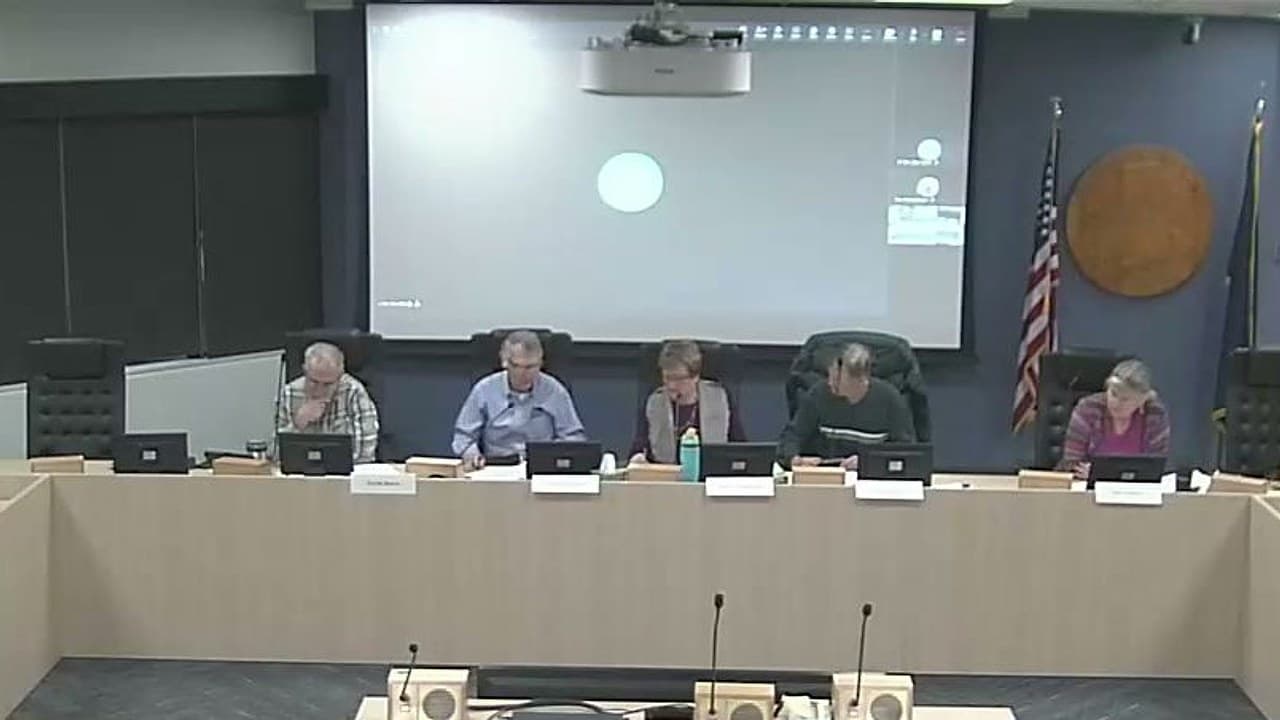
Representative Bynum, we've got you on Teams. Can you see the meeting room? You know, the front or the other day was coming. We don't have anybody. Yes, sir.
Thank you, sir. Hey, thanks again for the quick response yesterday after the jumble with Representative McCabe. Personal, uh, appreciations to you on that.
No audio detected at 4:00
Hello, Representative Galvin. Just a sound check. Do you have us? I do hear you. Thank you.
Okay. Thank you. Skip, sound check.
I see Skip. Skip, we see you, but we do not hear you.
Skip, if you go to the top of your, your screen, you should see a red that looks like an old telephone handset.
Then to the left you have share, then to the left you have mic, camera. And then 3 dots saying more.
Hey, Cassie, shut this— shut the mics off.
No audio detected at 8:00
No audio detected at 10:00
No audio detected at 12:00
Online and can you hear us? I can hear you. Can you hear me? Yes, we have you. Was the LIO staff not able to get you linked in so you would have visual as well as audio?
We tried it every which way on my phone. I'm trying it on my computer now, but I've got you on visual and I was on with the Gavin was on and I was seeing her and I was on, but you couldn't hear me at that point. So I don't know what the heck's going on there. Yeah, I know. That's why I was trying to use— talk you through how to get the audio changed.
Um, hold on.
Everything at once. Can be frustrating, I understand. Thank you. But if you want to just go ahead with me just on audio, that's fine. Okay, Skip Scott.
That's what we're going to do, and I'm just now calling the meeting to order. This is the Select Committee on Legislative Ethics. Today's date is Wednesday, November 18th. The time is 9:11 a.m. I do apologize for the delay as we have been sort of stumbling around with the technology.
But anyway, I think we are off and running. So with that, I would ask Kevin to call the roll, please. And Chair Thomas. Here. Public Member Anderson.
Here. Public member Skip Cook. Here.
Public member Deb Fansher. Here. Public member Carl White. Here. Public member— as I was, excuse me— Representative Galvin.
Present. Representative Bynum. I'm here. And Senator Yundt is not on Teams and not in attendance. Mr.
Chair, we have a quorum. Okay, thank you. With that, we'll move on to the next item, which approval is approval of the agenda. I would entertain a motion to either approve or revise the agenda. This is Deb Fancher.
So moved. Any objections to that? Hearing none, the agenda as outlined in your packet is hereby approved. The next item is approval of minutes. We are going to go through them one by one.
The first item up is a full committee meeting of June 26, 2006. These are in your packets under tab 3. So with that, I would entertain a motion to either approve or revise the minutes of the full committee meeting dated June 26, 2006. 26, 2006. This is Joyce Anderson.
So moved. Any objections, revisions?
Hearing none, the full committee meeting minutes of June 26, 2006 are hereby approved. Next item is a House Subcommittee meeting, which is also June 26 of 2026. Once again, this is in your tab 3 of your packet. I would entertain a motion to either revise or approve those minutes.
I move— this is Skip. I move to approve. Okay. Any objections, revisions? Hearing none, the House Subcommittee meeting minutes of June 26, 2006 are hereby approved.
We'll move on to the last set of minutes that are in your packet, which is the full committee meeting minutes dated September 14th, 2026. And once again, I would entertain a motion to either approve or revise those minutes dated September 14th, 2026. Mr. Chair, this is Bynum. I move to I move to approve the full committee meeting minutes, September 14th, 2026.
Thank you. Are there any objections, revisions? Hearing none, the full committee meeting minutes of September 14th, 2026 are hereby approved. So thank you for that. The next item is public comment.
I don't know if there's anybody on the phone, but there is a person in the room that may want to comment. And so is there anybody on the phone?
Yeah, Mr. Chair, I just confirmed we have no one on the phone wanting to make public comment. Okay. And is there anybody in the room that wants to make public comment? Theresa Obermeyer.
Okay. Good morning, ladies and gentlemen. Good morning. And come forward. I always have something to pass along because you people are swamped.
And so I want to— what I'm trying to do and I want to— thank you, ma'am. I can't be heard on the microphone. Is since I can't get anywhere, I have failed. I mean, I'm not going to say I failed. Life is a challenge, and I just wanted to let you know what we're trying to do now.
And do I speak in— do I— are the microphones all— yes, ma'am. Okay, I'll just start now if you'll forgive me. Theresa Obermeyer, and good morning. What we're trying to do Ladies and gentlemen, is create an elected Alaska Attorney General. Now, this is a really difficult task because the only way we can change our Constitution is by a two-thirds vote of each of the houses of the state legislature.
That, if you'll forgive me, is almost impossible. And I live in Anchorage and I have to go down there for such a long period of time. It all gets very expensive. So our idea is to have an advisory vote, and I'll read that into the record. Should Alaska have an elected Attorney General based on Senate Joint Resolution number 21 from February 24th, 2020, proposing amendments to the Constitution of the State of Alaska relating to the Office of Attorney General?
Because we already have an SJR that is our example, and I do believe I'm going to have someone introduce another SJR in the 25th Alaska— or no, it was the 35th. 35Th. I think it's the 35th. The 35th. No, yes, it is for sure.
The 35th Alaska Legislature first session. Just to mention a couple of things. Since statehood, our population has increased 329%. That is one issue. Then really by way of overview, and I don't know whether you people have ever thought of this kind of stuff.
I think of our wonderful Alaska attorneys like you, Mr. Thomas, living in Nome, and we— 30% of our active bar is active out of state. That, of course, is the highest astronomical percentage of any state in the United States. We could do a whole study on what other states might have 8 or 9%. We have 30%. Then I have not been able to get from our Attorney General how many state of Alaska attorneys there are.
But I believe they're probably around 30% or more. And of course, the attorney general— all these assistant attorneys, attorneys general report to the Alaska attorney general, who is only appointed by the governor. This is not good for our whole state. We need access to law. We need people to have access to attorneys.
I know I can't go to court. Anymore. I have in the past, but I can't— I'm not doing that because first of all, it's a big risk. I have to pay attorneys, and I'm not going to do that individually. So we need to really focus on this as those of us that care about Alaska.
I do have a Facebook group, and if you'll forgive me, I thought for a long time if I just put a whole bunch of documents on Facebook that the whole thing would really blow up and I get a lot of help. We do have over 200 members of it. But it's, you know, there are so many people on Facebook. So I'm trying to do this now to draw attention to the fact that we need an advisory vote to let the legislature know how much we who live in the largest community of Alaska, which is 40%, and we live where the business and commerce is, we need to have an elected attorney general. And hopefully, if you'll forgive me, it might be a whole new beginning.
Under a new governor and some new legislators. So I hope it's a good idea. The downside of this is—. One thing I would normally— public comments limited to 3 minutes. And so if you can—.
Yes, I'll wrap up. I'm not going to cut you off right now, but if you can— our initiative petition would be 7,220 signatures. So there's a whole process of getting this, and I'm trying to have it expedited. So we can start gathering signatures. Of course, they could only be registered voters in Anchorage, so that you wouldn't be able to vote for it, Mr. Connor.
But it's okay. But I would hope that you'd go back to your community and say, I live here. Why are these 30% being able to practice in Alaska when they've never even come here? This is what we need to change. Thank you so kindly for hearing me.
I would field questions if anyone has one.
Seeing none, so thank you. And thank you so kindly. Thank you for your coming. Have a good meeting.
Next item on the agenda is the State Benefit and Loan Program. This is tab 5. This is sort of a housekeeping item that we need to address annually, and so I'll turn it over to Kevin with respect to what we have in there.
So if you look there, thank you, Mr. Chair. If you look there, the first tab at, at 5 is the current year state benefit and loan programs. We have reached out to all of the, uh, the departments for updates, comments, and changes. Um, we had to go through a lot of education process.
There's still a lot of confusion and lack of clarity on what constitutes a benefit load program. We had to do quite a bit of education as different departments work through that. So the only significant— well, the only changes that we had received were from the Department of Transportation and Public Facilities. It's the same request that they had last year, but last year earlier in this year, I should say, going into 2026, they did not have the surge capacity to request the changes that they did not have to do. They did not have time to do the paperwork that was required for the removal of the programs.
You'll see there, if you look at the third page under tab 5, Excess right-of-way land, right-of-way acquisition permits, etc. Those DOT felt they were not a loan or benefit. They were for the specific use of right-of-way properties, and they have requested to remove those programs from the list that would require disclosure for benefits or loans that are received from the state. I believe that we may have made a copying error, and I apologize in advance if that is the case. As I look through Tab 5A, it should be the various documents that were submitted to remove those programs.
I believe we inadvertently copied the same removal request 5 times in lieu of having the 5 different ones. Keely, can we do something easy to remedy that? But the difference from— for this year and for the removal for 2027 is the fact that we do have the supporting documentation and paperwork. That was a problem the committee had identified about this time last year when we tried to update the list, and that's when DOT had not been able or did not have the surge capacity to provide that documentation.
Oh no, you, you are correct. Thank you. If you notice On the back of the form, I think they had submitted, there was a typo on the second page of each one. There's right-of-way permit encroachment driveway or airspace. The second one is disposal of excess right-of-way land.
Right-of-way acquisition. Right-of-way rental. Yep. And then Right-of-way permit. So that was just an administrative issue with how they had submitted.
But they felt that each of these different permits do not constitute a fit with the requirement to disclose those uses of right-of-way property. And we do have a DOT representative available to answer questions should you have any. And that's all I have, Mr. Chair. Okay.
Are there any questions before we actually take up the issue before us? Any questions from the DOT people or questions about the documents? But I think we should go one at a time.
Representative Galvin has a question, Mr. Chair. All right. I'm sorry. I'm not looking that way.
No problem. Can you hear me okay? Yes, we can. Okay, so I have— I apologize, I'm in another world here in Georgia, and I've tried to look this over, and I just think it would help the committee if you could— would give us some context in terms of how, how much is this becoming relevant to our work? Is this something that's often that folks are getting special exceptions for land use and need to— and that's why we are looking to remove this because it's just so often, or maybe it never happens, and it— or it doesn't feel relevant?
I'd just like to know a little bit of context if I could have that. Sure. So your question really is why would somebody ask to have this removed? Mm-hmm. Yeah.
Kevin, do you want to explain what the— absolutely— about what the basis for the—. Mr. Chair, thank you for that, and yes, I'm more than happy to. So if you look at any of those, uh, change, add or change requests, about midway down on the first page, there are three criteria for a benefit and loan to be listed and required disclosure. The benefit program or loan is generally available to members of the public, is subject to fixed objective eligibility standards, and requires minimal discretion in determining qualification for that benefit or loan.
If the answers to that are yes, then it is not a program that would require disclosure. It would be, for example, there are a number of programs that are listed under fisheries where there are loans. Well, there is an example under fisheries, it's a loan to a fisherman, but there is a situation where it may not be generally available to the public, or it may have some subjective standards on who receives the loan or benefit and has wide discretion in determining those. So that is what we send out to the different departments, and then they self-identify benefits or loans that they feel, uh, would qualify and should be listed as requiring disclosure. I believe to answer the representative's answer through the chair that this was a— originally it was an error in understanding and what may have been submitted by DOT.
And after they have taken a closer review and look at the requirements that The programs that are listed, the right-of-way encroachment, disposal access right-of-way, et cetera, it does not fall into the criteria that would require disclosure. So, in short answer, DOT is just attempting at this point to rectify a probably inappropriate listing of these programs under benefits and loans that would require disclosures. Through the Chair, does that answer your question, Representative Galvin?
Yeah, I think I understand now. And it sounds like this is not some— an area where the committee has found that there is an inappropriate advantage that needs to be— that needs to be disclosed. So that being the case, I appreciate hearing that. Thank you. One thing, if I might add, I mean, I think the real heart of these questions is, are any of the programs that we are talking about here subject to— are there fixed objective eligibility standards And is there minimal discretion?
In other words, the point of this— these things are if the state agency has the ability to say, well, I like that guy and not that other guy, then they would need to be listed. But if it's, okay, here's what you got to meet. If you meet that, you get, in this case, the driveway permit. So that's the— I think that's the real heart of this— these issues. And it's not unusual to see year by year that some of these some of these programs that have been listed in the past, somebody takes a look at it and says, wow, we don't really meet that.
So that's what I think is happening here. Go ahead, Joyce. Mr. Chair, this is Joyce Anderson. I'd also like to say, Representative Galvin, that this probably has been on the list since the initiation, which I'm talking about maybe in the '90s, and no one's really had a look at it because it was a big thing back then.
So I agree with Connor. I think it was probably on here in error to begin with. And it's just been pointed out, so I have no problem with removing them. Any other questions or topic? Okay.
I think we should go through them and vote one by one. So with that, I would entertain a motion to remove from the benefit and loan program or notification of that the right-of-way permit, encroachment driveway, or airspace permit.
This is Joyce Anderson. I so move that we remove the right-of-way permit encroachment driveway or airspace permit. Is there any objection to that or any other revisions? Without that, then we will approve the motions approved, so that would be removed from the program. The next item is is Disposal of Excess Right-of-Way Land.
Once again, I would entertain a motion to remove that from the Benefit and Loan Review Program. This is Skip. I'll also move. Okay. Any objections, revisions, questions?
Hearing none, the Disposal of Excess Right-of-Way Land would be removed from disclosure requirements. Requirements for the benefit and loan program. The next item is a right-of-way acquisition. Once again, I would entertain a motion to remove that from the benefit and loan program— review program.
This is Joyce Anderson. So moved. Any objections, revisions? Hearing none, the right-of-way acquisition Program, Department of Transportation, is removed from the requirement of being published with the benefit and loan program review. The next item is right-of-way rental.
Once again, would entertain a motion to remove that from the benefit and loan review program.
Any objections, revisions? Hearing none. The right-of-way rental program is removed from the benefit and loan review program. The next and last is right-of-way permit, utility permit on state right-of-way. Once again, I would entertain a motion to remove that from the requirement of being published with the benefit and loan review program.
This is Joyce Anderson. So moved. Any objections, revisions? Hearing none, the right-of-way permit utility— right-of-way permit utility permit on state right-of-way is hereby removed from the requirement of being published with the benefit-in-loan-redeed program. So thank you for that.
The next item is a Chair staff report. Mr. Chair, and Kevin will go ahead and notify the department. Through the chair, that is absolutely correct. Okay, next item is a chair staff report.
Is the, uh, it's tab 6 in your,. Uh, no, we missed the budget. Budget tab 6. The first item is, uh, 2027 budget. Mhm.
Yeah, no,. Oh, you said staff report. Chair staff report. Oh, oh, I got it. I'm sorry, I'm sorry.
Through the chair. So, ladies and gentlemen, I apologize. We had a number of issues. I have provided all of you with an update. There were some delays caused by email outages and whatnot.
For those in the room, you have an updated budget report, and for those that are online, I submitted that to you in email last afternoon. So we were doing very fine on the budget. You will notice there, personnel services, um, we've expended just a little under half of our personnel services, and that is salary for, uh, staff. Um, on travel, we've had a little bit, but we're still okay. We have $22,772 $1.2 million remaining.
A fair amount of that travel budget will be encumbered via COGEL attendance fees and then also travel for COGEL, and we will have 4 attending the COGEL conference, Conference of Government Ethics— help me out, Joyce. Laws. Laws. Um, so that will take a little bit of our travel budget. The services, uh, please be mindful of that.
The $30,800 originally awarded, $20,000 of that is at the beginning of the year escrowed away for third-party outside legal counsel. So we have not expended $23,840. We have a set aside for Brent Cole's contract or subsequent outside counsel as we identify a new one, so there is a significant balance remaining in that, uh, accounting line. There was one small Bill submitted by Brent Cole for the committee's awareness. Senator Reinbold, or former Senator Reinbold, has appealed to the U.S. Supreme Court, so there was a little bit of legal cost involved there on Brent's part.
Commodities are simply supplies for the office, and we have not— we tried to look ahead at the end of last FY and purchase used unexpended funds, so we have not tapped into the commodities or the supplies line item at all. With that, Mr. Chair, I would entertain questions or comments.
Any questions regarding the budget? One question I guess I have, Kevin, is do you know how this compares to years past? Are we kind of in the same ballpark or? I think we've probably got a little bit more remaining. As we talked about in the September 24th meeting, for personal reasons, Keeley had needed to reduce her hours.
And so we have, particularly for personal services, we have a little bit more more remaining, and as we will probably talk about later, that allowed those additional funds, allowed some crossover for training as we move forward with hiring a new administrator. Okay, any other questions regarding the budget? Keely's making some— we can't hear you. Oh, okay. Any other questions with respect to the budget?
Okay, seeing none, thank you. Next item is B in tab 6, which is staff report of informal advice.
Would you like me to—. Go ahead, please, Kevin. Through the chair, we found— we saw kind of a different situation with staff reports this period for two reasons. The duration of the period between the September meeting and the November meeting is so short, there was not a lot of time, correspondingly, a reduced number of inquiries. However, I think that the reduced number of inquiries was also highlighted by the fact that we had had 3 special sessions this year.
Folks were trying to after the third special session, get out and do campaign activities. And so there was not a lot of request for informal advice. Again, as you will see on the first page of the staff informal advice report, there were significant repeated number of questions about whether and when legislators could use the print shop. It was a bit surprising to me that some of our staff and legislators do not understand that the campaign period runs from 60 days prior to the primary through the day after the election, and then once the general election is over, then the print shop usage is opened up again. There were a number of questions about close economic associations where a staff would work on a campaign for a specific legislature—legislator.
Based on previous discussions with the Chair, we felt that it was prudent for them to go ahead and file the disclosure even if it was not specifically called out.
We have had— this is a general awareness issue for the committee. We have had several recurrent and ongoing issues with the disclosure platform that is outside of the committee's— excuse me, outside of the committee's control. There were a number of disclosures that did not receive confirmation of submission, causing duplicate, triplicate submissions of disclosures. We are working closely with WebDev and the folks in the IT department to try and isolate and identify, but at this point, we do not have a resolution. It appears to be an ongoing issue where randomly at infrequent or irregular periods, the disclosures may not be able to submit, or the system is not functioning as per norm, providing confirmation of submission.
So I think generally those were the major requests or asks for the staff during this time period. Mr. Chair? Any questions or comments by committee members? Joyce?
Yes, I do. First of all, you've got June 23rd through September 9th, which was the same dates for the meeting for our September meeting. Does that need to be changed on the top? That absolutely— through the chair, that absolutely needs to be changed. That should have been September 10 through, uh, November 16, and I will make that change for posting.
Okay, thank you. I have one other question. I know you talked about the first item under campaign related, and I'm assuming that there was no financial connection to this close economic association, even though it was suggested. And I know you talked to the chair, because if there was a financial between the two, there would have been a close economic association. But I'm assuming because there was no financial payment, you know, like no payment to the person, the staff person that was working on a legislator's campaign.
Am I correct in that? Through the chair, no, you are not correct on that. There was financial payment for for time for work on campaigns in some of the cases.
In some and not all? Is that— okay, maybe we need to clarify the question a little bit. In reading it, I wasn't sure— and Connor, maybe you can clarify a little bit too. I wasn't sure that— because when there is a financial connection between a legislator and a staffer, there's a close economic association. So I was a little confused with the statement.
So,. Oh, my memory of this issue was that there was a use of a car. That was the previous discussion that we had, Mr. Chair. Um, using that same threshold, I agree with what Joyce is saying, that in my view, that if you— if the staff receives outside payment from the legislature for work that's done on a campaign or dog walking or babysitting or whatever,.
Or rent. Or rent. It doesn't matter. But there is some lack of specificity on the dollar amount. I believe, as I recall, the act, it says a substantial financial matter, and we have used as a historical practice that $250 would constitute a significant financial matter.
So, yes, I agree with you. It has always been my contention and recommendation in informal advice, if you are receiving payment from any of the categories that are called out for close economic disclosure and that value exceeds $250, that it should be reported as a close economic association. Well, I feel the question needs to be clarified a little bit. If someone was going to be looking at this down the road, they probably wouldn't understand. So I think it's important to say that there was some financial, but that it didn't meet the threshold of substantial or something to that effect?
Because otherwise I'm a little confused as to, you know, the exact wording. It was short and sweet. Through the Chair, I would propose that I can put some amplifying, clarifying language in this. I can send it to the committee members for a quick— for a review before posting, if that is acceptable to the Chair. That sounds reasonable.
Any other? Joyce? No, that was the only thing, and I did ask— I did have my note here for clarifying, which you clarified, which was on the top of the next page, so I was a little— okay. Thank you. That was the only question I had about the changing of the date and then clarifying that question.
Chair? Oh, I'm sorry.
Hi. No problem. This is Elise. I have a quick question, if I may. You may.
I'm sorry, I don't see you on there now. It just says RG. Oh, let's see. I think I can fix that. Okay.
Here we go. Got it. So the question is related to what we were just discussing because the guidance that we had received in the past is that we can have— let's say I have a part-time staffer and they want to work on weekends on my campaign, that I may allow that to happen, but I need to disclose disclose it, and it must be only on non-legislative hours. And so that was my understanding, and I, if I, if I just want to put out there that it is much as we can make that crystal clear to folks that that's the way the rule is. I appreciate that, and I, we're doing our best to be as aboveboard as possible, but sometimes when we call in and get, you know, fuzzy answers or something, I'm just not sure that I'm doing the right thing.
So I just wanted to be sure to clarify from the vantage point of a legislator who is running for reelection, they need to have that very clear as well. And I didn't know anything about the threshold. I know when I'm giving gifts, anything that's $250 or more, um, it must be disclosed. But anyhow, I just— I wanted to put that on record. Okay.
Through the chair, if I may suggest, I can also add this as an item of emphasis on the recurrent training that is required for the legislators. The only problem and danger with that— so we will address it in the December through February time frame. Unfortunately, it doesn't come, come into a situation of concern for 2 years. And for the elected representatives, there's a lot that's happened in that 2 years. And to speak to your question about definitive answer, I know the situation that Representative Galvin was asked about, and it was an emphatic yes, disclose it.
So would that help, Mr. Chair, to reemphasize during the training, although understanding that it will be 2 years before it comes up again, so it may, may be an item that we could put some supplemental notification out in an advisory. To help refresh. Yeah, I don't see why you wouldn't do that that way. So,.
And Mr. Chair, I have a question. Is that somewhere in the staff informal advice, which she just asked about? I don't remember reading that previously. So if it's not in there, I think we need to add it as a Q&A so that it's something that can be referred to down the road.
Is there something in there relating to this question that Representative Galvin had? Through the chair, I'm not sure of the question you said. In informal advice or should it be something that is added to the— as a line item in the handbook, the ethics handbook? I don't think it's informal advice if that's your question. Right, but if he gave her that informal advice, then that would be something that should be in the staff report is what I'm saying.
Do you see what I'm saying? Yeah. You know, so it's in there. I didn't get the impression that he did, but—. So if it's— if you've given her advice regarding that, I think it should be in here somewhere.
Given who? I didn't—. You said you gave Representative Galvin some advice, or Representative Galvin said she—. No, I gave a staff member related to the question and issue that Representative Galvin raised informal advice. Okay, well then if you gave the staff member that, that should also be in the staff report so that it's in there, that it's been covered, as well as if you're going to be talking about putting in the newsletter and training.
But the staff report is what you look back on, and the staff report is for advice that hasn't been given in the past. Like, you know, can I accept this gift that's $257? Well, that's, that's pretty cut and dry. That's a no. You know, that's a question that we've had.
But it sounds like the question that we're dealing with right now is not one that I've, I've encountered before, and I don't remember reading it in informal advice. So I guess what I'm saying, the informal advice staff report that comes to the committee is all of the advice that's given that's not been given in the past. And I don't remember seeing that, so I think we should add it to this report. Okay. Through the Chair, agreed.
I can put it in the amplification. That was the bullet item 1 under campaign related. That was a very, very high level, and I will clarify that in the amplification. Okay. Any other questions, comments?
Next item is a gift of travel for legislative concern. Kevin?
Thank you, Mr. Chair. This is a little bit of a follow-on to what we had discussed in the September meeting, and now that we have a statutory requirement to submit agendas supporting a legislative concern for gifts of travel, I've provided you with a brief introduction to the issue. I also provided you some examples of the varied types of agendas that have been provided to the staff in concert with the disclosure. I think the first one— and please note that I did sanitize this, de-identify it— but the first example there was an email from the Ted Stevens Commissioning Committee I think that provides us with good information, but it's, it's financial figures.
I don't know as it provides an explanation of a legislative concern. The second one, though, the, the, the invitation card, I, I struggle with that, Mr. Chair, to know what that is. The third example is for a trip to Israel. And then the final one was a trip for a birthday celebration that was attended by a legislator.
I think the big takeaway and the ask that I have is if the staff is being put in a position —of requiring agendas and then vetting whether the agendas meet an acceptability criteria, we need a criteria for acceptability. What constitutes a legislative concern? What information is required in the agenda? Simply saying that I was invited to speak, made a few comments, wished happy birthday and cut a birthday cake I don't know as that would meet a threshold of a legislative concern. So I am asking the committee for their assistance in determining or providing a criteria for the staff to use as we evaluate and assess agendas that are provided for gifts of travel and hospitality for legislative concern.
Mr. Chair? Okay, thank you. Any comments on that? I mean, I, I, I, seems like a legitimate issue.
Connor, this is Deb Fancher, and I was just reading. I mean, I, I don't think that anyone in this room or listening by teleconference would not agree that the event hosted to celebrate the commissioning was not definitely something that I would put on the front page of ADN and was on the front page of ADN and has legislative concern. On the other hand, when I read this event in Israel, that screams to me of a private trip. How the person involved could say that there was legislative concern there is stunning. It's stellar.
It feels unethical. To be generous. And so I truly think if this— if people are using state funds for things like visiting the Golan Heights, I think we do need something in place. Through the chair, a point of clarification. I don't believe that state funds were used.
It was a gift. Again, but it needs— yes, that, in my humble opinion, which is worth nothing, but Totally inappropriate. Again, through the chair, this is the dilemma that we are faced with as staff. And the other part of it is, if we do not have a criteria, I do not believe in the Rules of Procedure, I know not in the Ethics Act, there is not a procedure outlined or specified that if, uh, for staff or the committee to vet a legislative purpose and to deny, because if the agenda and legislative purpose is denied, then the individual risk— disclosing the gift would have responsibility for repayment. And I don't believe— well, let me rephrase.
I am not comfortable with what is documented on saying no. You can't do that. Pay the money back because I have no documented process for vetting or denying that disclosure. Mr. Chair, in reviewing the June 26 minutes that we approved earlier at this meeting, you, Mr.
Chair, had suggested that an advisory opinion be requested to define, quote, agenda and matter of legislative concern. So I don't feel it's something that the committee should define. I think it's something that we need an advisory opinion regarding. And so we had asked— you had asked about to have that done in June, and from my understanding, Kevin, you had said we weren't getting an attorney assigned until December. So I think in my head, I was thinking we were waiting until December, and that's when we were going to ask for an advisory opinion.
Based on the new language and statute about the agenda that we were going to ask for an advisory opinion regarding those two issues and then provide some, you know, examples to go along with it. So I feel that's where we're at at this point. I just wanted to throw out my comment.
Mr. Chair, this is Deb Fancher again. Go ahead, Deb. Just kind of piggybacking on that, we just had in Anchorage an event where one of our assembly members took a trip and used funds that were campaign funds, if you will, and that created all kinds of angst. It almost got the assembly member removed from the assembly.
I can't imagine that we want state government less responsible or those kind of things to be showing up on the front page of ADN, because Quite frankly, I think that it's egregious. I just— to Kevin's point, we probably need something sooner than later. Well, if we're getting an attorney in December, that's within a couple weeks. So I think that we should draft— this is Joyce again— I think we should draft a request and maybe Kevin could draft something and send it to the chair for review to make sure that we've got everything covered that we need to cover and provide some examples. I make a motion that we request an advisory opinion on these issues.
I'm. Sorry, Representative Galvin, but we've already done that. Oh, I just want to make sure that you're aware that Representative Jeremy Bynum has had his hand up for quite a while. Okay. I'm sorry.
You're very small on this screen in front of me, and I apologize for that. So go ahead.
Thank you. Yes, I appreciate the conversation. I just. From, I guess, I've only had a short time to review these documents as they came in late yesterday, but I think that the bigger, I guess in my mind, bigger things of concern are the clear questions of what's being asked, and that's clear criteria for determining whether documentation is acceptable. And then secondly, the formal process for resolving incomplete and questionable disclosures.
I think there is also this bigger question of when something is believed to be a legislative concern. Also, I think it would be helpful to clarify when we're talking about is something ethical or unethical, or does something need to be disclosed, or is it allowable? So I I would hope to have a little more clarity on those two points of staff's requests and how we can address those. And then I think I also heard that there would be somebody was requesting that there be a basically review of this, and I would also support that from a legal perspective. Yeah, yeah, actually my memory of this is that we did actually decide to move this forward to an advisory opinion at the last meeting because the requirement that there be an agenda was actually a requirement that the Ethics Committee imposed.
Now it's part of the law, right? And so it does need to be clarified in terms of what it is and what it isn't. But I guess when I saw this on here, I thought, well, I thought we did that. We were just waiting on the attorney. In other words, You think we didn't make the— or didn't move to go ahead with the advisory opinion?
Well, you had asked that there be an advisory opinion. I got the message or my notes from the June 26th meeting. We probably talked about it in September too, but— so I think we are just waiting. Is that what we are doing? So has a request been drafted?
No, and I have not drafted a request through the Chair. But that's kind of understandable in light of— we don't even— do we know who the attorney is now? As of date, we do not have a alleged legal counsel assigned to the Ethics Committee that I am aware of. I have not checked in the last week, but I was told that it would be September— I'm sorry, December before they made those assignments. Okay.
So I don't know. I mean, I guess my view of this is we're kind of on track for trying to address this question. It's just a matter of getting the attorney and getting the question in and then determining whether or not we want to adopt it or not. Through the Chair, if the committee has any recommendations for— well, since after Friday I will be the only staff for me as we go forward, because we do have, um, the examples provided. And quite frankly, the last one, uh, the email about the birthday celebration and whatnot, I have not— I've tried to get additional clarification of an agenda, but I have some Some concerns about, as I've previously identified, about saying no, that does not constitute an agenda, and so you need to pay reimburse.
The other thing that was kind of unique about this particular incident, it involved a foreign government, and so refusing— after the fact, refusing hospitality and lodging might be a loss of face and other issue. So, I am just trying to be very sensitive to the concerns, but I would appreciate any guidance that the committee might provide as we move forward with these subsequent disclosures. So right now, is this the only one that you have pending, waiting for a decision? The one with the Middle East trip? No, the one that we were holding up was the email, the very last page under tab 6A, the one that says, "Hi, Keeley, this is a bit of difference— different because we— there wasn't really an agenda." They had another senator on I Speak and then did a cake cutting.
And so where are, where are we with the, with the Middle East one? What's happened there? In the absence of any further guidance, we had the one to the Middle East. We also had another disclosure, gift, gift of travel to Ireland. And because I had no criteria other than do you have an agenda, they were accepted.
Okay, Mr. Chair, I guess my comment is, is that I think these should be pending at the moment and there should not be a decision made until we get the advisory opinion back, because we really do need some clarification. We need some, some input as to what an agenda and a matter of legislative concern is. So I would suggest that we hold those, let those individuals know that we are waiting for an advisory opinion for clarification and that we will get back to them. I don't, I don't see any problem with that.
Well, except some of these have already been approved. Well, I think Kevin says there's two that haven't been approved. Oh, this one and what's the other one?
The Middle East one and the—. No, the Middle East one was approved. Yes. No, I thought he said it was— well, go ahead, Kevin.
Through the Chair, the examples that are provided in your binder were October disclosures. They have not been submitted to Juneau for inclusion in the record yet. We are overdue in submitting them.
Connor, this is—. Oh, I'm sorry, Kevin. My position was that whether or not we determine at some point the trip to the Middle East, to the, to the Golan Heights, is acceptable or not. It met the criteria that had been established for this staff. There was a disclosure, there was an agenda, so I had nothing to hold it up.
The only one that is pending and holding at this point is the email that I just read about the cake cutting, because there is clearly no agenda provided in that instance. This is— what is the setting for that one? I can't even tell where it's— what was happening and where. Which one are you talking about, Skip? The last one.
This is— this is what we're just talking about now, the October 14 submission for a gift of travel on October 7th. A gift of travel to where? It was not— the gift was specifically for lodging in Portland to support a foreign government's celebration, birthday celebration.
Connor, this is Deb Fancher. One of the things that I have not liked, but I understood In the past, we have had things cross our desk where we didn't have rules for it. I think that if you don't have a rule for it, then we have to accept what people have done even though we don't feel it's ethical. I remember in the past we had some what I consider to be egregious travel costs and we had to go with them because it was not the letter of the law. I think that sooner than later we need to get the letter of the law clarified.
But to go backward when we have nothing, as much as it pains me, and I think these things do not have legislative concern, but until we get an opinion and get something in writing, how do you go back and say— I mean, you can't say anything because they really didn't— the person involved didn't violate. They absolutely did not violate because we have nothing in writing. Shame on whoever this was for not seeing that this clearly does not have legislative purpose. I would encourage Kevin in the process of looking at this, just because the city has just recently been dealing with this whole travel, the city attorney, I don't know if we can contact them, but they have policy in place and you've got 4 people going to Kogel that can hopefully— this is nothing probably new under the sun, but we definitely need something sooner than later. If I might just comment on that, I mean, I think it's not quite true that the only thing you need is an agenda.
You need an agenda that shows what the legislative purpose is. You need an agenda that shows what the legislative purpose is. And so it's just because somebody provides an agenda doesn't mean, okay, you need it. So, but I agree with about going back. If they've been told that this is approved, then that's the way it is.
And Connor, I'm sorry if I may. Legislative purpose. I can make anything legislative purpose if I wordsmith it well enough. I'm sure that you can look at this cake cutting and it can be legislative purpose. And the Golan Heights, we can say we're building goodwill.
That is incredibly broad and it clearly— we need to tighten it up. Mr. Chair, if I may make one comment, though, from the perspective of the staff.
I think that the staff does not want to be the arbiter or arbiters of a legislative purpose. I don't think that is our role. That would be us telling the legislators or invited individuals what falls within the purview of their job. That is why I'm asking for the the committee's formulation of an established practice so that the staff, whether it's Keeley, myself, or someone else, has a source document, a reference document that we can use to say, yes, this meets the criteria, no, it does not meet the criteria. Because I think Deb has brought out a very good point.
That if all we say is that they have to submit an agenda, and I believe that's the language in the statute, it doesn't say what the agenda has to contain or what it must demonstrate. If they send an agenda, then they have met the threshold. Even though there's no— your position is even if they submit submit an agenda that has no legislative purpose. That's good enough. Representative Bynum had his hand up.
I wonder—. Okay, is that your position though? My position, Mr. Chair, is that I am working within the language that it says that they provide an agenda. It doesn't say an agenda that is acceptable.
It doesn't say that an agenda that It gives me no criteria beyond did they submit an agenda or did they not? Okay. So your position is if an agenda is submitted, that's the end of it?
Pretty much, Mr. Chair. And I believe that— I don't know before my tenure, but I know that has been the guidance that I received when I first came into this position 2+ years ago. Okay. Thank you, Representative Bynum.
I'm sorry. Go ahead. I was just going to make the quick comment that, you know, my understanding is the purpose of our ethics and disclosure is for transparency and accountability. And we're not trying to discourage legislators from participating in activities that benefit, you know, obviously our constituents, the state of Alaska, and relationships that we might have as legislators to benefit Alaska. The bigger question at hand is, are we appropriately following the law or not?
And if we don't feel that the law is sufficient, then maybe we then give a recommendation that the legislature would take up this concern. And I think that my understanding, and correct me if I'm wrong, that would be the idea of having this reviewed to give us a recommendation so that if we think the law needs to be a little more clear on what a legislative purpose is, or concern, I mean, that we might be able to adjust the law. But my, I guess my understanding right now is the bigger question is, is there clear guidance for being able to disclose and have that transparency so that our, the public understands that, for example, if I'm taking a trip to go somewhere that's paid for by somebody, that the public understands that that has occurred and that they may also weigh in on that. They might weigh in on that at the time when it is their time to weigh in. So am I correct on that?
In my view, you are correct about that, and it's not clear right now. And Mr. Chair, I would agree with what's been said. I think the first step is the advisory opinion to get the clarification. I think right now that if there is a question— I'm going to throw this out for committee comment— if there is a question that Kevin has regarding a gift disclosure, well then I think whether it has the proper agenda or whether it meets a matter of legislative concern, he should talk to the chair and then the chair could also recommend it go to the full committee and the full committee make the decision.
So I don't think it should be left up to the administrator to make that decision. It looks like we've got one on hold. The others that were in here were approved. I agree with Deb. We can't go back.
We have to move forward. So I think the one on hold, we need to hold until we, you know, get the advisory opinion and get some additional information, which I think Kevin has but wasn't provided with just this little quick email. So I think we're on the right path. The advisory opinion and then with Representative Bynum, if the advisory opinion provides us with some information that we feel needs to go in for— into statute. I think that that's appropriate, but I think we need to start with the advisory opinion.
And so my recommendation would be to keep this one on hold, move forward with the advisory opinion, make the request, and let them know that we need this, you know, now because we have things that we have to address. And I know that they're getting ready for the legislative session and we'll see who our attorney is and move forward. So I agree with everything said. I just feel— well, anyway, that's my thought on how we should move forward. And I know that in the past when I was administrator, if I had a question about legislative concern, I did go to the chair and I don't recall it ever going to the full committee after obtaining additional information and so forth.
I don't see any reason why it couldn't go to the full committee down the road. Yeah, I mean, I was thinking the same thing in terms of the way to proceed. I was thinking the same thing in terms of how to proceed. So anyway, that sounds like the— do we have a consensus here? We're going to move forward with the advisory opinion.
If it comes up in the interim, then Kevin will get a hold of the chair, and if need be, we'll take it up with the full committee to determine really the issue is likely to be legislative concern. The one that you, you talk about being on hold, I'm not quite sure why it's on hold since they haven't provided an agenda. But I mean, that is the one thing that's, as you said, was required. So I'm not sure why that— why we're holding that one, Mr. Chair, because I'm continuing to work with the involved discloser— discloser— to see if they are going to provide anything else.
My plan was to hold that in abeyance and not send it to Juneau because in my view, that is an insufficient agenda. But I am— I was not ready at this point to go back to the discloser and say, "No, you need to pay that $675 back to the host government," especially since it is a foreign government. That a refusal of the gift may cause a loss of face. Okay. All right.
Are there any other questions, topics, comments regarding this? Mm-mm. So I think we have a plan of action and we'll move forward. The next item is sexual and other workplace harassment civility training, which I assume, Kevin, that's something you're doing. Sort of.
Mr. Chair, yes. This was just a status update. We had talked about this in previous meetings. I was just confirming that the individual that has been identified in working through Ledge Legal— or not Ledge Legal, but LA personnel— to develop or to deliver the sexual and other workplace harassment training is Mr. Robert Kobusier, and I— there is a typo there, there should be an R at the end of his name.
He is the Executive Director of the Alaska State Commission for Human Rights, and he will be develop— or developing and delivering the training. Again, the commitment there is that he will limit his presentation to the 75 to 90 minute timeframe. And then reaffirmation that Mark Quiner of the National Conference of State Legislatures is going to be doing the civility training. He is working on updating his training materials and has committed to maintaining his presentation to no more than a 30 minute time block. So it was just an update for the committee and to give the specific name for sexual and workplace harassment training.
Okay. Any questions? Joyce, go ahead. I'm sorry, I'm doing a lot of talking. This is Joyce Anderson again.
So this training is not going to be added to ethics training. This is going to be a separate— I'm adding it up here— 2-hour training. And so we will still have ethics training for like 2 or 2.5 hours. In addition to this? That is correct.
All right, thank you. As reported, uh, I've worked with personnel to ensure that we maintain— we did not lose any of our ethics training time. Uh, currently for the 16th, I believe we are slated for a noon to 4:30 time frame for ethics training, which per ledge counsel will include and still be tied to sexual and other workplace harassment and civility training as they feel that those components are an ethics committee responsibility. So, Mr. Chair, so out of the 4.5 hours, 2 hours is going to be dedicated to this.
Am I correct? Yes. So then we have 2.5 hours. So 4 and a half, uh, well, with a break in there. Okay, thank you.
With the breaks, it will be about 2 hours for the ethics training.
Anything else? Okay, next item is an outside attorney update.
Uh, Mr. Chair, um, this item was added to the agenda, uh, during September meeting. We provided the updated contract with Brent Cole, so there's no need for a repeat on that. It was just an opportunity for the committee to get an update on any identification or steps to identify outside counsel to replace Mr. Cole when he chooses to sever ties with the committee. Okay, thank you.
And I will say that I actually have reached out to a few people with respect to possible replacements. I got a little less aggressive in doing that after talking to Brent Cole. My initial thought was that he was going to leave in December. He said no, and he's willing to stay on until he actually decides he is going to retire, which is not necessarily going to be immediately. So Anyway, that's where it is.
My hope is when we do get to the time where we're going to have to hire somebody, then of course they would be vetted by the committee before any decision is made with respect to replacing the attorney. So any questions or comments with respect to that? Uh-huh. Okay. Next item, public member vacancies status report.
Mr. Chair, that's just a quick status update for the committee. As we know, the two appointments are expiring at the end of this year. We do have— we have had a significantly increased level of interest from the public. I have received one formal submission, which to the Ethics Committee, which was forwarded to the Chief Justice.
I had requested an update from Chief Justice because the process is somewhat loose on whether they can submit applications directly to the Chief and actually states that they will submit applications directly to the Chief Justice. I have not received any additional update from, uh, of, in, let me rephrase, I have not received any notification from Chief Justice or staff, uh, beyond the one application we have received. However, there have been a number of inquiries about how to apply, what to do, etc. We specified in the advisor articles and the publications that we had made on various platforms that the submission date was November 30th. So we'll have to see once November 30th approaches what the level of interest and submission was.
Okay. Thank you. And Mr. Chair, if I could add, I have submitted my letter to the Chief Justice last week. So I just wanted to let the committee know that that was sent, I don't know, mid-last week anyway.
So I have submitted that to have the Chief Justice consider that I be considered for another 3-year term. Okay. Thank you. Any other comments or questions? Just a question, Connor.
This is Deb Fanter. Is Skip— has he decided whether he wants to reapply or— we certainly would—. Skip has decided that he's retiring from the committee. Well, that is unfortunate. But we are most grateful, and that is very unfortunate.
And I will just say, and Skip can correct me if I'm wrong, when I spoke with him about that, he did indicate that if there were no other applicants, that he would consider reapplying. So he was not totally out of it, but maybe he's changed his mind since then.
No, that would still be my position, but I would be 89 years old when that— or 90 when that next term expires. So I think it's time for some young blood to come in. Okay, well, thank you. And certainly thank you for all your time on here, but we're not quite to there yet. So, all right, next is a COGEL update.
Any other questions?
Seeing none. All right. COGEL update.
Mr. Chair, just briefly, we'll have 4 in attendance of COGEL. We've got Skip, Joyce, Deb, and Carl. That number is reduced by 1 with— for those that are not aware, Keeley will be leaving the Ethics Committee. Day after tomorrow will be her last day as she goes on to pursue grand and glorious opportunities at the crime lab.
And I would like to personally extend my personal thanks for the efforts, the work that she has done during her time here with the committee, short though it may be. I believe that she's indicated that forensics has been a lifelong goal, and that's where she wants to be. So my best wishes to, to Keeley. So we will have 4 in attendance. We've already canceled Keeley's reservation.
There will be a $100 surcharge, any— that I do not believe was in place before, but, uh, so we will have a cancellation fee, but it's not insurmountable. Okay. Thank you. Any other comments, questions regarding COGEL? Okay.
Seeing none, next item is subcommittee reports. The first you have on there is travel policy, which I don't believe we are actually taking up today, right?
No, Mr. Chair. We had held the travel policy in advance in our most recent meetings. Uh, so I know there's been a lot going on there, short period between the two meetings, but it is, uh, something that we do need to come back to. And as previously discussed, much of the content of that travel policy is for the use and specifics of the staff as we process travel claims, and also as we use P cards and other processes.
So I would solicit and appreciate any forward movement that we can make on that to finalize travel policy. Okay. I guess my thought was that this was a good item to be on the January agenda. However, Deb, of course, is the head of the subcommittee, and maybe she has something to say about all this. You know, I have— the first I've heard that it was going to come back up.
We definitely need something. Joyce, after looking at this, commented that she would like to see this shortened and making it a lot more short and sweet. I think short and sweet would be great. And. So, you know, we would welcome anybody on the committee to go through this, pull it down as you see fit, take out what is not necessary.
And 17 pages is long. If we could turn that into a 3 or 4 page document and get the job done, that would be great. Clearly there are things that we need to discuss. Those came up just as we were trying to plan on COGEL, and I do think that, you know, there's plenty of organizations out there that have travel policies. To recreate the wheel is always, in my opinion, pretty silly.
So we went to other departments, looked at other organizations, but If we can parse this down, Joyce is great with words. So let's, you know, let's try to get something on the books sooner than later. Mr. Chair, if I might. Go ahead, Kevin.
So I would like to propose a compromise to that. I think some of the— much of the language in the travel policy needs to remain for the staff. What we could offer as an alternative is the longer version and then an executive summary. Sure. Or a travel policy for members that would be a 2 or 3 page quick reference guide, but we still need some of that nitty-gritty detail.
And as Deb is the chair of that subcommittee, I can stand in the gap and arrange Any subcommittee meetings that you would like to have in the upcoming days, with the caveat that November— or I'm sorry, December is going to start to get very busy with the training cycle for new legislators on the 16th, potentially training for LIO staff the 13th and the 14th. So it is— we are going to be going into a busy time. And Kevin, just my, my life kind of had a massive life event added to it, so I, I think my December and January got turned upside down where everything is going to stop for me, um, and other things are going to take priority. So I doubt that I will be able to get to this in December or January just because sometimes Your life alters in a New York minute, and I've had one of those New York minutes this week.
Okay. Well, I guess we'll sort of see where we are, and it will be on the agenda in January. Whether or not it gets done or not is another matter. So, all right. Any other questions with respect to that?
Hearing, seeing none, next item is ethics legislation, which I know this is Joyce's area. Yes, Mr. Chair. So HB 298 was our ethics bill and it did pass. And as I was going through the rules of procedure and looking to do some updates on the complaint section, which needs to be reviewed by the subcommittee, I found an error.
So basically what it is, is if you'll see in the letter that's in your packet, it talks about that the subject of the complaint can request a meeting with the committee, and then the committee would then meet with that person. So if you go down to the big part that's between the two bold lines, it says the committee shall meet with— and it says the complainant— within 10 days after receiving the request. Well, the committee isn't going to meet with the complainant. They're going to be meeting with the subject of the complaint because the subject of the complaint is the one that's requesting to meet with the committee, and then, you know, there would be the 10 days and so forth. So it's very obvious.
I did have a discussion with Dan Wayne, even though he is retired. I did talk to him.
Excuse me. He totally agrees with— with this error and it wasn't caught. It was certainly put in the original version of the bill, which I hadn't found out about until Kevin told me that. And so basically, after Kevin's discussion with the Revisor of Statutes, it's such a substantive change that it cannot be done through the reviser's bill, which then goes through all bills and makes any corrections that need to be made that are sort of an error statement-wise and so forth and so on. But because this is such a major change, we have to introduce a bill to make the change.
And I think it's very important that we do because it's certainly an error. So I know Representative Galvin is on the phone. I have talked to her. Well, actually, I didn't talk to her because she was in Costa Rica, but I, I did some text messages. Representative Galvin has agreed to introduce a bill because she was the sponsor of the bill, and she's going to begin the process of preparing a bill, and I'm going to be working with her staff, and it will be something that will be introduced within the next legislative session.
I don't think it's going to be a problem. I mean, it's strictly just an error, and so I expect it to go through both the House committees and the House floor and the Senate committees and the Senate floor without any discussion other than have Representative Galvin and myself— I could be available if needed to explain what the error is. So basically, that's what this is about. And Representative Galvin, do you have anything that you would like to say? Okay.
I would just say in this case, if we narrow it to just that, we would call it a technical fix. This was something that was, you know, an— it was not anticipated and it will not be much of anything. However, there are times when committees decide to take up things because they think they're important. So what will or could happen is that a committee could say, well, while we're on an ethics bill, we're interested in hearing about this travel that everyone wants. And they'll— and that, you know, there may be some grandstanding about travel, and then they may say, let's take that, um, whatever advisement they got and move it into legislation.
So one thing I do want to recommend that we think about is, if you do want to have any clarifying language in statute, this would be the time to do that. So that— and again, I think Chair, if you— if it's part of the advisement from the consultants that— I think we're going to use alleged legal on that. And if they say, and this should be in statute, then that would be maybe something we consider as being an additional.
Piece of this bill. Otherwise, I would just call this cleanup and it'll go through pretty quickly, I think. Okay, well, thank you for that. Any other questions regarding this issue? I mean, we do— it is obviously incorrect and does need to be corrected.
So, okay, with that, we'll move forward with hopefully the relatively simple fix as Representative Galvin has outlined. The next is rules of procedure, which Joyce has done quite a bit of work on, and it's 7C in your packet.
Mr. Chair, I'd like to go through this. It has not gone before the committee. A lot of what's in here is current practice. There's a couple things that are not.
So why don't I start with page 1 of— not my explanation, because I'll be explaining it, but page 1 of the rules of procedure.
I don't know if we should do each section and approve them separately. That might not be the worst thing or the better thing, I mean, to do. So on Section 1, what I did was I put the term committee staff because sometimes we use staff, sometimes we use employee, you know, office employee or staff employee or something. So I felt that that's something that really needed to be consistent. So that is the change that I made in Section 1.
Any comments?
Do we want to approve Section—? What I think might be easier to do instead of doing that is go through each one and then when people do have a comment that we can discuss and revise that and then at the end if there's a motion to approve all the changes, it might be easier than doing each one. Okay. Okay. So that was in Section 1.
Section 2 is administrative policies. Basically what I put in there, as you can see, I also changed a lot to committee staff. But also under Section C, I put down that, you know, the administrator vacancy, and I put down what the process is. That wasn't in there, and I think it's important. I know that Kevin and we had some discussion, or he had some I know with me and probably Connor as well about what the committee staff was.
So it's under C and it says we're on page 2. It says administrator vacancy. It says what we shall do. It. Says E here.
I'm sorry, it's E. I'm— thank you. Thank you. That's cute. Okay, thank you. It's E. So that just explains the administrator vacancy.
And then under the act interim— acting interim administrator, I also put some of the same language about the job notice that will be posted and so forth. So I don't think that there's any controversy about that. Any questions? Mr. Chair, if I could— Go ahead, Kevin.
Two things. Number one, under Item E on page 2 of 19, a subcommittee will review the applications and make recommendation to the full committee.
Is there a process for establishing that subcommittee?
Well, I don't think we need to identify the process if that's your question, because it would just be, you know, the chair would set up a subcommittee.
What do you think, Connor? I agree with that. That's kind of what we're doing already. Yeah. Okay.
Okay. I didn't know if it took action by the committee or not. Okay. Okay. No other questions?
We'll move on with that. On the bottom of page 3, I know that there had been some changes in the Ethics Office, so I added policy if there's going to be any long-term changes to committee staff in-house working requirements that they should be approved by the committee chair. And I think that's what happened when— Jesse Bjorkman changed her hours; am I correct on. That? Correct.
Yeah. So— and I know that Carl and I have talked and he thinks we should take out "and/or" the full committee so just be by the Committee Chair. Is everyone okay with that?
Okay. Well let me ask you this first, Carl, what's your reason for that discussion?
I think that the Committee Chair is going to find that information out anyway. So it just takes more time. To go to the full committee is what you are saying? Yep.
Well, I mean, I don't read this as requiring it to go to the full committee. I just read it as a provision that the full committee—. And/or it could. Right. I don't read it as a requirement.
I'm sorry.
Skip? Well, if it's meant to be "or," just take the "and" out. Okay. Yeah. Okay,.
Let's do that. Yes, thank you. Okay, we'll take the "and" out. By the committee chair or the full committee. Okay.
Okay. Right. All right. And then—. Anybody that has any comments, please speak up.
So,. Okay, on the top of the next page, on page 4, um, and this would be long-term changes in the staff agreement of work hours. So the other one had to do with working requirements, and then this one has to do with the work hours, and it's the same thing. So we, we could take out the word 'and,' um, it's just putting in what current practice is.
Through the chair. Go ahead, Kevin.
What is the difference between item B on the bottom of 3 of 19 and C on the top of 4 of 19? Well, the bottom one is in-house work requirements, so that would mean that, you know, if the person's going to be working, you know, from home, then the chair would need to approve that because basically it's an in house, or I should say an in-office job that we're hiring. So that one has to do with in-house, and this one has to do with hours. So there's a difference between the two. Well, I think they're— through the chair, I think that introduces a potential for some misunderstanding, because staff in-house working requirements, I would, I would not have any way, uh, equated that with teleworking arrangements.
And I wonder if that is the intent of the committee and the intent of the item on bottom of 319, that long-term changes to committee teleworking policies or teleworking permissions, uh, would be much more clear than staff in-house working requirements.
Well, we can add in-house working requirements, i.e., teleworking, if you want. But it's still— we wouldn't say long-term changes to teleworking because that's basically— that person isn't hired to do teleworking. They're hired to be, you know, in the office. Does that make sense? So we could say in-house working requirements, i.e., teleworking.
Does that make sense, Connor? Well, I don't think I'd say "i.e." I mean, you might say "including" or "including but not limited to," something like that. Joyce, this is Deb Vancher. I think you could consolidate B and C together. I think that the point is, is that the committee wants to be made aware if there are changes in what our employees in the office are doing.
Right. So can we consolidate those just so we're aware of those and they're not just happening and we don't know that they're happening. So maybe you want to say long-term changes to committee staff working requirements. That's perfect. Okay.
Yeah. And it covers all of them. It does. I agree that should be consolidated. Okay.
Got it. Okay. We will consolidate both of those. Thank you. All right.
So we'll take out C and we'll have just B that says long-term changes to committee working requirements must be approved by the committee chair or the full committee. Perfect. And C is gone. And C is gone. Okay.
Okay. That makes sense. The one thing I would offer to the committee for consideration, Mr. Chair—.
Go ahead. —Is just day-to-day operations of the office. For example, if the assistant changed hours from an 8 to an 8 to 2 o'clock, 6-hour timeframe to a 9 to 3. I think there are some—. Yes—.
Things that fall clearly within— should fall within the administrator's prerogative and not invoke the chair's time or the committee's involvement. So I just, I have a little bit of a caution if we make the statement overly broad that it may be time-consuming, overly time-burdensome for the chair. But that is just a caution. Kevin, if I may, it says long-term changes. That to me says that those are permanent.
I think certainly if the roads are bad and people can't get in or if a kid needs to be ran to a doctor, that It's long-term changes. I don't think that your request is unreasonable at all. Well, through the chair, I agree, but it may be a permanent time start— your duty day change. It may be a permanent duty day change. I just raise it as a concern.
It's just an item for consideration. Okay, Mr. Chair, I look at long-term working requirements of being 6-hour days. And if they're going to work 10 to 5 or 8 to 2 or, you know, whatever it is, since I can't think of 6 hours in my head right at the moment, but 8 to 2, 9 to 3, you know what I mean? I don't consider that a change in the working requirements.
To me, the working requirements are they work, they're supposed to work 6 hours and now they want to change it to 4 hours. They want to not come into the office like I've said and they want to do tele, you know, tele-whatever at home. So to me, that's what the working requirements are. The working requirements are in-house and 6 hours or 8 hours or whatever, you know. Does that make sense?
How about you, Connor? Well, I mean, I think what Kevin's getting at is that, you know, if there is some sort of requirement that the office opens at 8 and closes at 4 and somebody says, "I want to come in, you know, at 9 and leave at 5," I think that's kind of what he's getting at. Okay. So is that right? I don't want to put words in your mouth there, but—.
No, I think that's a fair assessment, Mr. Chair. It's just that there are some things that, you know, do you start at 9, 8, 7? I think if there were some wildly unusual one wanting to work from 4 PM to 10, clearly those are— significant changes. The one thing that I would caution again is that it may be the interpretation that we need to make— not make statements too broad because interpretation of those broad statements can change.
I think there are some things— I mean, on a day-to-day basis, if there's a childcare issue or whatnot, that's not a problem. I think that's addressed here. But long term, I just have some concerns that I don't think the administrator should— the administrator should know the workload and what the best hours to accomplish. So I raise this caution, nothing more. I'm good.
Okay. Okay. All right. I think both the term long-term and then working requirements are— I always hate to put in examples because then it leaves out the exclusions that may be appropriate. So, okay.
On page 4, we've got the travel policy which we were talking about today. Basically, I made this broad because we haven't really done anything with the travel policy. As you can see, I didn't put a date, but I put down pursuant, you know, to the new statute, um, 2460.130, we're entitled to per diem adopted by the Legislative Council under that particular statute, which we weren't before. And then I said refer to the travel policy. We can add the date on there later.
And I did put a note in here, and I'm hoping that legislators were aware of this. We don't budget for legislative travel. And we haven't approved legislator travel unless the committee— you know, we would unless the— we would. I'm sorry. Legislator travel is the responsibility of the legislator unless the committee determines otherwise.
And such as maybe to a conference or something. But we don't pay for legislators to come to our committee meetings. Comment? Okay. Mr.
Chair, I do have one point. Not with the language that has been presented, but identifying an issue.
Accounting was not aware of the changes in HB 298, and they would have continued to pay public members at the $60 a day rate in the state of Alaska. And I'm just wondering, and I don't have a good solution, but we, when we have changes like that, we need to make sure I've got it fixed now. With accounting, but it happened by happenstance that we were having discussions and accounting was not aware of that change. So—. Well, I think that— not that I want to put you on the spot, but I would think that would be the administrator responsibility to let accounting know that the statute has changed and that we are under different requirements.
That's where I would be coming from. Because they wouldn't be aware of it. There's no way that they would know that there was something changed. Like I said, I didn't want to put you on the spot, but I would have— would look that it would be the administrator. Well, through the chair, there's nothing that documents that requirement or that work product.
Not a problem. Can easily adjust. However, it does speak to the issue that has come up, and I know Joyce, you and I have had discussion, and the Chair and I have had discussion about, and that is that the changes from HB 298 will not be incorporated into the Act until sometime after December and not having a clean copy. So that to me is probably the bigger concern. Well, and I understand that, and I really feel I I probably shouldn't overstep, but I know that's what the reviser told you.
But the— but according to what the legislature did and what is said, it said that became effective on the day that it was approved. So to me, even though the reviser hasn't come out with the actual language, the bill was approved and that makes it effective that day. Okay. So we're good with this language. Let's move on.
Yeah. Okay, we can move on. Um, internship program. Um, I've added down, just added in there under, um, J, that they're just say required completed forms and additional documents. Representative Bynum, go ahead.
I'm sorry, I just saw your hand. Yeah, I appreciate that. Thank you. Um, just before we— sorry, I'm getting attacked by the sun here. I got to move my chair.
Well, it's a good thing the sun is out. We are not having that problem in Anchorage. Right. It's a pretty rare thing here in Ketchikan at this time of year.
I did want to just ask a quick question about the travel element here in— it looks like H. Mm-hmm. That's on page 4. Now this is a change to the— this is committee travel policy section 2. It's basically saying the legislators are responsible for all their travel expenses. In most cases, I'd say that that probably is a reasonable expectation, although there are certain circumstances where that may be appropriate.
I could only speak for myself being in Southeast where 90 5% of all these activities that happen are happening in Anchorage, and it can be from time to time quite a burden on my office, for example, to be paying for, um, paying for travel. So what is discretionary, I understand that. Is, is this a— can we clarify what we mean by otherwise determined by the committee? Well, I guess, um, I know that's kind of general language as well, um, Representative Bynum, but The policy in the past has been in our budget, we have budgeted for public members and then also budgeted for COGIL. So I didn't want to leave out that there may be some circumstances where the legislature may need their travel paid, you know, to a committee meeting.
So that's kind of what I put in there. We can change the language if it thinks you need— it needs to be a little bit more, whatever. But there's always— there's always the exception to the rule. So that's kind of what that means. So is that helpful?
I guess I'm generally fine with that. I just want to be mindful, have the committee be mindful, that there are some activities that we perform on this committee that do lend to having, um, you know, in-person participation. Yes. As opposed to trying to do this through Zoom, and, and it can be sometimes a burden on the legislative, uh, on the legislator's office if they're not in the region to be able to attend those meetings. And so I just want to make sure there's a clear ability for a legislator to request that travel when necessary.
Okay, so you think the language is okay then, or did you want to change it at all? It says legislators' travel is the responsibility of the legislature unless the committee determines otherwise. Or should we say unless the chair— maybe not the committee, but maybe we should say chair. I think maybe we want to change that. And then You know, your conversation with the chair would be, you know, look, da da da da da da.
Does that make sense, Connor? We can change it. It would be a lot quicker. Yeah, let's do the chair. Yeah, unless the chair— okay.
Mr. Chair, go ahead, Kevin. One comment on that.
That notification approval by the chair may be most appropriate. However, the staff must be notified because if we are doing Um, if we are paying for the travel, we the staff need to do a travel authorization. So if there's a conversation between a staff or between a member, a legislative member, and the chair, that has to be communicated so we can do the TA, because otherwise the legislator will have problems with their— potentially have problems with their voucher when they submit for reimbursement because there's no travel authorization. Well, why don't we add at the end, Kevin, we can say, "Unless the chair determines otherwise and notifies the administrator." How does that sound? What do you think, Connor?
Okay. I would add one additional phrase. I mean, I think that's going to happen anyway. I know. I can't understand why the chair wouldn't, but if you feel it needs to be in there—.
Well, I think it, um, the chair would notify the administrator of the need for travel TA, travel authorization. I just think we need to say notifies the administrator. That's your job. That's, that's something you need to do that once we notify you. Through the chair, that may be the administrator's job.
You will have a new administrator in the next 3 months that may not know all of the nuances. And I am trying to protect that new administrator so he doesn't— he or she does not miss something. But that's just—. Well, I think that would be part of the training where the administrator trains the new person that, you know, travel authorizations need to be submitted for anyone who's going to be submitting for reimbursement.
Through the chair, that is a valid comment. But in the 2.5 years that I've been here, 2 years and whatever, I have never done a legislator's travel. Yeah, so it doesn't—. That's right, because we don't do that. It doesn't come up very often.
And so,. Right,. I mean, I think this language is— I mean, as revised, it's responsibility of the legislature unless the chair determines otherwise and informs the administrator. Right. So I believe— I mean, is that everybody okay with that?
Yeah. Okay. Okay, move on. Well, let's move down to internship, which is J. Um, internship This is something that I know Kevin had talked to me about, an internship where the person was not going to be on site at all. And so I'm throwing this in here for discussion under 3 where it says that the internship duties must be performed in person to provide necessary face-to-face teamwork with the legislature and legislative staff and supervision requirements.
Minimal tele— telecommuting, if that's the right word, is permitted if circumstances necessitate this method of work. But I don't know what everybody feels like an internship, but an internship means to me that that person is there and they're interacting with everything and it should not be an intern in another state just working at home. So I'm throwing that out for comment and I added that. That was something that has not been routine. But it did come up.
Hmm. George, one question I have is before that record— It looks like you had one. Oh yeah, I just put— it says all documentation. I just put required forms and additional documentation. All right.
So— okay, go ahead, Kevin. Mr. Chair, the incident involved— the incident that generated this conversation about telecommuting or remote internships was raised by a specific legislator. They were specifically in support of that. The person was able to do the same level of research remotely.
And I would just want the committee to consider, because the administrator is the one that would be implementing this and saying, "No, you can't do it." what the basis for that position is and what the supporting documentation is for the administrator to say, no, it has to be in person. If, and I think we had discussion before that where a staff member works is at the discretion of the legislature and the staff member. I just, I have concerns that in the internship, the remote internship that was proposed, requested, and the legislature was good with it, what the administrator can offer to say, no, you have to have them in the office. So I just raised that as a concern. Yeah, and Joyce, Why do you think the in-person part is important here?
I guess the reason I— and I probably should have not put this in and left it for discussion, but I guess this person was out of state and was going to work on a project. And I know the internships that are through the university, that the internships that— and legislators can correct me if I'm wrong, but the internships that happen during the legislative session, of course, they're there in person. And they're interacting with and they're doing so forth and so on, you know, and understanding the legislative process. So my thought was if they need to be there in person, well then I think internship's here. But I'm throwing it out for discussion.
If it's going to be a major discussion, why don't we just remove it and we can deal with it later so we can finish this? Does that sound good? It does. And Joyce, I have to tell you, I looked at this and my first look is I agree with you because in our world an internship is where you have someone kind of following you around the office. It's a new world.
Yes. And, you know, they're doing telemedicine online where people are diagnosing. And if you've got somebody that— if you have a legislator that feels they're going to get intern value and they don't need to be in the office, I think we're micromanaging when we put something like that in there. I think if they think that that person could be an intern, let them be an intern. Okay.
So let's remove it. Yeah, okay, the consensus is to remove that and can move on to the next item. Okay, so that would be M on page 5. I just put some language in about the website, um, which we've never really had anything in here before about the website at all, um, you know, that, that will be updated timely, which is, you know, what, um, what we've done, um, you know, advisory opinions, newsletters, complaint decisions, update committee members. Updates, statutory changes, etc.
And then changes to the format. I know Kevin had talked about maybe changing the format. I felt that that needed to be reviewed and approved by the chair to make sure that we have all the information out there that we need. So the top part is what we've done. The second sentence is changes being reviewed by the chair.
So I don't know what you think about that, Connor. So, well, anybody else have any comments or—. The only comment that I have was—. Should that be an and/or or just an or? We can do an or there.
Or just the chair of the committee. Just the chair of the committee. Okay. Yeah, that's probably fine. Yeah.
I just feel that, you know, when there's a major change that happens in the office, the chair needs to be notified. Mr. Chair, if I may. Go ahead, Kevin. So the bottom line is there were no changes made to the webpage.
I understand that. Without the chair's involvement and it going to the full committee. If this is to just to document that, I think that's a good thing. I think documentation of expectations is always a good thing. But I just wanted to clarify that.
Simply because of time commitments and availability, the changes that were discussed previously to reformat it consistent with the other legislative web pages have not been accomplished yet. And there was no Lone Ranger activity on making changes to the web page. But I do think to be consistent and also to be more user-friendly, we need to go forward with the changes that were identified to the committee. Thank you, Mr. Chair.
Okay. Okay. All. Right. Next page.
There's a lot on committee meetings. It said committee meetings and notice, but I took the word notice out because it's really committee meetings, and I moved something from another section over here as well. So the committee is subject to the notification requirements of Rule 23A of the Uniform Rules. I took that from another spot. The 5 working days in advance, I moved that around to make this sound a little bit better.
We've done— that's been in there before. It's sent to the House Clerk. It's also sent to the Secretary and is posted on the committee website. So that just made that Section B.2 a little bit clearer. Committee agenda, I'm throwing this out.
The committee— well, the committee agendas will be prepared for by the administrator and approved by the chair of the appropriate committee. That's been past practice. I'm suggesting that agenda items have a cover page, which I put on mine. I noticed Kevin has that on a couple of this meeting where you say the background, the discussion, and the recommendation so that the committee members don't just receive a page wondering what are we going to be doing with this. And the exceptions would be like the minutes, the budget reports, the informal advice staff report, and other materials that are self-explanatory.
And one I can mention would be the letter I had in there today about you know, the, the bill change. Um, and then the COVID page would provide committee members with pertinent background information regarding the agenda item. I think that's very important because sometimes when we get a packet, I'm not quite sure what we're doing with this particular item. So, um, is everyone okay with that? Any questions?
This is Deb Fancher. I, I mean, I, I think we are kind of getting down to the majoring on the minors. A committee agenda will be prepared. I'm totally okay with 1. Let's get rid of 2.
We're paying somebody to put stuff together. I think that, you know, if we don't have a cover page, quite honestly, I don't care. I mean, I would think that if I was preparing something for you and I wasn't your administrator, I would have a cover page and I would have an agenda, et cetera, et cetera, et cetera. But to start Making all of this that narrow, I think unnecessary. Let's assume that we're hiring a professional.
Okay. And that that professional can figure out how to put together a committee packet professionally. All. Right. I'm fine with that.
Everyone else? Any objections to taking that out? Okay. Okay. All right.
The next section is committee packets. Go ahead, Chairman. Okay. On Item 2 at the top of 6 of 19. Notice no less than 5 working days in advance of the meeting.
Are you— through the chair, are you aware of a meeting notice requirement requiring 5 working days? Because that can be problematic. I got an agenda approved Monday of this week.
I did not have an agenda. I put a very rough agenda on. They have to be submitted Thursday by 1:00 of the week preceding the meeting is what I've been told by the clerk and the secretary. So the 5 working day requirement may paint us into a— the committee into a box because sometimes we don't have that time frame. Uh, it may be more appropriate to say that an agenda must be provided to the Secretary and Clerk by Thursday of the week preceding, because that is the actual requirement.
That is a requirement. I'm taking the language from page 10 where it says— talks about 5 days prior to the committee meeting. So I moved that language. So that's not something that I came up with. I just moved it.
So if we think we need to change that, I'm, I'm fine with that. I know that there is a requirement during the legislative session. Is it also during the interim for that requirement, Kevin? The Thursday before, or is it just during session? I can't remember.
It is through the chair. My best understanding is that is the standard on the Thursday preceding the week's a calendar, that is when the clerk and the secretary post on the calendar. Okay, so maybe what we should say then, a notice, um, the Thursday before the committee meeting, providing the date, time, and place, because that's what's in place for other committee meetings through the legislature. It should be the Thursday of the week preceding, because in theory. Now, is this for the notice?
Yes. Yes. Okay. And the agenda? Yes.
Well, that's what the— yeah, the notice of the agenda. Yeah, we're under— okay. Under 2,. Right? Under 2.
Mr. Chair? Yes, go ahead. Just real quick, can we take a 5-minute break? I have to see you and Joyce about a possible interview.
And I just wonder if we can take a 5-minute bathroom at ease, just 5 minutes?
Okay, we will take an 8-minute break. How about that? Perfect. Sounds good.
No audio detected at 2:13:30
No audio detected at 2:15:30
No audio detected at 2:17:30
No audio detected at 2:19:30
No audio detected at 2:21:30
No audio detected at 2:23:30
All right. Woo-hoo. That's great. All right. We're back in session from the at ease.
Thank you all so much. And Joyce, I think we were on—. We're on Section 4 committee meetings. I think what we will do is probably go through Section 5.
There's nothing in 6 and 7, so we'll quit after Section 5 because we've got other stuff we need to do. We can bring that up at another time. So we're back on page 6 of committee meetings. I'm talking about committee packets. This is— and we do say available a minimum of 5 working days, which we may want to change, but we talked about language that was in another part of the section that I brought over about, you know, and I made more headings, so we've got it.
The public committee member packets, and we talk about that they're provided and that the administrator will determine if the packet is to be picked up, mailed. That's always been in there. And then members of the committee, public members, we talked about alternate members of the committee and public member legislators getting the public packet, and then legislative legal counsel and our committees outside legal counsel should be getting a packet. And then provided to the public, We've got that— and this was in our language before, which we can change. It says available 5 days prior to the committee meeting or 2 days after mailing to committee members unless committee staff receives a request from the committee member or members indicating a particular item should remain confidential until the meeting.
That was approved on December 3rd, 2003, because I had— that's language we'd had before. And then under confidential, I've got confidential materials will be marked, and we've— this is language we've had, and only to committee members attending the meeting. They want to send via email only after confirming the designated recipient's desired email address. That was in another section. So basically, all I did was kind of put all this together, you know, to make sure that it was in more of a generalized order.
Under— under, um, F and G, that's new. Anybody have any questions or anything? Yeah, please. Questions? I'm sorry, just trying to move forward real quickly.
No questions? I have an item for discussion, Mr. Chair. Go ahead. Number 1, provide to committee members the packets within 5 working days.
I got approval of the agenda on Monday. Now, if we put in here that the norm is whatever, that's fine. But on the September meeting and this meeting, we did not have 5 days in advance. I had, in essence, uh, from approval of the agenda until today's meeting, 48 hours. So I think the 5-day working requirement is problematic.
Then down in item B, provide to the public, I think we should use the same language that we used previously, that public, the public will have access to the agenda on the Thursday of the week preceding the meeting. Because that's the hard requirement, is to get an agenda. It does not have to be all the packet, the documents, or anything else. It has to be the agenda on the Thursday of the week preceding, and it would be available on BASIS. So Kevin, you're saying only the agenda, not the packet?
I'm— because only the— is the packet also required with the agenda on the Thursday preceding the meeting? No, it is not. It is only the agenda. And if you look on BASIS, many of the committee meetings do not ever have packets or documents. Okay, just want to clarify the agenda.
So we do need to have a packet available to the public. So what is the recommended timeframe then? Um, we can use the previous language for the agenda. I'll put that in here. But we do need to make sure— I'm not talking in the microphone, I'm sorry.
We do need to make sure there's a packet available to the public that we would— that I don't know.
Well,. We could have it here at the meeting. We could say it's available at the meeting if we want. The language in this, this in B, is like I said, what we approved on December 2nd, 2003. So.
Joyce, I'm sorry, through the chair, this is Deb Vancher. To Kevin's point, if we're going to hobble ourselves, if we say 5 days and we don't have an agenda approved on Monday, so does that mean that we don't have a meeting today because we weren't notified on Monday? I mean, if we put that in there, if we live by the letter of the law, we're going to die by it. So is there a way that we can make that more reasonable if we do have to have a meeting. I mean, I, I don't know how we can clean that up, but I do see that that could— I mean, I like it.
I would— I didn't have a chance to read any of the stuff that we have in our packet today because it came out so late. So on the one hand, I, I like having it 5 days in advance, but I also understand it hobbles your work if you can't have a meeting. Maybe what we should say, recommended to be available 5 days. Perfect. All right, let's do that.
Let's do that. I like that better. Recommended to be available, and I can put that— then we did the Thursday one up above, so this one is strictly the packet. So the packet is going to be available, recommended to be available 5 days prior. Do we want to leave the rest of that language in here?
Because I do think it's important if a committee member wants to do something that's confidential, we can pull it, because that was language we— For some reason that was in here that it said it was approved in 2003. A question through the chair.
So on the agenda that the committee gets, it is marked confidential. The only reason for confidentiality is if there's executive session and there are confidential materials that are discussed during the executive session. So in my tenure, at least, I've had no other situation where there's been confidential information. So I don't know. I'm—.
We're talking about— excuse me for interrupting, Kevin, but we were talking more about a general item that was on the agenda that some committee member felt should be discussed in executive session. So it didn't really have to do with— and maybe I'm misunderstanding you— didn't have to do with the executive session, you know, agenda. It had to do with, you know, another item. Let's say the travel thing, somebody wanted to discuss in, you know, an executive session, they could pull it off and then we would, you know, we wouldn't have that on there or in the packet. Does that make sense?
It was around—. I miss— no, that does not clarify because if it, if it goes out with the packet And then at the approval of the agenda, one of the members wants it moved to executive discussion for— or executive session for discussion, that document is already going to be out in the public. The document wouldn't be, because I understand, but the agenda would be, right? Or am I misunderstanding again? You are misunderstanding again.
Through the chair, the norm, the practice that was briefed to me is the Thursday prior to— the Thursday of the week prior to the meeting, an agenda and the packet of supporting documents is submitted to the clerk and the secretary. Now, there have been occasions where the packet is not ready by the Thursday of the week preceding the meeting. So it can be added at a later date. There is, and I have asked the question of the clerk and the secretary, is there a statutory or other requirement for the packet to be added to BASIS? And the response I have been given is there is no hard requirement for the packet to be made public.
Okay. Is the packet on BASIS today then, our packet? It went on BASIS this morning at about 8 o'clock because that was as soon as we could, because I, I did not know that I did not have access to post it there. So Keeley did that at 8 o'clock this morning. Okay.
I still don't see an issue with this then if the packet is out there and the item and there is material, but yet someone still wants to have it discussed in executive session even though the materials are out there. Which doesn't really identify anything. I don't see— we must have had a couple issues where this had come up, and I don't quite remember. In '03, that's a long ways back. But I don't see a problem with keeping this the way it is, even though it may be out there and the agenda and the packet may be out there, but yet the discussion is in executive session.
You see where I'm coming from? I mean, so, Connor, am I misunderstanding something, or—. Oh, but I'm wondering if we shouldn't scrap this for now. I mean, there's— I think it's hard to grasp this. Okay.
You know, is my thought about. It. This is Skip. Can I make a comment just on procedure layout? Under D, it's really kind of confusing.
It's got one public-committee packet materials, then it talks about providing to committee members.
And then it talks about the public under A and B. I don't— the heading doesn't seem to make much sense. And then there is no 2, but there's a 3 down there, confidential. So that whole thing needs to be laid out with better headings and so on. Through the chair, if I could recommend, I agree with Skip that the whole paragraph D on 6 of 19 needs to be revised, reviewed, and updated. The other thing that I would offer to you is on item 3 at the top of page 7 of 19, confidential documents may be sent via email only after confirming the designated recipients, blah, blah, blah.
That is flying in the face of what we're doing here today because we are doing a Teams meeting. There are confidential matters for discussion during the executive session. But according to this, it will— those confidential, uh, any confidential materials would have had to been mailed, uh, and we, we oftentimes do not have time to mail. That's why, uh, the meeting invite with all the attachments, the documents for this meeting was labeled confidential for the addressee only. So if you are limiting to email delivery or mail delivery only of confidential materials, you may not be able to have Teams meetings.
Yeah. Well, this does say email. So I'm not sure. Let's just drop this for now. We need to move forward.
Yeah. Let's— I will not do anything with committee meetings notice. We'll— this will be on hold.
Okay. The— I should, I should think there would be absolutely no discussion regarding the one on the top of page 8. It's part of HB 298. About the legal counsel participation. Oh, we, you know, unless the language isn't clear, but I kind of took it out of the statute.
So under 2461.72, which is a new statute, unless otherwise required by the Uniform Rules of the Alaska State Legislature, A committee deliberation or vote regarding— and I put in regarding a complaint because that's what it is— is closed to legislators who are not members or alternate members of the committee. That's what's the language in HB 298. And so I just put it in there because normally we had said— I deleted the stuff below because that's no longer applicable. Through the chair, Dan Wayne had indicated there was a conflict between this language in 172 and a rule of the. Uniform.
Rules. They need to be changed. But that's— I didn't put that in here, but that's the uniform rules need to be changed. I think we need to work with the legislature. Is that still in process?
Because I know it was during the last legislature. I don't know what you mean in process. I'm sorry. My understanding— I was not involved in the statutory change, but my understanding was Dan had put together the change to the uniform rules concurrent with the change to 172? Not that I'm aware of.
Not that I'm aware of. I think what we need to do, and that's on my list as being part of the legislative subcommittee chair, that we need to get one of our legislators on the committee to put something together with Ledge Legal to change the uniform rules because that was also something that came up. So you're absolutely correct, Kevin, but the uniform rules at this point are still out there being looked— not being looked at, but as a project to do.
Okay, so that's good. So I think, I think we're done.
We have the only change in Section 7 was instead of the staff, I said committee staff, and there was no change And the one on page 8— 10, I took out and we put it in a different section, which we're now not— which we're dealing with now, we're not going to deal with.
And then I divided Section 2 on page 10 into A and B because it seemed to be easier to divide that section up and have it draft minutes and approved minutes. So that's the only thing I did. It's the same language. Page 10, number 2. So all I did was do an A and a B.
So we talked about approved minutes and draft minutes. I put an A and a B there so it was easier to read. So basically we've gone through sections 1 through 8 except section 4. So Connor, if we're good, we can have a motion to approve. I want to ask people how they feel.
I mean, otherwise we can take a motion to approve what we've just done. With the exceptions that we have outlined, unless people feel like there has been too much information to move forward. So otherwise, I am willing to entertain a motion to approve—. 1 Through 3. —What has been— the revisions that have been made and agreed to as we move forward.
Connor, this is Deb Bancher. I would love to see the revisions written and then have a chance to look at them. Okay. And not just say I want to approve them right now because I didn't know— like I said, I got this on Monday. I didn't have a chance to read any of this whatsoever.
And so if we could do that, if that doesn't hold up the process, then you're looking at the whole thing in one fell swoop. But if we can just see what we've done and make sure that that reads okay, it would be nice to go ahead and make that. I can make those corrections. And so Representative Bynum, go ahead.
Yeah, thank you. Um, I just wanted a real quick question. Can, can, can we restate the comment about changing the uniform rules? Um, I'm kind of missing the portion where that discussion occurred under which section. Okay, we're on the top of page 8, um, in the House Bill 298.
We put in there that no legislators that are, um, not on the committee and involved in the particular issue that's, you know, an executive session confidential issue, which is only regarding a complaint, that there shall not be any other legislators that attend that. And right now, the uniform rules state that any legislator can attend an executive session. So the uniform rules need to be changed to say there is an exception regarding a complaint the complaint process through the Legislative Ethics Committee. So that's where that comes up. And so we were told when Dan Wayne was drafting the legislation that that also needed to be changed.
And so that's something that needs to be changed through the legislative process. Does that make sense, Representative Bynum? Yeah. Yes, it does. So just be clear, you're saying that the, the law when it passed made that change, but that's not in alignment with uniform rules?
Exactly. I would only make the comment that it's easier to change the law than it is to change uniform rules by—. We can make— by Dan Wayne. Just making that clarification for you. So you're on board though?
You'd vote for it, right? I'm not putting you on the spot. I'm sorry. Make that House or that concurrent resolution who knows what will be in it so. Okay.
Mr. Chair, if I may. Go ahead. A question about the process, and I understand and I agree fully with what Member Fanshawe had stated. I also want to bring it to the attention of the committee that as of Monday of next week, I will be a staff of one.
We have a number of items that we need to accomplish, one of which is getting the ethics handbook down for print, and I have some concerns about who is going to be responsible for making the changes that have been discussed in the rules of procedure, getting them incorporated into the rules of procedure, doing edits, and ensuring that we can get them down to the print shop in a timely fashion for—. We're not approving them. We're not approving them. We're talking about coming back with a clean copy for people to review. And then—.
Okay, so that would be in January? That would be in January. Okay, thank you. You don't have to worry about any changes. Is there any objection to proceeding that way?
I mean, I, I think Deb makes a good point. This is a lot of stuff to, uh, to take in. So anyway, uh, with that, uh, the next item on here is a motion to go into executive session to discuss matters which by law must remain confidential under AS 2460.160, Uniform Rule 22B regarding executive sessions and rules of procedure, executive sessions and discussion of matters the immediate knowledge of which would adversely affect the finances of a governmental unit and discussion of subjects that tend to prejudice the reputation and character of a person. So we have a couple of personnel items to discuss. We're going to do that in executive session, so I would entertain a motion to move into executive session.
This is Deb Vance. So moved. So. Moved. Okay, we will take a short at ease.
The time is 11:40 while we prepare the room for executive session, and thank you.
No audio detected at 2:46:00
No audio detected at 2:48:00
No audio detected at 2:50:00
No audio detected at 2:52:00
No audio detected at 2:54:00
No audio detected at 2:56:00
No audio detected at 2:58:00
No audio detected at 3:00:00
No audio detected at 3:02:00
Okay, we're back on the record out of executive session. The time is 12:02. The next item on the agenda concerns meeting— next meeting for January. So any—.
Mr. Chair, if I might remind the committee, I am in communication with the Chief Justice because she has to make the appointments consistent with past practice. We are asking her to submit the letters of appointment no later than the first day of session. Excuse me, when— what day is that, Kevin? I believe it's the 19th of January.
Thank you. I didn't know. But I've— we have asked traditionally the first day of session that she provide the letter of appointments as a caution and reminder We will have to get those to the Speaker and the President. I have not reached out to them yet because of the workload anticipated. I will be reaching out to them in the next couple of weeks, reemphasizing the need for expeditious processing of those appointments and whether they go before the Judiciary Committee or not, determine their determinations therein, and also discussions with both the President and speaker of the need of timely elected member appointments.
So it may— we may not be able to have a meeting until later in the month. I believe in 2025 we had it, the meeting, on January 31st. So that's just for planning consideration for the committee as we look at a date for a January meeting. Is this also the year for the full training of the members of the committee? Yes, sir.
So, I mean, we would want to do it at the same time, right? I would absolutely encourage that the training would be conducted at the same time and that I will schedule that training concurrent with or just prior or after that trip to Juneau. The other option in, um, for the members of the committee as far as training, um, right now we have new legislator training scheduled for the 16th of December in the afternoon. We may have potential LIO training, uh, here in Anchorage on the 13th and/or 14th. And then we will have training.
Kevin, is that December then? Yes, ma'am. That's what I said. December 16th is new legislator training here in Anchorage in the afternoon. The 13th and 14th would be here in Anchorage.
I hate to interrupt, but the 13th is a Sunday. Then my date is off. I'm going off of memory. It would be just prior to the 6th. 16Th.
Okay, thank you. Okay,. It would be the days preceding the 16th, which I think is a Wednesday. 14, 15. Okay, Monday, Tuesday.
Okay, 14, 15. I was off a day, so, uh, that would be available. I think, in my opinion, that having established legislators, um, or committee members in that new legislator training or LIO training is a beneficial thing because those experienced members or previously elected legislators can lend examples credibility to what I'm offering in a theoretical realm. So, there will be training in Juneau for the LAA staff. That will predate the start of the session on the 19th.
So that would be sometime during the week of January 11th through about the 16th. I will be down there for training then. So there are several options for members to fulfill that training requirement. Does that answer your question, sir? Well, do you have a date?
I have not formalized the date yet. Okay. I have got to work with the Secretary and Chief Clerk as well as the LA Executive Director to set those dates. And Mr. Chair, if I could, if I could comment.
I know that the Chief Justice is going to be appointing two people. Those individuals need to attend training as well as the rest of our public members. And so I think that's where Connor's coming from as to what— what— I'm a little confused yet as to when we might be doing that. Is that what your question was? Well, my question— what the practice in the past has been in a Juneau meeting, we usually go down when it's time for training, do the training down in Juneau, and then have a meeting at the same time instead of trying to have two things.
So it seems to me like that's the time to do it. And so what we're looking for, I think, now is at least an idea of what a date might be, or at the very least, maybe we can get dates that people know they're not going to be available. But it would be, I think, in everybody's interest to have the training and the meeting at the same time in Juneau. Mr. Chair, that is absolutely 100% my intent, that if we have a meeting in the morning, that training would be offered for committee members to attend the afternoon prior or the afternoon of the meeting date, or vice versa if we schedule the meeting in the afternoon, availability of training in the morning.
But absolutely, I would schedule concurrent or consecutive availability so it does not require additional days or additional time in Juneau for the members to complete both the meeting and the training. The, the big unknown is whether or not we're going to have members identified, ratified, appointed and what that time frame is.
Okay. Well, this is Deb Vance. The only date— I'll make your life easier. I head to Mexico on the 20th. So the 20th of January I leave for Mexico.
The only day I have available right now in January is the 12th. I'm completely open. If we was— if we need to be in Juneau January 6th or January 12th, or 8, 6, 8, or 12. Now that is pending this recent life thing where I may be going to a surgery center in Florida, and that would disrupt everything. But as far as right now, I'm looking at January 12th would work.
And I'm sorry, do we know the start of the session? Yes, it's—. Maybe you said it, I just didn't—. It's the. 19Th.
I thought you said 19. Okay. I was just confirming. I have old memory. So the problem with the 12th, Mr.
Chair, through the Chair, the problem with the 12th, we will not have members ratified. So that would not work. Then it would have— I mean, then I could be telephonic. If I am in Mexico, it can be telephonic. If I am in Florida, it can be telephonic.
Well, Mr. Chair, that, that does raise a good question because I know traditionally we have tried to schedule meetings where every member is available and present, but that is becoming more and more problematic as, as people's agendas get fuller and fuller. And the only component that Member Fancher would would need to address would be training. We can easily accomplish that. So I think we may need to consider whether or not we are going to limit ourselves to 100% attendance for meetings.
Well, I don't think we have ever really done that. I mean, you know, the only time that we have done that is when there has to be a, you know, there is something in front of the committee that requires in-person present. So, and it's not been unusual for people to miss, you know, the sort of the January meeting for one reason or another. So I don't think that that's a rule we have to follow. I was just trying to get an idea of when we might want to schedule that so people could keep that on their calendars.
Deb has told us what her situation is. Mr. Chair, maybe as a suggestion, I can poll all of the members to find out what their availability is for January, just as Member Franschier identified. She's only available on the 20th. If I could get the rest of the members and elected members, that might help us to narrow a timeframe.
So I will—. I'm wondering if it would be possible for Deb— Deb, are you available on— what is it? Kevin, the 16th for new legislators. Are you available on the 16th to attend in the afternoon? Uh, because I'm going to be there.
On the 16th. I'm teaching. In the afternoon. All day. Okay, just thought I'd check.
The 14th, uh, the 15th would be possible. Uh, 14th I'm in Eagle River teaching that week. Well, the 15th is LIO staff. Is it possible she could sit in on that one, Kevin, or is that just more tailored to them? Which—.
It's absolutely It's absolutely an option, and I just don't have the particulars for that meeting time yet. There have been other fish in the fire that I haven't nailed that down yet. I will keep, keep the information flowing, and if Carl or Deb or others wanted to attend, like I said, I think it's beneficial. To have someone that can give practical discussions of my theoretical presentation during training. Well, maybe it would be helpful if you sent out the training dates.
Is that what you were saying to everyone? And then, you know, like let's say Deb, for instance, seems to have quite a few conflicts and then maybe she could try to attend one of the other ones. As I solidify the times and dates, I will notify members That has been my plan all along. The dates and times have not been solidified as of yet. Okay, so that's where we are, and, and you'll send out a poll, and we're going to try to find a date.
We need to have a meeting. It's going to be in January, hopefully, uh, after the new members have, uh, legislative members have been appointed, correct? Yes, sir. Okay, anything else? All right, I'll entertain a motion to adjourn.
So moved. Any objections? Hearing none, uh, the Select Committee on Legislative Ethics is hereby adjourned.