Anchorage Assembly: Worksession re FY 2027 Proposed Budget and Assembly Amendments
Alaska News • • 158 min
Articles from this transcript
Anchorage proposal would replace yearly ambulance bonds with a $3.345 million levy
Anchorage may swap yearly ambulance bonds for a $3.345 million voter approved tax levy, costing about $40 a year per household.

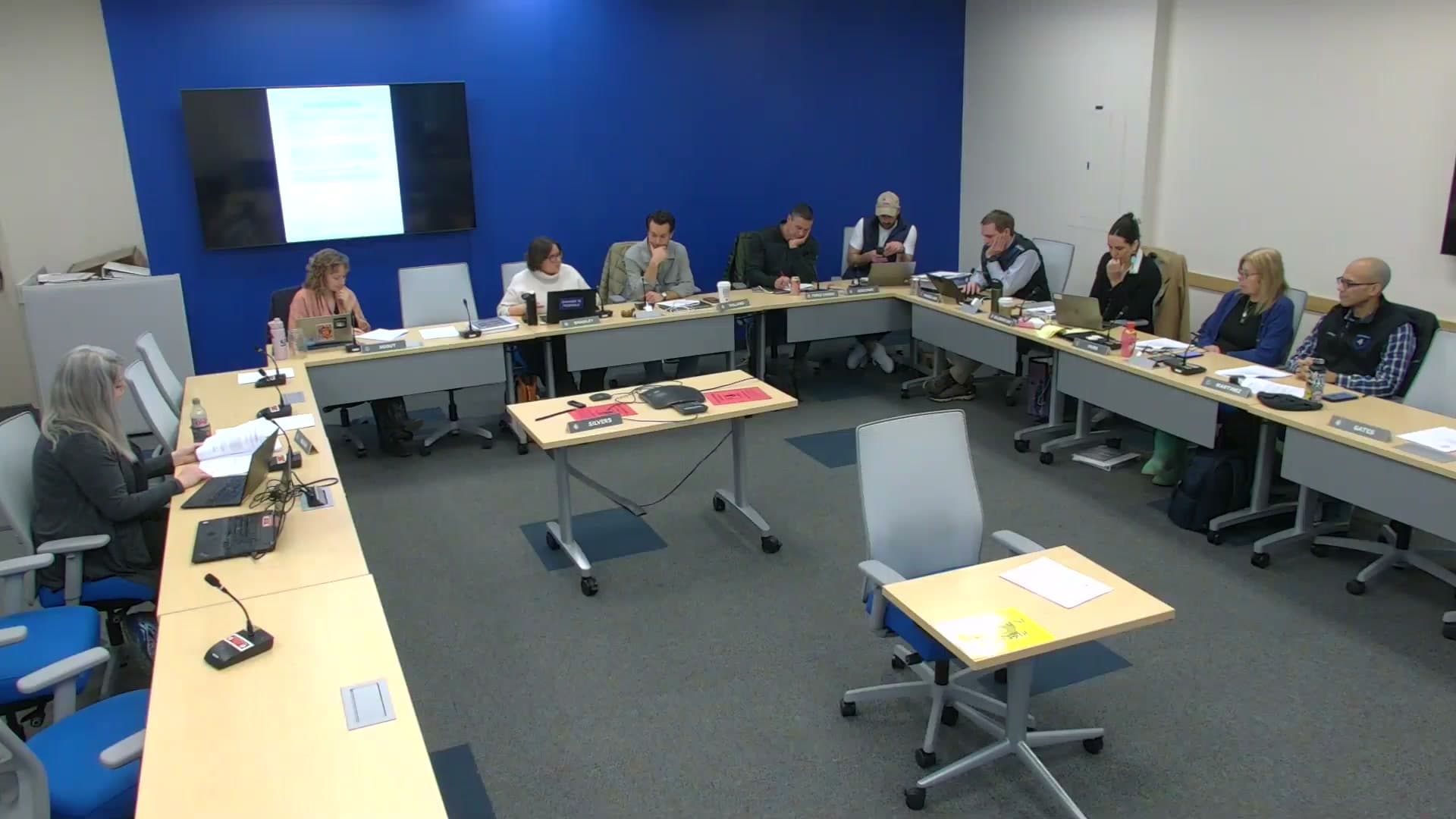
Okay everyone, I think we'll get started. I know we got a couple folks on the phone.
So this is the— so today is Friday, November 6th. This is the Assembly the last work session on our FY27 budget for this year regarding proposed budget assembly amendments. And then I'll also say we will be, because we didn't get to it on the last couple work sessions, I'm going to briefly verbally describe the assembly budget as well. But we're not going to be kind of, there aren't specific amendments on that. So I'll just kind of talk through some things that we anticipate moving forward.
And so before we do that, we will do introductions. George Martinez. Janice Park. Erin Baldwin Day. Donald Handeland.
Jared Goecker. Daniel Volland. Anna Brawley. That's folks in the room, and then on the phone I see Ms. Scout.
I'm here and on the way. And Ms. Silvers.
Here, thank you. Okay, that's folks on the phone. We're also joined by members of the administration, our OMB Director and Budget Analyst, And we are noticed from 10 AM to noon. So I'll just briefly speak through kind of order we're doing. So as we have a packet in front of us, we got it in our emails yesterday.
It's online as well. So essentially my goal, I believe they're organized also by— we'll have our, let's see, capital budget and then our operating budget and then go through. I think there's a few on alcohol tax, marijuana tax as well. So we'll kind of take those in order in the packet. And then the way we've done this generally, of course, work sessions we don't debate, but this is a time for the amendment sponsors to talk through your idea.
Also feel free to flag things where you anticipate change or things that you're still working on. I think that can be helpful. And also then opportunity to ask questions. So we'll kind of go through. I'm not going to set a time limit per amendment, but if we are taking a long time, then I'll kind of ask us to move along, and then we'll go through that.
And then at the end of the work session, we'll talk through a little bit of next steps in terms of process, and then I'll turn to our budget analyst to kind of go over what that looks like. So, okay, so before we get into the packet, and also just say, so folks, just be ready, we'll do it in order as we go through. But in the meantime, I'll say just a couple brief things about our assembly budget. So I think, I believe we said this last work session, but essentially right now there are not significant changes proposed to the assembly budget. There were two kind of items that did not make it into the budget that we did request.
So one of them is, or I guess there was a mistake that was made in the '27 budget, removing a position for the third attorney. We had changed around the funding for that in the 2026 budget, but the intent is to keep that position. So it got scrubbed essentially because it was, it looked like it wasn't fully funded. So the intent is to return that third attorney position and to hopefully recruit for that position at some point in 2027. We have tried before, but we can try again.
I think we all know we need that kind of support, and that's a net, net zero amendment because we currently have a contract or not a contract, just a line item for legal services. And that was tied to Eklutna and some other matters that are completed or not. Even if they're not completed, we're not using those services anymore. And so basically the funding for that can go back into that position. So that's something that we'll see in the substitute version of the budget that I know Ms. Brawse can talk through more in detail.
But rather than running a separate amendment, that's one piece that we'll do. And then the other piece of it that we had requested that did not make it into the budget was ensuring that we have adequate funding for the eventuality of a runoff election in this year's election. In the clerk's office budget, I'll also say, but when I say the Assembly budget, I mean the Assembly itself, including Legislative Services and Council, which are under the Assembly, and then also the clerk's office and the ombudsman. So it's all of those things together when we talk about the branch budget. So within the clerk's budget, there is adequate funding year over year for a regular election based on our known costs, mailing costs, all of that, staffing costs for election workers.
But we do not normally have an extra $400-some thousand in for that runoff election, which is another area-wide election. So rather than trying to put that in under the cap, as we know that that has been a challenge, I met with Ms. Rochet and Ms. Brause. We talked through a plan, and this is what you'll see on the agenda for the 17th. Essentially, well, one, we have most of that legal services budget that was not used in 2026, that can be essentially— and it's not going to be used by the end of the year. So a portion of that can be essentially moved into a special project fund for basically the goal of saying funding runoff and other election needs.
So we're working on what the wording would be, and that would be under the Clerk's Office, and it would essentially be similar to other project funds, like a specific fund that goes into that. So rather than trying to find $450,000 every 3 years, we would essentially fund about $150,000 per year. So we have to catch up this coming year, but the goal would be going forward that we put enough money in that fund every year to cover a runoff election. Of course, if we ever have a special election, that would be the other way that we can fund that, but those are not certain or regular, and sometimes they're district only, sometimes they're area-wide. So essentially a mechanism that we make sure that we have that funding for running elections that are beyond our normal cycle and also if there are any equipment purchases, software purchases.
We know that there's kind of more one-time expenses that come up in terms of running elections. And so anyway, so that is not going to be proposed in the budget as a line item, but you will see something on the 17th, a resolution that essentially reappropriates some of that money for 2027, creates that fund, and then we'll come back to at the end of the year when we have a better idea how much lapsed funding there will be. A portion of that lapsed funding we're proposing to move and make sure that the 2027 runoff, if it happens, is fully funded. So, so we can have a bigger conversation about that. But essentially, that is something that is not in our budget now that needs to be addressed unless— we don't know if we're going to have a runoff, but if we do, it will happen well before the first quarter budget revision.
So it's also not something we can take care of in late April because by that point there would be— we would be in that election cycle if it happens. So anyway, so if you would like more information about how we fund elections, talk with Jamie Heinz and Liz Edwards, our clerk staff. If you have questions about the Assembly branch budget, talk to Ms. Rochet. She's been digging into it to try to unpack what's there. We've been figuring out kind of what projects are one-time that we don't need to fund anymore, etc.
So, so we're in the process of still figuring that out and making sure that we are again funding things that we need to be ready for, like elections. So So any questions on assembly budget or what I just shared? I'll get up my phone as well. As usual, folks, text me if you would like to be in the queue. Okay, I don't see any other questions.
So as I said, talk with Ms. Rocher if you have questions. So let's then switch gears and we will talk about our assembly amendments. So I'm gonna again go through the packet and I'll remind folks, we know some of these probably are fully baked. Other ones are still in process, so I'll just turn to each member or set of members to provide comments as we go. So let's start on page 2.
So that is Baldwin Day Amendment Number 1 to the capital improvement budget. Yeah, thanks, Chair. So this is moving a project from 2028 back to 2027. If you remember looking through your capital budget packet, this is the project, the drainage project that includes what looks like a swimming pool in front of a neighborhood, and there are kids playing in it. This is, this is something I actually tried to move forward for construction last year, and the roadblock was that the design work was not completed.
So I, I have reached out to PM&E. I understand that we are in fact on track for this project to be shovel ready in 2027, and I don't see any reason to delay if we are able to put shovels in the ground next summer. So this is fairly straightforward, just moving this up, and this would be a change in bond revenue. So this would go on the bond package this year. Happy to answer any questions about that.
Okay, questions from members?
Okay, I don't see any. Then let's move on.
So next one is one of my amendments, so I'll just very briefly speak to it. So this is an existing item in the bond. You'll see it's— it's right now it's funded at $250,000. For coastal trail, essentially erosion mitigation and relocation of portions of the trail. If you've been out by Point Warren's Off or just north of it, you've seen there's a bench that doesn't exist anymore.
And just, it's an ongoing issue. And so there's been a conversation really for at least a decade on this with the airport, with the FAA, many partners. And we know that the actual, the fix to stabilize the bluffs is much larger than any of these numbers is gonna accommodate. So what this does is it essentially takes the existing project It increases the bond amount. It increases a small amount of O&M amount in that bond, and then it also adds $500,000 of a matching state request, knowing that this is not only next to the state airport— obviously the trail is on the outside of the airport— but also this is the coastal trail, is not just a local asset.
It's not just a West Anchorage asset. It is a citywide, impacts tourism, right? It has all these other benefits, and it goes through multiple districts too. So, um, So that essentially is to expand the ask for that and also to recognize that there are other safety risks along there, such as if you've been through or heard from folks about Westchester Lagoon to the Fish Creek Estuary, it's a very narrow corridor, lots of potential conflicts. So really just allowing for safety and stabilization projects within that corridor.
That's the idea. Any questions? Miss Baldwin Day.
Is—. So is this an additional Is this additional funding for, for design and then also O&M? Or are we, or is this a construction? Are we into construction? Oh no, we're in design.
Yeah, I believe I've been working with Parks and Rec staff to get the language correct, so some of it would be designed because certainly looking at more longer-term, you know, trail relocation, things like that. Also, that Westchester corridor would need design in order to figure out, you know, what the cost would be. And so it's partly that. It's also there are some more tactical I guess stabilization things they can do if you've seen like riprap and things along the way. So, so I think it's giving Parks and Rec the ability to not only plan for these bigger picture things, but also address some of these more immediate issues.
Gotcha. So, so what we're, what we're, what we're really intending to do here is, is to give more flexibility to address not just erosion, but also some of the safety issues that we know are cropping up in that corridor. Yes. Okay, thank you. Yeah, so it modifies the project description.
Okay, any other questions? Did you say 5%?
Yeah, and then I'll also note my intention is to include this in this state request in the legislative program. That's good. Also note we were joined in the room by Ms. Scout.
Okay, so let's move on then. I don't see any other questions. So next one is also me. So it is essentially putting back something— this is a state request as well— putting something back in that has been historically in our legislative program and our list of CAPSES requests. And it's written up here, but essentially there used to be a series of things that were in our legislative or in our CIB that said Senate District J, Senate District H, all of the different Senate districts and asked for $3 million of pavement rehabilitation for local roads.
So that essentially means resurfacing, basically the thing you do if you don't want to keep filling potholes over and over. So this is about maintaining and fixing what we have. This puts a request back in not per district or not per Senate district but for ARDSA. And the rationale is We have road service areas. This would be for anything within ARTSA.
Obviously there are different requests for individual projects. Sometimes limited road service areas ask for money as well, but it is very rare for us these days to be asking for state money to go into ARTSA because we typically only bond at this point for those. So this is really about making sure we're putting funding in our urban core. And then the $5 million is certainly less than the $3 million per multiple Senate districts, but just trying to be realistic there. So this is again the theme of fixing fixing and maintaining what we have.
Any questions?
Okay, don't see any there, then we can move on. So next we have members Martinez and Silvers for Parks and Rec. Yes, I'll speak to it quickly. This is a change in the CIP, CIP, CIB to move this project that's scheduled for 2031 bond up to 2027. This is for Standish Park is a small neighborhood park close to Muldoon Elementary, and for the record, I just want to put it on there, in 2008, the Anchorage Park Foundation report card gave this park an F rating, citing poor safety, visibility, and maintenance.
And some of those challenges are old infrastructure, dated child playground area and equipment, and quite honestly, over the last several years since the Centennial Park challenges that we've had.
This area has also felt more neglected, and this park was also utilized in some pretty negative ways, and some of that damage still remains. So we just hope to move this project forward and get a little love on that park. That is coming in the future, but get— try to get a little faster. Thank you. Okay, um, and Miss Silver, just jump in if you have anything to add.
Okay, questions from members on this one?
Miss Baldwin Day. Just generally curious if Parks has indicated their capacity to be able to meet this particular need with the staffing that they have right now.
I'm not sure I understand the question with respect to staffing, what, or, or being able— I mean, I'm not sure if this is something that we would be doing like in-house with the existing labor that we have, or if this is something we would be contracting out. And I was just—. I know Parks has a really, really long construction schedule. I was just wondering how this squares with other things that might be on their docket for '27. Sure, it was not flagged as a problem, but it wasn't asked specifically whether it was a problem or not.
Thank you. Okay, any other questions? Okay. Oh, do you have one? Maybe a thought.
Okay, Mr. Varnum.
Yeah, I think one thing for us all to consider, given, you know, the constraints of staff capacity and, you know, projects being in the queue, is just because we bond we added something onto the bond to receive a round of funding in a year doesn't necessarily mean and should not telegraph to the public that that project is going to then be completed that year. And often it actually takes multiple rounds of bond funding to have the stack of funds that you need to execute on the project. And so a good example of that would be like the Coastal Trail to Ship Creek trail connection that's received multiple years of bond funding. And just now You know, we— I think we had the groundbreaking for that this year. I'm also looking further.
I'm skipping ahead in the packet, but another example would be the Cutty Park Chalet that has been bonded for multiple times and still is not a completed project. So yeah, just— I think that's good for us all to have that understanding is we can put something on, you know, on the bond to get some funding. It doesn't necessarily mean it's all the funding that it will take, and it also doesn't mean it's going to be done anytime soon. Thanks. OK, any other questions?
OK, not seeing any, then let's move to the next page. Next one is Mr. Bolland. Please go ahead. Number 6. OK, this one we skipped 5.
I think we—. Yeah, I'm sorry, I turned the page already. OK, sorry. So let's go to Project 5. So that's Mr. Martinez and Ms. Silvers.
Yeah, and thank you, Member Bolland, for the commentary. This is similar to that. This is a project that essentially is moving an existing project from the 2032 forward, but specifically targeting Nunaka Valley South. Nunaka Valley South funding had already been bonded, and some of that money went to finishing the projects in the north part of the park. And so across years.
That north part of the park was done with part of a legislative grant from the state legislature and our local reps there. And so this is the attempt to get some of that funding forward to the park that had already been designated so that the south part can also get the improvements that folks have been waiting for with the money that they expected this year to be in the hopper that was moved forward to the north part of the park. Thank you.
Okay, any questions?
Okay, not seeing any. Then let's turn the page. Okay, so now we're on Amendment 6. So, Mr. Bond.
Yes, so this is for Woodside Park, and we did work with Parks and Rec, and both Shanna and Taylor were pretty enthusiastic about this one. The design is already underway for a more inclusive playground, parking and access improvements, a pavilion. And so this would be for the construction portion of that project. There's a larger sort of master planning process with the East Chester Park Master Plan, but Woodside Park and Playground is sort of a subset of that project that is already much further along and ready to go. And so, yeah, we are just looking to add this to the park spot.
Thank you. Okay, question. Oh, I missed out. Go ahead. Just state for the record, I meant to sign on to this one too and fully support it.
Okay, thanks. Yeah, and I'll say also, I forgot to say that before. So this is our opportunity to socialize ideas and things we intend to bring forward. So if you are very excited about something, obviously talk to the other sponsor, but this is another place to kind of signal that. So, and these are all drafts.
These are not necessarily what we'll see exactly. On the 17th. So this is really just, you know, consider these things that can change. Okay, any other questions on Woodside?
Okay, not seeing any, then we'll move on. Oh, and I forgot to say as well, we were joined by Mr. Perez-Verdia at about 10:20. So let's move next page then. Oh, sorry, so that is the background on that. Next one is Amendment 7.
Ms. Park. Thank you, Chair. So this amendment is to move a construction for a chalet in Cutty Park. As mentioned by Member Boland, um, uh, this plan from a previous bond, it was originally quoted to be $350 million. A couple of budget cycles have gone by now.
It's—. I think the cost is estimated to be $4.5 million. I'm asking for $2 million from Senator Greg Jackson and Representative Galvin to add state money to that, so to match, match funds. The Chalet would also be used as a warming center in the winter, and I think given the location, that, that gives access to that Northern Lights and Benson Quarter where we see a lot of unhoused people who could utilize that facility. There's the community council, Midtown Community Council, and as well as the speed skating organization we saw Tuesday night that gave $10,000 to the city for their management of the, of the ice there in Cuddy Park, and they have done that for several years running.
So I think it's a, it's a good location also for the kinds of events that people would, would hold. They would rent that similar to what is done in Kincaid Park and very close to the restaurants and hotels in that area. And it would be good for business. Thank you. Okay, Mr. Voland and then Mr. Handeland.
Thank you, Madam Chair. I love this project and I have supported it and co-sponsored bond funding for it in the past. And you guys know me, I'm Mr. Skate.
My grand political— if you guys could call me that from now on, I would greatly appreciate it. You know, my grand political ambition is the Voland Freeway, which is going to be an ice skating pathway connecting all the lakes in Anchorage.
But on this one, I think, Member Park, I would like to get in a room with you and the Parks and Rec staff and kind of hash this one out a little bit because I know that they are doing a master planning process for Cuddy Park, and I guess I have just heard some reservations from the department about proceeding with this project before that master planning process is completed. So, yeah, again, I'm very supportive of this. I just I wonder on the timing and the sequencing with Parks and Rec what their level of support is. Yeah, just be a question that I have and I don't know if Miss Brause has any insights into that. Go ahead, Miss Brause.
To the Chair, to Member Voland and Member Park, yes, that is true. They are undertaking the master planning process and I think traditionally we wouldn't be bonding for projects in advance of a master planning process specifically to determine what kinds of projects should be bonded for I know that some of this has happened outside of the master planning process, and that is fantastic. We like to secure funding for projects that we want to do. But I think that the completing the master planning process would give us more direction and a better way to advocate to the community and to the state for the additional funding for the development of the entire park, as opposed to just the chalet.
OK, next, Mr. Handeland. Thank you. So it says on here about $4.6 million and stuff. Is that, I guess, what is left remaining in those park bonds and individual donations? Is that that 0.6?
They have money. Ms. Park, if you can make sure your microphone's on. Yes, thank you. They do have money on hand from the previous bond that's, that's been sitting there, and then that money would be matched with this $2 million ask and money from the state. Okay, but is that, that, that 0.6, is that roughly what it is, or are you with this, I guess, over asking, I guess, over what the engineering estimate is?
Um, I don't think we're over asking.
I'm not sure I understand your question. I think maybe that would be a follow-up as to— it sounds like you're asking how much has already been funded, essentially. Okay. Yes, I think maybe that's— it's not something to answer now, but the answer— because I think sometimes this also is a good opportunity to surface questions that people will have, and then that way you can get the information before the meeting. Yeah, they do have $1 million on hand.
Oh, yeah.
Okay, any other questions, Mr. Handeland? Okay, next I have Ms. Scout, then myself, then Ms. Baldwin Day. Thank you. Um, early in your introduction of this, you said $350 million had been secured already.
Did you mean $1,000?
Oh, may have misspoken. It was originally quoted at $3.5 million. Oh, 3. And that was a couple years ago, and so it's been increased to reflect inflation. Total construction, is that right?
Yes. Okay. Okay. 4.6.
Okay. Thank you. I just wanted to clarify because that sounded like a big number. And then you mentioned that this could be used for as a warming shelter. Yes.
And I want to sort of tease that apart a little bit and just understand, because when we talk about like chalets, those are not staffed by people who are prepared and ready to support like people using a space as a shelter. I think about like Kincaid Chalet, Russian Jack Park Chalet. The intention of that space is like, you're out skiing, you come in and take your clothes off and let them dry. I think a warming shelter is a great concept. It's also something I know that we need in this community, but I want to just clarify that those two things are not the same and understand your intent with this project.
Is it a chalet or a shelter or some mix of both? Some, I think some mix of both. And I think that, that money, money to staff as a warming center for, for people who are unhoused would probably come from another, another program. Okay, thank you. That would be my expectation.
Okay. Um, I have myself next in the queue. I'll say, yeah, I think my ask was similar to Mr. Handeland, just to really understand. I would love just a page, and this would come from staff, obviously, of what's been funded on which bonds, what the status is, because I understand we have design drawings, but I think understanding where this fits in and the scale of that facility, and then I'll just say too, I think On the theme of fixing and maintaining what we have, I think that's really the questions that are going to be asked by the community about building any new facility. We had a presentation yesterday about a different facility that is not intended to use taxpayer funds, but I imagine those questions will come up.
So I'm just bringing it up. Anytime there's a new anything, we have to describe that. So I think those are my questions for now, because I think most of them were answered. So next, Ms. Baldwin Day, and then Mr. Bullock. Yeah, thank you.
I, so I think I, I think I might have a slightly different understanding of the warming intention of this particular, of this particular facility. So I think I, if it's all right, I would like to invite myself into the conversation with Member Park and Member Walland. And I also, I think, want to highlight that what is currently in existence for this particular project, I believe, is just conceptual drawings. Drawings. Is that correct, Member Park?
I know that there is a plan. I don't know how to categorize that. We do have illustrations. Okay. And an engineering report, so.
Yeah, so I think I want to be very clear, this is absolutely a concept that I I'm in full support of. I don't know, I think it would be, it would be good to have additional clarity on what exactly is being, where we are in the process of developing this project, and whether an ask for construction funding at this time is actually appropriate, given the level of specificity that we have. And so that might be a good follow-up conversation. We can add that to the agenda and potentially get additional information from some of the community members who are, who've been really, really persistent and tenacious in helping to move this project forward. So thank you.
Thank you. Okay, Mr. Voland. Thank you. Yeah, one thing I'm like thinking about too, not to get too far down the road into debate, but it is really cool, I think, when we have community members that sort of start projects and raise funding. I'm thinking of the Mushing Arch, for instance.
And sometimes it seems like those things kind of take a long time. And I'm always just, I guess I'm curious about like, how can we be supportive of those community-led projects that have a lot of momentum? Because I think it's people also taking pride in our town, and I like to support that stuff. But I will say, as far as the conversation around the warming center, my— what I understand with this project proposal, and having talked with the people behind this for a few years now, it certainly would not be I don't think the funds that have been raised or the conversation around this project is geared toward homelessness response of any kind. This is a recreational facility and it would be more akin to the Kincaid Chalet, for instance.
And actually, I would posit that the highest usage of this would be intended to be winter by the community, people who are using the skating oval, you know, families who want to take lessons and then have a hot chocolate and observe and warm up and that kind of stuff. So just want to make sure we know what we're— what the overall goal is. You know, I would assume anybody who's not being disruptive to others could come in and warm up, but that is the primary purpose is more of a recreational facility. Thank you, Madam Chair. And Mr. Perez-Verdia, and I will note he joined us in the room at about 10:30.
Yeah, I think all my questions already been answered. Thank you. Okay, I don't have anybody else in the queue for this item, so let us move on. So next we have also in the CIB Amendment 8, Mr.— well, it's Mayor and then Mr. Handeland. I don't know, I'll turn to Mr. Handeland, but also say if there's any that the Mayor's co-sponsoring, if there's comments, please offer those as well.
So go ahead. I mean, I'll turn it over to Ona. She was the main writer on this. Fair enough, yes, that does happen.
Uh, thank you to Member Handeland and to the chair and the rest of the assembly. This is, um, frankly very interesting, uh, this proposal, um, through the conversations that we have had both in budget and finance and just generally throughout the municipality. We're trying to figure out ways to do things better, smarter, ideally cheaper, um, and in the long run, one of the things that we do is look at how we pay for things and whether or not there are other ways ways that we can stretch a dollar. As part of the conversation this year around the proposal to add an ambulance to the area-wide service, we had conversations around how does that impact the north and south communities specifically when you add, you know, something to the middle or to an undesignated area-wide spot. Where does the ripple effect land?
And when Member Handeland was talking about that during the work sessions, what many of you know some of is that we are working through AFD alignment with their budget, with their positions, making sure that we're analyzing their overtime and how do we make particularly the police and fire departments who are our largest dollar consumers more efficient and ideally be able to do more with what we currently have. One of the things that became clear in the conversations with Chugiak State Park Volunteer Fire and Rescue and Girdwood State Park Volunteer Fire and Rescue, who serve the service areas by contract under AFD, is that the sort of coordination and the funding levels on EMS in particular for those service areas has not necessarily adjusted in a way that supports supports their operations, meaning the area-wide portion that belongs to AFD proper sort of maintains their operations, and whatever is possible to give to these contractual providers is sort of passed along. Cost increases, all the inflationary action over the last many years has meant that both of those operational positions have sort of gone unfunded in lots of ways. And we've been having conversations with both of those entities, particularly around how do we fix this going forward, what are the ways to do it. They are mill levy limited in both areas, as you know, we have tax caps too.
But when we looked at the financing, we annually propose bond financing for ambulance purchases. And we— I don't know for how many years. I still have to do a little bit more research in order to get all of the final numbers on this, but I don't know how many years we have done this, but it's at least 10 years of annual bond requests of 2 ambulances, 3 ambulances, 2 ambulances, 3 ambulances, and it's $800,000 and $1.2 million varying. Of course, any assembly or administration can increase that amount and put, you know, 4 ambulances on the bond, or they cannot offer that request at all. That has happened in the past where we have gone a year or two without an ambulance approval.
And really, that just hamstrings the whole system because part of the process so far hasn't necessarily integrated secured funding for Girdwood and Chugiak specifically. And in looking at the financing, when Member Handeland was asking that question, I realized that we are this year asking a 2-ambulance bond request for the replacement plus an expansion of 1 ambulance with additional staff in order to increase the capacity. But, but then I looked at the debt numbers on how much we pay doing that in a year-over-year process, and we end up paying more because we've been doing it for so long. So we now have this running trail of debt behind us for something that is an annual operating cost. I don't think any of us in this room necessarily are interested in decreasing the number of ambulances that we have providing service to the municipality of Anchorage.
And if that is the case, and it has been that way for years, then we should contemplate the idea that there is a better funding mechanism than accruing debt on an annual cost. So So, going through this, the proposal basically would delete the recurring bond request and make an annual levy of $3.345 million that would provide funding for Chugiak State Park and Girdwood State Park, over and above what their current contract has, because it is not enough to provide service, plus it secures the annual funding for them to set aside and then purchase those ambulances on a regular replacement cycle. On page 3 of the amendment, you see the sort of representation of what that capital request would look like in, you know, if we were going through our normal cadence. You see the bond numbers on the current proposal for 2020 That should be in 2027. I should have moved this all down here.
But so the current year we would have $1.18, which is the 380 bond request plus the 800. And then next year would be the $1.2 million recurring annual bond request for 3 ambulances. This graph incorporates the proposal of adding an ambulance with staff and then basically converts the whole funding mechanism to an annual levy. That then saves us the bond debt of $300,000 plus a year, which is essentially almost another ambulance purchase. And, and, and so part of this, we need to continue pulling the savings thread together to actually quantify exactly how much this will save over time.
But essentially what it will do is it takes a borrowing model puts the levy in place, and then as the borrowing goes down, the levy will continue. And ideally, the inflation adjustment with the levy paydown will sort of flatten out over the few years as we get into paying it off. This is cheaper.
Okay. And Mr. Handeland. Yeah. And I mean, credit to Ona on a lot of this stuff. I think some of it is like, hey, sparking the idea and then bouncing off of it.
But also, I mean, talking with Chief Dalton, he really is supportive of having it where, I mean, in the past oftentimes it was like, okay, well, when Chugiak State Park or when Chugiak Volunteer Fire Department is essentially due the ambulance, it's like, okay, well, hey, here you're going. They might be in a situation where, hey, normally they would say, hey, we might need it earlier, or hey, our ambulance fleet is, well, stopped. We're not going to sit there and say no to a new one. But it might not be part of that kind of, uh, that current cycle that they're on. So giving them kind of that operational flexibility to kind of save and put away that money and say, okay, well, hey, this one we might need to upgrade a little bit sooner, or hey, we can actually stretch this out for 2 years.
And so then we're not upgrading quicker than we need to, and then they have the flexibility to use that money more towards operations. And so I really like this because, yeah, it gives the, the service areas, but I mean, both in Chugiak State Park and then also for Girdwood, the kind of the, the operational flexibility to utilize that money. Okay, Mr. Bowen, and I have myself in the queue. Thank you. I think I know the answer to this, but we've been having a lot of conversations around service areas and who pays for what and who benefits from what.
And I know, so does this do anything to change who's paying for what? To the chair, to member, no, this is the same area-wide allocation that is currently paid. It would be slightly more in order to accommodate the Chugiak State Park or Girdwood portion of the contract, but overall it's the same subset, the same population paying this into the same system. And what I will add to that is one of the things that I really like about this is that if this were to become the way we did business, then we now all know how much it costs for ambulances in this municipality. We know it costs $8 per $100,000 of valuation.
That doesn't— that's not how much it costs to operate them, right, with the people attached to them, but that is how much it costs. It's $40 a year for an average household to have ambulance service within the Municipality of Anchorage available, and I think that is tangible in terms of the information the public wants. Awesome, thank you. Yeah, myself in the queue, then Mr. Martinez, Ms. Baldwin Day, Mr. Karamondi Day, Mr. Karamondi Day. Um, my question is quick.
I think a lot of my questions were answered, and then I'll also say, um, I guess at our fiscal future meeting last Friday, uh, the public is very interested in essentially how we change how we're doing things and making sure that we're paying for things. So I think this This seems like it's in the space of that. But the question I had was, I was actually surprised how low the cost of an ambulance was. So can you— what is the cost, relatively speaking? Because I was at a couple of these push-in ceremonies for fire engines.
Can you—. Do you happen to know the running cost of a fire engine, meaning the thing that has the water and all of the tools and so on? So to the Chair, that's actually why this sort of clicked for me, because I was looking at the bond request of $380,000, This is an ambulance. We buy this every year. Why are we paying debt on that?
And so I think the ambulances run between $375,000 and $400,000 depending, and the engines are $1.2 to $1.5 million, I believe, depending. And so they, you know, the ambulances are the more affordable rigs within the fire department. And so whether or not it makes sense to do that with engines and ladder trucks trucks, etc. We have to look at all the math. There are fewer of those than there are ambulances, so the math might not work out quite as well, but we are looking at how all of that, the same sort of consideration here, how does that look across the rest of municipal assets?
Yeah, and I'll just note, I think we get questions like, why is it, why are we paying so much for that thing? And I just want to offer, it's very different than a truck, a regular truck or a car or something like that. It's much more special. Anyway, so I was surprised how affordable it was. Yeah, okay, next, Mr. Martinez.
Thank you, Chair. It's a similar line of inquiry with respect to understanding changes that are being described, but first is, what's the difference between the responsibility of a bond and versus a levy? Is, is, is a levy fundamentally a tax where a bond is a different instrument. Can you describe that? Through the chair to Member Martinez, that's a great question because it's actually the part that I wanted to clarify, that, right, there is a significant difference between a bond and a levy.
Bond is a financing mechanism and it's, it's a borrowing mechanism. A levy is a tax levy, right? It is a certain amount on an annual basis that you collect from the community. A bond is a financing mechanism that you are approved to use to make a purchase. And then whatever the bond terms are or whatever the financing terms are, you have to repay that debt over time.
So there is a significant difference in terms of the impact to the taxpayer in any one single year if you bond versus if you levy, because, you know, the bond process may increase your allocation by, you know, $0.20 this year, $0.40 the next year, The challenge with that is that after a certain number of years, you have essentially put yourself in the same position as an annual levy dollar amount. And so the question is, where are we in that threshold on all of these different assets? Have we now accumulated so much debt that transitioning to an annual levy is cheaper in the 5 to 10 year run than the way we are doing it currently? Are they annual operating costs that we would not expect to ever decrease? Or if they do, because this is a specific ballot question, you know, this could be a reauthorization question.
It could be an, you know, you can have it extend all the way through. It can end after 5 years, 3 years, however long the reauthorization needs to take place. That may be important either if the program ever needed to change to decrease or potentially increase if another ambulance needed to be added. So I think the communication back and forth between the, the community and the MOA is important in terms of what the service levels are. But this essentially is the baseline of a service level.
So the area-wide service level for ambulances we're setting in this ballot proposal. We would say the baseline service level of the Municipality of Anchorage is 19 ambulances and it costs this much. Anytime we go above that or the costs increase and we need more, we can explain how and what happened. And that is either a service level adjustment because the service is expanding and more is happening, or it is a cost increase because inflation has gone up and we need to adjust for that. Cost increase.
So there's, there's more clarity in terms of transparency into the budget and what it pays for.
For additional context, the nature of a bond is not stable per se. It changes across markets and across time. So at some points in time, a bond is a more useful tool than, than immediate taxation. So I think it Through the chair to Member Martinez, absolutely. And that is right.
The more we can expand the tools we have in the toolbox, the more we have the opportunity to do things cheaper and more efficiently, because sometimes we get stuck in the clunky box and we can't get out of it. And I think that there are challenges that come with where we used to be and we were building huge buildings and we were borrowing for large projects. But now, because of our revenue situation, we are borrowing for everything. And, and that does not compute with the way the math lands over the last 30 to 40 years. So who would be able— who would be voting on this?
Uh, through the chair to Member Martinez, this is an area-wide question, so all of the municipality would vote on this.
You, uh, it's interesting where, uh, because I'm interested in the philosophy of, of the idea, right? Um, I mean, if you could buy your home with cash, you would not mortgage it, correct? Right. Um, through the chair, that depends. Depends.
That's, that's— see, that's the other part. And, and so I was wondering about where— how, how this is unique in terms of this particular item, this particular project, or are you talking philosophically of, of a change that it makes sense across other areas as well? And then go to Mr. Volner's point. Are we talking about, um, getting more direct with who pays for what, or we don't do it? I mean, because that's the— that's essentially the question of a bond is we know you don't want to get taxed now, so it's easier to digest the cost over time.
Rather than have the $40 out of your— and so then the question becomes, how do you break it all down and the entire budget down in similar lanes? And then who gets to choose which, you know, what those conflicts look like? So I'm just interested in that larger question. It may not be here for the depth of it, but at least a touch point. Through the Chair to Member Martinez, I think The answer to all of the questions is yes.
In terms of the philosophy, I think that this is— this kind of thinking, this philosophy is one of the tools in the toolbox. And so when we are looking across the municipality in each of the columns, we can pick this up and say, does this work over here? Does this work over here? Does this work over here? As you said, there may not be, you know, reason, or it may make more sense to borrow for a specific purchase that is $40 million, because that would be a very low annual increase over a long period of time for a large-dollar project.
But this is an operating cost. Buying an ambulance that we know we're going to use and have used for 20 years is an operating cost, and we should not be paying debt on those operating costs if we don't have to. And so really the, the, the who, who breaks it all down, who does that? I mean, respectfully, I do. And, and, and, and I, and I think that that is—.
We could tell this is a 3-page document. That I think is the, is, is what I am saying, is that I think we can look at this more. I don't know if it, if it works across other assets and other operating departments, but I think that it can because, because it feels like it's supposed to. We're trying to get out of this weird bag that we're in. We're all saying it's not— this isn't right, this doesn't feel like how— and I think that it's because we need to change it.
And, and so looking at this That doesn't mean that we don't have a tax cap or any of that. It means we're looking at how we're paying for things and whether or not it is reasonable to continue doing it that way if we have changed our patterns in the intervening 10, 15 years. And, and so pulling the details on the savings on this, I think, will give us a little more clarity on how this works. And, and so pulling the details on the savings on this, I think, will looking give us a little more clarity on how this works. And, uh, for other examples of what this might look like.
But I think that the more this kind of thing happens, the closer we can get to the question Member Perez-Verdia asked a few work sessions ago, like, what is the baseline? How do we do that? Well, we said it, you said it. And so we asked the public, do you want to pay this amount for this thing? And so So this is a small sort of subset, a microcosm of ambulance that we can put our hands around and figure out if that works, and we'll be doing more of it.
All right. Okay. Just as a time check, it's 11:00 AM. We're about halfway through the packet. I've got 4 more folks in the queue, so just asking if we can try to get toward wrapping up this conversation.
Thanks. Yeah, I'll follow up with the interruption. Took my question right from my head. So thank you, Chair.
Okay, sorry. Yeah, I want to make sure we have plenty of time to discuss our operating budget amendments, and then I don't think we're going to go past noon at this point. So next, Ms. Baldwin Day. Thank you. I just want to do that thing I do where I clarify that I know what we're talking about in plain language so I can explain it to other people.
So I think what we're doing here is two things. And please tell me if I'm correct. So the first thing we're doing is we're basically saying we've been paying for ambulances and associated humans with basically a loan that's labeled bonds. And we've been doing that for a while. Um, and we have been charged interest on those loans and that interest is expensive.
And so what we are doing now is we are moving to a system where we know what it costs and we are going to pay upfront for those things. While we are paying down the debt that we have accrued on the things we've already done. Through the chair to Member Baldwin Day, almost. Love that for me. Go ahead.
98% Correct. At the very beginning, you said we have borrowed for ambulances and the humans. We have not borrowed for the humans on ambulances. This expansion proposal is the first proposal to say we need to add the amount of money to pay for the ambulance and the humans because we need to grow the amount of revenue under the area-wide service, but the rest of it is correct. Excellent.
Okay, I will take 98%. Thank you. And then the second thing we're doing is we're giving Chugiak State Park and Girdwood Volunteer Fire Departments more flexibility, more agency over their sort of unique EMS needs where they are. We're giving them the ability to sort of self-manage that rather than us being like, and now you get an ambulance, now you get an ambulance, now you get an ambulance. Through the chair to member Baldwin Day, yes, and you said they're distinct geographic areas or service areas, and that is important in terms of both of the landscapes of those areas, particularly Girdwood has very interesting apparatus in terms of what they have to do for rescue and all of the other issues that come with the fabulous mountain town of Girdwood.
So I think that that is a significant change, mainly significant for Chugiak and Girdwood, but specifically for any of us who are in those areas ever. And I think a lot of the municipality is. Yeah, okay. And I think the last thing really is just a comment, and that is, you know, I really appreciate this conversation about like what is our baseline service level. And I hope that as we we carry this conversation forward, that we're, we're not treating a baseline service level as an ideal or optimal service level, that like, this is what we are doing, this is how much it costs us.
But that might not actually be the right answer over the long haul, especially when we're contemplating the current demand on services at this current service level. So just wanted to put that out there that our our baseline service level now is 19 ambulances, maybe we shouldn't say that that is the right number of ambulances for us to have, you know, in perpetuity. Okay, thank you. Okay, next was Mr. Perez-Verdia. Yeah, I think we've exhausted this.
I think most of my questions have been answered. Thank you. Mr. Volland. Thank you. So I think I just wanted to highlight that this is— well, I like this model and we've been successful with it.
We did a special levy for fleet replacement, I believe, for APD. We did a special levy for some snowplow equipment, and voters passed those things.
Is this sort of indicative— do we imagine, or maybe we don't know yet, but the levy that's gonna— this is gonna be part of— this is like a standalone thing, or is— are there other things that are going to be included on that levy? To the chair, to Member Voland, this should be a standalone question, and, and that's another thing that sort of made me realized that we could do this is in the work session when we were explaining how bonds have the, you know, bond question for the borrowing and then the small O&M levy portion. My brain just sort of said, why don't we just make the whole thing the actual purchase as opposed to putting the financing mechanism in at all? And so it would be a standalone question. So, so I think one of the things that we have to weigh is if, if, is if this is approved, is it the only question around ambulances on the ballot?
You know, does that limit the choice and then mean that if it is not approved that we're out of a cycle? But I think that we can do that calculation between now and January when we have to figure out what actually goes onto the ballot for final and determine what the right sort of tenor of that conversation might be. Thank you. And Mr. Handeland. Yeah, just some kind of follow-up comments on this.
So I mean, essentially we are already paying for this and it's like we have these bonds where it's like, hey, we're putting small amounts and then collectively and stuff we're paying more than the $40. And so by doing it this way, we are saving money. We're going to be able to get more. And so it's just how, how essentially we are, we're structuring that, that system there. Through the chair to Member Handeland, yes.
And the other thing I didn't mention is that the other thing that that, you know, we don't have to pay for when we don't use a financing mechanism is the actual cost of issuing the financing. And so that initial cost upfront goes away too. So, and then this just becomes a regular procurement that goes through the contractual approval and gets delivered. So it becomes much more simple. Also, the, the, the more we decrease our bond debt schedules and all of the things that are contained within the ACFA.
Means that the ACFA is easier to complete and quicker. So all of these things sort of move us in a better way.
Okay. So I don't have anyone else in the queue. So that, that concludes our capital budget amendments. So we are going to now turn to the operating budget. So I know we're about halfway through our packet, more or less.
So we'll continue through there again in order. And then, and then I also want to make sure that we reserve a few minutes at the end because I need to have our budget analyst talk through our process and then just some reminders about how we get between now and Tuesday the 17th. So next we have Item Amendment 9. So that is Members Handeland and Gerker. So please proceed.
Yeah. And then Matt Cruikshank, who's the vice chair, if you want to come up to potentially add answer some questions here. He's the Vice Chair of the SBIRSA Board. So this amendment, what it does is— oh yeah, one of the microphones. Yeah, and staff can get you a microphone.
And I'll just— just to note, because it is sort of unusual for us to have other folks at the table for our amendment work session, so I'll just remind folks, this is for answering questions. And then, yeah. So thank you. And folks can follow up offline if they have detailed questions. Go ahead.
Yeah, so what this amendment does is it transfers $4.27 million to— from public transit to the Suburba Board. So right now in Eagle River, Chugiak, we are paying into the transit system, and the ability of people out in Chugiak/Eagle River to utilize the system is, is, is very limited. We have Route 92 that is operated out there. It's a commuter route, is only operated both in the morning and evenings on weekdays, and it is the most expensive route. It costs $31 per passenger.
So when the big buses are going up and down the highway, there's about 3.5 people on the bus at a time. I mean, this is— I mean, the next highest one in, in the municipality is $13 per cost of travel. And so it is, I mean, it is extreme amount. So total operations for, for that bus system is about $560,000. And so what we are proposing to do is to eliminate that route completely and then have the money that the proportional funds that Chugiak State Park and Eagle River are paying into that system for that to be transferred to Subursa to be utilized for the transportation needs of that community, because the Suburso board has— I mean, just like the rest of the municipality has been seeing impacts with their budget in terms of having to reduce snow plowing along pedestrian walkways, and it's just how we have to do it, given the budget constraints there.
And so With this amendment, I'm happy to kind of answer some questions on it, but— or Jared has some things, but it's also— I would like to, I guess, if you could just give kind of a brief kind of potential impact of what some of these funding, this additional funding, what kind of SBIR/STTR could be doing with this. Thank you. And please turn on the microphone, so press the button, and then when the light is green, you can speak. And then make sure to— oh, yes, hold it down a little bit. There you go.
And then make sure to put your name on the record. Thanks. Through the chair, Matt Cruikshank, Vice Chair of Subursa. So Subursa is broken down into two separate mill rates. We have a 1.1 for operating and a 1 for CIP.
Over the past several years, we had a significant contract escalation with our last year with the contract holder was McKenna. And we had, generally speaking, we're paying for the hourly rates of the contract equipment at roughly about a 25% average across all of our pieces of equipment. We've now awarded a new contract and have about an additional 25% to 30% average cost for the equipment right there. Our current mill rate is at 1.1 right now. We've been at the cap now for several years right now.
And why I'm just mentioning this is we do not have any additional funding to put into sidewalks, and why I mentioned sidewalks is an easy one because the constituents out in Chugiak River extremely value connectivity to different areas in the area, and we have something called hazardous roadway or hazardous bike paths. So the number one thing we get is, why can't you plow our bike path. I'd like to commute to different locations right there. And, uh, we have the difficult challenge to prioritize the roadways, and with our now limited budget and the increase in our expenditure across the portfolio of Chugiak Eagle River, we are put into a difficult situation that we have to cut ultimately, uh, bike paths. I mean, I poor term, but low-hanging fruit is probably the easiest place to go.
So with additional funding, what I would envision is we'd have two major stream benefits to the community right there. First, hazardous walkways— always prioritizing schools and major transit routes is always going to be a priority. It would be amazing to be able to offer that. But also microtransit. I think microtransit, it would be amazing, uh, both for future development of the area.
Right now we don't have the connectivity that Anchorage has, and so as the new developments are going up right now, uh, walkability is not really, uh, an item right there. So actually creating some type of transit system— and I know there's some federal dollars potentially coming to a sample micro transit system out there, but that's not a sustainable model— so additional funds coming through our Suburbs, everyone I think knows what's up with Chugiak State Park, Eagle River Rural Road Board service area. I think would be amazing to have a microtransit system out in Chugiak River where we can prioritize our groups that don't actually have the funding to afford vehicles to commute to different locations. Our senior center, right now we only have a single bus route, 92. It's not utilized over the past 10 years.
We've had a couple of routes and they've slowly been all cut. So currently we do not have a transit system in place for Chugiak/Eagle River. So I would think any type of funding investment into directly— I think we're coming up on 40,000 population— would be a good investment. Thank you. And so just a little bit of background on how this number Jared Goecker came up with.
This was using the transit bus system's budget, taking out any federal, any ridership amount. And so this is just the allocation, the prorated local share that is going currently into the transit system from the people of Chugiak State Park, Eagle River. And so this is not pulling anything out of the Anchorage bowl. Allowing the people of Chugiak-Eagle River to essentially keep the funding that they are paying for transit so that it can be utilized in the community as they see fit.
Okay, I have Mr. Martinez in the queue, then myself, then Mr. Bowen.
Thank you, Chair.
Um, Budget Director.
Do we have— how is transit funded today? Bus, people mover specifically, how is it funded? And how is it distributed? Well, through the Chair to Member Martinez, I'd need to get my book and look specifically, but, uh, but through— it's through area-wide and federal funding as well as any other grants that are required, as far as I know.
And how it's distributed, you mean? How is the— how is the funding collected? And is this the representation from Eagle River, from the area-wide model, to the distribution of those resources, in fact, through bus routes? How is that distributed? Is it— does it follow the collection model or is it need-based?
Through the Chair, I don't know. I would need to ask Director Rudolph in order to determine how they actually align those, but I don't know that it has any specific formula that says that this corner gets this dollar amount, this corner gets this dollar amount. I don't, I don't know if that is how the system is planned. Yeah, similarly, I haven't heard of bus routes being determined based on tax, taxing districts, right? So like, because this is how much is collected here, there's a bus that goes here, and we follow the route similarly.
Through the chair to Member Martinez, correct. I do not think that that happens. Okay, so, so the nature of, of the collection area-wide to the distribution is not based on the taxing districts per se, it's based on a different methodology, development growth patterns, demographic, correct, a variety of other things. Um, to the sponsors, essentially, the nature of the request.
It seems like there's two requests here, and I wanted to just peer, peer them out a little bit. Is the $560,000 for the bus line— is when we remove that bus line How do you— how is it the— how is that— where does that $500,000 live to the nature of the remedy? So if the remedy is proportional representation, how do you take from $500,000 off a bus line that is being used today and turn it into a proportional share of more than $4 million? To this process. Yeah, so I can answer that.
So right now, Chugiak Eagle River, the average homeowner is paying around $360 into the transit system. What, as far as I can see, that we are receiving back in terms of transit services is Route 92, which is about half a million dollars, and then about $90,000 that comes into Chugiak Eagle River Senior Center in terms of their portion of Anchorage. And so the, I guess, issue that we are, I guess, raising here is that this is an area-wide tax that we are paying into, and that we are not, uh, do not feel that we are receiving anywhere close to a proportional share of the tax dollars that are going into that system. I mean, right now, for someone to utilize the system The average person out in Eagle River has to have a car to get to the bus system. And so when we are talking to people out in the community of what transit and what the needs are that they would like, it is interconnected within Chugiak State Park.
It is not, we want to go downtown. And as far as the, the $31 here to get down, I went and checked an Uber ride here today. It is $29.
And so, I mean, that's for 4. I mean, so we are— right now that route is severely— I mean, we're paying way more than we're actually receiving. I mean, and this is for the taxpayers. And so just trying to, I guess, shift it so that, hey, Chugiak State Park, Eagle River, we can get a system that we're paying for.
So to follow up with one additional question, has the analysis been done— and this is probably to the sponsors— if the assertion is essentially a proportionate share related to the amount of tax collected should be distributed in that particular area? Is that, is that an analysis that's been done citywide so that we know that that's true for everywhere else? I chose the tax districts that are in my area there because there is a current road service model that aligned with that, that we were able to sit there and say, hey, this is an operational body that knows the transit needs of the community that could administer that and develop the programs that the community needs. Thank you. I had enough.
I have a couple questions, a couple for the sponsors and one for Mr. Crookshank. Thanks for being here. One is, I know the decision about our routes and where they go and, you know, expansion, all of those things that runs through the Transit Department, and then there's a whole federal process. There's notice deadlines, things like that. So I guess to the sponsors, have you all spoken with the department about this?
Or I know the timeline is short. Was there any intention to bring this to the Public Transit Advisory Board or any of those folks who talk more about the kind of route planning side? Uh, so I did talk to, uh, um, Transit, uh, not specifically about this amendment but about some other stuff, um, kind of, uh, my concerns, but not, not about this, this item, uh, specifically, but plan to. Okay, yeah, I think that would be helpful to understand because I think it's just important to understand that we, we budget for the routes, but there's another process for determining those. So I don't know what the timeline is on that.
I know it takes a long time because if you discontinue, you have to give notice, but which doesn't mean that we can't change the budget. But I think that'd be helpful to understand. And then just for clarity, so it looks like basically the proposal is that a portion of what is now within an area-wide— it's not really a service area, but an area-wide service would then be transferred essentially to a service area. Is that correct? Yeah, and I guess one of the things that I kind of look at this similar to what we do with Anchor Rides right now is Anchor Rides does not operate out in Chugiak/Eagle River.
We are giving money to the Chugiak Senior Center to essentially perform those duties. And so I'm looking at this essentially parallel to it of, hey, the taxes are collected area-wide, the portion that is being contributed from the community of Chugiak/Eagle River, we are sitting there and giving that to the SBERSA board to set to then go and determine their priorities, their needs, and then actually go and administer those programs because they've got staff, they've got kind of the pulse on the community there to be able to kind of move much more nimbly. Okay, thanks. Yeah, I think the conversation has come up in the context of CASA about essentially, you know, moving funds from one service area to another. So I would want to understand if there's any precedent, and that's maybe a question more for the administration as a follow-up, just, you know, if and where we do that.
I imagine there's TORAs and other mechanisms to do that as well. So that's something I would like to understand. And then my last question is for Mr. Crookshank. You mentioned the SBIRSA mill rate and all of that. I know this isn't proposing to change that.
I'm just wondering, what is the mechanism to change the mill rate? And I say that because I remember a couple years ago having former Assemblymember Kennedy testify because I think there was something on the ballot. So I guess I'm wondering, what is the mechanism to consider changing the operating or capital mill rate for SBIRSA and have those discussions happened within SBIRSA in the last year or so? Through the chair, yes, those conversations have been had. We had a ballot initiative, I believe last year, to increase the mill rate cap to 1.3, 1.4, to give additional flexibility with the increased expenditure that we were having.
Ultimately, the voters voted down that initiative. And then either to you or Ms. Brawley, so, and remind me, because I know there's some things where everyone in the muni votes. For example, Girdwood, it's something that impacts Girdwood, it's their service area, but it's the full faith and credit. Would something like that, the subversive, is that something that is voted on area-wide? And to either of you, if you know, is that an area-wide or is it only the service area voters?
To the chair, it's service area voters only to increase their mill rate. Okay, thank you. Okay, those are my questions. Mr. Voland. Thank you, Madam Chair.
Okay, I want to make sure I'm tracking here. So the cost of PeopleMover Route 92 is about $560,000. Okay, but what this purports, if I understand correctly, is to— so all of the taxes for this purpose from this region of the municipality would stay within that region. Correct. Okay.
I think that's interesting. I think it's also like interesting in light of the prior amendment from Mr. Handeland where, you know, we're using area-wide funds to give more flexibility to areas like Eagle River and Girdwood. And I just want to go back to the services— service area conversation, because essentially what this is doing, it's not just deprogramming one route. It is deprogramming Eagle River's contributions elsewhere in the municipality to transit. And so, you know, what if District 1, North Anchorage, decided we don't want to pay for bus service in South Anchorage, we don't want to pay for bus service in East Anchorage?
Like, would that be a fair thing? What are— if the contributions are area-wide, you know, we're not just paying for my little hamlet, I'm paying for the services in my city.
I guess I just want to hear a little bit more from the sponsor on how— did you look at maybe just taking the PeopleMover Route 92 amount and programming that to the Chugiak State Park, Eagle River Senior Center? Well, I mean, I guess, I mean, as the— I guess through the history of the PeopleMover and as routes have been cut, and it's oftentimes, hey, around the, the outskirts of town that are doing it. But the amount of money that those people are spending towards that, that transit does not change. And so it's not— I mean, the, the way that I was, was looking at it was that, uh, I mean, when you have a fire service area, this is not that, oh hey, your house is further away, it's going to take farther away. It is on this, the, the fire department will never come because it is, is so— the, the PeopleMover system is so far away that it is really infeasible for anyone who doesn't live near one of these, uh, one of the people who does live near, near one of them, that it, it really doesn't make it it in any way practical for people in Chugiak/Eagle River to utilize the system.
And I think that's, I guess, characteristic of the usage rate on that 92. And so I think that that should be eliminated, and that was kind of more of a thing of like, hey, just from a, I guess, cost savings perspective. But then it was, okay, well, Eagle River or Chugiak is essentially not in the system. We would like to, I guess, keep the money that we're trying to do and develop our own systems. It's not sitting here saying, hey, we're trying to, trying to pull something out of Anchorage.
It's more of, hey, this is the thing that we're paying into, uh, and wanting to utilize that. Sure, but it, but it does impact bus service elsewhere in Anchorage. Oh yeah, yeah, yeah. And perfectly thing of like, yeah, there are, I guess, but I guess the fundamental question is, is bus systems in other parts of the area of the municipality, should those necessarily be, I guess, impacting people who are not utilizing that, not able to fully utilize, and then them essentially having to subsidize that system? And I'm not—.
Yeah, I think I understand, you know, if I don't go to the park, should I pay for the park? I don't know. But I will just— I think I would be curious to see this maybe come back in a form that doesn't entirely eliminate Eagle River's contribution to bus service in the rest of the municipality, but maybe can do something to support the Chugiak State Park Eagle River Senior Center. So for what that's worth, I guess I will just socialize that as my response. Thank you, Chair.
Okay, Mr. Martinez. Just one clarifying question to the sponsor. So the intent would be to not have any connected service between Eagle River and Anchorage, correct? Is now—. Okay, thank you.
Okay, I think that's all the questions. Let me just check one more time. Okay, so that's Amendment 9. We'll move on to Amendment 10. Thanks, Mr. Cook, for being here.
So Amendment 10, that one is mine. It's for Parks and Recreation. And I should say again, we're in operating budget. From here on out. This is a small proposal.
Obviously, I will acknowledge, you know, we know there's not sufficient room under the cap, so this is— there's several amendments that I saw that I think the part of the discussion offline is where we would fit this in and how. Essentially, this is to— and I've spoken with Parks Department about this— this would add 2 seasonal part-time, and it's 0.3 because they're horticulture department, which only operates during summer months. They're less than a 0.5, So these are seasonal positions. Separately, they've been reducing the number of seasonal positions generally to make sure that we have folks who are working year-round that have benefits, but this particular one they were in support of essentially. It's to create an invasive species task force, meaning having a small team of people at the Muni to supplement what they're already doing and what really is left to a lot of volunteers at this point, which is to deal with invasive species.
Species. And not to go too in the weeds on it, so to speak, I actually— anyway, sorry, that was not intentional and my brain did that anyway. But I think it is true. I think it is not just a matter of we don't like these flowers. This is a serious problem.
European bird cherry kills moose. It is very aggressively invasive. If you live anywhere where there's any patch of bird vetch, that bird vetch will get everywhere. And I've seen it kill entire trees. And so So these are things where they are serious encroachments on what is basically a separate ecosystem that is being invaded by these invasive species.
I mean, that's so— so I want to be clear, I am not arguing this is the most important priority in the entire city. I am arguing that this is not just cosmetic. And so, so I think relying on volunteers all summer is not sufficient. And I've been one of those volunteers every summer. This is one of the things I do is weed pulls.
And just seeing the scale and the fact that you— year one, they do a bunch of pulls of bird cherry or chokecherry, whatever it's called, and then year two, year three, you have to go back and do the same thing. So we are not keeping up with this, and this is a threat to our parks and greenbelts in terms of native vegetation, native wildlife, all that stuff. So anyway, all that to say, I am hoping to find a way to fit this in the budget. And again, I know it's competing with a lot of other priorities, so I'm working on that. And this again, though, would be seasonal, so it doesn't add benefits.
And so that's why the cost is so low, even though it is 4 positions. Questions? Ms. Park. Is this part of the program that— or do we— first of all, do we still have a program that subsidizes removal of bird cherry trees? I can find out.
I don't know the answer to that. It might have been a one-time grant, would be my guess. My second part of the question was, is that included in that? Program. Yeah, that's a good follow-up.
I will find out. This would be for paying for staff, and then this would be in addition to activities we already have. So any other questions?
Okay, Mr. Bond.
Well, first of all, I'm just going to say I think there could be some really cool swag. I want like an invasive species task force t-shirt or something. But that's not in the budget.
But I guess my question is, is on the funding source. Is this something that could be put on a bond, like a Parks and Rec bond? That's a good question. I think I would be very hesitant to pay for seasonal positions with a bond and to pay debt on them because it might— the debt might— I mean, for $80,000, it might actually end up being a significant amount, or at least I guess it's a question. I don't know if there's a way to fit this in our operating budget, so I'm going to investigate that.
I don't think that it's something we should bond for, because I think long term we should be getting away from bonding for staff that we need. And I think that if we're gonna do that, the fire folks are probably a priority. Okay, then another question, just because we know the tax cap is what it is, could this— has this been included in the conversation around the legislative packet?
That is a good question. I have not investigated that. I would say again, I don't know that we asked ask for operating subsidies from the state. I'm just thinking more like a grant, like a— I mean, invasive species would be removal, be something that would benefit the state as well as Anchorage. Yeah, I think it's worth discussing.
I mean, I will say this, and I should have said before, this is a recurring request. So in our operating budgets, one-time or recurring, I don't see the state giving us a recurring money for something like this. So for this, the way it's designed, I think that's, that's the intent. But I think there's other conversations to have. Okay.
Okay, other questions?
Mr. Perez-Verdia. The nonprofit organizations that are in Anchorage that are addressing this already, the Anchorage Park Foundation, Anchorage Soil and Water Conservation, that are there, is this something that we need to be funding? Are there others that can do it? It's a good question. I can certainly follow up with those organizations.
I think most of those organizations foundations have very small staff. And in fact, most of the things I've been part of is Anchorage Park Foundation working with the department, organizing volunteers on a one-off basis. And so I think it's not that there is a set of staff who is doing this work. It is that they are actually getting folks to do it, folks like me, for free. And I don't think that the scale of this problem is a volunteer-only effort.
So that's why I'm bringing it. Thanks. Any other questions? Okay, let's move on then. So, Member Levin, Mr. Martinez.
Thank you, Chair. One of the— one of the— this is an increase in public transportation funding for PeopleMover, particularly to extend PeopleMover service to holidays. One of the complaints that I hear often from folks who are using PeopleMover from across the city and especially in my district, is that people who use PeopleMover for work have to get to work even when there's holidays. And then when there are holidays, sometimes we want people to move around and celebrate and connect on some of those holidays as well, and their bus service is not available. So essentially, if you don't have a car on a holiday, you may be neighborhood or even homebound.
And so this essentially brings PeopleMover service to holidays, which I think is going to help us economically and help a lot of workers move around on those days. There is no source identified, particularly at this point, although the cost is $580,000 to increase PeopleMover for every day, including those holidays. And this is 7 holidays at full-day service, which would restore MLK Day, Presidents' Day, Sewers' Day, Veterans' Day, and day after Thanksgiving, Juneteenth, and Indigenous Peoples' Day. Thank you, Chair. Thanks.
I have myself in the queue and then Mr. Bowen. Oh, Ms. Scout. My Question, I guess I'll ask the same question since it's about transit. Have you discussed this with the department?
And of course, route changes of any kind or that kind of thing would go through that system. So just wondering if you talked to those folks. Yes, I got the numbers and the specs from transit. Okay, thanks. And then another question, just so this is for 7 holidays, then essentially this divided by 7 would be the one for each individual holiday, is that correct?
Whatever that number is. Yes, about. And this is that full weekday service, so there's a different cost if you did weekend service on those holidays as well. I think it's about $300 and somewhat thousand. Okay, thank you.
Mr. Voland, actually I was flagging you for Mr. Girdker. Sorry, Mr. Girdker, and then Miss Skarbek. Um, how many people is this serving? Like, how many people are gonna be riding the buses on these days? To the sponsor or the administration, whoever has the answer.
The question is how many people are riding the bus on holidays. Well, yeah, I mean, couldn't know that. I guess what I'm trying to get to is if we're increasing the cost by nearly $600,000, how many people are actually going to be utilizing this? Do you have an idea?
I don't have the floor, so, Chair. I think there's a question. Someone from the administration came up, and so maybe there's a response. Yeah, and I think if we don't have a response in the room today, generally that's a follow-up question too. So go ahead.
Yeah, I would just say, Susanne, I've seen some of the communication.
Can you not hear me? Can you hear me? I can hear you. Can members hear me? Yes, yes.
All right, now can you hear me? All right, better mic. Okay, um, if anyone wants to offer an amendment on that for mics, um, so I've seen the communication and I believe that when we use— we could potentially get some numbers of ridership when we had holiday service. Obviously, it would be dated, but at least it could give you some sense. Yeah, that'd be helpful.
Thank you. Yeah, and additionally, I think just with that request, we kind of have a sense of employment usage as well in terms of ridership and the demographics. I think that would be potentially helpful as well because you can extrapolate to a workday. And going to work with respect to employment data. By the contract, labor contracts.
Okay. No, Mr. Pressworthy, I was having a side comment that also because it'd be a holiday, depending on the labor contracts, you could also be paying more in cost for labor. I'm just curious if it was that factored in, Mr. Martinez, or the administration? The line on the bottom of the paragraph describes funding would go to support labor and associated overtime costs.
So at least it's contemplated, but I don't think there's any hard and fast numbers. Thanks. Okay, next, Ms. Scott. Thank you. I just want to note I've received requests for this as well from my community council leaders and from bus riders in our district who have been surprised at some of these, like, lesser-known and celebrated holidays go to the bus stop and then don't have a way to get around town.
And as we get into the colder parts of the, um, season, it becomes increasingly detrimental to quality of life for people in our community. Um, so I think this is a really much-needed proposal, and I look forward to seeing the data on ridership on these days where kids are out of school, um, and some folks are off work. So thank you, Mr. Martinez, for bringing this forward.
Yeah, thank you. And I think that's a— you mentioned the last point, I think it's a really important point. Days off from school are not necessarily days in, and with youth being able to ride buses free, and sometimes those holidays are festive and we invite people into kind of community ceremony, it is often puzzling to visitors that we don't have— we're shut down essentially from public transportation on holidays. Thank you for the point. Okay, Ms. Park.
Thank you, Chair. I would just note that when you're looking at this list of holidays, that this would heavily impact people in the service industry who need to go to work and are not paid highly and are going to work to help the rest of the community celebrate these holidays. So I'm absolutely in favor of this. Thank you. Okay, thanks.
And I'll remind folks too, we will have plenty of time for debate on Tuesday the 17th, so we want to be careful about not debating here and asking questions or asking for follow-up information. I know it's a fuzzy line, so we try to walk it as best we can. So also note it is 11:41, and so we have 6 amendments remaining. And so, Ms. Baldwin Day, but I want to make sure that we're moving through because each of these do need some discussion. Yeah, this is a very quick question and apologies that might have been asked while I was out of the room.
Are there any contractual issues with this? I want to be clear, I'm very much in support of this, but do we have any labor issues with this in terms of our labor contracts for our drivers? TBD. Okay, that would be my only flag. Thank you.
Okay, I don't see anyone else in the queue for this, so let's move on to Amendment 12. So that is Members Scout and Bourne. So please go ahead, whoever wants to start. Yeah, well, I am preparing my speech to accept the award for lowest budget amendment proposal and want to Yeah, this is a pretty straightforward request. The Anchorage Senior Center, which is in Fairview, provides very critical services to our community, and they have a recurring contract with the Health Department that doesn't automatically adjust for inflation.
And like many businesses and just property owners around town, they are in facing increasing costs over snowplowing. So we, um, they have a modest request for $65,000 to cover those additional expenses, and I'm happy to answer any questions, but have met with these folks and they are working very hard to put together a patchwork of funding from many different sources to provide meals, social support, And yeah, just quality of life for our seniors in Anchorage. So thank you. Okay. Also, I will note I was mistaken.
So we are noticed at 12:30. So apologies, I was in my head, it's been 2 hours. Sorry, in my head that the time that we had was 2 hours anyway. So sorry. So we do have time.
Apologies for that. Okay, questions for Ms. Scott or Mr. Bullock on this one?
Okay, I don't see any on that one.
Okay, so next is Amendment 13, or I think it should be 13. That is also Mr. Bowen, Mr. Scouts, please go ahead. Thank you. On this one, actually, I would like to invite Ms. Fleek-Green up. And I think I'll have either Ms. Fleek-Green or Ms. Brawse speak to this as well, but this is just responsive to some of the public testimony that we've heard pretty strongly from District 1 and downtown business owners that they really see the value of the downtown foot patrols and don't want to lose those.
The mayor spoke in her report at our previous meeting that there's been a little bit of confusion around how that is outlined or not in the, the budget.
Folks may recall that the funding source for the downtown foot patrols was a program within the room tax, the TIPS program, and that is to help facilitate tourism. And that can look like a number of things, and I would argue that One of the things that that can look like is making sure that the places where tourists are hanging out are really safe and welcoming places. And I think that the downtown foot patrol certainly was perceived as a huge complement to creating that. So what this amendment does is it states the will of the assembly to say, hey, we want to use that same funding source, which again is not a line item in the budget, but we want to use that same funding source to prioritize those room tax dollars for this important service. Now, if this money can be found elsewhere, please let me know.
I'm happy to make this go away and have the program continue. But on that note, I would like to turn it over to the administration because I believe this is a program that the mayor supports too.
Sure. Suzanne Fleek-Green through the chair. Maybe I'll start and Director Brawse can jump in. But first, I just want to say, we really do look forward to collaborating with, with the sponsors of this, as the mayor said on Tuesday night, but also in— it's evident in the fact that she promoted the funding of this last year, and frankly, when he was Chief Administrative Officer, Mr. Falsey worked really hard to find new revenues so that we could invest in tourism projects. And so it was through negotiation with Visit Anchorage that this new funding stream was created.
And I will say that it is focused on projects. That was the intent of this new stream, is to fund projects, but last year, knowing that this was a high need for all the reasons that you stated, we were able to make the case to Visit Anchorage that we should invest in operating dollars for a department, and that, that would really support the overall mission of this fund.
We would like to invest the TIP money in projects, though, and Visit Anchorage definitely definitely sees it as a project fund, not a program fund. So we're trying to be respectful of that too. But Mayor, absolutely committed to the Downtown Foot Patrol. It is successful. It is particularly successful in this area.
It works well in this area, and it has had a real effect. Businesses like it, of course. Residents like visitors like it for all of those reasons. So we have been talking at the mayor's direction, in fact we just had a conversation this morning again, about other places to find the funds, but it also is a staffing issue. We had hoped to be further along in having more patrol officers and CSOs that could fill this role so that we could take it out of out of tip and out of overtime because we were paying the officers overtime to fill these shifts.
So it would be better if we did it with more officers. We aren't there yet. So we probably are still in an overtime situation, whether it's CSOs, sworn officers, or a combination of both. So we are trying to figure out a way that we can cover the work and then find money from another source because we, we probably need to do it within the APD budget to cover it. That is our preference.
I think the TIP fund is frankly the last resort. And so again, I'll turn it over to Director Brouse, but it is something that we definitely agree and the mayor is committed to continuing because of the success. And just to clarify the comments that Ms. Fleek-Green made about the TIP funding, we've only had TIP funding for one year earlier in March, and that should be treated as a supplemental appropriation because it's a low-dollar amount in terms of making sure that it doesn't become an operating subsidy. I think that the TIP appropriation should come before the body after this. And so I think we can continue to work through how this actually works out, and if we need to have a conversation about tips, we can.
But I think, as Ms. Fleek-Green said, it's more appropriate to use the funding source as identified for project-based work and see if we can work the angle on the overtime for foot patrol specifically from a different fund.
So, no, I appreciate all of that. And I really— yeah, let me know what I can do to support y'all in doing that. In terms of the tips funding being the last resort, I guess I'm just wondering about timing.
You know, if we go past the budget process and there's not opportunity for the assembly to really state on the record, this is— we're listening to the community, this is what we want to prioritize with this money. Not forever, because we want to get to the other stuff too, but at least to fill a gap. When are we—. When do you think we'll know, I guess, if there's another potential funding source? Yeah, I'm just thinking of when.
Yeah, fair question. We have been trying really hard to lock down a negotiated recommended TIP program to bring forward to the assembly. We are hoping that that is done by the end of next week, so you will know sort of comparison-wise the projects that would be in TIP or not. And then on the funding, I think I would turn that to Director Brawse, but there, there's a couple of options. That she can go through.
But again, fair question that we could bring you the options back. We've been trying to squeeze a very overly squeezed lemon here. That is our budget. To the chair, to member Voland, I think the intent is to identify how we keep the program as robust as we can in January before the end of the year. We will work through how all of this, all the pieces and parts of all of this moving between what we're proposing for operating in 2027, any potential lapse funding that needs to be reappropriated into 2027.
And the closer we get to the end of the year, the more we know what that sort of landscape looks like. And so I would expect the Assembly to know and have the information on what this looks like going forward before the end of the year, but I think it will be much sooner than that, and ideally while we are having the TIPS conversation so that there isn't a hard choice that you feel like you need to make. Yeah, I appreciate that. I just— again, I'm happy to not have to move this amendment because there's something negotiated with the city of Anchorage or there's, you know, other funding. But I don't want to not have the opportunity to, to say this is what this— we want this funding to be for.
And so I guess that's like the timeliness that I'm looking at is that I will want to move this amendment as a last resort if there's another option. So kind of just putting that out there. Thank you. Okay, next, Ms. Galvin, Ms. Sell. Thank you.
Yeah, I have a couple thoughts and questions here. I'll say I attended my first meeting as one of the liaisons to the Visit Anchorage Board yesterday, and they do have a fulsome list of projects that they've been speaking with the administration about to include on the TIPS funding, and I think many of them would earn many of our support across the municipality, and that did raise flags for me about where this money would come from. And we've also been hearing from constituents more broadly about these programs within APD that are effective and popular and potentially on future chopping blocks. And so I think I just have a bigger picture question about how these programs, why and how these programs that are effective and have community support are on the chopping block when, yeah, and that we have to be scrambling for funding from new sources here when these things are working and making our community safer.
I would love to have the police chief involved in this conversation because he is the operational expert on it, but in terms of what's on the chopping block or not, let me just say again, we don't want to make those cuts. We are trying to present to the community for full transparency the way we are looking— what we are looking at for the next fiscal year after we get through this one, so that people understand. And I'll just take a moment to again applaud Member Brawley and Member Baldwin Day for the Fiscal Future Summit, how we— and the meetings that you two have also had in your districts, that it takes a lot of education and conversation so that people people really recognize that we are at a hard point, um, with our budget. And as you've heard from Member Brouse, so none of these are cuts that we want to make. For the APD budget, I think what it comes down to is you start getting to the really core services.
And at the core, what APD needs to be able to do is fill their patrol shifts, fill their detectives so they work up from that core baseline of what APD is expected to do. Thank you. And, and through the chair to Member Scout, I will say to, to keep it away from the operational decisions because that is not my forte. I will speak about it from the budget perspective. When, when we talk about the quote special team will end.
What that means is we will have to remove enough officer positions to get to a budget level we can fund, and therefore there are not enough people to create dedicated specific officers for the community action policing team. It doesn't mean that community policing doesn't happen. It means that there is no longer a specific a specific team whose job is that every day. It means that we have decreased the amount of officers we have available to us. So it is patrol function only, and everything else as possible, because the patrol function has to sustain.
That is not a— right, as Ms. Fleek-Green said, that's not a choice we want to make. We do not want to end these special teams. They are effective. They are fantastic. We have lived through an era where special teams were removed from APD's operations, and the community felt it.
But the reason that that has to be discussed is because that is the practical reality of losing the amount of money that we may lose or not have enough of next year, and the funding that would have to change with it. And so it is an all hands on deck alert to say, just so everybody knows that this is what the result of having to sustain $10 to $15 million of cuts is, potentially, right? That's if the cuts are chosen in that way. You can make other cuts to get to the same dollar amount at the bottom. But those are the operational impacts all across the board.
And so we want to make sure that we're communicating those to the community directly. But also clarify that that is not something that we want to do, nor would it be the first thing that we did when we needed to do something.
Thank you. Yeah, I guess just a final note. One thing that I've learned through doing these presentations, these North Anchorage Talks budget presentations, and having to sort of summarize information is that Public safety, I think for good reason, is the only department that has seen their budget grow since the '70s. And so, you know, I think that's just important to note here as we think about cuts and think about where we prioritize. But yeah, thank you.
I have myself in the queue and then Ms. Baldwin Day. So most of my questions were answered. Process for tips, I believe the amount, just to confirm, is $1.5 million. I was looking back at the resolution from last year. So it's $100,000 less than last year, or than this year.
And then we covered vacancies. My only other question was, and I'm not suggesting this is the right answer, but there is a Downtown Improvement District. Funds the Anchorage Downtown Partnership. I think their budget is about $1.1 million. I looked it up.
So this would be more than half of that. But I'm wondering, is it realistic, or what would it look like to fund that through an increase to that? And again, I'm not arguing that's the right answer. I think it should be on the table unless it is not somehow legally allowed to do that.
And that could be a follow-up. Yeah, to the chair, I don't know what the dollar amount would be, but I think that is is a possible option in terms of— it would be an allocation within that service area that would be then paid into APD to— yeah, I think that that is something we can get the numbers on. Yeah, I just think in terms of how to pay for it, I think that would be helpful to know if we can or can't do that. Ms. Baldwin Day. Thank you.
I'm wondering if if the Justice Assistance Grant can be used to cover overtime. Is that a thing you can do?
To the— through the Chair to Member Baldwin Day, I don't know. We'd need to find out. Okay. I was sifting through, and it looks like we have about $500,000 worth of Justice Assistance Grant funding that's set to lapse in 2028, and that's something we receive on an annual basis. So, I don't know if that's something that we could read, but that's on PD page 19.
Okay, any other questions on this one?
Okay, don't see any, so let's move on. So the next one is number— yeah, 13. Miss Baldwin Day. Thank you. I want to say this was perhaps not the best constructed budget amendment, so I do intend to improve the description and the explanation here.
I also want to clarify that this is not necessarily a planning ask. This is something that I've been noodling on for almost a year now. But my, my, my interest here is in really making a lot of information that already exists within municipal multiple databases viewable in a single location. And I think there are a variety of interesting applications for this kind of, this kind of thing. I think there are, I have not shopped this, I have not done an exhaustive review of departments that might be, have an interest in this kind of software.
But both the fire department and the clerk's office are very interested in the capacity that this would offer. So essentially, what I'm interested in is a software that essentially acts like a, like a screen that sits on top of all of the databases that we currently use, and it pulls parcel data up from all of our different platforms. So CityView, CAMA, SmartGov, a bunch of other things that we use within the muni. And it also pulls data in from other public record sources and it unifies it in a single place. So it allows It allows a user to basically see the data that we know about any given parcel in the municipality in one place, which means that a user could go to this platform, click on a parcel, and see within the same screen property tax information, zoning designations, rezone applications, building permits, conditional and special land use permits, code enforcement, including including whether or not there's an active or open case, history of that, there's an active license, the ownership of that parcel, which I think is really interesting, whether or not there's an STR registration associated with the parcel, and also AFD and APD calls for service.
Not like detailed information, but just like an aggregate number of service calls in any given timeframe. And it also allows us to slice and dice that that data without impacting any of the underlying databases. So for example, if I wanted to say pull a report on how many rezones from R5 to R2M have happened in the last 5 years, this would allow me to do that without having to go and essentially ask Building Services or Development Services or the Planning Department to pull that information for me. So one of the things I have noticed, particularly in the last year, is that I spend a lot of time asking other departments for information because I can't see it. And it's not that I, I want to adjust any of that information, I just want to be able to look at it.
And the, the back and forth with various departments is time-consuming. It takes time away from staff. And it means that my ability to both craft policy, or to see the applicability of policy, or even answer constituent questions and concerns, is really based on how quickly a staff person in another department can respond to a question. So I think, again, utility across a lot of different departments for this. And I, I understand, I understand that there's a reluctance to spend money on new things.
I think if we can spend money in places places that allow us to do our work more efficiently and more effectively, then we should be using technology to take those steps. So I have researched a couple of different options for this kind of software, but would definitely need to put an RFP out to be able to procure it. I am hopeful that this could be a collaborative funding arrangement in the long haul. Especially if we have multiple departments that are interested in participating in the use of this software. So this is really sort of an opening salvo to, number one, test interest, and also to say I think this has a lot of utility in a municipality that tends to be extremely siloed when it comes to the use of its technology.
So I'm happy to answer any questions that you have. Okay, Mr. Volland, then myself, then Ms. Park. Thank you, Madam Chair. Yeah, I'm curious. So I also can see you had mentioned multiple departments.
Departments could potentially be benefiting from this. I'm wondering about a connection with transportation as well, transportation planning. The Assembly passed policy guidance talking about, you know, we're going to be make— one of the, the criteria for prioritization is population density for investments in infrastructure, investments Chugach State Park.
And I'm wondering if this is something that could augment transportation planning, if it might be eligible for AMAPS funding. And I know that one of, one of the projects that we've tried to prioritize in the past through AMAPS funding, and we passed Assembly resolutions on it, I believe a couple times, was to do an inventory of public right-of-way and easements. And there's been some community members who have really wanted that to happen. And I think that that could— I mean, there's all kinds of things that that could inform us about, not only transportation planning, housing planning and data, but also trails. You know, what are public rights of way or easements that people could be using for their benefit, and how do we maybe mitigate conflicts between private property owners and people who are wanting to use public rights-of-way.
So just a thought. I mean, maybe there's a connection there where AMATS funding could be used on something like this too. That is a great flag. I don't know if that functionality would exist inside of this particular format, but definitely something worth chasing down, and I will do that. Thank you.
Okay, I have myself in the queue. Just a couple quick questions. So just to confirm, this says RFP, so the intent here— because you do list a specific vendor as an example, but this would be a competitive bid, is that correct? Correct. And then other question, or I guess just something to think about as you were describing, I see the utility of this, and I'm also wanting to flag, as we're thinking about this, I guess I'm wondering the way that the software would work at pulling in multiple data points.
We just had a long conversation over multiple meetings about the risks of essentially aggregating multiple data points about individuals and a property. And so I want to just, for clarification, the goal would not be to necessarily publish all of this information about individual— and I'll say we had that conversation in the context public safety. We've also had a lot of pushback from individuals, short-term rental registration folks, and there was confusion about whether our map would even be published. And part of that, I think, was safety concerns, you know, whether those are likely or not. But just wondering, kind of, can you clarify exactly how the software works?
Yeah, certainly. So there are a variety of different options depending on the platform. So most of the platforms like this that are out there allow, allow for either a curated external sort of dashboard where certain information is public and other information is not. These can also be set such that there is no public-facing information, that it is only an internal-facing tool. But the, the, my intent would be that what would be available within this would be anything that anyone could actually ask ask for in a public records request, and that it would be available internal to municipal employees and to legislators, not something that we would necessarily create a public-facing platform for.
I think it potentially in like a 2.0 rollout, if I know we've talked a lot about having different types of dashboards, this would allow us the flexibility to do that and to choose what information we actually made available to the public. But I see this more as an internal— a tool for internal utility, for the reasons that you've just described. So, thanks. Okay, thanks. Yeah, I want to make sure we're not setting up a giant public dashboard.
Thank you. No, Ms. Park. That was essentially my question. Thank you, Chair. Whether it would be public, and I can see how it could be used as a tool, but I can also see how neighbors might say, oh, they had police call.
They had one last week, or, you know, or they have a code violation. So I just wanted to be clear that it was more for an internal use. Yeah, precisely. I don't think we need to fuel the hysteria on Nextdoor. So that is not what this is about.
So thank you. Okay, thanks. Any other questions on this one? Okay, and I neglected to say earlier, Mr. McCormick joined us, I think, about 11:45 on the phone. Okay, let's move on to our next one.
So Amendment 15, also Miss Baldwin Day, also related to planning. Please go ahead. Yes, so this is, this is another thing I've been, I've been pondering for a while, and I think what I want to say from the outset is that having an on-staff transportation planner is something that is really customary in other localities. The Fairbanks North Star Borough has a dedicated transportation planner. Senior transportation planner.
The Juneau City and Borough has a dedicated senior transportation planner. And what, what we have done here in the Municipality of Anchorage is we've essentially outsourced this work, which is very important, to AMATS. And AMATS is a separately constructed entity. It is a construction of the state and the municipality together. And we have essentially said we have offloaded the responsibility for this work onto that body, which I, I think is structurally inappropriate and also inefficient.
So a transportation planner essentially forms the connective tissue between our adopted suitcase of plans and the public and project engineering as it pertains to transportation projects. That is the role of a transportation planner, and currently we don't have anyone that's really located in that space. And I think what, what has happened, what I have perceived that happens is we end up with a lot of project starts and stops because there are design questions, there are public engagement opportunities that need to occur that it's not clear whose responsibility it is. We've run into a lot of schedule delays and a frustrated public as a result of, of, I think, not having someone specifically in this role. And we've also saddled our MPO, we have saddled AMATS with a responsibility that really doesn't pertain to them.
And we've asked them to essentially make some policy decisions on our behalf because we are not making them ourselves internally as a municipality. So that is the rationale for this position. This is something I— if it is not possible to make this position happen this year, I want this to be be a recurring conversation, because I, I really believe that if we have more, more internal agency with our transportation planning, we will actually be able to deliver projects more efficiently and to get things completed in a more efficient fashion. So happy to take questions about that and any, any additional feedback that you think would be helpful move this forward. Thank you.
Okay, Mr. Bowman. Yeah, thank you, Madam Chair. Um, I think this one is really interesting. We've heard— we hear a lot about, um, sort of that missing nexus of land use and transportation.
And so having this within the planning department, I think, could be pretty cool. Um, on the funding part of it, I'm wondering if we've looked at, um, Again, just given, given our limited room under the cap, positions that haven't been filled in either the planning department or the transportation department. One that I'm thinking of, for instance, the assembly-funded budget amendment that former member Zalatell and I brought forward for the Vision Zero coordinator position within the transportation department, but that has yet to be filled.
And so maybe there's like an overlap between this work and some Vision Coordination or Vision Zero type planning work.
The other, I guess the other thing I have to add to this is some, like you said, Erin Baldwin Day, AMATS, you know, some, a lot of the plans are run through AMATS. For instance, we just updated the recreational trails plan, but the Parks and Rec Department had to work with a third-party contractor to put that together, and it was kind of this weird, like, okay, well, who's running point on this? They're Parks and Rec assets, but it's also transportation multimodal use planning. It's transportation, it's AMATS, it's kind of everything. And so maybe to have a key person who would be the I mean, is that kind of what you're imagining?
They would be sort of the person who coordinates all of that? Okay. I think that is a fantastic example of one of the things that I'm— one of the things that has sort of illustrated the need for this position. I think another place that— another project that illustrates the need is Fireweed Lane. I think having an on-staff transportation planner would have really changed the shape shape of, or would change the shape of that project in process.
So, yeah, thank you. Do we have, do we know, does the Planning Department have within their budget for hiring contractors funds that might be available for this? That's, that's a good question. And I don't know what they have in terms of funding remaining for contractors. I think it would be my preference that this would be something we would actually break in-house.
I think having this as a contractual relationship sort of further fragments as opposed to sort of unifying parts.
I, I am aware that they have, they have been recruiting for an open position, but I think that is also an important position, and I would sort of hate to poach the funds from that. There's also, Planning also funds right now a GIS position that actually isn't in Planning. It's external to Planning. Um, so they have an FTE right now that's being sort of utilized in a different department, but, um, technically pertains to them. So I, I don't know what the permutation of options are in terms of how we get this funded, and that is ongoing work that I, I need to do probably with Director Brouse.
Okay, fair enough. Great, thank you. Yeah. Okay, any other questions?
Okay, not seeing any on that one, so let's move on. So the last 3, and there's 2 of them labeled 17, but they are different. So there's 3 more amendments. We've got 15 minutes left, and then I'll just note all of these are related to the alcohol or marijuana tax. I guess, well, 2 of them are alcohol tax, one of marijuana tax.
So we are switching gears out of our general operating budget into that, and we'll go through that with the remaining time. So, and then, as I said, need to reserve just a couple minutes to talk through process and next steps, but I also know our budget analyst will be emailing this information to all members as well. So next is mine. It is Amendment 16. I'm not gonna read all of the text here, but the reason I put more text than we normally do in an amendment is I thought some background might be helpful because the few folks were here when some of these things happened.
And as I said, it's not a disclosure 'cause it's been long enough that I have not worked for the prior company that I worked before, but just to say I have been involved in this very deeply, and so trying to communicate some of that, but this is, some of this is my take as well. So essentially the gist of this amendment is it is net zero because it moves, it proposes moving $1 million out of the alcohol, or I should say reducing the funding in various grants under the alcohol tax in order to make room for half of the what we currently fund for ASD, $1 million, which was moved into the marijuana tax a couple years ago. And there we've had this discussion, so I won't reiterate that. And I know I've not—. I've communicated some with some of the ACE Fund board members.
I know that this is part of their recommendations. The reason I did half is because if you look at the alcohol tax, there are not a lot of choices and they are all hard choices to make. So I'm going to talk through why specifically I did the ones that I did. It, because I also want to recognize all of these organizations are doing good work. I say that in writing on this amendment.
This is not a direct going against these amendments, but I think the question that this amendment raises, and I'll also say this may change by the time we get to the 17th, but I want to bring this discussion, is really what are we holding harmless, especially when we're talking about direct named grants, and what are we either shifting or funding, and what is the opportunity cost of that. So essentially, um, I list multiple organizations here. Three of them, uh, this amendment right now proposes a full defund of these organizations. So I will say Awake, STAR, and Victims for Justice. I have not communicated with these organizations.
However, I know that these grants have been in this budget since the beginning, and I also know that they have increased over time for these three organizations. Additionally, Anchorage Coalition on Homelessness, Catholic Social Services for Complex Care, Christian Health Associates, and Covenant House. Again, all of those have— most of them have been in the budget from the beginning. There has been a lot of work to fund homelessness, and that is very important work. But again, I want to raise this conversation because essentially these things have been held in our budget year over year as we moved $2 million out for pre-K that was moved to a new funding source that I understand voters to mean wanted new things to be funded and not shifting existing things that we're funding.
So, so this is why I'm doing this. I will also say, I think that there's been the discussion about named grants. I think we've moved— there's pros and cons to doing competitive grants, there's pros and cons to doing very small grants at the municipality that all have a large administration cost, relatively large for depending on the amount. That's a lot of, a lot of its fixed costs for reporting the staff that you need, etc. So a $20,000 grant can have the same cost as a $200,000 grant in terms of our overhead costs and the administration costs on the city side.
So again, I was looking for how do you carve $1 million out of the alcohol tax. There's no fund balance. We're not expecting that to increase. It may even decrease over time depending on consumption patterns. And all of these things do have a cost to those other organizations.
However, again, we have moved $2 million out of the alcohol tax while these things have not been touched for several several years. So that's really the conversation. So, and also note there's a couple amendments after this that the other sponsor will speak to. It does different things, but just to say, I think that this conversation about what we fund in the alcohol tax, how many years we fund it, and how reliable that funding is year over year for organizations that rely on it for operating subsidies, that's the big conversation. So this is just one way to do that.
So questions, members? Mr. Perez-Verdia.
I just like to say this is a really important conversation that we don't— I don't feel like we have enough time tonight to— or today to completely discuss. I would very much like to be involved in conversations with the administration about this. This is a— I have a great deal of interest in this, and it's a conversation that we've been having for a while. And so I think it's important, and I have lots to say about it, but I don't have time tonight. So I just wanted to say that, that, um, please include me if possible.
I mean, whether that's making me a sponsor and then making me a part of the conversation, I'd really like to be involved. Thanks. Yeah, and I'll just briefly say, um, agree, we don't have the time for the conversation. I'm just putting it on the table. Happy to talk offline.
Mr. Voland. Thank you. Um, I'm curious about— so I, I think part of the, um, the other part of the alcohol tax conversation is if, you know, if these are— if a big proportion of the alcohol tax is grants to nonprofits, community partners, that also leaves less room for municipality projects, special teams that we were talking about earlier. So just want to flag that.
On the pre-K entitled Title I schools, I think that's, you know, just of course a conceptually important thing. But if we— I just wonder, did the sponsor consider just eliminating that entirely rather than the decreases to the other alcohol tax appropriations?
Because I'm thinking about, you know, potential new state leadership. Potential forward funding of education being, you know, the school district potentially being in a different budgetary posture in the future. Is that something that could be funded through the state, through the school district?
Maybe talk me through the importance of keeping the Pre-K funding at all, or just what was the rationale there? Yeah, I think, and there's the long version, so I'll try to give the short version. The short version is January 1st, 2027 is halfway through the school year. And so one question is, what do we do in the spring versus next academic year? So $1 million is one semester, essentially.
So I think that's a conversation to have. And then I think if we have it in two pieces, what we do with 27, what we basically do for the kids that are already in these classrooms now, now versus what we do next academic year is a question. Certainly what happens with the state is a big question, and I think there is opportunity. This is not considered K-12 instruction money, and so the only reason we're able to do this is because it is outside the local contribution, similar to transportation, SROs, all these other things. And so, so can the school district absorb this on their own?
Definitely not, not with the funding they have, and they're looking at cutting additional programs already, especially to middle school, high school sports, all those kinds of things. That's the conversation we have had and continue to have. So yeah, I think there is opportunity at the state. I think there's opportunity that this is not how this is paid for long-term. I think there's a, if you talk to the ACE Fund board and childcare providers, they have their own perspective on whether we should be providing Pre-K funding and how that impacts their ability to have operating models, pre-K kids cost less to have than infants.
I mean, so anyway, so this is a big conversation. The ACE Fund board has been digging into this certainly, and no one is arguing that we don't like pre-K, but, but yeah, so I think, so I think as long as we can have the conversation about what happens January 1st of this coming year and what that certainty looks like versus next academic year, I think there are more options. And I'll say this is not— I don't imagine this is the version I'm bringing on Tuesday, but I think, again, we have to have have this conversation.
Are there questions?
Yep. Miss Baldwin Day, sorry, if you can, I need a hand gesture or something. Oh, sorry, you mean the head nod doesn't work? Okay.
I really appreciate this being put on the table as an option. I think in a resource-constrained environment, we have to be willing to bite off really big, hard questions. And I think this is a really big hard question. And so I think I would also really like to participate in whatever conversations move forward with the administration and with other entities about this particular question, because I think we avoid this at our peril, to our own detriment, really. So if that, again, as Mr. Presverdia said, if that means having me as a co-sponsor, if that means just inviting me into discussions, I would really appreciate that.
Thank you. Yep, happy to have you. Any other questions on this? Okay, I'll say also just very briefly because then I know we need to move on. This does not make any choices about where that $1 million in marijuana tax funding goes.
However, the ACE Fund Board has been provided recommendations to this body. And so I think that's, that's another— that it's not part of this amendment, that's another piece of the conversation. And then I'll also say I really encourage everyone to look closely at Appendix R of our budget, which is the alcohol and marijuana tax appropriations proposed for next year, but also gives you a flavor of what's there now. Because the only other line that is large enough that this is possible from is our shelter funding. So I, I made a choice to not do that, but I will just say that there are very places to pull these from regardless of how you want to slice the alcohol tax.
So, so with that said, we do have two more on the alcohol tax, both from Ms. Park. So I will turn to Ms. Park for both 17 and 18. Please proceed. Thank you, Chair. So that really leads into what I'm talking about.
I think from a public health perspective, when you're looking at long-term remediation, prevention prevention saves you money over treatment of existing problems. So with that in mind, I am asking for a small amount of money to be taken from three existing programs and a grant given for $75,000 to Alaska Children's Trust to administer a gun violence prevention program called Be Smart. The program involves distribution of gun locks and educating children and families on safe gun storage, knowing when there are firearms in the home, especially when school children are visiting each other. And this would be administered through ASD, and President Carl Jacobs is very enthusiastic about this.
Alaska Children's Trust would administer the funds. One of the things that we could do that would save some money in distributing the materials is that ASD can print the materials and be reimbursed from the grant for their costs, so that will be cost-neutral to ASD to be able to do this. And would address a long-term goal of Alaska Children's Trust in harm reduction and violence reduction.
I just lost a screen, sorry.
In recent years, firearm-involved homicide of children from ages 11 or younger have increased.
From 2014 to 2023, the average percentage change in child homicides was 1.5%, but the, the the involving the deaths involving a firearm was an increase of 4.2%. In 2023, 36% of child homicides included the use of firearms, and that did include suicides. As mentioned by Member McCormick in our meeting Tuesday, we are the state with the highest rate of teen death by suicide, and the majority of those used guns. So 36% of child homicides used firearms, an increase of 20% over 2014. So in the last 10 years, I think this is a good investment and if the single life could be changed by the investment of $75,000, I think that's warranted.
Okay, thank you. So note, we have just a couple minutes left. I'm going to ask if we can extend by at least 5 minutes or so, and then I'm going to ask Ms. Park to speak through the last amendment as well, and then, and then we'll go to questions on both of them, and just to very briefly because we don't have a lot of time. Thanks.
No questions. Oh no, I'm going to ask you to speak to both of them together and then we'll take questions, okay, just to save a little time.
So continuing, similarly, the grant for Recover Alaska would be in alcohol prevention programs and education, um, and conduct outreach for a hotline and peer support And just to backtrack a little bit, part of the program for Be SMART would be PSAs and, of course, as I mentioned, the literature to be distributed through ASD. Basically the same funding source that would be revenue neutral and Recover Alaska would use these funds to conduct outreach and get people's support before the problems escalate. Again, early intervention saves us money, and I'd appreciate your support. Thank you. Thanks, Ms.
Scout.
Thank you. Um, I have a lot of thoughts and questions here, I guess. So there are two amendments that both cut 3 different nonprofits $25,000.
Are these amendments— is it a total of $150,000 for both? Okay, because they— and I think there's just like a scribner's error on the second one, saying add a new direct grant to Alaska Children's Trust instead of Recover Alaska.
How normal is it, or like, how often do we do a sort of sole source contract like these two proposals? Is there a reason we wouldn't put out— put a line item to address these issues, put out an RFP, and go to the most, you know, whichever proposal scores the highest rather than I think we're starting with a solution here, and I'm not sure if that's our typical procedure, but I have an issue with sole source contracting in general, especially with these issues that really matter.
I think—. Yeah, I think— I was going to say, I see Mr. Kresgeverdia leaning for the mic. Through the chair to Member Scout, I think the issue you have identified is part of what Chair Brawley is talking about in terms of directed named grants as opposed to a competitive procurement process for an outcome. And that has been a challenge for the municipality, both in its operations but also in terms of our actual code on procurement, which means that we usually put forward a program that has an amount of funding that is available for competitive bid.
Yeah, Mr. Presvedia. Yeah, I'll try to be really brief. Um, I think that there's two parts here— what we, what we can do and what we should do as a body. And I think this is a really good conversation for this and all bodies to have, is that, is that during budget processes, whether you're on the school board or on the assembly, it typically happens that somebody says, "I want to give that organization money," or, "I want you to hire somebody in this position," or, "I want you to buy this software program." And so the question is, is that stepping over the line in terms of our role? And I think that's a really healthy conversation to have.
So I would just leave it there and say that that line between governance and operations I think can be crossed and often is crossed, and we can debate that. But this falls within that sort of conversation, and I'm often an advocate for not crossing those lines as much as possible and giving the administration the ability to do competitive things, or saying, here's what I want to accomplish. Let me allocate some money there, and then you guys figure out how to do that, as long as it's what I'm trying to sort of encourage you to do. That would be the statement I have. Thanks.
Yeah, and I'll just briefly add, let's have an offline conversation because I can go way deep on this that I think might be helpful. But the short version is some of these named grants have been in the alcohol tax from the beginning.
Thank you. Yeah, I think I appreciate the intent. We need to work on these upstream solutions. Those solutions also include addressing issues around housing supply and affordability, good jobs, education, mental health. Like, this is a very multi-pronged issue.
I think we're trying to have a silver bullet here, but I don't think I'm convinced that this is it. And I guess I'll just also share like a moment of personal privilege that somebody that I grew up with here in Anchorage, a peer of mine, died by suicide last month by lethal means. And so this issue is important to me, and I don't think we can speed through a solution here. And I think I know from my connection to this person who passed away that a handout probably, you know, a pamphlet wouldn't have helped, but access to housing, jobs, and reducing the criminalization of mental health and substance abuse issues would have been a lot better for that individual.
Okay, any other questions? Well, I think We are almost out of time, so Ms. Park, if you want to respond. But I want to make sure we're not debating.
It's not a matter of debate. I'm just saying that prevention goes a long way in some of these issues, both of these issues. So what we would like to strive to do is to not have those detrimental outcomes, and that comes from an early investment. Okay, so I know as we said, there's a big conversation to have. I think part of it will happen through the budget process, but I think this is— this has been a conversation for 5 years, so we'll certainly continue.
So with that, we have gotten through our amendments. And then I will also say for folks, this is not the final package. This does not limit you from bringing other amendments on things that we haven't even talked about. I will also remind folks, though, that the later someone gets something, the less likely they're going to be able to support it. So I would encourage socializing ideas.
Obviously, we won't have another work session. And then I'll also say, I want to say very clearly, this process is different than writing floor amendments for code. So part of, especially if you're touching the operating budget, even if you're touching the capital budget, we aren't to the point that we're doing bonds, but it affects IGCs, it affects other things. So that is why I'm really encouraging everybody even if you don't have something on paper yet, talk to the budget analyst. Because what happens in our meeting, especially because we cannot exceed the tax cap, is every time we move an amendment, there will be a real-time calculation of whether that will increase or decrease the IGCs as well.
So, so just keep in touch with the budget analyst and the OMB director about that. I'm going to very briefly turn to Molly to give us just a couple things on timing and what she'll need from members before Tuesday this 17th. Uh, yes, super quick, the deadline has not changed from the original email that was sent out regarding this matter. So end of day November 11th. Yes, it's a holiday.
No, I did not make the assembly work schedule, and I confirmed everything with the clerk. Um, that is the addendum deadline, so it is the way to get everything out in time. Late on the table items require brownies before submission to me. Um, And those are due no later than Monday by noon. We need to be able to look through those things.
So obviously communication is the most helpful thing. So email me after Ona tells you where all of the money is found. And by that I mean Director Brause. Apologies. So those fund source lines, clean them up.
I apologize for any of the little errors here. We'll get everything cleaned up and it'll be beautiful for the main meeting. Thanks. Yeah, thank you. And shout out to our budget analyst.
This is her budget, first budget cycle as well. So yeah, and the reason we do these drafts is so we can get it right for the final. So, and then I'll also just ask Ms. Brouse, can you speak to intention as far as S versions on our various budget items? Yes, thank you, Chair. So I think the process will go through this year is that the administration does intend to put forward an S version of both potentially, as far as I can tell right now, the operating and the capital budget.
The coordination that will occur between Mayor's office, our office, and all of you will be sort of communication on amendments if they are being entertained or will be included in the S version. We'll talk to you about that and let you know. I think in the past we have put together sort of a spreadsheet, a list if you will, of whether or not all of the members— what sort of happened with the member amendments, whether or not the administration accepted or didn't include it in the S version. And we'll be able to have that information for you next week in advance of the meeting so you'll be able to prepare your amendment packet for the Tuesday night itself. Thanks.
And the only thing I'll add from the perspective of budget and finance co-chairs, that role has been more or less hands-on depending on the nature of the budget each year, but essentially that is one of the functions, and I should say to Mr. Wallin and I who are the co-chairs it is not our vibes, it is not what we like or don't like, it is can we fit things in after conversation with the administration. And I think our intention, and has been, really to try to make things work as best we can, and then knowing that there will be individual amendments, especially where we anticipate members don't agree. So there will be, there may be some of that. It's tough when there is not a lot of tax capacity to deal with, but that's the intention. So, so If you have questions, again, speak with our budget analyst and OMB director who are not subject to the Open Meetings Act.
And then look for some things coming through in an S version. And I do anticipate we're going to be spending a chunk of time on amendments in our meeting as well. So with that, I know we're a little bit over time. So thanks, everybody. And I think that concludes our work session today.
For those sticking around, we have a 1:00 p.m. legislative committee meeting. Otherwise, our business is done for the day. So everyone have a good weekend. Thank you. We're adjourned.
Speakers in this transcript

Anna Brawley
Vice Chair, Anchorage Assembly · Anchorage Assembly

Daniel Volland
Assembly Member · Anchorage Assembly
Erin Baldwin Day
Assembly Member · Anchorage Assembly
George Martinez
Assembly Member · Anchorage Assembly
Janice Park

Kameron Perez-Verdia
Assembly Member · Anchorage Assembly
Susanne Fleek-Green
Chief of Staff