Alaska Legislature: Special Coverage - November 17, 2026 10:00am
Alaska News • • 117 min
Articles from this transcript
Legislators question state plan to grant full Alaska LNG pipeline leases
Legislators grilled DNR over its plan to give AGDC full leases on the Alaska LNG pipeline route before financing or gas sales deals are final.

AGDC tells lawmakers Alaska LNG would cost $54 billion, more than lease filing assumed
AGDC now pegs Alaska LNG's cost at $54 billion, higher than figures in the state's lease conversion filing. Lawmakers questioned the rushed review, with public comment closing Nov. 25.
No audio detected at 0:00
No audio detected at 2:00
No audio detected at 4:00
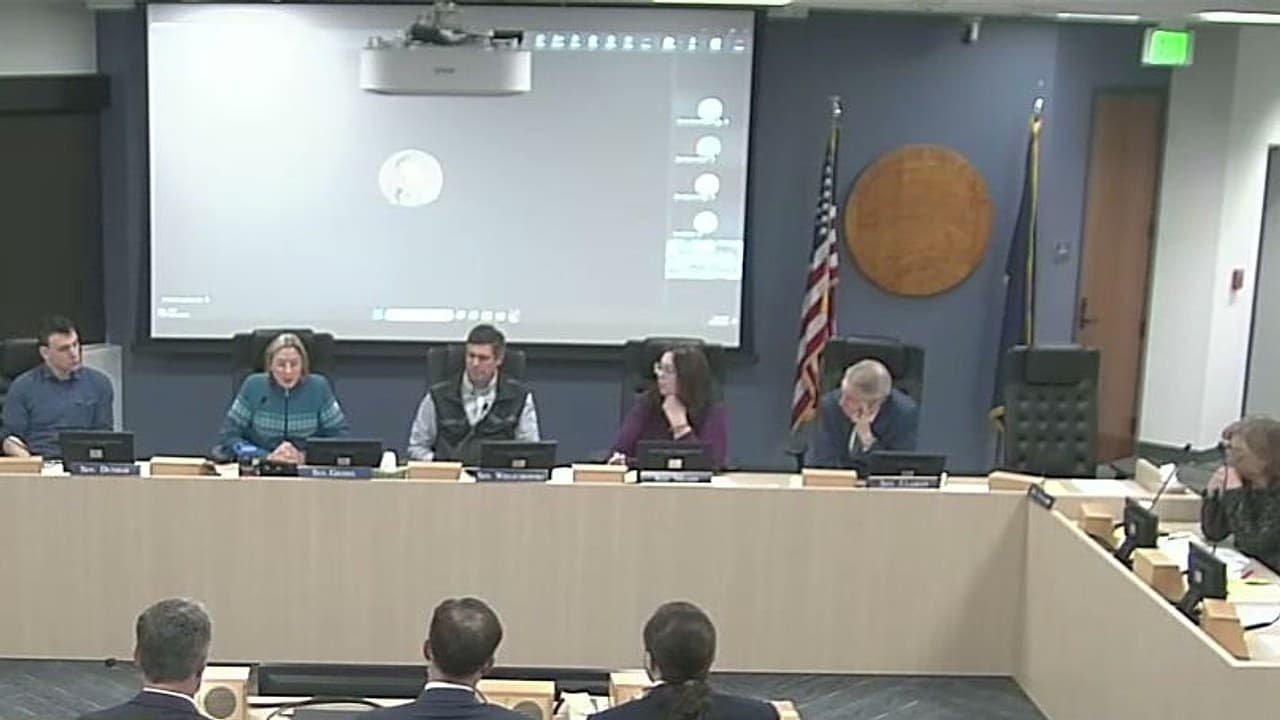
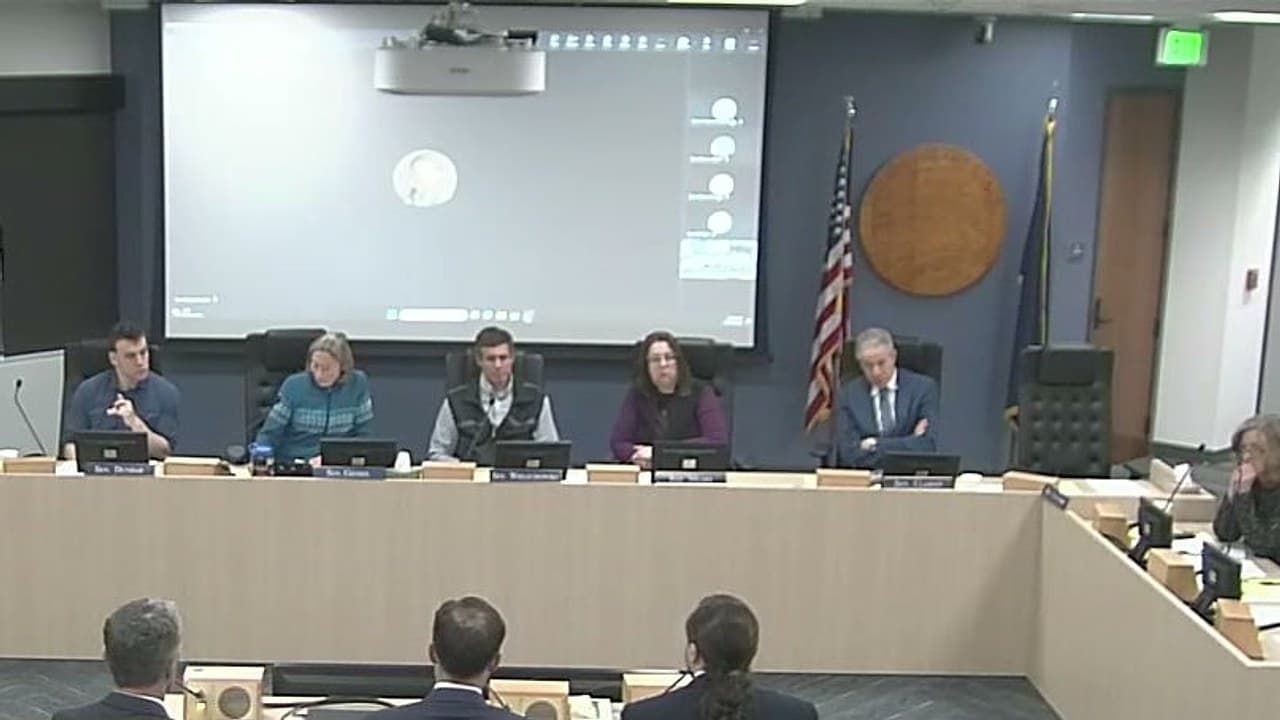
I call the Senate Resources— excuse me, the Joint Resources Committee Meeting to order. Today is November 17th, 2026, and the time is 10:02 AM. We are here in the Anchorage LIO. Um, I want to request that you turn off all cell phones, and let me make sure mine is off. Yes.
All right. Um, and let me go through who is present today. So here from the House is Representative Mears. Thank you. And online is House Resources Co-chair Representative Freer.
Here in person is Senator Claman, Senator Wielechowski, Senator Dunbar. Online is Senator Rauscher. And I am Senator Giessel.
Oh, pardon me. I'm sorry. I forgot. And also Representative Coulombe is here. Sorry.
Thank you for joining us, Representative Coulombe. So with that, we are ready to begin. We have a quorum to conduct business, though we won't be conducting any business. This is a hearing today. Thank you to the recording secretary, who is Heather, and helping us from Juneau and Anchorage in the LIOs is Zack in Juneau, Ian, Cassie, and Tristan.
So on the agenda for today is a presentation on the analysis and proposed decision for conversion of conditional right-of-way leases, AKLNG Point Thompson Transmission Line of 63 miles, that technically is referred to as ADL-421-296, and AKLNG Gas Treatment Plant Mainline of 807 miles and liquefication facility, technically called ADL-421-207. This conversion was issued on October 23rd, 2026. The comment period ends on Wednesday, November 25th at 5:00 PM. Presenters today are are from Alaska Gas Line Development Corporation, AGDC, Department of Natural Resources, DNR, and the Department of Revenue, DOR. There are documents online for the public who are watching.
These are online on BASIS. Uh, there are 3 documents we'll be referring to. Uh, the 2014 Right-of-Way Lease Transfer from British Petroleum to Harvest. This was a financial review 2021 conditional right-of-way determination for these leases that we're talking about today, and that was made in 2021 by Commissioner Feige, then the Commissioner of Department of Natural Resources. That is a 31-page document.
And today we're looking— present 2026 proposed decision to convert those 2021 right-of-ways from a conditional right-of-way to a full Right-of-way right. And this is a 17-page document. These are all online. And so we will begin by, first of all, inviting forward the Alaska Gas Line Development Corporation, and the president is Mr. Frank Richards. Among other things, as he's coming forward, he was asked to clarify the request for the conversion of these leases from conditional to full lease rights.
So we look forward to hearing from you, Mr. Richards. Thank you, Madam Chairman. For the record, my name is Frank Richards, President of the Alaska Gas Line Development Corporation. And I'm Matt Kissinger. I'm the Commercial Director for the Alaska Gas Line Development Corporation as a consultant through HAWC.
Very good. Mr. Richards, if you'd like to begin. Thank you, Madam Chair, co-chairs, members of the House and Senate Resources Committee. Thank you for the opportunity to speak today. I appreciate the committee's interest in the Department of Natural Resources' proposed conversion of the Alaska LNG projects to conditional right-of-way leases.
I'll begin with a brief history of AGDC's pipeline right-of-way and then address three matters: who will hold the converted leases, why are the lease conversions being requested now, and how the lease conversions relate to the project's broader financial and commercial development. History. In 2011, the AGDC, or Alaska Gas Line Development Corporation, was first granted a pipeline right-of-way, ADL 418997, from Prudhoe Bay to south-central Alaska for the Alaska Standalone Arapaho State Pipeline Project, or ASAP. That lease was issued as an unconditional lease, establishing a clear precedent for the current DNR procedure. The lease was amended following the legislature's passage of House Bill 4 in 2013, which found that a gas pipeline developed by AGDC was required for public convenience and necessity and was in the best interest of the state.
AGDC needed to explore development of a larger-scale gas pipeline that could go to Tidewater, and DNR was to grant a right-of-way lease after undergoing appropriate lease application review and public input. In 2015, AGDC became the state's pipeline representative in the Alaska LNG Project. AGDC brought to that project years of pipeline engineering, environmental studies, permitting work from the ASAP Project along with an established unconditional lease for the same right-of-way corridor that the Alaska LNG Project would use. In fact, soon after AGDC was brought into the project, the Alaska LNG pipeline route was adjusted to overlap the ASAP route to take advantage of the state's significant investments in ASAP environmental and engineering work. While the ASAP work— with the ASAP work product, AGDC created a valuable foundation for Alaska LNG.
By utilizing much of the same corridor and building upon the engineering, environmental, and permitting work already completed for ASAP, the project avoided substantial duplication of effort, saving considerable time and expense. AGDC continues to hold that unconditional ASAP right-of-way lease, ADL 418997, in addition to the two conditional right-of-way leases associated with the Alaska LNG. AGDC's right to establish and hold pipeline lands rights was clearly granted by the legislature as an important opportunity for the state to encourage commercialization of North Slope natural gas. It predates our current development partnership with Glenfarm, creates a clear precedent, and represents a significant component of the state's longstanding commitment to maximize the value of state resources and deliver affordable energy to Alaskans. Now, regarding who will hold the converted leases, AGDC holds both Alaska LNG leases, the Point Thompson Transmission Line, ADL 421296, and the Gas Treatment Plant Mainline and Liquifaction Facility Corridor, ADL 421297.
The proposed conversion does not transfer either lease. AGDC is the leaseholder today and will remain the leaseholder following conversion. These leases were first issued in 2021 following many years of environmental review, engineering, permitting, and regulatory coordination for the Alaska LNG project. Of note, the comprehensive environmental impact statement, including its appendices of about 5,000 pages, and rests on an extensive record of studies, designs, reports, and correspondence. Totaling approximately another 200,000 pages.
The current proceeding will convert AGDCs from conditional leases into standard unconditional leases under Alaska Statute 3835-100.
The terminology deserves clarification. Although these are commonly described as unconditional leases, conversion would not eliminate the substantive requirements governing development and operation of the project. DNR would retain its oversight authority. The project would still need the required notices to proceed, involving further review of final designs, construction plans, schedules, and mitigation measures. Conversion is therefore an important step in securing the project land rights.
It is not by itself authorization to begin construction. So why are the leases being converted now? I want to establish an important point regarding the timeline for this process. AGDC submitted a request to convert these leases on November 25th, 2024, almost 2 years ago to the day, and before Glenfarm assumed the lead developer role. Conversion of the conditional leases has been part of AGDC's longstanding effort to advance Alaska LNG towards final investment decision, or FID.
And construction. In early '25, AGDC entered into definitive agreements with Glenfarm to advance the project through 8Star Alaska. Under this structure, Glenfarm assumed the lead developer role while AGDC retained a 25% ownership interest, an important governance responsibility. One of the recurring concerns that we've heard in discussions with Asian governments, prospective LNG purchasers, and potential investors involves construction readiness of the pipeline.
An essential part of that readiness is confirming that land rights have been obtained. These parties understand the magnitude of constructing an 807-mile pipeline across Alaska. They expect land rights to be in place to support construction and operations before making long-term commercial and financing commitments. Many have asked why AGDC as a state corporation continues to hold conditional leases and whether that reflects uncertainty about the state's own commitment to the project. While the conditional leases represent an important regulatory accomplishment, their conversion to standard leases would provide greater certainty regarding the project's ability to assess and utilize state lands.
The October 2026 submission by HSTAR should be viewed as a continuation of AGDC's 2024 conversion request. Rather than as an entirely new initiative and as an essential part of the process for moving the project forward. That said, it is important to note that converting the conditional lease is a far cry from making them unconditional. Similar to all of our other permit authorization and land use agreements, there are substantive lease conditions that apply throughout the lease of the project— the life of the project— to ensure the project is developed and managed well. For DNR leases, one of those requirements is the obligation to obtain notice to proceed that involves additional scrutiny of the project's final design, schedule, and mitigation measures.
Another look at the question before us today is whether Alaska wants to be efficiently and responsibly to develop our own resources for the benefit of our residents. Converting these leases would remove a significant source of uncertainty for prospective customers, investors, and lenders, and would show the state's continued support of advancing Alaska LNG through its established regulatory process. Alaskans are facing uncertainty about energy security, and we believe that converting these leases is fully consistent with the legislative— legislature's mandate for AGDC, the ASAP precedent on the right-of-way granted to AGDC, and the growing urgency of Alaska's energy needs. Finally, regarding AGDC's responsibility to the state of Alaska, the legislature established AGDC to advance the development of Alaska's natural gas resources for the maximum benefit of Alaskans. The state has made substantial investments over many years of engineering, environmental permitting, and project development.
Those investments are the foundation on which Alaska LNG Project is now advancing. AGDC's responsibility is to protect that investment preserve the state's interest and work with qualified development partners to bring North Slope natural gas to Alaskans and international markets. Converting the leases protect the investment in 3 ways. First, it reduces uncertainty for financing and commercial commitments. Investors and lenders price every open question into their decisions.
A conditional lease held by AGDC is an open question that the state can close itself at no cost through an established regulatory process. Second, it preserves the state's safeguards. AGDC would remain the leaseholder. Substantive lease requirements would remain in place, and DNR would retain its authority over notice to proceed and other further assignment. Third, it protects the momentum that Alaska has built.
Declining Cook Inlet natural gas adds urgency to securing a dependable source of North Slope gas. Completing necessary regulatory steps support that effort while maintaining the review required before construction. For these reasons, the proposed conversion is consistent with AGDC's responsibility to the state. AGDC initiated this conversion process 2 years ago. The current proceeding continues that effort.
We support the process based on the applicable statutory requirements and the record before DNR. I appreciate this opportunity to provide this bit of history and answer some of the specific questions that you, Senator Giessel, had asked. And now I will ask my colleague, Matt Kissinger, to address the third question, which is around the cost estimate.
Mr. Kissinger, could you hold for a moment? I want to make note that the House co-chairs, Freer and Dibert, Both are online, as well as Senator Kawasaki. Senator Dunbar, you had a question for Mr. Richards? Yes, thank you, Madam Chair. And I think it's relevant to what you just said, Mr. Richards.
So I would like to have the conversation before we go into Mr. Kissinger. So you spoke about— you said AGDC holds both leases. You said AGDC holds leases, the leases. But in the supporting documents, in your own testimony, you also mentioned 8 Star, and can you just explain, is 8 Star holding these leases? And, you know, AGDC is only a partial owner of 8 Star.
So that's my first question. Is it AGDC itself, or is it 8 Star and AGDC through 8 Star? Through the Chair, Senator Dunbar, the leases are held by AGDC. AGDC is a 25% shareholder of 8 Star Alaska. However, the leases are held specifically by AGDC and not by 8 Star Alaska.
Okay. Good follow-up, Madam Chair. Follow-up, Senator Dunbar. I know what— I think I know what the answer to this next question should be based on that answer, but I'd still like it on the record. So— because 8 Star is mentioned in the supporting documents quite a bit.
And you spoke about this conversion creates a real property right that AGDC now holds, correct? Or will hold, excuse me. So in the process of converting these leases, will Glenfarn get a real property right? And if so, in the future, is there any scenario where the state might have to buy out Glenfarn's real property right after these conversions? Through the chair, Senator Dunbar, the— again, the— Let me step back a second and identify what we have in front of us is we have a layering effect.
AGDC already has a standard right-of-way lease on the pipeline right-of-way for the project called ASAP. On top of that now are the leases that have been provided to the Alaska LNG Project with AGDC as the leaseholder. So we have a layering on top of a layering. One is an unconditional lease, one is a conditioned lease. Those leases will be held by AGDC and not by H-Star.
So H-Star is a partner and developer in the project moving forward, and that's where the financial discussions have— will address in the development perspective of HSTAR moving forward, but the underlying land rights are to be converted for the leases that AGDC holds. Follow-up, Senator Dunbar. Last question, just I want to get very specific on this. So if AGDC is holding these converted leases, this real property, right, is there any scenario in which if the— if the state, AGDC, decides to pursue a project, a pipeline project with a different company, or if that's not Glenfarn, or if Glenfarn makes a legal argument that the state has, for whatever reason, abandoned this project or is not going forward with it, is there any scenario in which Glenfarn could bring litigation asserting that they need to be compensated for these real property rights? Through the Chair, Senator Dunbar, on that hypothetical again, because the Glen Farm through 8 Star does not have the leases provided to them, provided just to AGDC, then they do not currently have the right to those leases.
Now, in statute, there is the ability for DNR to allow for assignment of the leases to another developer. But that's a whole other regulatory process that would have to be applied for and put through the public process and worked through the regulatory regime that DNR has in place for assignment. Do you have something to add? Thank you, Madam Chair. Thank you, Senator Dunbar.
Mr. Richards, could you look back in your testimony I may have misheard you, but I wrote down here that you said on October 20, 2026, there was a request from AGDC to convert these leases. Did I mishear you on that October 20 date?
Madam Chair, my apologies if I said AGDC. My testimony was that on October 26th, the submission by 8 Star.
Okay. Thank you. And therein lies my confusion, because the letter that's posted with the public notice of these leases has an October 2nd— that's October 2, 2026— request from Adam Prestidge as the president of 8 Star. Requesting the conversion on behalf of AGDC. So just trying to clarify here if we are talking about the same thing and if what is public noticed is actually accurate.
Madam Chairman, again, for the record, Frank Richards. October 2, 2026 was a letter signed by Adam Prestidge requesting the lease conversion for— as H-Star for AGDC. And the reason for this was there were 7 conditions that DNR wanted to have presented to them for the lease conversion. And one of them had to do with the financial capability of the project. And that's where AGDC in our 2024 application presented 6 of the 7 requirements that met the— that met DNR's level of standard.
And what was then necessary was for the 8-Star financial capability to be brought forward. And that's what was applied for then with the information provided by 8-Star. In that letter.
At least 14 days prior to the letter from AG Deasy then. I mean, this letter was October 2nd, and you said on October 26th. Well—. Madam Chair, if I may—. The dates are rather confusing.
I don't mean to be confusing. My testimony was October 2026, so the year 2026, not a specific day within October. Okay, so then I'll go back to my original question. So that you did say October 20th, and I'm referring to an October 2nd letter from Ester. Do you see where the confusion comes?
Because in this letter it says that that they are requesting this on behalf of AGDC. Well, why didn't AGDC request for themselves? You're saying they did on October 20th.
Is that true? I mean, clarify, please. Madam Chair, again, I apologize if any confusion in my testimony. But the, the correspondence that DNR received was again dated October 2nd, 2026 from Adam Prestidge.
AGDC did not— there was no submission from AGDC on October 20th of 2026. And where did that— where did October 20th come from then? And what is it? What is the relevance of that date? I'm not sure, Madam Chair.
I was referring to the month of October 2026. And if I misspoke and included a date, then I was in error. Thank you. Senator Wielechowski. Could you just explain to me what occurs if this— what is the actual implication of this, the vesting of a real property interest, if this goes through, this conditional right-of-way is converted?
Through the Chair, Senator Wielechowski, I will refer part of this question back to my colleagues from DNR when they arrive, but my understanding then under the statute is DNR has the ability through the pipeline rights-of-way to grant essentially a leaseholder the rights to be able to utilize those state lands for pipeline construction and operation. Abilities. Before they will provide an unconditioned lease or standard right-of-way lease, they have certain standards that they must obtain from the applicant. And that's what we have presented to them both through AGD's original 2024 application and then the subsequent information provided in October of 2026. That will allow then AGDC to be able to identify that we— again, on the layering, we have the ASAP project, which is unencumbered or not conditioned lease, and then we would have the Alaska LNG project sitting on top of that as an unconditioned or standard lease, which would allow us to be able to go forward and identify We have the rights to be able to move forward to go to construction and operations of this pipeline.
And there's not a conversion process then that would be necessary to be followed in the future. Follow-up, Senator Wielechowski. By gaining this, is there— are there lease charges that are paid by AGDC or Glenfarn or 8 Star in exchange for this? Through the Chair, Senator Wielechowski, the legislature directed that if the lease is held by AGDC, there are no lease payments.
So the lease is held by H-STAR or AGDC, and will there be payments on this lease? Through the Chair, Senator Wielechowski, the lease is held by AGDC and there are no lease payments. If AGDC is to assign this to a— in the future, that assignment would then require then the leaseholder to pay those payments to DNR. Do you have any estimate of what the value of this would be for AGDC? In other words, how much would the lease payments be, I guess, if they were— if they had to be paid by a private company?
Through the Chair, Senator Wielechowski, I will leave that to DNR to provide that answer. And if full property interests vest before project financing closes, what safeguards prevent the leases from being encumbered or transferred or held indefinitely without a built pipeline?
Through the chair, Senator Wielechowski, again, there's— for the leases held by AGDC, there's really just the interaction between the State of Alaska and the legislature and AGDC on the ability of the project to move forward. If it's held by a private company, then it would be the payment of any lease payments that are necessary to keep that that lease in good standing and any plan of development that would be required due to the lease provisions.
If— I guess, what's the rush? This seems like a little bit of a rushed process before the next Governor takes office. What's the rush? Why not wait until the next administration gets in office? Through the Chair, Senator Wielechowski.
As I said in my testimony, we started this process in 2024. So it's been an ongoing discussion with the Department of Natural Resources. The remaining piece was, again, around the financial capability, and that was presented by HSTAR to DNR. It's a process that is ongoing, and we feel that, again, The DNR should follow its process. And I'm not sure of what the consideration of being rushed, but the information has been available to them for some time in terms of the conditions necessary to be able to make this lease conversion.
I want to read this statement, the very first sentence of the proposed decision by DNR. Tell me if this is correct or not. It says the Department of Natural Resources, DNR, received a request on October 2, 2026 from H-Star Alaska LLC acting on behalf of Alaska Gas Line Development Corporation to convert two conditional right-of-way leases. It doesn't say anything about 2024. It says October 2, 2026.
Is that an accurate statement? Through the Chair, Senator Wielechowski, reading from the introduction on page 1. Correct. And on page 2 of that same document, it talks about the procedural history of the right-of-way lease where AGDC provided a 2024 lease conversion package. Follow-up.
And if this is— who— what's the ownership structure of 8 Star? Is it predominantly owned and controlled by AGDC or is it predominantly owned and controlled by 8 by Glenfarm? Through the Chair, Senator Wielechowski, 8 Star is owned 75% by Glenfarm and 25% by AGDC. If this is coming from AGDC, why is Glenfarm, which controls 75% of 8 Star, filing this instead of AGDC? Through the Chair, Senator Wielechowski, Glen— 8 Star filed it on behalf behalf of AGDC because the information that DNR needed to be able to determine the applicability of this lease conversion was around the financial capability of the project itself.
Follow-up. In the 2021 conditional leases, they list 7 conditions including finances, technical ability, land use, materials, schedule highway use and contaminated sites to be met before conversion. Why is DNR converting the leases, or why are you asking them to convert the leases, when key agreements such as highway use agreements, multi-agency contaminated sites agreements appear to be unexecuted drafts or single-party letters? Through the Chair, Senator Wielechowski, again, the The conditions and requests by Department of Natural Resources in the conditional lease, we have been, again, working with those agencies to finish those agreements, such as the Highway Use Agreement. We have been actively, both AGDC as well as Glenfarm, engaged with the Department of Transportation specifically on logistics planning, which would and we require the overweight/overlength permits, the right-of-way agreements, the driveway permits, material site agreements.
And to my understanding, that Highway Use Agreement is to be finalized here very shortly based on essentially years of interaction and understanding along with the development work that has occurred now over the last year. For the design of the pipeline project.
Follow-up? Yeah. DNR's 2021 analysis stated that AGDC would demonstrate financial capability, quote, upon securing sufficient project funding with appropriate binding commitments and structure. Without a final investment decision or binding long-term off-take contracts, what concrete financial commitments justify finding the applicant fit, willing, and able today?
Through the Chair, I'm going to let DNR address that specific for their criteria.
Do you— Do you have binding financial commitments to justify being fit, willing, and able? Through the chair, Senator Wielechowski, the financial commitments, again, under the project finance structure will come into play as the project executes sales and purchases agreements for the LNG offtake for in-state gas. Now, those are not final. They are still being worked, and it is a process that we've have been undertaking— Glenfarm has been undertaking now since they initiated the process.
Follow-up. Because much of 8STAR Alaska's financial submission is confidential, how can the public and legislature independently verify that the statutory fit, willing, and able threshold has actually been met?
Through the chair, Senator Wielechowski, the Material that was identified as marked confidential, again, it was presented by HSTAR in that perspective. I believe that you are going to hear from the Department of Revenue today that the information has been in the public realm and will be presented as public information.
Senator Claman. Thank you, Madam Chair. You described this as a layered lease, which is a concept I've never heard before. I tend to think of leases and subleases, and so my question, as we sit here today, the only— if I saw the written piece of paper of the lease, it's more than one page, but I saw that document, the only The lessee would be AGDC, am I correct? Through the chair, Senator Claman, correct.
Is then there a written sublease between AGDC and some other entity? Through the chair, Senator Claman, no. When I talked about the layering, what I was identifying is AGDC has been granted a pipeline right-of-way for the ASAP project. And on top of that, then, with a pipeline design that is essentially mirroring the right-of-way centerline, then we have received a conditional right-of-way over that exact same piece of— those exact lands. Follow-up?
Follow-up, Senator Claman. And that's a conditional that would allow AGDC to continue its existing lease from the ASAP project on this project? Through the chair, Senator Bjorkman, the ASAP lease is still valid and is an unconditional lease. And then on top of that is the conditioned leases for the Alaska LNG project. Follow-up.
So where does anyone other than AGDC today have the the right to be coming in and making any requests about either the conditional lease or the unconditional lease that right now is only between AGDC and the state? Through the Chair, Senator Claman, again, DNR will be able to better describe this, but currently, as there are interests that want to utilize portions of the land that are under those leases. They apply to DNR and then DNR asks if there will be a conflict for those land uses to AGDC. And in many instances we say no, and in some instances we say yes, that will directly impact the pipeline centerline, and so therefore can you shift their application to a different area. So it is an ongoing discussion through the land management within the state pipeline coordinator section within DNR on competing— not competing, but interests that want to use those same lands that are currently under leasehold.
Follow-up, Senator Claman. Thank you, Madam Chair. Is there some kind of a written agreement between AGDC and any other entity concerning the assignment of the— of AGTC's leasehold interest? Because you talk about— in your earlier testimony, you talked about there would be an application at some point to assign it to someone else. Is there a written agreement today that relates to such an assignment?
You want to discuss it? I will ask my colleague to address that question. This is Matt Kissinger for the record. Senator Claman, through the Chair, There is not an existing pre-assignment or anything on that lease. And, in fact, I believe in the testimony last year, we discussed how the transfer of the rights to use that land could ultimately be used by AGDC as part of our capitalization of the project.
And so, no, that hasn't been done yet. And there would be a value in any transition, any assignment. Any assignment would also have to go through, as we understand it, and DNR can obviously expand on this, but would also have to go through the same public process.
Follow-up, Senator Claman. So where we sit today is— correct me if— well, where we sit today is there's this concept that you've testified about a possible assignment that goes to some unidentified party, but it seems to be very much part of the plan. Who is this party that's going to potentially get the assignment of the lease that's currently in AGDC's ownership?
Again, Senator Claman, through the Chair, I wouldn't say that there's an anticipated assignment. There's certainly an anticipated use of that right-of-way corridor by 8 Star, for 8 Star in order to build this project. How they use the land and how that relationship is between AGDC as the leaseholder, whether it ends up being an assignment or a use agreement. We haven't crossed that yet. Madam Chair, not a question, but I'll just make a short comment.
Just, Madam Chair, this just seems pretty— just seems incredibly confusing. We have this possibility that an entity that has no agreement with AGDC may use a pipeline corridor to build a pipeline. They're not the lessee. They— somebody from 8STAR is writing on Alaska LNG letterhead, not their own letterhead. It just seems like a very disorganized and confusing process here in the last days of the Dunleavy administration, and it's— I'm very concerned.
Thank you, Senator Claman. You know, we saw the organizational chart during session, and it struck me as a Rube Goldberg scenario, and this sounds like that even more. I do have some questions.
In October, 8STAR made their FERC report. They do that monthly. And it was essentially no change. There was no change on any of the work to be done. So getting back to the rushed process statement, this does seem premature.
Since there's been no further development, at least related to your report to FERC.
We are, of course, looking at the fit, willing, and able portion of it, which includes financial abilities, which you have been referencing, Mr. Richards, about how having these non-conditional leases will help the credibility of the finances for this project. So during session, we had Gaffney Klein as our consultant, and they talked about the open book methodology of financial analysis. They said— our consultant from Gaffney Klein said that Glen Farn and AGDC were giving the financial data to the Department of Revenue. So during session, that, that cost of this project changed 3 times, from $45 billion to $55, and then at the end, the governor was talking $65 to $70. So what was the final cost project that was submitted to the Department of Natural Resources to allow them to reach this conclusion, this proposed decision that there was financial capability.
Where did those numbers come from?
Senator Giessel, again, this is Matt Kissinger for the record.
So I'll talk separately about the capital forecasts, the CAPEX forecasts of the project, and then the financial capabilities. When we're looking at the financial capabilities, And again, this is through discussions with DNR. I think they can probably provide more clarity. But this is the first step. So AGDC having these leases transfer from conditional to unconditional, it simply helps us de-risk the project.
And especially, I would say, around these conversations with the U.S. Department of Commerce, et cetera, trying to present a package that looks like there's less risk. It's important for us to de-risk that to the extent possible. The Notice to Proceed is sort of the bigger assessment that DNR would make. So that's when you would actually be allowed to build on the properties. And so this is where you'd want to test the ability to build it, and obviously, the ability to DR&R the facility.
That financial capability obviously comes through AT-FID. You are— you generally, in a major project like this that is developer-driven, you have a smaller developer who brings in the larger investors at FID, and that is what brings in all of that financial strength. So the big question to us was, is there the financial capability to go through this phase, meaning to go from now to FID? And so in our view, H-Star does have that financial capability, not just through Glenfarm coming through but Glenfarm bringing other partners in such as Worley, such as POSCO and others, that has provided what we believe is the financial capability to take it through to that next level, but certainly not to build the project and DR&R the project. So there does have to be another assessment.
With respect to the CAPEX, it appears that the, the DOR model and numbers that were provided with this application simply took the DOR model as it was last sort of presented to the public. And if you remember right, that was during the last legislative session into the special sessions around the time that we were getting our Class 2 cost estimate on the pipeline, which, you know, ultimately is being worked into the DOR model. AGDC and DOR are working very closely right now, rolling that together, bringing in the inflation adjustments, having the right amount of contingency for a Class 4 estimate on the GTP and the LNG plant and the Class 2 estimate, which of course would have a smaller amount of contingency on the pipeline. The numbers that were presented tying to the DOR model that had been made public were based on what were the 44— as people remember it, the $44 billion cost estimate. That is $44 billion in 2023.
$3. And so obviously there is inflation adjustment to that. And the DOR model is continually adjusting. So whenever they are looking at a new cut of the model, wherever you are in time, it will be adjusted up to that time with inflation. And so that is how you get from $44 to what is probably around $49 billion right now.
And so some people get confused because they hear $44, $46, $47. $44 Billion was back in 2023, and that number obviously grows with time just from the inflation. As we have it right now at AGDC, holding the Class 4 estimates again on the two end pieces and the Class 2 on the pipeline with the appropriate levels of contingency around 20% across everything, is a $53.9 billion or $54 billion project. And again, that was not in the modeling that was presented and submitted with the submission. But that is an update to the DOR model that we are working on right now with DOR.
Thank you. I appreciate that. That does seem— that's an interesting explanation. So I would like to get on to the Department of Natural Resources and discuss with them what comprised their fiscal analysis. Are there other questions from committee members?
Representative Coulombe. Thank you, Chair. Just a clarification. Maybe Mr. Richards, you could clarify because there was a lot of dates going back and forth. But my— so my understanding is in 2024, AGDC submitted 6 of the 7 items that DNR needed.
And in '26, or October of this year, Glenn Farm or ASTAR submitted the financial capability part of that submission. Is that correct? Through the Chair, Representative Coulombe, that is correct. Okay, and follow-up? Follow-up, Representative Coulombe.
As far as assignments, what I'm hearing is that at this time there is no plan for an assignment to a private entity with lease payments, but you are saying that that is a possibility as the process goes forward, and if that was going to happen, there's still standards and things you have to go through that assignment to be approved. Is there legislative involvement in something like that? Through the chair, Representative Coulombe, my understanding of the statutes is through— from DNR statutes is that it would be a public process. The— an assignment application would have to be provided, and then it would go through what DNR's criteria and process would be. I don't believe that there's a legislative component to that, but I'll leave it to them to address.
One more follow-up. Follow-ups, Representative Coulombe. But that process is public? Yes. Okay, thank you.
Thank you. There is a Right-of-Way Leasing Act which states that the commissioner— it says the commissioner, after considering public interest and issuing written findings to substantiate a decision, to allow a transfer authorizes the transfer. Just the words that are in law right now. Senator Wielechowski, you had a question. Yeah.
I don't even want to move on. I'll be quick. Could— if AGDC were granted this right-of-way, could they then turn around and transfer it to Glenfarm or another entity at no or little cost? Through the chair, Senator Wielechowski, again, as we've just described, There is the ability to assign. It is a process that DNR would follow.
My understanding, though, is when a private entity would take on that assignment, there would be costs associated with the right-of-way rental rates. Follow-up. And would that assignment be done via a public process as well?
Through the Chair, Senator Wielechowski, again, as Senator Giessel just identified under the Act, there is the provision for that to occur.
Follow-up? All right. Well, thank you very much, Mr. Richards, Mr. Kissinger.
All right. Next up, we will be hearing from the Department of Revenue.
We are interested in the October 2026 analysis and proposed decision of of course, and so I'm inviting Commissioner John Krother forward as Department of Natural Resources. He's also accompanied by Deputy Commissioner Derek Nottingham, Division of Oil and Gas, and Weston Nash, Commercial Analyst, DNR. I specifically requested someone from the commercial analyst section of DNR because it It appears that in the past, at least when other decisions like this, Commissioner Feige's decision, for example, the analysis was done by the commercial analysts in DNR, not the Department of Revenue. So this is— these are some clarifying issues that we wanted to discuss. So welcome, Commissioner Krother.
Thank you very much, Chair Giesel, and members of both the House and Senate committees. My pleasure to be here today and speak a little bit to this topic. As reference, we have several other members of the Department of Natural Resources team. We don't have a pre-prepared presentation to present today, and I do believe a lot of the information on background and kind of the trend— series of events that have transpired led up to the application for the conversion, and then our preliminary decision have been summarized. I will share just a little bit about the Department process and then really just turn it to the Committee for your questions and follow-up.
So as referenced previously, we have two conditional rights-of-way that have been issued by the Department in 2021. Those received an initial application package in 2024. The application package that is— that led to the decisions under discussion today did come in October of 2026. That's October 2nd, 2026, the initial letter that's been discussed. I will note, we— because of the nature of that submission, HSTAR on behalf of AGDC, we communicated directly with AGDC and received a letter confirming that the application was submitted functionally by AGDDC, given that they are the holder of the conditional right-of-way and would be the holder of the right-of-way at the conclusion of the decision.
I don't believe we included that in the public record, but can share that for the Committee. It's a public document. It's a one-page letter affirming by Frank Richards as President that the application is, in fact, on behalf of AGDDC. So with that application submitted, we— prepared our preliminary decision, which has been issued and is subject to the public comment period right now. That's open, so members of the public can submit comments on that up and until, I believe, next week, perhaps next Tuesday or Wednesday.
Apologies if I have the date wrong, and I suspect my team will know it. We are also, under the statutory process, required to have a public hearing, which will be occurring next week as well. That will inform the Department's ultimate review and decision. So, when those processes conclude, we'll assess what scope of comments we've received, prepare an analysis of it, and potentially modify or adjust the decision as appropriate, and then move to a final decision. The timeframe for that, you know, we always try and do our processes as expeditiously as we can, but we, you know, The process does not close until next week, so we would expect some time after that to review the comments and proceed accordingly.
So I think that is really the extent of kind of opening remarks I had, but I understand we received some questions from the committee ahead of time that we can speak to, or additional questions that have come up, and I would be happy to have myself and the team speak to them. Why don't you go ahead and speak to those questions that we submitted to you.
They are the prominent questions that the committee has. Yeah. Well, thank you very much, Chair Giesel. Well, I will just— I will start off, and we received— to make sure we are answering the right ones, we received, I believe, 7 questions from the committee. I will read the question itself, give a preliminary answer, and then we can we can continue the discussion and further questions.
So the first one is, what fiscal analysis was done by the commercial analysts at DNR? And as has been discussed during AGDC's presentation, the commercial information about the structure of the project that was submitted in October of 2026 was informed by a Department of Revenue materials that had been cooperatively developed between AGDC and DOR, submitted on a confidential basis with the application, but I do believe DOR is prepared to speak to it after ourselves this morning. Our team did review that and summarized it in our decision. I would note that it is a very complex series of processes, so I will try and— I'll just try and step through it directly.
The Department and the commercial section within the Division reviewed that information in the context of the application in question here, which is we have a conditional lease issued. We don't typically issue conditional leases. It's statutorily authorized, but it's a rare occurrence. And the applicant is AGDC as opposed to a commercial third party. And so when we were doing our analysis of the overall application, we're doing it in that context with an applicant that has explicit, specific statutory rights and interests distinct from a general applicant.
And so the commercial analysis of the framework information and model that was presented was consistent with that unique occurrence, the conversion from a conditional to a— as it was described, unconditional is probably not the right word because it the current lease and the subsequent final lease would have a number of significant conditions. So that analysis, I think it's fair to say, is distinct from the analysis that is seen in other applications where a third-party applicant who doesn't have special statutory authorities, directions, or privileges applies to receive a land right and an unconditional lease from the Department for project development kind of out of the gate.
So the analysis that was done is summarized in our proposed decision, but it— I think it's a natural question, why is it distinct from what one might see in other decisions? I know you referenced at the outset that the 2014 analysis of the transfer from BP to Conoco— or from BP to Hilcorp involves a great deal of financial analysis. We can talk at more length, but when we have an operating project with operating financial commitments, both, you know, for day-to-day operations and safety and long-term DR&R, the financial status and commitment and structure that supports those is very material to the approval and the transfer.
As Matt Kissinger shared in the prior presentation, this project inherently has— it's not constructed or under construction at this time and it's being moved forward at a development step and stage to attempt to reach an FID decision in the future. And that short version of that, that's why the financial analysis I think is quite distinct from what what one might see in a normal decision, I would say.
Thank you. Senator Wielechowski. Thank you. So back in 2021, in the conditional right-of-way, the department said that AGDC would demonstrate financial capability upon securing sufficient project funding with appropriate binding commitments and structure. My understanding is there's no binding commitments at all.
If that's incorrect, then I'd be interested in hearing that. Number 2 is there's references in page 11 of your report to the financing of Glenfarm, but Glenfarm is not a party to this. Glenfarm is— this is a right-of-way going to AGDC, so that's a little bit confusing. Number 3, question is the purpose of this— the purpose of the fit, willing, and able statutory criteria is threefold: to protect property interests in case there's potential damages to adjacent state private property during construction and operation, mitigation of environmental harm, to fund reasonably practical measures to prevent and repair damage to fish, wildlife, and natural habitats, to fulfill lease obligations, indemnification, pipeline decommissioning, restoration. And so this is a very confusing process here because it's AGDC applying to this.
AGDC is a state corporation with very, very limited assets, and yet you're relying on, on, on 8 Star and Glenfarn, and there's no binding commitments and This whole process just seems to be— my personal view, I don't— it's very confusing. Can you help out? And it's very rushed too, it seems. Thank you, Senator Wielechowski, through the Chair. I appreciate the— I do appreciate that this is a— I think it's fair to say it's not the normal process under— that typically occurs under AS3835 because of the nature of the applicant.
Again, AGDC is a statutory creation. It is a state entity. We are progressing a process for securing a land right for a project through a state entity in a way that, you know, any other given pipeline— for instance, we saw pipeline projects for Willow and PICA. You know, there's no state subsidiary, state partial participation in ownership there. So it's much more a project is scoped and identified to occur, you know, a new pipeline to be put in the ground, to be fully owned and operated by a third party.
The— both the project developer, long-term owner and operator is expected to remain the same throughout that process. Here, the statutory framework for AGDC identifies that they essentially go through a project development process of which they are working to do. They have identified Glenfarn as a partner in that effort. And that the preliminary work they do to secure a project structure will then enable a project FID. I'll try and use these terms clearly.
In a case where an operator of a pipeline is also the, you know, these are subject to covenants for the transportation, open transportation. But the owner and operator of a pipeline is also the financer, is also the user. Kind of an integrated project model is very different than what we have here. And from the department's perspective, that was recognized in the statute, that AGDC is supposed to go iteratively through these steps of bringing in partners. In this case, Glenfarn is referenced.
And so the— I think that's what's making this process look confusing because it is distinct from what one typically sees when there is a third-party applicant all the way through. So your direct questions on binding and specific project funding, the— we do understand that AGDC has progressed a development relationship with Glenfarn. As described, that was entered into in 2025. And then informed of the submission by AGDC to receive the lifting of the conditions, that— I don't want to too blatantly speculate here, but if this process concludes and AGDC has an unconditional right-of-way, there will— for the project to occur, there will need to be a subsequent step where either AGDC itself is— receives a significant capital infusion through third-party agreements, legislative action, federal involvement or otherwise, or which would require AGDC to then receive a notice to proceed with detailed analysis of whatever that is, or AGDC might need to assign this interest to a third party, at which point that— the assets commitments of that third party would be subject to that same kind of review. And I think that's— I think that's perhaps what in the questions was being contemplated to occur at this stage, at this— the lifting of the conditions.
What this decision lays out is that the Department has determined that the level of progress towards that has reached a sufficient level to enable this step. And then we anticipate that in the future there would be further progress in securing those commitments and further analysis of that progress when either an NTP or subsequent assignment step is taken.
And I don't want to filibuster too much. I can speak to the other questions, but I've already gone a little— Thank you. Did you have a follow-up, Senator Wielechowski? If not, I'll go to Senator Dunbar. That's fine.
Senator Dunbar? Thank you, Madam Chair. I have two questions, if that's all right. Um, the first, uh, so we've been talking a lot about the conditional nature of this lease. Could you summarize for the public just what those significant conditions are?
Uh, thank you, Senator Dunbar. Um, through the Chair, I, I would be happy to speak to that. I, I think it was referenced earlier in the discussion. The current lease that's in place today includes 7 explicit conditions. And if I— if I was more organized, I could jump immediately to them.
But if you give me just a second, I'll find them and then read them, and then I'll describe some of the conditions that would remain in any right-of-way regardless of whether it's conditional or not.
So this would be— This is the— I think it's— I'll just read from the mainline lease right-of-way. As we discussed, there's two rights-of-way that are being considered. But the conditions I think that are of most— there's similar conditions in the— what's called the North Slope, the transmission line between Point Thompson and the gas treatment plant. But the mainline rights-of-way includes some of the leases or some of the conditions in south-central Alaska and in Interior Alaska that are of interest to the public, naturally. So this is reading from ADL 421-296, the conditional right-of-way lease that's in place today.
This is on page 4 of that 30-page document, Section 2.
And so when you move— that identifies just that those are the requirements for lease conversion. We move to page 5 of that document. The first is the financial capability that we have been discussing, evidence of capability. The next is technical capability, preliminary design documents and technical reports being submitted. And the third condition relates to existing uses.
And those are specifically identified as shore fish leases in the Kiski area, the Troublesome Creek Campground in Denali State Park, and the mainline material offloading facility. And those existing uses, essentially AGDC is required to develop plans to protect, preserve, mitigate impacts to those existing uses. The fourth is— the fourth condition relates to project plans for resource use. And those are timber, water, and material that are impacted during construction so that those resources aren't wasted. How are they beneficially used, preserved, transported?
And a plan is required to be in place for that. There's a 5th requirement for a project management schedule, a 6th for the highway use agreement with the Department of Transportation that was discussed earlier, and 7th is a contaminated sites agreement with the Department of Environmental Conservation. So those are the conditions that our decision, again, addresses the progress that's been made of, but it also explicitly references that there would be further— those conditions would continue to need to be met and at an NTP stage or an assignment stage would need to be reviewed in further detail in place at the time and in the case of an NTP to construct could not be issued until definitive formal agreements were finalized.
And so I apologize for going on and on, but the next category, which I think was discussed a little bit by AGDC, you know, this is a 30-page lease. It includes a variety of conditions, things about timelines and deadlines for construction to commence, things about limitations on assignments.
Terms about the payment of rents, a variety of covenants that are statutorily required under AS 3835-110 and/or 120. And so, the number of conditions that would be in place for any final lease, just like for any other final lease issued under the Alaska Alaska Pipeline Act would be significant. Another question, actually. One moment. We'll go to you in a moment, Senator Dunbar.
For the public who are listening, there is a document posted that is the analysis and proposed decision. And what the commissioner was just articulating was the conditions, which start on page 10 of that document and go through page 16. And, um, that's where you can find that information that he just referred to. Senator Dunbar. Thank you, Madam Chair.
So one of the conditions you spoke about was financial capability, and there's financial analysis here. During the last legislative session, AGDC and the Dunleavy administration came to legislature and said basically this project can't go forward unless we change from our existing property tax system to an alternative tax— an ATC, Alternative Tax System— at a much lower rate. So my question for you is, in this financial capability analysis that you did, did you assume that our existing property tax system was in place, or did you assume that we had or will pass that kind of tax change? Thank you, Senator Dunbar, through the Chair. My team can correct me if I'm wrong.
I believe the submissions did not— they reflected the status quo of current law in the sense that they don't presume an alternative tax structure or other fiscal changes either at the state, federal, or international level that, you know, would affect the project economics. I would just note, you know, our— in general terms, this analysis was not an assessment of will the project overall, a particular project, achieve a certain rate of return or reach a certain financial threshold for success. It was in the context of the statutory applicant, AGDC, have they— progressed agreements and partnerships such that the project is positioned to advance and have the possibility to achieve further financial capacity and success. And so we weren't undertaking an analysis to say, is a certain benchmark met and that's good enough. Naturally, AGDC and the state, were we to be making a decision about participation in the project or further policy change about the project, we might want that kind of analysis.
You know, what is the rate of return? What is the, you know, appropriate risking for that return? That wasn't something the department attempted to undertake. Follow-up, Senator Dunbar? Yeah, I'm trying to parse that.
I mean, what you're saying here is that you believe that AGDC has the financial capability to go forward with this project. And that is the determination here, and thus, they should get this property interest.
But you're not assuming any change to our current property tax system. And we heard an awful lot of testimony from AGDC and the Dunleavy administration for the last year that the project was not financially capable of going forward. Unless we fundamentally change our property tax system. So I guess, could you help us parse that seeming contradiction a little bit more? Yes, certainly, Senator Dunbar, through the Chair.
You know, as Frank Richards spoke to in his prior testimony, the project is working to advance a number of different agreements, off-take agreements, investment agreements with with third parties that may participate. And the analysis— our financial analysis was as to AGDC's work to advance that development and did that justify lifting these conditions to secure a property right in a state corporation, in AGDC itself, not to transfer it to a third party, not to commit to transfer it to a third party. And when they have that right and it's de-risked, that allows them to hopefully further advance those other agreements and interests.
The subsequent— you know, this is a hypothetical, but were AGDC subsequently to apply to the department to transfer this to an additional third party and say we further progressed our project, that's when a very material analysis of, you know, if that— and I don't mean to be silly— if that recipient was Fort Knox and had unlimited gold reserves, that would be a very compelling analysis. If that recipient was a group of contingent financiers, contingent on purchase, contingent on sale of gas and all those things were set up in a good waterfall to all happen at the same point, that would be a material part of our analysis and there'd be very relevant to it. And so I think the— that like the question of are the project economics in alignment for all of those transactions to finalize and the dominoes to fall would be very relevant to that moment of a transfer of assignment or notice to proceed that AGDC has secured financial capacity within itself to move to construction. Madam Chair, I just want to say just for the public to minimize confusion, there is a lot of— we use a lot of acronyms. I said ATC, I meant AVT, Alternate Volumetric Tax.
Thank you, Madam Chair. Thank you, Mr. Commissioner. Thank you, Senator Dunbar. You know, in looking at your decision and the financial— I'll put air quotes around analysis— you cite a lot of press releases. In fact, that's all that's cited is press releases about interest in the project.
And there have been, of course, I've heard several boisterous public speeches made about countries investing in this project, and yet I find that Japan and Korea, who are often cited, are actually doing independent financial analyses on their own. That feels very responsible to me.
What's happening here doesn't feel very responsible to me. When the fiscal analysis in this proposed decision refers again to press releases, which are generated by the company Glenfarm and AGDC themselves. So that— that's concerning. I mean, when is an in-depth analysis going to be done? This is a significant property right.
I recognize that AGDC is considering considered a state entity, and yet they're only a 25% owner. The public has questions about this, to say nothing of the committee members themselves. How do you— how do you justify this kind of financial analysis?
Thank you, Chair Giesel. I appreciate the question. The— I think to start with the comparison to Japan and Korea, you know, The posture I understand those sovereign entities to be in, you know, either at a sovereign level, at a government level, or at individual, you know, corporate or industrial leaders in those countries that are considering participation is they're working to understand the rates of return expected with an investment, the security of supply associated with a purchase, et cetera.
That level of analysis is natural for such a consequential decision. As referenced, our decision is about securing a property right, which is valuable, which gives— which de-risks and gives certainty to those other parties considering other transactions associated with this overall effort to a state entity. And so the financial analysis associated with that state entity is based on the scope scope of their statutory obligations. Here, their obligations are to attract developers and advance the project. As described, in 2025, they entered into agreements with Glenfarn, which created the co-ownership interest in H-Star.
That H-Star entity has been advancing— working to advance these agreements with buyers and sellers of gas, investors, and working to advance and refine the costs. Of the project.
So the financial analysis we did was the question of is that— is AGDC continuing to advance that cooperation with that entity? And we found that they are and they have. As referenced, were we to be doing subsequent analysis of the AGDC entity or the H-Star entity seeks to transfer this right-of-way, again, a hypothetical, to Korean Industrial Conglomerate X as part of their commitment to purchase, finance, et cetera, the financial capacity and commitments of Korean Conglomerate X would be extremely material and subject to the kind of review that we see for fit, willing, and able analyses for a ConocoPhillips developing a pipeline. Well, ConocoPhillips, if you're developing it as a subsidiary, is the parent committing to the DR&R? If it's a smaller independent, are you able to commit some sort of— some sort of financial assurances agreement with some set term to prepay DR&R?
You know, all those kinds of analyses are not in this decision because we've not determined that that step is ripe at this time.
Well, I appreciate that you've identified a flaw in the statute, because actually the people of Alaska are pretty interested in the rate of return that this project will bring to them, since this is our gas and our land. We had always envisioned it as our pipeline, but we're also interested in security of supply. So you're acting on our behalf, and, and so we feel that that should be considered, that there should be more in-depth financial analysis of actually the capacity of AGDC and Glenfarm to to pull this off before nonconditional leases are given. Appreciate that, Senator. Thank you.
Further questions? Representative Mears. Thank you, Madam Chair. Through the chair to Commissioner Krother, Mr. Richards earlier talked about an initiation of the process of conversion starting about exactly 2 years So that's a step. But the letter of request from Alaska LNG, I'm guessing DBA or 8STAR DBA Alaska LNG on behalf of ADDC, that letter was October 2nd, and then the finding of the department was October 23rd, so 3 weeks.
If we are looking at an assignment to a third party and that process, What is the scale of that? Because we have got one set of things that is a matter of 3 weeks and another set, you know, portion of the process over the scale of 2 years. So would that be weeks, months, or years, would you guess, that that third-party transfer would take place? Thank you for the question, Representative Mears. You know, this is just speculation by me, but I think I think that, you know, these processes require an applicant to develop an application, which takes time.
So, you know, that would have to be, "We are Applicant X. We have financial capability Y. We have partnership agreement Z." And then that needs to be reviewed by the Department to develop a proposed decision. Any transfer assignment decision would have a proposed decision publicly noticed, receive public comment, receive a hearing like this one is, and then that comment would need to be reviewed, final decision would be issued, and conformance with the statute could be assessed in an administrative or judicial challenge thereafter. So I anticipate such a project would take time.
As referenced, this project in the unique context of AGDC as our applicant here, you know, we issued the conditional leases in 2021 after a multi-month process of developing an application review and ultimately issuance. And then there's been discussions between the Department and AGDC about the status of the leases, the status of the project, and since that time, since 2021, which led to the preliminary submission of the 6 conditions, the kind of technical conditions in 2022. 2024, Continued discussion since that time. And so, you know, while this particular process has been— the decision itself was developed very shortly after the application, deliberation and discussion about it has been ongoing for a long, long time. And so as the project hopefully advances, we would likely see pre-application discussions of some length before even an application organization itself for something like a transfer.
Follow-up? Follow-up, Representative Mears. Thank you. Through the chair, so Commissioner Krother, you would imagine at minimum a number of months and certainly not weeks? That's, I think, a safe baseline presumption.
Thank you, Jim. Senator Claman. Thank you, Madam Chair.
I— if I'm Tracking your testimony, you're saying that because this is a state entity, AGDC, that's applying, they get viewed differently than if this were British Petroleum or BP applying for the same right-of-way. Here it's, are they a state entity, check these boxes, and then that allows them to be approved without the kind of detailed financial analysis you would perform if this were BP making the same application?
Senator Claman, through the Chair, in short summary, you know, yes, we believe AGDC has specific statutory authorities and powers that make them a fundamentally different applicant. And follow-up, Madam Chair? Follow-up. Is that also one of the reasons why the AGDC, the current lease that they have is a conditional lease And you said that's an uncommon event when you give a conditional lease. Is part of the reason AGDC has a conditional lease because you see there will be a later point in time in which somebody else comes into play that would be subject to a more detailed financial analysis when that occurs, if and when that actually occurs?
Thank you, Senator Kaufman, through the Chair. I believe that's a fair characterization. As I shared, I think we've issued one other conditional lease. I believe it was for a company called Yukon Pacific, also attempting to develop a gas pipeline project. And most of our applicants under AS 3835 are just seeking a traditional full final lease as part of their application.
Follow-up, Senator Claman. Thank you, Madam Chair. So is the— I guess that's the question. If this is a conditional lease because it is with AGDC, what is the point in converting that to an unconditional or a final lease? If you use the final lease, what's the point in converting that today or in the next 30 days to a conditional lease when really the point of going to an unconditional lease or a final lease really doesn't come in with AGDC but actually would be something that should be considered when an entity that's actually going to do development and has the resources to do that is being analyzed.
Why— what's even the point of doing that today rather than wait until somebody's got a package together so there's actually a final entity to analyze? What's the rush? Yeah, thank you for the question, Senator Claman, through the Chair. I think the— and apologies, this is a little bit— this will just be my kind of narrative characterization, but the— we are dealing with a unique project in terms of scope and consequence and unique applicant in terms of statutory authority. And consequently, we are working like— as the the statutes direct to facilitate their authorization and land rights in a way that continues to push the project forward and advance its chances of success in at times a kind of incremental and step-by-step manner.
And, you know, that in 2021, I don't want to misstate the facts, but, you know, we've had several transitions with the project overall, the Alaska LNG project and AGDC's role within it. You know, so in 2021, AGDC was working to adapt. There had been efforts to bring in project partners on a kind of international sovereign scale that had not resulted in final agreements. AGDC was working to kind of take over and reevaluate how to solicit other project developer partners. They viewed conditional right-of-way lease as a valuable effort in that progress, applied for it, received it, utilized it to be part of a package to pursue and investigate other developers, ultimately did enter into those agreements with the developer they selected through their board and statutory process.
And so we view the step as Frank Richards identified other foreign governments have identified land tenure as one of the many things they are trying to de-risk about the project and that the nature of a conditional lease, which by its terms is not exclusive, going to an unconditional lease as a material step forward. And so based on the permitting progress that has occurred since 2021 and the negotiations with other state agencies and these— that are identified in those other conditions based on the partnership agreements with Glenfarm, they submitted an application to take that conditional step. And we've deemed that appropriate here at a preliminary stage, subject to the public comment. And so we do think it's timely to continue to advance the land tenure to allow them to continue to advance those discussions with whether it's foreign governments, foreign companies, off-takers of gas. But we do anticipate there would be subsequent process, you know, this— such a complex project will have successive stages.
Unlike perhaps a project that's kind of trying to, you know, they know there's going to be production in the upstream, they know there's going to be off-take through TAPS, they're trying to assemble the financing package internally, they do it all in one bite. You know, this is a— This is a big elephant to eat kind of one bite at a time, and this is a bite, but not only a step forward. Thank you, Madam Chair. Thank you. Senator Wielechowski.
The statute is structured in a way so that you are supposed to determine whether the applicant is fit, willing, and able. You are supposed to determine whether they are technically able to pull this project off, whether they are financially able to pull this project off. AGDC has never built a thing. With all due respect, they have no technical ability whatsoever. They're completely reliant on others to do that.
They have no financial ability. They're completely reliant on appropriations from the legislature. The things that— if you look at the statutory criteria, there are things like— that they would be responsible if this were put into play to cover potential damages to adjacent state and private property during the construction and operation, to fund practical measures to prevent or repair damage to fish, wildlife, national— natural habitats, to fund state oversight costs, indemnify the state against liability, fund pipeline decommissioning and restoration, which could cost billions. They have zero ability to do this. And yet they will be completely reliant on other organizations to do that, of which you have no idea who those might be.
You have some idea, I guess, but Glenfarns never built a pipeline, ever. They don't— certainly on their own, they don't have the financial capability to do this on their own. So you're granting an application when there's zero evidence of any financial ability to do this, zero evidence of any technical ability to do this. It's completely reliant on others. And so is, is some DNR commissioner down the line going to have to evaluate the person that AGDC then gets to financially back this, or whoever's going to technically do these things?
Or are you just giving it to them and saying, well, we hope this works out, we hope you're able to do this, we hope you're able to cover the decommissioning costs, which are going to be billions someday, we hope you're able to to cover the mitigation costs, which could be millions, hundreds of millions of dollars, or will there have to be a subsequent analysis by some future DNR commissioner as to whether or not the person that AGDC is relying on can cover those things, or are just giving it and saying, well, we hope, we hope you're able to find somebody that can do it? Senator Wielechowski, through the chair, I think the short answer is that Yes, there would at the Department level associated with the right-of-way need to be subsequent analysis. And that would likely, you know, again, it is a speculation by myself.
Were AGDC to proceed with agreements that allowed it to develop the project in its right-of-way, there would need to be an analysis of those agreements towards the points you referenced, the ability to perform the DRNR are the mitigation of these impacts, you know, and that's identified in our decision as much of it occurring at the Notice to Proceed stage. So that would be required before construction can proceed. Or were AGDC subsequently to reach agreements that resulted in the transfer assignment of this, there would need to be analysis of that at that time. Follow-up. And I guess that begs the question.
If subsequent analysis will absolutely have to be required, why even do it in the first place? This looks a whole lot like window dressing, like we're rushing down, down a path towards something. And I understand people want to get something moving quickly, but there's clearly no financial ability and no technical ability to do this. Why don't we just wait like I think the statute proposes and like DNR said in the initial approval until you are more closer to FID when you have those things ironed out?
Thank you, Senator Wielechowski. Through the Chair, you know, I think our intent here is to make successive progressive steps. You know, we— in the long history of the project, we went from not having a right-of-way in place for it at the state lands. Now, there was a separate application for the federal lands separate federal permitting process, et cetera. We wanted to get a state right-of-way in place because of the preliminary nature and not an identified developer and the need to progress the— a variety of the things that were enumerated as conditions.
That was done on a conditional basis. You know, now we are here at this step. AGDC has made progress in having a developer and having development agreements, having contingent agreements with off-takers. And so our intent is that to review this application and the public comment, potentially make a decision, take this further step, and hope that that will induce and encourage further progress on those definitive agreements that would lead to ultimately project execution and success at later steps.
Did I hear you correctly in response to Representative Mears that you do not anticipate having a final decision before December 7th of this year?
Senator Wielechowski, through the Chair, if that was communicated, I misspoke. Our process does— our public comment period does not conclude until next week. We will have a public hearing next week. We will assess and analyze what comments that will come in from that public process and potentially make a final decision thereafter. I don't have a timeline for when that will be or won't be.
We are working as expeditiously as we can to complete this process. I do think— and apologies for the long answer— I think I understood Representative Mears' question to be what the timeline for a potential successive transfer or assignment application would be. So.
Thank you.
Is there an opportunity for this non-conditional right-of-way to be revoked? Is there a time limit in which a project has to be executed, after which time the non-conditional right-of-way would be revoked?
Thank you for the question, Senator Giessel.
I believe our right-of-way lease includes a requirement that development occur within 10 years of its initiation. And I believe an interpretation of when it initiated is the 2021 conditional lease. So the current terms call for initiation of utilization by 2031.
Thank you. Is that defined in statute? I don't believe that is defined in statute. I believe there is— I'll have D.C. Nottingham supplement here. There are statutory provisions about the timelines for leases, but there is an additional explicit condition in the conditional lease related to that.
Yeah, for the record, Derek Nottingham, Deputy Commissioner of DNR. Senator Giessel, the conditional leases have a 10-year time period which something needs to happen, either actually full conversion to the right-of-way lease. Once that right-of-way lease condition is met, then the lease has a 30-year time period from the start date, which is 2021. However, there are provisions in the Pipeline—. The Right-of-Way Act, um, yeah, I believe it's 3835-170, that if that state— if the commissioner determines and there's no progress on the pipeline, the commissioner can put the the project in default with a cure period.
And I believe there are also similar provisions within the lease. So in the mainline lease— I'm sorry, I don't have the number right in front of me. In the mainline lease, there is a provision in that particular lease that the—. If no construction occurs, I believe it does have a 10-year labs, period.
Thank you. If you could put that in writing for us and submit it to the committee, I will distribute it to both bodies' resources committees.
I'm going to ask one last question. We do feel that this is a rushed process. The public testimony is on Monday and Tuesday, and written is required by the end of the day on Wednesday. Of a national holiday week. I realize that complies with the 30-day structure, but it's hard to look at that and not call this rushed when the public is probably doing other things during the national holiday week.
So I don't know if you wish to respond to that or if there's any concluding comments, Commissioner.
Thank you, Senator Giessel. I do appreciate that the, you know, the timing. We worked very hard to have our preliminary decision issued so that we wouldn't have a deadline on Thanksgiving or the day after Thanksgiving because of just the considerations you referenced. And we're just— we're doing our best to advance as expeditiously as we can. And so we do anticipate reviewing and addressing any and all comments that are received and do appreciate that the end of that period is right before Thanksgiving, but hope that interested parties have had a chance to develop those comments already and look forward to having the hearing early in the week and receiving what comes in.
Well, that's the purpose of actually having this committee hearing today, for the public to be informed. I would suggest that as you talk about advancing this as expeditiously as possible, that supplements the idea that this is rushed. So, just a comment. Thank you. I appreciate all of you joining us today.
We do have a last speaker and that is Mr. Dan Stickel. He is the Chief Economist at the State Division— the State Tax Division in the Department of Revenue.
He will speak to the final evaluation to see if anything has changed since the legislative session earlier this year and the 3 special sessions. So Mr. Stickel is online or was.
Madam Chair, I am here. Okay. Thank you. I'm sorry, the screen and the tiny squares. Welcome, Mr. Stickel.
Thank you for joining us. I did submit to you a few questions about that, about the financial analysis that you did. So if you could just respond to those questions kind of broadly, and we'll see if there's any additional questions. Welcome.
Sure, for the record, Dan Stickel, Chief Economist with the Alaska Department of Revenue.
To the specific questions, what specifically is convincing a financial capability, so I think defer that to Department of Natural Resources and the analysis that they've done. The source data for the analysis— so just to back up a little bit, my understanding is that the analysis, the economic analysis that was provided as part of the The conversion application was based on our baseline assumptions that we presented throughout the various legislative sessions starting in March of last year.
And so that— for the baseline analysis, that's what was used. We have been working on an updated assumption set that we plan to use for future analysis, and we are— we have been discussing that with AGDC to make sure that our updated assumption set is, is reasonable and agreed to by them. We have not yet reviewed that directly with Glenn Farn.
For the cost estimate The cost estimate that underlied the analysis used in the conversion application was the $46.2 billion in real 2026 dollars. We are planning to update that cost estimate for our future analysis based on the information that was provided by Glenn Farn in Senate Finance later in the sessions of last year. Year. And then the final question had to do with potential interest in purchasing natural gas from Japan and Korea.
I have not been part of that process. I, I don't believe anyone at Department of Revenue has been part of the process. And did DOR employ a third-party consultant in doing analysis supporting the conversion decision. I know we did not. In fact, we were, we were not involved in that beyond the information that we have been providing to, to the legislature, to AGDC throughout the legislative process.
And happy to answer any other questions. Thank you very much, Mr. Stickel. Questions from committee members related to the Department of Revenue's analysis. Senator Wielechowski. So just so I understand, did you analyze the ability of the applicant to financially achieve the requirements of the statute, or were you just analyzing the project economics?
Senator Bjorkman, through the chair, we did not do any special analysis for this project above and beyond what we did during legislative session.
Thank you. Any other questions? All right. Thank you very much.
Thank you for joining us, Mr. Stickel. Online, I also have Legislative Affairs Agency. That's Emily Nauman, Megan Wallace, and Noah Klein. Do committee members have any questions for our legal team?
I will ask a question, and I believe Ms. Wallace is most capable of answering this. Ms. Wallace, if this right-of-way conversion were to take place and members of the public objected, what would be their opportunity to object, to request reconsideration? What legal processes are in place for the public to verbalize their concerns?
Hello, this is Megan Wallace, Chief Counsel with Legal Services. Can you hear me? Yes.
Okay, great. I believe that actually Noah Klein from Legal Services is prepared to walk through the administrative options that are available to the public. So I will defer to him, but happy to take any follow-up questions. Thank you. Mr. Klein, welcome.
Thank you, Chair Giesel. This is Noah Klein, Legal Services.
To the chair, the administrative process is just the standard administrative process that exists in DNR regulations. And so essentially someone who commented would be solidifying their ability to then request reconsideration of the commissioner's final decision. They would have 20 days to do so. And then at that point, if the commissioner continued with a decision that was adverse to that administrative appeal, the statutes in 3835 seem to be very restrictive in who has access to the courts. But that statute, 3835-200, both A and B have been found by a superior court to be unconstitutional, at least as applied in one case.
And subsection C has also been questioned by the Attorney General's Office. And so while the statutory provisions seem to be very narrow on who would be able to continue an administrative appeal past DNR to the courts, there are strong arguments that someone who commented on the proposed decision and then submitted a request for reconsideration or administrative appeal, depending on who made the ultimate decision, would potentially enact this provision. To the court.
Thank you, Mr. Klein. So in terms of just for the public, um, you said if the person had commented, they could request reconsideration. So could you clarify what comment— what commented means for the public? So currently there's a 30-day period where public comment is open, as you, I believe, Excuse me, again, this is Noah Klein, Legislative Legal, to the chair. As you had mentioned, Chair Giesel, there's a public comment period that I believe ends the middle of next week at the end of the day on Wednesday.
And so if a member of the public submitted a comment during that period, they would be then able to submit a request for reconsideration on DNR's ultimate decision if that decision was adverse to the position they were taking. Thank you, Mr. Klein. And, um, that commenting can be done— it would be viewed as either verbal commenting on the 23rd or 24th, or written commenting— comments submitted prior to close of day, 5 PM, on the 25th, correct?
Uh, that is correct. And, and I, I don't want to say that someone would be foreclosed from participating in the administrative process at that point, but they would more likely guarantee themselves the ability to then submit a request for reconsideration if they participated in the process either through a verbal comment at a meeting, a hearing, or a written comment. Thank you very much, Mr. Klein. Committee members, any questions for Legislative Legal? Representative Coulombe.
Thank you, Chair. So I guess this is a question for Legal and apologize if it's in this opinion but I didn't see see it. I was, uh, curious if on their review of this financial capability submission, if they feel like the commissioner is within the bounds of approving it, or if there's anything obvious that possibly that the commissioner missed and that there's potential problems with that submission and approving it.
Through the chair to Representative Coulombe, again, this is Noah Klein, Legislative Legal Services. I haven't researched that specific issue, but if the committee would like an answer on whether we have any concerns about the financial— whether they met financial standards, we could get an answer to the committee. That would be helpful. Thank you, Representative Coulombe. Mr. Klein, that would be helpful if you would produce such a document.
Any further questions for the legal team? All right, seeing none, that concludes the, uh, the meeting content for today. Um, for the public who is listening, um, there are two public hearings noticed: a virtual hearing held on November 23rd from 6 to 8 PM, and an in-person hearing held here in Anchorage I believe it's at Alaska Housing Finance Corporation's building on Tudor. That is November 24th. I don't know the times of that.
Oh, pardon me. It's from 11 to 1, pardon me, on the 24th, which is Tuesday, from 11:00 a.m. to 1:00 p.m. at AHFC, Alaska Housing Finance Corporation headquarters on Boniface. And then written comment can be submitted 4:00, 5:00 PM on November 25th. So with that, that concludes this meeting. Thank you to everyone who was able to join us.
No, no additional meetings are scheduled at this time. So I will conclude the meeting. Let the record reflect that the time is 11:51 AM.
No audio detected at 1:56:40