Senate Judiciary: Business meeting
Alaska News • • 168 min
Articles from this transcript
Senate Judiciary Committee votes 16-6 to advance Kyle Reardon for Alaska federal bench
Alaska's federal court could have a full bench for the first time since 2021 if the Senate confirms Kyle Reardon. A panel backed him 16-6, four Democrats in.

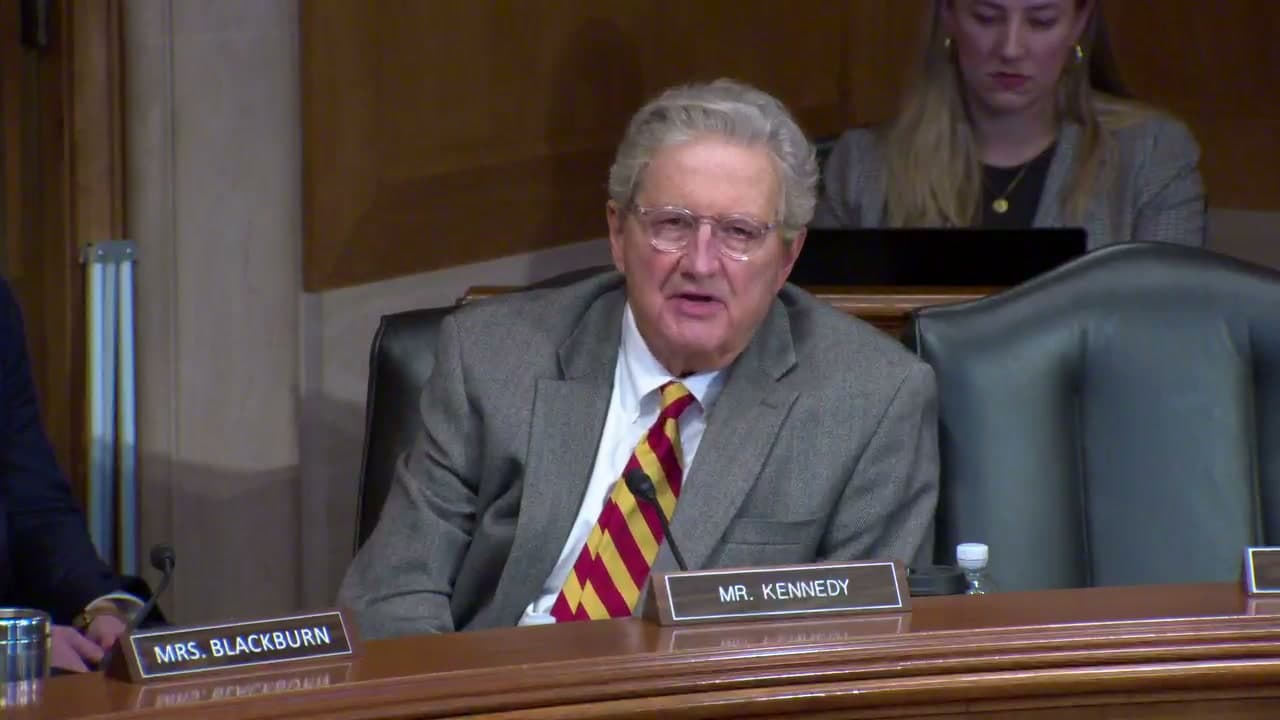
No audio detected at 0:00
No audio detected at 2:00
No audio detected at 4:00
No audio detected at 6:00
No audio detected at 8:00
No audio detected at 10:00
No audio detected at 12:00
No audio detected at 14:00
No audio detected at 16:00
No audio detected at 18:00
Good morning. On today's agenda, we have 18 nominations and 1 bill. We'll vote on the 4 district court nominees: Daniel Blow, Richard Berner, Courtney Coker, Kyle Ridden. The remaining nominations on the bill will be held over for future consideration.
The American Bar Association continues to find itself in hot water and with good reason. Although it claims to be an unbiased organization, it routinely takes public positions on divisive political, legal, and social issues. I won't repeat the laundry list of ABA's rampant partisan activities. Indeed, I've run through that litany on many occasions, this and former Congresses. And I'll remind you that the ABA has repeatedly advanced hostile positions towards the Second Amendment.
And immigration enforcement, has promoted harmful abortion and liberal gender ideologies. The ABA's political agenda has, of course, tainted its credibility in rating judicial nominees. It's all well documented that, historically speaking, a poor ABA rating has reflected a bias against conservatism And there are dozens of examples that across Republican nominations, like a broken record and a broken clock, the ABA strikes midnight again, baselessly labeling a Republican president's nominees as quote-unquote minority, not qualified. Although the ABA squandered its credibility long ago, I feel compelled to address this issue again because it affects multiple nominees pending before today and in coming weeks. So let's take a look at a couple examples.
Judge Blue, nominated to the Eastern District of Kanumbia, or Kentucky, has been a state judge for nearly a quarter of a century. It's hard to imagine how any nominee could be more qualified for a judgeship as a current judge with that much experience. The ABA's provided no justification for its rating, minority not qualified. It's the fox guarding the hen house, telling us to trust it. Now, consider Mr. West, who we're holding over today.
He was nominated to the Eastern District of Oklahoma. He, like many recent nominees, was a Solicitor General in his state. The ABA's rate— rated his Solicitor General peers, Judge Devine, Judge Lacour, and Judge Flowers, all well qualified. Meanwhile, Mr. West gets a minority not qualified rating despite having as much or more years of legal experience than each of the three names I just mentioned. The ABA's rating there lacks any transparency.
They're illogical, inconsistent, and plainly tainted by political bias. I'd say that they should be taken with a grain of salt, but that's be giving them, uh, too much credit. In spite of the ABA's baseless attempts to discredit recent nominees, The Senate's confirmed nearly 60 highly qualified Article III judges so far this Congress, and I look forward to today's votes that we can get to work confirming more. Senator Durbin.
No audio detected at 25:20
Mr. Chairman, I thought the decision was made by this committee to not engage the ABA in rating judicial nominees. And I think they have been cut off by this committee and your chairmanship from basic information that was always available to the ABA, such as the nominee himself or those who work with him on a legal basis. So your opening statement about the ABA leaves me puzzled. Uh, I don't know if you're suggesting they're coming back or that they have been officially recognized, but I thought the position of the majority in the committee was They didn't care what the ABA thought. At least that's what was announced at the beginning of the session.
I think you stated it, but I just want to know that I haven't changed my mind over the last 20 years. Good. I think that's good most of the time. Thank you very much, Mr. Chairman. I think there are a lot of things that this committee could have considered and didn't during the course of the last 2 years.
We have a responsibility. If I sound a little unusual, I just spent an hour or 2 in the dentist chair, so A little bit, uh, we'll forgive you. Thank you. The committee has failed to fulfill its responsibility under Article 1 of the Constitution to conduct oversight of criminal misconduct by federal agencies and officials under our jurisdiction. Let me be specific.
Republicans turned a blind eye as immigration agents shot and killed Renee Goode and Alex Freddi in Minneapolis. Silverio Villegas Gonzalez in Franklin Park in my home state of Illinois, Johan Sebastian Duran Guerrero in Biddeford, Maine, and Lorenzo Salgado Arroyo in Houston, Texas. These are murders, killings by federal agents, the jurisdiction of this committee on the issue of immigration. We've been too busy to consider it. Unfortunately, those investigations still need to take place.
Republicans have tried to minimize the January 6th insurrection and President Trump's efforts to overturn the 2020 election. I think we may have one straight answer from nominee about what actually happened on the election in 2020. Most 8th grade students can answer that question, who won the election? But most of our judicial nominees cannot. One committee Republican even mocked my criticism of President Trump's blanket pardon of January 6th insurrectionists.
Remember that? First day in office, unconditional, complete pardon of all the insurrectionists who attacked our Capitol Police, who are guarding you right now to make sure that you are safe. They attacked our Capitol Police and two lost their lives. That reality has been ignored by the majority of this committee. Meanwhile, the crime spree by these pardoned rioters continues.
Just last week, Cleveland Meredith was charged with threatening to murder the federal judges who presided over his January 6th criminal case. Donald Trump gave a full unconditional pardon to Mr. Meredith, who came to Washington on January 6th with a car full of guns and threatened to, quote, put a bullet in then-Speaker of the House Nancy Pelosi's head. On Sunday, President Trump again defended his pardon of these traitors, saying, quote, I don't think any group has been treated more unfairly. Any group has been treated more unfairly. But last week on Election Day, the American people rejected this administration's corruption, and cruelty overwhelmingly.
President Trump responded to the stunning rebuke of his leadership by doubling down. He made baseless claims again that the Democratic landslide was a result of fraud. No evidence forthcoming. He promoted Stephen Miller— how about that one— the architect of the mass deportation campaign that led to the deaths of the people that I mentioned earlier. He is now Chief of Staff to the President of the United States.
He ordered the Justice Department to criminally investigate members of Congress for simply conducting oversight hearings. Thanks to Republicans, President Trump has a loyalist as his Senate-confirmed Attorney General to carry out his orders. Unfortunately, it appears our Republican colleagues Lisa Murkowski, who I thought may have learned a lesson from the last Tuesday election, did not get the message. Senator Grassley, this is not directed at you personally. You probably are not aware of this, but I want to make it a matter of record.
The Republican majority in this committee continues to withhold committee records that Republican senators used to question Special Counsel Jack Smith. Remember that hearing? Can you forget it? That was Jack Smith, who was spoken of by this committee over and over again as the eminence grise in this plot to vilify President Trump. He appeared before this committee under oath and testified.
Now, the information that was used to attack him in the hearing, which we have requested and routinely is turned over, has been withheld in violation of Senate rules longstanding committee practice. The majority is also violating numerous longstanding standards in desperate attempt to confirm more than 30 qualified loyalists to lifetime appointments before Democrats take the majority. By departing from these practices, Republicans are further undermining the committee's ability. I won't be here to see it, but don't be surprised if some of these violations have now become routine enough to be followed in the future. And you're— we are setting precedents for future Democrats, which unfortunately may turn that direction.
We cannot have one set of rules for Republicans and another for Democrats. Consider one of the nominees Republicans are violating committee rules to advance. This dates back to the election day of November 3rd. As Republicans know, The results in Texas were discouraging to their party. The next day, the Republicans in the Senate moved into action and decided to send as nominees to this committee one that we'll talk about this morning, who was a Supreme Court justice in the state of Texas, lost the election on Tuesday, nominated for federal district court on Wednesday.
Well, that's pretty good. He was running for office to be reelected to the Supreme Court, and now he's running for the federal district court. And there's another one. One of the nominees is Elliot Geiser. Mr. Geiser has served as the Assistant Attorney General for Legal Counsel.
He has advanced some very unusual and unpopular and overturned theories. As head of the Office of Legal Counsel, he issued numerous unhinged legal opinions. For example, he declared that the Presidential Records Act is unconstitutional and signed off on the creation of the infamous January 6th slush fund. Mr. Geyser has limited contacts with the state of Texas. We'll discuss him later.
He decided the day after the election on November 3rd he was leaving the Department of Justice. Well, it's not too late for Republicans on this committee to change course. If you're listening to the American people, I would suggest that you abandon efforts to hold our regular DOJ oversight hearings back instead of using them as an opportunity to inform the American people about the facts. That we hold a hearing finally with the big tech CEOs. We have a month and a half left.
Let's bring them in. We have a lot of questions I think both, both parties would like to ask about protecting our children and families. We need to respond to Senator Curtis, Republican senator of Utah, his request for a bipartisan investigation of the Trump family famous wedding reception paid for by a Russian oligarch. You think that would have drawn a hearing under the Biden administration? I think so.
Well, Mr. Chairman, there are many things we still can do, and I hope we'll use them. And one of them is not to expedite nominees who have not been carefully vetted. I hope we don't accept that as a standard in this committee. I yield. Mr. Chairman, I want to know that I have an answer for a couple issues you brought up.
I addressed this access to record issue in an October 8th, this year's letter, and I'll introduce that record into the— that letter into the record without objection. Over recess, my staff briefed Democratic offices over a 2-week period to provide a review of whistleblower records and other records at issue. My staff spent as much time as necessary to explain the records and to answer questions. In fact, my staff allocated more time and resources to the minority than they did the majority. Then my staff sent a memo to Republican and Democrat offices, which also included possession of, uh, whistleblower records before publication.
That level of care hasn't been afforded by Democratic chairs to Republicans regarding standards. When then-Senator Durbin, chairman of the committee, ran his Trump January 6th investigation in 2021, there were multiple in-camera reviews of National Archive records. Now, once was another member's office present for those in-camera reviews of government records.
Where was the— there wasn't any outrage by my Democratic colleagues at that time, and Republicans didn't complain either. We respected Ranking Member Durbin's decision to then, as then-chairman of this committee. What's unique here is that my office negotiated access to whistleblower records before publication. Not just government records. And that's in addition to the thousands of pages that I've made available to both majority and minority.
That conduct shows the respect that I have for members, appropriately balanced with my responsibilities as chairman to run investigations and protect whistleblowers. It would certainly be better if my Democrat colleagues cooperated with my investigation rather than trying to publicly undermine it. Instead, in this investigation, as well as others with Senator Johnson, we've personally attacked— we've been personally attacked by the other side. I've told that story many times. I'm not going to go back into that.
We all remember the outrageously false accusations that we advanced Russian disinformation. Some members on this This very committee, even after releasing authentic bank records, no member has ever apologized to me or Senator Johnson for these false attacks. These very public and very false attacks caused my office rightful caution with how to share certain records, especially whistleblower records, which I can do as chair, just as the Democrats have in the past. In addition, you brought up another issue that I have to respond.
Considerate— consideration of judicial nominations is some of the most important works that this committee does, and as Chairman, it's been my priority to ensure that the federal branch bench is filled with judges who will uphold our Constitution and rule of law. It's no secret I've worked hard to efficiently advance judicial nominees throughout my 6 years as Chairman. Uh, you've seen the statistics. Under my leadership, this Congress, we've advanced and confirmed judges at the fastest rate in decades. But now my Democratic colleagues criticize the pace and timing of how I'm proceeding with pending nominations.
They say I'm moving too quickly and breaking quote-unquote precedent. So let's look at that precedent. Democrats say that I'm doing something new by holding nominations hearings less than 2 weeks apart, but there's no Senate or committee rule that requires that. The chairman has always had discretion to set hearings scheduled. Since the Obama administration, Truncated hearings have been held at least 3 dozen times.
Nearly 7% of those happened when the Democrats were in the majority. In fact, it happened 16 times while I served as ranking member. Democrats also say that I'm breaking precedent by allowing nominees to sit fewer than 28 days, uh, after receipt of his Senate questionnaire. Again, there's no Senate or committee rule that requires that. The 28-day norm has been waived for nominees in the past.
It's happened for district judges multiple times, including twice in the 115th Congress, and chairmen from both parties have also done it for higher court nominations, like for Justice Barrett. And for Justice Jackson. Historically, this committee has shortened timelines when circumstances warrant it. For example, an article by Mike Furgossos titled Democrats Whine About Hearing Schedules— that article discusses how the Democrats undertook similar measures during the 2022 lame duck session. Without objection, I would enter that into the record.
So that's the precedence. Now let's talk about what's unprecedented. During Biden administration, more than 94 of the— 94% of the U.S. attorneys and 100% of the U.S. marshals were confirmed by voice vote or unanimous consent. During this Congress, because of Democrat obstruction, that percentage has dropped to zero. Democrats have undertaken unprecedented levels of obstruction to stall President Trump's nominees.
And once the Democrats take control of the Senate next year, they've made clear that they're planning to block Trump-nominated judges from ever being confirmed. So don't take my word for it. Senate Minority Leader Schumer has publicly said in multiple occasions before the election, he even told the press that blocking lower court judges was, quote, one of the reasons that we want to do everything we can to take back the Senate, end of quote. My Democratic colleagues on this committee have indicated the same. One advocated for, quote, "hard reset on nomination process next Congress," end of quote.
Another said, quote, "I think it's slim to none that we would support nominees from this administration," end of quote. So I want to be very clear. Some Democrats so despise President Trump that for the first time in our nation's history, They're planning to stonewall a president's ability to appoint judges. Now that is what is unprecedented. So yes, I'm working.
I'm going to work hard to get judges confirmed quickly during the lame duck session while we still have time, because I know what's coming and I care too much about this country and the American people not to do it. We have a quorum. Mr. Chairman, I'd like to respond. First, I'm glad we have a good working relationship, a trusting relationship. We do have.
Yes, I do. I want to continue that. But there are some things that bear observation from the opposite side. All the norms you talked about that had been changed in the past had one distinction to the norms being considered now. The changes are made with the consent of the minority.
So we would ask the Republicans, would you go along with shortening a period of time for a nominee? And if they said yes, we did. But otherwise, no. That is not the case now. The decision is being made unilaterally without request for our consent.
And let me also say a word, because this one really gets under my skin a little bit. Why do we have roll calls for U.S. Attorney nominees? Who insisted on that? Why, the first Trump administration, there were 87 US attorneys approved by voice vote. Why do you require a roll call vote now?
One senator insisted on it. Who is that senator? The mystery senator? JD Vance. I went to the floor of the Senate 7 times asking unanimous consent that then-Senator Vance stop his objection to having just the basic vote of an individual by voice for U.S. attorney, as we'd always done.
He insisted he was going to bring down the Justice Department by any means, and he objected each and every time. So to blame us on the Democratic side for something that was advanced by the now vice president is just plain wrong, and the record will show it. Thank you, Mr. Chairman. Okay, now we'll go— now we'll go to vote on these nominees. We're going to lose.
If you'll briefly recognize—. No, no, we're going to— I'll recognize you just as soon as we get done with these votes. We'll now turn to the nomination of Daniel Blue to serve as judge of the U.S. District Court, East District of Kentucky. All in favor of reporting the nomination, clerk will call the roll. Mr. Cornish.
Aye. Mrs. Moody. Aye. Ms. Brand.
Aye. Mr. Durbin. No. Mr. Whitehouse. No by proxy.
Ms. Klobuchar. No by proxy. Mr. Coons. No by proxy. Mr. Blumenthal.
No. Ms. Roberono. No by proxy. Mr. Booker. No by proxy.
Mr. Padilla. No by proxy. Mr. Welch. No by proxy. Mr. Schiff.
No. Chairman Grassley. Aye. The ayes are 12, the nays are 10. Having a favorable vote to nay, Mr. Ballou will be reported.
Mr. Chairman, I'd ask unanimous consent to be able to put in a statement. In support of the nomination of Richard Bennett and Courtney Coker, in the record, please. Okay. Without objections. Order.
The clerk will call the roll on Richard Bennett. Mr. Cordes. Aye. Mr. Lee. Aye.
Mr. Cruz. Aye. Mr. Hawley. Aye. Mr. Tillett.
Aye. Mr. Kennedy. Aye. Mrs. Blackburn. Aye.
Mr. Smith. Aye. Mrs. Britt. Aye. Mrs. Moody.
Aye. Ms. Brand. Aye. Mr. Durbin.
No. Mr. Whitehouse. No by proxy. Ms. Klobuchar. No by proxy.
Mr. Cruz. No by proxy. Mr. Blumenthal. No. Ms. Herrera.
No by proxy. Mr. Booker. No by proxy. Mr. Padilla. No by proxy.
Mr. Welch. No by proxy. Mr. Schiff. No. Chairman Grassley.
Aye.
Mr. Bennett will now be reported after that favorable vote. Now, Courtney Coker, clerk, will call the roll. Mr. Corden. Aye. Mr. Lee.
Mrs. Moody. Aye. Ms. Brand. Aye.
Mr. Durbin. No, no, in person. Mr. Whitehouse. No, by proxy. Ms. Klobuchar.
No, by proxy. Mr. Coons. No, by proxy. Mr. Blumenthal. No.
Ms. Hirono. No, by proxy. Mr. Booker. No, by proxy. Mr. Padilla.
No, by proxy. Mr. Welch. No by proxy. Mr. Schiff. No.
Chairman Grassley. Aye. On this vote, the ayes are 12, nays are 10. Favorably reported. Now Courtney Coker after that favorable vote.
Now Kyle Reardon, clerk, will call the roll. Mr. Cordish. Aye. Mr. Wheat.
Aye. Mr. Cruz. Aye. Mr. Huffman. Aye.
Mr. Tillich. Aye. Mr. Kennedy. Aye. Mrs. Blackburn.
Aye. Mr. Schmidt. Aye. Mrs. Britt. Aye.
Mrs. Moody. Aye. Ms. Brand. Aye.
Mr. Durbin. Aye. Mr. Whitehouse. No by proxy. Ms. Klobuchar.
Aye by proxy. Mr. Coons. Aye by proxy. Mr. Blumenthal. No.
Mr. Rana. Aye by proxy. Mr. Booker. No by proxy. Mr. Tavia.
No by proxy. Mr. Welch. No by proxy. Mr. Simmons. No.
Chairman Grassley. Aye. Unspoken, the ayes are 16, the nays are 6. Okay, the nominee getting her favorable recognition, or I mean favorable vote, will be reported to the floor. Senator Schiff.
Thank you, Mr. Chairman. Seeing that we have a quorum, I move for a vote pursuant to Rule 4 of the committee's rules on a subpoena for Volume 2 of Special Counsel Jack Smith's final report directed at the Department of Justice, which already possesses a final version redacted of grand jury materials. I have a resolution that we can vote on requiring production of Volume 2, as previously requested by 10 members of this committee over a year ago. Although there is a pending court order in Florida sealing the Volume 2 report, the court order is on appeal with oral arguments scheduled for January 2027. The district court's order in that case relied on a woefully inaccurate factual finding that Congress had expressed no formal interest in the report.
No audio detected at 49:20
This committee should correct that record as soon as possible. Committee's recent oversight hearing with Jack Smith confirmed the committee's interest from both parties in the conclusions and conduct of the special counsel. It is, I think, inexcusable the public still does not know the evidence supporting the criminal charges involving classified documents against President Trump and his co-conspirators. This committee has been receiving and releasing documents related to special counsel reports, but doing so selectively. And the, I think, simple, obvious next step would be to actually release the report.
So I would urge the committee to join me by voting to subpoena DOJ, reclaim our oversight power. And under the committee rules, I'm entitled to a roll call vote on this. Yeah, the request is out of order. I'll explain. My Democrat colleague, who's falsely— they have accused my side of violating committee rules.
Have broken the committee rule that the chairman sets the agenda. Judge Cannon issued an order that blocks the release of Jack Smith's Volume 2 outside of the Department of Justice. Litigation regarding that order is before the 11th Circuit without oral arguments scheduled— with oral arguments scheduled January 12th. Any litigation over a subpoena issued by the committee on this matter would— wouldn't finalize before the court ruling. Judge Cannon noted in her order that, quote, manifest injustice, end of quote, would result from releasing the report.
Judge Cannon said special counsels have released final reports at the end of their investigation. But noted that, quote, the court strains to find a situation in which a former special counsel has released a report after initiating, initiating criminal charges that did not result in a finding of guilt, at least not in a situation like this one where the defendants contested the charges from the outset. And still proclaim their innocence, end of quote. As Judge Cannon noted in her order, uh, President Trump and the other defendants in the case, quote, still enjoy the presumption of innocence held sacred, sank in our constitutional order, end of quote. In this instance, what Judge Cannon said Is precisely for now all Congress with record after record.
I've shown, uh, Jack Smith and his staff were politically weaponized. As one example, Smith's deputy wanted to prosecute any nun wearing a head habit. Another example, Smith's operation intentionally served committed the speech and debate clause of the Constitution. I've also made public government emails showing officials had concerns about proceeding with classified document cases. Smith and his team obtained invasive and irrelevant information on hundreds of thousands of Republican supporters.
I've repeatedly asked my Democrat colleagues to join my investigation, which they have refused to do. Some of these facts were conveniently left out of Smith's public report, which, if, if passed, is Prologue Volume 2, is assuredly filled with allegations benefiting the special counsel's political positions. Smith also produced Volume 2 after his appointment was deemed unconstitutional, so he knew he was on borrowed time. Attempting to force this release under this unique condition is premature. Therefore, your resolution is out of order.
Mr. Chairman, if I may make two points. First of all, Rule 9 of the Committee Rules states that the chair of the committee, with the agreement of the ranking member, or by a vote of the committee may subpoena the attendance of a witness or records. So under Rule 9, the committee can vote to subpoena records. And under Rule 4, if you wish to deny me that, it says the chair shall entertain a non-debatable motion to bring a matter before the committee to a vote. If there is objection, as you are objecting, to bring the matter to a vote without further debate, a roll call vote of the committee shall be taken.
So here's, here's the thing. We can vote on this now, or we can vote on this in January, um, in which I think a subpoena will be issued. The implication of not voting on it now, denying the minority vote on it now, will be— it will be the Republican position when you're in the minority that the minority party no longer has the right to command a vote, to require a vote on a subpoena. So if you want to give up that right, You'll be doing it today. You'll be taking a position that when you're in the minority, you have no right to a vote on a subpoena.
So that's the implication. The subpoena is going to go out, but you're establishing a precedent by denying me this vote that you won't insist on a vote. You'll have no position to insist on a vote in the minority. The difference between what you're predicting will happen in the future and happening now The chairman does not have your motion on the agenda, so it's out of order. If the chairman next year puts it on the agenda, then you'll deal with it at that time.
Okay, so everyone, I hope you'll stay in your seats. I'm adjourning the executive business meeting and transitioning to our nomination hearing. So we will, uh, gavel out and gavel in. I'd like to welcome everyone to today's hearing. We have two panels.
The first panel features Todd Butler, who was nominated to serve on the U.S. Court of Appeals for the Fifth Circuit. Our second panel has three district court nominees: Samuel Adkinson, for the Eastern District Tennessee, Phil Echt for the, uh, District of North Dakota, uh, Bradford Kelly for the Eastern District Louisiana. Our second panel will also feature Arthur Kleinschmidt, who was nominated to serve as the Assistant Attorney General for the Office of Justice Programs. Because we have a number of introducers, a lot, to get through today, I'm going to be brief in my keeping us on schedule. Today's nominees feature a wide array of backgrounds.
Mr. Butler has extensive experience in private practice. Mr. Atkinson and Mr. Kelly are public servants at the federal level, and Mr. Ank serves as a state-level as North Dakota's Solicitor General. They're all exceptional nominees. On multiple occasions, I've noted that the President continues to nominate individuals with military backgrounds. I think that disciplined experience is an asset for the federal branch—.
Bench. Mr. Kelly and Mr. Acte both served in our nation's military, and we all thank them for their service, and especially I do. Dr. Kleinschmidt also has an inspirational story. As a clinician, he dedicated years of helping Americans. In addition to counseling, he managed many grants, including those that help victims of opioid crisis.
He's a leader in that field. I look forward to hearing from all these nominees. Now, Senator Durbin. Thank you, Mr. Chairman. I mentioned part of my concern earlier.
I'd like to make sure that it's clear. The second Trump administration has fallen behind Biden administration's pace in confirming judicial nominees. In fact, well behind, well behind the first Trump administration's pace. So now, in the waning days of this Congress, in light of the last election, the chairman is violating numerous longstanding committee norms the Republicans and Democratic chairs alike have followed over the years without consent from the minority. A key phrase when it comes to the rules of this committee.
The majority is planning to hold nominations hearings today and next week, contrary to our practice of holding nominations hearings no closer than 2 weeks apart. They're slating 2 nominees for next week's hearing whose questionnaires were received 10 and 14 days ago, before the, uh, 14 days before the hearing respectively, contrary to 28 days which has been required by both political parties up until now. They're calling nominees for hearings even if their FBI background investigation hasn't been cleared by the staff, and they're slating as many as 7 nominees for a single hearing. Why? Because the Republicans are losing the majority, and they're afraid that unqualified MAGA loyalists won't withstand close scrutiny when Democrats are in the majority.
Consider two Texas nominees who are slated for next week's hearing: James Sullivan and Elliot Geiser. On Tuesday, November 3rd, James Sullivan lost his election for the Texas Supreme Court. The very next day, the administration submitted his Senate Judiciary questionnaire, which had obviously been prepared in advance. So here's an individual who was running for the Supreme Court, and when he didn't make the cut at the start of the next day, he decided his career was best at the federal level. And this committee is giving this man expedited hearing.
The reason will be obvious in a second. Another individual who's being considered is Elliot Geiser. His questionnaire was submitted to this committee 2 days ago. As I mentioned before, he's an assistant attorney general for legal counsel. It says that Geiser's questionnaire was submitted, as I said, 2 days ago.
It says that Senator Cruz's office contacted him the day after the election about the nomination. So once again, The defeat of the Republicans in Texas has created a scramble for lifetime appointments to the federal bench. Under the committee's precedents, these two nominees can't be confirmed before the end of this Congress under accepted guidelines and schedules we've followed in the past. So Republicans are breaking the rules to jam through these nominees and avoiding one obvious thing. On January 3rd, there'll be a new senator from Texas.
Senator Tallarico has the right, as all senators do, to approve or disapprove district court nominees on a process known as blue slip. What we're seeing here is an effort to scramble quickly to resurrect defeated candidates in Texas and others to fill the, the positions on the federal district court before Senator Tallarico is sworn in on January 3rd. It's pretty obvious there's such a scramble to do this. They're ignoring the rules of the committee and ignoring the obvious. Before appointing a person to a lifetime appointment to the federal bench, shouldn't we take a close look at their background?
We have in the past, but clearly we're not any, any longer. I think that's a serious mistake, Mr. Chairman. And when it is, when you have to live with it under a new chairman, I'm sorry to tell you, you asked for it. Well, I've already addressed this issue, but let me do it for a second time. Democrats have undertaken unprecedented levels of obstruction to stall President Trump's nominees this Congress, and they've publicly made clear that they're planning to block Trump-nominated judges next year.
So I'm working hard to get judges confirmed quickly during this lame duck this session while we still have time. Now let's be very clear—this isn't any different than how Democrats fast-tracked judicial nominees in recent lame duck sessions. You heard me note earlier Democrats held truncated hearings in 2022 during a lame duck session. And in 2024, when the Democrats were about to lose control of the Senate, they rammed ahead with confirming 22 federal judges during lame duck. That's essentially the same number of nominees currently pending, uh, in the Senate right now.
So I hope you'll spare me the outrage. Democrats don't like this because we're getting ahead of their planned obstruction. But what's good for the goose is good for the gander. And then something about the FBI timeframe. We're working with limited time remaining on the Senate calendar, so I intend to process nominations efficiently.
The majority and minority are still conducting full and complete review of nominees' FBI background investigations. However, I'm not going to prejudice nominees and prevent them from sitting for a hearing because of delays outside of their control. But let me be clear, nominees won't receive a committee vote unless the FBI background investigation has been cleared. Because of the timing was hard to estimate, introducers should go as they arrive, starting with, uh, let's see, I guess we have— do we have Senator Hagerty?
Please go ahead. And then anybody else that's in the room, sit down. Go ahead, Senator Hagerty.
Mr. Chair, witness is supposed to take seats. Yeah, please do.
I didn't see you gentlemen in the crowd. There's special chairs, Mr. Chairman, where I've sunk down as low as I think I possibly could. I feel like I'm in It's a Wonderful Life sitting across the table, Jimmy Stewart's seat. Thank you very much, though, Mr. Chairman, Ranking Member Durbin. I'm pleased to be here to introduce a friend and fellow Tennessean, Samuel Atkinson.
No audio detected at 1:05:20
He's President Trump's nominee to be district judge for the Eastern District of Tennessee. Hailing from the mountains near Chattanooga, he brings exceptional intellect, broad litigation experience, and the character we expect from our federal judiciary. Sam is a distinguished graduate from my alma mater, Vanderbilt University. He was an All-American on the mock trial team. He graduated there summa cum laude.
He then attended Yale Law School, where he served on two law journals and received the top prize for excellence in trial presentation. As an advocate, Sam has practiced law at elite law firms. He's played key roles in high-stakes litigation, including billion-dollar bankruptcies and civil liberties cases. Importantly, in his current role as Special Assistant and Associate General Counsel to the President, Sam has played a key role supervising the mountain of litigation involving the federal government these past two years. Sam's experience isn't limited to the above cases.
Consider his law review article titled, quote, "System Level Standards: Driverless Cars and the Future of Regulatory Design." We need judges who, like Sam, can adeptly apply our law not only to yesterday's problems, but also to the problems of tomorrow. Sam is bright, consistent, and he demonstrates a steady hand. His impressive resume shows he's ready to be a district judge. But let me put this in a more personal context. You're about to meet a man who clerked for the Chief Justice and two outstanding circuit judges, and now is counsel to the President.
You're expecting to meet someone who's learned, hardworking, and brilliant. Yes, Sam is all of those things, but much more besides. He's honest, quick to laugh, he's humble, and he's devout. He's devoted to his wife and their three children. Public service has placed high demands on their family, and Sam's gratitude for their unwavering support is apparent.
His pastor back home in Tennessee said that, quote, Sam is the epitome of a servant-hearted man. Sam understands the proper role of a judge, that the Constitution's original meaning is binding, and that the law must be applied as it is, not how he or anyone else would like it to be. I urge this committee to quickly advance his nomination. Thank you. Thank you, Senator Hagerty.
Now Senator Blackburn. Thank you, Mr. Chairman, and we are so pleased to welcome Sam to the committee. This is like a return visit for him, as he once worked with this committee, and we are pleased that he has been put forward for nomination for the Eastern District of Tennessee. He brings an impressive record of legal experience, and you heard a little bit about that from Senator Hagerty. He did get his BA with highest honors from Vanderbilt.
No audio detected at 1:08:00
He earned his JD from Yale. He was an Scalia and Blackstone Fellow, President of the Federalist Society, and Forum and Features Editor of the Yale Law Review. I don't think he ever slept when he was in college, in law school. During law school, He also clerked for you, Mr. Chairman, on the Senate Judiciary Committee during the Kavanaugh confirmation hearings. Following that, he had three prestigious clerkships: Judge Katzas on the D.C.
Circuit, Judge Thapar on the Sixth Circuit, Chief Justice Roberts during the '21-'22 term, when several landmark cases were decided, including the Dobbs decision. Following the clerkships, he entered private practice at the law firms of Gibson, Dunn& Crutcher and Cooper& Kirk, handling civil rights, constitutional, and commercial matters, including litigation before the Supreme Court. Most recently, he has served as special assistant to the president and Associate Counsel in the White House Counsel's Office, where he advises the President, the White House officials on litigation, legislation, executive orders, nominations, and federal regulatory actions. I want to congratulate Sam and his family on the nomination. I am confident that he is going to serve the Eastern District Lisa Murkowski, and our nation with honor, integrity, and decency.
And I'm looking forward to working with him as we shepherd his nomination through the Judiciary Committee. And I will add, Mr. Chairman, I was delighted to learn that their daughter and my granddaughter had a wonderful time this weekend playing at a mutual family friend's farm. And I think that that's probably just the best thing you could do on a Tennessee weekend. So thank you, Mr. Chairman. Thank you, Senator Wicker.
Well, thank you, Mr. Chairman, and distinguished members of the committee. I'm pleased today and have the distinct privilege of helping Senator Hyde-Smith introduce Mississippi's Todd Butler. For consideration to serve as a judge on the Fifth Circuit Court, a very consequential posting and a rare opportunity. My colleague and I are both before the committee because we believe he is absolutely the man for the job. Todd Butler is a lifelong Mississippian.
He's raised in Scott County. He's a small-town boy, and he's the distinguished son of a distinguished father. His father was a 4-term mayor of Morton, Mississippi. But let me tell you about Todd Butler. He was valedictorian of Morton High School, and he, in addition to being the top scholar of his class, he was on the winning basketball team and later became its captain.
Then he went to Mississippi State University where his peers elected him president of the student Association, but, uh, while he was involved in student government, he earned top marks and once again graduated at the top of his class, summa cum laude, at Mississippi State University. Todd Butler then went on to, um, law school at the Mississippi College School of Law He was editor-in-chief of the Law Review.
Um, he got the highest grade in 8 of his courses and once again graduated summa cum laude. Um, now, uh, Todd and his wife Sarah live in Brandon. They're raising 2 boys. They attend church at the Word of Life Church.
And Todd is a very experienced litigator. It happens that if he is confirmed, he will succeed on the Fifth Circuit the man that he clerked for on the Fifth Circuit. He was a clerk for Judge Southwick, whose position he's been nominated to take. Now, after clerking, Mr. Butler entered private practice, worked in state and federal litigators. He was with the distinguished law firm of Phelps Dunbar, a multi-state law firm where he was a partner, and he's experienced in this area of the law.
He was— he's presented oral arguments on 20 Federal appeals, 17 before the Fifth Circuit and one before the, uh, United States Supreme Court. He's used his talents to serve not only his clients but also the next generation of legal minds. He's been a professor at his alma mater, um, uh, Mississippi College School of Law. And over the course of his career, Mr. Butler has litigated on and written about a wide range of legal matters He has probed complex constitutional questions, navigated contentious disputes in the courtroom and in his writings in numerous law review articles. He's filed multiple amicus briefs in federal courts and contributed to, uh, numerous publications.
He served us by court appointment as an arbitrator. The U.S. District Court for the Southern District of Mississippi recognized Mr. Butler's skill and wisdom when they selected him to chair the Magistrate Selection Committee. He was chosen by the court to help them select other members of the judiciary, and, um, and he was, he was recognized by the Mississippi Business Journal with the Leader in Law. Leader in Law Award. In short, he's well-versed in an array of legal matters.
He's the temperament and expertise for such an influential position in the federal judiciary. Let me just reiterate, Mr. Chairman and Mr. Ranking Member and distinguished members: top of his class in high school, summa cum laude in undergraduate, Summa Cum Laude in law school. He's got 8 AmJur awards from law school and graduated at the top of his class there. In short, I do not think we could have a more experienced and a finer, better-read nominee for this very important lifetime position than Todd Butler, and I'm Delighted to join my colleague in giving him my, my most enthusiastic endorsement.
Thank you, sir. Senator Hoeven. Thank you, Mr. Chair. I'm here to introduce and really to just provide my strongest encouragement that you all support Phil Ax for the judgeship, U.S. District Court judgeship in North Dakota.
My comments are lengthy. However, Senator Kennedy said he would yield his time to me. So once I exceed my 5 minutes, whatever you allot for him, I would have an addition as well, Mr. Chairman. So seriously, thank you. Phil Axte is just an incredible candidate for this position.
He's a fifth-generation North Dakotan. And grew up with an understanding of our state, rural America, and just not only the rules of law, but just common sense. He attended Bismarck High School, spent his time on the family farm in Sheridan County, and then decided he wanted to get into public service. And the way he chose to do that was go to West Point. So he went to West Point, he was on the Dean's List, he was a distinguished cadet, and then he served as an intelligence officer in the United States Army, where he was awarded the Bronze Star for his service in Afghanistan.
And so that really gave him an understanding of what it takes to be a leader, discipline, responsibility, and the importance of serving something greater than himself. This is not a traditional path, I would say, for a judge. And I think, again, that's why he stands out as a truly exemplary candidate. He earned his law degree from Yale Law School. I think he was having a little trouble getting into the University of North Dakota Law School.
I can't say for sure, so he ended up going to Yale Law School. He gained valuable experience in both private practice— I'm kidding about UND, okay, just so there's no—. Kidding about that. He went to Yale Law School, and then he clerked for the United States Court of Appeals for the Fifth Circuit. He started his legal career working in my Senate office, which of course we were thrilled to have him, and of course he was just tremendous in his time with us, and I had a chance to get to know him a little bit and obviously was impressed not only by his service record, uh, but his incredible, uh, intellectual ability, sound judgment, strong work ethic, and, and those things continue today.
He is currently working as Solicitor General, uh, for our outstanding U.S. Attorney Drew Wrigley, who I think might be here somewhere, uh, but, uh, I've known Drew a long time, and Drew's a tremendous legal mind and a tremendous attorney general. And he tells me that Phil Axe is one of the most capable attorneys that he's ever worked with in his career. And he's had a stellar career as well. And so that really means something to me that he knows Phil personally. He's hired him, employed him, and that he's the solicitor general and he's just done an incredible, incredible job.
I've got a lot more here I could go on about. But I see my outstanding colleague Senator Kramer's gonna talk about him as well. So I'll just wrap up here, but I just tell you, you know, think about this, just what I've told you. Look, and I've got pages and pages here. So Senator Kennedy, I really did need your time, but I'm not gonna use it.
But here's a candidate who went to West Point, served his country. He's got the finest, academic accolades and accomplishments, but he's a guy that served our country in battle, won the Bronze Star, and now he's our state solicitor general. Now, that's pretty fantastic experience for a U.S. District Court judge. So thank you, Mr. Chairman. I appreciate it.
Thank you, Senator Hoeven. Now, Senator Cassidy. Thank you, Chairman Grassley and Ranking Member Durbin. It's my privilege to recommend Brad Kelly to the committee to be a United States District Judge for the Eastern District of Louisiana. Brad's record reflects academic excellence, distinguished military and public service, and sophisticated legal practice.
He's a proud double graduate of LSU, where he graduated summa cum laude with degrees in political science, history, and international studies. In recognition of his academic achievement, he is Phi Beta Kappa. Brad later attended LSU's Paul M. Abeir Law Center, where he's an editor of both the Louisiana Law Review and the Journal of Civil Law Studies. Brad received his law degree magna cum laude and was inducted into the Order of the Coif. Following law school, Brad clerked for the Honorable Donald E. Walter of the U.S. District Court of the Western District of Louisiana, where he had a view into the inner workings of a federal court.
If confirmed, he'll take an oath to uphold the Constitution, and he knows about that firsthand. Between college and law school, he served our country honorably as a captain in the United States Army. Served as an infantry platoon leader, and as a lead intelligence officer for a unit of nearly 1,000 soldiers. During the Iraq War, he also advised senior command leadership on combat missions, and his commitment to serve did not end when he left the Army. As an attorney, he provides regular legal assistance and counsel to Gold Star families, those special Americans who have served the grievous loss of an immediate family member killed in the line of duty.
In addition to helping the families of those who have fallen, he has aided those who live on with the wounds of their service. And in recognition of his extensive pro bono work on behalf of veterans, Brad has been— has received a commendation. He also brings substantial experience in public service. After a stint in private practice, Brad returned to government service where he served as a senior official during both Republican and Democrat administrations, including as a senior policy advisor to the U.S. Department of Labor and as chief counsel to, to a commissioner of the Equal Employment Opportunity Commission, the EEOC. Those positions gave him firsthand experience with federal law, administrative agencies, and the practical consequences of government decision-making.
He then returned to private practice. He became an equity partner at one of the world's largest labor and employment law firms He now co-chairs the firm's artificial intelligence and technology practice and has served as lead counsel in complex litigation across the United States. And that breadth of experience matters. Brad is no stranger to the court on which he has been nominated. He has litigated several matters in the Eastern District, including matters as recently as this year.
Mr. Chairman and Ranking Member, I'm confident that Brad has the credentials, experience, rigor, and patriotism that mark exceptional nominees to the federal bench. I support his nomination without question. With that, I yield. Thank you, Senator Cassidy. Senator Kennedy, you have one of the few moments right now.
Very briefly, I would like to adopt Senator Cassidy's remarks. Mr. Kelly, I'm kind of stumbling around because I Senator Hoeven's eloquence took my breath away. Once again. Nice tie, Senator Hoeven. I remember when those were in.
No audio detected at 1:23:20
Mr. Kelly is— he's got a big brain, but more than that, he's got the demeanor. That he needs— someone needs to be on the federal bench. He's, he's tempered. He's thoughtful. He doesn't swing at every pitch.
He doesn't get caught up in the mania of the moment. He'll be a good federal judge. And that's all I want to say. Senator Hyde-Smith.
Chairman Grassley and Ranking Member Durbin, I just appreciate the opportunity to be here at this hearing today. And it is truly a privilege to introduce G. Todd Butler of Brandon, Mississippi, and his family to the committee. He's an excellent choice to serve as a judge on the U.S. Court of Appeals for the Fifth Circuit, and I offer my full support for his confirmation. President Trump nominated Todd to the federal bench based on his extensive experience as a federal and state litigator who believes in interpreting the law as it is written. Pursuant to the text and original meaning of the Constitution.
A native of Scott County and graduate of Mississippi State University and the Mississippi College School of Law, Todd Butler has earned the respect within the legal field for his expertise and experience on appellate, constitutional, and employment law. He has a deep understanding of the appellate process, having served as counsel in more than 300 cases and has extensive experience presenting oral arguments before appellate courts nationwide. He has also presented oral argument in front of the United States Supreme Court. His confirmation would bring an important perspective to the federal judiciary. His legal career includes a focus on litigation and strategic counseling related to labor and employment issues.
No audio detected at 1:25:00
He has a significant understanding of municipal liability and workman— workers' compensation issues based on a long record of serving as general counsel for an extensive list of public and private entities, including the Mississippi Municipal Service Company, the Mississippi Municipal Liability Plan, and the Mississippi Municipal Workers' Compensation Group. Todd also brings experience as a as a successful arbitrator and adjunct law professor, as well as membership in a variety of legal associations. In closing, I have full confidence in Todd Butler's qualifications, character, and commitment to justice. I look forward to working with this committee and with Leader Thune to ensure swift confirmation of G. Todd Butler to serve on the Fifth Circuit Court, where he will be a strong asset to the court and to our federal judiciary more broadly. Thank you.
Thank you, Senator Hyde-Smith. Now, Senator Kramer. Thank you, Chairman Grassley. Senator Durbin, and I might just say, Senator Durbin, I'm going to miss you. I'm going to miss those wonderful speeches on the floor.
Respect you a lot. Thank you for your service. One of Kramer's convictions is never try to match wits with John Kennedy. And so I'm not going to try that. Senator, but I will tell you that I agree with Senator Hoeven when he talks about the unusual but very noble route that Phil Axte has taken to this point.
He has— he's an outstanding Solicitor General, but he came to North Dakota to be Solicitor General after a very distinguished career with a very successful firm, probably making a lot more money than he's ever going to make now for the rest of his life when he gets confirmed. Um, and that firm Gibson Dunn Crutcher in Texas has been referenced before, I noticed. I don't know if there's something going on between them and Yale and, uh, and the Fifth Circuit, but, um, Phil has, has, uh, has a history with all of them. But growing up in farm country in Sheridan County, going to Bismarck High School, going to West Point, serving in the military with great distinction and honor, then going on to Yale obviously is impressive, but it's also noble. And I know Phil to be— one of the, maybe one of the more interesting things about Phil that I've noticed as a public servant is he chose public service and that he's humble.
And a guy with a big brain, to use your words, Senator Kennedy, I think it's a good description of Phil. He's obviously bright, even brilliant, but he remains humble. And that probably comes from the that fifth-generation farm in North Dakota. And so I just joined Senator Hoeven in advocating for Phil. And there's no truth to the rumor, Senator Kennedy, that Phil's job in that— remember, he said his first job in law was working in Senator Hoeven's office.
He did not carry bail. That was not why he was there. He was a true true intellect and public servant and still is. And I encourage a unanimous vote, Senators. Really, he's the kind of guy you could all vote for.
Thank you, Mr. Chairman. It's my job to introduce Dr. Kleinschmidt to be Assistant Attorney General. He began his career as an accountant, but he later dedicated his life to supporting mental health. In combating substance abuse. He earned a master's degree in addiction counseling and a PhD in clinical psychology.
He worked as a clinician for several addiction recovery centers. Dr. Kleinschmidt also founded the Recovery for America Now Foundation. That's a nonprofit. Providing treatment scholarships to addiction treatment centers across the country. In 2017, he served as senior advisor to the Substance Abuse and Mental Health Services Administration and later as Deputy Director of the Office of National Drug Control Policy.
In 2025, He became Principal Deputy Assistant Secretary at the Substance Abuse and Mental Health Services Administration. In that position, he oversaw billions of dollars in federal grants related to substance abuse and addiction. Dr. Kleinschmidt has had a unique career in public service, and I look forward to serve in him. Now, would Mr. Butler come to the table, please? And before you seat, I'd like to swear an oath at this point.
Do you swear that the testimony you're about to give before the committee will be the truth, the whole truth, and nothing but the truth, so help you God? Please. Uh, you—. He answered affirmatively, and, uh, please be seated and give your opening statement and introduce any family and friends that you— that are proud that you're going to be on the circuit. Chairman Grassley, Ranking Member Durbin, members of the committee, I'm humbled to be before you this morning.
I want to start by thanking the president for the honor of this nomination and to my home state senators for their unwavering support. I grew up in a place very different from I'm from Washington, D.C., a small town of about 3,500 people. There's one red light. If you blink, you will miss it. I did not know an attorney growing up.
It was not until I was in college that I met an attorney for the first time. But I have parents that love me beyond measure, that always encouraged me to work hard and follow my dreams. And because of their sacrifices, someone like me is able to sit before the United States Senate asking for consideration to be on the court that I clerked on so many years ago and that I spent my entire career practicing in front of. With me here this morning is my wife Sarah, who is by far everyone's favorite attorney in our family, as well as my two sons, Tanner and Fitzgerald Butler. Now, Tanner is also living the American dream because he just celebrated his 7th birthday at Legoland in Florida.
While his little brother, who is 5, was at his favorite place in the world, which is his grandmother's house. I thank God every day for the blessings he's bestowed upon my life. There's so many other people that deserve my gratitude. I'll mention just a few. My law school classmate and friend, Judge Christy Johnson, who's just been so supportive throughout this process.
My law partner, Mike Hurst, who's helped me navigate very unfamiliar territory. Gary Friedman and Tommy Seiler, the two individuals who taught me how to practice law, and my entire law firm, uh, Phelps Dunbar. All of my partners, all of the attorneys that I've worked so closely with over the years, all of our staff, uh, the firm truly is like a family to me, uh, and I want to thank everyone there, in addition to all of my extended family and friends, just everyone who's prayed for me, lifted me up, encouraged me through this process. Last and certainly not least, I want to thank Judge Southwick, um, the man who hired me to be his law clerk 18 years ago and who has been a mentor in my life ever since. Judge Southwick is the epitome of a hard-working judge.
He is collegial, he's kind, and he's a great human being. It would be an honor to be considered for the Fifth Circuit under any circumstances, but it is a particular privilege to be considered for the seat that he's held since 2007. Thank you for holding this hearing, and I welcome any questions the committee has. Now we'll have, uh, 5 minutes of round of questions. You've been an attorney for 2 decades specializing in appellate constitutional employment issues.
Uh, pretty dense and complex they are. Uh, they're also highly relevant to cases that you'd hear in the Fifth Circuit. So what's the most important lesson you've learned as a practicing attorney, and how has that experience prepared you to serve as a 6th Circuit judge? Thank you, Mr. Chairman. I think like, uh, most things in life, there's no substitute for hard work.
No audio detected at 1:34:00
In every case, there's competing positions, there's competing arguments, and to the litigants before the court, that's usually the most important thing going on in their lives. So I've just learned over the years to— if you put in the, the effort and, and, and work hard, that generally serves you well. As far as my experience, I've been very fortunate to have mostly a federal practice throughout my career. I've litigated hundreds and hundreds of cases in the district court, in the court of appeals, all the way up to the United States Supreme Court. Um, so I've had the benefit of knowing how to make a record myself, of how to evaluate a cold record.
I've presented many oral arguments. I've also been fortunate to have been appointed by court as an arbitrator where I've presided over a hearing and issued an opinion. So I think the breadth of my experience would serve me well on the Fifth Circuit. Let's talk about your relationship with Judge Southwick. How did clerking for that judge shape your legal career, and what have you learned from him that you intend to take with you to the federal bench?
I think oftentimes when people get federal clerkships, they're told at the beginning of them that it may be very well the best year they have in their practice, and there's certainly some truth to that. It was a fantastic experience. Experience having the opportunity to clerk on the Fifth Circuit, and particularly for Judge Southwick. Again, as I mentioned in my introduction, his work ethic was, was always stood out to me, and I would, I would hope to implement that myself. His judicial humility, he's, he's collegial and very, very kind to his colleagues, and I think that that is so very important as well.
And just having the opportunity to, to clerk on the Fifth Circuit and, you know, at that formidable age, get to see great writing, get to see great advocates, get to see the work of the court in action. It's something that truly shaped the rest of my career.
Let's talk about the separation of powers.
Predicts a delicate balance for everybody to follow. Our Constitution entrusts policymaking to elected people like us senators and the President of the United States. Your role as a judge is to interpret the law and apply the law as written. To that end, I'd like to have you describe your judicial philosophy. Philosophy and tell us your thoughts on originalism and textualism.
Senator, I do consider myself to be both an originalist and a textualist. I think those are the only judicial philosophies that restrain the discretion of judges and make judges stay in their lane and not encroach the political branches of legislating. As far as originalism, my, my approach would be to, to interpret the Constitution as a fixed meaning and in accordance with the original public meaning at the time. Certainly textualism, interpreting statutes according to the plain language and not, not to any supposed subjective intentions of the drafters or the the policy preferences of the judiciary. You've done 17 Fifth Circuit oral arguments.
What do you believe is the appropriate temperament of a judge, and how would you approach oral arguments if confirmed?
Thank you, Senator. As far as temperament goes, I think, I think the most important thing to litigants and to their advocates is knowing that their arguments were heard, were considered, and diligently studied. In all the cases I've had over the years, whether I won or lost, if I felt like the court truly appreciated my argument, I certainly felt a lot, a lot better about it. So I think that's a very important role of the judge. Certainly judicial humility and understanding that it's not about you, but it's about the cases that come before you.
As far as my approach to oral argument, I think oftentimes listening is a lot more important than talking, and so I would not be the type of judge that would ask questions just to ask questions. I would allow the litigants to, their advocates to present their arguments before the court, and I would try to hone in on the issues that make the difference in the case. Senator Durbin. Mr. Butler, the people of Chicago demand that I ask this question. Are you familiar with the names Montez Sweat and Jeffrey Simmons?
Those don't come to mind right now, Senator. They're graduates of Mississippi State. They're on the defensive line of the Chicago Bears. So I wanted to give tribute to your alma mater. You've sufficiently embarrassed me early.
Our job is to humble the exalted, you know, it's part of our job. I only have one question, and I think Senator Booker has one in a similar light. You've defended a number of police officers who've been arrested for misuse of their authority. One case comes to mind. Uh, an officer arrested a 10-year-old child.
Uh, they argued that the officer had probable cause that this child violated the Mississippi indecent exposure statute for urinating in public. Thankfully, the court rejected your argument because a 10-year-old, they believe, cannot have requisite state of mind to violate a statute. Would you like to comment on that defense?
Thank you, Senator. I have defended a number of difficult 1983 cases over, over the years. Many of the cases do have difficult facts. But what I would say, any of my work, any of my cases as an advocate only tell half the story of my career. If you look at my SJQ, A large portion of what I've done over the course of my practice has been training law enforcement officers and other public officials on how to not violate rights and how to respect people's civil rights.
And so that's certainly a large part of my practice. Now, certainly lawsuits get filed and I have institutional clients, and when they do, I defend them to the very best of my ability. But that only tells— half the story of my practice. Thank you, Mr. Chairman. I'd like to yield the remainder of my time to Senator Booker.
You have 2 minutes and 51 seconds. I really thank you. And first of all, what an extraordinary tribute to your family. It is, as we share faith, it is truly the greatest blessing of God for men like you and I to marry up. And your boys are extraordinarily well-behaved, much more so than Senator Kennedy.
Senator, I got one that is asleep back there. So that's half of it. It's not the first senator that's fallen asleep too in a hearing. So, so I— your job is to zealously represent clients. And I used to run a police department.
And I will tell you, some of the greatest heroes I've ever dealt with are police officers. 99+% Of them are extraordinary human beings. I think for Senator Durbin and I, some of the cases, the extreme cases that you represented, and again, starting with Madison himself representing people who are accused of despicable crimes, is I think what our jobs as lawyers is often to do. But the circumstances here are really difficult. In 2024, Fifth Circuit case, Howell versus the City of Hernando, an officer allowed a canine to continue biting Hoyle for roughly 30 seconds while the canine had Hoyle's right leg in his jaws.
Uh, through— and then they threw 7 close fist punches at Hoyle's head, including 2 while Hoyle was lying on the ground. Hoyle was restrained in handcuffs at the time, and they proceeded then to stomp on Hoyle's motionless, uh, supine body. This is just horrific. And most Americans hearing these facts would believe that the act was not justified.
Yet in this case, there was no accountability for those officers. Can you reflect for me, maybe at least, you did your job, but what does your heart say? This officer got off what it seems like to be a technicality. Do you agree with that? It was a technicality.
Can you condemn those actions now in hindsight? Senator, thank you for the question. It would be inappropriate for me to comment on, you know, a case that I've litigated on behalf of my client or second-guess the court. Again, I would say I've represented and handled a lot of cases that have very difficult facts. And, you know, part of my job is to advocate and present arguments within the bounds of the law when I'm able to do that.
And we've had many cases over the years. If they need to be settled, we try to settle the cases. That's part of what we do. I appreciate that candor and the answer, and I'll just say in conclusion that the justice being blind is such an important thing. We have a heavy, difficult racial history in our country, and we see that the data is clear, and there's been conservatives and left-leaning think tanks have shown that African Americans accused of some of the same crimes get disproportionately longer sentences, get treated within our justice system.
And so my, my prayer for you is that you're able to fulfill that oath that you take to be independent, to be even-handed, and should you be confirmed, to be someone who lives the spirit of our justice system at a time when there's still unfortunately atrocities and injustices happening within our system. Thank you, sir. Thank you for that. Before I call on Senator Kennedy, I have a letter here to enter into the record supporting Mr. Butler's nomination. And this is from retired District Judge Tom Lee and retired Magistrate Judge Keith Ball.
They endorse the nominee, and the basic quote is, based on our direct experience with Mr. Butler, we believe he possesses the judgment, temperament, and integrity, etc., end of quote, to fulfill that job. Uh, Senator Kennedy.
Mr. Butler, what's the holding in Gideon v. Wainwright? Uh, Senator, uh, Gideon is, uh, the, the Supreme Court case that entitled, uh, criminal defendants to a lawyer for serious crimes. Now, when the Supreme Court handed down Gideon v. Wainwright, did it say that criminal defendants are entitled to a lawyer, but only a lawyer that agrees with their conduct? Certainly not, Senator. It says their clients have a right In this case, criminal defendants have a right to an attorney, period, to advocate their case, right?
No audio detected at 1:45:40
No audio detected at 1:46:00
That's essentially my understanding. And is there any constitutional requirement or ethical requirement that the lawyer agree with the— with his client's behavior? No, Senator. I think the rule of law demands representation for litigants.
How many clients you think you've had in your private practice?
Just ballpark. Hundreds of more than 300, probably. Yeah. Did you agree with the behavior of all of them? Of course not, Senator.
When a client comes to you and says, I want you to represent me, do you sit that client down and And say, look, I want to know how— what's your position on abortion? What's your position on climate change? Do you generally quiz them to make sure that your political beliefs are the same as theirs? I do not, Senator. Okay.
In fact, that would be inappropriate, wouldn't it? I think it would be inappropriate. Okay. So if you— if you're defending a municipality in a 1983 suit.
Um, and, and, and the, the alleged misconduct was egregious, in your opinion, and, and, and the person who, who engaged in that behavior was, was, was an unadulterated meathead. They're still entitled to an attorney, right? That's right, Senator. I mean, we don't say everybody has the right to counsel except meatheads, do we? That's correct, Senator.
Okay. What's judicial review?
The idea that the court gets the last say under Marbury v. Madison, and they're entitled to adjudicate the cases and controversies that come before the court. Yeah, what—. Where does the, uh, where does the Constitution say that the United States Supreme Court has the right to declare that a state statute— I mean, that a federal statute is unconstitutional? I'm not familiar with that particular provision, Senator, but Marbury Marbury v. Madison said the Supreme Court has the final say on constitutionality.
Is that correct? There are Article 3 powers. Yes, Senator. Yeah. So where does the Constitution say that?
It was derived from the, the case and the ability to adjudicate cases and controversies under Article 3, and we have accepted that as part of our nation's history and tradition. Okay. Alright.
What's, what's, uh, what's a state's police power? The state's police power generally—. Well, strike that. Let me, let me be more specific. What's a legislature's What's the state's police power as, as affected or prosecuted to a state legislature mean?
So under the 10th Amendment, uh, any powers that are not expressly granted to the federal government are reserved under our system of federalism to the states. Okay. All right. And you've read the Constitution? All 7 articles and 27 amendments.
You're pretty fond of it. I am. Me too. I think you'll be a good federal judge, Mr. Butler. Thank you, sir.
And, and, and you'll probably be— I think you will be confirmed, but no offense to my colleagues, but you keep representing people regardless of their political beliefs. Everybody's got the right to a lawyer.
Thank you, Senator. You bet.
Are you done, Senator Kennedy? Yes, sir. Okay, Senator Blumenthal. Unless you don't want me to be done, Mr. Chairman. I'm just going to do what you tell me.
Well, you had 6 seconds left. I—. If you'd ask the question—. That's unusual, Mr. Chairman.
Senator Kennedy has just taken 13 seconds of my time.
Welcome to the committee, Mr. Butler, and to your family. I think your family's here. They are. They are, Senator. Thank you.
I have a few questions. You may have anticipated them because I've asked them of other nominees. Who won the popular vote in the 2020 election?
Senator, Joe Biden was certified the winner under our, under our system. So, you know, you're not answering my question, right? Senator, in line with other nominees that have come before this committee, including Justice Jackson, the underlying subject. My question to you is, who won the popular vote? I know who was certified.
My question to you is, who won the popular vote? And reciting the standard evasive line, I think, really is an insult to your intelligence as well as to ours.
Senator, again, our system prescribes the winner of the election. Who won the Electoral College in the 2020 election? Joe Biden was certified under the Electoral College. Did Donald Trump win the 2020 election?
No, he was, he was not certified the winner under our system. Are you unable to say that that Joe Biden won the popular vote? Is that just something that will not emerge from your lips, Senator, in line with other nominees that—. Well, I'm asking you as an individual, because on the bench you will be making individual judgments. You don't have to side with other members of the panel.
You're not going to be repeating puppet-like what other nominees, no matter who they are, but certainly the rote repetition of this line about certification, I think, betrays a lack of independence. You understand that point, don't you? Senator, uh, an important role is following precedent. And so I'm just outlining—. So you're following the precedent of other nominees who have been schooled and prepared to refuse to answer this question.
Nominees of both parties, including Justice Jackson. Well, Justice Jackson was in an entirely different situation, and I think it also betrays a lack of adherence to fact as well as logic that you are repeating this distortion that has been relied on by other nominees. Let me ask you, was the Capitol attacked on January 6th? Again, Senator, the broader characterization of it is attack. The Supreme Court has used the word breach, and I would adopt the— again, I was in Mississippi, I think, on January 6th, but so I have no firsthand knowledge.
But based on news reports and things that I've seen, I think the Supreme Court has characterized it as a breach, and I'm comfortable with that language. Well, I'm asking you whether you agree with Justice Amy Coney Barrett, who said, quote, a mob of rioters breached the Capitol on January 6th, 2021. You agree? Senator, I've certainly seen news reports and videos of violence, and I condemn that, especially being someone who has represented law enforcement the entire time. How about, uh, Judge Kelly, Timothy Kelly, U.S. District Court judge?
No audio detected at 1:54:40
In an order on July 10th, 2026, he said— and by the way, he's a Trump appointee— quote, as the court has said many times, the attack on the Capitol on January 6th, 2021 was a perilous event. It was an attack on people, including police officers, many of whom were injured. Do you agree with Judge Kelly that the Capitol was attacked on January 6th, 2021? Again, I think I've seen certain videos of clear violence, which I condemn.
No audio detected at 1:55:20
Attack. Are you willing to use that word? I've, I've I've seen physical violence against police officers that I condemn. So there was an attack. Are you able to say that?
Will that word emerge from your lips? Senator, again, broader characterizations of an attack are, are characterizations that beget a political controversy that—. So you are willing to say I don't want to be disrespectful. The Capitol was attacked on January 6th. Again, Senator, I think I have witnessed certain, uh, certain events of violence against police officers, which I can do.
You understand the reason that I'm harping on this question is not to be pedantic or taunting.
It's simply to know whether you're going to be independent, whether you will speak from your own conscience and conviction, from the learning that you've acquired in your trial practice, whether you will be a member of the bench who will do justice. You understand? That's why I'm asking this question. I understand. I understand, Senator, and I'm committed to judicial independence, and I will take an oath to—.
Well, I am equal. Of a contrary view, that your failure to acknowledge that Joe Biden won the 2020 election and your refusal to use the word attack is the result of the lines that have been dictated to you by the handlers and the minders and the preparers in the White House, not your own views. Thank you, Mr. Chairman. Senator Moody. I think it's pretty clear what that kind of line of questioning in a judiciary hearing is aiming to get at.
I, for one, want to prevent any kind of activist judge ever being on the bench. I think that undermines the trust in this government as a whole, but specifically the judicial branch. And the fact that you just had to answer questions about things that didn't deal with your legal knowledge or your independence I think shows a lot why we have some judges on the bench right now that forget their role and their limited scope of power and the oath that they took.
I am heartened to see that our chair is excited to move forward on so many of the nominations and make sure that we are rolling up our sleeves and getting those done. That is great to hear. I think as a Congress, we need to show the American people right now that we are doing their business and we're getting their work done. In fact, this is their body. And I think that will go a long way to showing them that we remember who we work for, and that is the American people.
And certainly Article 1 gives us great responsibility, and part of that is to legislate and make people's laws on their behalf. And I think— You can throw in a myriad of reasons for this, but because of the lack of legislating, I think it often puts a heavier burden on the judiciary because you have other branches trying to operate this government and then exposed to a barrage of litigation because we are not legislating.
On behalf of the people, as we should. And that means rolling up our sleeves and getting things done. That's what they expect. Maybe that's because I'm from the great free state of Florida, where our session is 60 days and we run laps around this place and we get the people's laws passed and done to make sure that we are effectively running the people's government. And we've got to be better about that here in D.C.
I just got here. I'm a brand new senator, and I'm shocked We've got to be better, and we will. And I'm glad to see that our chairman wants to ensure that we are getting nominees confirmed to our judicial branch, as that is one of our primary responsibilities. But let's talk about what your responsibilities will be as a judge. That's very important.
And your ex— and your past and how that will inform your performance as a judge, you're going to take an oath that you will perform all the duties incumbent upon you under the Constitution and the laws of the United States. What does that mean to you? That I will apply equal justice under the law to everyone that comes before the court. And if in fact a law is deemed to be unconstitutional, is that law then just taken off the books?
The court's power is to render the, the law unconstitutional with respect to the, the parties, the cases and controversies before the court. When you say render it, what does that mean to you? Issue a judgment under their Article III powers. But does that come off the books? Does the statute come off the books if a part of it is declared unconstitutional.
It can be unenforceable in the future, but not physically erased from the statute books. So it stays on the books. So the founders of this nation intentionally chose not to give unelected judges vast power to amend or alter the people's laws, right? Certainly, Senator. So if you take, given my last statement, that Congress has not done a great job at not being responsive to the American people and passing the laws that they are demanding and getting those pushed out, resulting in a barrage of sometimes unjustified litigation on the courts.
Do you believe that sometimes could be the cause of activist judges taking advantage of that situation? Senator, I believe that my role would be to exercise judicial humility, and to only decide the cases and controversies that come before the court, and leave to the political branches the job of making law, and not insert myself in the policymaking role.
No audio detected at 2:02:00
How do you believe, as a judge, you could perform your roles, your role, to best restore faith in the independence of the judicial branch? By applying the laws that are enacted by the political branches, um, according to their, their text and plain meaning, and not importing, you know, my beliefs, uh, or, or trying to discern the subjective beliefs of others, but applying the laws that are enacted by this body and that go through bicameralism and Thank you, Mr. Chairman. My time's expired. Thank you, Senator Blackburn. Are you—.
Did you want— okay, uh, uh, we're done asking you questions, but remember, you'll get more questions as you want in writing. Get them done just as soon as you can. Understood. Thank you, Chairman. Thank you, Ranking Member Durbin.
Will the next panel come and stand Well, you wait till we get your names and come on up and sit wherever your name is. And then before you sit, we'll administer oath.
No audio detected at 2:03:20
Let's see.
Here we got everybody there. So would you please raise your hand. Do you swear that the testimony you are about to give before the committee will be the truth, the whole truth, and nothing but the truth, so help you God? I do. They have all been affirmative.
Please sit in the order from left my left to my right. I'll ask each of you to give your opening statement and introduce any of your family and friends or whatever you want to do with your time. Please proceed, Mr. Atkisson.
Thank you, Chairman Grassley, Ranking Member Durbin, and members of this committee for being here today. It is an honor to appear before the Judiciary Committee. I thank God for the opportunity to be here. I thank President Trump for the honor of this nomination, and I thank Senators Blackburn and Hagerty for their gracious introductions and generous support. Thank you.
I am joined today by my wife, Bailey. We have 3 young children who are with my mother-in-law right now, as well as a baby due next spring. My family is the light of my life. I thank my wife for her many years of friendship, support, patience, and kindness. I thank my children for the joy they bring to our lives each and every day.
I love you. I also want to recognize my father, who is here today, as well as my stepmother. I grew up in a small town. I have learned much from my father's lifetime of consistent service and stewardship. From his time on our library board when I was young to his more than 40 years in the agriculture industry, thank you for being a role model, Dad.
My mother is watching this hearing remotely from Florida. Without her love, support, and sacrifice, I would not be here today. Thank you, Mom. Thanks as well, uh, to my mother-in-law, who's wrangling 3 energetic children, uh, to my father-in-law, my grandfather, my church family, and friends. I'm grateful for their prayers, support, and encouragement in this process.
I also want to briefly recognize a few individuals for whom I worked. Thank you, Chairman Grassley, for allowing me to work for you during Justice Kavanaugh's confirmation hearings. Thanks to current White House Counsel Will Sharff and former White House Counsel David Warrington for allowing me to work for them. Finally, I want to thank the judges for whom I clerked. Judge Katzmann, Judge Thapar, and Chief Justice Roberts.
I learned a great deal from each of these men about the law, about how to conduct oneself as a judge, and about life lived well. I thank each of them for allowing me to work for them and for their service to our nation. One final brief point: I wish to recognize Judge Varlan, whose seat I have been nominated to fill. Judge Varlan served the people of Tennessee and the United States with distinction, integrity, and honor. He was and is a very good judge.
If confirmed, I will strive to live up to his legacy. Thank you, Chairman. Thank you. Now, Mr. Act.
Chairman Grassley, Ranking Member Durbin of Members, thank you for the opportunity to be here. I'd like to thank the President for nominating me for the District of North Dakota. To be here is one of the great honors of my life. I'd like to thank Senators John Hoeven and Kevin Cramer, not only for the kind introductions, but for the great work they do for the people in North Dakota day in and day out. I wouldn't be here without my wife Nicole.
She's smart, funny, and kind. She's a brilliant lawyer in her own right, and she's also carrying our first child, who who, God willing, will be out in the world soon. So we're pretty excited about that. I need to thank my parents. My father is no longer with us.
He was a Marine before he came back home to farm in North Dakota. Like many teenagers, I had a rebellious streak, so I joined the Army instead of the Marines, but I like to think he's forgiven me and he'd be happy to see me here today. My mom is the one who taught me to read, fostered a passion for learning. She's always been there to support me. In more ways than I could possibly list, including making the trip to be out here today.
I'd also like to mention my sisters, Chelsea, who also made the trip out here, and Tia, who's back at home with her young daughter. They're two of my best friends, and I'm lucky to have sisters like them. Professionally, I need to mention my current boss, Attorney General Drew Wrigley. I will be forever grateful that he was willing to give me the opportunity to be the Solicitor General for my home state. I would not be here for were it not for the trust that he was willing to place in me, and in my work product, and in my legal judgment, and in the responsibilities he's entrusted me with these last several years.
I'd also like to thank my governors, former Governor Burgum, current Governor Armstrong. In both of them, I saw public servants with boundless energy who were committed to seeing the law applied consistently. And finally, I'd like to thank Chief Judge Jennifer Elrod, who I had the privilege of clerking for at a law school, not only because I met my wife through that clerkship, because I could not have had a better mentor to begin my legal career. And there are many others I'd like to thank, but my time is short. So thank you again for the opportunity to be here.
Thank you, Mr. Egg. Now, Mr. Kelly. Chairman, Ranking Member, and members of the committee, thank you for the opportunity to appear before you today. I'm grateful to the president for the honor of this nomination and to Senator Cassidy and Senator Kennedy for their support and their confidence in me.
I would like to thank my wife, Michelle, and our 4-year-old daughter who are here with me today. In the Army, one of the highest compliments you can give someone is to call them your battle buddy. That's the person you want beside you in the trenches because you know without hesitation that they will always have your back. I married my battle buddy, and I'm blessed beyond measure to have Michelle by my side. I'm also deeply grateful to my family and to the many friends, colleagues, and mentors who have supported and encouraged me along the way.
My professional life has always been defined by service and a deep respect for the Constitution and the rule of law. Before becoming a lawyer, I served in the U.S. Army as an infantry and intelligence officer and deployed to the Iraq War. That experience profoundly shaped me. I saw firsthand what happens when the rule of law breaks down. There is no faith in government, and ordinary people have no confidence that the law will protect them.
My first platoon sergeant was later killed by an improvised explosive device in Afghanistan. Immediately after his death, I wrote a memorial tribute honoring his life and service that was published in the local newspaper where our unit was based. It hangs in my office today as a reminder never to take for granted what we have in America, a nation governed by laws where liberty is protected in governmental power is constrained. I've also had the extraordinary privilege of representing pro bono the Gold Star families of 5 soldiers in my unit who were killed during our combat deployment, advocating on their behalf in criminal proceedings arising from those losses. Their strength and sacrifice remind me that service is not about the person who serves, it's about the people and principles that we are entrusted to serve.
If confirmed, I would bring to the bench the principles the Army first taught me: duty, discipline, humility, and accountability. I would have no agenda other than to faithfully apply the law. I would approach every case with an open mind, follow binding precedent, respect the proper limits of judicial authority, and render judgment without fear or favor. Years ago, as a young Army officer, I raised my right hand and swore an oath to support and defend the Constitution. If confirmed, it would be the highest honor of my professional life to continue fulfilling that same oath in a different capacity.
Thank you for your consideration. Thank you, Mr. Kelly. Now, Dr. Kleinschmidt.
I'm sorry.
Chairman Grassley, Ranking Member Senator Durbin, and distinguished members of this committee. This is the greatest honor of my life to be here today as President Trump's nominee to serve as the Assistant Attorney General for the Office of Justice Programs. I want to thank Senator Grassley for your generous introduction. I also want to thank my family for their love and support throughout my entire, throughout my entire life.
My wife, Katie, who's also an attorney and a former judge in Colorado, is here today, and she's always served as a great inspiration for me. It is only by their support and God's good graces that I am here today. Furthermore, I consider myself to be extremely blessed, as people in the recovery community, family members, mentors supported me and allowed me to achieve over 24 years of continued sobriety and long-term recovery. By the virtue of President Trump's trust in me, I am here, and ready to take up the mantle as Assistant Attorney General of the Office of Justice Programs, if confirmed. I believe my personal and professional experiences make me uniquely qualified for the job.
I'm from New Orleans, got sober in Minnesota, where I first practiced as a licensed therapist before continuing to do so in rural Colorado and Northern Virginia, which provided me with unique insights into the issues faced by many different communities. There was a time in my life where being bestowed a nomination from our President of the United States would have been nothing more than a pipe dream. Which only strengthens my belief in the miracle of recovery. Throughout my career as a licensed clinician, I have been invested in helping people improve their lives. I provided direct therapeutic services to individuals and families, including children, adolescents, and adults across all levels of care and different socioeconomic backgrounds.
Additionally, I treated individuals involved in the criminal justice system, including parolees, law enforcement professionals, and veterans with mental health and addiction-related issues. After serving as a peer volunteer working in the recovery community, I switched professions from being a certified public accountant and returned to graduate school and earned a second master's degree in addiction counseling. My first job out of graduate school was working as a primary therapist at a long-term adolescent correctional facility. I was later recruited to work at a long-term residential treatment center in Colorado that specializes in fear, substance use disorders, and co-occurring mental health issues. During my employment at this facility, I earned my doctorate in psychology, and my doctoral dissertation studied drug court models.
My academic work and my firsthand experience as a practitioner has strengthened my belief that OJP has a unique role to play in supporting states, localities, and communities. Furthermore, I conducted trainings to correctional officers regarding inmates with addiction and mental health issues, and have authored addiction treatment curriculum that is currently being used inside state penitentiaries, drug courts, and collegiate recovery programs. I believe that OJP plays a critical role in furnishing resources to individuals that are most in need. Additionally, OJP plays a central role in support of local law enforcement agencies in state and— state and localities around the country. If confirmed, I look forward to working with states, localities, and communities, provide them with these resources while being a good steward of American taxpayer dollars.
I am eternally grateful to President Trump for his nomination and to Attorney General Blanche— Attorney General Blanche, and look forward to assisting this committee as it considers my nomination to be Assistant Attorney General of the Office of Justice Programs. Thank you. Mr. Atkinson, you're the first one to get a question. Uh, you've clerked for a Sixth Circuit judge and Chief Justice John Roberts on the Supreme Court. What did your clerkships teach you about the proper role of a judge, and how did they inform you of your judicial philosophy?
Chairman Grassley, I appreciate that question. From each of the judges for whom I clerked, I first learned the importance of taking the law seriously and going deep. Law is hard work. You have to roll up your sleeves and work hard to find the right answers and do that. I think the second thing I learned was the need to communicate clearly to the litigants.
Uh, when someone's showing up in court, it's often the worst day of their life, or it arises from one of the worst things that's happened in their life. And so, it's incredibly important that even if someone doesn't win when they come before a judge, They know they were treated seriously, with dignity and respect, and that their arguments were considered. The final thing I'd say is from each of the judges for whom I clerked, I learned about treating your colleagues, the people who work for you, other judges on the bench, and litigants with respect. It's an important part of the judicial process as well. Thank you, Chairman.
Thank you. Now, Mr. Act, um, you served in the Army. You've had a real great legal career. For the last 3 years, you've been Solicitor General. Please tell us what you've learned from your time as Solicitor General, and how has that prepared you to preside over cases in North Dakota?
No audio detected at 2:17:00
Thank you, Senator Grassley. As Solicitor General, I've had the privilege of overseeing most of the state's highest-profile litigation for the last for several years. I've appeared in more than 100 cases. I've argued many of them in both state court and federal court, and one thing I've learned through that experience is you can tell when the court has put in the effort and the time to really understand the best version of the arguments that are at issue. I think that's important for litigants, maybe particularly for litigants whose arguments don't prevail, is that they come away from the experience with the, with the knowledge that the court really put in the time and the effort to understand the best version of the argument, even if it ultimately didn't find it persuasive.
And if fortunate to be confirmed, that is something I would strive to do through my opinions and orders. Okay. Now, Mr. Kelly, you've been in public service a long time and in executive branch positions as well. What guiding principles have driven your commitment to public service? Thank you, Senator.
I believe that three of the most important guiding principles when it comes to public service that I've learned are duty, integrity, and a respect for the rule of law. Those were first instilled in me early in my career as an early Army officer where I served as an infantry intelligence officer. And later they were reinforced when I served in senior roles at the U.S. Department of Labor and at the Equal Employment Opportunity Commission, and those remain very important to me. Yeah, Mr. Kleinschmidt, I got kind of a pointed question on a policy issue. I hope you can answer it for me.
No audio detected at 2:18:40
I've long raised concerns about claim processing failures within the Public Safety Officers Benefit Program. Simply put, it often takes way too long to take care of officers and their families. The Justice Department under Blanche has refocused sources— resources to that claims process, but program improvements are still needed. If confirmed, I hope you can commit to me conducting a thorough review of the program, holding bureaucrats accountable for shortcomings and reporting back to me? Senator, thank you so much for that question.
I agree with you that this is a very important program, and I do believe we ought to furnish the, the families of our slain heroes with the resources that they need. If I'm confirmed, I will be happy to work with you and your office to ensure that this program gets what it needs. Senator Durbin. Thank you, Mr. Chairman.
Mr. Atkinson, Mr. Axt, you each graduated from law school only 8 years ago. You've been lawyers for less time than any judicial nominee considered by this committee in the last 10 years. Mr. Atkinson, you have fewer than 5 years of litigation experience. Mr. Axt and Mr. Kelly, neither of you have ever tried a case. Do you know what a federal district courtroom looks like?
It's usually a venue for a trial. Most of you have little or no experience with trials. How many civil jury trials have each of you participated in as lead or co-counsel, the three of you?
Senator Durbin, my practice— I've tried a case as co-counsel in front of a judge. I haven't handled a jury trial. That was a bankruptcy case? Yes, an adversary proceeding within a bankruptcy case. Mr. Axt?
Senator, as Solicitor General, most of our cases involve constitutional issues or statutory interpretation issues. We generally try to avoid trial. Where they have gone to trial, we've delegated that to trial teams. That said, I have supervised trial teams, developed legal strategies, developed witnesses, argued dispositive motions. But you were not lead or co-counsel in any of these cases, correct?
Not during trial proceedings, Senator. Mr. Kelly. Senator, I had the opportunity and the privilege to clerk for a federal district judge where I assisted with numerous trials, both criminal and civil. And currently, as a partner at a law firm, I lead counsel in cases across the country. But have any of them gone to trial, civil jury trial?
No, Senator, but I've been very successful with dispositive motion practice and so forth. So occasionally, and I know it's less frequently than back in the day when I practiced law, people do try cases before a federal judge. And that's what you're seeking, is a position to preside over a trial of a federal judge, a lifetime appointment. How many criminal jury trials have each of you participated in? Mr. Kelly?
I have not participated, but I, again, as a federal judicial clerk for a federal district judge, I was involved with several criminal trials. And in addition, I've done pro bono on behalf of Gold Star families for criminal proceedings where—. Were you lead or co-counsel in those cases? No, Senator. Okay.
Mr. Agnes. Senator, as Solicitor General, we've overseen the appeals of multiple criminal issues, but I have not been counsel of record during criminal trials.
Senator Durbin, my practice has been primarily civil in nature. I haven't handled a criminal jury trial. I have filed a petition for certiorari in a criminal case. In federal district courts, do you have any idea whether there are more criminal cases or more civil cases? Senator Durbin, in the Eastern District of Tennessee, civil cases substantially outnumber criminal cases.
It's about a— it's about 65% of the docket in the Eastern District of Tennessee is civil compared to 35% criminal, and that's excluding bankruptcy matters. Mr. Atkinson, have you ever picked a jury or conducted voir dire?
I have not handled a jury voir dire to the best—. Mr. X.
No, Senator, I've not been a counsel of record during a quad year. Mr. Kelly. Senator, I've participated by assisting the judge that I clerked for. Well, I just have to tell you, I would think twice if someone suggested I be a federal district court judge. There was a time when I did all the things that the questions I've asked you, but to take a lifetime appointment for a federal district court.
No audio detected at 2:23:40
Which is primarily a trial-driven court, or at least preparation for trial, and not have any experience at the things that I've asked you here really raises the question of why were you on the list? Why did this administration think that you needed a lifetime appointment with so little personal experience? Fewer years of practice for two of you than any nominee in the last 10 years. 10 Years before this committee. The hundreds and hundreds of nominees we've considered.
I just don't get it. I don't understand it, and I think it's unfortunate. You are talented in certain areas, but a lifetime appointment for a federal district trial judge? I just don't see how you put it together. Mr. Kleinschmidt, I just have a short period of time.
Your service with the administration resulted in the termination of $373 OJP grants to law enforcement and other agencies. You may have been involved, we're not sure, with SAMHSA's decision to cut back $2 billion in grants to organizations dealing with mental health counseling. Do you think that's the key to good law enforcement, is cutting back on these grants and mental health counseling? Uh, Senator, uh, I was not involved in the decision-making board to cut those particular grants. And it's to my knowledge that those grants, the $2 billion, weren't actually cut.
They were rescinded. I'm sorry. They were rescinded. The cuts, they eventually got rescinded, I do believe. I had left SAMHSA prior to the actual cuts.
I've run out of time. Thank you very much. Okay.
Before Senator Kennedy, I ought to remind the committee that whether you've tried a case or not before a district court, Justice Jackson never did before she was named to the district court. Senator Kennedy.
Um, Dr. Kleinschmidt, Am I saying your name right? Yes, sir.
How many people in America, just ballpark, are homeless?
Senator, that I don't have the actual number, but it becomes kind of complicated because there is not one definition of homelessness. Yeah, that's what I'm—. Spliced in a different different qualifications for homelessness. Okay. And it's a fluctuating number.
How about if we agree on a bunch? Okay. Okay. Yes, sir. All right.
You anticipated my second question. Why are they homeless? Senator, it's been my experience, both personal and professional, and I have gone into homeless communities and did outreach interventions. In East Baton Rouge and elsewhere, generally there's a lot of core issues that involve homelessness. Mainly, if I had to say, it's severe mental illness and severe substance use disorders are big contributors, and you usually will see a co-occurring of both those ailments at high levels.
So How do we eliminate homelessness?
If, if, if two, two of the core issues are mental illness and drug addiction or alcohol addiction. Well, Senator, like, like I, I have done outreach and I do believe strongly in outreach type of activities to reach these individuals that are suffering. And in need. In my time at SAMHSA, Kensington, Philadelphia is one of the hardest-hit areas of drug addiction in America today. So my time at SAMHSA, I did work to put in a certified community behavioral health center in the heart of that community.
No audio detected at 2:27:40
I know your experience, Doc. Tell me how we address— let's just take addiction. That is a root cause for some of homelessness. Is that not true? Uh, Senator, that's a big root cause for a lot.
Okay, you could have said yes. Uh, um, how do we address that? Uh, Senator, it's, it becomes a little bit of a complicated type of, uh, that's why I'm asking you. I know it's complicated. Tell me how we address it, Doc.
So when I worked at SAMHSA, one of the biggest things I was trying to get done is how do we do interventions on the street life. And that's what it's going to take. It's going to take individuals sort of going out there. Now, I'm also an advocate of not just like law enforcement, but law enforcement can be a great intervention for individuals that are sort of—. How so?
How so? Well, you sometimes you could save somebody's life by addressing them on a legal sort of an issue, legal enforcement. And then from there, you could actually allow them to go to treatment from that particular sort of point. But it's going to take actual human-to-human type of contact to do interventions to get individuals from suffering their plight in homelessness, whether it's serious mental illness and addiction. So it does require more than pointing to a treatment center and like expanding access.
You actually have to go out and work with these people. Is the answer for government to provide money so they have a safe place to use drugs? Uh, Senator, I have a lot of experience with this. Uh, I do believe individuals that are suffering with serious mental illness, severe substance use disorders require treatment. So to give them something other than treatment, uh, or it almost like I equate it to a hospital.
If you remove all the medical necessities out of it or the medical resources out of a hospital and you put people in that particular hospital, they're not going to get well 100% on their own without any sort of treatment interventions going on. So I'm a strong believer, a firm believer in having individuals receive the necessary services that they require. What do you mean by what are the necessary services? Well, Senator, that a lot of times that's going to be predicated on the individual and what they present with. So some individuals will have a more acute mental illness episode, a presentation, and some are going to have more of a substance use disorder, sort of a diagnosis.
So you have to depend on what the individual sort of presents with. But in both cases, if you're talking about a homeless person, they're going to require sort of services. And one of the things I did at SAMHSA was I provided funding for AOT treatment. Which is like an outpatient service for people with serious mental illness. Okay.
All right. I'm out of time. Solicitor General Axe, do you learn anything from Hovind?
I learned a great deal from Senator Hovind, Senator. Okay. All right. Just checking. I'm out of time.
Senator Blumenthal. Thanks, Mr. Chairman. I was going to say thank you, Mr. Chairman. Let's see if We can get maybe some original answers. Mr. Atkinson, who won the 2020 election?
Senator Blumenthal, Joe Biden was certified as the winner of the 2020 election. Write down the panel. If you are going to answer the same way, just say ditto. I would agree with that answer, Senator. Ditto, Senator.
Yes, sir. Ditto. Yeah. And was the Capitol attacked on January 6th, 2021? Senator, there were acts of violence, lawlessness, trespass, and destruction of property that day.
But you're not willing to say the Capitol was attacked? Senator, again, I condemn the acts of violence, lawlessness, trespass, and destruction of property that day. Mr. Axe, ditto. Senator, I would just add that whether the act, whether the events of that day are characterized as an attack could have legal ramifications. So that's a ditto, correct?
Senator, I condemn the acts of violence on that day. Mr. Kelly. Ditto, Senator. Ditto. Mr. Dr. Klein.
Yes, sir. Ditto. Ditto. Ditto.
Ditto, ditto, ditto. That's where we are on the United States District Court. Dr. Kleinschmidt, do you agree with President Trump that human trafficking is a, quote unquote, scourge? Senator, I have had human trafficking victims on my caseload over, over my career. So I'm very much in favor of whatever we can do to eradicate human trafficking.
No audio detected at 2:33:00
And do you agree with President Trump that it is a scourge? That's the word he used. Do you agree or not? I'm unsure, to be honest. You're unsure whether it's a scourge?
Well, let me ask you this. I'm not sure what the parameters of the word scourge sort of is, but I'm going to say—. It's a bad thing. Is it an evil? Yes, sir.
Okay. So, uh, let me ask you, um, you must be aware that the Trump administration has allowed about $190 million in anti-human trafficking grants to lapse, and it has withheld about 75% of money appropriated by the United States Congress for groups that aid victims of human trafficking. It's about $130 million that should be going to support human trafficking survivors and strengthen law enforcement's ability to fight trafficking crime, which President Trump has called a quote-unquote scourge. And you agree that it's a bad thing? Well, Senator, if I'm confirmed, I'm gonna, uh, follow all federal laws regarding grant implementation.
So I very much take serious the victims of—. Well, let me ask the question, if you don't mind, before you provide an answer. Oh, I'm sorry. The question is, will you commit, if confirmed, to release all of the anti-trafficking funds currently withheld by the Trump administration Yes or no? Uh, Senator, I'm sorry, I didn't mean to interrupt you a second ago.
Um, I am going to work diligently to get these resources from the Office of Justice. Is that a yes? I'm going to release the money. Committed to, uh, addressing and getting the funds to those Americans who need them the most. Yes, sir.
You know, um, you'll work diligently, so the answer is yes. Would you agree with me? Yes. Yes, I'm going to work and do and follow all the stipulations and guidelines to get our taxpayer dollars, be a good shepherd of the taxpayer dollars, to get those resources, human trafficking victims and other victims of crime, to ensure that Americans stay safe. I'm going to take that as a yes, that you will release the money.
I'm going to hold you to it. I think our United States Congress should hold you to it. Because human trafficking is a scourge and the victims deserve all of the money and more that Congress has appropriated for this purpose. You know, in your answers to Senator Kennedy talking about homelessness, you mentioned the criminal process. Do you think that homeless people should be arrested?
Uh, no, sir, but I do believe that we as an institution, local authorities could be a benefit in, in helping and assisting individuals out of their plight and suffering. I'm not saying they need to be arrested, but I do believe that we do, as human to human, uh, do better at providing intervention to get them from point A, suffering in the street, to point B, in treatment, into self-sufficiency. So just to clarify, you would not favor arresting or prosecuting? Executing people who are—. I wouldn't favor, I don't favor that, but I do believe we could marshal resources in a, in a, in a fashion that will help people get the services that they need.
So you might not favor it, but local authorities should be permitted to arrest homeless people? I, I feel like I'm, I wasn't even referring to arrest. What I'm trying to say is if you have resources in the community, we should use them to help Americans. And that And allowing somebody to suffer in blight isn't something that I favor. Non-criminal resources.
Well, non-criminal resources. I, but, and I don't even mean, and I'm a person in long-term recovery too. So I've been around, I've been in my own addiction. I've been out, I've been out there. So I know exactly sort of what I'm saying.
But if you don't want, I wouldn't want to remove resources from individuals who are in need, if they're suffering in the street, I would like to help them. So if they're suffering in the street, maybe they should be in jail. That's a good place for them to be. No, sir. Okay.
I just want to clarify in fairness to you. Okay. So, so what I'm saying is that they're suffering in the street. Uh, should we just let them be there? So I, I, and what I'm looking at is who would actually be the resources?
First responders on some level could be there as well. So what I'm trying to say is I believe these individuals need services and they need Americans to, human to human, to actually assist them getting from point A to suffering in the streets. I'm out of time, Mr. Chairman. Thank you. Before I call on Senator Blackburn, she's going to close the meeting down.
No audio detected at 2:38:20
I want to thank you folks and compliment you. The last The last advice I give— you heard me give to the nominee for the Fifth Circuit— you'll get a lot of questions in writing. Get them in very promptly. Senator Blackburn. Thank you, Mr. Chairman, and thank you to each of you for your patience and for being here.
I would just note for the record that we— DOJ got more human trafficking awards announced today. And I know Senator Blumenthal and I have worked on this issue, and I was pleased to get a notice that they got more. We had 3 awards that went into Tennessee today for a few million dollars, and those, those dollars are important. We do like to get them out the door. Those organizations need that money.
I also want to note for for the record. There is this conversation that our colleagues across the dais like to have on saying people don't have adequate experience, people haven't served as a judge, you know, and indeed they brought forward some nominees for judges that had never been a judge. They'd never been a federal judge or a state judge or a county judge or a city judge or a judge at the fair's pie contest. They had never been a judge. It was interesting, too, that some of their nominees had no clerkships and no experience on the bench.
They had passed the bar and had gone to work for a nonprofit, usually a leftist group like an environmental group or something that was pushing woke policies. But they had zero experience with the courtroom. And I think for the record, it is important to inform the record that they have one standard for Democrats. They blue slipped everybody that came along, even though they were unqualified. And many of us don't blue slip until we sit down and have a meeting and go through how that nominee is going to work through the process.
And if you've never been a judge, if you've never had a clerkship, if you have never had any courtroom experience or committee experience, that's going to be a pretty heavy lift. And that's how you get— how you get activist judges who try to act like they're the legislative branch. So just for the record and just informing the staff that is in the room and those that are in the room on that issue, Mr. Adkisson, I do want to come to you, if I may. You have a, a good record in federal clerkships. And those are highly competitive.
No audio detected at 2:41:20
And whether it was the Sixth Circuit, the D.C. Circuit, the Supreme Court, you have been there through some significant cases. I mentioned earlier the Dobbs case, and then, um, you've got, you've got others that I think are informative. And you've also worked on the New York State Rifle and Pistol Association versus Bruen. Is that correct, Senator?
The Bruen case was one of the cases that was at the Supreme Court the term that I clerked. Okay, and so you have been through that process? Yes, Senator. Thank you. I want you to talk for just a minute about how, um, you look at the role with a federal trial court, because that's going to be different from the appellate courts and from some of the experience you've had in a clerkship, but that Clerkship experience should inform your work on the district court.
No audio detected at 2:42:40
So if you will, um, give just a little bit of background on how that— how you're going to use that experience. Yes, Senator. I think 3 things come to mind there. The first is the importance of getting the law right for every single litigant. Everyone who comes into court is, is dealing with a case that's very important to him or her personally.
And so the clerkships, the time working in my current job, my time as a litigator have taught me the importance of doing that. The second is moving cases along. When cases take a long time, as I learned in private practice, that costs clients considerably. And so it's important for trial court judges, district judges, to move cases along so that people can get judgments. Okay, let's talk a little bit about how you would manage the docket.
No audio detected at 2:43:40
Because there are 41 counties. Tennessee has 95 counties. 41 Of them are in the Eastern District. And let's— we have a backlog. And we are trying to move these cases forward.
So talk with me about how you would manage that docket, expedite that docket, and once a trial is set, you're going to hear that case and not reset it?
Absolutely, Senator. I think one of the practices I would like to adopt that I believe Judge Thapar used when he was on the district court was if you get a motion, try and decide it within 30 days unless you can't, to keep cases moving along. And I think that's very important because if motions sit there and linger, it's very difficult to get cases to trial or to final judgment. But second, I agree, Senator, that when a trial date is set, people have poured enormous amounts of their financial resources, their emotional resources, their time into getting that case or controversy decided, and it's very important that those dates are sticky and are not moved around except in the most extraordinary of circumstances. Having cases reset is one of the biggest complaints we have in the district courts, and I think it is, as you said, very frustrating because people set their schedules around that date and they look forward to a resolution on that court.
No audio detected at 2:44:40
I want you to talk a little bit about your work on the Students for Fair Admission versus Harvard. We hear a lot— it's so interesting, as I talk to Tennesseans, their, their frustration with DEI policies that have caused them to be overlooked or to miss out on, on something. And people want fairness and they don't want favoritism. They want fairness. So speak to your work on that case.
Yes, Senator, that case was one of the first cases I worked on as an associate. I was involved in the trial preparations and assisting the trial team during trial. The case ultimately reached the Supreme Court, uh, which held that you couldn't give individuals preference based on the color of their skin, uh, in the college admissions process. That was one of the more important civil rights cases decided in recent decades. Uh, many of our clients were Asian American students, uh, and all sorts of races.
It was an honor to work on that case and to vindicate their civil rights.
Thank you. Well, this is going to bring us to the end of the hearing. I want to thank you all. You are going to have until the end, the close of business, which will be 5:00 on November 17th, to get your written responses into the QFRs that will come to you. We thank you all for being here.
And with that, Meeting is adjourned.
No audio detected at 2:47:20
Speakers in this transcript
Adam Schiff
United States Senator · United States Senate
Bill Cassidy
Chairman · Senate Committee on Health, Education, Labor, and Pensions
Bill Hagerty
Cindy Hyde-Smith
U.S. Senator · U.S. Senate
Dick Durbin
U.S. Senator · United States Senate
John Hoeven
U.S. Senator · United States Senate
John Kennedy
Senate Appropriations Subcommittee on Department of Defense
Kevin Cramer
U.S. Senator; Chairman of the Senate Armed Services Subcommittee on Airland · United States Senate; Senate Armed Services Committee; Senate Armed Services Subcommittee on Airland
Marsha Blackburn
Chairman · U.S. Senate
Roger Wicker
Chairman · United States Senate Committee on Armed Services