Tanana Chiefs Conference: TCC 2026 Fall Summit - Day One General Session
Alaska News • • 335 min
Articles from this transcript
Galena and Tanana tribes team up so neither takes a below-market BIA lease rate
Galena's Louden Tribe and the Native Village of Tanana will negotiate BIA building leases together so one village's low rate can't be used against the other.

After 120 days at 40 below, Rampart's tribal council outfitted every household, chief says
After 120 straight days at 40 below, Rampart's tribal council bought chainsaws, freezers and more for every household, Chief Dawn Newman told a TCC summit.
No audio detected at 0:00
No audio detected at 2:00
No audio detected at 4:00
No audio detected at 6:00
Check, check, check, check, check. 1, 2, 3. If everyone can please get their seats and we'll get started in about 2 minutes. And we're going to ask our chief to open us in a good way. If you'd like to come up, or we can ask— we can come to you, Chief.
Um, not yet. We'll ask everybody to sit down first.
Good morning. If everybody could please get to their seats. We'd greatly appreciate it. We value your time. We know that some people might have to leave, and we appreciate you all coming in and being here at the summit.
The summit is created out of the requests of our tribal leadership, and we are here because of you. And so welcome to the first summit of Tannana Chiefs Conference.
Before we go into our agenda and start the gathering, we want to be sure that we open in a good way with our chief. Chief Trimble Gilbert is here and he's going to share some words and some Native song as well, and please give our Chief a warm welcome.
Testing, testing, 1, 2, 3.
Good morning, everybody. Good morning.
I'm very excited to be here. To see all our people here.
And many years we've been work together every years from the all the leaders in the past, they told us to do with the prayers and it worked.
And Also that we— they remind us about prayers and working together. And thousands of years we help each other and helping our elders and people who have problem with sickness. And the children's, and unity is a very strong word. So now as we are here to look forward for the future, there's a lot of things need to be done, and Just like sometimes we kind of mix up with a puzzle, put it together. But only way we could do it, we, we have to help each other to go forward for the next century so that our work is never done.
So that's what we need to do this and to keep our cultures alive and help one another.
So yesterday I, the plane pick us up in Arctic, me and my wife and others.
Kind of sad thing flying over Vinh Thai.
They lost two important people, and I have little bit tears in my eye.
So this morning I want you to join me, and before we pray for our meeting, and, uh, I'm going to start praying the Lord's Prayer. It's very, very important That our Lord taught us beautiful prayers, and we— I've been using it everywhere I go. So my language, I'll read, I'll say it. Let us pray.
Amen.
Away from home.
I ask, we ask the Lord to be with our people out there, especially the elders and the younger people. So we thank you for a safe journey, and we got together here this morning.
So we look forward, look ahead, We got very important things to talk of for the future to come.
For the leadership, all the important people in the past, and a lot of leaderships and elders and the youth are here with us.
Lord, we ask you to bless and lead us to do the good things with one unity people.
Give us strength in every community, and Yukon Flats and Down Rivers, Even all over the Athabaskan people, even Canada, there's a population, it's more populations we got. We thank you for that. So Lord, we ask you to need the good spirit to lead us and give us power to talk touch each one of us and blessing all the chiefs and all over. Touch them for us. So the blessing to God Almighty, the Father, Son, and the Holy Spirit, be with us.
In Jesus' name, amen. And also that rainy time is a sad time.
So John 14, Saint John, John 14 said, And so, I'll sing that song.
No audio detected at 19:00
And the blessing of God Almighty, Father, Son, and the Holy Spirit be with us in Jesus' name. Amen.
Thank you, Chief.
He wanted to keep his community area in prayer because they are laying someone to rest who is strong in their faith, and his spirit is there. And he wanted to sing a song for the late Reverend who had passed on recently. And he's also thinking of everyone that is experiencing loss, and he wanted to be sure to bring them into this space with the song that he shared. Thank you, Chief. Did you want to share anything else?
Did you want to share anything else, or you're good? Yeah, I want to make a peace moment, and let's all stand for any Thai people before.
The community of Unitai, we pray for them.
They do need the Spirit there. Comfort them, love them, and they may work together and finish. It's going to— we know it's hard, but it's not hard for the Lord. So thanks you very much. Thank you, Chief.
Merci.
Uh, Chief, Chief, we have a gift for you, Chief. Just running after you. It's a birch bark basket and some salmon and jam and other goodies. Thank you for everything you do, Chief. Merci.
Ever since I become Chief, you should see my house in Arctic. All the things People give to us, Mary and I, we don't know where to put, especially the blanket.
We, they know we're getting old and we were sit down here this morning and we got 2 more blankets to take home. Thank you everybody. Yes, very good. Let's give them a— oh yeah, go ahead. Also, Sharon asked me when she will call me, and, uh, it's— I'm gonna try do fiddling a little bit, not too much.
So I hope we all join together and have fun together also. Thank you. Thank you, Chief. Give him a warm applause, please.
There is a fiddling event that's starting tonight over at the tribal hall. That's what our chief is referencing. It's the Gwich'in Fiddlers Festival, and it will begin tonight over at the tribal hall. I know that Margaret Henry John was practicing last night, and Cora said she could hear her dancing upstairs.
You ready? Yeah. Okay. If there are any veterans in the house, please join our Chief Donald Charlie. He's walking over here so that we can begin in a good way with the flags and such.
And I If you can please join him over there, we really want to appreciate and show our appreciation towards our veterans for everything they do in our country and also for the state of Alaska. We know that our Alaska Native people serve in higher per capita than any other race in the nation, and so let's give them Actually, hold on one second. Let me ask our Secretary Charlie Wright to please come to the stage, and I'm going to pass the mic on to him. Would you like this one or this one? This.
No audio detected at 26:30
One. Good morning. Good morning.
Good morning, everybody. It's so good to see you all. Thank you for being here.
Um, my name is Charlie Wright. I'm a Secretary-Treasurer of Executive Board. I'm from Rampart, and it's really good to see you all and be here with you today. Before we continue, I want to acknowledge the many losses our region has experienced recently. I know that there are families grieving and families still waiting for answers for their missing loved ones.
As Native people, it is important that we come together and lift one another up in support and prayer. Even when we cannot find the words, we can be there for one another. I'll ask you all to stand if you are able and join me in a moment of silence for our missing and murdered Indigenous people, for the loved ones we have lost, and for the— all the families and communities carrying grief.
Thank you for recognizing our friends and family who were or are carrying this grief and hardship with them today. I appreciate each and every one of you for being here and taking a moment. Thank you.
Thank you, Charlie Wright. At this time, we'll welcome our Vice President Rhonda Pitka to the stage. Please give her a warm welcome.
Good morning. My name is Rhonda Pitka. I'm chief of the Village of Beaver, and I also serve as the Tanana Chiefs Conference vice president.
It's good to be with you all here today, and I look forward to all the conversations that we're going to have during this fall summit. It's been a really exciting time these last 2 months.
And at this time, I'd like to welcome the veterans, and please stand for the presentation of colors with our Alaska Native veterans.
No audio detected at 29:30
No audio detected at 30:00
No audio detected at 30:30
No audio detected at 31:00
No audio detected at 31:30
Hugh Walker, United States Navy, 1973 to 1977, radioman.
Ted Lean, US Army, 1982 to 1989.
Donald Charlie, US Army, 1969, 1971.
Peter Demoski, 1967 to '69, U.S. Navy. I was a Vietnam veteran for 2 years.
Thank you to the Alaska Native Veterans. Um, we'll be doing a donation of $1,500 to the to the organization and appreciation of posting our colors. And, um, I, I'd like to thank everybody who attended the Veterans Day dinner last night. I heard the food was absolutely wonderful. Uh, thank you all.
You may be seated.
Thank you, veterans. Let's give them another warm applause of appreciation, please.
They had some yummy barbecue last night prepared by one of our employees, Roger. He's an amazing cook. He did good by them.
And then also on that note, last night we had an amazing showing for the Fish and Game Advisory Board, and we got all of our people that we wanted elected to those seats, and a majority of them are tribal members. Let's give them a big round of applause, please.
We are also always reminded by our elders, by our leaders, to not only own the space you're in, but also to know that the people that are coming in, they are on Indigenous land. Our ancestors had walked on these lands long before there was any colonized towns, colonized people living here. So I appreciate the presence of our people showing up not only last night but also at the polls. And we are showing a difference throughout our state, and those people are going to impact big changes.
Before I begin, I'd like to recognize our elders in the room. If you can please stand. Any elders in the room, please stand.
Let's give our elders a warm applause, please.
In recognition of our elders, we know that without our elders and their guidance, we we would not be here standing and representing our people. And so, I just wanted to be sure that we show great appreciation to our elders and all their guidance that they provide us. At this time, I'd also like to ask any tribal chiefs or council members to please stand.
Wow. Let's give them a round of applause, please.
So amazing to see our tribal leadership in the room. And also, finally, I'd like to ask our emerging leaders or any young people in the room to please stand.
Thank you for everything you do and the amazing leadership you provide to us as well to know that our young people need to be present in every room. Merci.
Finally, I just want to ask any staff members of Tanana Chiefs Conference to please stand.
So these— please stay standing. These are the people that you give us direction to, that I'm able to ask them to go forward in a good way to provide service not only to our tribal members but to our community and to represent us in every way possible. I'm so proud of our staff in all that they do. They do an amazing job, and we know that I can't do this by myself. It's only with an amazing staff managers that I'm able to stand here, and I just really want to show my appreciation to them.
So if we can give them one more round of applause, please.
Thank you. Merci. And then you know how to find them too if you have any questions. That's really important.
Before I proceed in going forward with my words, I'd like to also ask any executive board members of Tanana Chiefs Conference to please stand.
Excellent.
These are your voices at the Executive Boardroom, and I can assure you that all of them provide input for your region, but they not only represent your region, they represent the whole of TANF and Achieves Conference, and they do an excellent job in that. And so, I just want to show my appreciation to the Executive Board and all they do. Especially Charlie Wright and Rhonda Pitka, because they have an extra weight that they carry because they're officers. They are always responding to any advisory committee meetings, any OMB meetings, any education meetings. They're at our last minute.
And I hope— let's give them one more round of applause, those two, please.
So there was a last-minute OMB meeting the other day, and our officers were able to respond and get on that OMB meeting right away. The OMB meeting had a good result because of participation from not only Tanana Chiefs Conference, but also other tribal members throughout the country. Thank both of you. There are other opportunities that they will be advi— providing advocacy for later this week, and they not only do that this week, they do it throughout the year. So thank you both for your service.
Merci.
I'm Sharon Hildebrand, Chief Chair of Tanana Chiefs Conference. I was raised in Nulato by my grandparents, Ellen and Aloysius Peters.
I live here in Fairbanks with my hubby Vern and our two sons, Peter and Anthony, and I also had a third son. His name was John and he is laid to rest in Mento and he was married to Emily formerly Frank, of Mento, and I'm forever tied to the Mento people. I love the Mento people and all they do.
I wanted to share a quick story regarding a story that was shared with me by my father-in-law.
Eddie Hildebrand, he used to travel down to Holgachuk a long time ago in the early 1900s, the real 1900s, like 1920s, '30s, '40s, those areas when they used to go around in putt-putt boats, they called them a long time ago. But he would travel down to Holgachuk. Holgachuk is the lower Yukon area, Holy Cross, Shagaluk Prayling and Vic area.
But my father-in-law, he would go and visit a person, an individual in the community, and while he was visiting, a child would come in and stand by the door, and the family would be feeding my father-in-law. When he was done eating, the child would invite him and say, "My family would like you to come over to our house." And so my father-in-law would make his way over to the next house, and that family would feed him, visit him, and put out their best foods. And again, while he was almost done eating, another child would come in. He later learned that he knew that he couldn't eat very much when he go into one house because he'd be invited to another house. But he also learned that their belief down in the Holgachuk region was you invite people to your home, you give them your best food, and when you do that, you're putting out good energy for your community, for your family.
Energy has power. You can put out a good energy in your community, and that's what they were doing. They were putting more blessings on their families, they were putting more blessings on their communities.
He was telling me this. People, elders, they tell you stories, they don't tell you directly what they're telling you. My father-in-law was telling me this story because he wants me to do things in a good way, to remember our protocols when we have visitors, to remember how we treat people because it does come back. The energy, the power in prayer, how our Chief talked about earlier, there is power in prayer. Every time I talk with our Chief Trimble Gilbert, he tells me he loves to pray, not only in the morning but throughout the day, and I believe in the power of prayer.
That's the only thing that got me through the day when my son had passed on. Prayer lifts us up when we're hurting. Prayer gets us through when our basketball team might be not be doing so great.
Prayer gets us through if we might not find the best berry patch. But prayer is so important because it is blessings that we're putting out.
With that said, I want to share that our people have also— our employees came together and we had a strategic planning session with our executive board.
We created 3 pillars at that strategic planning session with our executive board that they adopted and passed. It's 3 objectives, 3 goals that we look to achieve in the next 3 years, and the first one is tribal sovereignty. We want to ensure that we provide the tools for tribes to go forward in a good way. And I want to mention Nisha Walsh, Twila Krueger, and Lorraine Burrish, who is strengthening our tribal court system now. They are going to be putting on a workshop later on this week, but they also have planned a tribal government training in January.
The other part of our plan is to also— Recognize that tribal wellness is so important in who we are as a people. We want to do preventative medicine. We want to provide preventative care. Our Chief Herbie Demet is also always sharing how can we prevent diabetes. We know that diabetes has skyrocketed since our lack of fish in the Yukon River.
He'd like to see us do more preventative medicine, and I appreciate him, Charlie Green, Charlie Wright, they're always talking about how can we provide better health for our people with less salmon in the river. And so that second objective will provide for that tribal wellness. It also talks about our how we can address substance abuse, and how we can provide better care for our behavioral health and mental health issues that we experience in our communities.
I know that, I know that every one of us have experienced mental health in some way, even myself. I wanted to share that it's important that we take care of ourselves and it's okay to ask for help.
The third pillar is building capacity. That's Tanana Chiefs Conference. How can we strengthen the organization of Tanana Chiefs Conference to ensure that it's here for 50 or 100 years plus? We want to ensure that Tanana Chiefs Conference is able to provide the tools for our tribes long after we're gone. We want to ensure that Tanana Chiefs Conference builds capacity for our tribal members.
I really want to commend my staff for ensuring that we are able to provide rural positions in our communities. Not only rural positions, not out of state, but here within our region. We also have travel coordinators in many of our communities. I appreciate our IT department for looking. There's— they have 14 positions currently advertised that could be in one of our villages.
We are going to put forward a payment for our employees that will help with their internet because we know that Things are more expensive in our rural communities. How can we do better in that area? The other thing that we're looking at for our employees in the rural communities is increasing the rural stipend that goes out to the employees. The other thing that we're looking at is how can we supplement the wages out in our rural communities. These are real things.
We want to prevent outmigration. We've also looked at increasing the point system for contracts going out to individuals wanting to get contracts with Tanana Chiefs Conference. It's because of the Chief DJ Starr and Houslia. They pushed forward a resolution this past March, and we're going forward with those. It's been implemented, and we're going to go forward in a good way for our tribes to ensure that we have tribal representation in every area of Tanana Chiefs Conference.
While I'm talking about health and how we can be stronger, I'd like to ask for any health board members to please stand.
Thank you for everything you do.
We work closely with the Chief Andrew Isaac Health Center. Chief Andrew Isaac Health Center is also doing an amazing job with Fairbanks Health Partners. They work closely with the Fairbanks Memorial Hospital. Oh, someone's phone is ringing.
That's our chief.
Everything that we do, we ensure that we're collaborating with our community partners because we can't do this work by ourselves. We recognize that, and I appreciate our health board for ensuring there's representation across our region to ensure our tribal members' voices are heard.
Like our elder Daisy shares with us that we're doing good but we can do better, and I really appreciate those words. I share it all the time because those are reminders that whatever we do, that we can still do our best but we can always do better.
This summit is an idea that came from our tribal leadership. Our tribal leadership, I've heard you. You said you're being away from your home longer and longer during convention. It has gone from the week before convention starts, Wednesday, Thursday, Friday, Saturday, and Sunday break, and then Monday, Tuesday, Wednesday, Thursday. So because we're doing this summit, it'll take away Monday, Tuesday of the week of convention.
So Monday, Tuesday will be sub-regional meetings in March. Wednesday, Thursday will call to order. That will mean that you'll be able to stay in Fairbanks at a minimum. And I know that many of our tribal leadership is very happy about that. Some of them do not look forward to coming to Fairbanks even though we're able to get some shopping done and bring that back to the community.
However, I see you, Gio, you could clap for it.
Gio Stevens is one of our newer chiefs and I just surround you with love and I appreciate all our young leadership stepping forward. To be in leadership. It takes a lot of guts to do that. And I appreciate them very much.
We're going to have some breakout sessions in the afternoon, and then tomorrow we'll have the breakout sessions in the morning, and then we'll have the full body meet here in this room again in the afternoon. There is a great lineup of speakers. And for each panel and speakers that's going to be coming up, you're going to notice that there is going to be tribal leadership present on every panel. I shared with the managers that it's very important that we elevate and ensure that our tribal leadership is at the center of every discussion.
I was reminded recently about my mentor, Bernice Joseph, the late Bernice Joseph.
I was talking to her one time and I was working for my village corporation and I was asking her a question about ANCs and tribes, and Bernice was a very strong advocate of tribal leadership. She believed in our tribes. And I was asking her a question if ANCs can carry something forward, and she said, "Wait, hold on," she said, "our tribes have the power and strength to do what they need to do. We don't need any outside people telling us what to do." It was a good reminder for me to know That our tribes are the strength that carries us through. Our tribal leadership gives us direction in what way we're going to go forward in a good way.
And that brings me back to the story of my father-in-law.
Let's bring good energy forward. Let's share good food with one another. Let's send blessings towards one another. Let's do things in a good way. If our leaders are there in the front, our tribal chiefs are doing something, let's lift them up in prayer.
Let's thank them. Let's put out that good energy that we need. Especially, let's write on it what had happened last night in us going forward with good energy and electing so many tribal members to that advisory board.
Let's continue to do amazing things, and I'm so proud of Tanana Chiefs Conference, our chiefs here, my boss.
I'm very humbled to stand here in front of you and to represent you. I thank you and I appreciate you. And merci. Thank you.
I'd like to ask if Before we proceed with the agenda, I'd like to ask if any of our Dinakanaga board members or Dinakanaga elders are present. I know that there are some of them here. If you can please stand and we can give you some recognition because you do some amazing work. Any Dinakanaga board members or membership present?
Yay! I love every one of you. Merci.
Okay, okay, so With the business, I'd also like to give a shout out to GCI for donating internet bandwidth so that we can make our online livestream possible for participants in rural villages. Let's give them a round of applause, please.
We also have some items for quick household items and safety reminders. The emergency exits are available throughout the facility, of course, for safety, including two to my left and the main entrance where you came in today. Please take a moment to be aware of the exit closest to you. Restrooms are located to the right once you exit the room.
For everyone's safety, please keep the aisles and walkways and exits clear throughout the day and follow staff instructions in the event of an emergency. We also ask that you please silence your phones and minimize side conversations while speakers are presenting. We know that you're excited to be here and to visit with one another. There is a visiting area outside that you can utilize, and if you can please use that open area out there for visiting, thank you.
While we're reminding you about these housekeeping issues, I just want to ask that you each take care of one another and take Breaks as needed and drink lots of water.
Excuse me.
And also, I want to recognize that there was some amazing changes throughout the state with the recent elections like I talked about earlier. We're going to see significant changes not only here in Alaska but across the country. And I want to reaffirm you that no matter who is in office, we are also, we are always creating partnerships. We respect and recognize that we have many tribal members who sit on both sides of the aisle, and we respect that. We don't want to disrespect anyone no matter what political affiliation you're with.
And so, we want to ensure that we're working with whoever is running our country. We want to ensure that we're able to work with them to ensure that our tribal priorities are going forward. With that said, we'll have some federal partners presenting tomorrow that we've been able to create very strong relationships with and able to get tribal priorities forward under the Trump administration. And so we just want to show how the tribal partnerships and federal partnerships work together.
And at this time, I'm going to ask if Chief Dawn Newman can begin making her way up here.
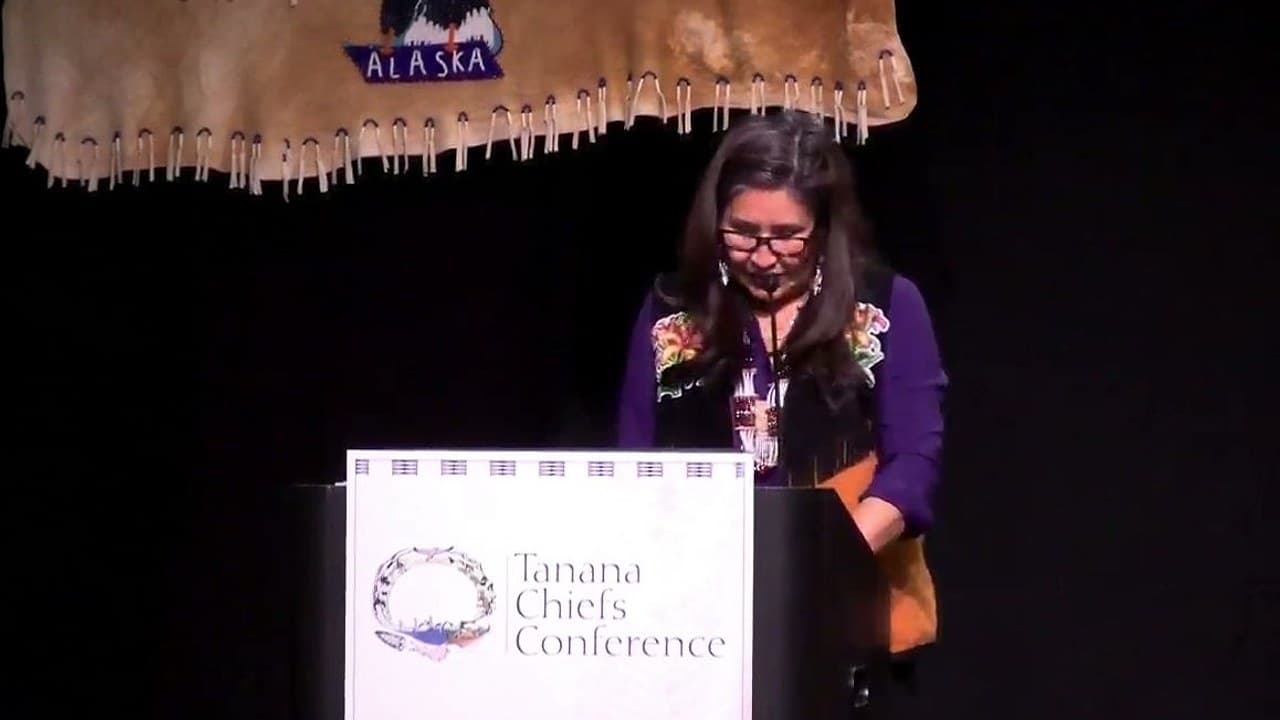
Our keynote speaker understands that strong tribal leadership is grounded in service, culture, and responsibility to our people. Please join me in welcoming Chief Dawn Newman of Rampart to deliver the Fall Summit keynote address. Chief Newman, the floor is yours. Please give her a warm welcome.
Good morning.
Dawn Newman here. First, I'd like to thank Tanana Chiefs Conference for giving me the opportunity to speak here today. It's an honor to be here with many tribal leaders. Elders, relatives, and friends.
For those who don't know me, I'm the chief of Rampart. My friends— my parents are Barbara and Donald Anden. I'm the granddaughter of Helen Peters of Tanana and the late Nora Billy of Beaver.
Just celebrated my 20-year anniversary with Ben Newman, and we have two daughters, Natalie and Joni.
They're both here today as well.
I've also been a community health aide for the past 10 years. And now am a health aide instructor with the CHAP training program. I love my job and I love my coworkers.
I've seen firsthand the challenges that come with living in a remote Alaska. Today I'd like to share what we've accomplished in Rampart, some of the challenges we faced, and what we're working toward, taking care of our people.
I'm too tall.
You're too tall, or take this one.
Oh no, this is final. Move forward. That is right. Yeah, I might drop it. Okay, okay, we all know that living in rural Alaska isn't easy.
The co— the cost of living is high, transportation is expensive, and sometimes even the simplest projects take years to complete.
But we find ways to make things work in Rampart. Our tribal council focuses on improving the quality of life for our residents Sometimes that means major infrastructure projects, and sometimes it means making sure families have what they need to get by.
As you all know, last winter was brutal in Rampart. We had 120 consecutive days at 40 below or colder.
Now we're used to the cold weather in the Interior. But normally, even during winter, we'll get a few warmer days. When it warms up to around zero, people can get out and cut more firewood. Last winter, that didn't happen.
For 4 straight months, we didn't get a break in the, in the weather. Families were running out of firewood, and the extreme cold made it difficult to replenish their supply. At the same time, the cost of everything was going up.
The cost of living is high, transportation is expensive, and sometimes— sorry, wrong page.
So our tribal member, tribal Council made the decision to help our village. We couldn't change the weather, but we could do something to help our people get through it, and that's what we did.
We also had a poor moose hunting season. Only a couple families in Rampart were successful in harvesting a moose last— in the last few years.
As everyone knows, moose meat is an important part of how we feed our families. When the harvest is poor, it affects the entire community.
So our council provided meat boxes from Matt Valley Meats in Wasilla to help families get through the winter. We also assisted residents with firewood and fuel. And we've purchased practical household items to help make everyday life easier. We've provided chainsaws, shovels, chest freezers, and water buckets for every household in Rampart.
These things our family use. Chainsaws and shovels help with gathering firewood and maintaining homes. Tres— chest freezers provide storage for subsistence foods, and water buckets are essential for families who still depend on hauling water. We've also helped families with their propane needs. Our council arranged to have everyone's propane tanks hauled into town, refilled, and brought back to Rampart.
When you live in a remote community Even something as simple as refilling a propane tank can become expensive and a complicated task.
By coordinating that service, we were able to take some of that burden off our residents, and not everyone even has the ability to haul things like propane and We also sell heating fuel and gasoline to tribal members at cost because we understand how expensive it is to heat your home and get around.
And for Thanksgiving, our council purchased a complete holiday meal for every household in Rampart.
And when I say a complete meal, I mean everything from turkey, ham, right down to the butter and eggs.
We wanted families to have everything they needed to prepare Thanksgiving dinner in their own homes without the added financial burden of purchasing an entire holiday meal at rural Alaska prices.
Another thing we purchased for our tribal members was survival kits, and these weren't your average little emergency kits. We made sure they were stocked with enough equipment and supplies to help people get through an unexpected situation while traveling. In fact, we wanted them to have so much equipment that if they got stuck somewhere, they weren't stranded anymore, they were camping. All joking aside, we know how quickly things can become dangerous when you're traveling in rural Alaska.
Especially during the winter.
We wanted our people to have the equipment they needed to stay safe until arrive— help arrived or they could make it home.
These are practical things, but they matter.
When people need food, we help feed them. When they need heat, we help keep their homes warm. And when they're traveling, we want them to be prepared. That's part of our responsibility as a tribal council.
One of the biggest improvements we've made in Rampart has been bringing running water into our homes. Our tribal council worked in partnership with the Alaska Native Tribal Health Consortium and THC to install install wells, plumbing, and sewer boxes in the majority of the houses in Rampart. Having running water is something many people take for granted, but when you've lived without it, you understand what a difference it makes. Being able to turn on the faucet, wash your hands, wash your dishes, and take a shower in your own home shouldn't be considered a luxury.
It's a basic necessity. Unfortunately, not every household was able to get a working well. Some homes couldn't reach the water table, and those families still depend on hauled water. So our council provides water delivery to those households free of charge.
We believe water is a basic necessity.
And we're, we're, and we're going to do what we can to make sure our residents have access to it. We've also had an ongoing problem with our community's Washeteria. For the past few years, it has frozen for extended periods, forcing residents to haul water from the creek.
My husband made sure I said creek and not crick.
Our community found ways to get by, but we know that's not a long-term solution. That's why our council is funding a refurbishment of the washateria, including more up-to-date equipment. Banyulcán has also contributed to this project, and we appreciate their partnership. We also make a point of keeping our washateria token prices affordable.
Affordable. We understand that operating and maintaining these facilities cost money, but we also understand what our families can afford.
Having a washateria doesn't do much good if the people who need it can't afford to use it.
And that brings me to something that's important to our council. We want people to live in Rampart. We want families to stay, and we want our children to have the opportunity to come home and raise their own families.
But we can't expect people to stay if we make it too expensive for people to live there.
We're not trying to make money off of our tribal members and residents. We're trying to make life a little easier for them.
Because what is good building a future for our village if our people can't afford to be a part of it?
Health care and supporting our patients. Health care is especially important to me because I've worked as a community health aide for 10 years.
I understand the challenges of providing medical care in a remote village, and I've seen firsthand how difficult it can be for people to get the services they need.
Sometimes a medical appointment means getting on an airplane, traveling to Fairbanks or Anchorage. And staying away from their home for several days. And sometimes it means being there alone without the support of family or friends.
We understand that personal connection is important to healing.
Having someone beside you during a difficult time can make a real difference. Someone to help you, comfort you, and simply be there when you are away from home.
That's why our tribal council pays for an escort to accompany patients when they travel for medical care.
We also assist with medical travel, lodging, meals, and other related expenses. We want our people to be able to focus on their health instead of worrying about how they're going to manage everything on their own.
We also know how important it is to have a good clinic right here at home. Our current clinic was built back in the 1980s, and quite frankly, it needs to be torn down.
The building is old, deteriorating, and even have an exam table that's older than I am.
Our patients deserve better than that.
When someone comes to the clinic, they're often sick, injured, or worried about their health. They should be able to receive care in a clean, safe, and comfortable environment where sheetrock isn't falling on us.
After 6 years of working to secure suitable land, we're finally getting a new clinic. Thanks to Victor Joseph and Jacqueline Bergstrom.
It's been a long process, but we keep working toward it. As both a chief and a health aide, this is one project I'm especially happy to see moving forward.
The finishing touches are getting done on a safety house for families experiencing a crisis. And thank you to TCC.
Our goal is to make sure people have somewhere safe to go when they need help.
Another thing our council has done is purchase Starlink systems for every household in Rampart. Reliable communication is a necessity, especially in a remote village.
And how we stay connected to our families, access information, conduct business, and reach services that aren't available locally.
But we've also watched the cost of Starlink continue to rise, and weather can affect our service. That's why we're still looking forward to Doyon's fiber optic project.
We hope it will provide a more reliable and affordable long-term option for our residents without the same weather-related limitations as satellite service.
Our people needed connectivity now, so we provided Starlink systems, but we're also looking ahead to what will serve our community best in the the future, improving infrastructure, reducing transportation costs. We've also made some much-needed improvements to our electrical system. For years, we experienced brownouts that damaged our appliances in our home, and replacing an appliance in remote— in a remote village isn't cheap, especially when you add freight costs.
Rampart provided new appliances to every household in Rampart, so improving our electrical system became a priority.
We now have a new generator house, and Fulford Electric redid our village power grid. One thing that helped make this project possible at a much lower cost was our winter road.
Now I call it a road, but it's a glorified snow machine trail.
We've worked to keep that route open so our residents can haul larger household necessities like bulk heating fuel, propane appliances, and furniture without paying expensive freight costs But it's also been valuable for our organizations working in Rampart. Fulford Electric was able to drive in their electrical, their electrical poles, hole digging equipment, and bucket truck to complete our power grid improvements.
Without that access, they would have needed to barge their equipment in and out, and a substantial cost at our council. At a substantial cost to our council.
Other organizations and contractors have also used the route to bring in supplies and equipment.
We also support Native hire and Native-owned businesses like Marvin Torres. Doug, Doug Green Jr., and our mechanic.
Some have chosen to drive rather than fly, avoiding airline weight restrictions and having themselves more flexibility, flexibility with their work schedules. Another way we've reduced transportation expenses is by purchasing a flatbed truck and two large boats. That allows us to haul supplies from Fairbanks ourselves instead of relying entirely on airlines. Between maintaining winter access and having our own transportation equipment, we found ways to reduce expenses for both our residents and our tribal council.
The money we save on transportation is money that we can put toward other needs in our community.
We're building a bulk fuel plant with funding assistance from BANA Yukon, another important improvement that supports our community's full fuel needs.
Housing and our future. Our school has been renovated, and we'd like nothing more to see it filled with children.
We want families to come home. We want our young people to be able to raise their children in Rampart. But for that to happen, we need housing. We're currently working on housing rehabilitation projects. And we have plans to build additional homes.
We recently welcomed a new family into Rampart. And our council helped with their relocation expenses.
We chartered planes to help bring the family and their belongings to Rampart. Relocating to a remote community can be expensive, and we want to make that transportation as easy as possible for families who choose to make Rampart their home.
If we want our village to grow, we have to do more than encourage people to move here. We have to milk— help make it possible. I'd also like to welcome Tony Wheel, Antoinette Wheel, who I finally talked into moving to Rampart a year ago and is now our tribal administrator.
But construction in Rampart comes with a challenge, and one of our biggest challenges right now is gravel. Rampart is built on a hill, and what we have available is mostly large boulders and dirt.
Not the type of gravel needs for construction. That might not sound like a major problem, but it's holding up several important projects. We want to build more homes, relocate our transfer site to Four Mile, and finish our ball field.
All those projects require a significant amount of suitable gravel, and right now we don't have the reliable source.
We have the plans. We know what needs to be done. But without the proper materials, we can't move forward. We're continuing to look for solutions because these projects are important to the future of Rampart.
We'd also like to see a permanent road built into Rampart. Better access could help with transportation. Construction, and the cost of bringing supplies into our community.
We know these projects won't happen overnight, but we're going to keep working towards them.
Supporting our youth and keeping our culture alive. We also believe in investing in our young people. We've provided scholarships to help tribal members continue their education or attend training programs.
We've helped our youth travel to Fairbanks to participate in basketball through the Johnson O'Malley program. We want our kids to have opportunities, whether that's education, sports, or learning new skills, and we want them to stay connected to their culture. We've supported culture camps and traditional activities, including sewing class taught by Lita, where Participants learned how to make kuspucks.
We've paid for our residents to travel to cultural events such as AFN, FNA, NCAI, and Albuquerque for Gathering of Nations.
These activities give our people opportunities to learn, participate, and stay connected with their traditions and other Native Communities. Our culture is something that we want our children and grandchildren to carry forward, and that takes people who are willing to teach, people who are willing to learn, and a community that supports them.
Supporting our employees and neighbors. We recognize how important our employees are. We've provided raises for our staff. We're continuing to work toward paying a livable wage.
A small village— small village employees often take on more than one responsibility, and we appreciate the work they do for our community.
We've also helped neighboring villages with search and rescue efforts.
When someone is missing or needs help, it doesn't matter which village they're from. We help where we can.
That's how our communities have always taken care of, care of one another.
How our council works. One thing our tribal council is mindful of is how we spend our money. Travel is expensive, expensive, especially when you live in a remote village. We try to make decisions that provide the most benefit to our people. Sometimes that means providing assistance directly to families, resident or not.
Other times it means investing in equipment or infrastructure that will save money for years to come.
We have limited resources and we want to make the most of what we have. We also made changes to how we handle requests from our tribal members. In the past, requests had to be submitted in writing and wait until the next council meeting before a decision could be made. Now our council has a group chat, and I had to teach Ada.
When a request comes in, we can discuss it and hold a vote right there in the chat following our established council guidelines. That means our members don't have to wait until the next scheduled meeting for an answer, especially when they're waiting on burial assistance.
We still make decisions together as a council. We just found a way to make those decisions more efficiently.
And when someone needs assistance, especially during a difficult time, A timely decision can make a real difference. It's a simple change, but it's helped us become more responsive to our community.
Recognizing our community partners.
I want to recognize Bannayul Con, our tribal corporation. They have been a tremendous partner in our community. They've helped, helped us identify grant opportunities, secure funding, and provide matching funds for projects that might otherwise have been difficult to complete.
Their support is building our bulk fuel plant and they've also contributed to our Washeteria Improvement Project.
But their involvement doesn't stop with infrastructure. Bandil-Kahn regularly contributes to community events, including our spring carnivals and Fourth of July celebrations.
We've also found ways to get our young people involved in taking care of their community. They purchased bicycles for every child in Rampart. Giving them the opportunity to earn a bike by participating in our community cleanup day. The kids got a new bicycle and our village got cleaned.
Everybody benefited.
These kinds of partnerships make a real difference in a small community. We have a lot of goals for Rampart. But we can't accomplish everything on our own.
Having an organization like Banyul'koon willing to help find resources, contribute funding, and support our community activities allows us to do more for our residents.
And I want to sincerely thank them for their continued support of Rampart.
Recognizing those who came before us. Before I finish, there's someone especially I want to recognize and thank.
Former Chief Floyd Green.
Floyd was the chief who talked me into moving to Rampart in the first place.
And a lot of what we're doing today started with the work he did for our community. Floyd believed in making Rampart a place where people could afford to live.
He worked to reopen our school, build houses, and recruited families to move to Rampart. He also understood how expensive it is to live in rural Alaska. He believed in charging people what they could afford, and he established the practice of selling gasoline and heating fuel to residents at cost.
That approach to leadership has stayed with us. Many of the decisions our council makes today build on the foundation Floyd established.
When we talk about keeping essential services affordable, supporting families, and finding ways to encourage people to move to Rampart We're continuing to work, we're continuing work that he started.
I want to give him credit for that.
He understood that if we wanted our village to grow, we had to make it possible for people to live there. And that's still what we're working toward today. I want to thank Floyd for the work he's done for Rampart, for the example he set, and for encouraging me to make this village my home. Recognizing our council, youth, and community.
I also want to recognize that none of these accomplishments happen because of one person. Our progress in Rampart is a joint effort, and I certainly couldn't do this work alone.
I want to thank our council members Ada Jordan, Charlie Jordan, and Ben Newman, and the former council member and tribal administrator Margaret Moses for their dedication and the work they put into our community.
I also want to recognize the youth representatives Joanie Newman and Genevieve Johnson. It's important, important that our young people have a voice in decisions that affect their future.
They bring their own ideas and perspectives, and we're glad to have them involved. I would like to recognize Natalie Newman, Joanie Newman, and Genevieve Johnson for their initiative in keeping our village active.
And I want to thank our employees and community members. We can make plans and set goals as a council, but it takes the cooperation and participation of our people to make those plans happen.
Everything I've shared today is the result of our council, our youth, our employees, our community, and our partners working together.
I'm proud of what we accomplished in Rampart, but I also know we have plenty of work ahead of us. Some projects move quickly, others take years.
Those are the realities of living in rural Alaska. But just because something is difficult doesn't mean we're going to stop trying.
We keep working, we look for solutions, and we do what we can with the resources we have.
Being a chief doesn't mean you have all the answers. It means listening to your people, understanding what they need, and working together to make things happen. I know every tribal leader in this room faces challenges in their own community. We may not all have the same resources or the same needs, but I think we all want this— many of the same things. We want our elders taken care of.
We want our families to have a safe, warm home. We want our children to have opportunities.
We want our people to have access to healthcare. And we want our village to have a future.
We don't want our young people to feel like they have to leave their communities to build a life for themselves. We want them to have the opportunity to come home, raise their families, and continue the traditions that have been passed down for generations.
That's what we're working toward in Rampart. We're a small village. We don't have unlimited money or resources, and we certainly don't have all the answers. But we want people who care about our community and a council that's willing to do the work.
Our communities were here long before any of us, and our responsibility is making sure they're still here long after we're gone.
We're building on the work of those who came before us, and hopefully next generation will build on what we're doing today. We're also looking forward— I'm sorry, we're also looking for ways to improve the lives of our tribal members.
And if there's something we're doing in Rampart that might benefit your village. We're happy to share what we've learned.
We don't have to figure everything out on your own. Our goal isn't simply to build houses and improve infrastructure. It's to make Rampart a place where people can afford to live, where families want to stay.
Thank you.
Usually I'm going to go off a little script here, and I'm going to ask our executive board to come up here while we present the gift to our keynote speaker. Chief Dawn Newman did an excellent job in displaying what tribal sovereignty is, and I appreciate all her words that she's doing and uplifting her people in what they're doing in their community.
I was asked yesterday, how do we select a keynote speaker?
Every one of our tribal leadership is always at the forefront of what we do every day at Tanana Chiefs conference. And what Dawn, Chief Dawn, displayed here is everything that our chiefs display in all their communities. And what she's doing is for the good of her whole community. She's not doing these things for recognition to stand in front of us. Let's give her another round of applause, please.
The gift that our Vice President and Chief Rhonda Pitka is giving to Chief Don Newman is a bracelet and earring set made by Julie Biddle of Gwich'in Ajay.
Thank you, it's really good too. Thanks, Julie. Do I open it? Yeah, it matches me. It does.
My gosh. Thank you. Oh, it's nice, huh?
I'd really like to thank Dawn. She comes from a long line of, um, community health aides. Her sister has been a health aide for the last 30 years. Before her, her grandmother, Nora Billy, was a longtime health aide in our communities. You know, for all the health aides out there, I really appreciate all the work that you do.
Thank you.
Chief, I want to thank you for all you do for the community. I'm very proud of your progress and good to hear you speak so well. You were nervous before your speech, but you did a really wonderful job.
Rampart's lucky to have you and proud of you. Thank you.
Okay, we're going to switch into the panel. But before we do the panel, I'm going to ask Dawn to come over here so we could get a picture with her real quick, if our amazing comms can come over.
She's taller than me. She's taller than me. I know, I really just got a cake.
Thank you. Thank you. Thank you all our chiefs for coming up and recognizing our keynote speaker. At this time, I'll hand the mic over to Chief Rhonda Pitka, our vice president. And before she comes to the mic, I'd like to ask if there's any former chief chairs of Tanana Chiefs Conference to please stand.
If there's any former Chief Chairs of Tanana Chiefs Conference to please stand.
Let's give them a round of applause.
So Victor Joseph is also my Chief Administrative Officer and he's doing amazing. One more thing, I'd also like if there's any Doyon board of directors in the room to please stand.
I saw some of them in the room earlier.
Okay, let's give a warm welcome to Chief Rhonda Pitka.
Good morning. I'd like to Welcome our first panel. The panel is called Supporting Sovereignty.
That would be Loni Bareish, Twila Krueger, Nisha Walsh, and Charlissa Titus, Miriam Titus, and Francine Wheel.
Our first panel focuses on supporting sovereignty, strong tribal governments. Strong tribal governments require practical tools, effective programs, and systems that reflect the authority and priorities of each tribe. This panel will share specific perspectives from self-governance, tribal government and support, tribal courts, social services, and community leadership. I'd like to invite the moderator and the panelists to begin. Please help me welcome the panel's moderator to the stage, Maureen McGinty, self-governance manager.
We switched it up on you guys. That's Lonnie going up. Ah, okay, great. Well, let's welcome Lonnie Beresh.
Thank you. Good job.
Uh, good morning. Um, it was good to hear from Chief Don Newman, uh, on all The many ways that they're supporting each other in Rampart, just really awesome. I kind of want to move to Rampart. Can I move to Rampart?
Shoshree Dathlil Oji, Danyet Gotan Isli, Gatananguichi, Shishika Haina, Naiha, Sheehanai, Mary, Tat, Ken Housley, Gabaqua. My name is Lonnie. I'm from Stevens Village, but I live in Fairbanks with my family, and my parents are the late Mary and Ken Housley.
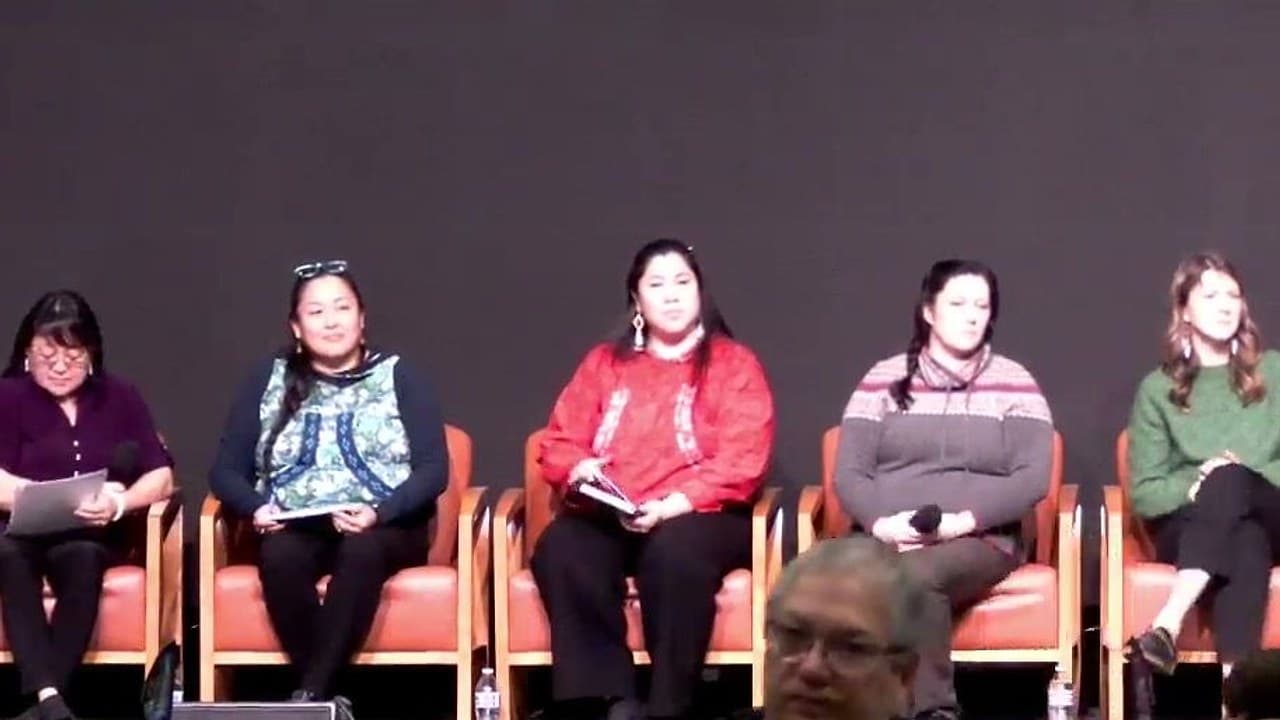
Kicking off the panel portion of the day, we have your supporting sovereignty panel. Joining us today are Mentow tribal staff. We have Char, Francine, Miriam. TCC Tribal Social Services Manager, Nisha. Tribal Courts Manager, Twyla.
Self-Governance Manager, Maureen. And I'm the Tribal Government Services Manager. With the Supporting Sovereignty panel, we'll start out by each briefly introducing or reintroducing what we do to support tribal sovereignty in our region. And what we offer in technical assistance to our tribal leaders and their staff. We're each our own departments, but we do all work closely together to achieve our goal, which is to be there for tribal governments, our courts, and staff in the ways that we're needed.
So, we'll each talk a little bit about that, and after that, Miriam, Char, and Francine will give you a few examples of ways that they've utilized our services their own work. And afterwards, we'll have about 20 minutes for questions from you all.
And so, um, I'll start us off since I'm already on the mic speaking. So, um, I oversee tribal government services including tribal enrollment The technical assistance we provide in tribal government services is simply answering questions about anything to do with running a tribal government. Small questions, big complicated questions, we'll take them. And so I usually provide technical assistance just over the phone or by email on a daily basis, sometimes in person if our chiefs or TAs are in town and stop by. And so what that looks like is I'll just get a call from, you know, the TA or a chief just asking a question.
And so what I'll do is I don't just answer it. I'll have them pull up their tribal government operations code on their end. I'll pull it up on my end, and we'll go over it together and read what your tribal code says on, you know, whatever the question is. And whatever the code outlines and calls for in that process.
All right. And so sometimes, actually a lot of the times, those phone calls turn into scheduling a training or workshop.
So it might look like I get a call maybe a month or so in advance of a tribe's annual election, saying, you know, we really want our election to run smoothly and by the book. So can you help us with that? Yes, we do offer what I call the Election Committee Refresher. So which, whether you have all new election judges or experienced ones, it's always good for everyone to go over those election ordinances. Really well, especially right before the election.
Additionally, TCC tribal enrollment staff can provide a list of tribal members for the TA and the election committee to use to make their list of qualified voters that they'll use at the election.
Another usual call that I get is, hey, Loni, we just had our elections and we have a few new members who got on the council. And we want some help teaching them. So with that, I would come out along with Self-Gov staff and offer a new council orientation, which is good for new tribal staff hires also, and experienced council and experienced staff as a refresher.
So those are just a couple examples of trainings we offer. It really just depends on what our tribes tell us that they need. And so we'll tailor it to that.
We did have Resolution 2026.03 come in last convention, which was about tribal government trainings, and with that, we encourage more tribal members and our youth to attend the trainings that we provide in the villages rather than just the council and staff. They're for everyone.
So, Constitution Code and Policy Amendments and New Drafting. If you know, you know, right? If you know, you know. Some of you in here know because you get it done. You really get it done.
Miriam knows. She's probably tired of seeing my face. And I say, you know, you know, because there's kind of been a pattern of Once I work with you on those code amendments that you need, we just keep working together and keep updating more and more of your codes and policies, which is awesome. So awesome. But one, one reason that we wanted to reintroduce the work that we do here on this panel today is because I know that there are many other tribes in our region that also want support updating their constitution or their codes or their policies.
And don't know how to go about it or just haven't gotten to it yet. And, you know, everyone's so busy. And that's okay. It's never too late to start. So you can still do it.
So let's do it.
So what does this build? What are we trying to help build? Our goal is to help you build a strong foundation in tribal law and policy. Your own tribal law and policy that you as tribes operate from that makes sense for you, your tribal constitution, your codes and policies, knowing them, how to use them, abiding by them, and enforcing them. Another main goal is promoting confidence in decision-making among.
Councils and staff, which goes hand in hand with the strong foundation in tribal law. When you know it, you're naturally more confident in making the right decisions on behalf of your people, which is what we see.
So we're here for it. Your training workshops, code amendments, everyday questions, aka technical assistance. And I partner with tribal social services, tribal courts and self-gov and the work that I do.
And so with that, our tribal government manager is actually up next, and so I'll hand it over to Maureen. Hi. Eh, thank you.
Hi, can we skip forward 2 slides, please?
There you go. Hi, my name is Maureen McGinty. I literally wrote it on my paper because one time I stood up here and I introduced myself wrong because I got so nervous. My grandparents are the late Patricia McGinty Ikata and the late Anita Ambrose Domoski and Leo Domoski Jr. My grandpa Leo Damaski Jr. is amongst one of the first recorded MMIP cases in the state of Alaska. So I always appreciate the moment of silence that we begin these meetings with.
I'm the daughter of Maurice and Josephine McGinty. I'm married to Douglas Carlo. He's a tribal member from Tanana, and we raised our children here in Fairbanks. Little Doug, late Julianne, Cole Cruz, who is 19 today, and Cullen were also grandparents to a little baby named Aurora Luna.
My family lived in Ninana when I was born, so I was born in the Yukon-Tanana region, but we later moved over to Kaltay, Kuslia, and Nolato, so I was raised in the Yukon-Kaikuk region. I'm the self-governance manager at TCC, and my entire position is centered around Public Law 93-638, the Indian Self-Determination and Educational Assistance Act of 1975, otherwise known as ISDEA. This is a federal law that gives federally recognized tribes greater control over their own programs, services, and funding. This law allows tribes to take over federal programs, receive federal funding, set priorities, build tribal capacity, and exercise sovereignty. It's vital to understand that while this law was created in 1975, Our people have always governed ourselves, protected our communities, managed our natural resources, and provided our own social services ourselves for hundreds, if not thousands, of years.
Self-governance is responsible for the day-to-day with our tribes. We provide training and technical assistance to our tribal councils and tribal administrators. We provide financial management training for BIA programs, economic development grants from TCC, sub-regional fund balances, including IHS balances, and special funding such as opioid funding and wellness dollars. We provide assistance with human resource and policy management as well. We regularly travel out to communities to provide training to new councils, tribal administrator training and support, and to assist with identified needs of the tribe, which sometimes means that we coordinate with other entities on tribal project management.
That can include coordinated efforts with school districts, federal partners, ANTHC, HUD, IRHA, just to name a few. And to foster a healthy team at TCC and to provide the best services we can to our tribes, we coordinate efforts with other programs within TCC, such as tribal social services, tribal courts, and tribal government services. Together, we're able to meet our tribes' where they are at with their needs. It has been said amongst my fellow TCC worker bees that if they don't know the answer, self-governance does. So naturally, self-governance not only provides assistance to our tribes, we also provide that same level of courtesy to our TCC staff as well.
To bridge the gap where we're needed. An example of that is just last week, Paul Mountain, we don't know how he started getting calls for, on behalf of patient travel and dental clinic, but Paul didn't transfer those calls around and have our tribal members upset. He took those calls and he helped them. He He connected them to the right parties, and he even made sure the health staff followed back up with those people if they didn't get a call. But our goal is to foster strong tribal governments, to encourage and empower tribes to pursue self-determination, and to exercise their right to govern themselves.
Our tribal leaders are PhDs in sovereignty, and they need to be heard and prioritized. The ultimate form of sovereignty is your tribal courts, which put your tribal codes and your constitutions into practice. Twila Krueger is going to be speaking next. She is the tribal courts manager with TCC. Can we go to the next slide, please?
I think I heard a mic drop.
Good job.
Good morning, everyone. I'm happy to be here with you all today.
My name is Twyla Krueger, and I am the Tribal Court Manager with Tanana Chiefs Conference.
My role is to support tribal courts throughout the TCC region to help strengthen their ability to address issues that arise within their own communities.
Through my position, I provide technical assistance, guidance, and resources to tribal councils, tribal court judges, court clerks, and tribal court staff.
That support can look different for every tribe because every tribe, every tribal court is at a different stage of development and has different needs. Some of the ways I provide support include helping courts understand their processes, develop procedures, strengthen court operations, and identify training opportunities and resources.
I also assist with questions involving petitions coming in. Sometimes those come directly to me, and then I will find the tribal court that it needs to be delivered to. I help with court orders. I don't draft them. I assist tribal court clerks in drafting their own orders.
Court procedures, and the day-to-day operations of tribal courts. A big part of my role is being available when tribes have questions or need someone to help them work through a challenge. Sometimes that means providing one-on-one assistance, helping to locate resources, or connecting tribes with the right training and support.
Tribal courts are important because they provide an opportunity for tribes to address issues that affect their people and communities in ways that reflect their own values and traditions. I believe tribal courts should have support, the knowledge, and the tools that they need to develop a system that works for them. Another area that I'm kind of focusing since I came on board is building training opportunities for tribal courts. We recognize that judges, court clerks, and tribal court staff need ongoing training and support to feel confident in their roles with the issues that they're faced with. Daily.
We are working toward offering different training opportunities, whether that is one-on-one training requested by a tribe or bringing tribes together through sub-regional trainings.
The goal is to make training accessible, provide practical information, and create opportunities for tribal court staff to learn from one another.
I encourage collaboration between tribes. That helps build connections and strengthen relationships.
So communities, you know, they can share their experiences, their challenges, and successful practices, and just being there in that role as a sounding board is so powerful.
Ultimately, my goal is not to tell tribes how their courts should operate. I think that the tribal courts already know what they're doing.
My goal is to support tribes as they build their own capacity, strengthen their justice systems, and exercise their rights to self-determination.
Tribal communities should have meaningful role in deciding how justice is carried out for their own people.
That means respect and tribal sovereignty, recognizing traditional values, and understanding that each tribe should have the opportunity to develop a system that reflects them as a people.
But at the end of the day, success means seeing tribal courts grow stronger and having the knowledge, the resources, and the confidence to operate in a way that works for the village as a whole. I see my role as just being a resource, a support system, and someone tribes can reach out to when they need help.
Because ultimately, strong tribal courts help strengthen tribal sovereignty, and that's why we're here today. It strengthens self-determination and the future of justice in rural Alaskan villages.
I was fortunate enough to sit in on one of the panels at AFN, and one quote stuck with me, and it was from Emil Nadi. He stated that sovereignty is like a muscle. If you don't use it, you lose it. And that's just food for thought for you too. And I wanted to end it on there and give a warm handoff to my colleague and someone I work very closely with, Nisha Walsh, who is the manager with the Tribal Social Services.
Thank you. Thank you for your time.
Good morning, everyone. Like Twila said, my name is Nisha Walsh, and I'm the Tribal Social Services Manager. My family is from Tanana and Tanner Cross. My mom is the late Maureen Walsh of Tanana, and I was raised by my dad, Dwayne Sanford, and my stepmom, Lena Sanford, in Tok.
So, Tribal Social Services, formerly known as the Child Protection Program, is the program that's responsible for assisting tribes in providing child welfare services to families who are involved in the state or the tribal child welfare system. So, what exactly does that mean? We're a team of 7, including myself. We have 2 ICWA advocates. Michelle Peter and Acacia Shaffer, and their primary roles are to ensure ICWA compliance in state cases, work alongside tribes to identify family members for placement, and they attend court hearings and meetings associated with state cases when tribes are not available.
We have two family support specialists. Sophie Holland and Verna Solomon, and they provide a wide range of technical assistance on a daily basis from how to complete a court order to doing a home visit and creating a case plan. They also do direct service, so upon request from tribes, they do monthly home visits for youth that are placed in the Fairbanks area. And they also attend tribal court hearings. We have Julie Dietrich, who is our resource family specialist, and she does all things foster care licensing.
So she facilitates the application process, puts it in a nice package, sends it to the tribe for the tribe to review, and they are the ones who ultimately license the foster home. She can also assist families in the state licensing process as well. Lastly, we have Vanessa Joseph, and she is our prevention specialist. She's been with our team just a little less than a year, but she's done a lot of amazing things. Her primary focus is to work with at-risk families and prevent them from entering the child welfare system, and she does this through case management, setting goals, doing monthly home visits, and networking them to resources to help build their foundation and strengthen their foundation so that they stay out of the child welfare system.
She also facilitates parenting classes. So she just got done doing a series of Positive Indian Parenting, and I know she's getting ready to set up some classes in the upcoming new year. Lastly, and what you might be familiar with, are our family fun nights. So Vanessa helps facilitate family fun nights here in Fairbanks, but she also works in partnership with tribes to host their only fam— their own family fun nights. Um, family fun nights are fun, but they're to promote healthy parent and child engagement and to also build networks of support.
So with every family fun night, a resource is provided, and it also promotes literacy. So every child that comes to a family fun night goes home with a book.
We also provide training, and the entire team is responsible in helping with our trainings that we provide to TFYS. The first picture that you see is This is a TFYS training that we did just a couple of weeks ago. We had a lot of judges, which was really awesome. So, we do 2 large trainings a year in person. We do monthly TFYS meetings virtually, and we provide one-on-one workshops to interested tribes to look closely at every case that they have.
And establish a path forward.
I believe that training and mentorship and temporary guidance is really important to not only strengthening sovereignty, but to sustaining it. The middle picture you see, we also have done a couple of youth gatherings for our youth that are in custody. And Bruce Irvin helped us facilitate making canoes out of birch bark. And the last picture that you can kind of see, we collaborated with the Head Start program and the Housliya Tribe to do a series of family fun nights to make regalia. Next slide.
So before I step away, I just wanted to provide some quick data for you. 4 Years ago, we had 145 youth in tribal custody and today we have 92. We also had 175 youth in state custody and today we have 143. I know that 18 of the youth that are part of that 143 are on trial home visits right now. And so I'm really hopeful that they'll be reunified with their families and cases closed in the really near future.
We've seen the biggest growth in our program with prevention. 4 Years ago, we weren't doing any prevention. And today we've done over 140 family fun nights throughout our region, and 85% of those have been in our rural communities.
Um, Vanessa also carries— she's starting to grow her caseload. She has 7 families that she's working with right now, and 100% of those investigations have been closed. And I already mentioned she facilitates parenting classes as well.
And in closing, just providing some data from last quarter, we had 22 youth reunify with their parents and 19 youth achieved permanency through adoption and guardianship. Thank you, and I'm going to turn it back over to Maureen.
Just bring this back down.
Can I get a big round of applause for the panelists, Lonnie, Twila, and Niesha?
So, I know we provided, you know, a lot of information in a very short timeframe. However, all 4 of us are going to be presenters at the Tribal Government and Tribal Court Conference, January 12th to 14th. It's going to be here in Fairbanks at the Eight Star, here right in this room. A save the date is going to be going out after the fall summit, and we already have an agenda drafted. We're going to be working alongside the State of Alaska, I believe.
Yeah, they funded it. So That'll go out soon. So when you got all 4 of us panelists together to build this panel, we wanted to bring a tribe in that we all worked with successfully with all 4 of us, and so with all 4 programs. And so today we invited the Native Village of Minto staff and judges. You can go to the next slide, please.
And they're going to show you how all 4 of these programs work together for their tribe. So I don't know if you want to come up together or pass the mic, but we have Charlissa Titus here, Francine Wheel, and Miriam Titus. Miriam, do you want to come and begin?
BIA.
Oh, it's the BIA that's funding our conference in January. Okay, go ahead, Miriam. You want to start with the codes and constitutions? Yeah. Yeah.
Okay. Hello, everybody. My name is Miriam Titus. I am the tribal administrator in Minto. My parents are Luke and Alice Titus.
My paternal grandparents are Robert and Elsie Titus in Minto. My mom is Navajo, so my maternal grandparents are John Lee and Bertha Simpson from Narrow Canyon, I guess, Arizona. They lived up in the canyon. My family in Arizona is from the Monument Valley area, so. I have an uncle who lives in— you could just see the Monument Valley rocks from practically his house.
I just wanted to start off saying that I am one of the people that I have been wanting to move home for a long time. I lived here in Fairbanks. I went to college at UAF. When I graduated, I started working um, at TCC thanks to Victor Joseph. He was the manager of Olminto Recovery Camp and recruited me to work at the camp as soon as I graduated from college, and that kind of opened the door for me to come to TCC.
And so I've been working at TCC ever since about 2000, so about 25 years, 26 years. I've done a lot of things. Worked for Old Minto, worked for Child Care Assistance, worked for Head Start. I worked for Tribal Social Services. So I've, I've moved around and got some experience before I moved home, and that really helped me out when I moved home as the tribal administrator.
I want to thank the Minto Village Council for hiring me, trusting me to do this job, and giving me the opportunity to move home because that's one of the things that we heard about this morning is wanting more people to move home to your own village. I know we always encourage our young people, go out, go do stuff, go to school, go to training. Minto will always be here. You can always come back. And so that just popped in my head this morning when our keynote speaker was speaking.
So, as a tribal administrator, I've worked a lot with these ladies. They provide a lot of support to our tribe. I'm always emailing and calling and asking questions, and I know that we worked on— while they were talking, I do remember when I first started working as a tribal administrator at home, Paul Mountain would came out to our village and did a training on what tribal administrators do and what tribal government is about, and he went over the whole tribal code with me and my coworker. I have a TA assistant, her name is Katrina Frink, and he took us in the conference room and we read the whole tribal code from the front of the page to the back. So, that was really good to know what the tribal codes were about and what they cover for our village.
And I'm always hearing our chief, Laurie Baker, and our village council are always talking and saying, "Well, what does our tribal code say about that?" You know, when people ask questions and stuff. So, we're always falling back on that tribal code.
A lot of our tribal codes were from the 1980s and the '90s. So in 2024, we decided that it was time for some updates to our codes, and we worked for the next 2 years to complete our updates. Thanks to Lonnie Beresh for coming to Minto and helping us with that. As a TA, all TAs know that our task list is long. There's always something else that we need to do.
And the work never stops. And so to get these codes updates done, we had to commit to following through with the work to completion. Plus, there are still more updates that we want to work on. Just one thing at a time, though. It can be done no matter how busy you are.
And if you need help, just call these ladies and they'll always answer and ask— answer your question and help you and support you in what you're doing. Thank you. Thank you, Miriam. Charlisa, do you want to come up and speak on the other, the other two portions?
Okay, and Francine. Okay.
Good morning.
Hello, my name is Charlice Atitis and I'm from the Native Village of Minto. I'm very nervous, so.
Today I want to highlight the support, training, and technical assistance that the Tribal Social Services Program and tribal courts has provided me throughout my work in child welfare. Working closely with the tribal social services team has helped me become a more knowledgeable, confident, and effective TFYS. Throughout their ongoing guidance, I have learned so much about conducting monthly home visits, developing meaningful case plans, drafting court orders, navigating court processes, and obtaining adoption subsidies.
Having someone available to answer questions, walk me through processes, and provide guidance has made a huge difference in my ability to manage cases and better serve our families. I have also collaborated with them to host the family fun nights Tanisha was talking about. I also appreciate the monthly meetings that TSS provides, which allow us to learn about additional resources, share experiences, and understand processes that help us in our day-to-day work. There are two larger trainings each year, are another valuable opportunity to build skills, meet other TFYSs, and learn from one another. The Minto Tribal Court holds hearings consisting of 3 judges, the TFYS, the TCC Tribal Court Manager, the TCC Family Support Specialist, and any other parties to the case.
The judges take turns presiding with a total of 6 judges and 1 alternate. The tribal court needs 3 judges to make a quorum, and the Minto Tribal Council serves the the appellate court. I work with Twila, the tribal court manager, to schedule hearings as needed.
One accomplishment I am especially proud of is the progress we have made in our program. Before I began working closely with the TSS team, we had 13 children in custody. Today we have 4. I know this progress is the result of our judges and others showing up. And working together, but I believe the training, guidance, and support we have received from TSS has played an important role.
I've worked with Verna and Nisha weekly at first to look at each case closely and create next steps to reunification or adoption. This partnership has helped me become more proactive, better prepared, and more confident in working as a mentor of TFYS. Today I do home visits, complete court orders, develop case plans, case manage parents, and obtain necessary documents all on my own. From the things I've learned, I can now answer questions about process or identify services for parents and help new TFYSs or clerks with how to obtain Um, sorry.
With how to obtain necessary document— oh, sorry, that's the same page.
Um, okay, sorry. With how to obtain a subsidized adoption or do a home visit. Every case heard and every decision made in our tribal court strengthens our self-determination and affirms that our Sovereignty is not just a right we hold, but a responsibility we actively exercise. Thank you.
Hello, my name is Francine Wheel, born and raised in Minto. I was raised by my late grandparents, Lige and Susie Charlie. I I am a judge on our tribal court. I've been doing it for more than 8 years.
I became a tribal court judge because I believe our communities deserve to have a voice in our own system. I wanted to be a part of something that supports our people, protects our families, and strengthens our communities. Being a tribal court judge is more than just hearing cases and making decisions. It is about understanding our people, respecting our traditions, listening to different perspectives, and finding ways to address problems that reflect our community's values. Tribal courts provide the— an opportunity for our communities to take responsibility for their own justice and work towards solutions that make our community stronger.
I am proud to support or serve my tribe and hope to make a positive difference for future generations.
Becoming a tribal court judge means more than holding a position of authority. It means being trusted by your community to help resolve conflicts, protect our people, and uphold our tribe's values and traditions. The most important responsibility is to make fair and thoughtful decisions that serve the best interests of our community and our people. I have a responsibility to listen to everyone, respect their voices, uphold our tribal laws, and ensure that people are treated with dignity. One challenge a tribal court judge may face is balancing the needs of the community with the responsibility to remain fair, impartial, and consistent when making difficult decisions.
I would encourage anyone interested in becoming a tribal court judge to understand that it is an opportunity to serve their people, strengthen their communities, and make a difference for our future generation. I would like to see tribal courts in rural Alaska become stronger, more established, and more self-determined. I want to see tribes have the resources, training, and opportu— the resources and support they need to operate their own justice system and address the issues that affect their communities.
Being a tribal court judge is more than holding hearings and signing court orders. It is about serving our people, protecting our families, respecting our traditions, and making decisions that strengthens our communities Tribal courts are an important part of our sovereignty and our ability to determine justice for ourselves.
As a tribal court judge, our main goal is to reunify families. We always want to see children reunited with their families, and because that's where they belong is with their families. So I want to thank these ladies, um, for supporting us. They're always right there when we have questions. I want to thank Charlissa for everything she does.
She is an amazing TFYS worker, and I'm happy to be here today. I pray that you all have safe travel back to your hometown. So thank you for this opportunity.
Good job to our panelists. We all came up here nervous, but we, we did it. We're all the way to the— we're all the way to the Q&A. So we, we're— we started— we did start late. Technically, we have 3 minutes.
But we were, we were 10 minutes behind, so I don't know if you want to do the Q&A. Do we, do we have time to take? Okay, so we can take a few comments and questions. And just overarching is just be mindful of the questions that we ask because we do have very confidential matters and that we do deal with on a daily basis, and there is time to Sidebar in room 104 if we don't get to it. Okay, okay, we can go.
We can— we have the mics ready and the delegation has your mics on the table.
I'm sorry. Okay, the lights are bright up here. I see a hand in the back. Um, yes, uh, You know, about 10 years ago, there was a program that was started down in Galena by Judge Chris McLean, and it was circle sentencing.
And ever since he quit being the magistrate in Galena, It fell in the cracks. I don't even know if you guys know about it, but you know the circle sentencing was to keep our children out of the state books.
He was trying to go back to the old ways of where the village people did their own law.
When we sent in somebody, they have obligations to do that the circle tells them. This wasn't done by tribal judges. This was done by the village like they used to do long ago, just to keep our children out of the book so that they could get jobs.
But ever since then, it just— there's no more progress ever since he quit being the magistrate in Kleana. He had the program now, I think, to where he'd go out and teach people The circle sentencing. It was just like a talking group by the whole village. We did that in Housliya, and I think they did that in Kaltag and maybe in Ulato. But it seemed it was working, and nobody kept on doing it.
Sure, we do a lot for our children as tribal judges.
We want to keep the children in the village. We don't want them to go out in the city to be raised by somebody else. We want to keep them with their families.
But I'd sure like to see that circle sentencing come back. So I'd ask you all up there, all the moderators, if you could look into it.
I could kind of go over some resources on that. But that circle sentence, and if you look into your codes, you have language written in it to where you can implement it.
Training-wise, through Ruralkap, they have a very good program called the Alaska Circle Keepers. I'll find additional resources for that. And you were correct, Jeff May does offer the restorative justice this through the state of Alaska, and I could reach out to him too to see any, like, future collaboration we can do.
That's what I was trying to get at. See, the way they worked at Down Galena was that if it was just a misdemeanor or something like that, they call the Houslia Tribal Council, the judges, the tribal judges, or anybody in the district that would like to take the case.
That was working with the State of Alaska, and now it just fell through because nobody in the State of Alaska judicial system would call the villages to see if that we'd take the case.
So we have to try to get back on that track again to work with the State of Alaska, and I'd like to see Tanna chiefs, see if they could do that, get them back in the system so that we could protect our children and the people that are not in the books so that they could get a job.
Thank you for that comment. I will reach out to Anne Bruno. She does the Rural Justice Unit for our tribes to see if we could strengthen our relationship with them. Thank you. Thank you.
Thank you, Chief, for that great question. I wanted to reassure you that circle sentencing is a program that the State of Alaska has begun to implement within their justice system, and Twila Krueger is very familiar with that program. And so, I just wanted to share that through that program that was created in the Gleana Court System, it has expanded throughout the state. It is currently being done as well in some of our tribes. I wanted to share that our tribal sovereignty is present when we assert our tribal power.
We don't ask for permission. I know that there's several tribes in this room that have done that. They did not ask for permission. They went forward and did things for their tribal members to ensure their community is safe. And I just want to reassure you, Chief, So this is being worked on, and thank you.
Merci.
Thank you so much for that question. We did have another hand from Chief Julie on this side from Tanana. Thank you very much. Good morning, everybody. I'm just really happy to be here today.
I just really want to thank the panel up there. For all the hard work that you guys do every day on behalf of our communities and our families. It's very important that we continue to assert our jurisdiction through the Indian Child Welfare Act and also, you know, just to uphold our codes and ordinances and also to make sure that, you know, we're taking care of our people in the best way. The, um, the comment I have today is about our relationship with the State of Alaska. I know for the past 8 years we haven't really had very much support through our court system, through our Indian child welfare.
In fact, we've been challenged so many times before on our ability to take care of our children and something that we've always done as a people, taking care of our children. Many of our parents and grandparents took their own grandchildren in and raised them. And so that's very important that we continue to do that. But I just wanted to know what we could do to make sure that we strengthen our relationship with the state of Alaska, because we do have 107— or 143 children right now in state custody. And that's a lot of children.
And who are those children? What tribe do they belong to? How is the state of Alaska following up on trying to find out who is the rightful tribe that these children belong to? And so that's a very important thing that we need to strengthen with the state of Alaska. You know, we have— all of us have our membership, our members, you know, and we know who our members are through our enrollment.
So it'll be easy for us to make sure, you know, that our children know who they belong to. And another thing is we need to encourage more foster parents. We're lacking people to step forward and take these children and raise them and help them through this most important parts of their lives. And so I really encourage a lot of you young people to step forward and make yourself available because these children need you. And I just really thank the staff, you know, for helping Tanana.
We do regular tribal courts all the time, and we're making sure that we're trying to find and make sure that our children are going to be safe. So I just really want us to really look forward to our new governor to maybe strengthen some of those things that we need in our in our communities. Thank you.
Nisha will answer this one. Thank you.
Oh, sorry, Nisha. Okay, I'm responding. Um, if you— Julie, if you had a question there, I'm sorry, I just looked at Tyler and was like, she didn't ask a question, did she? But I will agree with you Um, when you say that we need foster parents, we do need so many more foster parents. I would— 75% of our youth are placed, um, with relatives, but we need more foster parents for sure.
Um, also stepping up and getting involved. So as simple as if you are the TFYS, I'm reaching out to my team to see what youth you have in state custody so that we can get you connected to the appropriate meetings and hearings that you can participate in. So then you have a voice and the youth has an advocate from their tribe saying, this is how we want things to go. And not all youth have had that in the state system. Um, I also would echo what Julie said.
I think we're going to have a flip here soon, right, um, with new staff and new administration. And we're very hopeful that our relationship with the state, with the state, is going to grow and in a way that is going to help us and help them better take care of our youth.
Thank you, Nisha, and thank you, Julie, for all of the hard questions that you continuously ask us to keep us on our toes for. If anybody else has any questions, the group will be in room 104, and I just wanted to reassure everybody that all of, all of the questions and comments will be recorded. And this is— these are things that we'll work on continuously throughout the year. At this time, I would like to thank our Minto panelists especially and give them a gift.
Um, I'd like to thank them all for their incredibly hard work doing difficult work for our people and, and for our kids, and always keeping them at top of mind. These gifts, uh, are beautiful necklaces made by Karina Evans of Ruby. Thank you.
Uh, at this time, I'd like to ask you all to please stand up for a group picture. Yeah, we'll be facing this way. Thank you so much.
All of them were so well prepared, they all had about 14 notebooks up here they had to retrieve.
I'd like to thank our panelists for this morning, and at this time we'll take a 10-minute break and we'll have a performance by Dineh Eslan Dance Group, and we will reconvene— well, we will not reconvene promptly at 11:10 AM. We will reconvene promptly at 11:22 AM. Thank you.
Good morning. This— oh, um, for anybody who is going to come out here with the dance group Dena'a Slán, or if you just want to sing with us, we're going to drum a few songs. Please come up front if you'd like to join us.
No audio detected at 2:45:00
No audio detected at 2:47:00
No audio detected at 2:49:00
No audio detected at 2:51:00
Oh yeah. Good morning. Thank you for having us here. Thank you for being here. You guys are all doing really great things for our people and our tribes and our communities.
We are Denaéé Sláan. Our group is based out of here in Fairbanks. We are made up of many different tribes and we are blessed to have a lot of elders in our group. Sitsu, Eliza, Sarah, Lorraine. They show up more than me.
No audio detected at 2:54:00
No audio detected at 2:54:30
Hallelujah! Hallelujah! Hallelujah! Hallelujah!
Mike, Mike, there we go. Okay, let's get back, and we have important— more important discussions to share on panels that are going to be on tribal stewardship and land use plans. But before we do that, I wanted to share that there's a national outage with Microsoft. And so— there's a national outage with Microsoft, and that will impact our rural or anyone that's trying to get in on our panels this afternoon. Our IT team will let us know that Microsoft is having these issues.
They're trying to work on it. We'll encourage you to log on. You may have some trouble connecting or the stream may be interrupted at times. We appreciate your patience and apologize for the inconvenience for those trying to participate in the panels this afternoon that are not in the room. You're going to have some issues because there's a national outage.
For those of you that are here in the room with us, please stop by the resource tables in Room 105. Staff are available to answer questions about emergency energy assistance and TANF and help you sign up for emergency Salmon Disaster Relief funds. We also have an elders lounge in Room 101. We invite our elders to stop by, get comfortable, and watch the live stream in there. At this time, I'd like to ask Carrie Stevens to join me on stage to talk about some awesome credits that you can receive while participating in this event.
Please give a warm welcome to Carrie Stevens.
I'm going to cheat. Carrie Stevens, Maryland, Hudson. Ben Stevens, Sedona, Hetch Hetchigon, Fairbanks, Alaska. Ita Albert, Ina'a, Patricia Supik Booza, Marilyn Lita. Good morning, everyone.
My name is Carrie Stevens, for those of you that don't know me, and I'm faculty with the Tribal Governance Department in the College of Indigenous Studies at UAF. It's an honor to be here with you today. I just wanted to take a moment to announce that this summit is being offered for credit. You can earn 1 tribal governance credit for your time here participating in this summit. We are very honored to work with Chief Hildebrand and her staff to offer Tanana Chiefs Conference summits, workshops, trainings for college credit in response to a resolution that was passed last year, but also as a longstanding partnership.
In the Department of Tribal Governance, our whole goal is to uplift and strengthen tribal sovereignty and basically to keep up with all of you. And our founder, Annie Huntington Crisca, really believed in providing credit for all of the work that you're already doing and acknowledging your knowledge and your brilliance. And so we've been offering credit for workshops like these for two decades now. If you earn a credit for being at the summit, you can apply that to one of our programs. In support of all of the work of the beautiful staff that was just here with you, we have occupational endorsement in tribal justice.
We have an occupational endorsement in tribal stewardship, supporting all of the staff that are getting ready to come up on stage. We have a certificate, which is 30 credits, and associate's, which is 60 credits, and we just approved the bachelor's of tribal governance in the spring.
So we really support all of you, and we are always We are so grateful and honored for our partnership with Tanana Chiefs Conference. Our registrar is right outside the door to fill out a registration form. Tanana Chiefs Conference will graciously support the registrations of all delegates, alternates, and emerging leaders. And if you are interested in credit, and you are not delegate, alternate, or emerging leaders, we have support from the College of Indigenous Studies to pay for your credit. So it's really an honor to be here with all of you and try to keep up with all of your amazing work.
So, anabaasi. Thank you. Thank you.
I always appreciate everything that UAF does where we can partner in a good way to ensure that we're listening to our tribal needs. And everything that Carrie shared is very important because they're actually— they're listening to us and they're creating those partnerships for the long term. So thank you, Carrie. Merci. We have a lost and found item, some green mitts.
Somebody lost their mittens. Oh, okay, my buddy Twyla lost her mittens, just like the little kittens lost their mittens.
So thank you to Dana Aslan for coming up to join us and waking us up and ensuring that we go into the next panel in a good way. At this time, I'd like to invite Charlie Wright to come on up. We also made a monetary donation to Dana Aslan. We know that it takes work to represent us in a good way, and so we made a donation to them as well. So thank you.
Charlie. Give Charlie Wright a warm welcome, please.
Good morning. Charlie Wright here. I just want to say good morning again to you all, chiefs and delegates, elders and youth in the room. It's so good to see all of you. Our next discussion highlights tribal stewardship and land use planning.
Excuse me. These plans help tribes document priorities Guide responsible development, protect important places, and strengthen decision-making for future generations. Please welcome our panelists who will share practical approaches and community experience. April Monroe, Realty Officer, Dallula Erikson Tribal Resource Stewardship Division Director, and Martha Turner, Tribal Administrator from Nulato. Please come on up, ladies.
Thank you.
Are we just gonna— we're just gonna present? Yeah, we can all sit and then grab.
Okay, we're mic checking. It looks great. Thank you guys so much for giving us the opportunity to come up here and speak to you. I was joking this morning, I'm not feeling very well, and I said, it's okay, I'm not that much of a hugger, but I guess I am because I'm sorry to all of you I saw and didn't get to hug. I'm so happy to be here with all of my colleagues.
I'm going to give them a quick chance to introduce themselves and talk about what they do in their tribal capacity or their capacity at TCC. And since I've got the microphone first, I'll start first and say I'm April Monroe. I'm the Realty Director at Tanana Chiefs Conference. And in the Realty Department, we provide kind of full supportive services for allotment owners, owners of restricted Native lands, and also are lucky enough to serve in a broad consultative capacity, just helping tribes, tribal leaders, and tribal people make decisions about lands and land management.
No audio detected at 3:07:30
My name is Delula Anne, or Delula. My family comes from Gathgo or Kaltag, and then I also have ties to Galena, and I was raised mostly down in Hoonah on Tlingit Ani. I'm the Tribal Resource Stewardship Director here at TCC, and our program helps the tribes advance stewardship priorities through hunting and fishing advocacy and then on-the-ground stewardship. And we also last minute invited Kimberly Nicholas and Olivia Carnes to sit on the panel with us. So they weren't on the agenda, but we roped them in.
Good morning. Kimberly Nicholas. Gahhtohoots and Sedanslik, Fairbanks, Alaska.
Ita Lawrence Saunders. M'ooza kaila yathina. Vilma Saunders, Meeuza. So, good morning. My name is Kimberly Nicholas.
I am from Kaltag. I work here in Fairbanks at TCC. I'm the Tribal Outreach Stewardship Coordinator, and yeah, I help these wonderful ladies do all the work that they do.
Good morning. My name is Martha Turner. I'm the Tribal Administrator from Nulato. And I was invited here by Delula. Um, I was hoping that one of my staff, my key staff, could be here, Jasmine Olson, but unfortunately she couldn't be here, so I'm sitting in for her.
Thanks. And hi, I'm Olivia Carnes, and I'm an attorney at TCC, and I have the pleasure of working a lot with April and Delula on lots of lands issues.
That's awesome for her to describe it as a pleasure.
Olivia is the attorney that has to answer our complicated questions. One of our big goals across all of our land efforts is to take directives and act on them. So when we were examining what we should discuss today, Delula was quick to identify a resolution that we feel like has been that tribes are not every tribe that has interacted with this resolution has reached their goals, but that we are seeing less tribal participation than we would love. So, Delula is going to be able to go over the resolution that we're focusing on, and then we'll move on to giving you guys some information. And I'll also say that our experience has always been the most important part of what we all do in assisting with lands is answering your questions.
So we're gonna make sure we leave a lot of time for you guys to ask us questions.
Is your clicker broken? The clicker is not working. Should I—. You didn't memorize the resolution, Delula?
I bet she actually did.
Yeah. Okay. Thanks for leading us into that, April. So, One of the directives from earlier this spring was for us to look back through all the resolutions and identify which ones needed to continue being worked. In TRS, we pulled out a number of resolutions, and this was one of the key ones that we identified that would be the most helpful in moving forward hunting and fishing advocacy and land protections.
And that is to create tribal stewardship plans for traditional territories. And in this resolution, it basically directs us to work with any tribe upon request who wants support creating these plans. And as far as I am aware, currently there are only 2 tribes that have— one of them has a land use plan and then the other has a stewardship plan. And that's Stevens Village created their land use plan and we'll talk about it in a little bit. And then Nelado is in the process of creating their stewardship plan.
And so I put together this little graphic just to kind of help us conceptualize the idea of a land use plan versus a stewardship plan. And I'm thankful for Randy Mayo. He's been giving me a lot of good insight. He helped create the original Stevens Village land use plan. And the way he described it to me was that a traditional land use plan helps create the boundaries in which you are stewarding, and that just outlines on a map in a document for your tribe, all of your traditional territory that you hunt, trap, and fish and live off of.
And then a stewardship plan will identify the activities in which you are working to protect and steward your land. Let's see if this works. Yay. Perfect. So when we were talking about kind of just broadly these issues of tribal land management, We wanted to kind of lay out just conceptually, of course, Indigenous relationship to land is so large and so far-reaching, it can be difficult to break down practical categories.
The other thing about Indigenous understanding of land is that it is— it's not aligned with the Western structures that are currently being imposed on land management. So, generally, your traditional lands, all of your lands are the boundaries in which you live and in which you exercise subsistence and all ways of life. But for management purposes, there are two really important categories of land, and the first we think of as titled lands. So, these are lands that a tribe owns, a corporation owns, that individual owns, maybe a church owns. These are the lands in your village, these little dots of allotments and private lands, these are lands that you can own and control completely.
And then the second, of course, is traditional tribal territory. So, these are lands that under a Western understanding, our tribes don't own. But for which there are some entitlements to participating in management. I think we're all living in this era where we see how frequently you go in a meeting and you see these land acknowledgments. We're going to acknowledge that we are all on this unceded tribal territory.
A lot of the work that Delula does is, yes, and what are we going to do about that to reclaim management rights on that unceded territory? So our key components are just going to be addressing how it is that you exercise these management efforts.
Okay, so title lands. When we're talking about titled lands, lands for which somebody is the owner, maybe the tribe is the owner, an individual owner, somebody can become an owner. The things we really wanted to go over with you guys, And the broadest goal of this presentation is to discuss these categories. So, as you're thinking about them, you're able to come with your very individual specific questions to our breakout session, right? So, when it comes to titled lands, the biggest challenges we're seeing is first identifying them, you know, identifying their actual physical locations, determining who owns them.
When we talk about making plans, actually managing these types of titled lands, The big tools, the largest tools that you have available to you are hazard mitigation plans and of course, community planning. So hazard mitigation planning. Bob is here in the audience. Bob, do you want to raise your hand so everybody sees you? Bob Sattler is over here.
And he, along with the help of some of our pretty phenomenal interns, our fellows, works a lot on hazard mitigation planning. So, hazard mitigation planning is taking these kind of titled lands, these lands which make up your village, and we know that some hazards are coming. We can't control that climate crisis is real, but what we can do is make plans for being resilient to these crises we know are coming, to the change that we know is coming. So, hazard mitigation plans are brought— they're big documents, but what they really are, are community plans for preparing for these types of emergencies and for mitigating the impact, for making plans that make it less likely that our people and infrastructure will be harmed.
So, when we think of traditional tribal territory, these are the lands in which the people in your community and your tribe have lived in really deep relationship with, kind of, for time immemorial, for this very long time. By title, these lands typically are going to belong to federal, the federal government or the state government. Native allotments are also a really important component of broader traditional tribal territory. While they're individually owned, they're often owned at this point through fractionation by a large number of individuals, and they were identified, they came to be titled because they were identified as having a really critical use purpose. So just wanting to say, hey, we're, you know, when we describe these two land types, this is what they are.
And I'm going to pass it to Delula to talk a little bit more deeply on how you can engage in the lands in this category, traditional tribal territories.
So before I switch to the next slide, I'll just speak to this one a little bit too. We wanted to use this picture as kind of an example of something we're all pretty well aware of is how checkerboarded our traditional territory is. So in this particular section of the map, it's the land between Caltech and Nalado. So Caltech and Nalado were like families, and we all kind of use the same area. But you can see that our land is parsed up pretty heavily.
We have corporation land, state land, federal land from BLM, and then federal land from Fish and Wildlife Service. And so why this is important is it'll really help. Us figure out how we are planning to steward the land and how we're going to navigate those two management systems to do so. So some of the key components that would go into a tribal stewardship plan is identifying the natural resource policies that you are wanting your tribe and members to abide by. And a lot of this would be like your traditional practices and protocols around how you as Indigenous people manage like your moose and your fish and your birds and your berries and your land.
And then creating tribal goals and targeted definitions for, like, what exactly are you wanting to take on? Do you want to manage with the refuge on the federal side? Do you want to push with the state to manage on the state side and engage in the Board of Game and Board of Fish, things like that? And then identify the technical capacity that you need to build within your tribe to do that. And that's what we're here for, is to help build that technical capacity within your tribe.
Sorry, this thing is like right in front of it. And then the other really key part of it is to create action items and a timeline so that you're moving towards your goals.
So, we kind of put this slide together. The first thing you got to do is plan to make a plan. And so, some of the, like, really big parts that you have to pull together is first, you really have to have your tribal commitment. And then you have to establish your planning team. So identifying the people within your community who really should be informing your stewardship plan and your land plan, and then developing a timeline to work towards that.
So, and one of some of the things you need to do in that timeline in the planning work is identify all of your stakeholders, define the purpose and the scope of your work, outline your traditional territories. And then once you have your plans, it would be amazing if your tribal council would adopt and publicize your plan, or it doesn't have to be super widely public. You can adopt it and then have it available to tribal members only, like up to your guys' discretion.
So that is all of the, like, components and kind of how we wanted to kind of build this container and this conversation around land use planning and stewardship. Stewardship planning. And then we wanted to end with a couple of great examples of the 2 plans that I had mentioned earlier. So, and why they're really important. So, Stevens Village in 1989 got together and prioritized creating their land use plan, which they published in 1991.
No audio detected at 3:20:30
It was created with elders, tribal leaders, technical experts, and key community advocates. And they held a number of public meetings to create the plan. And one of the really amazing parts of this is that they were actually able to use their tribal land use plan to win a favorable ruling in a court case that happened in 2014. Department of Natural Resource on the state side wanted to do a project out near Stevens Village that went against their land use plan. But they were going forward without consulting the tribe.
And so what the tribe did was they worked with TCC and they used their land use plan to push back at them and won in a court case, um, the prioritization of their plan, and DNR had to take that into consideration. And I'll hand it off to Martha now to talk about Nulato's plan.
Okay, our Nulato Tribal Stewardship Plan, um, Last year we met with staff and brought this up at the council too, but we took it upon ourselves to talk about what it would take to start a tribal stewardship plan. So, we jotted down, you know, ideas on how we can do this, but the purpose of our plan is to protect and restore culturally significant lands and waters through collaborative management rooted in traditional ecological knowledge. With that being said, stewardship is just being caretakers of our land, and that's the most important thing to us, especially to protect it for our future generations. And that's what we started doing.
We just made things happen. First, we started with our youth with culture camps, and as you can see in the picture here, many of our, you know, we haven't been able to fish in about 8 years, so bringing back culture camps was really important because it gave us a chance for our elders to pass down, you know, cutting fish, what it takes to set a net, to, you know, how to even set a net, look for eddies, where to set the net, and then to process all the fish that you get from the net. And that's exactly what we're doing right here is the elders working with the youth and with some volunteers from Nalato. So the kids sure enjoyed that. They really, really enjoyed it.
They were so happy to get down and dirty from, you know, heading and gutting to learning how to cut the fish and watching it, you know, dry and, you know, just taking part of getting the smokewood and everything like that. So that was really, really fun to see.
Some of the activities that we jotted down and we started doing is habitat restoration. We've been working with Fish and Wildlife. I'm going to just name all who we reached out to. US Fish and Wildlife, Yukon River and Tribal Water or Fish Commission, Gun-a-yoo, Andrew K. Tomasky School, Tanana Chiefs, the Stewardship Resource Program, Alaska Department of Fish and Game, the Middle Yukon AC, Board of Game, and BLM. It's a lot that, you know, to reach out to and to figure out how we can work with everyone at the same table, but we're doing it.
We just keep circling back and, you know, jotting off the bullets, like, what did we do? You know, we've had workers from Fish and Game come down and Fish and Wildlife, and they were teaching us how to tag furs. They were talking to us about predator management and, you know, doing more advocacy with the Board of Game proposals for control use area. There was the D1 lands that, that was really— it really touched, touched us like personally, because that's where they proposed to turn the D1 lands over to the state. And if they did that, the D1 lands, there's some close areas that's close to Nolato River and also down by Caltech.
So we're trying to protect our lands and keep that within our own management and not pass it off to state. Because if you pass it off to state, then it's open for anyone to come in and buy the land and they can do anything that they want there.
We did a lot of— we worked with our community members and we were doing some trespass monitoring. We paid some locals to go out and put up no trespassing signs last fall.
And one thing that's new that we're going to be doing is the draw permits. You know, we're going to have a permit drive at home to get as many people in Nalato to apply for these permits to keep people out of, you know, Cayu. And, you know, it's just a way to get more advocacy and teach our younger generation to, you know, step up.
And the land and water protection. One thing that we thought of with, you know, working with our elders is we want to bring the elders over there to teach our younger generation, you know, where the traditional places are to go pick berries, you know, where animal holes are, stuff like that. Because from that, you know, we want to start having more men's gatherings, women's gatherings, and just get a lot more participation from our community.
I think that's—. Yeah, right here, the students, it was just so fun to see the kids, you know, washing the fish and processing. And then they also— one thing that we did before too was, you know, we harvested a moose and the kids got to learn how to process the whole moose. And we passed that out to elders and to people that didn't— that weren't lucky with a harvest. And that's the same thing we did with the fish right here too.
Whatever was caught, we passed out to the community.
So that's our presentation and our pitch for you to come see us tomorrow in our breakout room. Thank you so much, Martha, for coming and sharing about the stewardship plan. It's really amazing what Nalato is working on and what Stevens Village has, and it's I think a model for our region, and I'd love to see every single one of our villages have that. And we're here to support the creation of that. So tomorrow we'll have a breakout room and we'll have a number of the technical expert staff from TCC in the room.
So you can come in, you can ask questions, and you can start your planning to plan process.
Okay, awesome. I just wanted to acknowledge all of the women up here on stage and their hard work. I— not only are they working hard at TCC trying to push, you know, an Indigenous-led transition to management of lands, they're working nonstop. I think these guys were all behind an effort to turn over the Fairbanks AC. They're infiltrating these Western structures.
They are dominating really these spaces. So I'm so lucky to work with them and proud to work with them. Something I want to say about all of them is that when the door closes and we're having a meeting that's not on stage and you're not here listening to us, that these are people who still talk from the heart with so much sincerity about wanting to give their, you know, their lives in service to moving tribal management forward. So, these are incredible structures to use. We've got 42 eligible parties that can make these plans.
Only 2 of them have been made. So we want you guys to come and get our help to make these plans and fulfill this resolution. We are happy to take questions, although Charlie is looking at us. Do you want us to not do questions? Do you have a question, Charlie?
Hi, Jerry. I'm just here to make sure you don't run away after.
Very good. Very good. Thank you all. This is a pretty good panel up there that you guys have, and I'm very happy to hear how you guys are helping in the communities draw up their community plan. And Martha just gave a good example of how they're actually using it.
And Stevens Village, I commend them for having it in place and then beating off the state. And then I am probably going to invite you guys out to help Alaska work on developing a plan because then we are up against the Ambler Road, and it's being amped up now with, uh, Ambler Mine going to be developed up there. And while that— I've got that on the subject, I'd like to thank both April and Delula of traveling up to Evansville for the actual consortium meeting when we had up there this fall, and then we made some headway. So again, I will need Delula with her statistics and, um, on natural resources and April for standing up beside us. Thank you very much.
You're so welcome. Thank you, Jerry, for your leadership on the Ambler Road, and we would love to help Alatna make a plan. One more tool in the toolbox.
Yes, Charlie or Chief?
Who, me? I can't see you in the light, but I see a hand.
Hello. Sorry, Paul Williams Jr.
In translation, my name is Paul Williams Jr. I'm a certified Native language teacher in Beaver, Alaska, where my dad is from, was from, and my mother was from Arctic Village. And I have a question, but As our ancestors gave us our land, our traditional lands, fish camp hunting grounds, and native allotments, and our lots in our villages. And my question is, who do we see about getting the documents of who owns 160 acres, 40 acres that our ancestors given to us, they willed this, and who do we see? Because we're having, we're gonna see more and more outsiders coming in hunting, going upon our land, and I don't know if they're respecting our area.
Our gas is going up, it's hard to go to fish camp and our hunting grounds, Native allotment to check on it because we don't want to lose what our ancestors give us. So I would like to know and would really like to have the deed. I mean, see if we could get the deed and who owns what so we could hold on to what our ancestors gave us. Tatá ke kwábat ke he with God's help. Mahsi'cho.
Nenoháhalia. Mahsi'.
For the good question. So specifically, if you want to know about an individual piece of land, we have got resources we can point you to for you to be able to look yourself, but also critically within the Realty Department at Tainanach Chiefs Conference, we are always able and willing to help look at the title to a specific piece of land. And in that question, you brought up another important point, which is these allotment lands, these lands which people have inherited and now in many cases many people own, are non-native hunters respecting these lands when they are out on the land? And I can tell you the answer to that is no. We are seeing more trespass reports with more serious trespass year after year.
No audio detected at 3:33:30
Every single year these are increasing. And the tribally led solution that we are focused on is exactly, um, uh, you know, also aims to address the problem you identified, which is helping local hunters with gas in order for— and mapping tools so that they are able to monitor lands for trespass. What we know about land management systems is that Western land management has failed. The only land management system that has ever functioned and, um, in the history really of the world is Indigenous-led management. So our trespass efforts under Sharon Hildebrand are pivoting toward putting tribes and tribal people in the driver's seat, um, providing assistance with the cost of gas and allowing people to monitor their own lands for trespass and increase food security by keeping them on the land longer.
Mahsiit for the question too, and I'll just add a little bit to it. Those Mapping out the allotments and who owns what, that's going to be a key component in your traditional land use plan. And then very directly, like, who at TCC could help you with that? That would be April and her crew, and they will be in our breakout room tomorrow. So you can come to the breakout room and sit down with those experts and get the answers to your questions on the spot.
Merci.
Yes, you know, when Tanna Chief surveyed all the Native allotments, after they marked 160 acres or how many acres they're allowed, they always put the marker right on the edge of the bank.
They never did realize that the bank is going to cave someday. And as Native allotment landowners, we have no water rights.
We have no water rights whatsoever. So if your marker caves into the bank, you don't own that piece of land no more. So what I'd like to see is Tenet Chiefs Realty go out and check every land that they surveyed, make sure those signs are still up saying that it's your land.
I've been bringing this up almost every time land issues came up.
But we haven't heard anything about it yet. Thank you. Thank you. Thank you for your good question. So we have about 15,820, I think, landowner clients and a staff of 4.
That said, your suggestion is really good, and it is something that we do. We monitor allotments for erosion. You're correct that when you were— so when it was actually the BLM that originally did survey, and in many cases they did put it close to the riverbank because that was the correct boundary of the allotment. As we lose ground to riverbanks, it does provoke a need sometimes for reflagging property corners, which is something that we do. This is something that Tanana Chiefs has really moved around little pieces of funding and robbed Peter to pay Paul.
To do because it's an unfunded function. But our surveyor does go out, we monitor for erosion, uh, we are consistently building tools to do that and to move these markers, and of course provide also digital tools that can keep up in real time. The, the reality is that we cannot see every single allotment every year, which is why as trespass has increased, we are partnering more and more deeply with owners and tribes in order to make sure that allotments are seen on a very regular basis. But you're exactly correct, and that is an important part of what we do. I'll just take a moment real quick too, just so you guys can put a face to the names.
We have Bob Sattler, Jon Parcell, Clara, and Heather, all with Realty. Could you guys stand up so people can see who you are and know who to talk to? So John and them are over here. Bob's over there, and I think Malina, I seen her earlier. I don't know if she's here still, but she's also with community planning.
So these are your peeps to talk to.
I saw. Oh, yeah. Hello. Sorry, Margaret.
My name is Margaret and I'm from Circle. We live on the highway, you know, and during these hunting seasons, I don't know if this got to do with this program or not, but we do have a lot of allotments up the river on the Yukon River from Circle. And we do have, we get about 30 to 50 people from outside traveling that highway to hunt on the river, upriver from Circle, and that's where all the Native allotments are. One year there was a hunter that went out there, I believe it was a military guy. He shot a moose and he left it there, and that was on a Native allotment.
You know, and to us as a Circle Tribe, we have no way of running after them, keeping an eye on them to where they hunt and whatnot. And a lot of times when our locals do go out hunting, there's a whole moose out there on a Native allotment, and we don't know who did it or whatever, you know. And it's hard for the community to be watching all these people going out hunting and stuff with the military and with the DOT. DOT, when we're out road hunting, they're cutting brush there and that makes a lot of noise. A lot of people didn't get our moose 'cause of that with the military and the DOT.
The road system really sucks, I'll tell you. Merci.
Merci, and I agree. That was the trespass we reported to this fall. I think there were 3 different Native allotments where there were trespasses involving wanton waste, where whole moose were shot and left. Our villages that are on the road system are under particular pressure, and as Dululuk, certainly this is a great topic in general, and I think one you'll also address in your second panel. This is incredibly undermining to food security, and the pressure is increasing.
You're right. And that speaks to, as we were saying, Western management of these lands has failed. There are some structures that we can use to get in and more, you know, within these structures, assert more control. So these are critically conversations that are happening in places like the Fairbanks, Alaska, which is now tribally dominated, right? These are— when we need to take issues like this to court, these plans can be exhibit A.
So you're right, it's something that we see where Circle is one of our highest trespass report communities, but we're seeing it everywhere.
Um, I think I seen Anvik, Nathan, right, with Anvik had his hand up, and I see Gloria back there, and then, um, Julie in the back, and then we might have to wrap it up after that just for the sake of time. So we'll go Nathan, Chief Gloria, Chief Julie.
Hello, you can hear me? Okay. Thank you for all the information. I just wanted to make sure that you guys were aware. I'm sure you're aware of it, Delula.
If not, I'm sure Bob is. But 2 days ago, the Trump administration just put a rule out, and it's pretty crucial that all tribes are aware of it. And because of the comment period, and they are trying to shorten those. So I just wanted to make sure that got brought up to— so tribes are aware to comment on that. Rule that just went into effect on the 10th.
Thank you. Do you want to speak to it?
I'm not entirely briefed on it. I read a couple of the emails. Um, Bob knows about it. It's on our radar, and I did just get Suzanne's email about it, so it's coming up in our queue to start getting the information out on that. Thank you for bringing it up, Nathan.
Uh, Chief Gloria.
Good afternoon. I have a question for you guys. Every year you guys spend a lot of money sending fish out into the villages. I would like to see you guys spend some of that money creating an app such as, you know, there's— you guys could piggyback off of apps such as Onyx Hunt. So that way it's not 4 people overseeing 15,000 owned allotments, it would be us actually helping ourselves in looking over our own allotments and trespassing problems.
You guys had— I think it was either you guys or Doyon had this thing where you scanned it and then scanned something and then you could show people trespassing on your lots. If you create an app, you know, everybody has Starlink Mini in their boats nowadays in the fall time or when they're traveling. People can just take a picture and then download that onto the app that you guys create. And we can— we're not depending on TCC, we're depending on ourselves to take care of our own allotments. And this is just an app you guys can create and people can download.
And map out their own allotments. So I think it would be really beneficial to TCC or Doyon or Guneyoo or whoever would help create this app for people to be able to take care of their own allotments and trespassing issues. Thank you. Thank you. It's a great question, and we're actually in talks with OnX to develop a I will tell you that what we do right now is we have about 720 people logged into the RealtyOnX and they've never cut us off, but we are actually in talks with them in order to do exactly what you're saying, to develop an app such that when people are hunting, they can just take a picture and it comes through to us as a report.
And we certainly, you know, will be able to there increase our ability to track it. One of the really One of the huge challenges with trespass is the unwillingness of law enforcement to investigate or to prosecute it as a crime. So, uh, we are in a place where we're aiming largely at data sovereignty and, and preparing to address that more broadly. But we are working on exactly that and are, um, you know, and in addition to that, are hoping that we will be able to, in cooperation with Doyaan, provide some assistance toward the cost of gas to keep people out on the land going further, staying out longer. We've piloted this program with Tanana and Minto.
It was very popular, and we are doing exactly as you asked in the process of making an OnX-based app.
Oh, Chief Roberts. Thank you. Um, so, When I went out to— we went out to NCAI, we— there was a big issue with the 106 Historic Preservation and Protection of Sacred Sites. And I know that all the tribes across the U.S. right now are fighting to protect the desecration of any of their sacred sites in their areas. And so I hope that, you know, TCC and the tribes could continue to monitor and watch and advocate to make sure that, you know, we don't have our sacred sites being overrun because, you know, when we identify the places that are important to us, we can better protect our lands.
So I just want to make sure that, you know, we continue to keep up with all of the current things that are happening right now with the federal government when they come and just try to overrun our areas. Thank you. Thank you, Chief Roberts. You're also exactly correct. We're seeing incredible attack on, uh, 106 processes and generally sacred sites.
The tribal sacred sites in Alaska are not safe. The regulations that protect them are being dramatically peeled back. This is something that we're monitoring closely. And as I think a final plug for making these Tribal land plans, the use plans and the stewardship plans. This is just another way for us to place on record that these sites are protected, that these sites are managed, that these sites will be tribally controlled, and that projects which threaten these sites will, uh, will be pushed back on.
So these are incredible tools to do exactly what you're talking about, and, and it's a very important tribe-to-tribe It is not possible for there to be one blanket plan that covers TCC. The information that you have, the knowledge that you hold about your own homelands are critical to creating these tribal stewardship and land use plans, and these tools are critical in protecting those lands.
That's it. We're cut off. I think it's time for lunch.
Hi, Charlie. Uh, yeah, I'll be the next one. Yeah. Uh, uh, I live where I want to be every day.
I'm 91 years old. My wife is 91.
We raised a family where we want to be, and so we— that means that we love our country, not just our village, but the The whole country is ours.
And, well, we have to keep the traditional life.
We all know that. But we do need the education.
But a lot of things just kind of bothers me.
I don't know why some of the communities are— population is declining.
And so I was kind of worried about probably not too many years. I don't know how long I'm going to live.
But I just keep hoping that our kids come home and they should try to keep the traditional life for the future generation to come.
You know that where we land, we like to keep the land as a fishing place and hunting area. And probably about 30 years ago that old people talk about it and having meeting. So how can you keep the traditional place?
So we select the area where the traditional land, so we We got the home allotment, so it's still there, but so that fishing and other kind of animals still there.
So When I seen that Yukon River is— I remember since 1951, there's more and more people left traditional life.
It's even as hard, hard time, but they never leave their home.
So, and also, they're not the only thing we keep losing. A lot of other important things, and this is like moose skin.
It costs a lot of money. We buy it. I even give up the sewing because it costs too much.
And I know a lot of expert people, very talented women sewing, and I seen it. I'm really proud of that.
Should be more traditional clothes.
And that's one of the things is in a store I run into it, I look for fish, and then I see the salmon strip.
It's really way different than the way we make.
But then I know a lot of them, a lot of young people don't want to cut fish and meat.
So how can we teach those kids to do more.
So a lot of things we keep losing, language too.
Some of my kids, they learn, they learn little talking a little bit. My wife and I, we understand each other.
But when we need something important like that and we have to talk to each other, but I was attending Athabascan meeting. I grew up with it. When they talk, I understand them, every word.
Then there's a lot of things It's done for the future, which is the land.
It's pretty hard to protect the whole land, but we have to keep trying to keep the land forever as the Baskin people. That's what I want to see.
When we were Grew up in a hard way. Why did people so happy every day?
They work probably 12-hour day every day going out. Come home, even cold weather, they don't talk about weather.
And we tell story about the day activity, hunting. We were so happy people, but now it's different.
That alcohol can destroy the land.
Drugs is the same thing.
So we try to talk to our kids.
Grandchildren. There's a lot of them at home.
One of them is away from village about 6, 5, 6 years. She work, finally come home. She was so happy. His father has already built house for her long time ago. Other one too.
So there's any way we can help to bring home a lot of young people to make a good living.
I'm the happiest people as a Baskin guy live. I enjoy my life. Anthropocene way.
I want to be happy with my people all over, but now is everything changed.
I got tired about people doing bad thing to each other in other country.
We should be like that And that's what I talk about this morning, just become one unity people, not to forget Athabaskan people.
So we learn a lot of good things, education for the future. A lot of them could make good living too. I seen it, a lot of them working.
That's what, from my bottom heart, I want my people to live long life.
But as Mary and I, we just talk about to each other, when we keep losing a lot of young people.
That's a very sad thing.
A lot of nice-looking people. Other Baskin people died with alcohol and drugs.
So would you please try to be happy and raise your family, and they will be happy.
So I want everybody have long life. All the kids we have, lot of kids in every community.
So I'm giving you all, like I'm saying a little while ago, I want to be happy with my people. Don't jealous about each other.
I got allotment, I build house on it, but I look like I gonna lose it.
Erosion. People there fishing, using it.
I let them use, but it's— I look like I'm going to lose it, but we still have another house somewhere else.
I built probably 8 house in my community, Log Cabin.
You know, so my kids trying to do same thing, but I lost two of them.
So my people everywhere.
My grandpa is from Anvik.
The guy who was elected there, he's my cousin. I found out. He told me.
So I know Tongue River people, they're all support me with my— what I'm doing. So thank you very much for your time listening to me, and I support you with a prayer. All of you remember that. So I love you, every one of you. Thank you.
Thank you very much, this excellent professional panel. Living our way of life, a good way of life, is really important. And going forward, we're nothing without our land. So let's all work really hard to take care of our land in the best we can. And it's important for us all to be eating off our own demographic for our best health and best way of life.
That means eating from our land around our communities. That's how we live the best life. Anyway, before you guys come off the stage, I'd like you guys to Run away so that we can have a photo after, and I'll let you finish, and then I'll finish. Go ahead, Talulah. I just want to say, Anamasi Trimble, for framing it that way for us.
One of the guiding principles we have at TRS is that the best way to protect our ways of life is to live our ways of life. And I think these stewardship plans and land use plans will help really put that into action for our communities. And I seen it in action in a lot of our communities already. Our culture camps and our wellness gatherings that are going on across the region are really bringing people together and not just in the community, but bringing tribal members like myself who live here in town. It's a way for us to go home and live our ways of life.
And so if you really want to make my dreams come true, come see us tomorrow and let's start working on some stewardship plans.
Masi. And before we run away, we have a gift for Martha.
Please stand up.
Thank you for all you do. Thank you, thank you for being here. And don't run away, we'd like, like you guys stand up for a group photo, please.
They told me to get in, so I'm— Okay, thank you, thank you.
Thank you everyone for that amazing panel. We served all our elders. We're checking if we can continue serving the participants, but until we get word, we made sure our elders were served first. And before our Chief share some good words, I wanted to let you know that there's TCC employees in the hallway. Margaretha Jones, our HR recruiter, she has a table out there with some fun TCC swag.
No audio detected at 4:03:00
She can tell you about job openings here at TCC to help you with your application. Be sure to ask her about our region-wide positions. These are jobs you can do remotely from anywhere in the TCC region. Including right from your home community. Also, I wanted to just share that we did something different than was done in previous years.
I wanted to ensure that all our employees were sitting amongst everyone so that you'd be able to easily access them. I, I, um, I didn't like the way it was all tables against the wall where we were separated from everyone, so You'll notice that Jacqueline Bergstrom, Karen Sitten, Joy Huntington, the rest of the managers, Victor Joseph are sitting amongst you because— Rob Lucas. I wanted them all to be amongst you so that you can ask them questions. Just, they're with you, we're with you. And so with that said, if we can give a warm welcome to our Chief Andy Jimmy, traditional chief of Minto, please.
I just want to welcome everyone to our conference, and it's always good to see people from different places, different villages. And it always— whenever we come together, we always accomplish something. So Hopefully we'll keep going, and I'll bless the food. If everyone can stand, please.
Heavenly Father, we thank you for allowing us to gather to lead our people. We, we pray for strength and wisdom to leave our lead our people. Lord, we also ask to bless our food to our nourishment and always make them mindful for the needs of others. In Jesus' name we pray. Amen.
Let's eat. Thank you, Chief.
Our staff is doing their best to bring plates to everyone. Until then, everyone is welcome to grab a plate out front, but if you want to remain seated, we're going to continue with our panels because we're running a little behind. We want to make sure that everyone is able to listen to the important panels that are before you, and so I'm going to ask Chief Lori Baker to come to the stage, please, and she's going to introduce our next panel.
As Chief Lori Baker, also our executive board member, makes her way forward, please give her a warm welcome.
Good afternoon. As Sharon said, I'm Laurie Baker, Chief, Native Village of Minto, and I'm the Yukon TANANA rep for that region.
This working lunch panel will focus on BIA 105 leasing and community highlights. The discussion will provide practical information about leasing authority, legal considerations, and how communities are using these tools to advance local priorities. And let's welcome Victor Joseph, Chief Administrative Officer and newly elected AFN co-chair. Welcome.
Rebecca Patterson with Sanosky Law Firm.
And Brooke Sanderson, Tribal Administrator, Loudoun Tribe. Welcome.
Good afternoon. It's great being here again and working with you all.
The BIA 105 program is a significant tool for our tribes as it provides financial support for the— your operation and maintenance of your facilities that are federally funded programs. The 105 program is not a traditional lease but rather a cost agreement that compensates tribes for the operational expenses related to the self-determination contract and self-governmental compacts. Before we get into our presentation today, I'd like to recognize our panelists. We have Rebecca Patterson, and then we have Brooke Sanderson with Galena. They each agreed to share part of their story and the story of the 105L.
But before we get going, we do want to ask a question.
How many of you, and by a show of hands, how many of you heard about the BIA 105L program?
How many of you have applied for the BIA 105L program by a show of hands?
Okay. How many of you want to apply for the BIA 105L program?
Okay, as we're going around looking at this, the BIA 105L program is kind of a little bit complicated in our region. And so some of our tribes have their own compact, meaning they compact directly with BIA. And then we have other tribes that compact, that do their 605L that compact with the TCC agreement, and then there's some tribes that we do the whole agreement on behalf of our tribes. There's a combination, but there's possibilities through this program for all of you. We're going to first recognize Rebecca, and she's going to go through a presentation sharing with you the 105 program.
So please, Rebecca.
Hi, good afternoon, everyone. Um, I'm hoping that by the time I get through this presentation, every hand in this room will be raised when we asked who wants to apply for a 105 lease. Okay, that's what we're going to talk about. Why is this important? Why should you be interested in it?
And what are some of the challenges that are being faced in the region? All right, can we bring up the presentation? It's up. Okay, so first a little bit of background on a 105 lease. As Victor said, these are not traditional leases.
So this is from the Indian Self-Determination Act. It's Section 105. This is why they're called 105 leases. It says, on the request of an Indian tribe, the Secretary shall shall means they have to do it. Okay.
They don't have a choice. It's not discretionary. They shall enter into a lease. And then later down where the other yellow highlighting, what are some of the things the lease can include? It can pay for your rent.
If you own the building, it can pay for depreciation. It can pay for a loan. It can pay for to fix the hole in the floor. It can pay for janitorial, snowplowing, all sorts of expenses of operating and maintaining that facility. And before about 2016, if you went to IHS or BIA and you said, look, this is part of the act, I would like a 105 lease, they would say, that's nice, we have no money for those leases, so we're not going to do it.
In 2014 and 2015, your friends over at Manilac decided to challenge that, and they said, the statute says shall. And when the statute says shall, that's not a choice. That means you have to provide these funds. And Manilac prevailed in court. And so that started the IHS and initially, and then eventually the BIA lease program.
So what is a lease? It's an agreement to compensate a tribe for their expenses for maintenance and operation. It can change from year to year. So maybe one year you're putting on a new roof, you can add the roof to the lease for that year. Next year, you're probably not replacing the roof.
So that lease would— that cost would come out of the lease. Even if you do nothing, you can generally get increases for inflation. So if your electricity costs are going up this year, if your heating costs are going up this year, that would be put into the lease and you would get compensation for those higher costs. So I talked a little bit about what can be included in these leases, but they're pretty broad. So you can add funds for, you know, loans for the new roof, for water, utilities, fuel, insurance, pest control.
You can add money for a reserve to replace your building systems. So maybe you have an HVAC system that's working now, but you know it's only going to be good for 10 years and you want to put a little bit of money away for each of those 10 years. So when you need to replace it, you have the money sitting there. That can be part of your annual lease amount. This is a funding tool and it's a way to increase funding even though your BIA funding amounts barely change from year to year.
This is just more of what can be included: repairs, other reasonable expenses, fair market value for the land.
So how do you get a 105 lease? It's fairly simple. First, you look at what facilities can you get a lease for, and this is why we're talking about BIA. Because for IHS, who, who can think of IHS healthcare facilities? What healthcare facilities do you have in the village?
I'm going to guess a clinic for most villages and maybe some provider housing. There's not a ton of healthcare facilities in the village. But what about on the BIA side? What are your BIA programs? How many of you have a tribal government?
Yeah, all of you have a tribal government and probably have some building where the tribal government provides services. So I'm going to skip ahead, but if there's an administration building, if you have a public safety building, if you have a social services building, if you have a natural resources, if you have road maintenance facilities, essentially all your tribal facilities in the village are potentially eligible for this 105 lease with BIA. Okay, it's very broad. So going back, so you identify what facilities do we have that could potentially be eligible for a lease? And then how do we want to propose this lease?
Do we want to go through that long list I gave you and actually write out, this is how much I pay for electric each year, this is how much I pay for heating, this is how much my water bill is. Um, and by the way, the government will ask for receipts to verify all that. Or do you want to have an appraiser, which is a professional, right? An appraiser, you might hear them if you buy a building and they're going to— and you're getting a bank loan, they'll want you to get an appraisal to make sure that the building is worth the amount of the loan. You can hire an appraisal and they can come out and they can appraise your facilities and say, okay, this tribal building, we think this tribal building should be rented out for $200,000 a year.
And they write a fancy report. That's their job. That's what they do. They're professionals. So you can get a professional appraiser and you could submit that.
You could get a realtor, um, to provide comparables. That's going to be kind of hard, and we're going to talk about that a little later. But in theory, at least if you were here in Fairbanks, right, you could get a real estate agent or a broker to say, okay, if you're renting out a 100-square-foot office facility, here's 3 100-square-foot office facilities, and here's how much they're renting for. And so you know, we think your market value is going to be somewhere in that range. Um, or you can use a hybrid.
So maybe you have that professional come out, he does your appraisal, um, he says it's $200,000, but this, this year you got to add a roof, right? So you— the appraisal is not going to have that one-time expense in there, so you're going to use the actual cost of that roof replacement for that one-time expense. It's pretty flexible. Depending on which method you choose, you're going to gather your documentation and you're going to put it together and you submit the lease request to BIA. Then you negotiate with them.
They might come back, they might have questions, they might say, hey, we didn't see your proof of ownership, can you send us this document? They, they might ask about the facility itself. You reach an agreement on the amount, you sign the lease agreement, and you get money. Right? Pretty simple.
It should be this simple, by the way. Should be being the operative word, should. But the process itself is not very complicated. Some of the positions that the agency takes have become challenging, but the process itself is not that complicated. Okay.
So according to BIA, you can get a new construction lease, so if you're building, a new building, they have a whole approval process. If you haven't even done anything yet, but you've maybe talked to an architect or something, you're going to build a new building, they have a pre-approval process. They will say, yes, this building is going to be eligible for a lease once it's open and providing services, or no, it's not. Some tribes are using that sort of confirmation to go ahead and get financing. So, they're taking that to the bank and using that to get a loan for the new facility.
It can be an existing facility, so you're just getting operations and maintenance of that existing facility, or if you have an existing facility and you're transferring to a new facility, these are all situations where you can request a lease. So we talked about the types of eligible facilities.
So, like I said, it should be pretty simple. You gather your costs, you submit it, they say, okay, stamp approved, and you get your money. BIA has issued a lease guidance. And this lease guidance has changed from summer 2025 until the consultation that BIA just had that wrapped up this last October 5 times. Okay, and I'll talk about why it's changed so much.
So if you don't know where, if you pull this up, you can use this link. This is where their lease guidance is. Because they had changed it so many times and because the the policy positions that BIA was taking in many cases were offensive to tribes. After changing it so many times, BIA thought, hmm, maybe we should do tribal consultation. So they held tribal consultation.
It closed in October. They still have not released the results of that consultation.
So here's one of the main disputes, this fair market value. Like I said, you hire this professional appraiser to come and in their— use their professional judgment, use the skills they have, their available methodologies, and say this is how much this building should be leased for. Um, there is a certain appraiser here in Alaska, I'm not going to mention their name, they've done almost all the 105L lease appraisals in the state. Not all of them, but they do a lot of them all over. They've done them for IHS.
IHS loves their appraisers, thinks of them as the gold standard. They've done some for BIA. BIA has soured on one of the methods that they might use, which is called a cost approach method. So if they're looking at a facility, let's, let's say it's your tribal administration building in the village. One way to appraise its value is to look at comparables.
Well, how many of your villages have more than one tribal administration building? How many tribes are in each village? Generally one, right? You're only going to have one building. There is no comparable.
So instead they use a different approach, which is a cost approach, which is if this building burned down tomorrow, how much would it cost to build that building from scratch? And you guys know what building materials cost. It's expensive. It often comes up back with very big numbers. BIA doesn't like that.
And so they've really gone against this cost approach method and any appraisal that uses a cost approach or uses a cost approach along with other approaches, they're going to flag. And this has kind of been this big issue in the guidance.
I put on here reliance on nonexistent regulations. For a long time, the head of the lease program at BIA has said, well, We can't use a cost approach, it's illegal because of 900.74D.
If you're kind of a legal nerd like me, you can go look up and see that 900.74D does not exist. There is no 900.74D. BIA made it up, and they're using that as a reason to deny these leases or to cut down the amount that tribes have proposed.
They don't like this process, but they acknowledge that they're getting a lot of appraisals that use this process. So they developed a whole new waiver process where essentially you provide, I think my building is $10 a square foot, and BIA might say, well, we think $5 a square foot is reasonable. But if you don't agree with us, you can go through a waiver process and ask the Assistant Secretary for Indian Affairs to see if they agree with you, and they will. RAVE, the nonexistent regulations to allow you to be reimbursed at $10 a square foot. Okay.
It's for anything beyond what BIA deems as reasonable. So how do they know what's reasonable? And this is why everyone should pay attention, even if you haven't even applied for a lease or you're thinking about it. What they've said is, we acknowledge in rural Alaska villages, there's not a lot of comparables. There is one tribal administration building, not 5.
So they have split the state into 7 regions. So Interior is one region, and they said, well, we'll just use comps for those regions. So if you're in New Lato and you agreed to $50 a square foot, and now Arctic Village comes in and they say, we think our building's $75 a square foot, BIA is going to say, Well, we just said Nulato was $50 a square foot, so that's reasonable, not $75. So they're building this database to come up with comparables by region, and they have not been transparent and they have not shared that information. Also, what they're doing is they're imposing a 200-mile rule.
So you're in the native village of Tanana and you come in and ask for a lease at $100 a square foot. And they draw a circle, say, well, Fairbanks is only 100-and-something miles away, and in Fairbanks, that building would be $35 a square foot. So clearly, $35 a square foot is reasonable. All of you know that things in your village do not cost the same as they cost in Fairbanks, but BIA questions that right now. So, that's, that's an issue as well, and it's going into their reasonableness assumption.
So, essentially, if you come in and propose a lease and it's above anything within 200 miles of your village, they might say that's unreasonable.
Other issues, there's some disputes upon BIA only wants to pay for facilities that aren't, that aren't quote unquote federally funded. So, if you got federal money to build that administration building, they might want to cut down the lease because of that. If you— and it doesn't have to be their federal money. So if you got NAHASDA money, if you got grant money, they still might want to cut that down. The big thing on here is that on average, it takes BIA right now 18 months to negotiate a lease.
So if you propose your lease today in 2026, they're probably not going to come back to be ready to negotiate until 2028. They have a backlog of almost 1,800 leases. So many tribes actually submitted their lease proposals in '23 or '24. Now BIA is coming back in '26 and saying, well, we have these new policies we have to apply now. Those weren't even the rules when they submitted their 105L leases.
BIA has proposed that the initial lease date— it used to be BIA's policy was if you were interested in leases, you could submit a letter and said, we intend to negotiate a lease. Lease. Today is November 12th, so we would like them to start on November 12th, and when BIA was ready to come to you in that 18-month period, you'd negotiate a lease, it would be backdated to November 12th. Now BIA is saying, well, we don't want to start the lease until we finish negotiations. So if you propose it November 12th, 2026, and we don't end our negotiations until February of 2028, your lease will start in 2028.
That's 2 years that you just missed out on, mostly because of their own backlog. So, these are just some other things in the guidance that have been an issue with tribes. And tribes have definitely been unified in letting BIA know this is not okay. What they're going to do with the results of that consultation remains to be seen.
So, I talked about the backlog a little bit. They don't have a lot of staffing. They said that they're going to move everything to an online portal. That online portal was originally supposed to be available in June of this year. It still has not opened yet.
But what BIA has said is once we get everything in the portal, you'll be able to see where you are. You'll be able to see if you're missing documents. And also, we're going to set a deadline. And if you don't have all your documents submitted by that deadline, those leases are going to get canceled and you have to start the process over. That's potentially years of lease reimbursements you might have missed out on.
So if you have submitted a lease application before today and you're not sure what's going on with it, you should be reaching out to BIA to make sure they have all the documents they need. So this is just a little bit, you know, I talked about there was a court case in 2016, right? And so this is just showing the growth of tribal 105L leases over time. Over on the far side, you'll see it's almost like a flat square. That was 2019.
People hadn't really heard about the BIA Lease Program. They hadn't realized its potential. But, but now go over and look at that blue box. That's really high, right? Why are there so many leases?
Because everyone realized, wait, this is a way to get funding for all my tribal facilities in my community. And it's a means that has never been available, never been accessed. So, the program is growing. And it's becoming more and more popular over time. And this just shows you a little bit about the budgets of BIA.
So contract support cost is yellow. 105L is orange. Those are most of it. If you see the blue, that's the BIA budget. That's not changing.
The amount you're getting is not changing. But if you can get on the orange, that's what we're talking about today, some of those lease funds. You might be able to bring more funds into your community. So I'm gonna, I'm gonna stop here with the presentation. We're gonna go back and I think we're gonna hear from Brooke, who's gonna tell us a little bit about Loudoun Tribe's experience with this process.
Every tribe in here. Should be considering the BIA 105 program as a legitimate program that you should be able to access, use, that helps you pay for your facility cost. And it's significant, and you should have had that right for a long time. And so the question is, is how do we get you there? Let— we're going to get to questions and answers in just a little bit, okay?
But I want you all to consider this and how important it is, because every one of our tribes struggle to determine how they're going to pay their bills. And this is an option to help you get to those bills. But realize what Rebecca just said, that even if you put in your application today, it is probably going to be 2028 before you even see a dollar from it. And so there's things that we have to do and work through, but I want— we, you know, one of our goals was to make sure that our— of our tribes are representative and part of our panel. And Brooke has worked— she's the TA for Galena— has worked really hard to get their program application into BIA, and we wanted her to share her experience on what Gleana— oh well, what Gleana was experiencing through this process and where they're at today.
So Brooke, please.
Uh, good afternoon everyone. Um, Rebecca said you can take the PowerPoint down now if you'd like. Um, So my name is Brooke Sanderson. I'm the tribal administrator for the Loudoun Tribe. I originally grew up in Ohio and moved out to Galena and started working for Loudoun in 2020.
In 2023, I accepted the position as tribal administrator, and I was trying to think back, and I don't know if this was the first time it was brought up or if I just was outside of my environmental bubble to hear about our accountant suggested our tribe pursuing a 105 lease.
Initially, at that time, I had a lot to learn, and so we didn't pursue it at first. But then earlier this year, our council and our staff decided that now is the time to start pursuing that with the BIA. TCC. So I've been working a lot with our grants director, Luis, on this. We initially reached out to TCC in July of 2025, and we started working with Tana Carter through this process, and I think Tana no longer works with TCC, but they'll— they have plans that maybe Victor can elaborate on later for how they're going to assist tribes in the future.
Um, but she was really helpful, um, with getting us through that process. Um, we contracted with a company called Reliant. Um, they're based out of Anchorage, uh, and they did our appraisal for us. Um, we had to provide them with all the information like Rebecca Um, was talking about earlier about our utility costs, administration fees, janitor salaries, pictures of our building. Um, and then we also had to provide the square footage used for BIA programs.
So, for example, um, we have an office space dedicated for our Victims of Crime program. Uh, since that's not a BIA program, that's not included in our square footage that we submitted to reliant for our appraisal. Um, but there's a— it's a process. They help you through it. Um, but providing all of that information does take time.
Uh, we submitted the report and all the other necessary documentation to the BIA in May of 2026, and then around the end of September, they assigned our realty specialists to review all of that information.
Um, so in October, they reached out by email and said that they were rejecting our initial, um, proposal for the cost per square footage, um, and that we could either negotiate or submit a waiver. Um, so we initially reached out for information about, um, why exactly they were rejecting the proposal. Did we calculate something wrong?
Um, did they have questions about why we included some square footage that, um, we did? Um, anything like that. And they really haven't given us a clear answer on that. Um, we've met with them 3 times. Um, each time they have different staff in there, um, and honestly, it's been a really odd experience for me.
Um, we, we work really well with a lot of our federal agencies, and it seems like every time, um, they've been in those meetings, they either haven't fully reviewed the information we've given them, um, Or, um, like I said, they're, they're giving us new people every time, and I don't exactly know the reason why. Um, we've also had some experience where, um, well, like we said, we, we just want to know why they're rejecting it, what their proposed rate is. And they sent us some comparable spaces from Fairbanks and Anchorage. We obviously told them that that's not a good comparison to the rural villages. Um, and then in one of the meetings recently, they pulled up, um, the Galena School District website has information on housing options for their teachers, and they were citing the rents for those homes.
And, uh, We asked them, why are you comparing residential subsidized rent to the rent of an office building? And they couldn't really give us an answer. They said, well, your building looks like these homes, so that's why we're comparing them. And I don't know about you all, but I see my home utility bill and I see the tribal utility bill and you You can't compare the 2 of them. That makes no sense at all.
So that's kind of where we're at right now, and we're a little bit at a standstill.
We've talked a lot. Well, and I guess that's when, you know, I was reached out about joining this panel, and we've talked a lot about the need to really push back back on this. Um, our tribe is happy to negotiate, um, a rate, but there should be reasons behind why we're doing that. And, um, we feel like it's really important to work together, um, as tribes and with TCC, um, to negotiate the best rate that we can, um, so that, um, like Rebecca said, when they come and look for comparables in the region that we're not, uh, setting the bar too low, um, for everyone. So, um, that was all I had.
No audio detected at 4:37:30
The same concerns that happen with Loudoun Tribe is what's happening with Tanana as well. And as we look at the comparables and the challenges that we're facing and how they're trying to determine what our lease cost is, it's totally invalid. And we're collectively working together now to make sure that none of us start looking at agreeing to a rate that is below the fair market value for us. And that's what's going to be really important because we don't want them to say to us, well, they just did it, and so these are the dollars that we're going to be allowing you to. So Loudoun and Tanana has agreed to work collectively together and see what we can do to make sure that we get to an agreement that's going to be beneficial for all of our region.
And I think that's going to be really essential in the success that we have in our future. With that, I'm going to go ahead and move to questions and answers. Leah, you had your hand up first, and I want to recognize that and thank you for your patience. And you have a mic? Um, yes, I do.
Um, thank you, Victor. I, um, Thank you to the ladies, the panel, the tribal administrator for Galena.
I guess my first question is, out of the tribes, who has a— who's allowing TCC to maintain your facilities, especially your clinics?
Nobody? Okay, so currently for the Manly Village Council, TCC took the— we contract with them and they have a lease agreement with the BIA for the facility. You know, at the time it was reasonable. You know, they give us a certain amount, a small allocation annually. To lease the building from us.
You know, the clinic at the time, it was kind of a money hole, especially the utilities. The average for the electricity was $5,000, and then December it'd go up to $6,000. This is monthly. So anyway, I just wanted to acknowledge you, Victor, because this is an example of tribal sovereignty. Where we are discussing the 105L lease programs through BIA and giving the tribes an opportunity to lease directly with BIA versus, you know, TCC leasing on our behalf.
So, and for all the information too, because that gives me an idea of, you know, what the process is, and we're currently— Tanana and Loudoun are sitting with their leases. So, I just wanted to acknowledge you for that, Victor, because, you know, we're turning a new leaf and I've been talking about it and, you know, I'll keep talking about it that, and I've heard it, well, tribal sovereignty, okay, well, what does that look like for you? You know, tribes are sovereign. They are the federally recognized tribes. And with all the funding coming out, fiber optic, the solar panel systems, the tribes need to own that.
It's super easy to lease it, have another vendor, contractor maintain that facility for them. So, I will keep saying it until I keep seeing that, you know, the tribes, the primary stakeholder is at the table. You know, and also this is not just for TCC, but this is for our village corporations as well. It would have been very— and this is a separate topic, but I'm almost done. It would have been a— for all this fiber optic money coming in and Doyon applying on behalf of the tribes and then contracting with ACS.
It shouldn't have been like that. Doyon should have been applying on behalf of the tribe, and then the tribes could have been, you know, contracting with ACS to maintain that. So, thank you, Victor.
Thank you. I wanted to point out a couple things if I could. Is really— I appreciate your comments, and it speaks to a lot of how business is conducted. And tribes, through their sovereignty, through their self-determination, give certain authorizations, and the law requires certain things to be done in order to get to a 105 lease agreement. And part of that is that they have to be a part of an agreement that's signed by a body with the federal government.
In some cases, the tribe gives the authority to TCC to apply for them on their behalf using their sovereign voice. Other tribes indicate that they want to apply for their 638, but we want to be part of the TCC compact, and we want to operate certain programs, but TCC, you operate these others. And so those agreements need to be recognized within that compact. And then there's some tribes like Tanana, Ruby, I think Fort Yukon, and is it Nelatl? Nolato that have their own compact where they go directly, but it's always the option of the tribe using their own self-determination to their sovereignty, sovereignty ways.
So saying that, that's the complexity of this, and because it has to be part of the compact or an agreement what services are being provided, where, and in that agreement. And that's how that works. And so I wanted to share that with you because it's an important piece, but I— it's an important piece that what TCC has always done is if a tribe was ready and wanted to move to their own 638 or to work towards their own compact, we support that and we want to make sure that we work with those tribes to achieve that goal. And so that's how we see the future working forward and moving forward. So I think there's a lot of potential growth here.
And I wanted to give— I wanted to make sure that what I said was correct. Rebecca?
Can you hear me? Okay. It's correct. But also, I would just say the tribes in all three of those circumstances The facilities are still eligible to be leased. So whether you have a direct compact, whether you compact through TCC, or whether you contract with TCC to provide programs, you can still get a lease.
And if you're interested, I would say work with TCC to make sure that happens. One of the first leases that I was working on was not in this region. It was with another small tribe in Alaska that compacts through their tribal organization. And going through that tribal organization, they were still able to get a lease in place and to receive those funds. So that's not a barrier and that's not a reason, you know, that's not going to bar you from eligibility.
Okay. Are there any other questions, please?
Yup. Good morning, Victor. Thank you to the panel members. Uh, Brooke, I had a question. Um, a little bit louder, please.
Maybe closer to the mic. Is that better? Yeah. Um, so I, I thought I had heard that, um, the lease amounts are negotiable year by year. Was that correct?
Yes. Does it make sense just to maybe accept the potentially lower comparable cost per square foot amount in the initial year, and then maybe in future years try to get that adjusted, um, you know, for either appraised amount or better comparable data that can be developed?
In my opinion, no. Just because then that's, that's the bar, right? Yeah. And so, and the— they haven't come back with an exact number yet in any of our discussions, but they've said things like, you're like 20 times higher than what we would accept. And so I think I think it makes sense to at least have a reason why.
And then our tribe, like, our staff would be open to— we're open to negotiating, but if we accept that lower rate, then they're just going to push for that next year. But like we've said, each tribe, obviously, it's up to them throughout the process what they want to accept. Um, but, uh, one of the things I was thinking about after my presentation was, um, encouraging the— especially the staff when you're in these meetings with BIA, that's their only job is to negotiate these agreements, to understand all of the regulations. And like, like Rebecca said, if they throw out, you know, um, different terms that you're not familiar with, just trust your gut and, you know, you don't have to agree to anything right away. Would be, at least from my perspective.
I just want to add something. I mean, I think every tribe obviously has different factors they're going to consider and is going to make a choice in a negotiation of what they're willing to accept and what they're not. I think the frustration so far has been the lack of any justifiable reason for why they're declining the amounts that have been proposed. And I'll just provide an example from another tribe. It wasn't out.
And but in another tribe where we submitted an appraisal, it's done by a professional, right? This is their job. This is what they do. Banks rely on them and others rely on them outside of the government every day to do this job. And BIA sent back a document and I looked at it and I, and I asked them, I said, is this generated by AI?
Because it's talking about an apartment over the storefront in this village when there is no apartment over the storefront. Front? And, and the village knows that because you know every building in your village. And he said, well, there's a phone number on it. And I said, well, did you call it?
Did you actually talk to a live person to verify that this building exists? And they hadn't. And so it's— I think it's hard for a tribe to say, okay, we'll accept that work as reason to cut down the amount that the professional who actually saw the building did a reasoned analysis, took their professional judgment into account, used the methods and skills that they've been trained on. We're going to give up that number to just go with whatever AI slop they were able to generate.
Follow up, please. Yeah, no, that, that definitely makes a lot of sense. One, some other questions I had, you know, as you guys said, this is kind of a a way to get more funding into the communities. It might be great if Canada Chiefs can maybe in some way create a position within the organization or some sort of task force or initiative to maybe go out or reach out to the communities to say, hey, do you want somebody to come out and maybe inventory your buildings to try to start that process for 105L? It might be worth it to have something like that.
Maybe if you have information, I looked like on your presentation, it was like $100 million was going toward 105L in that range. Is there a max, you know, amount that the government might put on this? And thirdly, would it make sense to reach out to the delegation and others within, you know, Congress to say, hey, can you push for more funding into this program so that backlog, you know, can possibly go down with more staffing? Thank you. So I'll talk a little bit about appropriations, and then I'll let Victor talk about TCC's plans.
No audio detected at 4:51:30
So So right now, the appropriation for 105L is what we call an indefinite appropriation. The language says such sums as may be necessary. So if BIA needs $100 million for one year to pay all the leases across the country, it's $100 million. If they end up needing $115 million, they can get $115 million. The sums that are necessary.
So there's not a cap in that way. What is happening though, is that as that need grows, when they estimate for the BIA budget, because it's still part of the discretionary budget, they're applying a number. They're saying, oh, it was $100 million last year. That's gonna be play into the overall BIA budget. And if there's not money to increase the BIA budget, that means that money comes out of services, right?
It's a zero-sum game if, unless you can expand the pie. Similarly, you know, BIA is part of the Interior appropriation, and yet they can cut EPA, but you can only cut EPA so far. So, if they need to make the Interior and the BIA budget bigger, they're going to have to find somewhere else for that money to come from. So, that is an issue. There's been a lot of advocacy about moving 105L to what we call the mandatory side of the appropriation.
So it wouldn't go play into those budget caps each year. And that's something Congress has been briefed on and several organizations like NCAI and others have been pushing for. In terms of the delegation, Senator Murkowski knows about 105L. She was the one who originally put that indefinite appropriation in place. She is aware of the issues with how facilities in rural Alaska are being are being valued.
She was the one who kind of first questioned Interior and BIA about that in a hearing in September 2025. So if you're going to talk to the delegation and if you're having experiences like Loudon has had, then I would recommend just sharing with Senator Murkowski's staff because they understand what the issue is. And I'm sure they'd love to hear an update on how things are playing out in rural Alaska.
Okay, Edwin, I really appreciate your questions and thank you for bringing them up because we need to get more of this information out. TCC is very interested in assisting our tribes to achieve the 105L. Currently, the program's been put underneath me, and as we're looking at that, and then we're also going to— once we get through a certain portion of it, we're also going to be looking at that person that used to be Tana Carter's. She was in that role, and we're going to be looking at filling that position that can actually assist tribes in moving a path forward and so that we can get more applications in. I think it's essential that we work collectively together to make sure that we maximize the program lease amount because we don't want them using false numbers to lower the cost.
And the only way that you can get— once you're in a lease agreement, that's going to be recurring, that you got to re-sign every year. But if you want to get to another amount, you got to go through that whole appraisal cost. And some of those appraisal costs cost up to $15,000 just for one building. And so I just wanted to share that with you. So it's a major expense, but it's also something that's going to be real beneficial for the tribe.
I have time for 2 more questions. One more question, huh? And then we'll go with Chief Julie Roberts-Hyslop, please.
Thank you for the panel providing information on this really I think it's an exciting step forward for our communities. One thing I was thinking about was, you know, the state of Alaska, they don't really provide any money to our communities anymore. Very little, any kind of municipal funding comes to our villages. So the tribes, you know, basically provides almost all of the services in our communities now. We have our VPSOs, we have our transportation dollars, we have our environmental, our water and sewers.
There's just so many programs, you know, that our tribes are right now responsible for because the state of Alaska doesn't have any money to provide to our villages. And I think that's really important that we continue to look for other sources of income to maintain our current programs that we have, but also to expand into more of the areas where we're being asked to expand. And I think right now is an excellent opportunity, and thank you, Edwin, for bringing it up, to go back to Washington, D.C. We have, I think, quite a few newly elected individuals in Congress. A lot of them are Native Americans, and I think they're going to be willing to listen to us. And if we tell them the story about what we are doing here, the success stories, they're more than probably willing to help us in making sure that we're continuing to provide for the people.
So sometimes, you know, with the state of Alaska, I feel like we're a stepchild or we're not on the same level with our sovereign rights, you know, as a tribe. So If we could just continue to advocate and to educate not only our own tribes and our councils, but also Congress, because we're on the same level as the state of Alaska and we deserve to have, you know, the extra funding that we need in our communities to keep our communities alive and going. Thank you. Thank you, Chief. Leah, last one.
Uh, thank you. Um, really quick, Victor, so we currently have a contract with TCC and we'd like to negotiate it. I have requested, um, I'd like to see how much TCC is bringing in from BIA for leasing our clinic, and then I'd like to look at the current utility cost and see where we're at because it might be beneficial for our small community or, you know, our tribal office to keep this contract with TCCA and negotiate what they're paying us annually. So is that something that, um, we can work on for the Manly Village Council?
Thank you. So the clinic is— there's two types of 105L leases programs. There's one that's specifically BIA and then there's one specifically IHS. For the clinic, it'd be under IHS, and you have to be part of the larger compact, and it has to be written into that compact in order to get it out. And so the way it's been being done is, as the tribe or the city government may own the facility, we lease from them or from you And then, then we come to agreement in terms.
And so I'm— it's going to be important for us, Leah, to have that discussion with you. Okay. And so I look forward to it. All right. With that being said, that's going to end our panel today.
I want to thank you for this opportunity to be in with our leaders today and presenting this panel. Can you give our panelists a big hand, please?
Thank you for that wonderful discussion. On behalf of TCC, Becca, we gift you with earrings made by Alaska Wild Rose. Thank you.
And Brooke.
Hair clip made by Giovanni Tremblay of Gujaja. Thank you. Again, another applause and pictures.
Let's give them another round of applause, please.
Excellent discussions. Friendly reminder that Margareta Jones, our HR recruiter, is in the hallway. She has some TCC swag and she is willing to talk to you about region-wide positions that are available. Uh, Rob, if you can go out there and talk with Margareta about the HR position or IT positions that are available. I've heard some tribal leadership that they have people that are willing to fill those IT positions.
No audio detected at 5:01:30
Exciting stuff.
Yay! And then one more friendly reminder that Microsoft is down nationwide, and so if for some reason you know, of your tribal members that are trying to get on to listen to the breakout sessions, it's because there's a down, something is down nationwide for Microsoft. And finally, our next session is a community success story. I'm going to ask Devin Agnes to start making his way up here. And he's very welcome to sit at the chairs with his team if he'd like, or it's up to him.
Devin's story is a success story centered on resilience, coordinated support, and the importance of helping people move towards safety and stability. Please welcome Devin Agnes and the team members who will help share his story. Devin!
No audio detected at 5:03:30
It's flashing. Oh, hello, hello. Hello, hello. Okay.
Hello everyone, my name is Devin Agnes. I'm from the Navajo Tribe. Chief Hildebrand wanted me to speak to you today. I'm here to talk about my journey of getting the Medicaid waiver. It took me 7 months of work and advocating to make this happen.
I just wanted everyone to give a call to Fontana Das, and she's the perfect person to get the process started. Through this, I was able to get my Medicaid waiver, get assisted living housing with ADON, homes in Wasilla, and I'm on the wait list for the Fairbanks Native Althome this coming spring. I have volunteered at the Fairbanks Food Bank, go to the gym with Tommy Rosani, the Fairbanks Rescue Mission director, and he helped me fulfill my goals for a good life while sharing with our community. I also have a YouTube channel. In March this year, I gave Sharon Hildebrand a call and she put a team of people from many TCC departments and other support people for me every once day we meet online to get my update and ensure other support and services are in line.
At these meetings, I will ask questions about Medicaid waiver, housing options, and other supports I need as well as to share my goals and accomplishments with my team. Sarah at the Fairbanks Rescue Mission has been a big support to me, along with Sharon Hildebrand and her staff. Thank you. Thank you both so much. And to everyone that has been a part of my support team.
I don't have many questions, many words to share, but if you have questions for me or want me to share more of my journey, please feel free to ask me now.
Let's give him an applause, please.
Devin came to us in March and he gave us permission to share his story. Because of Devin, he has been doing all this amazing work on his own and we're so proud of him. He was in the rescue mission and he left me a message. I think it was the week I got elected. And he shared his story, and I made sure to connect him with everyone at TCC and ensure that he was connected with the right people.
And I just want him to know that he did this all on his own. He's pretty amazing. And then he found his own housing, and so now he's independent. And living on his own, and he's also looking to volunteer in the community, and he's also looking for work so that he can continue to supplement himself in a good way. He's living not in Fairbanks right now because of lack of assisted living housing, but he's looking forward to moving back to Fairbanks.
Let's give him a big round of applause, please.
Does anyone have any questions on Devin's journey and how he's here? Devin was very vocal. He wanted to share his story and how he is here now and able to go forward in a good way and share his stories for other people to know that there is a way forward. Thank you for doing that, Devin. Are there any questions from the tribal leadership or anyone in the room?
Thank you, Chief Hildebrand. Devin, my name is Chief Dementor from the Village of Grayling. I just want to acknowledge your story. I think it's very wonderful that you were able to come forward with us today, not only to do that but to help out all of the rest of our people that are watching and to encourage them as well. For a lot of us, ain't in good times.
A lot of us do have different things we face. So again, I appreciate you coming up here with us today, and I look forward to meeting you here up later. Thank you.
Yes, I'm Jack Oji from Nokonaga. Devin, you're an inspiration to our younger generation.
You know, a lot of kids are looking up to you now because you proved that it could be done, and as elders, we show our respect for that.
You are well respected for what you're doing. So keep up the good work. Thank you.
Thank you, Chief Jack Pulcheez of Houslia. We have Gloria Patsy, then Percy, and then over here, Sonya Fields. Bonnie? Sonya Fields. Oh, Sonya, sorry.
Gloria Patsy Nolado. I just wanted to say how proud I am of Devin sitting up there and being an example of resilience from coming from a village, coming here, moving here, and then being brave enough to step out of his comfort zone to help himself. It just makes my heart really happy for him. So good job, Dev.
Thank you, Chief Patsy. Go ahead, Chief. Lawrence of Kaykook. Yeah, hi, good afternoon. Percy Lawrence from Kaykook.
Me too, I just want to congratulate Devin for his hard work and his dedication to prove to himself and the younger peers that he can go out and he can get on his own, get his own housing. And hopefully obtain a job. And I just wanted to make a note here that, uh, if 10 of the Chiefs or even Doyon can help this young man look for a job, there's jobs out there, I know, for the disabled, the handicapped, etc. So again, and you know, in my own words, I want say this guy is my young relative. His mother Rebecca is my close relation that came from the Peter family, so you guys just keep an eye out for this guy.
No audio detected at 5:12:30
He's just starting out his life. Thank you, Devon.
Thank you, Chief Lownitz. Sonya? Yeah, hi. I congratulate you for your Many fortunate, uh, there's a lot of— well, I just got done recently advocating for a lady who's unfortunate as you because she's, you know, she has, she has a voice but she's not able to move. There's a lot of people— I mean, you can be an advocacy to your— to me, you're an inspiration of many.
I am also disabled, but I have, um, you know, qualities that you can't see. And can you hear me? Oh, anyway, I want to congratulate you. Good job. But I also have a question for the panel, if that's okay.
Go ahead, Sonya. Well, while I was in my job as an advocate, uh, the many resources that I put this little girl in was thrown out. So I had to run around every time to get somewhere else for her to go every time. What do you have to say about, you know, helping people like that, that doesn't have a voice or can't move? I mean, they're pretty much confined to a wheelchair or something.
Um, okay, there's— we have voc rehab, and, um, if there's been any kind of victimization, they can reach out to, uh, Tribal Protective Services at 676- 7.
We have education, depends on the age. I think there's also more resources for, I think it's, I don't know the education, right, coming out of high school they have more resources. We have, I think—. Thank you, Brianna Angulo. Give her a round of applause, please.
Brianna has been with Tanana Chiefs for a number of years, and I pulled her in to help pull a team together for Devin. I thank you for bringing that question forward, Sonya. We can share with you more resources offline, and one of us will come visit you shortly. Brianna will come over and talk with you. Thank you.
Yes, Sonya, I appreciate you coming forward. She comes and visits me regularly, and I thank you for always me, Sonya. Merci. Are there— okay, Chief DJ Starr, then Chief Charlie Green, then Chief Vernon. Yep, thank you.
Very inspiring story, Devin. You know, thank you to all you on the panel. Just maybe a discussion needs to be had about the lack of assisted living facilities within Fairbanks and the Fairbanks North Star Borough. Um, maybe that could be a topic for discussion at another time. Um, but you know, hopefully over time, you know, that, that lack of housing could be addressed.
So thank you. Thank you, Chief, for that excellent question. Housing is at the forefront of our discussions because we know there's a high need for that. That's a part of our strategic plan. I appreciate you bringing that forward, DJ— not DJ, Edwin.
I knew him since he was a little boy and he was, uh, being raised with, uh, Gloria— Chief Patsy. So thank you, Edwin. Uh, go ahead, Chief Charlie Green.
Hello, uh, Devin. Um, my name is, uh, Chief Green. You might have remembered me from, uh, I was— we had a subregion meeting in Nelatow 2 years ago, and we recognized him for coming to the meetings as a young man for 2 days straight. And, you know, that I knew he was something special when he did that. So he was there every day, all day long with us and listening to our meetings.
So just want to thank you for being an inspiration to you know, lots of young people, and it's just really cool to see you, like people are saying, stepping out of your comfort zone and paving your own way. That's just really awesome. And I was wondering what it would cost to get a picture with you. I mean, what you charge, you know, like $100 or whatever. I'd be willing to just to take a picture with you because You know, you're a pretty special guy, so thank you.
And I'm, you know, wherever we could take a picture, I'll for sure pay for it. Thank you. Thank you, Chief Green. Chief Vernon John, and then Peter Demoski.
Actually, Peter Demoski was trying to raise his hand for a while, so I just raised mine to get it.
Yeah, I raised my hand twice. You finally saw me.
Um, just so you people know, Devin and his mother been constant visitors to my house.
Uh, everyone, when you, uh, move the mics, please don't lift it by the, the neck because it disconnects from the base. There you go. Okay. Oh, okay. Um, I was saying that Devin has been a constant visitor to me and my wife's house in Novato, him and his mother.
I'm real proud of your accomplishments, Devin. I never expected that from you.
Um, I don't know if my wife is in here, but she was earlier, and your mother, and I'm sure they're proud of you also. Just keep up the good work, Devin, and we're all pulling for you.
Thank you, Elder Advisor Peter Domoski. Chief Vernon John, did you have a comment? No? Okay. Is there any other— oh, back here.
Faith? Is this the button? Okay, that's the button. Hi, I'm Faith Lasek. I'm an emerging leader.
I'm on the advisory council. I'm from Chilkitsik and Fort Yukon and Housliya. I just wanted to say that I totally understand. I searched for a job for months, and it really is a struggle here in Fairbanks, and I live here. I was raised here my whole life.
And I wanted to say that I understand and I get it, and I wanted to thank Sorry, I'm really nervous. I hate talking in front of people. And I wanted to thank TCC for giving me this opportunity because this is, this is what this is all about. This is why I applied for the position on the council was to represent people like us and to come and kind of give people a new perspective and to represent people that might not have as much of a voice. Um, and I really admire that you're up there and, and you're here telling people and showing up and all of this and hearing about you.
That's really, really inspiring. Um, but yeah, I wanted to thank TCC for giving me this opportunity to represent, um, people like us a lot. Um, And yeah, and just bring attention to it. And I thank you also for being up there and bringing attention to the issues that we are facing. Thank you.
Thank you, Faith, for those good words. I know that she has tribal membership and family from Huslia and from Chalkeetsek and other places. And I appreciate you representing our emerging leaders in a good way. Thank you. Merci.
Hannah, did you have a question? Okay. Any other comments or questions before we get our picture taken with Devin?
Wait, hold on, there's more people that want to talk. Go ahead. Thank you so much for being so strong in all of the challenges.
I know it's really difficult, but yet we're behind you, and I just want to pray for you, encourage you, encourage all our young people that We could all do it, and yet there are a lot of challenges, and I met a lot of people who are on wheelchairs, and at least we could consider, like, it's hard for them to open up the doors, and a lot of places don't got— Ramp, ramps. And it's like that at fish camp and cultural camps too, so if we could make access for all people could be part of it because we're all family and we are all there for each other. And I'm so glad that this is brought up because we could work together and support each other.
Jesus' name. God bless all of you and all of our young people. And, um, this is this issue we're bringing up.
Mahsi'! Thank you for those good words. Is there anyone else before Devin shares his final closing and thank you?
Okay. Thank you, everyone. Go ahead. At the end of my speech, I just wanted to thank Chief Hildebrand for letting me speak to everyone at the summit. Thank you.
Oh, and my YouTube channel is Devin Braveheart. Yeah. And I post my workout videos. On there.
Devin Braveheart is his YouTube channel. I want to ask the executive board if they could start making their way up here and we'll do a quick picture. I just want to let everyone know that, uh, some of our executive board members are not present because they're on the Education Committee Council that's happening right now, uh, through the Juneau legislature and At this time, I'll also ask Charlie Green or Ivan. Ivan, if you want to go ahead and gift that to Devin, if you don't mind.
It's beaded gloves made by Edith Thomas.
No audio detected at 5:25:30
No audio detected at 5:26:00
Check, check. Okay, thank you so much for those good words that you were able to share, Devin. I think that Chief Ivan was volunteering Charlie Green, Chief Charlie Green, $100 a pop.
Yes, yes. Devin, to win, you know, you got to learn in your young age, like when somebody like me asks, does it cost $100? Say it costs $200. So that's the best. So you'll learn as you get older, you got to be a negotiator for yourself.
You want to say something? I wanted to say a prayer real quick.
Can everyone stand? I want to say a prayer real quick.
Dear Heavenly Father, I just thank you for today, for allowing me to speak in front of the CCC Summit.
And I want to also pray Q Lord, that me and David from Nadon will have safe travels home tonight. I ask this in your name, Lord. Amen. Amen. Beautiful.
Sharon, you could help me later to get his global number. He said he has global. Okay. He understands it. Just get me that number and text it to me so I can put money in.
Our chief, Charlie Green, is so awesome. He's committed to helping Devin on his journey, and he's committed to that $200.
We're going to go ahead and transition to the break sessions. There are 3 breakout rooms. We'll take a short break. Actually, you could just walk to the break sessions and there's tracks in room 1 focused on budgeting, financial stuff, how do you can create economic opportunities in your communities.
We are trying to gather more data from our tribes and rural residents regarding employment needs in our villages.
A QR code will come up shortly. On the screen you'll find a QR code. If you are a chief, chief, TA, council member, or even just a village resident, please take our survey. If IT can please pull the QR code up on screen so that everybody can scan the code and begin the survey. And it's real time, so we'll see the results right away.
Or tomorrow.
This is our last session as a full body. We'll come in together as a full body in the morning or in the afternoon, but in the morning tomorrow will be 3 breakout sessions. Thank you, Devin. You're amazing.
Oh, he's coming to Charlie.
I want to say thank you for the thoughtful and very productive first day. Today we heard about sovereignty, stewardship, housing, economic opportunities, emergency readiness, grant development, and Pathways Home. I am grateful to our chiefs, delegates, Tribal members, presenters, moderators, partners, and staff, please rest well after the breakout sessions are done.
And also, please refer to your agenda for the start sessions tomorrow. The agenda is available on the TCC website and social media for more information. Eduard de Lactonique, you take good care of yourself until we see each other again. Merci. Breakout sessions.
Don't forget the Kuchin Fiddle Festival tonight at 6.
That was Margaret Henry-John, in case you didn't recognize her voice. She wants to ensure that she has dancing partners tonight at the fiddle festival at the tribal hall. I had the opportunity to visit Arctic Village this past spring, and I don't think I sat down once. They go all night. I heard that they go later.
It ended at midnight, I think. They said they usually go till 4 AM. But it's all alcohol-free and it's drug-free, and it was just a beautiful event. Also, I wanted to share that Devin also had the opportunity to throw out the first pitch at the Golden Heart baseball game this past summer, and he did an excellent job.
Thank you, everyone. The breakout sessions are in your packet. You'll find out which session you want to go to. And if you have any questions, you'll see our staff walking around here. Thank you all and have a great day.
Merci.