Kenai Peninsula Borough: Finance Committee, 2026-11-10
Alaska News • • 26 min
Articles from this transcript
Kenai Peninsula Borough adds $500,000 for tire shredder; tire fees likely to rise
The Kenai Peninsula Borough is spending $500,000 more on a shredder for its "mountain of tires," and businesses that dump tires will likely pay more.

Borough to enlarge a Soldotna landfill basin that's been too small since 2017
A Soldotna landfill's storm water basin can't handle heavy runoff, and the pit that takes its overflow gets debris next year. $60,000 starts the fix.
No audio detected at 0:00
If everyone is ready, we'll start the Finance Committee meeting at 3:15.
Um, first up we have Ordinance 2026-19-15. These are public hearings, uh, tonight on these ordinances. Services. This is appropriating funds from the Solid Waste Capital Project Fund for design and improvements at the Central Peninsula Landfill, sponsored by the Mayor and eligible for consent. Mayor Micciche?
Mr. Griebel, please.
Yes, thank you. For the record, Scott Griebel, Director of Salt waste. The memo and the former committee meeting kind of went over this pretty well. The memo explains it fairly completely. The high points, the basin that's in place in Cell 3 CD area is incapable of handling the main flow that's designed to go to that basin.
And in the next calendar year, we'll be losing the ability to divert water because those areas will start to take CD waste placement. So time is urgency, and we're trying to take advantage of the economy of scale of the construction of the Cell 4. So any questions? I'll stand by.
No audio detected at 3:20
Thank you very much. Thank you. All right, seeing, uh, no comments on that, we'll move on to Ordinance 2026-19-16, appropriating funds from the North Peninsula Recreation Service Area Operating Fund for the heating and ventilation systems improvement project, sponsored by the mayor and eligible for consent. Gami chiki. Yeah, thank you.
I don't know if— oh, okay. Thank you, Mr. Kim. Didn't know if it was going to be Nigel or John or you, so glad it's you. Thank you.
Good afternoon. This project at North Penn Rec, they had a pretty bad failure last year in their heating system. They have not been able to secure a contractor to come on board. So as part of this appropriation that we're working on, maintenance will be going in and taking care of repairing all the unit ventilators throughout the system there, as well as bringing Siemens in to do diagnostics on the system that's currently in place to see if we can improve, uh, the view of the system over there, give us a little better view when things are going wrong instead of being in the dark.
No audio detected at 4:10
So as I understand it, this adds monitoring which they haven't had in the past. Is that correct? They have, but it's been internal to them. Oh. This would bring it over to us, and it would put it in line with how we build Siemens processes for our buildings.
So something we understand quite well, and we're able to help out and get them moving to the right path. Thank you. Do we have any questions or comments on this one?
Seeing none, thank you very much. We'll move on. Ordinance 2026-19-17, appropriating supplemental funds from the Nikiski Senior Service Area Fund to provide for a financial audit of the Nikiski Senior Citizens Inc. for fiscal year 2025, sponsored by the mayor and eligible for consent. Mr. Mayor. Thank you, Miss Harbaugh.
Please.
Uh, thank you to the chair. So this ordinance requests an additional $10,000 plus to add to the original $20,000 appropriation This is to cover a financial audit for Nikiski Senior, Inc. And due to the changeover in leadership, we felt that it was appropriate that the borough be a part of this process and that we could then communicate with the auditors as well as the new director. And so, again, asking for an appropriation because when the bids came back, they were slightly higher than we originally anticipated. Though we did anticipate it would be more, didn't want to put too much out there for fear that it would be considered the expected bid. Thanks.
Thank you, Miss Harbaugh. Does anyone have any questions?
I don't see any lights. Thank you.
Ordinance 2026-19-18, accepting and appropriating insurance proceeds for Kenai Peninsula School District vehicles, sponsored by the mayor and eligible for consent. Mr. Peter Micciche. Thank you. Don't see any risk folks here, but it's a simple one. This is the appropriation for the $29,783.33 from two sources to the school district for a vehicle that was totaled on May 4th, 2026.
Thank you. Do we have any questions?
I don't see any. Thank you very much. And Ordinance 2026-19-19, appropriating local assistance and tribal consistency grant funds for the solid waste mobile shredder project, sponsored by the mayor and eligible for consent. Peter Micciche.
Heather Griebel. I'll give you a little lead-in. Uh, lead-in is you've heard us talking about shredder. It's time. We have a mountain of tires that will not be going into the ground and It's in their original form.
It'll be transformed into a tiny fraction of that volume and used around the facility, but I'll let Mr. Griebel touch on the dollar amounts and what our plans are going forward.
Thank you, Chair Niesen. Just to expand on what the memo states, the shredders, two shredders were bid. Both are more costly than the allocated funds that were distributed. The, the shredder that was selected is a more robust design, specifically for more impactful materials, and even more specific than that, tires. Tire volume reduction would equate to 70% less airspace when buried.
So it's, it's, uh, it's even if we were to just put them in the same hole, uh, we're talking about 70% volume reduction. Um, I'll stand by for questions if there are any. Thank you, Mr. Griebel. Do we have any questions? I have one.
President Tunseth. Thank you, Chair Niesen. I think you answered the first part there with in the memo it mentioned the 70% reduction. That that's really kind of primarily geared towards the tires. Um, the, the amount of money totally makes sense to me.
I mean, it seems like a piece of equipment that we need to have that's going to be really beneficial.
Um, I guess the question is, are we shredding a bunch of other things too? And then specific to the tire byproduct, is there other uses? Is it something people can like buy, or is there or do we just try to put it in the, in the landfill for now? I assume there maybe is some thought towards that, but, um, I guess two parts. Do we— what else do we shred with it, and what do we do with the tire byproduct?
Thank you, Mr. Tunseth, through the chair. Um, uh, the, the tires are the main factor, and we will— additionally to the tires that are accumulated at the CPL, we'll be taking tires from the Homer area as well. Um, and we're going to attempt to get vendor support for transporting those. Um, and we're prepared to, uh, begin transporting those from the Kenai Peninsula up as well. Um, as far as other materials, um, this shredder will be robust enough to manage other CD waste, um, refrigerators, washing machines, um, and the volume reduction on those is pretty substantial as well.
A lot of that equipment, or a lot of those objects, once you put them in cover and in pre-placed waste, there's kind of a pad, and it doesn't crush like you would think. So we'll additionally be able to use a lot of areas that we can't really place materials because there's not a good volume area for it. By reducing it and make it easier to place. As far as use of the tire shred, for, you know, public type of use, it would require more equipment that removes all the belting from the tires. That's another piece of equipment that's equal in cost to this one, plus you'd have to have a facility and employees to manage that.
So that's not really a step that we're prepared to run down. But that material, in addition to reduction in volume, can be used in other purposes on site, drainage ditch placements, nesting gas recovery piping in the cells, active cells. There's a variety of uses that we're starting to target for it.
Anyone else?
Peter Micciche, thank you. Yeah, just to be, just to be clear, um, what kills shredders is seeing what it will shred. So we're going to have a very clear SOP with very clear responsibilities on how it's operated. If they continue hauling metals, that's their baby because they have the equipment to do that, but we'll certainly use it where appropriate as we identify how to keep it shredding over time. But it's almost of all of the communities I've talked to, it's like, yep, well, they tried it on this thing.
And, um, so if we kept it to tires and light materials, uh, if we did have someone to receive and pick up 1s, 2s, and 5s, you can— it's, it's all about reducing volume. And for us, that's cash. That's shelf space that we will be preserving, particularly in Homer and places where they are going to have limited space in the very near future.
I would strongly oppose any of the materials at this point until we move forward on a decision point going into the CT cell once they are ground because I am talking to agencies about whether or not other entities could use that as drain rock outside of the site. So if we can do that, then we can make it free to the public to reduce what even has to be on site if we exhaust 10,500 tires worth of rubber a year at the site, you know, at CPL or other borough assets. So I think we have a lot to learn, but the remove— turning a mountain into a molehill will be, uh, the first thing that you will happen to see very quickly. And to add one quick point to that, uh, if we place in the same hole as we would otherwise, it's a 70% reduction. If we use it for an other intended purpose that currently takes another material, that's 100%.
Mr. Hebert. Thank you. This question is for the mayor. I know when you buy a new tire that you do pay a tax on that. Does any of those funds come to the borough, or is that all a state tax?
No audio detected at 13:40
I would ask Brandi that question, but I believe it's a state tax. Is it? Depending on— so it's funny because some of the retailers are charging for tires Um, because they have a disposal fee. We thought we had a partner, we don't, so we may— we're going to be looking at rates for disposing of tires to help fund the equipment because this is a direct service for tire users. Um, almost certainly commercial is going to pay more than they're paying today for tire disposal.
No audio detected at 14:00
We'll have to determine whether or not the general public does or not. I mean, that load is relatively low, but we look at the major retailers that are moving tires. They move thousands of tires a year, and we'd like to have them as co-investors, and would have been nice for it to be voluntary, but, you know.
Is there anyone else who has a question or comment?
I don't see any. Thank you, Mr. Griebel.
Under new business, we have 3 items. The first is Resolution 2026-051, supporting the transportation priorities to be submitted to the State of Alaska Department of Transportation and Public Facilities for grant funding purposes, sponsored by the mayor and eligible for consent. Mr. Mayor?
Heather's here. Thank you. Through the chair, um, this resolution just, um, approves the prioritized projects for the Human Services Transportation grant funds for the entities that are planning to submit applications for this year. Part of the application process does require us to submit a resolution to the state, so we held a meeting on October 28th, which is a public meeting. Projects were presented and prioritized by the attendees of the meeting.
Happy to answer any questions. Do we have any questions for Miss— President Dunford? Thank you, Chair Niesen. Um, I don't want to have to probably make too much of this or go into too great of detail. I'm really curious, um, specifically about the priorities and the meeting, um, on the 28th, of like how those priorities came up.
No audio detected at 16:00
And maybe it's just that's the sort of breadth of the people who might be eligible or interested in the funding at the time. What I kind of keep going back to is, I guess, this fiscal year '25 report that's included, this 69 pages of report. And some of that is, I think, the previous year's report. But when I go, I guess where I would be looking for it is when I go to where it's page 30 on this document, I see in there— I'm just scrolling to get there— that it lists the priority of projects there. And it says project priorities for the next 5 years will be selected based upon the goals and strategies of this plan, submitted applications, funding availability, and prioritization of human service project applicants.
Prioritization meetings will be held annually in the fall with the Kenai Peninsula Borough as the lead agency. And then it goes on to list a bunch of other things, including hiring a transportation coordinator. Um, so I don't disagree. I don't want to sound like I'm disagreeing at all with what the priorities are. Um, and, and I also understand this just being a resolution and that being needed for the state piece funding.
So in no way am I interested in objecting to the priorities or trying to hold this up at all. I'm just, I guess, a little curious, like, where does this kind of fall within this larger plan, um, and how were the priorities, I guess, derived? And maybe it was just a lack of— that's who showed up. I, I don't know. I, I wasn't there, so shame on me.
But maybe just a little— broaden my understanding of this a little bit. Thank you. Thank you through the chair for, uh, thank you for the question. Um, I just want to clarify, are you speaking about the Coordinated Transportation Plan that was attached, uh, To this, is that the document you're talking about? Okay, I just wanted to make sure.
So that document, my understanding is that's updated every 5 years by the transportation stakeholders, which is again made up of different stakeholders throughout the communities, nonprofits, medical, government, private businesses, things like that. So that's updated every 5 years. And then it's my understanding that the public is is allowed to vote on and determine the priorities of the specific projects. So while the, the plan identifies that the transportation priorities, these projects are specific to the grant funding for the prioritization. I hope that answered the question.
Um, I think so. And then, so specifically, um, the, the, the people that we're recommending, and there's recipients, I think it was like Seward Independent Living Center, Um, there was another Seward one, the Central Peninsula Independent Living Center, and CARTS— was that the last one? So Homer. So how— I guess, how are those ones the ones that were chosen? Um, so each entity presented their projects for funding to the public that attended the meeting, and then it was voted on by a motion.
No audio detected at 19:00
And I will state that This actually, the motion passed unanimously.
Any further? If I may. Let me just. This comes out of two funds, very minor amount of money. These are not CIP projects.
No audio detected at 19:40
These are nonprofit funds for the nonprofit purpose. Um, and I can, um, when we're done with this, I can tell you some of the history of how these things happen. Um, it's interesting. This isn't as bad as I've seen. It's not as good as I've seen.
But, um, these, uh, it's a whoever shows up. It's like CAP meetings. Some of them go to fund refreshments for a community group, some fun life-saving, you know what I mean? It's just like that.
We are talking about in both CAP and funding like this on a handbook of how you could get the most value out of limited funds. But right now it's often a turf war, and you have another assembly member here who's been there for some of the turf wars that might be sitting up front in the middle that may or may come in. But you read into it correctly. This one's not so bad. And I hope it goes to solid returns moving forward.
Mr. Haverkamp. Thank you. Yes, I have attended a few of those in my my career of 32 years.
You are correct that to question this a little bit, but it is the community members that do vote on this. It's not a— it is a group, but it is a group of community members that do. And they used to get along pretty well, and they would split it 4 ways, or 5, you know, if there was 4 groups there, they would split it 4 ways. And I think that has changed now. I think that they don't split it equally.
They— I don't know. I haven't been to one for a while. But what gets me when I see this is when they talk about coordinated transportation, all of these players, no one coordinates between themselves. My vans are my vans. That's how they— you know, these clients are my clients.
We see that all the way from the senior centers to private. And so that gets me a little bit when they talk about coordination, because it never happens. So that's my view.
Thank you. It's unclear to me the amount of money that's involved. So the question I have is whether the amount of money that will be involved is enough to cover each of their priorities that has been voted on? Thank you for the question. These are grants that I— we don't actually get to see what they are submitting for.
They talk about their projects, and I believe they did put dollar amounts in there, and I apologize, I did not put those in this information. And so it just will depend on whether or not they actually receive the grant funds. So there's been instances where folks have not received the funds, um, and they may not receive the full funding ask. So my understanding is they are submitting for their full funding ask, um, to cover these, these projects. It's just up to the state on whether or not they'll be fully funded or funded at all.
I understand. Thank you. Any other questions for Ms. Gear?
No further. Thank you very much.
Okay, ordinance. This is an ordinance for introduction, Ordinance 2026-19-20, accepting and appropriating Code Blue grant funds from the Southern Region Emergency Medical Services, Inc., on behalf of Bear Creek Service Area, sponsored by the mayor. The hearing will be on December 1st, and this is eligible for consent agenda. Nanwalek. Miss Gear again.
Thank you. Thank you. Through the chair, um, This ordinance just accepts and appropriates Code Blue grant funds for the purchase of the LifePak 15 monitor package for Bear Creek Fire Service Area. These funds are coming actually from their fiscal year 2023 funds that were left over. There was an oversight with Southern Region where their application, Bear Creek's application, was not included in the package that they submitted for the funding.
No audio detected at 23:50
So that's why the letter says fiscal year 2023 funds. They went ahead and met, wanted to be able to fund the project, and had some leftover funds from 2023 and decided that they'd like to award those. Happy to answer any questions. Do we have any questions for Ms. Kerr?
Thank you very much.
The final item is KPB- 8-079, authorizing the issuance of a letter of non-objection to the Alcohol Beverage Control Board regarding the transfer of location and owner as requested by Anchor Point VFW Post 10221, DBA VFW Post 10221, license number 496, Anchor Point. This is from the clerk. Let him clerk.
Go. Thank you, Chair Niesen. I don't have anything at this point to add about this, but I think if there's any questions, the clerk can answer those this evening.
No audio detected at 25:10
Thank you. Do we have any questions or comments on this one? I don't see any. Um, seeing no further business, we will be adjourned at 3:38. Thank you.
No audio detected at 25:30
Speakers in this transcript
Brandi Harbaugh
Finance Director · Kenai Peninsula Borough
Hwan Kim
Borough Attorney · North Slope Borough
Lenora Niesen
Assembly Member · Kenai Peninsula Borough Assembly
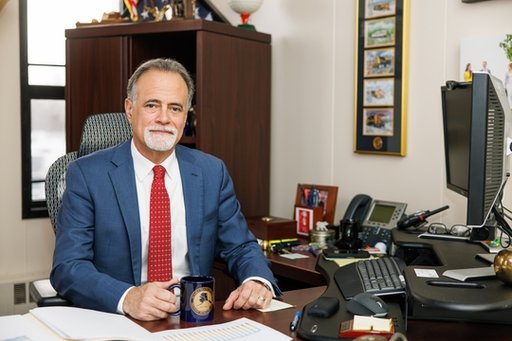
Peter Micciche
Mayor · Kenai Peninsula Borough
Ryan Tunseth
Assembly President · Kenai Peninsula Borough Assembly
Scott Griebel
Assembly Member · Kenai Peninsula Borough Assembly