Nome Planning Commission Meeting- Nov. 17, 2026
Alaska News • • 33 min
Articles from this transcript
Nome Planning Commission denies variances for two King Island Native Community homes
Nome's Planning Commission denied variances for two King Island Native Community homes on East Sixth Avenue, citing code violations.

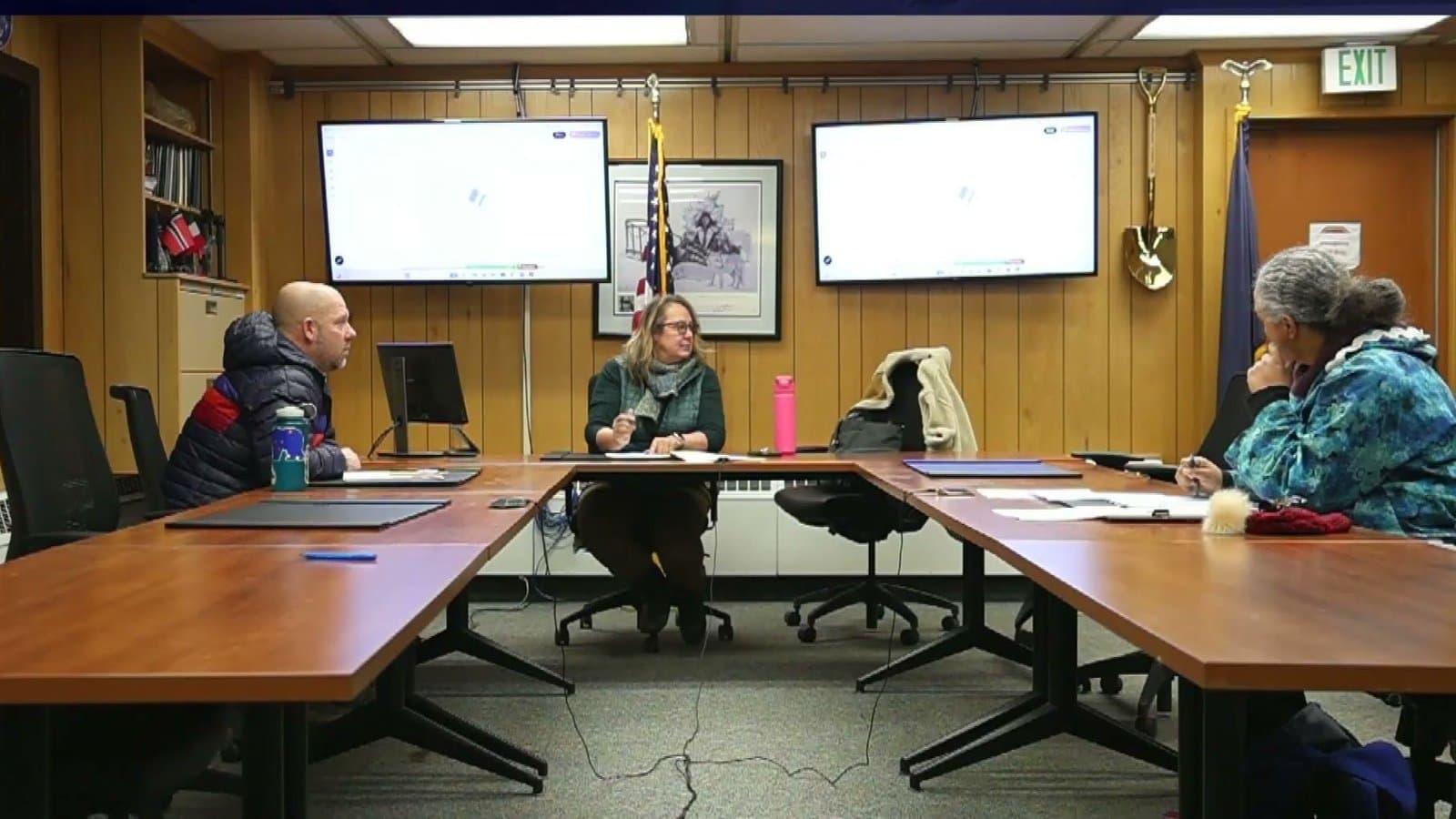
Commissioner Ford? Here. Commissioner Johnson? Here. Commissioner Buerker?
Here. Commissioner Jennings? Here.
I'll make a motion that Commissioner Ford be the chairperson for this.
Second. Second. Second. Whoever.
Oh, okay. Okay.
Okay, so our next step would be the approval of the agenda. Motion to approve the agenda.
Second. Call the roll. Commissioner Jennings.
Commissioner Baker? Aye. Commissioner Dicker? Yes. Commissioner Johnson?
Aye. Commissioner Ford? Aye. Commissioner Hurstman?
Yes. Moving on, approval of minutes. That was the September 8th Planning Commission meeting minutes. Did everybody get a chance to look at those? Yeah.
Okay. I move to approve this minutes. Second.
Okay, we don't have anything under communications. Do we have any citizens' comments?
Sure. Hi, Kenny Hughes, Mayor, and I'm here in my official capacity as for these comments. Basically, I just want to thank all of you commissioners for agreeing to serve the community. I appreciate the time that it takes, the time that those of you that have been on the board for a while have sat through a lot of training.
I hope that you're able to, uh, apply it. Tonight's decisions have real-world consequences for the parties involved. And so everyone is trusting on your common sense and your training to do what is right unto all peoples, as your pledge of, uh, to the city, uh, so mandates. Once again, really appreciate your time and commitment. And anybody out there who has a concern about planning and what the Planning Commission does, tonight's a great opportunity to see some real-world things that they do And if you would like to be involved, let us know.
There are opportunities for more to be involved. We still need 2 Commissioners at this point. So thank you very much for letting me have the opportunity to spread that word. Thank you.
Anyone else?
Unfinished business, we don't have anything under that. For new business. Looks like we've got a couple variants for a few variance requests.
Yes, Madam Chair, would you like me to kind of give a brief overview before you, uh, get started? Uh, yes, would you state your name just for the record? Yes, uh, Erin Reinders, uh Sitŋasuaq, the planner for City of Nome. Thank you. So I just wanted to give a brief overview of what, what we're looking at today.
I'm just going to start with Item 1 first. So just as a reminder, what is happening here is the city manager has the ability to approve platting actions for minor lot adjustments, like what the— what— like what the applicant is trying to achieve here. But the city manager in this case does not have the ability to grant or deny variances. So that is the Planning Commission's role tonight. Um, so with Lot 4, um, we are considering a grouping of variances, but that are all related to the same action.
So One, a setback of— for allowing instead of 5 feet, a 2.2-foot setback on the west side of Lot 4. And then on the east side, a set— a side yard setback variance to allow for a 4.1-foot setback. And then a variance for a lot depth-to-width ratio, which is The standard is the 2.5 by 1 max, and then this goes up to a 3.31 point by 1, which is a mouthful, but hopefully that makes sense. It's just, it's just comparing the width and the depth. So I'm not sure if the applicant is there, but all the application materials in your packet, but Briefly, kind of giving an overview of the situation is utilities were placed and the homes were placed before boundary and survey pins were set.
So there are Lot 5's entry stairs encroach onto the current Lot 4, and so they're trying to move some, some lots lines to address that encroachment, but in doing so, that results in still in some side yard setbacks issues, and then another setback issue as well. And then also the, the ratio challenge. So as we have gone through trainings, talking about how to handle variances, A variance, there, there has to be really a legal test of code that all have to be addressed. So the zoning, the zoning ordinance, Title 18 spells out 8 criteria that have to be met, all of them have to be met. And then also describes how variances require, are needed for only really the unique physical land constraints and how cost and inconvenience are not qualifying triggers.
And code really speaks to those, those facts specifically. So because of the requirement that all of the criteria are met, based on my review, I have found that it fails at least 5 of the criteria. The, the site is flat, so there's no physical obstructions.
It was a construction sequencing issue that actually caused this, this request, and physical modifications are, are feasible. Um, again, the applicant did speak to the cost of that, but I think as far as like looking at code, it talks about like, is it possible and how cost and inconvenience should not be considered. Um, so I have in your packet and memo, I kind of walked through each of those tests of code. And then also provided some findings that can be worked into a motion. Um, and then the— my staff memo also provides some draft motions for you to consider.
I would also add that if the Planning Commission chooses— if you find that the criteria are all met through your deliberation, I have included some conditions of approval that I would recommend you approving if you go ahead and grant this variance. Really, just there's some plat notes and just kind of some, some clarifications that I think will then help to address any of the outstanding concerns if, if this were to move forward. So that is my overview, and I'm happy to answer questions that you all might have now or as you begin your deliberation.
I have a question, if that's all right, Aaron. Yep. Um, in the packet that it talked about, you— well, you said the sequencing of events as far as the, uh, like this, like the pinning of the lot and things like that. Does it matter? I mean, the city's contractor was the one that, that did the original, is that correct?
Or the— sorry, the city has hired a contractor to put the underground in before the pins were officially set. Is that what happened? And does it matter? I guess so.
Was there somebody else that was speaking? No, that was just me. Sorry. All right. No, no, you're good.
Um, so that is my understanding. So yeah, I think the utilities— I'm not sure who was doing what, but yeah, the utilities did get put in. So that is part of the sequencing. I think that makes this, frankly, a challenging deliberation, but I think— yeah, so I don't know. I mean, so I think that is something that you can think about, but the fact is— yeah, I don't know how else to respond.
I think that makes this challenging. Yeah, yeah. If I understand it correctly, the— I mean, the, the whole project was approved, and then the city came in with their contractor and put the underground in based on the lot lines, but those lot lines weren't actually the final approved lot lines. Is that right? That's correct.
Okay. Yeah. And then maybe add to that, the contractor set the houses without getting approval to or correcting the problem or raising an issue.
And I guess, Erin, that's where I kind of wondered if any of that stuff really matters to the overall decision or the outcome, or if we're supposed to just take this on its merits. I think that is for you to— it is not something that I was able to consider when looking at the specific test of code. Um, because the fact is we are here and things are in the wrong locations and, you know, and now we're trying to address, um, setback issues and encroachments that have been created. Um, but I think as you got— I mean, but you can certainly consider those factors in your deliberation. Thank you.
Zeff, you're on mute.
I apologize, had some connectivity issues. I am back. Okay. Zach, did you have a question?
Uh, I did not. I was listening, and then my, uh, where I'm at, there's occasionally, uh, moments of blackouts, so internet just went down, and I am back. Uh, just to clarify and make sure that, uh, the last thing that I'd heard, um, was more or less clarification on the sequencing of utilities being put in at this location, and then the subsequent building, and then after all buildings were placed, final surveying was done, and that's when all these encroachments were found.
Thank you very much, one, Miss Erin, for putting all this together with the packet and kind of outlining it. My understanding was essentially that building began, and initially building was kind of set up to accommodate the location of the utilities where those utilities were kind of put in, in those properties, those access points.
And then upon final surveying, when they looked at it, it— no, it did not match sort of city code. Or more or less something to that effect. And so now that's okay. So that's doing a great job summarizing that. I would say so.
Yeah, I think that was a really great job describing that. I would say that after the building was placed and then surveys were done is when it was identified that there was the encroachment issues. Yeah, so I, I have a kind of comment. When I was building inspector, and I've completed a few projects of my own around town, you always submit the paperwork up front that has the layout, the lots, and everything else. Um, so the contractor and NJUS did have a proper set of documents in order to place these things.
Something happened between the initial paperwork and the final project over here, and now we're asked to be in fixed their mistakes, which is not under the code, unfortunately. So I'm not buying that the NJUS contractor put it in the wrong place. And water and sewer is easy to move. It's not that hard to move. Maybe a little expensive, but not hard, and you can change it underneath the house.
Um, there's plenty of pitch. You can change the pipe, you know, quite a bit underneath the house. I'm not getting why they're asking for this other than to save money, because they— it's obvious to me they put the houses on the wrong lots. They got to reverse them. The other thing I want to point out is a building inspector or a person who's built—.
If you have less than 10 feet separation between buildings, you have to put 5/8 sheetrock underneath the siding on those two sides in order to comply with state fire code. So the whole thing is a hazard as it stands, and it doesn't meet the lot ratios and all that. I don't know what they think they're trying to accomplish here, but it's a far stretch. That's what I have to say.
Yeah, uh, one thing I just want to really focus on during this is that we're not here to kind of try and decipher or critique the potential intent of the applicants. I'm just here to look at what they're asking and to fill our role and to just go about that. I don't really— can't really rely on my connection to allow everybody to tell me those types of sort of like feelings or interpretations. Just here for what's on paper and what we're supposed to do. Um, and I'm not trying to critique you, uh, Chairman or Commissioner Smith, just trying to stay on task, um, and stay focused on the things that we're here to do.
Uh, right, and that's what I was doing. I appreciate your comment. So, so to stick on task, if you look at the paper in front of you, Mr. Zeff, um, the building should be reversed. The lot, skinny lot, should have the skinny building. The fat lot should have the fat building.
It's pretty obvious they screwed up right in front of us. So that's my comment. If you want to stick to the facts and the papers in front of us, I'm gonna, I'm gonna put a pause on everything. We need to have a motion on the table really before we're discussing this. My apologies.
So would somebody care to make A motion. The motions that are suggested are on page, um, 4, 5.
So either one of these can get us started with the discussion, and then we can, uh, we can look at the questions and see where we're at. Okay, so, uh, I'm sorry that we—. Do we have a motion? We don't need one. We can let it die.
Let what die? This whole thing. No motion, the thing dies.
Oh, I see what you're saying. Um, or if you could just, um, Sorry to interject. Make a motion to accept the variance, and then a yay vote means yes, no means no, and then we could discuss as Commissioner Ward is saying. Okay, so you need make a motion that we vote, then make a motion that we accept, uh, make a motion that we accept the variance proposal. Yeah.
We need a second.
Can I second? Yes, I will second. Okay, so looking at our—. And just, uh, excuse me, roll call. Yeah, Commissioner Jennings.
I, I apologize, the, uh, motion repeated Motion to accept the variance, um, just for the sake of, uh, so we can get to discussion.
Can you hear me? Excuse me. Yeah, you're good, you're good. You guys can discuss. It's good now.
Okay. Yeah, excuse me. Confused there. Yeah, excuse me. Sorry.
Okay, if we did a roll call, I'm kind of confused. No, no, you're good. We're good. We're good. Okay, so let's look at our questions here.
The variance is needed in order to provide the applicant or property owner rights to commonly enjoyed by other similarly situated properties in the same district or neighborhood.
So that's, that's our first, first question. What do we— what's saying? Look, sorry, I looked around. I couldn't find anything that was similar to this. This is a unique situation, so I have a hard time seeing that one met?
So all the lots are 50, uh, they're all up to—. Goes as far as—. So that's not met, correct? No. Okay, so they all have to be met in order for— so I don't see where we need to go any further.
Yes. So I guess we— that's it, huh? I would say so. I agree with you. I agree with you.
So, uh, I think we need to make the motion to deny the, uh, uh, as, as written by, uh, Aaron on page 5. I move that the Nome Planning Commission deny the variance application for proposed Lot 4B, Block 79A, adopting the findings set forth in the staff report, finding that the application fails Criteria 1.
No audio detected at 24:44
And we don't have to go beyond that because it has to pass all.
Correct. Okay, correct. Okay, we didn't have a previous motion on the floor. We didn't. So, um, you guys have a motion to, um, change it to this?
You want to amend it? Okay, okay, I second that. Okay, so let's vote on roll call on—. Okay, Chair, might— can I ask a question.
It is important that you adopt the findings, or adopt findings, and I just want to, uh, clarify what findings you all are adopting in that motion. Um, If— yeah, so on page 4, um, just— I just want to, for clarity, just make sure that you all are fine, are agreeable to those 4, uh, findings. And I would note that the item 1 where it talks about fails criteria is it does note that 5 of the criteria are not met.
We don't need to go through all 5. We only need to not meet one and, uh, take a vote. I appreciate your work. I think it's great, but I don't think we need to do all that.
I would then just suggest that you, um— so then is part of the motion just that you would be adopting that first criteria, that, um, item number 1 within the findings and then changing that to just that it didn't— that it failed to meet the— all of the criteria. Yes, correct. Okay, thank you for allowing me to clarify. Yep, you're welcome.
Commissioner Jennings.
I'm horribly sorry.
Yeah, we're just doing roll call right now. So a yes vote would be denying it and a no vote would be approving it. Can you guys hear me?
Yep. Ah, gotcha.
Okay, I'm gonna try and rejoin unless you guys can hear me. We can hear you.
Oh, terrific. Um, to clarify, this motion is to do the recommended, uh, motion that is in the staff report, that is to deny the variance, correct? Yes.
Yes, I heard yes. If that is the case, then I, uh, am in agreeance with that motion. Okay. Yes. Commissioner Berker?
Yes. Commissioner Johnson? Yes. Commissioner Ford? I would like to amend it again, uh, to, uh, include Section B as well, because you had the same exact same issues.
I second, I second the amend. Okay, so we got to start voting from the beginning. Start voting from the beginning, start over.
Okay, Commissioner Smith? Yes. Sorry. Commissioner Ford? Uh, yes.
Commissioner Johnson? Yes. Commissioner Bricker? Yes. Commissioner Jennings?
Uh, I'm going to abstain simply because we have enough.
We have enough, I think, with four. We have a majority. Simple majority.
Good. Uh, Commissioner's comments?
You want to call? Yep. Commissioner Smith? Well, it's, um, unfortunate that this situation happened. I wish there was more we could do.
There's not enough wiggle room for us. Um, I don't know what else to say except for appreciate everybody coming out. It's good to see everybody, and thanks for a great meeting presentation. I really liked Aaron's presentation. Very thorough, very nice, excellent.
Took a lot of the thinking out of it, and that's what I got to say. Thank you, guys.
We've got an awful lot of people that are, have made comments to me about the dust that's going on in town. This is kind of a concern for health reasons. And a lot of this is caused by the shipping activity with the rocks. We're going to see more of it next year. So I hope we can encourage them to come up with a better plan to address that before we get into the dust season next year.
Thanks. That's all. Commissioner Johnson.
Thank you.
Commissioner Bricker. I just want to say thank you to Erin for putting together the information this evening. The fact was very helpful. Um, on the, uh, Commissioner Ford's comments about the dust, uh, one of the things that I don't believe has been being done but is supposed to be is the approaches for where they're pulling the rock out of. There's supposed to be a certain amount of larger stone, I believe, that helps knock the mud off.