Anchorage Assembly: RESCHEDULED: Legislative Committee Meeting
Alaska News • • 56 min
Articles from this transcript
Anchorage Assembly members want behavioral health funding in the city's ask of the state
Anchorage Assembly members want behavioral health funding added to the city's state legislative requests, not just tougher drug penalties. The mayor's office agreed to draft new language.

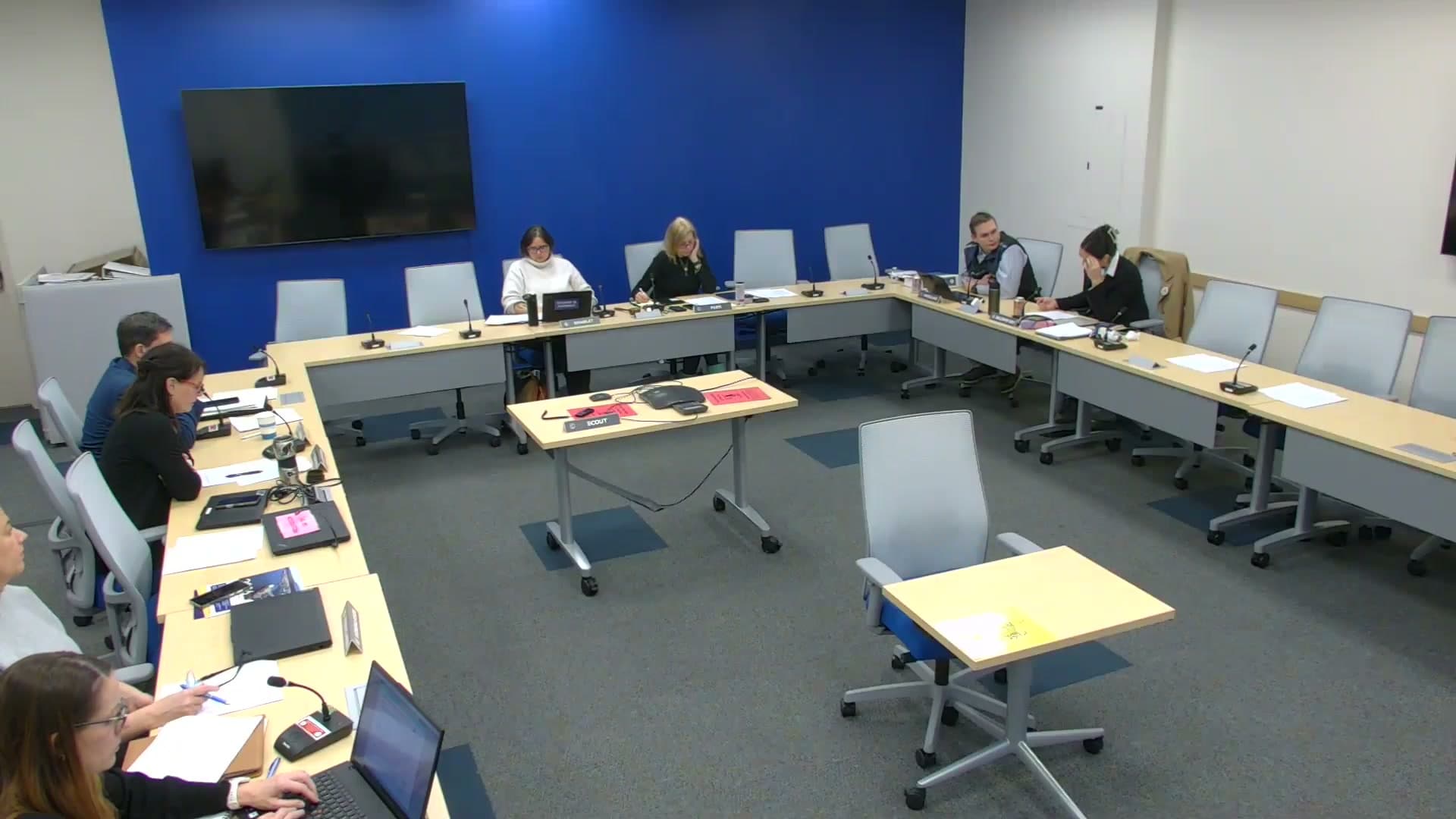
Yes, thank you, Madam Chair. Nolan Klouda with the Mayor's Office, and you guys should all have in front of you a draft of the legislative program, and I was thinking I could walk members through what's here. Most of this reflects prior conversations that we've had with the committee and a lot of continuity of past priorities. For past legislative programs as well that you see reflected. This is a draft form.
There is still a window to tweak and change some of the things that we see here, but it's probably kind of a short window before getting this introduced on for the meeting of the 17th. So we've organized this into kind of 3 themes: Build, Protect, and Thrive. So I can kind of talk about each of those in turn. The build one is, number one, is the Port of Alaska Modernization. I think that's one we're always going to have as a top request for both state and federal purposes.
What the request that we have in here is for $250 million, and we suggest that as potentially $200 million from a state general obligation bond and $50 million from a general fund capital budget. So those would be— that's our— that's kind of where we're— where we're starting with on the port. Two potential different avenues depending on how the capital budget conversation goes this session. The next three items on the list on page one, they all relate to housing. So, you know, building infrastructure to support housing development, specifically around the JBEHR recapitalization— Fighter Town recapitalization effort.
To— so that we, you know, can accommodate that growth and not see a lot of stress in our housing market that raises costs. So that's a key one. The one about expanding water sewer access kind of is something that overlaps with that one because I think— because a lot of the infrastructure we'll be talking about is water sewer. But this one also is a— there's a list of AWU projects that fall into this that support both new development of housing and also some areas like in Sand Lake where they have unsafe drinking water And some capital funding could help with that as another example. We also do have General Manager of AWU Dave Persinger here, so folks wanna ask more questions about that certainly can.
And utilizing AHFC and ADA to participate in housing, financing housing developments, we think that's a good, it's been a priority for us for a while, but I think this is a good time to bring it up with a new gubernatorial administration coming on board. On page 2, those top 2 items are also longstanding ones about improving state road maintenance and also about DOT staffing, which has impacted project delivery within— for a lot of DOT projects within the municipality. So those will continue to be priorities. The next 2 are about solid waste services and energy projects, so both the waste-to-energy project and then the utilization of landfill gas, so 2 separate things.
Renewable Energy Fund application in for waste-to-energy for the, for the design and permitting. And then the landfill gas utilization is capital funding to expand the use of methane gas, which is already used to generate power, but to be able to produce more, very timely with cooking gas shortages. The last item on BUILD is to modernize water and wastewater utility financing. So, so two requests here, the PRISM mechanism. Which is a kind of a simplified process for recouping costs on smaller capital projects, and then simplified rate filing for water and wastewater utilities.
So these are both measures that would help, that would position AWU better financially to be able to invest in infrastructure expansion that we might need, especially to enable housing development.
The next heading, Protect, or yes, excuse. Me. Before we go on to the next section, are there any questions?
Okay. Next heading of Protect. Anna has a question. Yeah, yeah, I think that way we can— so I guess for members' benefit to just— if you have— we're not— the purpose here is not wordsmithing. So if you have minor wording changes, please talk offline or give them to Jennifer for consideration, but just in terms of kind of discussion about— so I'll say, I think this feels like the right list of priorities under this section.
And I'll also just note, we met this morning, Nolan and Ms. Park and I, and so recommended moving the housing ones up a little bit in the list, but otherwise, which has already been done, so you'll see that here. But I want to also remind folks, you know, this is the level of detail we'll have in the program because there are no bill numbers yet. We don't need to do a deep dive if there's things we can do one-pagers on, you know, on individual items. Like, this doesn't have to cover all the detail, but just if there's things folks have thoughts about, you know, how to phrase these or like that. So, but my question though, it's really a follow-up question just to, I guess, Mr. Persinger, really just a question.
Can you, this is more about process. I would like to see in the future, whether it's this committee or different committee, I think we should have more of a briefing on that simplified filing in that more detail. But my question is, does AWU produce its own legislative priorities? Or I just want to make sure, mostly out of curiosity, because I know there's a lot of efforts and advocacy going on down in Juneau. Excuse me.
Through the chair, David Persinger, Anchorage Water and Wastewater Utility General Manager. Priorities internally and then we work with the administration to vet those out. Okay, so really your priorities get rolled into the program, is that correct? Yes. Okay, thanks.
And then yeah, I think follow-up question for later is kind of just getting more of a deeper briefing on what, especially for those of us that go to Juneau, the more that we can answer questions or at least have the correct answers and not say the wrong answers, that's helpful. Absolutely, we would be happy to do a briefing and we've developed one-pagers. In fact, the simplified rate filing we attempted to get through the legislature last year. Unfortunately, we ran out of time, so we can definitely provide a detailed briefing and the information. Okay, thanks.
Those are my questions. I guess I do have a question on the road maintenance. Has there ever been any kind of discussions with the state of Alaska in terms of them potentially providing funding for particular routes if it became more efficient for, I guess, the municipality to do that as part of the system. I'm not sure if— maybe that's a completely different person kind of question there.
Hi, sorry I'm late, apologize. Suzanne Fleek-Green through the chair. Yes, I feel like almost every mayor comes into office and thinks, how can we negotiate better operations with the State of Alaska. I definitely saw it under Mayor Berkowitz.
And I would say to some degree we have been able to make— well, I take that back. We have not really been able to make very much progress on that. And I think partly we recognize too that State DOT is very underfunded.
And so I mean, I guess with a new incoming administration, is that I guess something that I guess having another push to try to see if there are I guess ways of working around? I'm just thinking from like, hey, an efficiency standpoint, it's like, hey, if they're understaffed and stuff and we are able to I guess say, hey, here are some routes that are on outlying areas, we are already plowing the roads around that, and just from an efficiency standpoint of, hey, we kind of do a little bit of kind of like swapping there, and but, but you guys, I guess, fund the cost of that. It might be cheaper, um, if that's something to potentially pursue. Yeah, I think that's definitely a conversation that we are open to, and we hope that whomever is the next commissioner of DOT would also engage. I will say that our two teams meet frequently, um, so our public works team road crew meets with their maintenance team frequently, and they do talk about issues like this.
So it's an ongoing conversation, but in terms of reassigning specific roads, I think part of that would also be a funding negotiation, how we change the TORA to be able to take that on. So good question, really good question. Yeah, I wanted to also respond to that just with some background. So I know having gone down to Juneau in this capacity since 2024, I know that is a conversation every year for sure. And there's the discussion about local roads, but really it's about the state roads that are in the municipality, right?
And so I know that Senate and House Transportation for every single year, our Anchorage folks have said we need to increase the operating funding for DOT, and especially on the House side, because that's where the operating budget goes. And there's been a lot of resistance to that. So I think that that is a conversation that we have pushed, our legislators have pushed. I intend to continue pushing it individually, whether or not it's in this program. But I think that's the conversation is how to increase the operating budget for DOT.
And then I'll note the central region, which I know Mr. Handeland also knows, is Anchorage, it is Matsu, and it's some other areas like Bethel's Airport, I believe. So the other consideration is even if funding is increased, will it go to Anchorage or will it go to Matsu? Mat-Su Borough and Anchorage, Municipality of Anchorage, have each about the same number of state road miles. And so, and the, so that's a question too, like, is the resources allocated? And it is not us versus Mat-Su, but I think it's important to understand that even if it's put in there, there is no guarantee that it will only go to Anchorage or that it will go to Anchorage at all.
And historically, the conversations have actually been the opposite. And so anyway, that's just additional context for that discussion. That it's definitely— we're continuing a conversation that's happened for a long time.
Ms. Baldwin Day. Um, yeah, I, I just, I think, have a stylistic comment. I also agree that this is the right list. I'm wondering about the utility of maybe some subheadings, um, and potentially just restructuring just a bit. So it seems to me that we have 2 items that pertain to housing, 2 that pertain to energy solutions, 2 that pertain to roads, and then 2 that pertain to water and wastewater.
And so I'm wondering if we could sort of bucket those together so that it's a little bit— the flow maybe makes a little bit more sense, um, with the port staying as the header, obviously. Um, but so a stylistic suggestion, not substantive at all.
Yes, Miss Ross. It also looks like there's some that are more legislative. Requests and other— or like capital laws or executive requests. So maybe we divide them up that way too. I'll have to read these more carefully first, but that could be a way to divide them as well.
Mr. Clouda. Yes, through the chair, we— one thing we've done in past years, I believe, is put an indicator next to each item, whether it's a capital request or an operating request or an administrative request. Along those lines. So we could, we could do something like that as well.
Shall I proceed? Okay. The Protect category relates to public safety and public health, emergency response, criminal justice system. And so first item here is about strengthening drug interdiction at the state level, because I think this is largely an issue that affects inflow and outflow to and from Anchorage when it comes to illegal substances. So this is about making sure that the state troopers have the resources to intercept illegal drugs before they reach Anchorage.
And so that's one priority. Then another one here is about, relates to closing gaps in the competency to stand trial system. This is an issue that's been identified where sometimes when a person commits a crime, but they are not, but they're not deemed competent to stand trial. And then, and the other kinds of mental health support facilities are not, programs aren't available, they fall through a gap that often leads to them being out without treatment and also in a position to sometimes cause continued public safety concerns. And so this is about addressing that gap.
There may be a, there might be a slight expansion of this that we could, that we could talk about. And we have Municipal Attorney Eva Gardner here, but there are some other, other laws that are that are kind of similar to this that relate to public safety challenges, like the Alcoholism and Intoxication Act and certain drug nuisance and property abatement law areas. So those are other areas we may actually want to expand this request a little bit too. And if we want to talk more about that, Eva is here. And another item that we did not have on here, but that we may want to add, is about updating state law to allow urbanized areas with unique needs to enact traffic laws that differ from those at the state level.
So to give us a little bit more leeway to, to, um, have those at the— design those at the local level. So that's another one that I— that we're thinking we may want to add into this too. And I don't know if anyone has feedback on that.
Um, so, uh, we have another— an item here for restoring, um, Schedule IIa drug penalties, this is something that was identified by the police department. Oh, yes. Yeah, I think we have a question, Ms. Brawley. Oh, sorry, I thought you were done with this section, so my question can wait till the end of the session. Sorry, I was mistaken about the timing.
Go ahead. Yes, so the restore Schedule IIa drug penalties, something identified by the police department and by legal that is going back to the pre-SB 91 penalties for Schedule IIa substances. So that includes methamphetamine and cocaine.
Making those Class C felonies again to reflect the seriousness of those drugs and strengthen efforts to deter them. There's an item here that we had last year as well, the next item up for wildfire safety for unmanned aircraft capacity to be operated by the fire department. So this is, so yes, that's another kind of small capital item. And then the, I think this is the last item under Protect, is to increase rates for general relief assistance. This was on our program last year, and we did secure a, I think it's a 1.5% increase in general relief assistance rates for assisted living.
This allows for people with serious disabilities who sometimes end up in, who need assisted living, who end up in the shelter system, right? And giving them a better place to go, and then also opening up that shelter capacity. So Representative Mena, advocated for that, championed that last year and got that increase. And I think that a further increase would be very helpful as well. So that's it for the Protect category.
If we want to pause for any questions or comments there. Thank you. Yes, Ms. Brawley. Yeah, thank you. I'll reiterate a comment I had this morning just so it's on the record.
So I think we discussed kind of the— how I think it's helpful to be specific in our headers, which this is, you know, to be clear about what we're trying to do and why. With some, and we talked about kind of broadening some of them. So specifically on the unmanned aircraft capacity, I just, I think this is something that I've carried down to Juneau a couple times. We haven't gotten it funded yet. And I think my suggestion is really to elevate the header, even if this is the specific request that we put in CAPSES.
I think the real conversation we need to have with legislators and with the state executive branch as well is Chugach State Park and related lands are some of the largest lands in our boundaries. And we have the general principle that if you own the land, you steward the land, you maintain it. And so there is a lack of maintenance, not lack of care about the park, but in terms of wildfire fuel, what we've heard over and over from AFD is why wildfires often originate on those lands and they move into our area. And so I think I just suggest we broaden the description of this. And I think we really have to have the bigger conversation of what are they doing to maintain their own land?
It's because we all own the wildfire risk. This is not just an AFD, not just an Anchorage taxpayer's risk. And that's all the way along the Chugach State Park, right? So, and really into our green belts as well, which are local, but Ms. Fleek-Green, you probably have a. Comment on that.
I do like our public lands. So what I'm hearing is that you would like to make this slightly more generic. So it would be more like expand wildfire response capacity. And then one example of that is having a UAV response, but also maybe more investment at the state park level to be able to address wildfires. Yeah.
And I would also say that's correct. And also in DPS or wherever the fire— the state fire folks live, because I think the other thing we keep, you know, supplemental budgets keep having larger and larger disaster response needs. And that obviously we need to respond to those things. And this is not just an Anchorage issue. And then we need to be able to keep socializing that we cannot pay for the wildland fire division that we need long term.
And so, so when I go to Juneau, at least I look at these as talking points and really like jump, jumping points for conversations. And so I think it is the specific ask, but we also need to be talking about these big picture issues, whether or not we're going to get funding for that. But that's, that's so yes, expand the header. But I wanted to connect this to these other conversations that we need to keep talking to legislators about, especially because they don't pay for our state our operating budget the way they used to. So, and they're not going to, but we have to have those conversations and educate those folks about why there's limits on what we can do.
Okay, great. We'll work on the wording a bit based on your comments and then circulate it around. Okay,. Thanks. And then my other comment, just briefly, um, different topic that we don't have time to get into, the, um, the Schedule IIA drug penalties, um, This one does give me pause, I guess I'll say.
Like, I understand the argument. I remember SB 91 10 years ago, and the whole discussion was how do we put fewer people in prison so that we don't have to open another prison. And then all of the politics and everything else that happened 10 years after that means that we're kind of going in the opposite direction. So I feel like we're going— the state has gone in circles on this. But I do want to just express a concern about advocating for first events first offense felony drug possession cases.
And I, again, I know that's a big conversation that we don't have time for. But I, again, I wonder if there's a way to broaden it a little bit. And then, because again, I think there's two sides to that conversation. And, and the result is that it will put more, it will require even more resources into DOT in the court, or DOC corrections in the courts. And so anyway, so I don't know what that looks like.
We can talk offline. I just want to register a concern about being very specific about that, because I think, again, there's two sides to that coin.
Sure. And Madam Chair, I would, I would add one, one piece that I certainly appreciate your concern with, with the drug penalty issue. But I'd also add that there are more options to deflect people into treatment and rehabilitation programs, too. And so that is also a strength of the drug, of stronger potential penalties.
To. Shall I proceed to the Thrive? Please. Oh, yes.
Yeah, thank you. I think this is maybe just like a philosophical question or observation, and that is that we call out behavioral health as a piece of the protective asks, but we don't actually have a specific ask relative to investment in behavioral health care. And I I think, you know, asking for an increase in general relief assistance rates is, is, is good. I think if we're talking about drug interdiction and drug penalties, and we're not actively calling out drug prevention intervention, like those kinds of, like, investments as well, we're really only asking about half of the equation. And so I would like to make it clear to the state that we expect their participation in the prevention side of things.
And, and also in that, like, in the intervention that we as a city, as a municipality, are being asked to do in the absence of robust state resources. And so I, I will be very clear, I don't know what specifically that ask ought to look like or how it could be structured. But I think that that's a really important piece of the puzzle when we're talking about drugs, behavioral health, homelessness, all of those things.
Mr. Lee, good point, and we can definitely again come back with some language to circulate as a way to address that. Mr. Hanlon. Yeah, I mean, kind of similar, similar line. I mean, I just kind of did a search on here of like, like homelessness in it, and there wasn't, I guess, anything very specific. And this is one of the things that I brought up actually at a community council meeting yesterday with Senator Merrick, where as much the homeless problem, behavioral health, like a lot of that, I feel Anchorage is kind of the bottom of the funnel and it becomes this state issue that is kind of mostly felt by the taxpayers of the Municipality of Anchorage.
And so as much of a kind of, I mean, a stronger ask, I guess, for that thing, 'cause I view the homeless problem as like, I mean, If you go and ask people and stuff, there are a number of them who say, hey, they're from outside the municipality of Anchorage. And so as much as we can kind of convince legislators that this is a state problem that is currently located in Anchorage and that we need support and help from them to kind of alleviate that.
Another good point. Thank you. My first thought is we have— we did submit to the state comments on rates for crisis stabilization. That's a small piece, but frankly, for like Providence and South Central Foundations who are creating crisis stabilization centers, we want to make sure that the reimbursable rate is adequate so that we fill beds. And that maybe we can grow that area because even as earth-changing as it will be to have those two centers open this winter, it still won't be enough for exactly the reason you said is right now we're the, we're the only place.
I mean, Fairbanks closed their shelter. The Matsu will not open one. So we are the place where people come. I think Thea has talked about where we know people are getting put on airplanes from Belize, for example, and sent here because they know that we have shelter and that we have services like the opening crisis stabilization center. So I think, again, we will work on some language to address your point and see how we can, to a new body, really accentuate the fact that we are providing services for residents of the entire state almost.
And I'm not sure, I guess some of the numbers and stuff, but it'd be interesting to, I guess, look at. I mean, because it's where we're 40% of the population, but I would imagine it's well over 40% of the homeless are located within the municipality of Anchorage. And so I guess something like that to kind of reiterate that. Thanks. Miss Brawley.
Thanks. Just briefly on that point, I feel like an old lady 'cause I keep saying way back in 2024. That is the exact conversation we had. And so what I'm gonna dig up and ask staff to circulate is we sent a letter that essentially enumerated the cost per police call-out, fire call-out, and the general message, and this is one I intend to take down to Juneau, is when the state and other entities aren't taking care of behavioral health and homelessness and all these other things, we do pay more in fire and police, like that is what happens. And also we all pay for it in emergency room costs because it goes straight to our health insurance costs.
And so anyway, so we have crunched those numbers, they're out of date. And that was, we did just to say, we were successful in getting a $4 million grant to run our Midtown shelter at that time. And it took basically the entire session convincing legislators, especially Anchorage legislators, one, that it's a statewide problem, and two, that their inaction was costing us locally. And so, so I think, kudos to them for funding it. It was a one-time funding, but yeah, I think that that's a conversation again that we've had and we will continue to have, so I appreciate you bringing it up.
And I would just like to add to that, I remember that the governor cut last year's budget for, um, for NAMI, for all the senior centers and mental health services across the state, and then when that happens, we shouldn't be surprised when people end up on the street. So hopefully better things to come. Uh, Mr. Clowden. Sure, sure, thank you, Madam Chair. Um, so to proceed on with the Thrive category that, that relates to our long-term success as a community, and so this, this encapsulates education, affordability, energy affordability, and a competitive public sector workforce, um, among other things.
And so, so the, the first 3 items here, and to Member Baldwin Day's point, we could do some subheadings here, but the first 3 relate to education. So a couple different dimensions of it. So one, one, just increasing funding, increasing and stabilizing funding. And so we mentioned in here, you know, just higher baseline funding and a mechanism for an inflation adjustment, right? I think we keep ending up in the situation where one-time adjustments and then they lose purchasing power, you know, to inflation and then takes special legislation to increase, right?
So that's one. And then the education funding formula, looking at— this is things like, like required local contributions and also the average daily membership to smooth the amount of money that comes to schools so that they don't— there's that volatility depending on what the specific enrollment is that year. And then, and then the third education item is about forward funding education. There's a lot of talk about this, providing budgetary predictability and stability to school districts, which we, I think, which we all know is a thing from our conversations with the school district. The next one relates to, you know, and this is a broad statement about sort of investing in the University of Alaska Anchorage.
You know, key asset for Anchorage is our university system. If you talk to, you know, the city of Fairbanks or the Fairbanks North Star Borough, you know, they're always going to go to bat for UAF. And in a lot of ways, it makes sense for us to be thinking of UAA in the same way. There's a next item here is on increasing Cook Inlet natural gas supply and storage, recognizing the situation that we're in with regard to natural gas shortfalls potentially this winter. Also, the item for residential weatherization, helping people adjust to higher energy costs, which we know are coming.
We— the next item, we called for an increase in community assistance. So the community assistance funding formula that exists now It's been the same since 2016, the same dollar amount since 2016. So when— and so it's lost a lot of its purchasing power, but it is still a fixed dollar amount where $30 million gets distributed and there's the $90 million trust fund. And that amount was— the amount set in 2016 was a reduction from the prior revenue sharing program. So we think at least, you know, something that increases that funding a little bit, and it's on a per capita basis because the the formula kind of has two pieces, a flat amount per incorporated city or borough, and then a per capita amount.
And so Anchorage doesn't do very well when it's a flat amount, but we do well when there's a per capita amount. So this is something that can be flexible funding for us for new revenue for the municipality. Then we have, after that, we have the restored defined benefit pensions. I think, you know, I think we know the importance there. And then this last item is to invest in parks, trails, recreation infrastructure.
This is— there's a list of some of the parks projects that are sort of summarized here. These are things that would be good items for state— for smaller— in the event of a kind of a smaller capital budget that's looking for some, you know, few million dollar projects here and there. There's a number of them to choose from that would strengthen our parks and trails as a community. So that's the end of the Thrive section. I could pause there before we talk federal.
Priorities. And if I may, I want to just make one note on the Parks Trail Recreation is I know that we will get to the point where you will have district requests at the additional page that each of you will develop, and sometimes parks are on your list. And then we know that Anchorage Park Foundation also does a very good job of advocating for projects in front of Juneau.
Frankly, because the capital project program has been so anemic over the last many years, we have not had this category in there, but we are thinking that there will be more of an appetite by individual legislators to have their own district projects. So these are just starting with some ideas, and then also these are ones where Yes, we could bond for them, but our park bond is oversubscribed. I'll say it that way. And we just are always trying to be cognizant about how much voters might approve in a parks bond. So we thought that it would be helpful to also have these listed in the legislative program.
Member Brawley— I'm sorry, Member Baldwin Day. Thank you. A couple of notes, suggestions. First, under improve the education funding formula, I'm not sure if this is something that you all have workshopped, but one of the things I continue to hear as a suggestion, not just here locally but from lawmakers elsewhere who are dealing with real challenges in education funding outside of the state of Alaska, is consideration of a base facilities allocation. I don't know if that's something that we might want to call out specifically as something we would like the legislature to consider, but I think a base facilities allocation is a worthy concept to just sort of float out there to say we are interested in this.
Um, uh, under Invest in the University of Alaska Anchorage, I, I would love to see student housing called out as a place of investment, uh, understanding that there is a waitlist for dorms and we have homeless university students living in our city. I would love student housing to be incorporated as a specific ask.
And then potentially just a language note under Invest in Parks, Trails, and Recreation Infrastructure. I would love for us to sort of collectively start talking about the recreation economy. And so I think that might be an interesting way to sort of shift the narrative is that, you know, yes, this is an This is all infrastructure, but it supports our recreation economy in a very important way. And I think if we started to adopt that language, we could help people understand that recreation isn't just, oh, we're out here having fun. I mean, yes, we are, but this is also a very specific economic driver for Anchorage.
So maybe using that as the header. Great. You will be pleased to know that I have a draft of a recreation economy plan, let's call it, on my desk. And I would highly encourage you to talk to Travis Morrison. He is our lead staffer on it and is working on that plan.
So. We have not gotten to chat yet. I am very excited about talking with him. Thank you. That's probably—.
Yeah, I have 3 different comments. First one is, as I'm looking at this, and general support for this, and second the mentioning student dorms or housing development there for the university. I think we should move the Cook and Link gas supply storage to protect, and the reason is because it is a life and death situation if it's 0 degrees and people's furnaces don't work. And so I think, I mean, I think it's real. I think we just need to keep elevating it, and I think that's the way residents are feeling.
Last night at Turn Again Community Council, that was a big question, was kind of what are we doing about our gas supply? Apply. And I know we're not the ones to answer that, but I think that's where that should go and also rebalances this list a little bit. Separate question, base facilities allocation. This is a whole other discussion, but AML, Alaska Municipal League, they have a set of resolutions.
In fact, as a board member, I'm going to be voting on them in a few weeks or about a month from now. Base facilities allocation is something they have carried as well. And just to note there that there's not enough time in the world for us to fully connect our priorities with AML's priorities, and I'm not even running any resolutions. It's just I can't. But anyway, that conversation is happening, I guess, is what I'm saying.
So whether we put it here or whether it's elsewhere, that's an advocacy piece, and AML does a good job of advocating for local governments generally. And so things that elevate beyond us, that's a good space to bring that conversation. And then third separate thing on the parks thing, I would suggest, because of the timing of all of this, we're going to have to print this basically right after we publish the budget. I would suggest we don't necessarily put a dollar amount in the program for the parks. I'm sorry, I'm looking at the last one.
And then I'm not a super fan of listing all of these park projects in there. Not because we shouldn't ask for them, but in terms of the description. And then I'll say I've had a 3-year side quest. Of trying to connect the RCIP with what the Park Foundation advocates for. Because what I discovered is we went down there 3 years ago, and I didn't even have their list, and so I didn't talk about it.
And I think the pro and con of the way that we do that and say, hey, every legislator gets to put something in the budget, it creates a scattershot approach that I think we keep— we're on the cusp of keep having that conversation locally. And it is not because they don't do good work. I just— there's a disconnect there that I'm trying to connect, and it's taken me multiple years. I will continue. But I think making sure not to constrain what they do.
But anyway, I think rewording this a bit, keeping it a little more general, recognizing that we are going to be moving amendments into the CIB. I know we talked about a couple of them today. I just want to make sure we don't leave anything off the list or if we don't— right. So, so it's more a wording thing. But just to say, that's a whole other big conversation.
Each of these things is a huge conversation, really. But that's something that I will continue to do as well, is try to keep those things aligned and prioritized. Thanks.
Thank you, Mr. Nolan. Sure, sure. Thank you. Thank you. Yes, all good comments, and we can incorporate a lot of these changes.
The last item here, we had talked about federal priorities piece that probably lives separately from the printed state-focused legislative program, but the federal priorities list is here, and they do echo many of what we've have talked about for the state level but position a little bit differently, and there's a few other items that are not on the state list. So first one, secure funding for the port, which we, we of course have our state and federal strategies on the port, and, and so pursuing different, different approaches, but there's a large amount of investment needed, as you guys know, and, and so we, we are pushing on both avenues. Another one that echoes the state is that is investing in housing infrastructure, so a different set of of funding channels available, but also, uh, you know, the federal government is, is making the large investment in JBARE, um, provided that, that MilCon budget passes. And so, uh, there, there is a strong case for federal, you know, assistance in adjusting to that change, right, and getting housing built with the supportive infrastructure. Uh, third here is the waste-to-energy and JBARE land transfer.
So there's a specific effort to get the 50 acres adjacent to the regional landfill that we've been leasing that's owned by J-Bear transferred to municipal ownership, and that would be the site of the waste-to-energy facility when it's developed. And so that's, that's an active effort that we have going on right now.
Expanding weatherization funding to improve affordability. This is, this is also going on with, with higher energy costs, federal pots of money that can complement any state or local money that we have to help reduce household energy costs. The continuum of care funding to address homelessness, you know, this is under HUD. The continuum of care funding funds a variety of different programs that support people coming out of homelessness and housing insecurity in general. And so getting more funding available from that pathway is a very high priority and I think has been for some time.
The last item here is about the Corps of Engineers Authority for Alaska Water and Restoration Projects. So some language to this section of the Flood Control Act, would expand the Corps of Engineers' authority to, in Alaska, to include shores, wetlands, ecosystem restoration, environmental protection. The kind of bottom line of all of this is it creates a new vehicle through which we could get funding for water, sewer, and restoration projects, including things like restoration of the Eklutna River. So a lot of good upside here. This dovetails with the potential to build more, to get more infrastructure to support housing, as well as some other projects like restoration.
And this is also something that, that Mr. Persinger from Anchorage Water and Wastewater Utility can speak more to as well. But that is, that's, that's the run-through of the program, and I can, I can stop here for any more discussions or questions.
Miss Baldwin Day, and then Miss Brown. Yes, thank you. Great list, super excited about core authority.
I think I have— I'm not sure if this is an addition to the list or something to incorporate in one of these bullets, maybe. I think continuing to ask for a cost of living adjustment in HUD entitlement calculations would be really helpful. So I think HUD that there's not much we can do to really change the HUD formula itself, but I think a cost of living adjustment has been a way for us to get at the question of how the HUD pie gets sliced and diced. And I've had a couple of conversations with our federal delegation about how critical that could be for Anchorage in getting additional CDBG funding and things of that nature. So, That's something that you would be open to incorporating.
I would love to see that added. Ms. Brawley. Thank you. I promise we did not coordinate a similar commentary. And then the other thing I'm gonna ask to send around is the advocacy for the last 3 years on HUD regarding the continuum of care formula, 'cause I think it just provides information and kind of why that's being asked for.
But all that to say, I think the point is valid. The formula is difficult to change because it's a zero-sum amount of money. I think that the thing that I would love to see in here is, um, we have housing and we have the homelessness piece. I think they're, uh, I'm hearing not just from kind of the political world but also American Planning Association, others are really tracking that there is likely to be a Road to Housing 2.0 type of bill. And I think there's going to be appetite to really look more broadly at these funding streams like CDBG, the ones that come through HUD that are not just housing.
And so I think we would miss an opportunity to advocate and say you should be putting more money in those in those programs. And so I think maybe there's a way to use what's there and expand it. Certainly the CoC funding is important, but I think many of those programs have not been touched for a long time and they are very siloed. And so really an overhaul of HUD is needed, which is probably not gonna happen in the next 2 years, but that's the level of conversation we need to be pushing for, I believe, but with these kind of tactical things.
And then I think that's all I had for now, amazingly. So thank you.
Thank you, Member— or Chair Brawley's comment actually reminded me of another piece of federal legislation that I think merits advocacy, and I think that is really implementing some of the provisions in Build America 250 with respect to local control of or MPO control, I should say, of federal funding dollars. Happy to share some specifics on what that ask could look like. But as we're sort of looking at this IIJA transition to Build America 250 and MPO flexibility, I think there are some very specific things we could say that we support and that we want to see implemented by our congressional delegation.
Yeah, Member Baldwin Day, if you want to send us language, that'd be great. Cool, thank you. Miss Brawley. Okay, I'm going to briefly suggest one more item. I remembered what the other thing was, and I don't know if this belongs in the legislative program.
It would be a federal thing. It really is do something about the healthcare system, and I know that's a huge— I'm not even— yeah, because I think— because I just— Again, I know it's not necessarily the most strategic. We can talk offline about what that looks like, but I think the muni is self-insured. It is one of our biggest cost increases. It is partly why we cannot pay for many other things, and it is killing the private sector too.
And so I just, I mean, I think it's such a huge conversation that I can't help but, I wish I had a sticker on here that said health insurance is theft. I mean, that's where I'm at. And so like, I'm not going to buy that sticker right now, but I just, and again, I recognize much bigger than the muni, but I think because we are self-insured, because many of our issues have to do with lack of access to healthcare, I think there probably is some narrower thing that is at least a talking point. So we can talk offline, but I just think that is something that I, that I think we need to bring up and the federal level is the way to do it. And I am not arguing for any specific system or change, but we have to talk about how it is killing our budget.
Um, and it is killing our constituents' budgets. And so anyway, so I don't know what that looks like. I just, we can talk offline, but if it doesn't end up in here, it's not the end of the world, but I think Someone has to bring it up. Well, my response would be, I think, good point, and we should talk about it soon because tea leaves are saying that's going to be one of the first priorities in the new Congress. So I will, I will reach out to the U.S. Conference of Mayors to see how we make the argument connected to our local cost of just our own in-house healthcare.
Okay. And I think somebody probably heard me say before that early intervention saves money on healthcare costs. Yep.
Yes, Miss— Thanks. I just. Wanted to mention timeline because I know a number of you have mentioned additions that you want the administration to consider. So Nolan is planning to get this near-final draft to our office by Monday morning. That will give Ali just 2 days to lay out the design to make it into this.
Booklet, you're going to be up to an 8-page booklet this year instead of 4-page based on what we saw in the draft. So if you have things that you want to get in writing to Nolan or Suzanne, please do that today if possible so that they have time to incorporate those and get them to us. And then the plan is for the resolution and the program to be submitted for the addendum. So that's by this Thursday. So you'll see it on the November 17th agenda.
For introduction and potentially discussion, or, you know, it could wait for the discussion to wait till December 1st. But the bottom line, it has to be approved by December 1st per municipal code.
And if I can offer one correction, in code it says it has to be approved by December 10th. So functionally, either we have a special meeting in addition to the first, or we just do it on the first. And so that's why that's the timing. And it needs to be introduced before the budget is passed. And so that's why it has to go on the November 17th agenda.
I mean, it could go before, but we're never in the position that we do that. And then it has to get passed by that date. So that is why we were doing this, just for folks' awareness. That's why it's got this two-step. Yes, go ahead.
Thank you for clarifying that. And one more point, the district priorities. I have most districts' priorities submitted to me and I'll get that list to Allie and to administration as well. I still have 2 districts that haven't given me their priorities. So if that's you, please get them to me.
And if you're not here, I'll be following up with you. Thank you. Ms. Brawley. Yeah, thank you. And one more point on that.
I mentioned this to Ms. Scout one-on-one earlier. If you would like something, if you have a capital request, especially if it's new and it's not already in the program, it needs to be in our capital improvement budget because there's a straight line from the amendments that we run to the final CIB to CAPSES. Because what our staff do is they take the list that's already in there because it's program, or sorry, it's projects that are already defined. They have a code, they have a number, they have a department, right?
They're all lined out. That is what goes into CAPSES. So if you put a line in the legislative program and you don't do anything else, it's only a line on the piece paper. And so that is just something to be aware of. And so it doesn't have to— it can be done after our budget is done, but that's what our staff uses to put things into CAPSES, which is the state capital or state budget request system.
So just to close that loop. And so that's— so if you're in that situation, talk with our budget analyst and OMB director because we can probably get them in the, in the S version if necessary, or they have to be individual amendments. So just to close that loop, that is because again, if it's in the program and it's nowhere else. It's nothing else happens with it. So first, for capital requests.
Thank you. Any other questions?
Okay, our next scheduled meeting will be December 2nd from 1 until 2, and out of order. Yeah.
We will also be having a meeting with our legislative representatives for the Anchorage caucus on December 14th, and it will include only committee members.
Miss Brawley? Oh, sorry. Oh, it's okay. Yeah, I think just to clarify, it's not all committee members. The request of the delegation was, you know, more than 3 of us meet, that it becomes a public meeting.
And so in the past, we've done just a couple of members. But I remember maybe Mr. Clouda could speak to that. And if you could also kind of COVID thinking ahead to session 2027 briefly in terms of what we've done in the past and what we're hoping to do.
Sure, sure, Madam Chair. We— so that— so this, this meeting The meeting that we have in December is going to include Chair Brawley and Chair Park. So we will have— we are trying to keep it as a smaller conversation, and that was also the request of the legislators too. But we will be— you know, we'll have other points of engagement with the delegation in December, January, as session gets going too. So we have a lot more strategizing, I think, to do as a group.
That will include the involvement of Assembly members as well as we progress with that. And we have the AML conference usually early in session too. So lots of other opportunities to engage and work together on priorities.
Ms. Brawley. Thank you. Sorry, I know I'm talking a lot. So historically, just for context for members, in the past we have gone down right at the beginning of session. And by we, I mean some Assembly members, Mayor's Office, you know, a kind of a group of us go down, meet with our delegation, meaning all of the legislators that represent the areas of the municipality.
We've done dinners with them, we've done a lunch to brief on the port, we've done other kind of Zoom meetings, they meet regularly. So just to say that that's, it's a separate thing than going down for the AML conference. We've sometimes timed it with the conference when all of our local officials, it's essentially a fly-in for all the local governments. So just to say, I think we're still working out what that looks like. It is certainly— the goal is not to make it an elaborate event, but it's a way for us to talk to our folks during session.
And so in terms of timing and everything, we've done it different ways over the years, but that's the goal. So, and I think we're— my interest would be to defer to the mayor's office, who I know is working with those folks on scheduling that. But just to say, that is not an only committee chair thing. It's not— all 12 members could go down and do it, right? That's rare, but so just to say, if anybody's interested, whether you're here or not today, that is an opportunity.
And separately, folks have also gone down and advocated. So I think that anyway, there's lots of ways to do it. And so the interest is to get as many of us actively participating in that as possible. Thank you. Yes, Ms. Baldwin Day.
Yeah, I actually have a follow-up question to that. Have we ever have we ever coordinated such that there's like a single point of engagement where sort of like everyone who's there representing the municipality of Anchorage, to include both executive and legislative branches, have hosted a lunch or engaged somehow with legislators in Juneau? Like, have we ever done that in a collaborative fashion to sort of say, hey, here's a united front of things that we would like for you to work on? And if so, is that something we're considering? If not, is that something we're considering?
And sort of what's the appetite for that? Yes, through the Chair, we have done that and do coordinate, you know, with the body, I think, over the last few years. That certainly is the case. We, you know, we do hear from legislators. They do like the fact that the mayor is in a position to speak for the municipality as a whole.
I think that is something that is important. But we do like the broader engagement, and we do want to have the assembly members be involved in government affairs and in our advocacy. I think that is something that's very helpful. But yes, there is lots of joint planning that we can undertake as well. Ms. Brawley.
Yeah, I think there's a couple of years there was a lunch that was held in December, so before session, and it was a big, it was at the Dena'ina State House, It was a whole thing. And so that is a— and we did have good participation, but I know it's resource intensive to do that. And then what we've heard from legislators is they have a very tight window before they go to Juneau because they're also trying to have a life before they go down there for 5 months. But I'll also say in 2024, I was dubbing our visits down there the Anchorage Friendship Tour, and that was to— that was more to build the relationship between Anchorage and other local governments and say it's not us us versus them, because that has been a historic dynamic in that building. And then 2025 was the Anchorage Unity Tour, and so it was the mayor's office and the assembly going down.
So I'm not suggesting we have to brand our, uh, our outreach. Um, in 2026, I was running for office. Yeah, yeah, more shirts. Yeah. Um, so, so just to say, we don't have to brand the tour, but the Unity Tour was very specific in order to signal to our legislators we are on the same page.
Thank you. Any more questions?
Okay, as I mentioned, the next regular meeting of this committee will be December 2nd from 1:00 until 2:00. And we have reached the time for audience participation. Is there anyone who wants to speak?
Anyone at all? So seeing and hearing none, we will stand adjourned.
Speakers in this transcript
Anna Brawley
Vice Chair, Anchorage Assembly · Anchorage Assembly
David Persinger
General Manager · Anchorage Water and Wastewater Utility
Donald Handeland
Erin Baldwin Day
Assembly Member · Anchorage Assembly
Janice Park
Jennifer Harrison
Commissioner · Municipality of Anchorage Public Naming Commission
Nolan Klouda
Policy Director · Mayor's Office
Susanne Fleek-Green
Chief of Staff