Petersburg Borough: Hospital Board Meeting October 2026
Alaska News • • 64 min
Articles from this transcript
Petersburg hospital board commits resources to seek state Level 4 trauma designation
Petersburg Medical Center's board voted to pursue state Level 4 trauma designation, a decade-old goal. Certification could take about a year and may unlock state trauma fund payments.

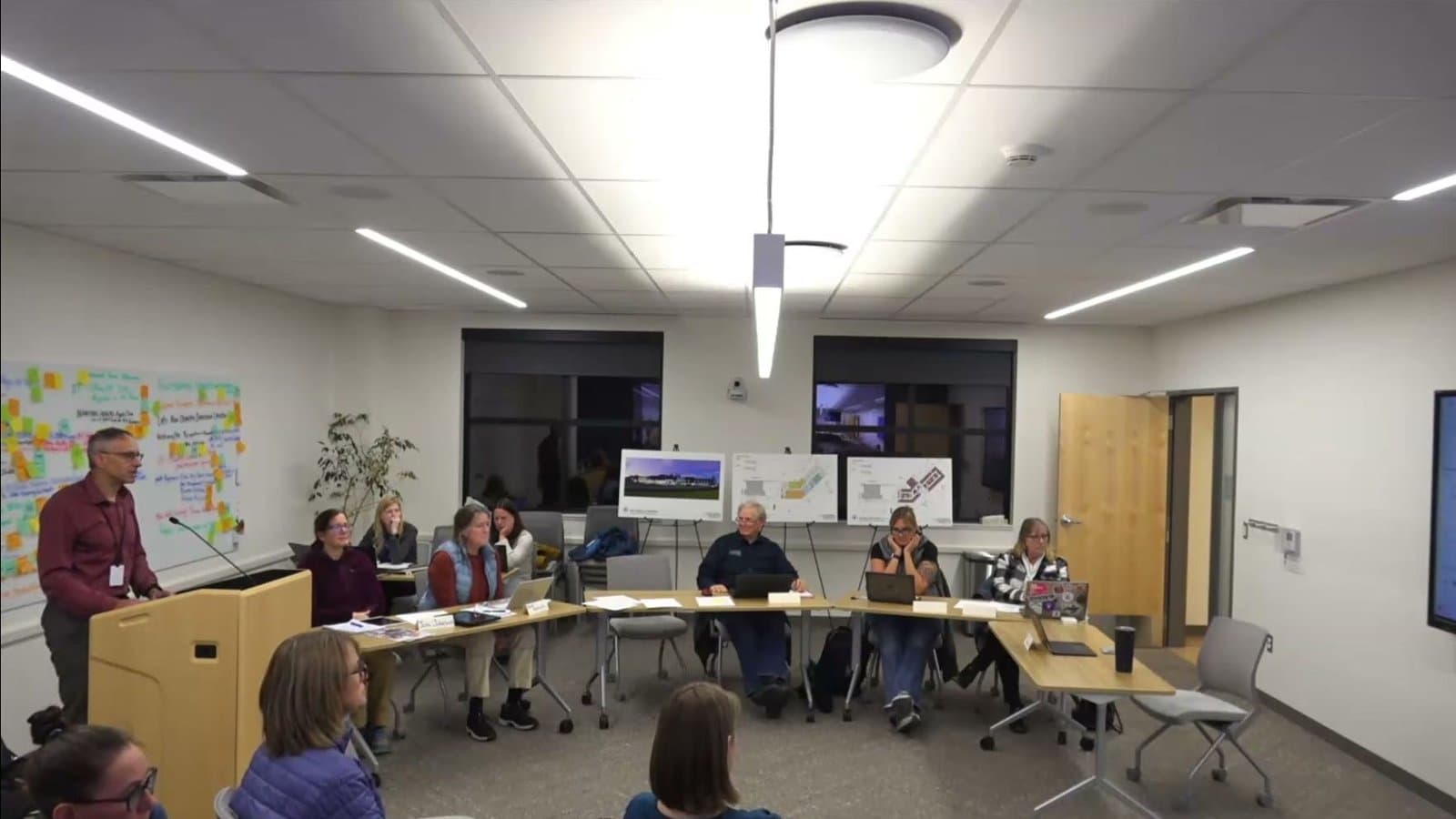
No audio detected at 0:00
Um, and it is 5:30, and I am going to call the meeting to order. Sheena, if you could call the roll. Board President Cook is absent. Board Vice President Lagoudakis, here. Board Member Stratton is absent.
Board Member Khan, here. Board Member Roberts, here. Board Member Johnson, Here. Board Member Kurnick. Here.
And do any board members have a conflict of interest or a potential conflict of interest with respect to any item on today's agenda that should be disclosed?
Hearing none, we'll move on to an approval of the October 29, 2026 Hospital Board meeting agenda. Do I have a motion to approve? Motion we approve the agenda? Or not the minutes? September agenda first.
Yeah, yeah. Oh, the agenda. Yes. Okay. Do I have a second?
I'll second approval of the agenda. It's been moved by Jim and seconded by Joni to approve the meeting agenda. Any discussion? All those in favor say aye.
Hi. And you're going to have to speak up because I cannot hear you in this room.
And is there any opposed? All right, agenda approved. Approval of board minutes. Do we have a motion to approve the board minutes from September 24th, 2026? Move to approve the September 24th, 2026 minutes.
Second. It's been moved by Joni Johnson and seconded by Jim Rogers to Approve the Hospital Board meeting minutes from September 24th, 2026. All those in favor? Aye. Opposed?
All right, moving on to visitor comments. Do we have any visitor comments and board member comments? To start out, we would like to welcome our newest member, who took her oath of office this month. Welcome to Janet Kernbeck. Thank you.
Good to have you on board. It's very interesting being on this side, and I now can say I appreciate your guys' reports, like, a whole lot. They are very important.
Anyone else have any board member comments? I have just a quick one on the PMC manager work session that was held in early October. Just that there was great energy and that time, dedicated time, allowed folks to both brainstorm and reflect on challenges or changes. So we started from a place of recognizing that all departments are interconnected and dependent, and the group touched on focal areas for future work, none of which are surprises as they are ongoing. Recruitment, PMC's new website, and optimizing use of both campuses while working toward a new facility or just a few.
The need to be flexible and be able to share resources was a theme throughout. The use of AI as a tool was discussed to share best practices across departments. And lastly, Phil challenged staff to come up with ideas that would revolutionize healthcare, which— to which there were no shortage of ideas. But I really appreciated being in the room. Thank you.
Any other comments? All right, moving on to committee reports, and the first one is the Resource Committee, and I have the committee report. Some key points from our meeting are that the clinic patient volumes are strong, and we performed 15 MRIs this past month, and emergency visits remain steady. In contrast, rehab numbers were down, although our two traveling therapists have now moved on, so that affects the numbers. Home health numbers are down and in-hospital days have been fairly light.
Long-term care census was down, although there have been some rebound in numbers, bringing the resident number to 12. We do anticipate there will be a drop in revenue due to changes in Medicaid and Medicare in the future, though. Outpatient revenue was higher than normal and net patient revenue is okay, as is 340B revenue. We do expect changes in that program as well, however, due to the upcoming Medicare changes. Expenses this month are slightly above our target budget, and we've made some drug purchases that added to expense.
There are also ongoing repair and maintenance issues we are discovering and addressing. And it was noted we had a drop in our investments, but we do hope to make up for it. There was some conversation about our current investment strategy. It was reviewed and reapproved in the past 12 months, but we may want to take another look to determine if we're being too conservative. Our cash reserves are strong and our long-term investments are solid.
We do have some things to work through with accounts receivable, but expect that to lower in the future. There's also been a small rise in bad debts that we're dealing with, and we discussed potential coordination with the VA as one way to expand patient base and address a potential need. And staff is working through the audit and we expect to wrap up by December. We've applied for 4 more Rural Health Transformation Grants, and motions on this agenda under new business address these. We also still have $1 million remaining in the RHTP for telehealth, behavioral health, maternal and early childhood planning.
Any questions or comments on that?
All right, moving on to long-term care.
Report. Did anybody attend?
Joe. Joe. Okay, and we will need a board representative at that next meeting, November 18th. Um, do I want to appoint somebody at this juncture to do that?
I'll be out of town. I'll be out of town.
Would you like to? Sure. All right. Janet will be our long-term. Where's that one at?
Well, it will be on November 18th at 1:30 in the Dorothy Engel Conference Room.
And then the next item is infection prevention and quality and control quality, quality control, I think. Committee, any reports there?
Okay, none submitted. And for staff reports, Jolynn Duddles submitted the swing bed skilled case management report. Any questions or comments on that? I have a question.
I saw her report had a 7 out of 8 patient 3-day skilled days, or, you know, acute days being qualified. Is, is staff being watched? Yeah, and I'm not sure that they didn't. I think they just, they verified it. Okay.
I just didn't see that, that she had it addressed out and it was like, I was curious about that. And then she also had one. There was a question about skilled ICF and a swing ICF, but it didn't look like long-term care was full. I was just curious about an ICF on a swing status.
If ICF isn't full, that that was addressed somehow. I don't need to know an answer. It was just that that was—. Yeah, it was, it was, it was Okay, those were the two questions I had. Okay, next is Chief of Staff Dr. Selena Burke submitted a report.
Any comments or questions?
And the clinic report, Kelly Zweifel submitted a written report. Thank you. Yeah, please.
Okay, just to give a quick overview, you know, community engagement. We worked with public health, with nursing and clinic and public health to do a flu shot clinic here on October 16th. Worked with the school quite a bit to do sports physicals. And you guys hear me? I'm not sure if that's right.
The room audio actually picks you up. Okay. Yeah, microphone is not—. Okay. We worked with the school for sports physicals and wrestling weigh-ins.
Direct Primary Care went live in July, so we have patients enrolled and we're excited. It's still new. We haven't got a lot of feedback yet from the patients themselves, but getting them enrolled and making sure the processes go well.
We continue to use— have hypertension be our quality project, so we're monitoring our hypertension control for patients through the clinic with each of our providers and continue to hope to make some improvement there. So we have some good reports now and we're following it. Now we wanna do some action items to really see some improvement there. We continue to monitor our access to care quite a bit. It's something we measure daily on the number of same-day appointments we have so that we hold enough acute care appointments.
So if someone's sick that day, we have enough availability for them to get in. And then just our other thing is just kind of maintaining and working towards recruiting a physician. So we've been using, we still haven't filled a position since Dr. Morgan left. We have quite a few locums we're working with, you know, some of them we've worked with for a long time. They come and fill the gaps and fill on-call, but definitely still looking to recruit a physician.
Any questions? I have one. Benchmarking on both the hypertension and the diabetes. Did you— are you going to like— because I look at it and it's a great report, but I wondered if there was a benchmark at all. Like what we're going to reach for?
Yeah, what you guys are reaching for. And I'm not looking for any answer. I'm just— yeah, you know, it'd be nice to know benchmark. And then I had one more, one of your last ones. I can't remember what it was.
I didn't write it down, but it was a great report. I really appreciated the information. Thank you. I think one thing too that we noticed, like, in right there, our clinic visits in September, we had 880, which is like 100+ more than kind of our average. We did have dermatology here during that month.
So, We see about 90 to 100 patients with just him coming. So that's probably what that is. But the thing we really want to work on, which we haven't made big movement on, is our no-shows, which is the last column. And, um, uh, yeah, and I mean, it's not higher than what other places are. I mean, it's kind of a common, but we, but my experience is it was always pretty low here when we first put some of it's just our transition to our EHR and some of the changes, but we're trying to improve it through text reminders and other things.
So that's something that we're working on, calling patients that we know are, you know, often no-show and giving them reminders day before, day of. And that takes a lot of manual staff work, but it's worth it. We want to see improvement. Excuse me. Kelly, I wanted to ask, because that was actually one of the questions I had, but is that with those—.
Like, it's been an ongoing—. Yeah, so there's already Text reminders happen automatically for people if they book their appointment more than 48 hours in advance, but if they had booked it within 48 hours, it doesn't automatically go out. So that's where we have to do more of a manual reminder where someone calls them and we're working towards being able to text people outside of that system, but that's still an ongoing project. So it's still kind of a work in progress too, but we have started over the past couple months making efforts towards that and staff, you know, saying, oh, I forgot to call that person, you know. And so some of those things, you know, to do, but we'd like to automate it more and improve it.
Any other questions? Thank you very much.
Community Wellness and Public Relations, Julie Walker. That's all.
Okay. Well, good evening. If there's any questions, I'll take questions, but just a couple highlights in the report. Our community wellness department oversees our employee wellness incentive program. That continues to go well.
We've got 61% of eligible employees participating in the program, and it's been going really well. As far as community engagement, we have recently begun offering CPR and first aid classes to the community. This is something that Becky Katie Turland was previously doing on her off time as a volunteer of the fire department, and we're able to bring that in-house. And so she doesn't have to take PTO to go teach a class that we should be doing here. So that's been going really, really well.
And she's also been spending a lot of time doing—. Partnering with PIA to offer a class called PC Cares. It's a talking circles series that focuses on promoting Positive changes and preventing high-risk substance use in the community. So it's kind of community-based prevention work there. They have another series that's starting next week.
So if that's something that you or someone, you know, might be interested in attending, please reach out. Um, and our Tai Chi program continues to go well. We will be ending that grant. Um, that 4-year grant for fall prevention ends April 30th. And so we've been working on sustainability planning to be able to continue that class afterwards.
Part of that is moving our class up here rather than renting the dance studio. And we've got now 3 instructors trained. So we're looking at no problems with maintaining that class. And the bingo size program will be transitioned fully to the borough under Parks and Rec. They've been leading it, but we will let them completely take it and continue that on because that's been a really great community class as well.
Kelly mentioned the hypertension project. I just wanted to follow up that part of our 3-year tobacco grant that we were awarded will also focus on hypertension. So we're partnering with the clinic as well as the hospital side on changes around hypertension and improvements facility-wide. Any questions? Did you want to address the art at all?
Oh, sure. If you haven't seen, the first piece of art has been installed. It's just around the corner. More to come soon. We have 5 outstanding pieces from our procurement project that are all commissioned pieces, and they should be in in the next couple of weeks.
And then we will decide where they will live within the building and continue on filling any gaps that we identify for art. But it's been a really fun project thanks to Cindy. For participating in that and a few others that have been part of that. It's been a community-led or a community group. So we have a couple community members that are not affiliated with the hospital that are on that committee that help select the artwork.
Yeah, thanks. Thank you.
Next up is youth programs.
Hey there, I submitted a report. I also provided you all printed copies of the report that generally goes to our advisory committee. Their copy will get beefed up a little bit before we meet on the 9th. Highlights, I guess, programs continue to grow. There's some fun facts in that printed packet for you, but we served 230 or filled 230 enrollment slots this summer.
Which is huge and very exciting. With this also comes additional staffing, so I really want to highlight my staffing team, in particular my high school staff and some of my younger staff members who have taken on leadership roles and are now leading program, which is incredible to see their development. Gavin O'Neill led our fly fishing camp this year, along with— I was there with him, but I kind of let him just take the driver's seat. Eli, Gavin, and Maddie led our paddle camps. Again, I got to enjoy the whale show and be there in case, but they ran it, including saving me when I had a surprise wet exit while trying to race a child.
So they T-rescued me. This is a great reminder for the kids that even with training, things happen. And Noah Powick ran our orca clubs and did a phenomenal job with that. And so just kind of this grow our own model And then looking to the future and continuing to grow, we had 12 mentor-in-trainings this year. Last summer we had 5, and we had lots of other kids who were interested.
We just didn't have capacity to take them all on. But just knowing, like, these kids are getting that opportunity as mentor-in-trainings, helping with our Forest Candy program and our younger Kinderskog program, and then hopefully we get to hire them is pretty cool. It makes our life easier when we go to onboard them. Less training involved because they've already been doing it. So pretty exciting stuff for us.
I really want to highlight as well, we were incredibly fortunate to receive Rasmussen funding last winter. And we purchased a wild amount of gear, and it is not often we can receive grant funding to purchase gear and things. So we were able to get some adaptive equipment. So now rather than a reaction to an enrollment of a student, we have an invitation for it. So being able to get more kids into the Out, which is awesome.
We purchased all of the gear we need for expeditions and overnights, which allows us to build our capacity and host those on our own now. We partnered again this year with Onward and Upward for our kayak expedition, but we got to use all of our own gear. Which in itself also saved quite a bit of money. So, um, huge thank you to the Rasmussen Foundation. It was so much fun to pick and choose all the cool stuff that our kids get to use.
Um, and then the other highlight I think, um, that's worth noting is our sponsor, Escogee Fund, which we started this spring at the suggestion of Chris Norris, who has been a tremendous advocate for our program. And right now we have just over $30,000 that have been raised for that fund. Low barrier scholarships for families. They fill out a 1-page application. I approve it pretty quickly.
And the really cool thing about this fund is just about 40% of it is individual donations from people, which I think is really cool. So sometimes it's $100, sometimes it's more, but all of it goes directly back to kids and making sure we're reducing barriers. So that is awesome. I have so many highlights. Please pack it out.
Highlight this one. So we did host our Wild Trails Bike Club again this year. We had a couple different sessions of that. Again, Noah led one of them. I led the other one, but especially with the Rise and the e-bikes and e-scooters.
Keep my opinions on them, but we thought it was really important to be really lean, really heavily into safety practices. And so during both of those sessions, We parked our trucks and had the kids practice, like, going around a parked vehicle, watching for a driver opening their door, watching for brake lights. We were also able to give kids MIPS-rated helmets through our helmet project, which I've requested additional funding to continue to purchase MIPS-rated multi-sport helmets to give away for free. Some of those helmets have now gone to the medical center for hand— for positions to be handing out during visits, which is awesome. We're able to hook kids up, adults up with helmets relatively quickly, including if there was an accident and they have to go in, we can give them a new helmet right away.
So I'm really hopeful we can get some more funding to keep that project going because it has been huge. We've put hundreds of helmets on hundreds of heads and it's kind of a point of pride. So, calendar is built for summer 2027. It's very exciting for me. Any questions?
No, but I'm glad to hear about the helmets because I know that the fire department is working on some safety training for the students. And the— so some of our funds have come from, um, the Fire Association, um, and then the Department of Injury Prevention had provided quite a bit of funding at one point, as well as the Alaska Community Foundation, before I was even affiliated with medical Center. Um, that's kind of how this whole thing started. I'm a huge advocate of helmets. I think it's a really simple thing that you get to do, and then you can go do some really, really fun stuff with just one thing strapped on your head.
Um, so hopeful to get more funding so that we can keep making sure kids and adults have the helmets that they need to do the activities they should be out doing. When you're working with the scooters, are you teaching them to stop at stop signs?
We have actually an e-bike and e-scooter policy that we don't allow them at programs, so I can't actually teach them how to do it. I can teach them how to ride their bikes safely. You won't see very many of our Kinderskag kids on e-bikes or e-scooters. I was going to say, I think you have to be 16 years old to legally—. That is the legal requirement.
Thanks for pointing that out. That doesn't necessarily mean that's what happens in our community, but that is the law. We're just trying to make sure the kids are safe. That's right. All right, thank you.
Uh, Jennifer Wood submitted a Food and Nutritional Services report. She's out this week, she's at a conference. All right, and Home Health, Ruby Shumway submitted a report.
Brandy's filling in. I'm filling in. Okay, good evening. She gave me a quick little overview. Um, so the Home Health Department and Community-Based Services, we remain very stable and continue to get out into the community.
We have new staff on board and we have expanded community programming through the Cedar Social Club and thanks to Kinderskog, they have stopped in a few times and they have so much fun. It's such a great multi-generational program when they can come in and visit with our elders. So we're also seeing a very large growth in senior service demands, and I think with the oncoming changes that we're going to see with some of the Medicaid, we're going to continue to see that with the aging population of our region. Of course, we're going to also continue to see this influx of adults needing senior services for their aging parents. It's just something I think that's going to continue to grow and we're going to see more of.
So Grant funding remains critical in supporting programs in our department and also expanding our case management services into Wrangell. And we're in the very early stages of potentially expanding the home health service into Wrangell and are working to build that staffing capacity to support that effort. And overall, all of the visits remain very strong in our department and quality improvement initiatives continue, and the department is focused on both sustainability and future growth. And we've seen in the last 2, 3 days, we've seen a big influx in referrals. I think we've had 5 in the last 3 days, so we've seen quite a few new referrals come down.
I think that's kind of how it works. We just kind of see this ebb and flow. Yeah, our staff is very busy. So yeah. I just wanted to ask about the wheelchair access van.
Is there a long-term or short-term plan for acquiring that? So we have submitted a request to Senior and Disability Services for— they have a kind of a one-time funding opportunity, and it has to be used for one sustainable project that doesn't require it to go through year and year over the years. So we have asked for that to be funded by this. We're waiting back to hear from them, and we submitted the the outline of it and what we would be requesting. So it would be a wheelchair accessible van, more like a minivan, but it would still haul a couple people and a wheelchair.
So that's what we've requested. We're just waiting to hear back from them. Good. So, yeah, that's just one.
All right, thank you very much. You're welcome.
And then is Justin online? He's not. Okay. Yeah, he's not this time. We do have a new facility report in our packet.
And then quality, Stephanie Romine. She's on PTO, but I was wondering if, Jennifer, you wouldn't mind updating on the Level 4 trauma thing? Sure.
So part of our quality improvement initiatives are to stand up our Level 4 trauma designation, which is a designation through the state. It comes with a long list of requirements, um, that some of which we've met and some of which we are working toward. Um, back, I think this late spring, early summer, we had submitted a request for a consultation. And so they came like, see, week before last, the very first part of, or the end of, end of September, um, the program The trauma program manager, and then Dr. Brownson, who is the trauma medical director, both for AAMC and then the state trauma program. So they came down and did a consultation, which is basically looking at kind of a gap analysis of where we are, where we need to be.
And that went really well. They were really impressed with where we are today and And we feel like within the year, you have to have a year's worth of case review and active process improvement in place. So we believe we need this time next year, we should be able to have our certification, basically survey, and then receive our trauma designation. So in that, there's a lot of training involved, some equipment involved, and a lot of just processes and policies. And, um, anyway, it's things that we're already working on, but it, it really— that trauma designation is, is evidence-based to actually raise the level of care just because we have really firm, um, protocols and guidelines and, um, and very recent training.
So any questions? Do you have a trauma register here, or—. Uh, Elizabeth Poole does that remotely, and she's done that Yeah, for you. Nice. So you guys get that report from her too.
Nice.
All right, thank you very much. Next up, Rachel Kandel and infection prevention. Any questions there?
Hearing none, we'll move on to the executive summary. You are on, Bill. All right, try to do this without— you can scroll up and you can see it over there. All right, thank you. Um, so first thing is I want to thank all the staff and, uh, for being at the manager work session, and it's a lot of effort to put together.
And thank Tina for really helping put that together. This— we left this on the board just for you so you can see all the work that was put in for that day and, and the conversations that occurred. Those are I think very meaningful to do and really sort of set the stage for the next year looking at our priorities. What are some of the things that we did? A couple of things I noted in my report that were just interesting on the growth.
The board has given me direction to increase behavioral health services and we know we mostly through Dr. Sonkus and also with Pat, availability and actually about 50% increase in the last fiscal year compared to the year before. And that's just increasing a lot of telehealth activity there, but also Dr. Sunkist comes on site. And then also with rehab, so we have had really strong increases in our PT, OT, and speech programs. So it feels like they're— it feels like we could just have more and we're just running out of space. But the second gym that we created in that original area where they had offices, it has been very successful.
A lot of positive feedback on there. I want to commend Wolf, stepped out. He's dealing with a refrigerator issue on the other campus. But commend Wolf for really helping put that gym together. I don't know if you had a chance to look at it, but it looks really nice.
Transformed that space quite a bit.
The big thing on a, I guess, the conversation piece that other than the Level 4 trauma is RHTP, which is the Rural Health Transformation Program. And so we have in your board packet, you have 4 or 3 projects to approve and officially accept those grants for approval so that We want to make sure we get that on the record. And also, in addition to that, we have two resolutions. One is related to the Level 4 trauma that's required, and the second one is, as I mentioned at the last board meeting, is to, to go and apply for a housing grant. Doesn't guarantee we'll get it, and it doesn't obligate us to anything.
I'll bring those back to the board to accept those, but it's just a necessary part of the grant. Other things, maybe I was at the— I was invited last weekend. I went, traveled to Anchorage. I was invited to speak at the summit, the aging summit on aging that the state put on, and I spoke on telehealth and just gave a historical perspective and some of the things that we're doing here at Petersburg Medical Center, which that was a great opportunity to connect with staff, connect with the state. Seemed like it was well received and seems— let me scroll down a little bit more.
Remind me what I'm— what I've been doing on my day-to-day basis. Keep going down. I think, you know, some of the highlights I think worth mentioning are just the volumes in the ER over the summer. If we scroll down to those graphs, you can kind of see the— on the right-hand side there. It's kind of coming back down.
You can see the, the downward trend here in September. But just to give you a sense of those volumes, I mean, those are— I apologize. Um, there are multiple months back to back where we're seeing well over 100, but not only that, but 120, 130. Um, and when I looked at— did a 30-day look back on a lot of times, it was, it was hitting 130 on a regular basis. And that is a lot for our summertime.
So, and the reason I mention that is it puts a lot of strain on our medical staff and our staff and nursing staff as well, but we're starting to see some of that as well. So we want to just make sure we're recruiting for our new physician as much as possible, which is a huge challenge, and I'm grateful for the locums stepping in on those. Coupled with that, we have a list of specialties, so kind of when I look at those, I'm like, wow, that's, that seems like quite a lot. So I'm very proud of that. We have Dr. Harrison from Wrangell who's come over a few times now, and he, he does, he actually is a locum, but he does fill in as an endocrinology clinic.
So that's, we're expanding those services with him. We're trying to expand and talk to him about telehealth as part of the telehealth project, the RCP project. So that's very exciting. We have Dr. Sonkus, like I mentioned, psychiatrist. And the model that, you know, I presented at the state really is this bridge between having telehealth access and also having onsite clinic visit.
And coupled with that and also including that within our continuum of care model is the success of some of the telehealth projects. We also have Dr. Hyre doing telehealth services remotely, and Dr. Raster has come onsite. He's been here forever. He, um, uh, he's, he's also came in September. Uh, Cammy Kapp, Dr. Kapp, our optometry has been coming in.
She was in here in September as well. And then of course, Dr. Taggett and, uh, is it Jenelyn? Jenelyn. Mm-hmm. A CRNA.
Uh, they came and did scopes. Really amazing results. Super busy, uh, month. Wow. I don't think that's the right number of colonoscopies there.
Right. For the year. Oh, for the year. Thank you. For the birding.
I was like, great. Since he started. Yeah. Okay. Yeah.
Excellent. I say that does sound like a lot. What's that? Master, what is his specialty? Oh, I just assumed everyone knew him.
ENT. Huh? ENT. Oh, he is. Okay.
Yeah. Yeah. And we're working with ortho to, you know, I've been working with ortho, you know, orthopedic surgeon to come in from Juneau as well. So we're trying to get, build out some of the specialties. Awesome.
That's Dr. Taggart was here and the team was actually very exhausted that day. And they smile just one second.
Yeah, so really great opportunity. And I think that's it, uh, for me. Um, uh, med staff, just so you know, I think, uh, Katie had mentioned it in the youth programs, but for the helmets, but medical staff wanted to get a letter together, which I'll, I'll, I'll, um, initiate, uh, to medical staff, uh, for some of the, the e-scooters and e-bikes in town, just that we're seeing that as a safety issue. Um, would like to present that to the safety committee. I know Shared Coalition is doing something similar.
I don't know if you guys got that letter. Yeah, we got a letter signed today. So, so just making sure that we're, um, you know, uh, our medical staff is concerned about some of the accidents occurring and some of the, um, you know, safety issues are just in, in the community in general related to those. So Putting a letter together to put to the borough. I think it's called the Safety Committee, correct?
And Dr. Still sits on that one.
So, oh, financial ones. Jason will go over those, but we're really stable with the ARD is down, down at right under hovering right underneath 60, goes up and down, which is excellent for the last quarter. We've been seeing that, if not more. And that's just, to me, is just a great example of the effort that is done in keeping those low, especially now where, you know, where claims are hard to recoup and making sure that we're staying on top of that in a timely fashion. So those are excellent metrics.
Okay, thank you. Any questions? So your ER report, that's great. I was Wondering on the medevacs, because I know that there's been a lot of medevacs. I live close to the airport, I hear them, and I know that that's really a lot of work for the nursing staff.
It'd be interesting to see that statistic. Sure, I can add that in there. Elizabeth, who does those too? Yeah, I don't think we've actually had more than usual. Really?
We do about one a week. One a week, that's exactly right. It's right around 50, 55 on an annual basis. It has not changed much yet. Yeah, but we look at that to trend, but it's very consistent.
Right. Let me ask just out of curiosity, how many patients can you see in the clinic with the total staff if you were fully staffed? I mean, right now with the people that you have, how many slots are there? I think it's pretty max because you have— we have nurse practitioner, We have 2 nurse practitioners and a PA, and then we have 3 physicians, but you can't all work in the clinic all at the same time. So it ends up becoming a space and capacity issue with other staff.
So, so your support staff, you're still limited by support staff. But the volume is, is, is what's— and the time off and, you know, those kinds of things really weigh in when you have— when you don't have enough to pull from. Yeah, and, you know, there's a lot of complex patients. There's a lot of complex patients. So you can't really estimate it just due to some people might need this long.
Some—. That's right. Okay. Yeah, yeah, yeah. I mean, you got a little lower 48, they're like every 15 minutes.
Yeah, patient, you know, that's not, you know, it's not necessarily good care. So, and you keep, you keep the number of slots open every day for sort of immediate requirements. Yeah, Kelly, the urgent care, the walk-in is always available. Yeah, absolutely. So you're always leaving some slots for that.
But we do measure the third next available appointment is one of the things that we measure. That's a standard, uh, it's a typical standard when you look at that, and you want to be within 2 weeks. That's sort of the benchmark on that standard, and we try to look at that by provider. But as a facility, we definitely meet that, that mark. But by provider, we try to keep that within the next— well, oh, there, there you go.
There you go. So we have 10 days or— yeah, Jennifer. Well, I was just going to say, sorry, Seth Wynn, who is a nurse practitioner, is working also in the clinic. And so I think the number of patients would be roughly the same that are being seen now. It's just there's not a physician covering who can cover the same things as a physician.
Because they have a number of people. Yeah, he's, you know, he would, if one physician comes, then he wouldn't be working full-time. Yeah. Yeah. One more question.
Telehealth, is it covered by insurance and Medicare? It is. It is. Okay. Wonderful.
And the exception is Dr. Hyre when she's internationally. So it's Medicare rules. We're not allowed. So that's private pay. We had to change that.
Oh, when she's in—. That's correct. When she's back in the States, you're allowed to. We had to get a pretty strong legal opinion on that one. That was an interesting conversation.
And I just wanted to give an attaboy for the AHA Innovation in Patient Safety and Quality Award. Saw that. Yeah, yeah, there's a poster in the long-term care solarium if you want to see it. It's pretty— might check that out.
All right, all right. Thank you, thank you very much. All right, Jason, financials is the next on the agenda. Good evening, everyone. Hello.
Sure was nice to be, uh, at the leadership retreat here a couple of weeks ago and Too bad we didn't have a picture of the fish. I, you know, after 3 years of coming there, I actually finally was able to catch one. So a little embarrassing to say that, but I'm glad that I was pretty excited. So getting into some of the numbers here, so clinic was up about 1,000 visits for the month. You know, the benchmark that we kind of look at for a rural community is you take the population of that community and you times it by 3, And that's how many clinic visits you should have over the course of the year, and Petersburg has been hitting those numbers.
I would say that our clinic is, is well supported. The community has a lot of confidence and it's used quite well. Emergency department visits are hitting their target as well. You would take your population and divide it by 2, and that's how many ED visits roughly should be experiencing in the course of a year, but Radiology procedures, 261, up just a little bit from the previous month. As, as we come out of the summer, we get into the fall, typically we see the emergency department visits decrease and the clinic visits go up as we see some flus and some other illnesses and people are back in school, stuff of that nature.
So rehab services, you can see, are down just a little bit. And as was commented by Cindy, home health visits down a little bit. Emergency department visits, still, you know, normal. It comes down off of kind of the high for the summer. I think 125 was an exceptional number for summer, but as we get into the winter months, this typically drops down, I think around 60.
Observation days, 3.8. Acute has been fairly light for the month, acute 23 days, so a little less than 1 per day. Swing bed, very few. And then long-term care has been a little light as well. So as we move down into the income statement, you can kind of see this here that the inpatient revenues were quite a bit below budget due to the low census.
Outpatient, a little bit above budget, I think due in part to the GI clinic that we had. Long-term care visits down a little bit, and clinic doing okay above budget on that one, and home health coming close to budget. So about $187,000 below the budget for the month, or the target, if you will. Net patient revenues, we didn't do any kind of a special adjustment. We'll finish the cost report here in the next couple of weeks, and by the time we do the next set of financial statements, we'll have a better understanding of where The, the cost report, you know, it's been a big question mark for us because we finished the work building, we got that depreciation, we anticipate Medicare will owe us quite a bit of money because of those additional expenses.
So net patient revenues about $200,000 below budget due to those changes in volumes. And then total operating revenues about the same. 340B, not quite hitting the target. That's due to some changes in Medicare that happened back in January. That's some more coming up the first of the year.
But the other grants, things of that nature, the purse, USAC, in-kind running consistent with what we would see in other months. Expenses for the month running about $160,000 above budget. In that area. Payroll came in just a little, little bit above budget. Contract labor about right on, but we had some supplies, some purchase services.
The supplies is due to some medication, some infusions that we had, and the purchase services is due to the accounting. We're in the middle of the audit, so we have some costs associated with that. Repairs and maintenance, different, just different unpredictable breakdowns in the facility, otherwise predictable. The stock market turned south on us during the month. It'll turn back up in a couple months, so probably a good time to invest.
No audio detected at 47:20
And so reporting for the month, about a $552,000 loss. Not to be panicked or concerned about that. This is typical We, we look at the financials over the course of the year and really rely upon the cost report. Year to date, we're seeing about a $42,000 loss. We've had some stronger months already in the year, even though there's only 3 months that we're reporting for this fiscal year.
So I'm not concerned.
And looking at the balance sheet, cash is still running fairly strong. What we have in our operating account and our short-term investments, long-term investments. Accounts payable continues to be paid on time. No anomalies to report in our balance sheet accounts.
Going through a few statistics here, contractual adjustments running a little bit lower. Typically we see this around 18%. Our operating margin, as we indicated, because of some low revenues, low patient volumes in some areas, a little rebound. Total margin, a couple years ago we were reporting pretty high margins there because of the grant revenues that's coming through, but we've used all of that. Days cash on hand, 111.
Days in accounts receivable net, 53. Gross is 65, so we do running a little bit higher than we were. We'd got down to the high 50s there a little previously, but we've had some insurances that we've been in negotiations with and held some claims, had some pre-authorizations, some enrollments that we've been trying to get processed for some long-term care visits, things of that nature. So all explainable, and we'll— we should see that turn and come back down here in the next few months. So I won't go over grants unless David wants to.
The investments, as I indicated, it was just a downturn in the market, which can happen. But, you know, we see this over the course of the years that one month it's down, the next month it's up. Cindy did a great job of explaining the conversation and discussions that we had in the The Resource Committee, the audit cost report will be wrapping up here shortly. Audits or the cost reports due by the end of the month and the audits due in December. Nothing out of the ordinary to report on that at this point.
So, okay, any questions on the financials?
I had a question on the And this would be for David. The HRSA grant that we didn't get funded, did we get a reason for being rejected on that? Um, hello. Uh, we have not yet. Um, I expect that, um, I expect that we'll either receive, um, reviewer scores in, in a few weeks, or we'll request them.
It's common for it to be a month or 2 delayed. Well, and I don't expect that we're going to get every single grant, but sure, that one would have been a nice one to have. Yeah. All right. Any other questions?
I have— go right ahead. I have one on supplies and medications. You talked about we had some expenses on that. What is the length of time on recoup on that? Is that a month or, uh, 6 weeks?
Or, you know, when do you look at recouping some or all of it?
See that show? You talking about the pharmaceutical? Pharmaceutical mainly. Yeah, Jason, he's, uh, talking about the, the supplies and the, um, and like, yeah, chemo drugs, you know, those kinds of things that are Typically when you see those hit the income statement following month, or is that, is that just a—. No, it should be, they should be hitting in the same month.
That's, that's why you saw that the outpatient revenue was, was high. Infusion is an outpatient service, and so outpatient revenue was high and expense for pharmaceuticals was high. So we did capture the revenue and the expense in the same month. The cash flow, so we'll bill that out to insurance and can take about 60 days for us to be paid. Depends on the payer.
Medicare can pay within a month. Commercial insurance, we tend to collect that within 2 months.
Thank you. You're welcome.
Anyone else? All right, Jason, thank you very much. Welcome.
Next item on the agenda is old business, and, um, there is an acute care and long-term care bed purchase request consistent with the approved FY 2027 capital budget. The original capital approval covered long-term care beds. This request adjusts the scope and approved amount to include striker beds and related equipment for both acute care and long-term care, including freight, at a total not to exceed $700,000. And do I have a motion to approve that expense? I'll move.
Second. It's been moved by Heather and seconded by Jim to approve the purchase of long-term and acute care beds and related equipment, including freight not to exceed $700,000.
In all, is there any discussion? The original thing was $700,000 for just the long-term care. So are you— and it looks like you're going to take a loan for the rest of it or something. No, it was— the total amount was always roughly around $700,000 for both. We have— this was going to be either depending on the insurance, the interest rates, if it's going to be leased or financed, or if it's going to be purchased outright, just coming up depending on the factors.
So the Q, we just left off the original one. Yes, that's correct. That's correct. The amount, $700,000. Yes, right, right.
The minutes reflected the $700,000 that was left off on the capital. Yes, that's right. That's why we're redoing that. Okay. And the totals, yep.
All right, uh, so all— well, I guess we need a roll call on this one. It's a financial.
Board Vice President Langudakis? Yes. Board Member Khan? Yes. Board Member Roberts?
Yes. Board Member Johnson? Yes. Board Member Koenig? Yes.
And that is approved unanimously. Moving on to new business, we have Resolution 2026-02, authorizing submission of an FY 2027 Rural Professional Housing Grant application. And Phil has noted that there's a slight amendment to it to remove the words "has reviewed." Oh, okay.
But you have to—. Can I just make a comment? Yes, Joni is the one who identified it, so I just want to give her a high five. Very good. Yes.
All right.
Um, well, we have to, have to say approve it first, amend first, then amend it. So, well, do we have a motion? To accept Resolution 2026-02 authorizing this. And I'll second it. You have—.
Vice President, I'm sorry, there's a little voice back here saying we amend first. I can't hear you. I think we need to amend it first because we're going to be approving the amended version. Uh, you have to— you have to approve it, put it on the table, and then you have— amend it, and you have to approve the amendment, and then you approve the original, approve the whole.
Yeah. Do you want to do it?
You want me to do it? What? No. So you move to amend? Oh, no.
Well, we haven't— we approved it. You first and seconded. And everybody has to vote on it. That's just putting— saying you want to— I don't know. I don't think we're—.
Nobody's going to argue about— as long as—. Okay, we'll make the change. Okay, to approve the amended. So continue to—. I can move to amend Resolution 2026-02 to strike the language reviewed and as reviewed and those three words and the fifth whereas.
And is there a second to that amendment?
Yes. Jim. Okay.
Is there any discussion?
All right. All those in favor of the approved amended motion?
Aye.
And, and I agree too.
I've just completely gotten sidetracked, and that was unanimous, so we don't need to worry about that. And then, um, do we need to do the original amendment, or is it just that we approve the amendment? Okay, so next on the agenda is Resolution 2026-03. Hospital Board support of Level 4 trauma hospital designation, and the motion is to accept Resolution 2023-603 showing the Hospital Board in support of Level 4 trauma designation for the Petersburg Medical Center.
I request that we approve it. I, I need a motion to approve. Motion to accept it.
And is there a second? I will. It's been moved by Jim, seconded by Heather to approve that motion. Is there any discussion? Hearing none, all those in favor?
Aye. Opposed? And that motion approves unanimously. And then we have a review of current hospital board appointments and committees and election of appointment and committees at the next hospital board meeting.
And I'm a little— I'm a little confused there. Usually we do. So after the first board member, or the newest board member, is here at their first meeting, they usually get to look at all the appointments. At the next one, we do appointments. And, uh, okay, so Janet gets to review them.
And as we can see, there's some positions that are open. We don't have someone on long-term care, and Um, we don't have a secretary, so those are things that will need to be voted on at the next meeting. One sec, I was going to say, is there anybody who's interested in being the board secretary? I can do it.
And I, I didn't hear what the other one was. We don't have someone on the long-term care committee. On the long-term care committee, a Joe's infection Oh, okay. Is that one of the ones that Marlene had? Marlene had the— okay.
And everyone okay with that? I don't, I don't know that we need a motion for that. No, we just vote on it at the next meeting is when we vote for president, vice president, secretary, committees. Okay. And then the next item on the agenda is acceptance of funding.
The hospital board of directors authorizes receipt of funds from the state of Alaska in the amount of $1,043,942 for RHTP initiatives, maternal health and early childhood planning project, that's $159,947, behavioral health department launch, $437,542, and telehealth integration at $446,000.
$1,453. I have a motion to approve.
And do I have a second? Second. Joanie has moved and Jim has seconded to approve that motion. Is there any discussion?
No discussion, but I had a quick question, Phil. So the clock starts ticking on the 1 year, like once the funding is received? Yeah. Okay. Oh, Or when is it ticking?
Clock ticking right now. Yep. Okay, we don't get the money till I get this piece of paper. It gets on reimbursement style. Yeah, yeah.
All right, and that is a financial one, so if you can call the roll on that one.
Board Vice President Lagodakis. Yes. Board Member Khan. Yes. Board Member Roberts.
Yes. Board Member Johnson. Yes. Board Member Kernick. Yes.
And that passes unanimously.
And then I'm not showing an executive session here, but we do have some appointments, don't we? Yes, we do. Oh, I see. Here, here, here. I'm sorry.
So can I ask a question? Yes, you may. So do we have a new secretary? Is that, is that in stone? Yeah, voted next time.
Voted next time. Okay. Yeah, because we'll, we'll need to take Marlene off the bank accounts. Oh, that's right. And the investment accounts.
And then we'll need to add, if we've got a new person, we'll need to get signature cards to add that person. So thanks. I just wanted to know if that, you know, when that becomes concrete. Okay, thank you for sharing that. December 3rd.
December, yeah. All right, our next meeting is currently scheduled for December 3rd, 2026 at 5:30 PM in the Work Building Conference Room.
And did you say you were, were not going to be here? I'll be here for that. Yeah, everybody look like they're going to be around. I may— I think I'm out of town for that one. And then we need a motion to go into executive session, consider medical staff appointments or reappointments, and discuss any legal financial concern.
Been moved and seconded to go into the executive session. All those in favor? Oh, will you close that door? Yeah. What's that?
Thank you. Yeah. No, I wasn't going to— I wasn't going to start. In fact, if you want to take a couple minutes break, right ahead. I'm going to go ahead and end the webinar session for everyone.