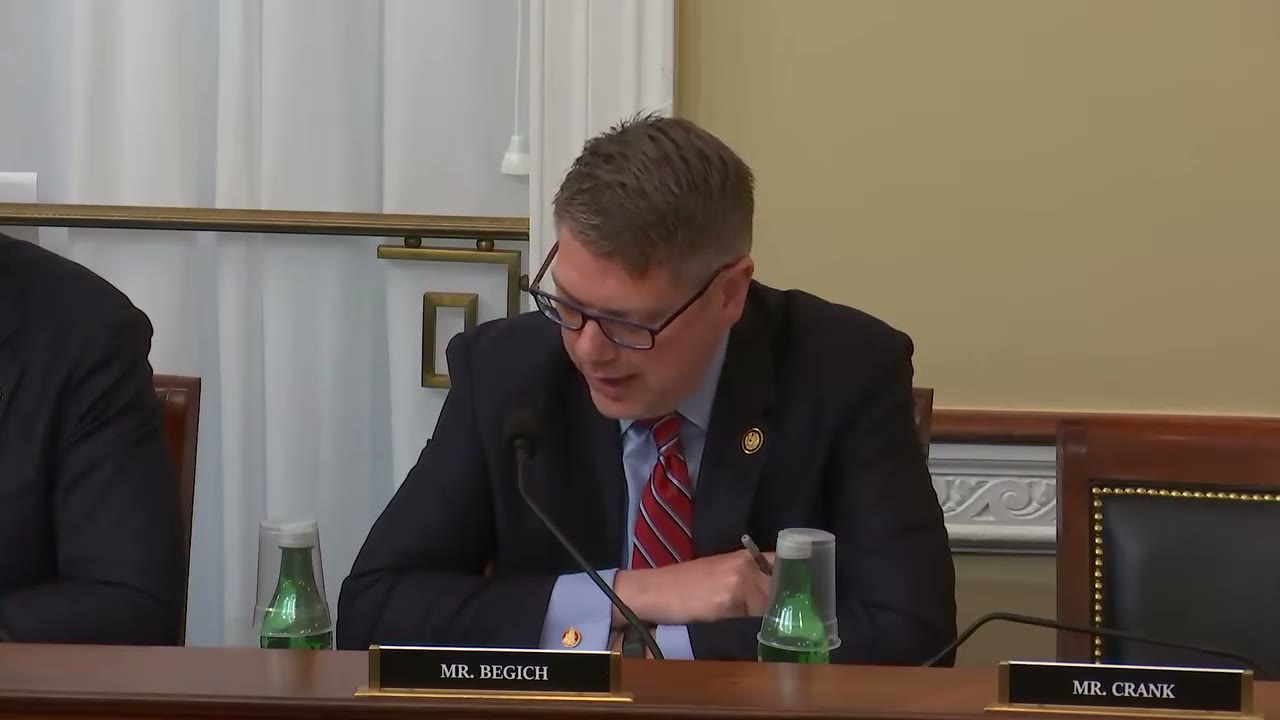
Nick Begich
112:25 - 113:13
"That calculus is amplified in Alaska, where every acre of subsurface and surface disturbance triggers extensive federal review, and remote logistics make each borehole extraordinarily expensive. What magnitude of drilling and surface disturbance reduction have you seen or modeled, and how transformational could that be for Alaska projects where a smaller exploration footprint directly reduces both permitting risk and cost?"
“That calculus is amplified in Alaska, where every acre of subsurface and surface disturbance triggers extensive federal review, and remote logistics make each borehole extraordinarily expensive. What magnitude of drilling and surface disturbance reduction have you seen or modeled, and how transformational could that be for Alaska projects where a smaller exploration footprint directly reduces both permitting risk and cost?”
- Speaker
- Nick Begich
- Timestamp
- 112:25 – 113:13
- Community
- Alaska News
- Captured at
- July 21, 2026
From the transcript
That calculus is amplified in Alaska, where every acre of subsurface and surface disturbance triggers extensive federal review, and remote logistics make each borehole extraordinarily expensive. What magnitude of drilling and surface disturbance reduction have you seen or modeled, and how transformational could that be for Alaska projects where a smaller exploration footprint directly reduces reduces both permitting risk and cost? Thank you for the question, Representative. The purpose of this bill would be to compare the quantum technologies versus the classical technologies side by side and see what benefits that we are getting from the quantum versions. What I can say from experience though is that usually we see orders of magnitude improvement when doing things with quantum technologies.
Related Coverage
The program mapping Alaska's unknown ground expires this year
Bipartisan House bills would reauthorize the USGS Earth Mapping Resources Initiative, which has nearly doubled Alaska's public subsurface geologic data since 2019, through 2031.
 by Maggie AlaskaNewsadded 2mo ago1 min read
A permitting bill could open the federal fast lane to Alaska projects
A bipartisan bill would lower the FAST-41 permitting threshold from $200 million to $50 million, opening federal fast-track review to far more Alaska infrastructure projects.
by Maggie AlaskaNewsadded 2mo ago2 min read