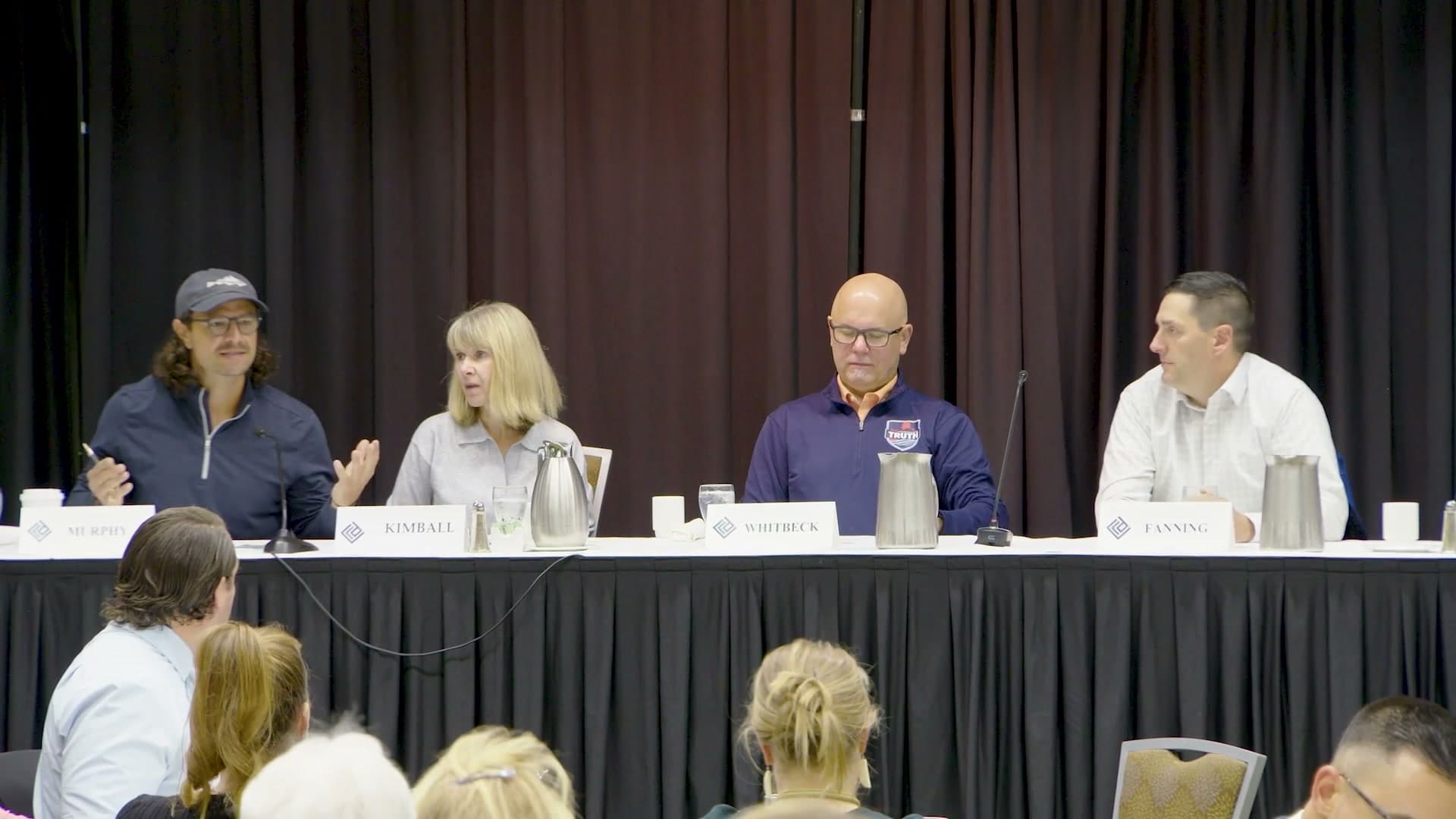
Nicole Kimball
14:05 - 14:37
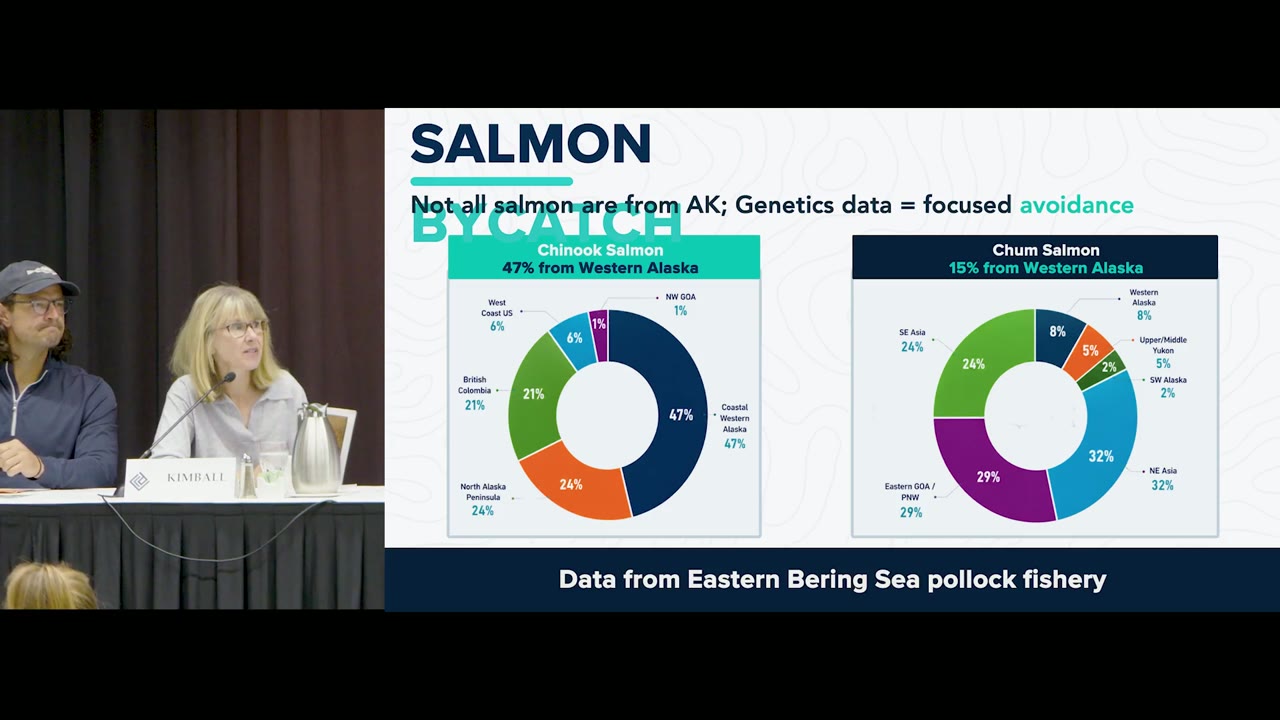
"pretty consistently about half of the Chinook bycatch is coming from coastal western Alaska... for chum salmon, it's pretty different. It averages about 15% of the chum are from western Alaska. The vast majority are hatchery fish from Russia and Asia. And that makes for a more difficult management problem because you're trying to reduce your impacts on western Alaska chum, but you don't care as much about Russian and Asian hatchery fish."
“pretty consistently about half of the Chinook bycatch is coming from coastal western Alaska... for chum salmon, it's pretty different. It averages about 15% of the chum are from western Alaska. The vast majority are hatchery fish from Russia and Asia. And that makes for a more difficult management problem because you're trying to reduce your impacts on western Alaska chum, but you don't care as much about Russian and Asian hatchery fish.”
- Speaker
- Nicole Kimball
- Timestamp
- 14:05 – 14:37
- Community
- Alaska News
- Location
- Alaska
- Captured at
- September 8, 2026
From the transcript
So this is just the Bering Sea pollock fishery, but pretty consistently about half of the Chinook bycatch is coming from coastal western Alaska, and I have a slide that kind of shows the aggregate systems that those comprise. And then for chum salmon, it's pretty different. It averages about 15% of the chum are from western Alaska. The vast majority are hatchery fish from Russia and Asia. And that makes for a more difficult management problem because you're trying to reduce your impacts on western Alaska chum, but you don't care as much about Russian and Asian hatchery fish.
Related Coverage
Pollock official puts bycatch impact on Western Alaska runs at 1.9%
At an RDC breakfast forum Thursday, Nicole Kimball of the Pacific Seafood Processors Association detailed the Bering Sea pollock fleet's 100 percent monitoring, hard caps and new Dutch Harbor genetics lab. The chum caps she cited will not take effect until at least June 2028.
 by Bill AlaskaNews1w ago2 min readAI