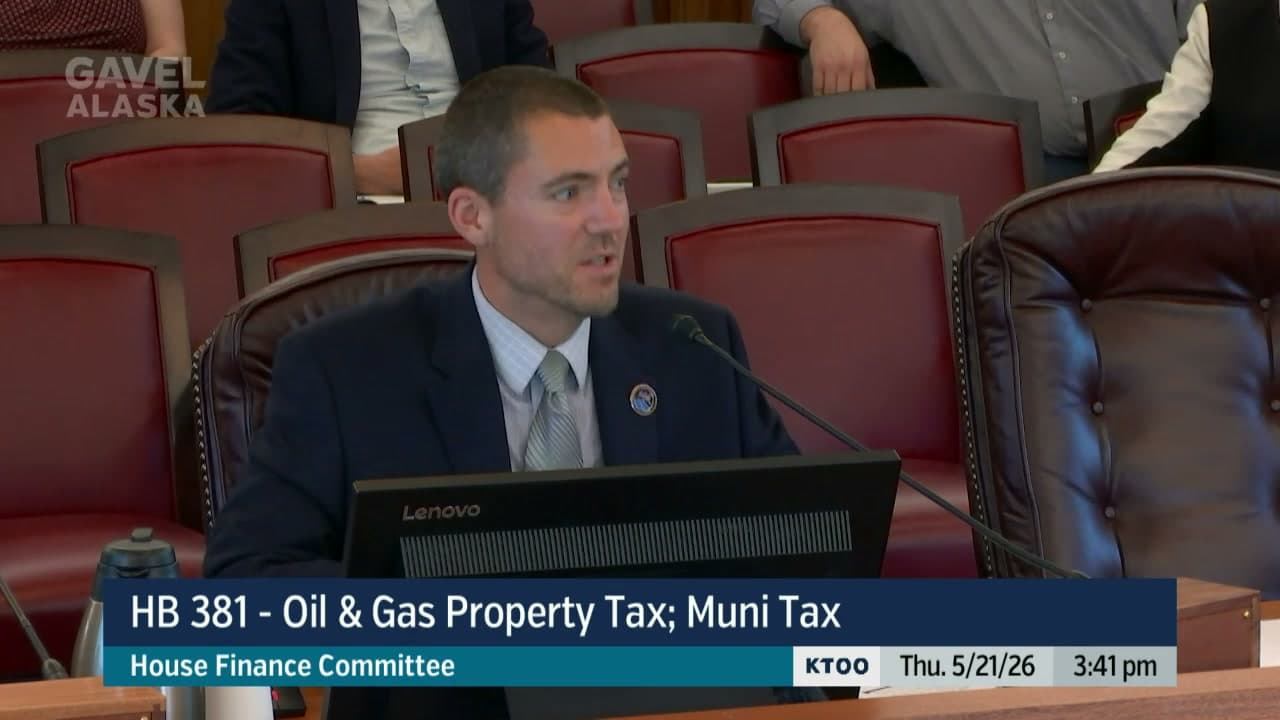
“we're assuming the $46.2 billion real capital cost, a 30% equity share, and 70% debt financed for the project as a whole. And then the state's share of the capital contribution would be 25% of that 30% equity contribution, plus our share of debt financing fees.”
- Speaker
- Dan Stickel
- Timestamp
- 125:17 – 125:48
- Transcript
- House Finance, 5/21/26, 1:30pm
- Community
- Alaska News
- Captured at
From the transcript
To answer the first part of your question about why $4 billion seems low back on slide 8, So it is— we're assuming the $46.2 billion real capital cost, a 30% equity share, and 70% debt financed for the project as a whole. And then the state's share of the capital contribution would be 25% of that 30% equity contribution, plus our share of debt financing fees.
Related Coverage
Alaska gas line faces economic challenge even with tax breaks
Alaska LNG needs $8.48 to $9.07 per thousand cubic feet to break even, but global prices are $8 to $9. • Governor's tax plan cuts state revenue from $29.7 billion to $22.5 billion over the project's life. • Capital cost overruns and producer gas prices pose bigger risks than tax relief can fix. • State could invest $4.4 billion for a 25 percent equity stake.

House Resources gas line bill would cost municipalities $13B under governor's plan
Governor's plan cuts municipal revenue by $13 billion, House Resources version cuts only $2 billion • Governor replaces property tax with volumetric tax statewide, House Resources keeps property tax on facilities • Both versions reduce state revenue, project remains economically challenged at current market prices