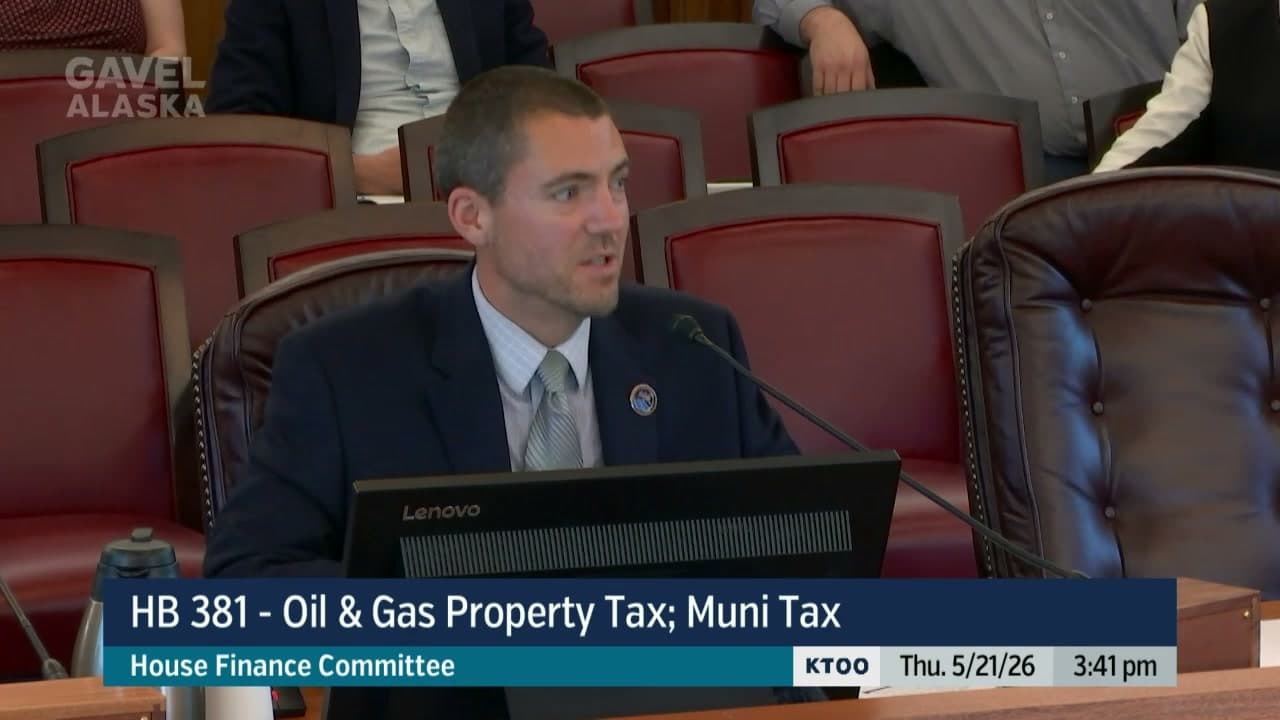
“given our baseline assumptions of the $46.2 billion capital cost and the $1.50 per 1,000 cubic feet purchase price, we have that $9.07 break-even price under current law, the $8.48 under the governor's version of the bill, and the $8.96 per 1,000 cubic feet under the version before the committee.”
- Speaker
- Dan Stickel
- Timestamp
- 70:18 – 70:52
- Community
- Alaska News
- Captured at
- May 21, 2026
From the transcript
But we can look at what, given our baseline assumptions of the $46.2 billion capital cost and the $1.50 per 1,000 cubic feet purchase price, we have that $9.07 break-even price under current law, the $8.48 under the governor's version of the bill, and the $8.96 per 1,000 cubic feet under the version before the committee. And we could look at what would those breakeven prices be with the different gas purchase prices at the upstream and then with different capital costs.
Related Coverage
Alaska gas line faces economic challenge even with tax breaks
The Alaska LNG project would struggle to compete in global markets even under the governor's proposed tax relief, with breakeven prices at the high end of current futures markets, according to state modeling presented to the House Finance Committee on Thursday.
 by Walter AlaskaNews1mo ago3 min readAI
Juneau, Alaska