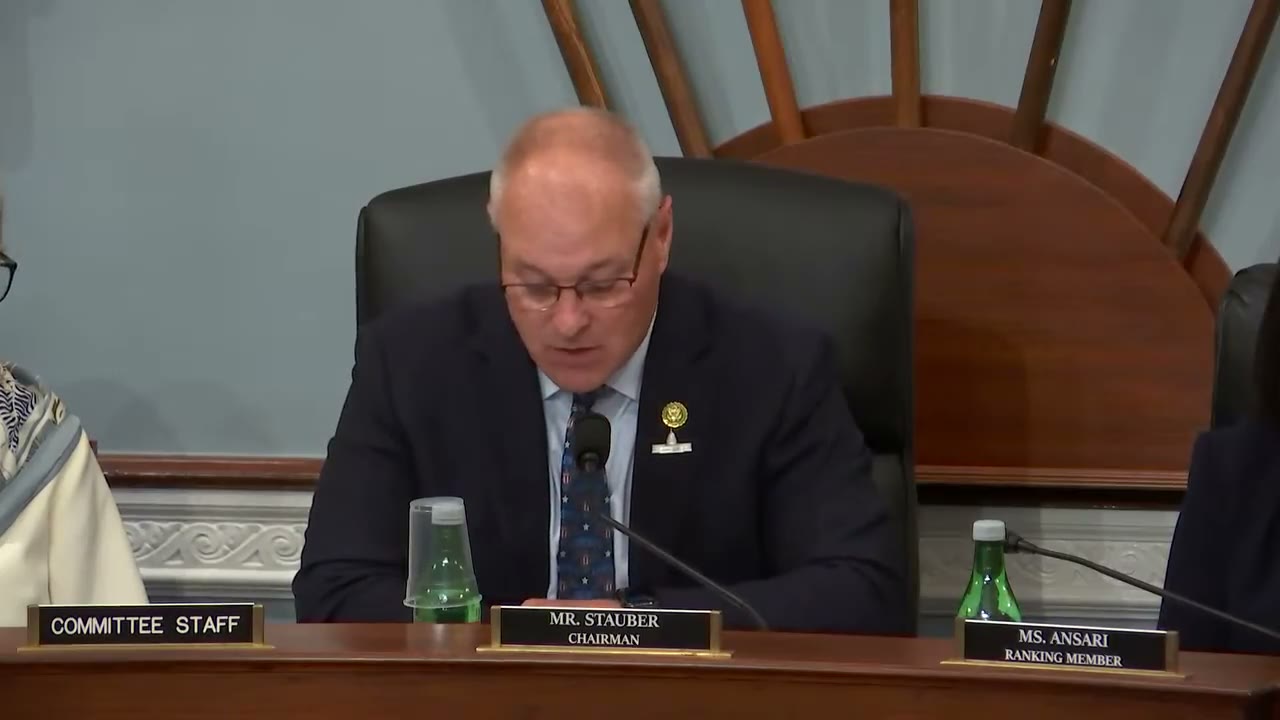
Pete Stauber
6:22 - 7:17
"H.R. 9640, Introduced by Representatives Whitman and Dingell, would reauthorize Earth MRI for another 5 years, continuing the important work of mapping our nation's surface and subsurface resources. This reauthorization is crucial to continue initial comprehensive national modern surface and subsurface map and data integration."
“H.R. 9640, Introduced by Representatives Whitman and Dingell, would reauthorize Earth MRI for another 5 years, continuing the important work of mapping our nation's surface and subsurface resources. This reauthorization is crucial to continue initial comprehensive national modern surface and subsurface map and data integration.”
- Speaker
- Pete Stauber
- Timestamp
- 6:22 – 7:17
- Community
- Alaska News
- Captured at
- July 21, 2026
From the transcript
H.R. 9640, Introduced by Representatives Whitman and Dingell, would reauthorize Earth MRI for another 5 years, continuing the important work of mapping our nation's surface and subsurface resources. This reauthorization is crucial to continue initial comprehensive national modern surface and subsurface map and data integration. This reauthorization will also enable us to build upon the progress, progress we have made during the first 5 years of Earth MRI and go back to key geological formations like the Duluth complex in northern Minnesota to get deeper, more in-depth view of the geological resources just below our feet. Simply put, the maps obtained through Earth MRI research will further strengthen America's critical mineral supply chains to protect our national and economic security while ensuring American industrial competitiveness.
Related Coverage
The program mapping Alaska's unknown ground expires this year
Bipartisan House bills would reauthorize the USGS Earth Mapping Resources Initiative, which has nearly doubled Alaska's public subsurface geologic data since 2019, through 2031.
 by Maggie AlaskaNewsadded 2mo ago1 min read
A permitting bill could open the federal fast lane to Alaska projects
A bipartisan bill would lower the FAST-41 permitting threshold from $200 million to $50 million, opening federal fast-track review to far more Alaska infrastructure projects.
by Maggie AlaskaNewsadded 2mo ago2 min read