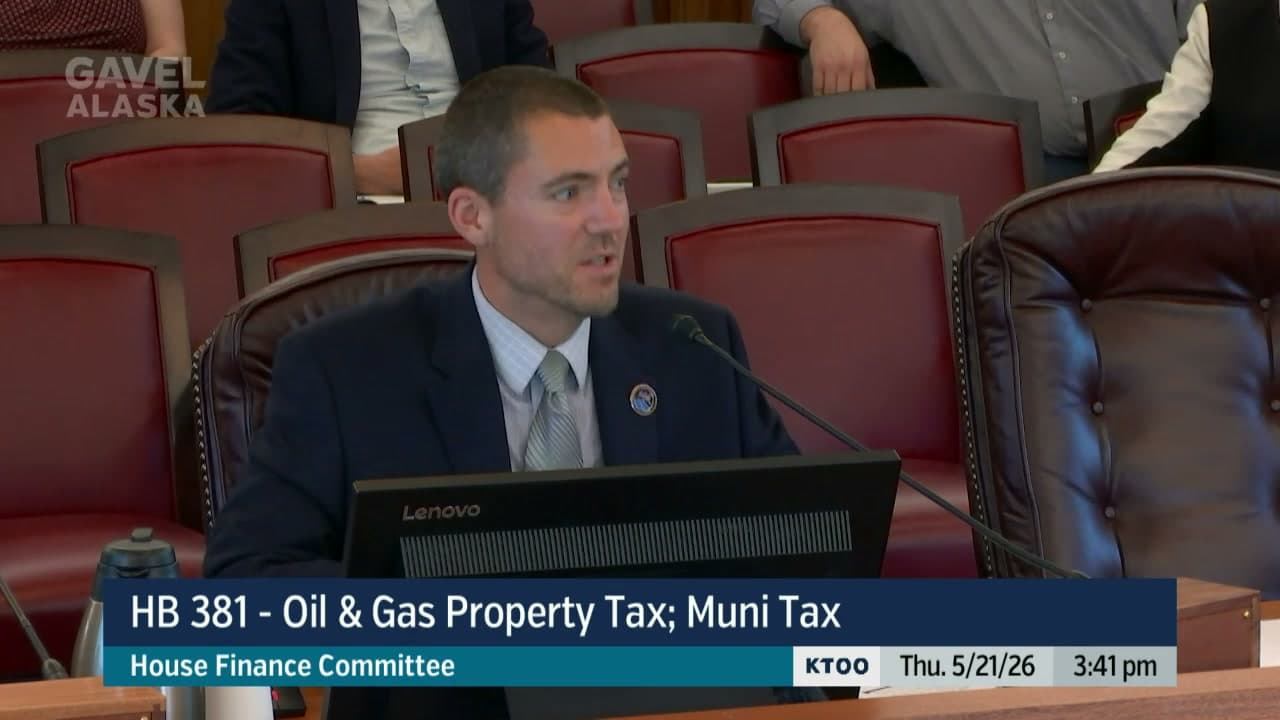
“The bill, as introduced by the governor, would be a material increase to the cost of gas. And would definitely make the project more attractive to investors. The version of the bill before the committee is a tax decrease overall, but to a much smaller extent than the bill as introduced by the governor”
- Speaker
- Dan Stickel
- Timestamp
- 92:15 – 93:16
- Transcript
- House Finance, 5/21/26, 1:30pm
- Community
- Alaska News
- Captured at
From the transcript
So Alaska LNG has the potential to provide tens of billions of dollars for the state of Alaska, the federal government and local governments, public and private sector. And beyond just those direct financial benefits that we've, that we've modeled would be an enhancement to energy security for both Alaska and the nation, significant job creation and economic development. The bill, as introduced by the governor, would be a material increase to the cost of gas. And would definitely make the project more attractive to investors. The version of the bill before the committee is a tax decrease overall, but to a much smaller extent than the bill as introduced by the governor, both by having a higher alternative volumetric tax rate for the pipeline and then by essentially carving out the, the treatment plant in the LNG facility and subjecting those to municipal election.
Related Coverage
Alaska gas line faces economic challenge even with tax breaks
Alaska LNG needs $8.48 to $9.07 per thousand cubic feet to break even, but global prices are $8 to $9. • Governor's tax plan cuts state revenue from $29.7 billion to $22.5 billion over the project's life. • Capital cost overruns and producer gas prices pose bigger risks than tax relief can fix. • State could invest $4.4 billion for a 25 percent equity stake.

House Resources gas line bill would cost municipalities $13B under governor's plan
Governor's plan cuts municipal revenue by $13 billion, House Resources version cuts only $2 billion • Governor replaces property tax with volumetric tax statewide, House Resources keeps property tax on facilities • Both versions reduce state revenue, project remains economically challenged at current market prices