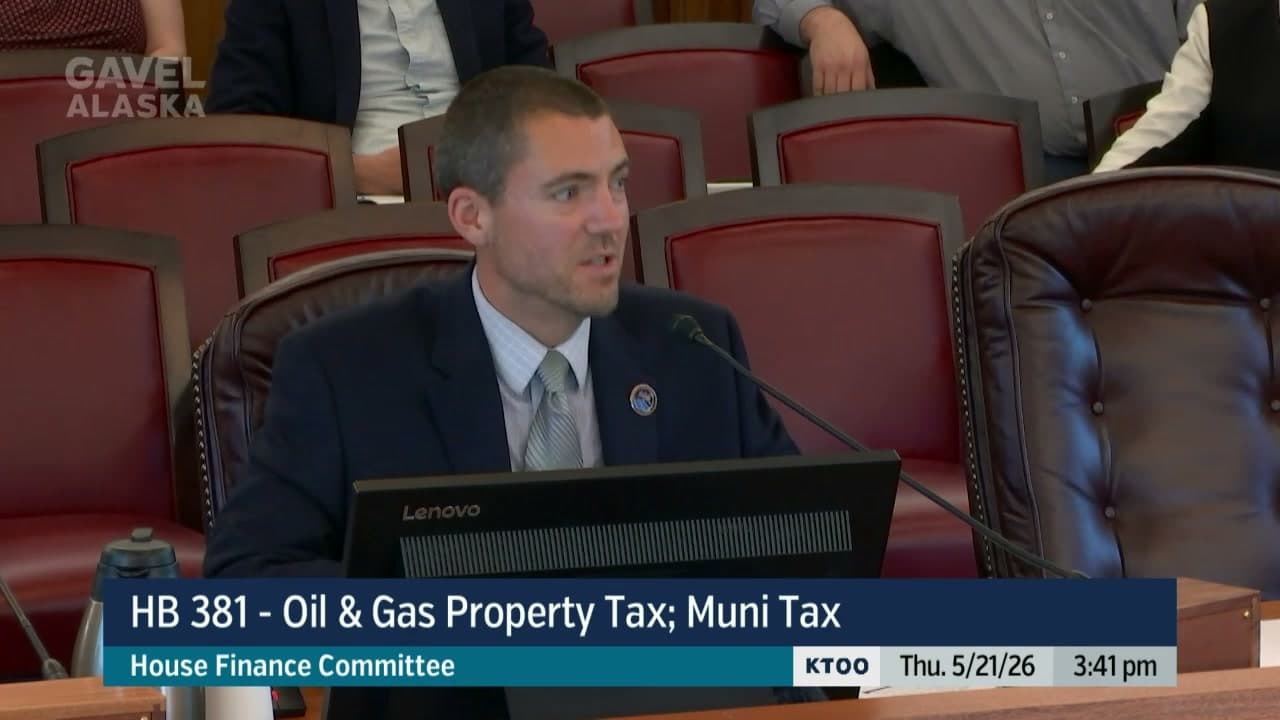
“when I look at slide 8, these are remarkably low numbers to me. I understand this is debt to equity, so you're talking about 30% of the cost of the project, as I understand it. And then 25% of the 30%.”
- Speaker
- Andy Josephson
- Timestamp
- 123:18 – 124:11
- Community
- Alaska News
- Captured at
- May 21, 2026
From the transcript
Well, of course, the last sentence from Mr. Stickel is concerning, but I must say, Mr. Stickel, when I look at slide 8, these are remarkably low numbers to me. I understand this is debt to equity, so you're talking about 30% of the cost of the project, as I understand it. And then 25% of the 30%. I think it was Callan that testifies to this committee annually, talked about— when I asked where would we get these resources, they said, well, they recommended overdrawing the ERA. I know that's sacrilege to talk about, and it will be left for the next legislature But I'm just struck by how low these numbers are.
Related Coverage
Alaska gas line faces economic challenge even with tax breaks
The Alaska LNG project would struggle to compete in global markets even under the governor's proposed tax relief, with breakeven prices at the high end of current futures markets, according to state modeling presented to the House Finance Committee on Thursday.
 by Walter AlaskaNews1mo ago3 min readAI
Juneau, Alaska
House Resources gas line bill would cost municipalities $13B under governor's plan
The Alaska House Finance Committee heard Thursday that the governor's version of HB 381 would reduce municipal property tax revenue from the Alaska LNG project by over $13 billion compared to current law, while the House Resources version would actually increase municipal revenue by retaining property tax on the gas treatment plant and LNG facility.
by Walter AlaskaNews1mo ago3 min readAIJuneau, Alaska