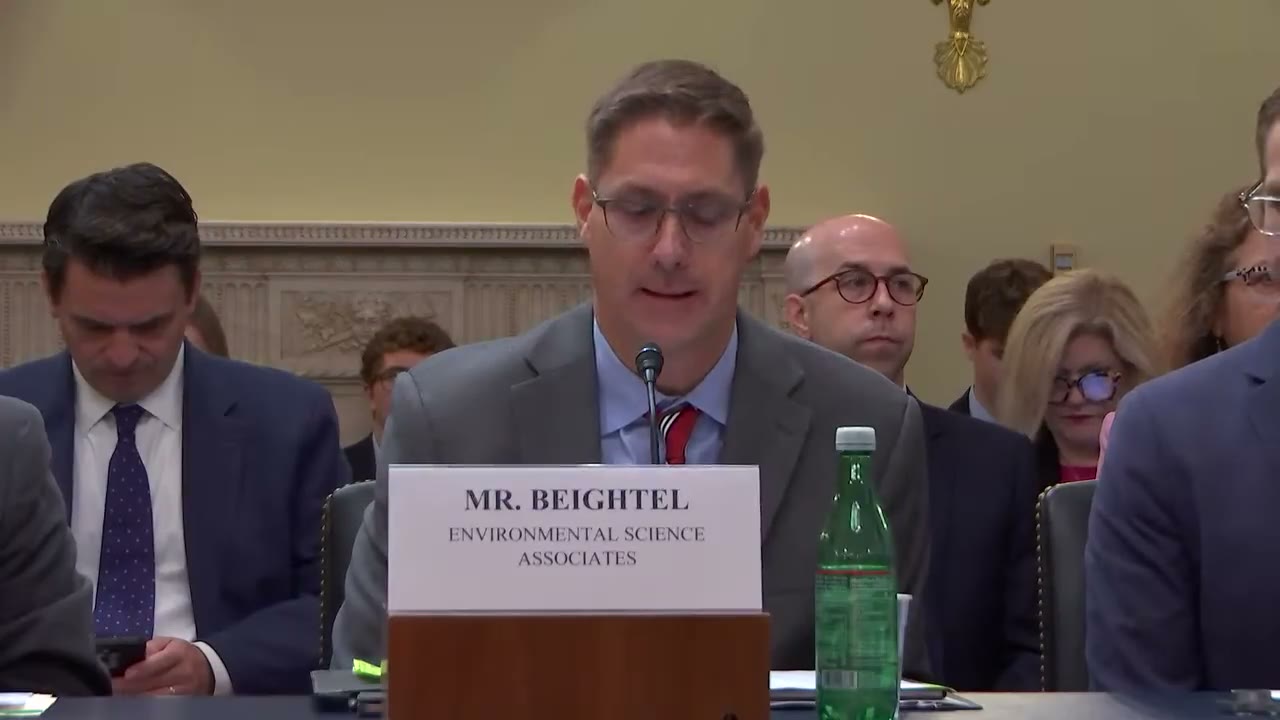
Eric Beightel
71:02 - 71:44
"It allows more project sponsors to benefit from actively managed permitting timetables, earlier interagency coordination, transparent timelines, and timely issue resolution. It also means that communities waiting on regionally significant investments, from drinking water improvements and broadband deployment to electric transmission, flood resilience, and other critical infrastructure, can benefit from the same disciplined permitting approach that has already proven successful on much larger projects."
“It allows more project sponsors to benefit from actively managed permitting timetables, earlier interagency coordination, transparent timelines, and timely issue resolution. It also means that communities waiting on regionally significant investments, from drinking water improvements and broadband deployment to electric transmission, flood resilience, and other critical infrastructure, can benefit from the same disciplined permitting approach that has already proven successful on much larger projects.”
- Speaker
- Eric Beightel
- Timestamp
- 71:02 – 71:44
- Community
- Alaska News
- Captured at
- July 21, 2026
From the transcript
The question before Congress is not whether FAST-41 works. The question is whether the benefits of that approach should be limited to only the very largest projects. Lowering the eligibility threshold is a common-sense reform to answer that question and extend the program benefits to more projects and the— they serve. It allows more project sponsors to benefit from actively managed permitting timetables, earlier interagency coordination, transparent timelines, and timely issue resolution. It also means that communities waiting on regionally significant investments, from drinking water improvements and broadband deployment to electric transmission, flood resilience, and other critical infrastructure, can benefit from the same disciplined permitting approach that has already proven successful on much larger projects.
Related Coverage
The program mapping Alaska's unknown ground expires this year
Bipartisan House bills would reauthorize the USGS Earth Mapping Resources Initiative, which has nearly doubled Alaska's public subsurface geologic data since 2019, through 2031.
 by Maggie AlaskaNewsadded 2mo ago1 min read
A permitting bill could open the federal fast lane to Alaska projects
A bipartisan bill would lower the FAST-41 permitting threshold from $200 million to $50 million, opening federal fast-track review to far more Alaska infrastructure projects.
by Maggie AlaskaNewsadded 2mo ago2 min read