Shannon Carroll
270:02 - 270:53
“I think it's important to recognize that there's no fishery that has zero impact on the seafloor or the habitat, and I think the way the council's approaching it is that they're not looking to mandate zero contact. They're looking to minimize uncertainty with regards to unobserved mortality and seafloor contact.”
- Speaker
- Shannon Carroll
- Timestamp
- 270:02 – 270:53
- Community
- Alaska News
- Location
- Alaska
- Captured at
- October 20, 2026
From the transcript
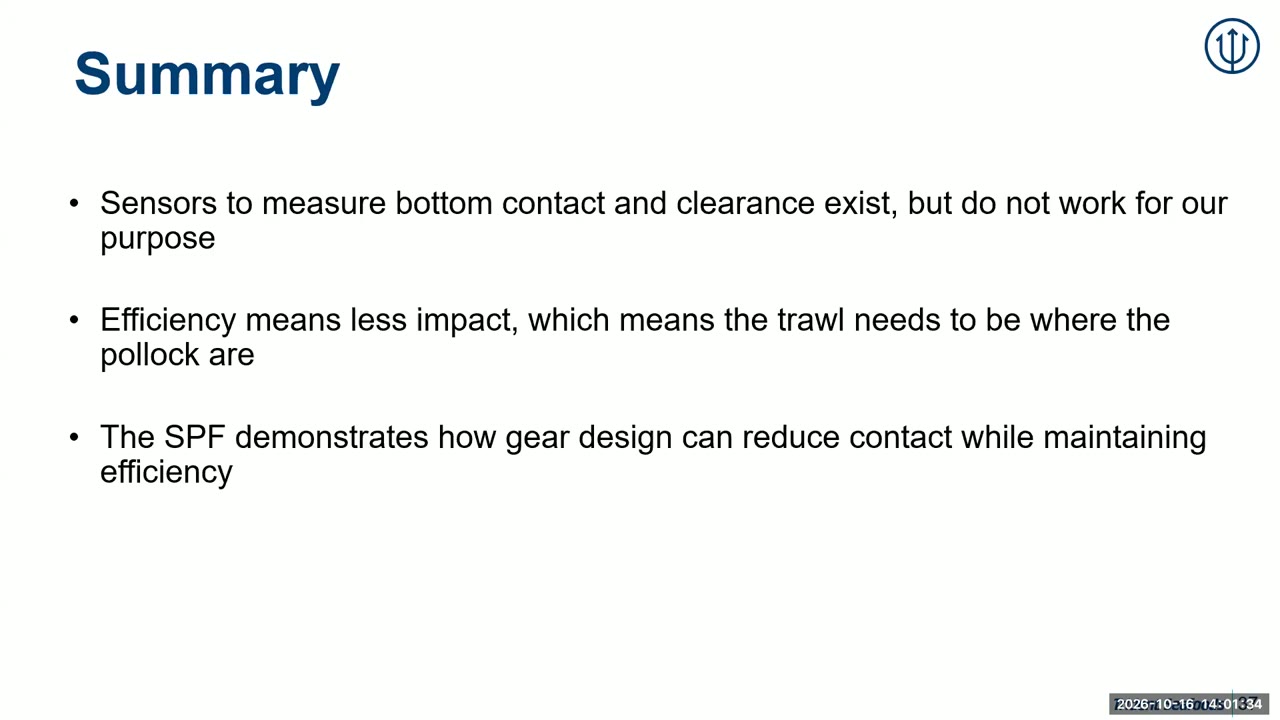
I think it's important to recognize that there's no fishery that has zero impact on the seafloor or the habitat, and I think the way the council's approaching it is that they're not looking to mandate zero contact. They're looking to minimize uncertainty with regards to unobserved mortality and seafloor contact. And so, So sensors are a way to approach that, but there are other ways to approach it through gear design, and you can have performance standards that don't require technology to enforce. A good example is the amendment 80 sector has a performance standard of elevated sweeps that have to be, I think it's 2-something inches off the seafloor. That was done and validated through testing and gear design and made such that that gear design could be be looked at by an enforcement officer on deck and be enforceable, but there's no sensors that enforce that performance standard.
Related Coverage
Trawl briefing leaves state board asking about its own waters
Fish board members asked if federal trawl science covers state waters. Not the state-run fisheries, it turns out. Trident showed a net that touches bottom less.