Brad Harris
172:13 - 173:05
“we would rather overestimate impacts and get it wrong in that direction be overly careful than to underestimate impacts.”
- Speaker
- Brad Harris
- Timestamp
- 172:13 – 173:05
- Community
- Alaska News
- Location
- Alaska
- Captured at
- October 20, 2026
From the transcript
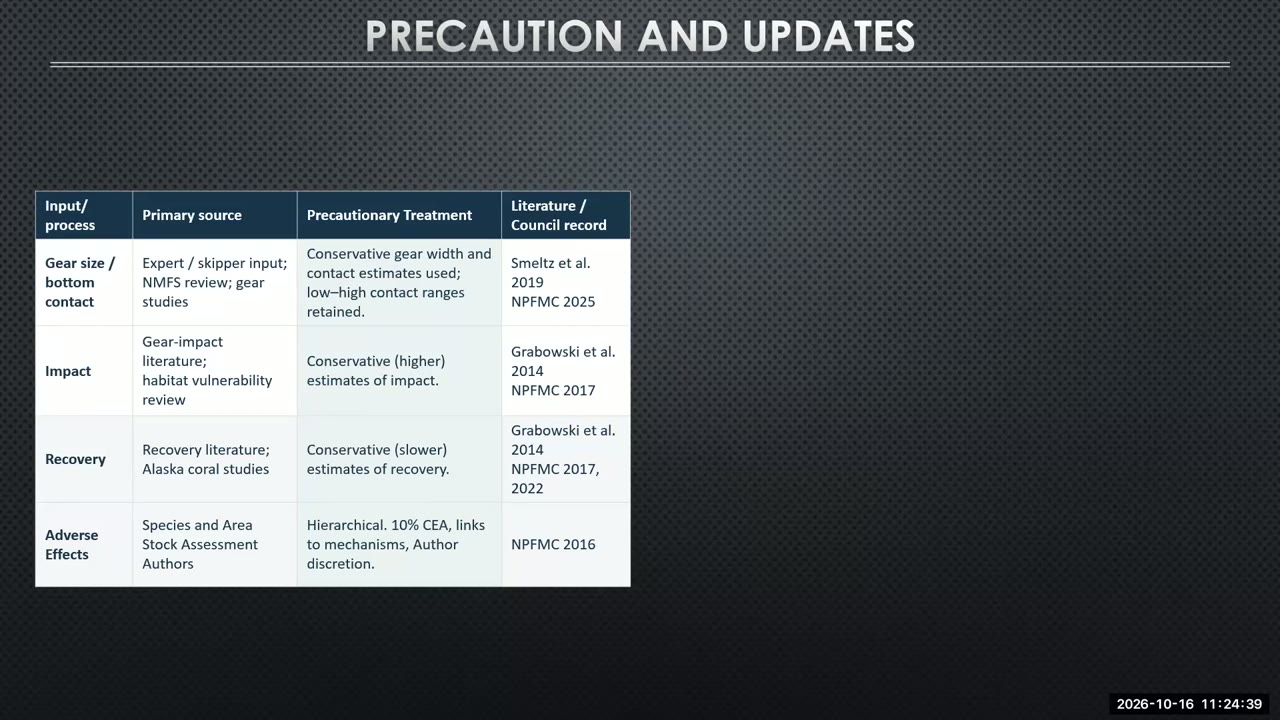
In the absence of being able to absolutely address that uncertainty or even quantify it, we need to be careful to lean into the sort of the direction we would like to go in terms of conservation. And in this case, we would rather overestimate impacts and get it wrong in that direction be overly careful than to underestimate impacts. And so we've built in several structural steps to add precaution. For example, when we look at gear size and bottom contact and we get expert input, uh, from industry and gear, uh, and gear designers, we think about, um, how that gear could change throughout the course of its use and we apply the largest or the most impactful estimates for those gears. For example, pelagic pollock gear for catcher processors in the Bering Sea currently, and have for all iterations of the Fishing Effects Model, been assumed to be on the bottom every single tow because we cannot demonstrate otherwise.
Related Coverage
Trawl briefing leaves state board asking about its own waters
Fish board members asked if federal trawl science covers state waters. Not the state-run fisheries, it turns out. Trident showed a net that touches bottom less.