Jason Jannot
68:18 - 69:00
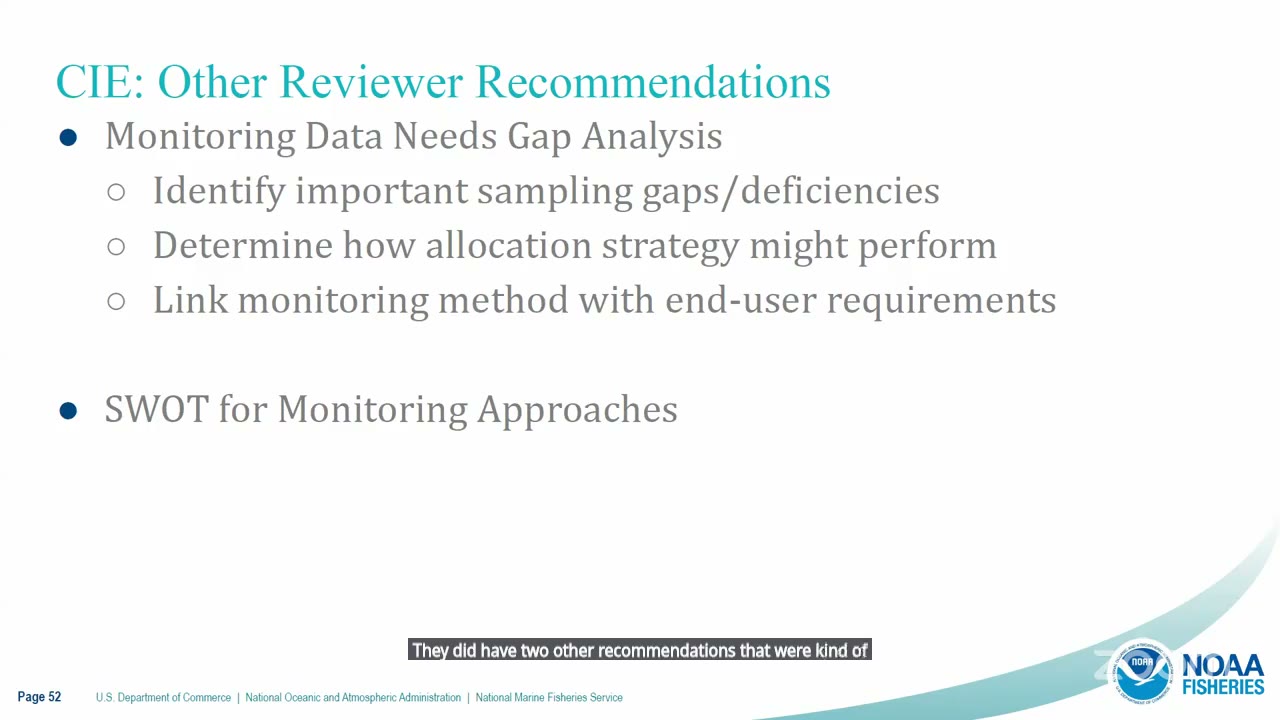
“the first was a monitoring data needs gap analysis. And here they were suggesting that we try to identify important sampling gaps and deficiencies and determine how the allocation strategy might perform if we were to bring those gaps in, and it would better link our monitoring methods with our end user requirements. And then the other recommendation that they all seem to have, which was a SWOT for monitoring approaches, that's a strengths, weaknesses, opportunities, and threats analysis for the two approaches.”
- Speaker
- Jason Jannot
- Timestamp
- 68:18 – 69:00
- Transcript
- NPFMC 280 Day 2 - October 9, 2026
- Community
- Alaska News
- Location
- Alaska
- Captured at
- October 9, 2026
From the transcript
They did have two other recommendations that were kind of not directly part of the review, but they all sort of mentioned these. And the first was a monitoring data needs gap analysis. And here they were suggesting that we try to identify important sampling gaps and deficiencies and determine how the allocation strategy might perform if we were to bring those gaps in, and it would better link our monitoring methods with our end user requirements. And then the other recommendation that they all seem to have, which was a SWOT for monitoring approaches, that's a strengths, weaknesses, opportunities, and threats analysis for the two approaches. Recall that we have two tools available to us currently.
Related Coverage
North Pacific council raises Tanner and Bristol Bay red king crab limits, keeps snow crab in rebuilding
North Pacific Fishery Management Council raised Tanner and Bristol Bay red king crab harvest limits for 2026-2027 while keeping snow crab in rebuilding.

Outside scientists find NOAA's Alaska fishing observer program sound, recommend no 2027 changes
Three outside scientists reviewed how NOAA decides which Alaska fishing boats carry observers or cameras. Verdict: sound methods, no changes needed for 2027.