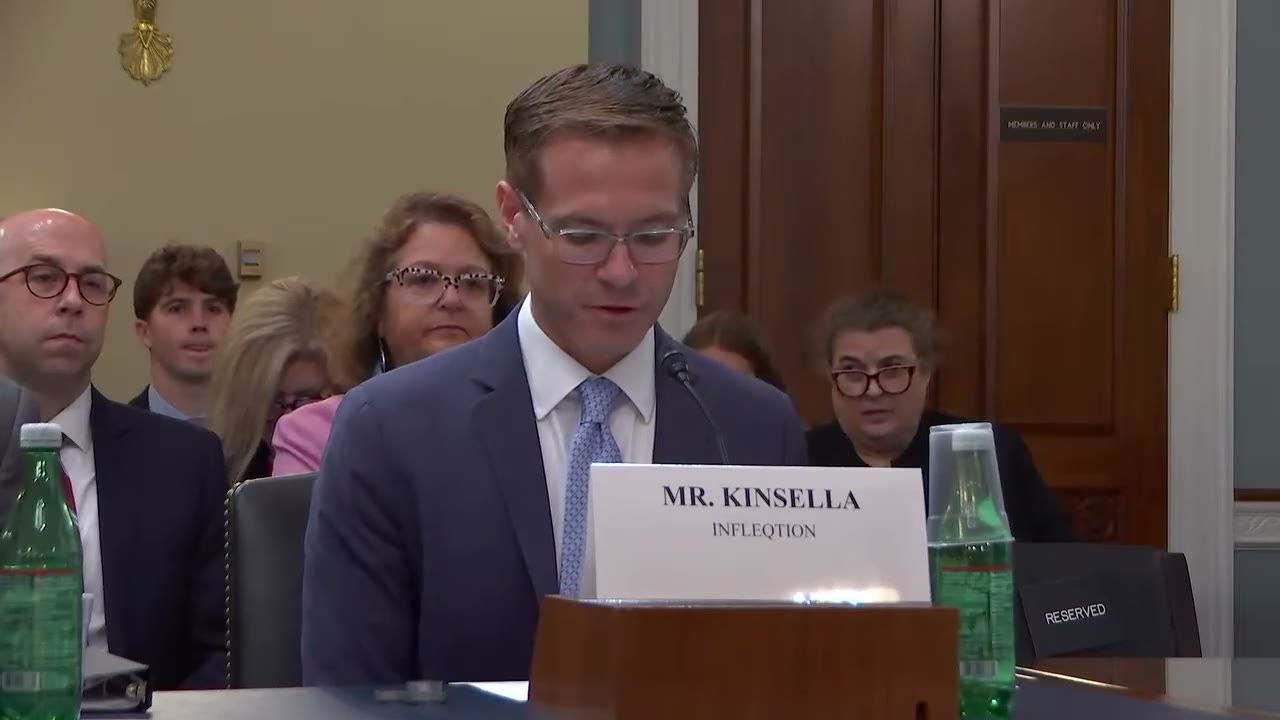
Matthew Kinsella
76:41 - 77:37
"This bill puts our instrument to work inside that proven program, directing the USGS to fly quantum gravity surveys over priority mineral zones compare the results head-to-head against classical methods, and make all of it public, fueling private investment without a new authorization of federal spending."
“This bill puts our instrument to work inside that proven program, directing the USGS to fly quantum gravity surveys over priority mineral zones compare the results head-to-head against classical methods, and make all of it public, fueling private investment without a new authorization of federal spending.”
- Speaker
- Matthew Kinsella
- Timestamp
- 76:41 – 77:37
- Community
- Alaska News
- Captured at
- July 21, 2026
From the transcript
The technology for mineral mapping specifically is real and it's advancing fast. What's already proven and ready today is Earth MRI itself, the established USGS program this bill builds on with existing data platforms, state partnerships, and users across industry and academia. This bill puts our instrument to work inside that proven program, directing the USGS to fly quantum gravity surveys over priority mineral zones compare the results head-to-head against classical methods, and make all of it public, fueling private investment without a new authorization of federal spending. I'd ask the subcommittee to understand this in the context of two competitions with China at once: the competition for critical mineral supply chains and the competition for quantum technology leadership. Independent analysts estimate China's government investment in quantum technology at roughly $15 billion, alongside a separate $138 billion state-backed fund for emerging technologies.
Related Coverage
The program mapping Alaska's unknown ground expires this year
Bipartisan House bills would reauthorize the USGS Earth Mapping Resources Initiative, which has nearly doubled Alaska's public subsurface geologic data since 2019, through 2031.
 by Maggie AlaskaNewsadded 2mo ago1 min read
A permitting bill could open the federal fast lane to Alaska projects
A bipartisan bill would lower the FAST-41 permitting threshold from $200 million to $50 million, opening federal fast-track review to far more Alaska infrastructure projects.
by Maggie AlaskaNewsadded 2mo ago2 min read