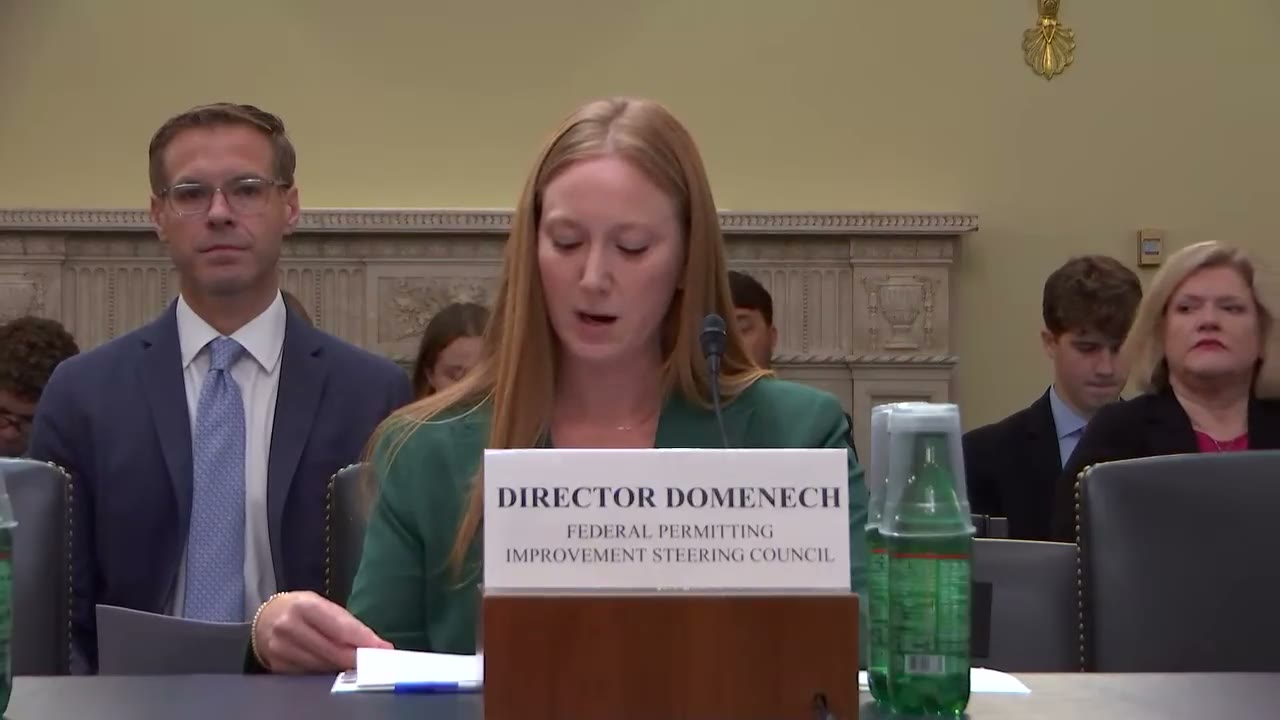
Emily Domenech
23:59 - 24:42
"the Permitting Council supports HR 8003 as written, and we are well situated to bring additional projects and continue to show that the FAST-41 process works for projects of all shapes and sizes."
“the Permitting Council supports HR 8003 as written, and we are well situated to bring additional projects and continue to show that the FAST-41 process works for projects of all shapes and sizes.”
- Speaker
- Emily Domenech
- Timestamp
- 23:59 – 24:42
- Community
- Alaska News
- Captured at
- July 21, 2026
From the transcript
I spoke earlier about the intense growth in our portfolio, uh, over the last year and a half, and I'm proud that our team has been able to readily meet that increased demand from project sponsors. In addition, the inclusion of the transparency projects on the dashboard has changed the equation for what constitutes a FAST-41 project. Because a transparency project already does not have to meet the investment threshold of a covered project, we have included far more projects on the dashboard below the $200 million investment. These projects have not taken away from our covered project work, and we are still completing both types of projects faster than ever before. In summary, the Permitting Council supports HR 8003 as written, and we are well situated to bring additional projects and continue to show that the FAST-41 process works for projects of all shapes and sizes.
Related Coverage
The program mapping Alaska's unknown ground expires this year
Bipartisan House bills would reauthorize the USGS Earth Mapping Resources Initiative, which has nearly doubled Alaska's public subsurface geologic data since 2019, through 2031.
 by Maggie AlaskaNewsadded 2mo ago1 min read
A permitting bill could open the federal fast lane to Alaska projects
A bipartisan bill would lower the FAST-41 permitting threshold from $200 million to $50 million, opening federal fast-track review to far more Alaska infrastructure projects.
by Maggie AlaskaNewsadded 2mo ago2 min read