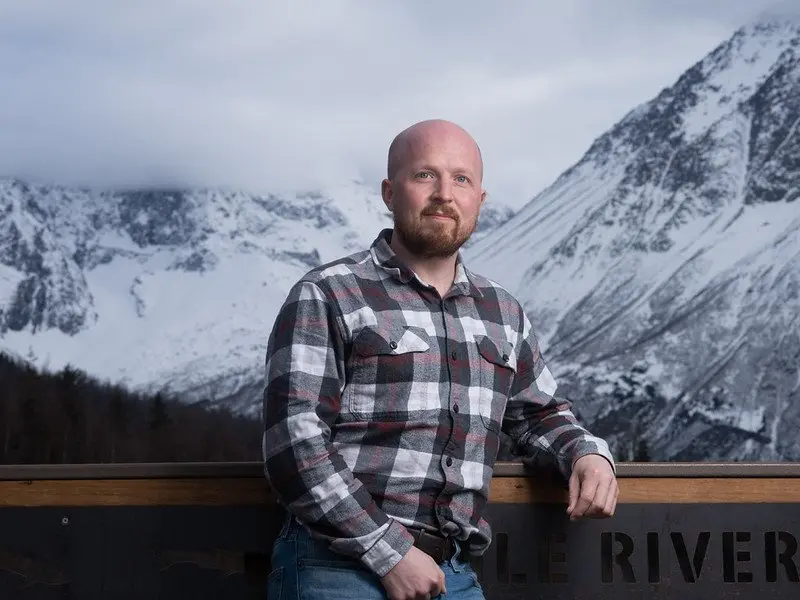
Photo used via Creative Commons license courtesy the Jonathan Kreiss-Tomkins campaign · Photo source · CC BY
Wilson concedes as Kreiss-Tomkins' lead over the GOP field keeps growing
Republican Bernadette Wilson conceded Alaska's governor's race Monday, Nov. 16, four days after CNN projected Democrat Jonathan Kreiss-Tomkins the winner, as the state's latest count added to his lead.
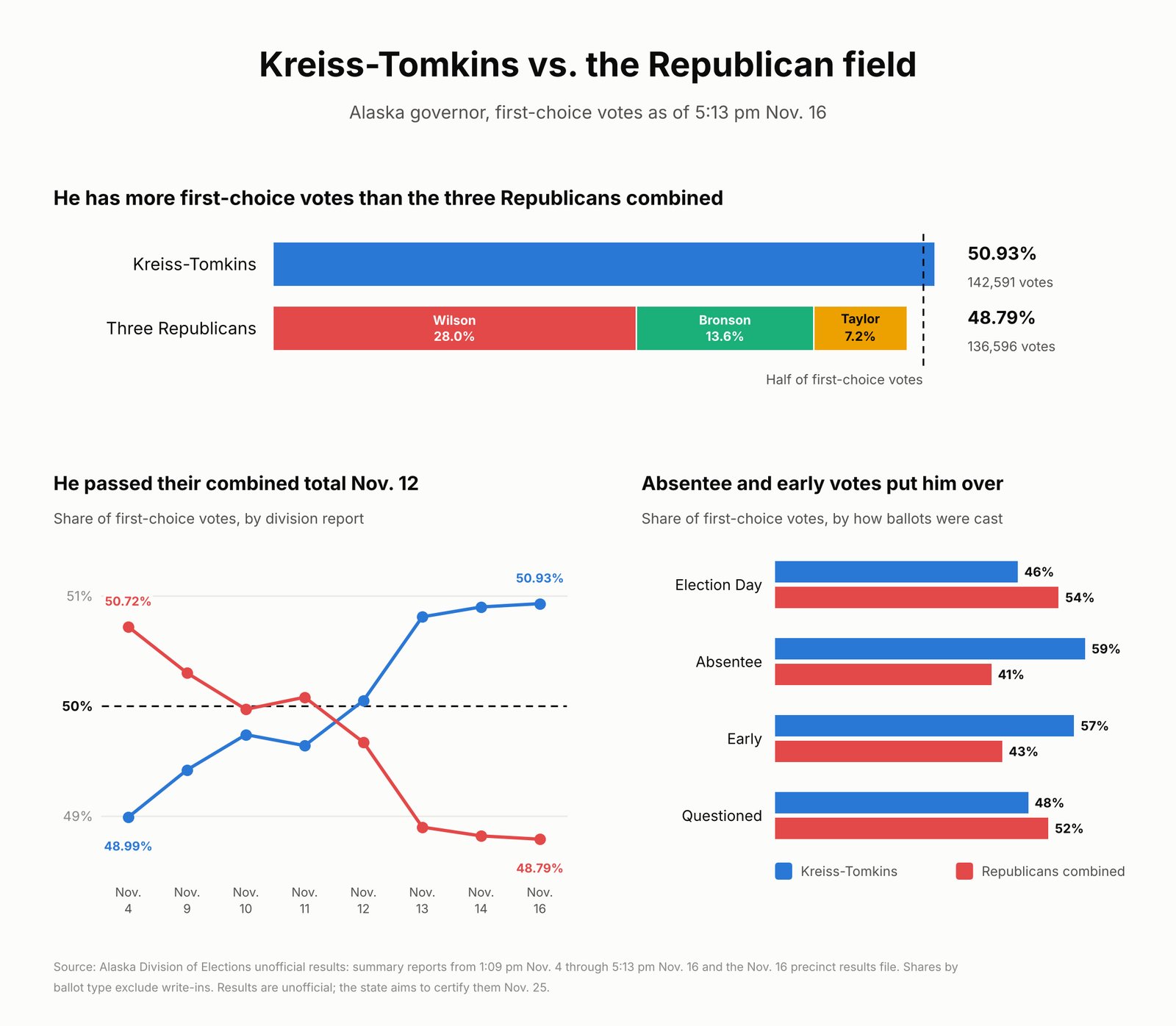
Kreiss-Tomkins has 50.9% of first-choice votes in the Division of Elections' latest results. Wilson, who finished second, has 28%, Republican Dave Bronson has 13.6% and Republican Treg Taylor has 7.2%. Together, the three Republicans have 48.8%, and Kreiss-Tomkins' lead over their combined total grew again Monday.
Early in the count, it was the other way around. The day after the election, the three Republicans together had 50.7% to his 49%, and they were still ahead after the Nov. 10 update. Absentee and early ballots closed the gap. Kreiss-Tomkins won 59% of the absentee votes and 57% of the early votes, while the Republicans together outpolled him on Election Day ballots, 54% to 46%.
He passed both their combined total and 50% in the Nov. 12 update and has stayed ahead of both since.
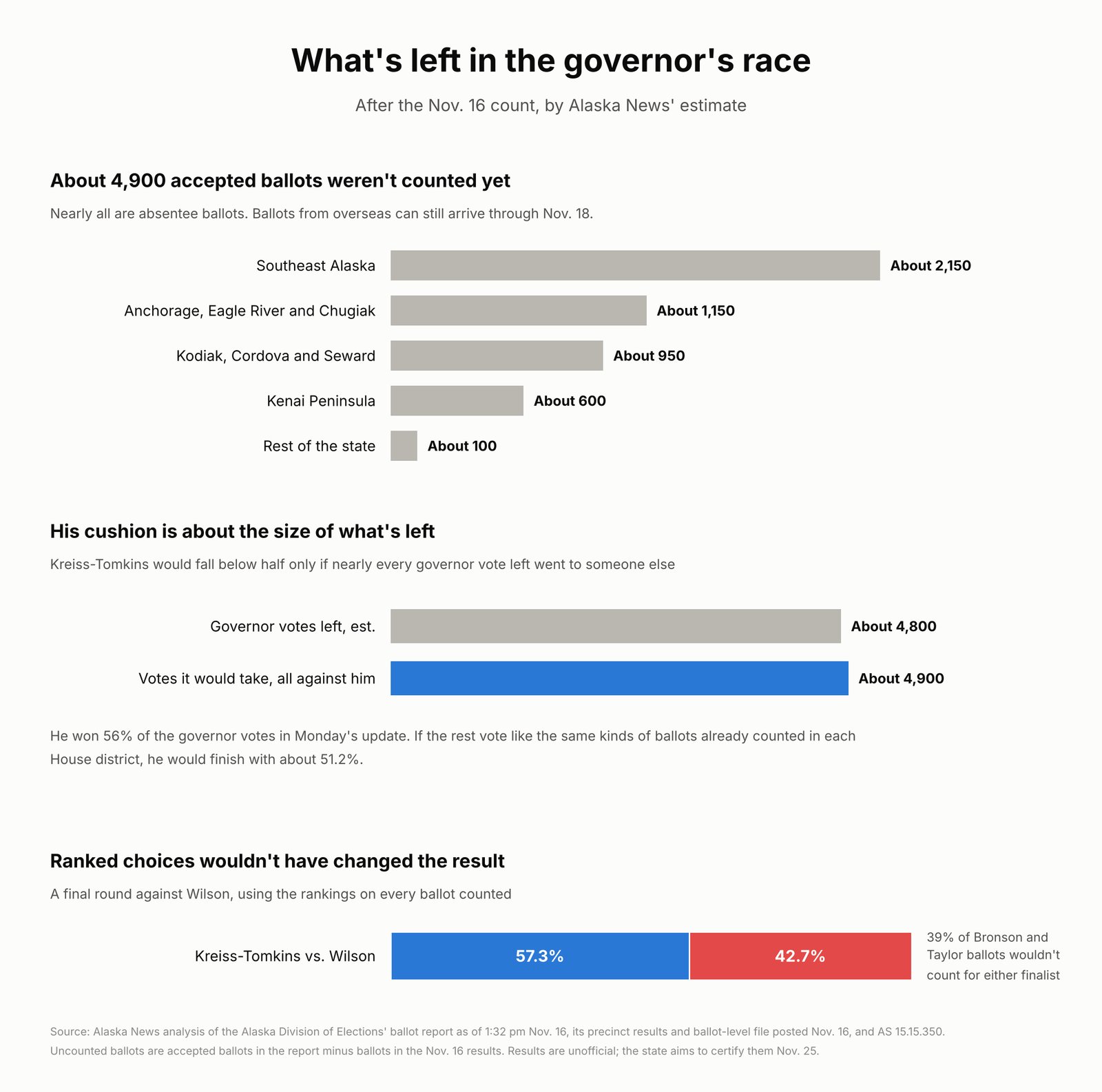
About 4,900 accepted ballots still weren't counted after Monday's update, by Alaska News' count from the division's latest ballot report, released Monday afternoon. Nearly all are absentee ballots: about 2,150 from Southeast Alaska, 1,150 from Anchorage, Eagle River and Chugiak, 950 from the House district that includes Kodiak, Cordova and Seward, and 600 from the Kenai Peninsula. Ballots from overseas can still arrive through Nov. 18.
That's about the size of Kreiss-Tomkins' cushion. Counting ballots the way state law does, he is about 2,500 votes over half, so he would fall below it only if nearly every governor vote left went to someone else. He won 56% of the governor votes added Monday, most of them absentee ballots from Anchorage, Eagle River and Chugiak. If the rest vote like the same kinds of ballots already counted in each House district, he would finish with about 51.2%, by Alaska News' math. That's a scenario, not a forecast.
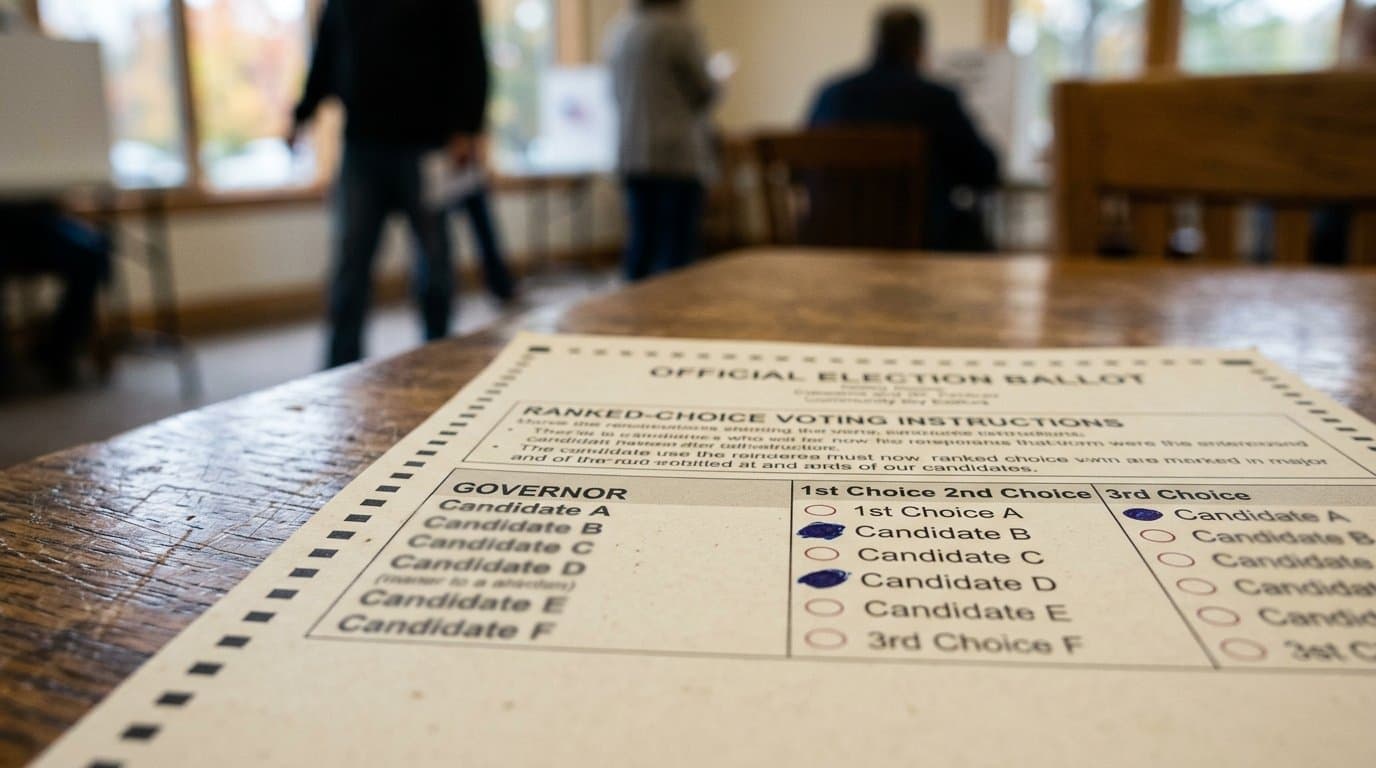
With more than half of the first-choice votes, he wins without ranked-choice rounds. The rankings wouldn't have changed the outcome anyway. The state's ballot-level file now matches the official count, and in a final round against Wilson, Kreiss-Tomkins would get about 57% to her 43%, by Alaska News' math. About 39% of the ballots that ranked Bronson or Taylor first wouldn't count for either finalist.
He has a majority of first-choice votes in 24 of the 40 House districts so far: three in Southeast Alaska, the Kodiak-area district, the 14 in Anchorage outside Eagle River and Chugiak, two in the Fairbanks area and the four rural districts from Bristol Bay to the North Slope. In the Ketchikan-area district, he has exactly half, 3,190 of 6,380 first-choice votes, with about 600 absentee ballots there still uncounted.
Wilson conceded in a video, saying she had called Kreiss-Tomkins to congratulate him. "It is no secret that we do not share values," she said.

She used part of the video to praise former state Sen. Tom Begich, the Democrat who finished second in the August primary, then withdrew and endorsed Kreiss-Tomkins. She called Begich "an example of statesmanship" for being "willing to put pride and ego aside." During the campaign, Wilson called on Bronson and Taylor to suspend their campaigns, and President Donald Trump, who endorsed her in October, urged Republicans to unite behind her. Both kept campaigning.
The state aims to certify results Nov. 25, when the director of elections issues the winner a certificate of election. Kreiss-Tomkins would take office three weeks from Monday. Under the Alaska Constitution, the governor's term begins at noon on the first Monday in December, which this year is Dec. 7. He and his running mate, nonpartisan Anchorage Assembly member Zac Johnson, would succeed Republican Gov. Mike Dunleavy, who couldn't run again after two terms.
Kreiss-Tomkins, 37, a former state representative from Sitka, would be the first Democrat elected governor since Tony Knowles won a second term in 1998 and the youngest governor in state history.
What did you make of this story? (no account needed)
Get Alaska News in your inbox
Create your free account and get the day’s top stories around 6 each morning, in a few minutes’ read.
Top stories, around 6 each morning.
Stories on what you follow, on Sundays.










Comments
Sign in to leave a comment.
No comments yet. Be the first to share your thoughts.