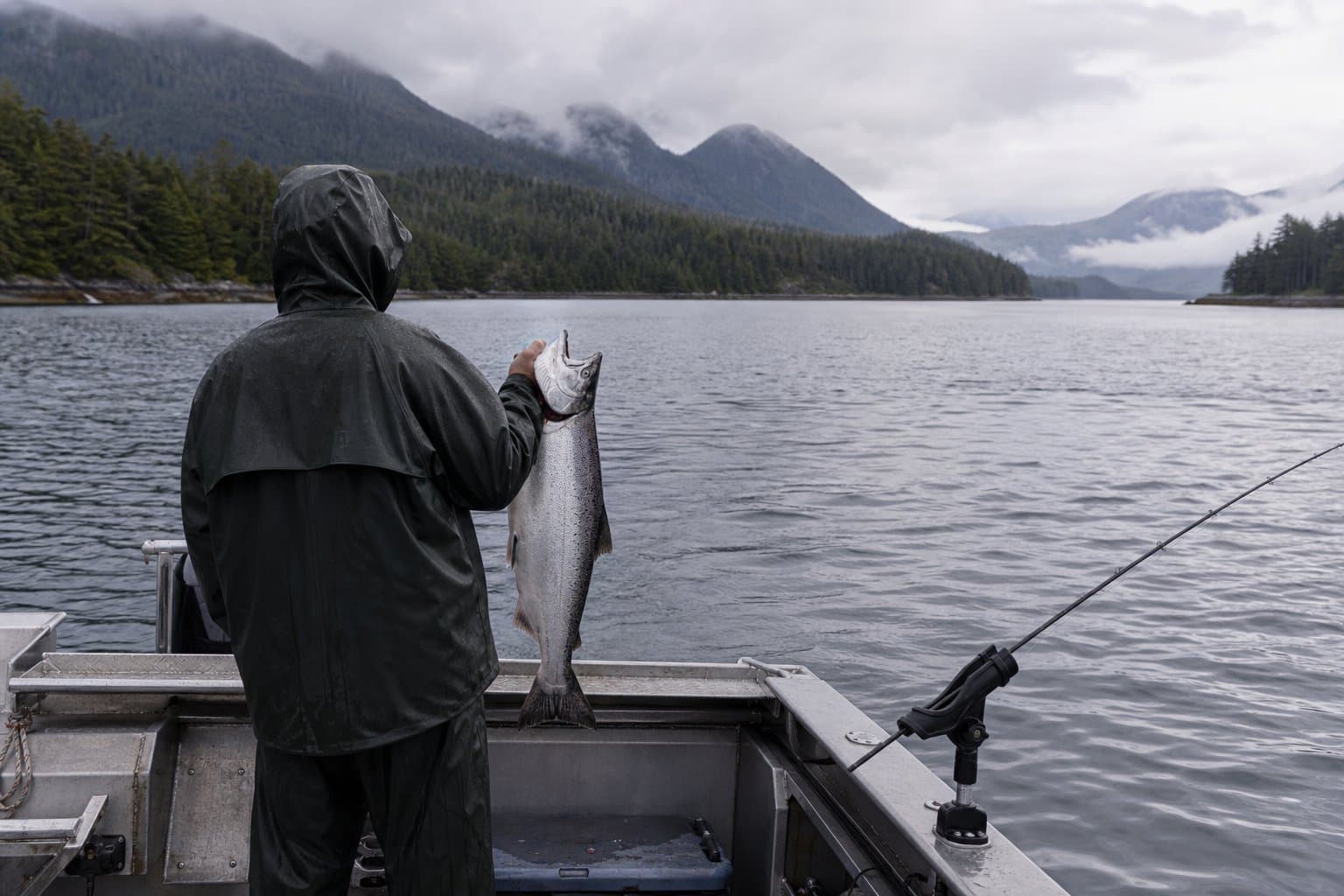
AI image
Why Alaska is giving out-of-staters more kings as the runs falter
It looks, at first, like a contradiction. King salmon are in trouble across much of Alaska — closures on the Kenai, record lows on the Copper, missed escapement goals on the Kasilof four years running. And yet on July 1, the state will let out-of-state anglers in Southeast keep more kings, doubling their season limit from one fish to two.
The explanation is a quota most Alaskans have never heard of. Southeast's saltwater king fishery isn't managed like a struggling river. It's an ocean fishery of mixed-origin fish — many bound for Canada and the Lower 48 — and the total catch is capped each year under the U.S.–Canada Pacific Salmon Treaty, based on coastwide king abundance, then divided 80% to commercial trollers and 20% to sport anglers. So ADF&G isn't choosing to kill more kings. It's letting nonresidents take a little more of a share that was already set aside, because the sport fishery is running below its target of 43,600 fish this year. The department says it will keep watching the harvest and can tighten limits again if it climbs too fast.
The kings most at risk get their own guardrails. Special closures for wild stocks around Seymour Canal near Juneau and in the Ketchikan area stay in place, and parts of the Haines/Skagway area remain closed to king fishing entirely through July. The loosened limit is aimed at the abundant treaty fish in the quota, not the depleted local runs.
Who benefits is its own revealing detail. By ADF&G's own accounting, nonresidents accounted for roughly 65% of Southeast's total sport king harvest in recent years — meaning the visiting anglers and charter clients getting the bigger limit are also the ones whose license and king-stamp fees disproportionately fund the very department setting the rules. Nonresident licenses and stamps cost several times what residents pay, and that money, along with federal dollars tied to license sales, is a backbone of Alaska's sport-fish management budget.
The mechanics for anglers are simple: the two-fish limit runs through September 30, applies to kings 28 inches or longer, and counts any kings already kept this season. The daily limit stays at one.
Based on a press release from ADF&G.
Drafted with AI. Edited by Cale Green (1 revision). No full editor review is on record. Who is accountable.
Stay informed. Support what matters.
Free, permanent access to local news you can verify. Subscribe to support Bill AlaskaNews and go ad-free.
Related Coverage
Southeast anglers get a bump in the king limit
Alaska News · 2mo ago
Visiting anglers get an extra king salmon in Southeast this fall
Alaska News · 1mo ago
Ketchikan anglers catch a rare break on king limits
Alaska News · 2mo ago
Ketchikan anglers can keep more kings this month, even with a slow run
Alaska News · 1mo ago
Fishing Prince of Wales for kings? The nonresident limit just dropped.
Alaska News · 2mo ago
Comments
Sign in to leave a comment.
No comments yet. Be the first to share your thoughts.