AI image
When the electric co-op sprays herbicide near your well, what are you owed?
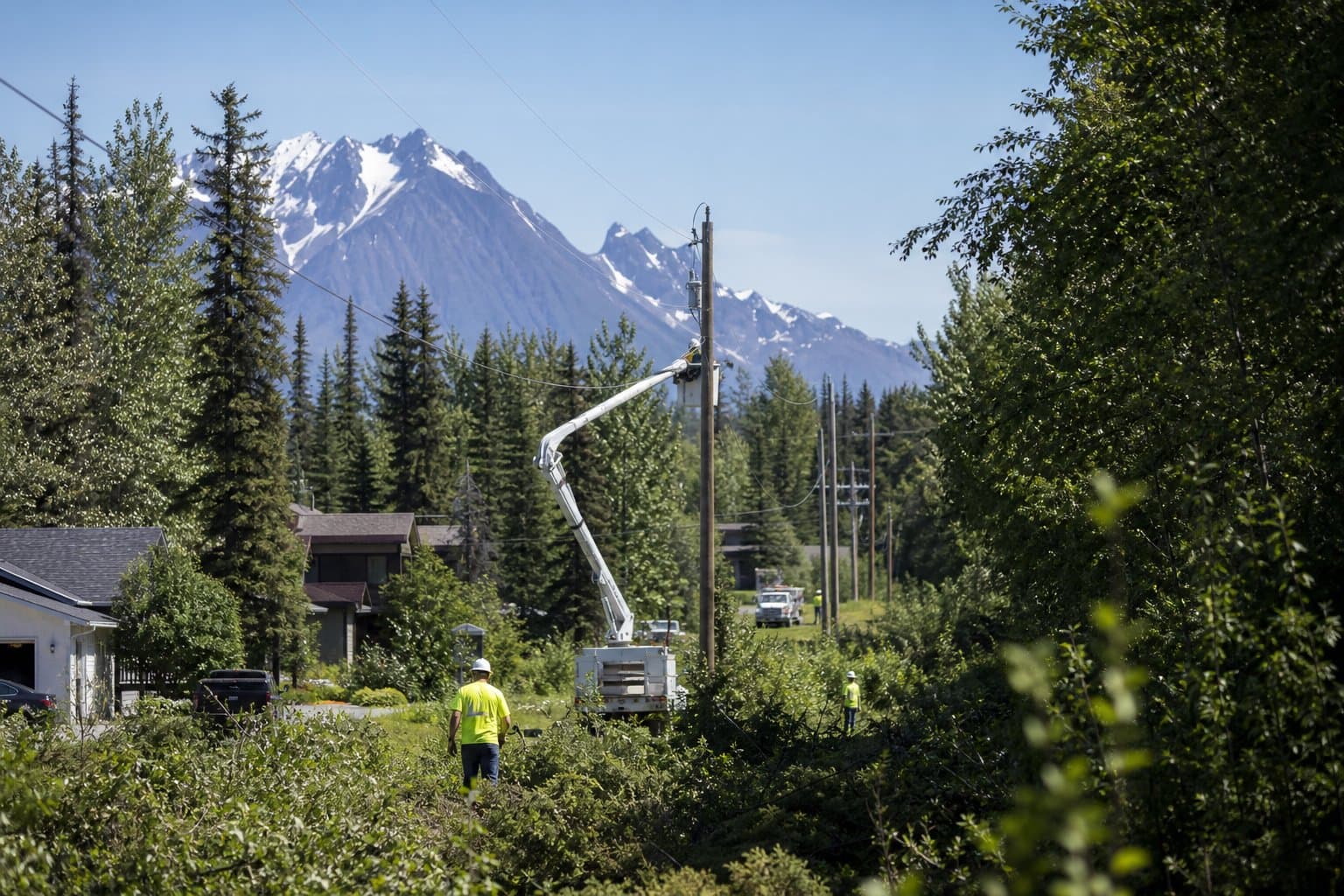
This summer, Matanuska Electric Association is doing what it does on a seven-year cycle: clearing brush and trees out of its power-line easements across the Mat-Su and northern Anchorage area. Most of that work is mechanical — mowing, hand-cutting, bucket trucks. But part of the 2026 program is chemical. MEA plans to spray herbicide in select spots along the Knik-Goose Bay corridor, starting near Point Mackenzie and working toward the Parks Highway.
That corridor is fast-growing, rural, and largely on private wells — which raises a fair question for anyone whose property backs up to a power line: what are you entitled to know before someone sprays weedkiller next door, and what protects your water? The answer is less than you might assume — and the reason isn't really MEA.
Alaska does have a strict notice regime for herbicide spraying. Under state regulations, whoever sprays must publish newspaper notices 30 days ahead, notify any drinking-water system within 200 feet, tell the state at least 15 days out, and publicly report large applications. But those rules are triggered by the land: they apply to state-owned land, state-leased land, and rights-of-way managed by a state agency. MEA is a private, member-owned cooperative spraying its own easements — so that framework doesn't reach it.
What does bind MEA is narrower: its applicators must be state-certified for right-of-way work, and they must follow the federal pesticide label, which carries the force of law and sets any limits near water. Beyond that, what neighbors get is largely what MEA chooses to provide.
To its credit, MEA says it provides something. Its vegetation-management materials state that members with property in affected areas will be notified before herbicide is applied; for the clearing work, members get an automated call a few days ahead. What those materials don't spell out is how far in advance the herbicide notice goes, which chemicals are used, or what buffer, if any, crews keep from a wellhead.
And there's a gap no utility controls: the state's 200-foot rule, where it applies at all, protects public water systems — not the individual private wells much of this corridor relies on. For those households, the formal safety net is thinnest exactly where the population is growing fastest.
None of this makes the spraying improper. Trees in the lines are the leading cause of outages, and MEA is doing routine work it's entitled to do. But "we'll notify you" from a utility is a different thing than a notice rule with the force of law behind it — and along Knik-Goose Bay, it's mostly the former.
Source: MEA details 2026 vegetation management clearing schedule across Mat-Su ().
Drafted with AI. Edited by Cale Green (1 revision). No full editor review is on record. Who is accountable.
Stay informed. Support what matters.
Free, permanent access to local news you can verify. Subscribe to support Alaska News and go ad-free.
Related Coverage
A new Mat-Su road would cross the ground its drinking water comes from
Alaska News · 3mo ago
MEA is building a 40-acre substation in Meadow Lakes for Mat-Su's growing grid
Alaska News · 3mo ago
A new federal water-testing rule could check rural Alaska for 'forever chemicals' — if it reaches us
Alaska News · 2mo ago
DNR, Mental Health Trust finalize MEA easements for Wasilla utility corridor
Alaska News · 3mo ago
MEA wins easement on Mental Health Trust land in Wasilla
Alaska News · 3mo ago
Comments
Sign in to leave a comment.
No comments yet. Be the first to share your thoughts.