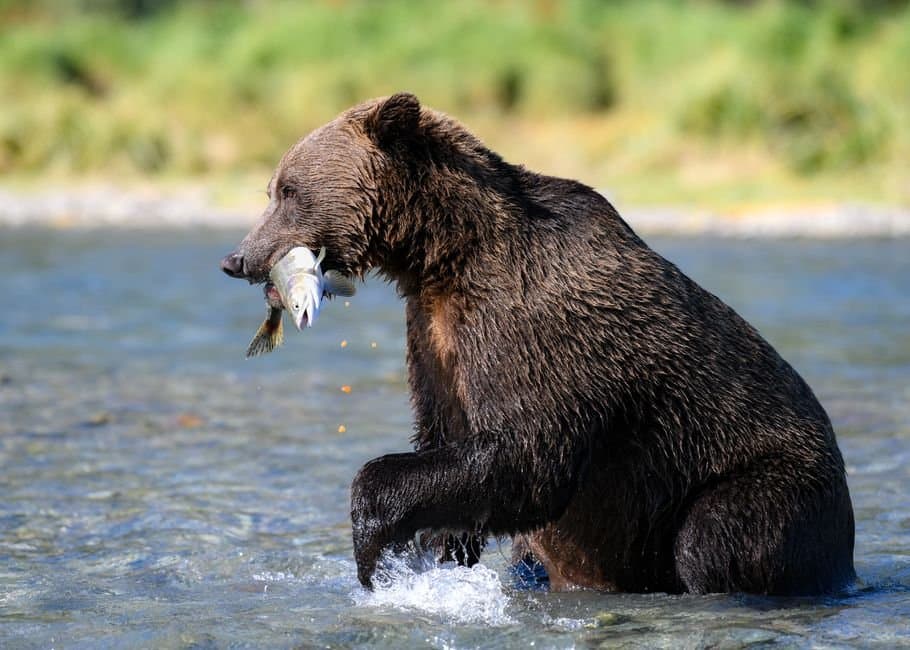
Photo by A G on Pexels · Source
Upper Cook Inlet's Northern District set gillnet fishery closes indefinitely over weak coho
Set gillnetters in Upper Cook Inlet's Northern District are off the water until further notice after the Alaska Department of Fish and Game closed the fishery at 7 a.m. Monday under Emergency Order 2-F-H-34-26.
The department framed the shutdown as a coho conservation measure. "The department is taking a conservative approach for managing Northern Cook Inlet coho salmon this season, in accordance with the Northern District Salmon Management Plan," the Alaska Department of Fish and Game said in its Aug. 14 announcement, adding that "this closure is warranted to increase coho salmon escapements into Northern Cook Inlet streams." The fishery may reopen if assessment projects indicate escapement goals will be achieved. Lucas Stumpf, acting area management biologist in Soldotna, is the contact for permit and harvest questions at 907-262-9368.
The same week brought the opposite call in Norton Sound. Area Manager Kevin Clark and Assistant Manager Luke Henslee opened Golovin, Elim, Norton Bay, Shaktoolik and Unalakleet to a single 24-hour commercial gillnet period running from 6 p.m. Thursday to 6 p.m. Friday, targeting chum and coho with mesh 6 inches or smaller. Catch rates in the previous periods ran slightly below average, and most regional monitoring projects are inoperable; the Kwiniuk River tower is the exception, and its coho are projected to meet the escapement goal with a harvestable surplus after subsistence needs. The opening does not change subsistence schedules or closures.
Lower Cook Inlet is split the same way. The Kamishak District remains closed to purse seining after an Aug. 8 aerial survey found fewer pink salmon than anticipated, while Aialik Bay stays open seven days a week on 16-hour periods after a July 29 survey counted 7,000 sockeye against a sustainable escapement goal range of 3,200 to 5,400.
Alaska News has covered a string of these Cook Inlet actions this summer, including NOAA's August closure of the Cook Inlet EEZ under a federal coho cap of 16,619 fish.
The economic stakes are documented. Federal analysis prepared for Amendment 16 found that repeated Cook Inlet closures produce foregone harvest and lost revenue that drift gillnet operators, processors and coastal communities do not recover later. Sport-fishing interests argue the restrictions are necessary: Andy Couch, a Matanuska-Susitna Borough Fish and Wildlife Commission member and Northern Cook Inlet guide, has contended that heavy commercial drift effort on Kenai and Kasilof sockeye leaves too few northern-bound coho to fill spawning escapement goals in streams such as the Deshka and Little Susitna.
AI-assisted, reviewed by editors. Spot an error?
Stay informed. Support what matters.
Free, permanent access to local news you can verify. Subscribe to support Bill AlaskaNews and go ad-free.
Related Coverage
ADF&G closes Northern District set gillnet fishing for 12 hours Monday
Alaska News · 1w ago · 92% match
Cook Inlet drift fleet limited to Area 3 for a single 12-hour opener Thursday
Alaska News · 2w ago · 88% match
Kamishak District closed to seining after survey found fewer pinks
Alaska News · 1w ago · 87% match
Lower Cook Inlet seiners are shut down while set netters keep fishing, days before the season ends
Alaska News · 1w ago · 87% match
A weak coho run just shut down federal commercial salmon fishing in Cook Inlet
Alaska News · 2w ago · 86% match
Comments
Sign in to leave a comment.
No comments yet. Be the first to share your thoughts.