AI image
Three wildfires close to Native allotments near Huslia and Galena as lightning siege continues
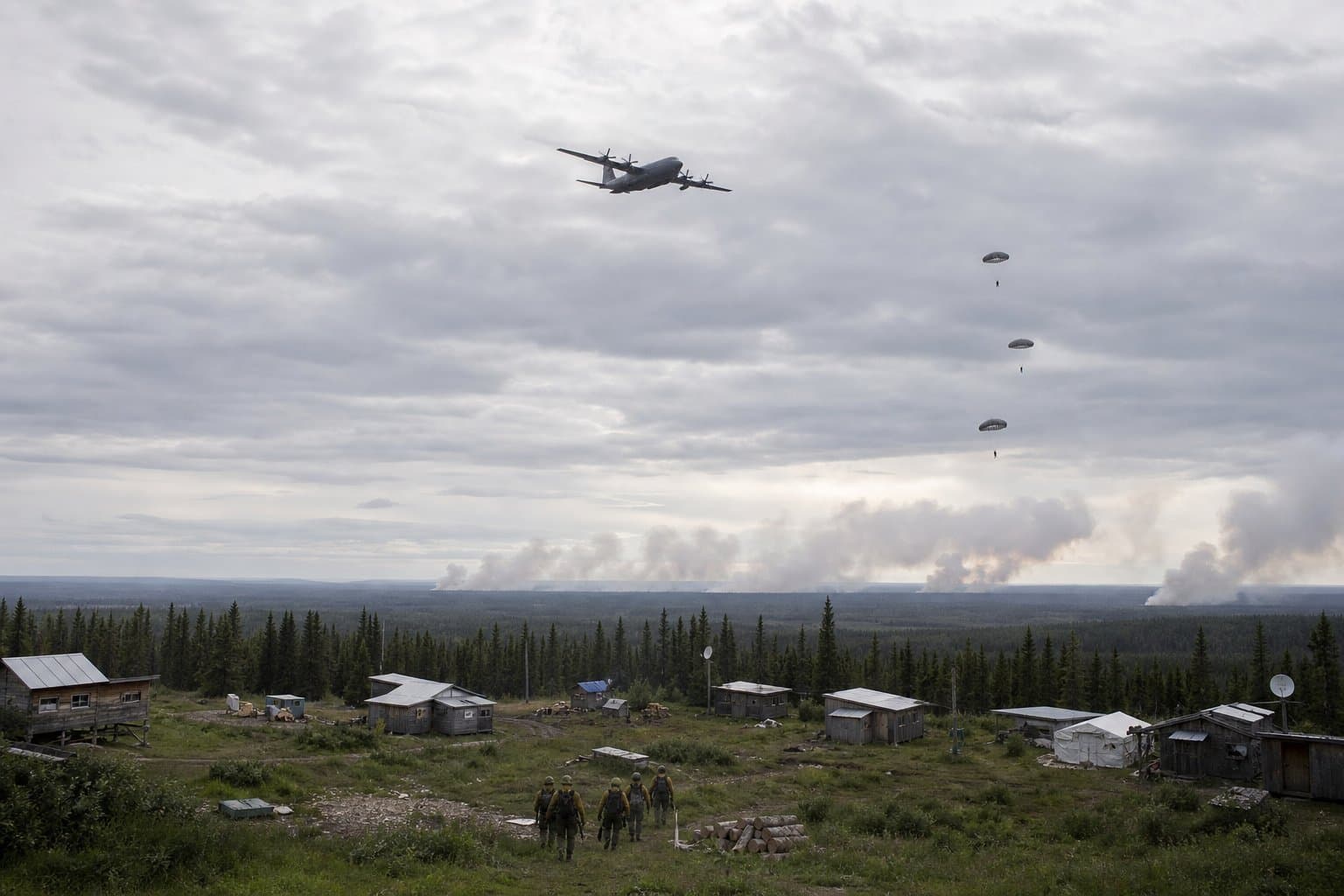
Three wildfires ignited by lightning are burning within miles of Native allotments and remote cabins in western Alaska, with smokejumpers and water scoopers responding to simultaneous fronts near Huslia and Galena as of Wednesday evening.
The Three Fires
The Horseshoe Fire sits 11 miles east of Huslia, just east of Willow Lake. Two Native allotments east of the lake are within a mile of the fire. Smokejumpers circling overhead before their jump estimated the fire at 30 to 50 acres, burning in spruce with pockets of hardwood, torching in isolated spots and spreading east. Huslia is a Koyukon Athabascan village on the Koyukuk River, surrounded by boreal spruce forest and allotment lands with no road connection to the outside.
The Bishop Fire is burning 25 miles north of Galena inside the Koyukuk National Wildlife Refuge, roughly four miles south of a Native allotment. It was initially estimated at 15 acres and was not immediately threatening any sites of value. Twelve smokejumpers are working it. The Blueberry Fire reached an estimated 100 acres before water scoopers dropped on about half of it and were then reassigned to the Horseshoe Fire. Cabins sit five miles north of the Blueberry Fire.
A 19-Fire Surge
These three fires are part of a 19-fire surge across Alaska over two days. Tuesday alone produced 3,718 recorded lightning strikes, concentrated heavily in western Alaska and up to the North Slope. As of 8 p.m. Wednesday, 2,326 recorded strikes followed a similar pattern but reached slightly farther into Central Alaska. The U.S. Wildland Fire Service, which manages suppression across 191.5 million acres in the northern half of the state, said most of the new starts have been corralled quickly. Of the 19 fires, 15 fell within its protection area, and only a handful required response from smokejumpers and aircraft, with some successfully contained and demobilized within a few days.
The agency warned that more ignitions are likely. "It's a good thing, because there will likely be more new ignitions as a hot and dry trend continues across northern Alaska this week," the U.S. Wildland Fire Service said. As of 8 p.m. Wednesday, 322 wildfires had burned an estimated 34,886 acres statewide this season. Of those, 175 were human-caused, 142 were naturally caused, mostly by lightning, and five remain undetermined.
Aircraft Reassignments
Water scoopers were reassigned from the Blueberry Fire to the Horseshoe Fire after dropping on about half of the Blueberry Fire. Eight smokejumpers remain assigned to the Blueberry Fire.
The U.S. Wildland Fire Service was established as a new Interior Department bureau in March 2026, with Brian Fennessy serving as its inaugural director. "Smokejumpers and water-dropping aircraft have done a good job corralling fires during initial response within the U.S. Wildland Fire Service's protection area, which covers 191.5 million acres across the northern half of the state," the agency said. The 2026 fire season is unfolding against a federal policy backdrop that emphasizes risk-informed decisions and coordination with tribal partners on lands where allotments and traditional use areas sit directly in the path of fire.
Source: U.S. Wildland Fire Service, U.S. Wildland Fire Service: U.S. Wildland Fire Service Tackles Multiple New Wildfires After Lightning in Western Alaska – Alaska Wildland Fire Information.
Made by our human newsroom with AI. How humans and AI work here · Grow with our newsroom
Stay informed. Support what matters.
Free, permanent access to local news you can verify. Subscribe to support Maggie AlaskaNews and go ad-free.
Related Coverage
Five wildfires burning across Interior and Western Alaska as Siruk reaches 60% containment
Alaska News · 3mo ago
New fire near Bettles strains crews
Alaska News · 3mo ago
NWS issues overlapping fire-weather alerts across northern Alaska through July 9
Alaska News · 2mo ago
Lightning Lights Up Delta Junction, Then the Rain Comes
Alaska News · 3mo ago
Second Fire in Two Weeks Ignites Near Ambler on Kobuk River
Alaska News · 3mo ago
Comments
Sign in to leave a comment.
No comments yet. Be the first to share your thoughts.