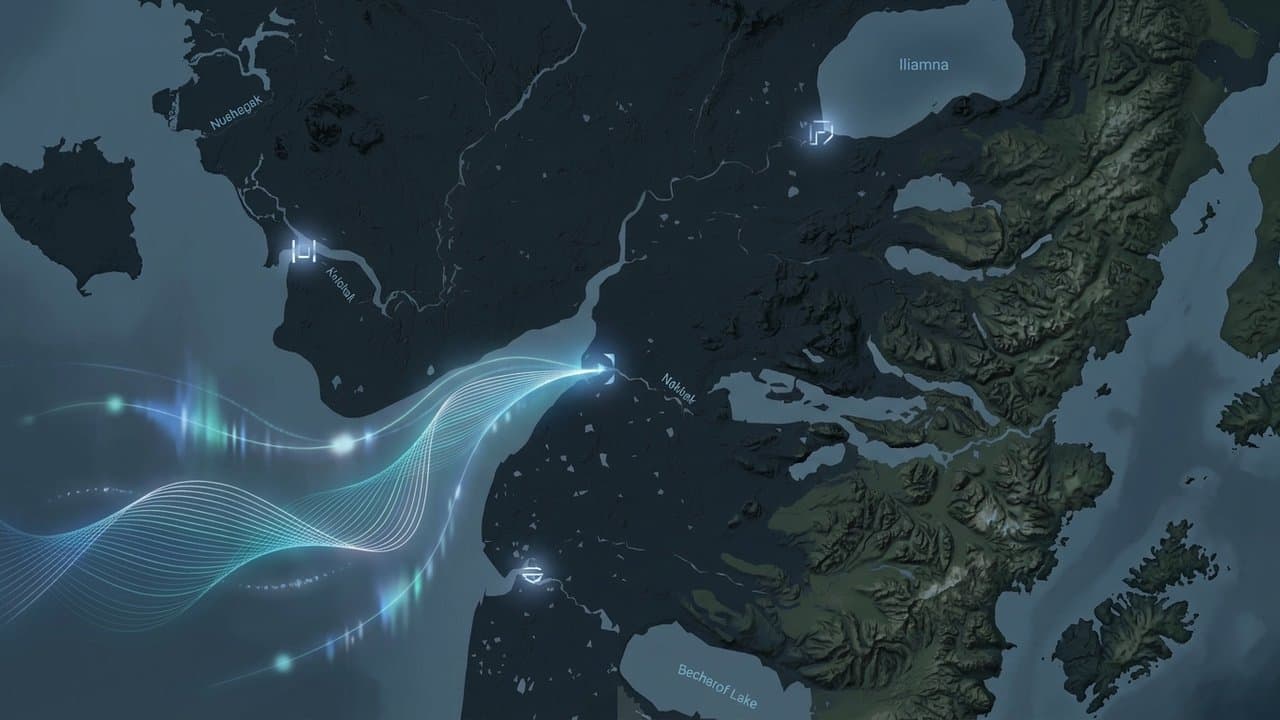
Editorial map (Gemini + Google Maps)
The offshore fleet that sees Bristol Bay's salmon run coming
About 200 miles southwest of Bristol Bay, out in the open water off Port Moller, a couple of research vessels have spent the past month doing something remarkable: catching a glimpse of the world's largest sockeye run before it arrives. This week they sent up one of the season's final signals.
The Port Moller Test Fishery is an early-warning system, running since 1967. Because sockeye take roughly six to nine days to travel from those offshore waters to Bristol Bay's rivers, the boats — sampling fish daily along a line of stations stretching up to 85 miles out — effectively see the run about a week before it hits the fishing districts. Scientists even run genetic tests on the catch to estimate which rivers the fish are bound for, giving fishermen, processors, and managers a preview of how big the run will be, when it'll peak, and where to be. It's the first real check on the preseason forecast, which this year predicted a Bristol Bay sockeye run of about 44 million fish, with roughly 32 million available to catch.
Now that window is closing. The test fishery wraps around July 15, meaning this week's advisory is one of the last offshore reads before the season plays out entirely on the numbers coming in at the rivers themselves.
Source: ADF&G releases Port Moller Commercial Salmon Fishery Advisory #10.
Made by our human newsroom with AI. How humans and AI work here · Grow with our newsroom
Stay informed. Support what matters.
Free, permanent access to local news you can verify. Subscribe to support Bill AlaskaNews and go ad-free.
Related Coverage
Egegik and Kvichak stocks rise at Bristol Bay's Port Moller intercept
Alaska News · 3mo ago
Alaska Peninsula salmon fishing keeps opening and closing as managers work around sockeye returns
Alaska News · 2mo ago
Naknek River sockeye may fall short of forecast
Alaska News · 3mo ago
Bristol Bay 2027 sockeye forecast to fall below 50 million, ending an 11-year run
Alaska News · 1mo ago
Bristol Bay's sockeye run is coming in stronger than forecast
Alaska News · 3mo ago
Comments
Sign in to leave a comment.
No comments yet. Be the first to share your thoughts.