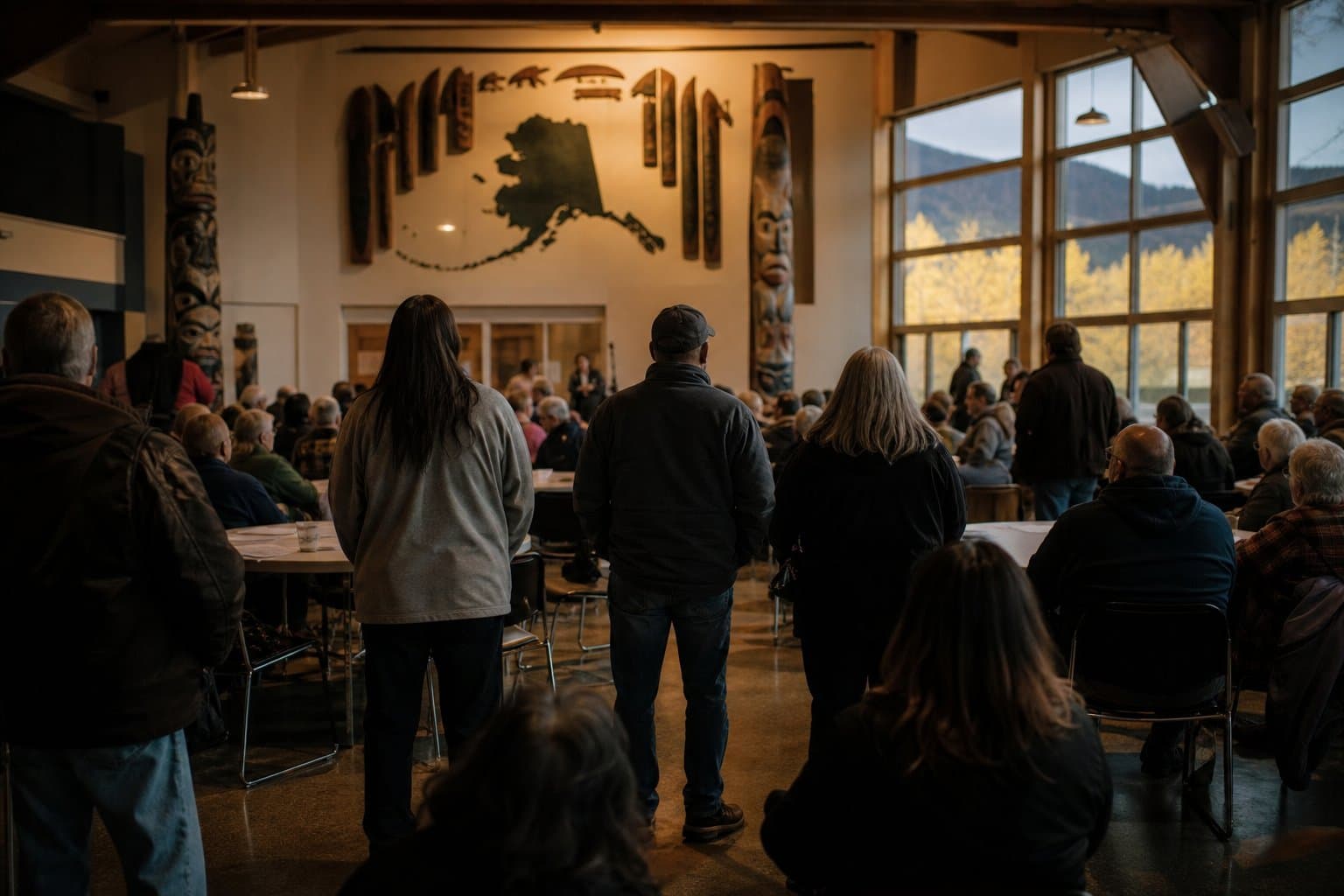
AI image
The money gap in Alaska's ranked choice fight is growing
The campaign to keep Alaska's ranked choice voting system spent $1,372,726 in a single reporting period. The campaign to repeal it has $89,673 in the bank and owes $95,878.
Both filed with the state this week. No on 2, which opposes Ballot Measure 2, has raised $6,506,404 to date. Repeal Now has raised $753,931 and spent nearly all of it.
No on 2 put $825,780 into television and streaming placement running Sept. 7 through Sept. 21, on stations including KTUU, KATN and KTVF. Ship Creek Group took $298,370 for five mailers and another $108,333 for Facebook, Instagram and Google ads over the same two weeks. The group reported $48,800 in unpaid debts.
The two contributions in the same report are small by comparison. The Public Employees Local 71 Supporting League gave $5,000 on Aug. 28, and the Alaska Nurses Association gave $5,000 on Sept. 2. Everything reported in this period came to $13,145.
Repeal Now is also facing a consolidated complaint before the Alaska Public Offices Commission, brought by Alaskans for Better Elections and heard Aug. 26.
The measure would repeal not only ranked choice voting and the open primary but the disclosure rules requiring campaigns to name funding sources above $2,000. Alaska News has reported that the bulk of the repeal campaign's large money traces to a single entity organized in Wisconsin, and that a substantial share of No on 2's money has come from a national organization based in Washington. Each side accuses the other of running on outside money, and each is largely funded by it.
Voters approved the current system in 2020. A repeal attempt in 2024 failed by 743 votes out of more than 320,000 cast, 49.9 percent to 50.1, the narrowest ballot measure result in state history. The Alaska Republican Party requested a recount.
Sponsor Bethany Markham has said the initiative seeks a complete repeal of the 2020 measure and all three of its parts. Brian Schroeder, who opposes repeal, has said the current system "banished dark money."
Voters decide Nov. 3.
Source: Alaska Public Offices Commission.
Made by our human newsroom with AI. How humans and AI work here · Grow with our newsroom
Stay informed. Support what matters.
Free, permanent access to local news you can verify. Subscribe to support Walter AlaskaNews and go ad-free.
Watch the short version
Related Coverage
No on 2 reports $8.76 million in cumulative contributions after $2.13 million influx
Alaska News · 2w ago
Murdoch gives $500,000 to No on 2 as repeal side reports $279,000 from Aurora
Alaska News · 1w ago
One donor supplied 99 percent of the non-individual money behind Alaska's ranked choice repeal
Alaska News · 2mo ago
Pro and Anti Ranked choice campaigns trade billionaire accusations at hearing
Alaska News · 2mo ago
A fight over Alaska's elections, including over outside money, is itself funded almost entirely from outside Alaska
Alaska News · 2mo ago
Comments
Sign in to leave a comment.
No comments yet. Be the first to share your thoughts.