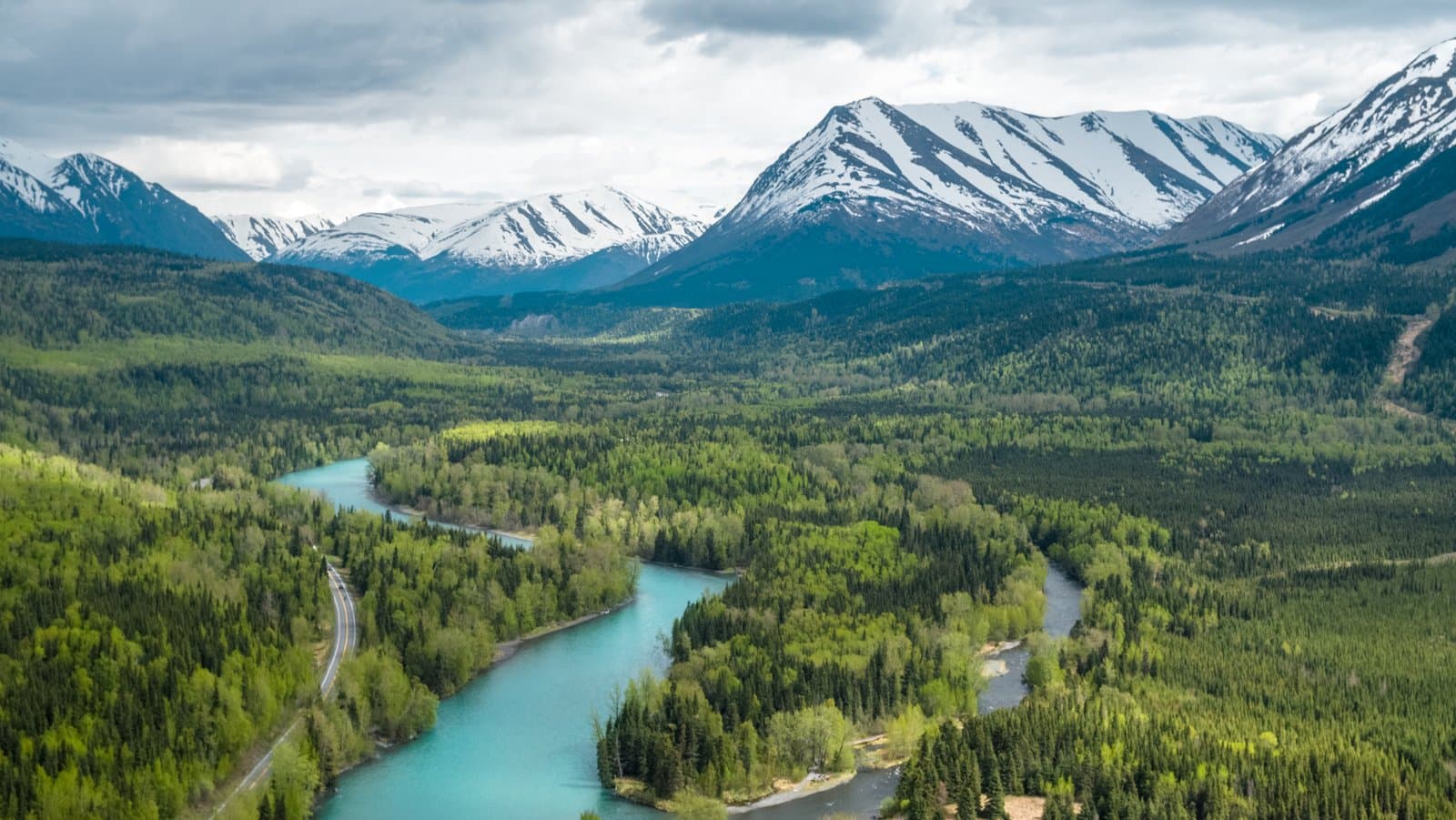
Photo by Cale Green
The Kenai's kings are closed again — another summer without Alaska's most iconic salmon
For the second consecutive year, no one will be allowed to catch a king salmon in the Kenai River. The Alaska Department of Fish and Game has closed all Kenai king fishing — both the early run and the late run, including catch-and-release — through August 15, under a pair of emergency orders that effectively cancel the season.
The closure is procedural language. What it represents is harder to read in an order number.
The Kenai River was, for decades, the holy grail of king salmon fishing in the world. Eight of the ten largest sport-caught kings on record came from its waters. The biggest of them — a 97-pound, 4-ounce fish landed by Soldotna auto dealer Les Anderson on May 17, 1985 — still holds the all-tackle world record. Anglers built whole vacations and entire careers around the chance to fish that river. Lodges, guides, tackle shops, and small Kenai Peninsula towns built businesses around the kings.
That world has been shrinking for fifteen years. Through 2009, the Kenai's late-run king salmon averaged about 53,000 returning fish a year. In 2004, the count topped 91,000. Since 2017, the run has failed to meet its minimum escapement goal every year, triggering closures or severe restrictions every season. The Board of Fisheries designated the late run a stock of concern in 2020 and adopted a formal recovery action plan in 2024, setting a recovery goal of 14,250 to 30,000 returning kings of spawning size — itself a fraction of what the river produced a generation ago.
The 2026 closures track that arc. ADF&G's sonar at river mile 14, in continuous operation since 1987, will keep counting fish as they pass — providing the in-season data the department uses to decide whether escapement goals are being met.
Why the run has collapsed is contested. Researchers and managers point to some combination of changing ocean conditions, warming North Pacific temperatures, predation by recovering populations of marine mammals, commercial bycatch from non-target fisheries, and freshwater habitat changes. None of those explanations alone accounts for the decline. None can be quickly reversed.
The Kenai isn't quite empty of fish or fishermen. The sockeye run has remained strong, and the guiding industry has increasingly pivoted to sockeye-focused trips to keep going. Russian River sockeye are entering the lower Kenai now, with the Russian River weir slated for installation June 3. Anglers can still target sockeye, rainbow, and other species under standard gear restrictions. On the Kasilof River, hatchery king harvest remains legal through June 30 — one fish, 20 inches or longer, wild fish released immediately.
For Kenai king fishing itself, though, this summer joins a lengthening list. Another season Les Anderson's 1985 record stays unbroken. Another year the river runs and the rods stay down.
Based on a press release from Alaska Department of Fish and Game.
Made by our human newsroom with AI. How humans and AI work here · Grow with our newsroom
Stay informed. Support what matters.
Free, permanent access to local news you can verify. Subscribe to support Bill AlaskaNews and go ad-free.
Related Coverage
Kenai River king salmon fishery closed through mid-August 2026
Alaska News · 4mo ago
The Mat-Su Valley's king salmon fisheries are closed — Anchorage's closest king water joins the Kenai on the bench
Alaska News · 4mo ago
Anchor River, Deep Creek closed through mid-July as king salmon returns fall short
Alaska News · 4mo ago
Mat-Su king salmon fisheries closed amid conservation concerns
Alaska News · 4mo ago
A storied Alaska king run falls short again — the Nushagak goes catch-and-release Sunday
Alaska News · 3mo ago
Comments
Sign in to leave a comment.
No comments yet. Be the first to share your thoughts.