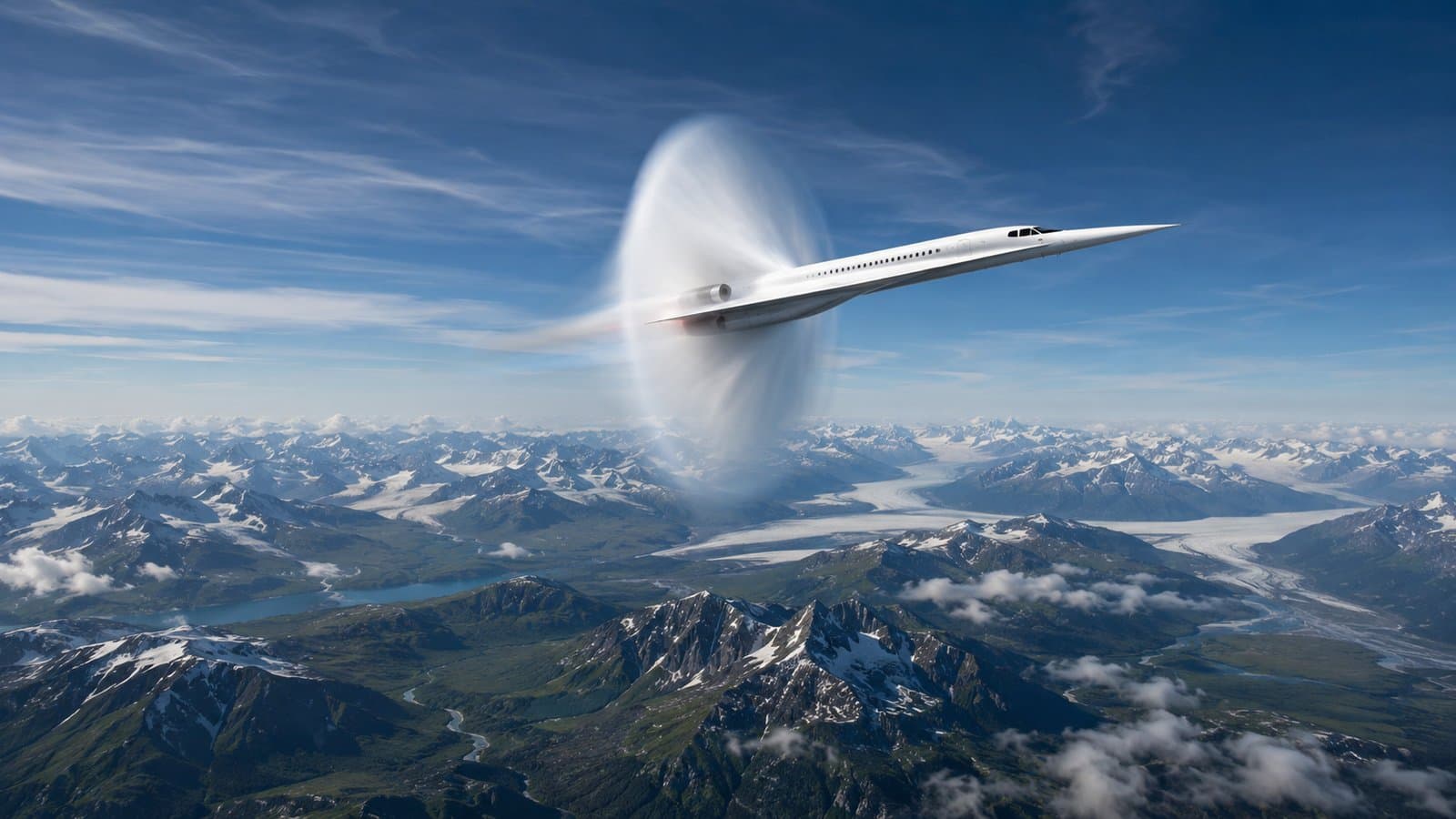
Generated image
The FAA wants to end the 50-year ban on supersonic flight — and Alaska has the sky for it
For more than half a century, it's been illegal to fly faster than sound over the United States. The rule, on the books since 1973, is what kept the Concorde subsonic over land and effectively grounded the dream of coast-to-coast supersonic travel. Now the Federal Aviation Administration wants to lift it.
The agency has proposed scrapping the blanket ban, calling it "outdated and no longer appropriate." What doomed supersonic flight over land was the sonic boom — the thunderclap a plane drags behind it when it breaks the sound barrier. New designs and flight techniques can now soften or redirect that boom so it never reaches the ground, and the FAA would allow supersonic flights as long as no boom is heard below. The move follows a 2025 executive order pushing the U.S. to lead the next generation of supersonic aviation.
If supersonic travel does come back, few places stand to feel it like Alaska. This is a state defined by distance, where a trip to the Lower 48 is a serious journey — and a state with something supersonic flight badly needs: vast stretches of sky over almost no one, exactly the kind of empty airspace where a jet could break the sound barrier without a boom bothering a soul. Anchorage, already one of the busiest cargo hubs on Earth and a waypoint on the polar routes between America and Asia, sits right at the crossroads.
It's far from settled — the proposal is open for public comment through mid-August, and separate rules for takeoff and landing noise still have to be written. But after 50 years, the door to flying faster than sound over American soil, Alaska's included, is finally being pushed open.
Source: Federal Aviation Administration, Federal Aviation Administration: Enabling Supersonic Overland Flight.
AI-assisted. How we use AI
Stay informed. Support what matters.
Free, permanent access to local news you can verify. Subscribe to support Alaska News and go ad-free.
Related Coverage
As Anchorage cements its role as a global cargo hub, the growth is colliding with its neighbors
Alaska News · 1mo ago
Anchorage airport noise study weighs which measures to recommend; public comment Aug. 25
Alaska News · 1mo ago
The feds are tightening subsidies for flights to small towns, but Alaska is exempt by name
Alaska News · 1mo ago
A permitting bill could open the federal fast lane to Alaska projects
Alaska News · 2mo ago
Alaska's small planes get until 2034 to upgrade altimeters — if they fly Outside
Alaska News · 2mo ago
Comments
Sign in to leave a comment.
No comments yet. Be the first to share your thoughts.