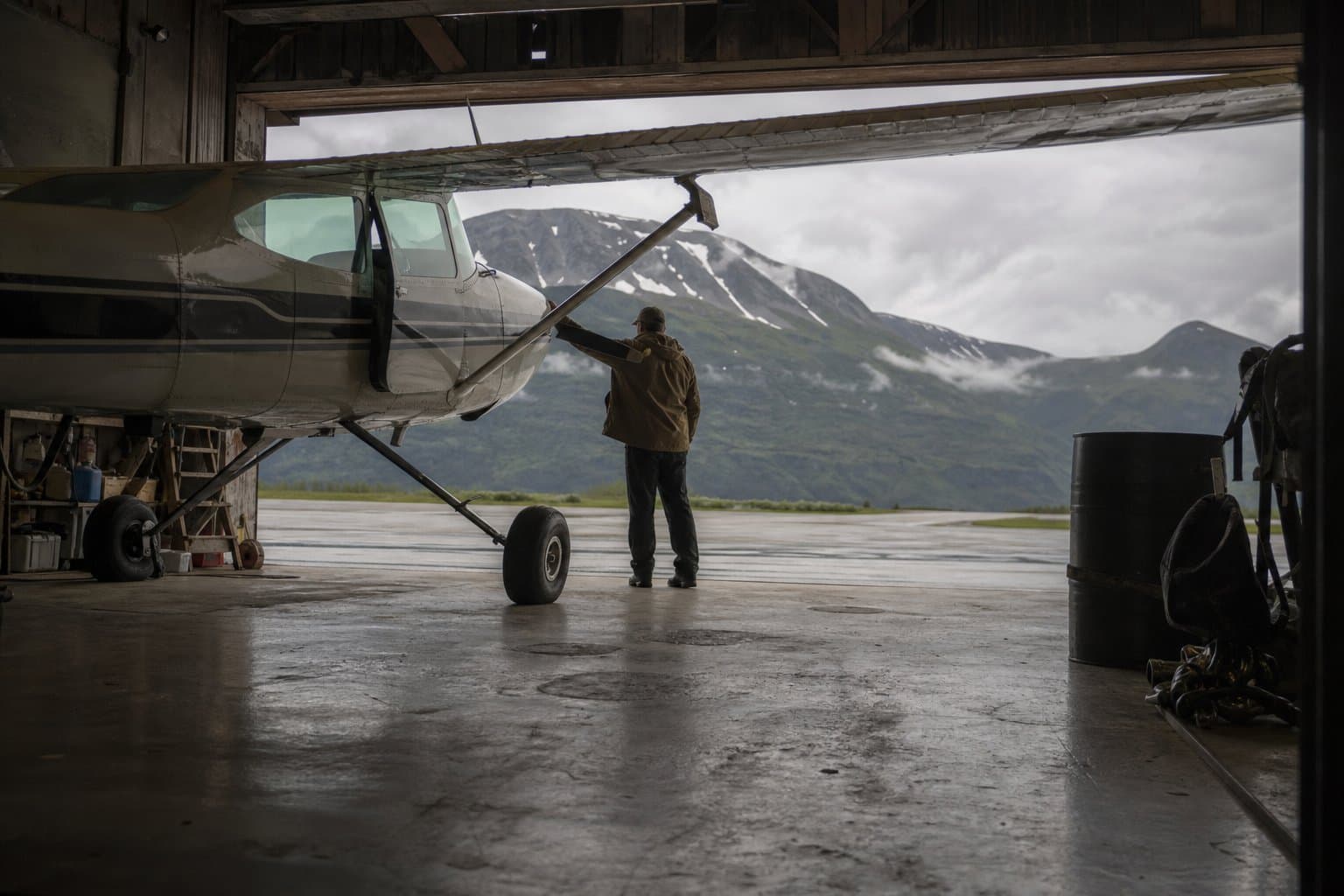
AI image
Supreme Court to hear Alaska bush pilot's fight over $95,000 plane seized for a six-pack
The U.S. Supreme Court agreed Monday to hear a challenge from Fairbanks bush pilot Kenneth John Jouppi, who stands to lose his $95,000 Cessna because a passenger carried a six-pack of Budweiser on a flight to Beaver, a dry Interior Alaska village.
The court added Jouppi v. Alaska to its 2026-27 oral argument docket. The outcome could shape how courts measure whether a forfeiture violates the Eighth Amendment's Excessive Fines Clause nationwide. It will also directly affect how Alaska's alcohol-importation forfeiture law applies to bush pilots serving dry communities.
The Alaska Ruling
The Alaska Supreme Court upheld the forfeiture in April 2025. Writing for a unanimous court, Justice Jude Pate held that "the forfeiture is not grossly disproportional to the gravity of the harm caused by the offense." The court evaluated the offense in the abstract rather than the specific facts of Jouppi's case. That approach conflicts with the Ninth Circuit, which requires review of the specific violator's actions. The petition, filed by the Institute for Justice and Fairbanks attorney Robert John, asks the Supreme Court to resolve that split.
The Pilot's Case
The petition describes Jouppi as a first-time offender convicted of a misdemeanor. The beer belonged to a passenger. Alaska law mandates forfeiture of aircraft used in violation of local-option and related alcohol statutes, with no discretion to weigh those individual facts. Samuel Gedge, senior attorney at the Institute for Justice, said the case was exactly what the clause was designed for: "The Excessive Fines Clause of the Constitution was built for cases like this."
The State's Position
Alaska officials have argued that illegal alcohol importation causes grave harm in rural communities. The Alaska Advisory Committee to the U.S. Commission on Civil Rights documented in 2019 that "alcohol is a major factor in high rates of suicide, domestic violence, and accidental injury in rural Alaska." The Alaska Supreme Court relied on those broader community harms to justify upholding the forfeiture. The Supreme Court will now examine that rationale against the question of whether excessiveness must be measured by the specific defendant's conduct rather than the offense in the abstract.
Oral argument is expected during the 2026-27 term.
Source: Alaska Department of Public Safety.
Made by our human newsroom with AI. How humans and AI work here · Grow with our newsroom
Stay informed. Support what matters.
Free, permanent access to local news you can verify. Subscribe to support Maggie AlaskaNews and go ad-free.
Related Coverage
The Legislature will spend $50,000 defending the seizure of a pilot's plane
Alaska News · 1mo ago
24 bottles of R&R, grounded short of Shungnak
Alaska News · 3mo ago
Inside a bootlegging pipeline into dry Alaska
Alaska News · 3mo ago
A Fairbanks man's fourth liquor license reaches the state board Tuesday, with no store attached
Alaska News · 2mo ago
Nome Airport Crossing Permit
Alaska News · 3mo ago
Comments
Sign in to leave a comment.
No comments yet. Be the first to share your thoughts.