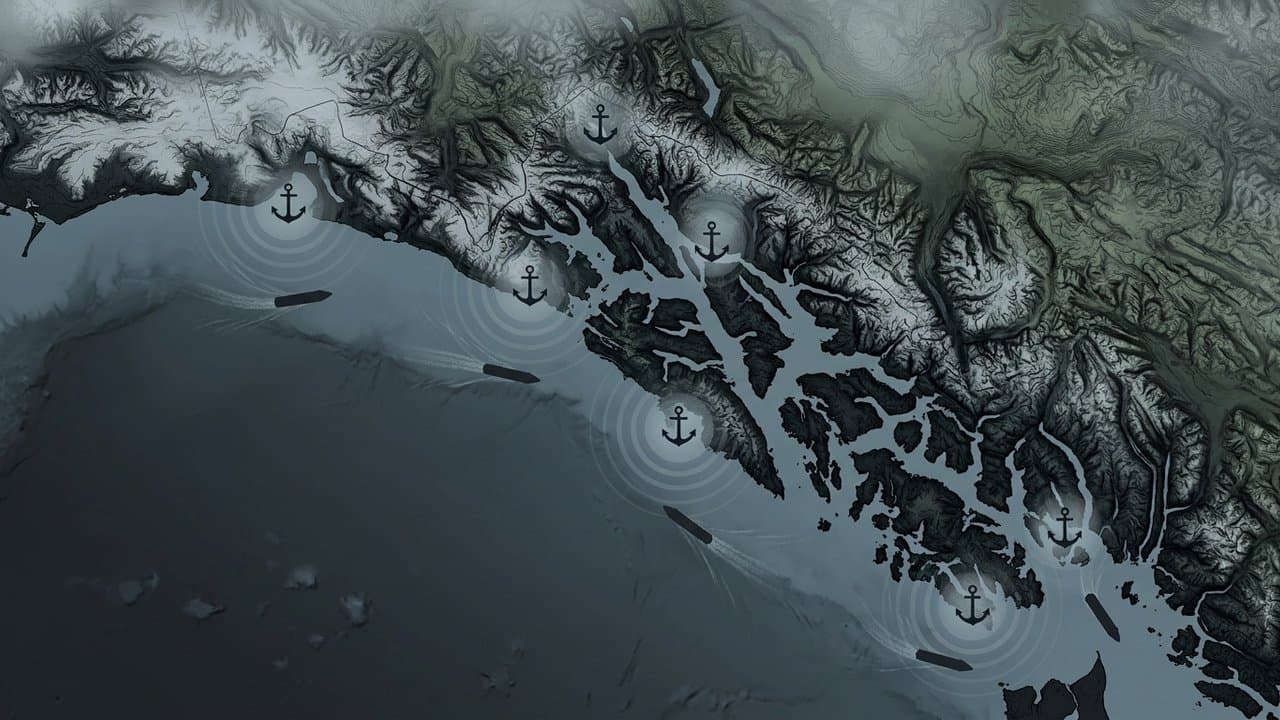
Editorial map (Gemini + Google Maps)
Southeast Alaska ports share a pattern: residents want stable or reduced cruise volumes
Residents across six Southeast Alaska cruise ports have told their local governments much the same thing: economic benefits from cruise tourism are real, but there is a point of diminishing return. A Port Communities of Alaska presentation prepared for Juneau's Visitor Industry Task Force 2.0 meeting on July 9 documents that pattern across Juneau, Sitka, Ketchikan, Skagway, Wrangell, and Haines, while also noting that communities looking for growth want to see slight increases in visitor numbers, not reductions.
A Regional Pattern
The presentation, compiled by Alexandra Pierce, Juneau's Visitor Industry Director, shows that each community has run its own public process on cruise management in recent years and arrived at similar conclusions. The PCOA's summary of common themes finds that busier communities want to see the same or reduced number of visitors, that tourism is positive for communities and economies but has a point of diminishing return, and that residents want local governments to do more to manage tourism. Sitka's tourism task force, convened in 2022 with final recommendations adopted in 2024, found that 70 percent of respondents agreed the ideal number of cruise tourists balances economic opportunity with quality of life. Sitka implemented a daily passenger cap of 7,000 in 2025. Ketchikan's community listening sessions produced a tourism strategy that links resident quality of life directly to tourism sustainability, stating that "when a place is a great place to live, it becomes a great place to visit."
Juneau's Caps in Global Context
Juneau's caps appear in a global comparison the PCOA presentation includes alongside destinations such as Venice, Amsterdam, Bar Harbor, Dubrovnik, and Santorini. "CBJ negotiated a daily limit of five ships and passenger caps of 16,000 (12,000 on Saturdays)," Pierce noted. That framework, agreed to by the cruise industry and approved by the City and Borough of Juneau Assembly through non-binding memorandums of agreement in 2023 and 2024, followed roughly 30 percent growth in annual cruise passengers after the pandemic, according to Pierce's May 7 tourism vision memo to the task force.
Regional Coordination and What Comes Next
The PCOA is planning a global fees study and plans to participate in a global port governance study. That work may provide context for comparing negotiated and legislated approaches used in ports around the world. Pierce's memo frames the task force's current work as building the tools future decision-makers will need: "Our job is to give future decision makers the tools to establish informed policies grounded in data."
The presentation also flags a structural reality of the regional cruise network. Decisions at one port ripple to others. As the dominant cruise port in Southeast Alaska, Juneau's cap choices affect itinerary planning across the region, a dynamic the PCOA was formed in 2020 specifically to address through inter-municipal coordination.
The VITF 2.0 is scheduled to take up the PCOA presentation and draft long-term recommendations at its July 9 meeting, with a follow-up session set for July 16. The task force's mandate runs through the end of October 2026.
Source: Juneau Visitor Industry Task Force.
AI-assisted. How we use AI
Stay informed. Support what matters.
Free, permanent access to local news you can verify. Subscribe to support Walter AlaskaNews and go ad-free.
Related Coverage
Juneau weighs what kind of cruise town it wants to be
Alaska News · 3mo ago
Juneau isn't changing its cruise caps — it's deciding how to decide
Alaska News · 3mo ago
Juneau task force takes up cruise cap criteria Thursday, with dock pressure looming
Alaska News · 2mo ago
A Juneau task force wants congestion data to support limiting cruise calls
Alaska News · 1mo ago
Juneau tourism task force takes final public testimony Oct. 15
Alaska News · 1mo ago
Comments
Sign in to leave a comment.
No comments yet. Be the first to share your thoughts.