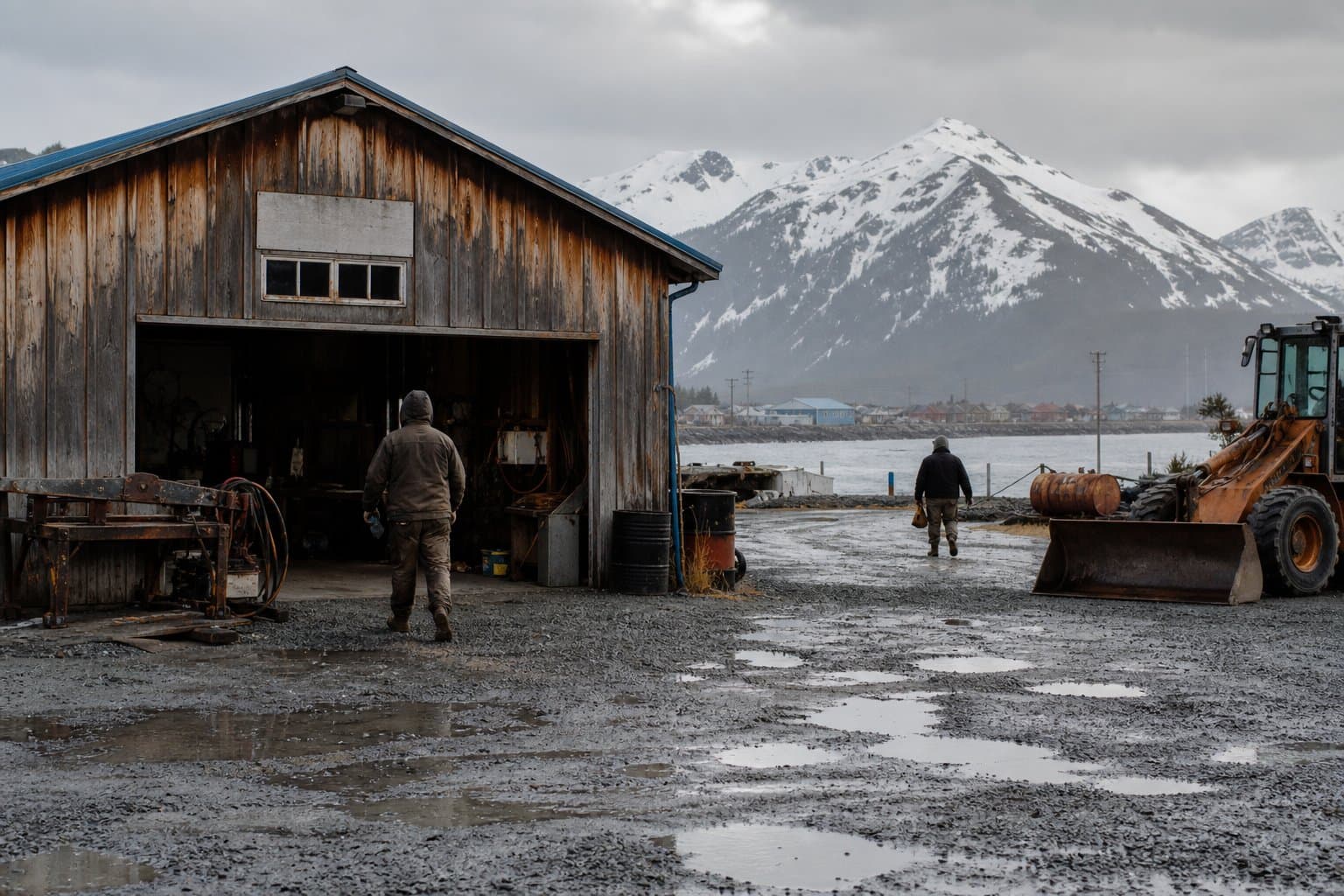
AI image
SBA rule drops 8(a) disadvantage presumption for individual owners, leaves Native corporations untouched
Alaska Native corporation-owned firms will keep their eligibility for federal 8(a) contracts under a final rule from the U.S. Small Business Administration, which strips an automatic advantage for individually owned applicants but leaves entity-owned firms, including those owned by Alaska Native corporations, untouched.
The 8(a) program is one of the federal government's main tools for steering contracts to disadvantaged businesses, setting aside a share of federal work for firms that qualify as socially and economically disadvantaged. For individual owners, the rule ends a long-standing presumption that members of certain racial and ethnic groups automatically qualify; going forward, those applicants must prove their disadvantage under new standards, a change the SBA said brings the program in line "with constitutional requirements and the law."
None of that touches Alaska Native corporations, and the reason they sit in a category of their own traces back four decades. In 1986, Congress amended the Small Business Act to let Native corporations and tribes into 8(a) contracting, and it gave them terms available to no one else: a business majority-owned by an ANC is deemed by regulation to be owned and controlled by Alaska Natives and economically disadvantaged, without the individual proof other applicants must supply. ANC-owned firms can also pursue contracts of unlimited size through sole-source awards, an advantage that has made them formidable federal contractors. The SBA's new rule reaffirms that this eligibility "does not in any way amend or affect" entity-owned businesses.
That distinction is not a technicality in Alaska; it underwrites a significant share of the Native economy. Alaska's 12 regional corporations reported $13.5 billion in combined revenue in 2022, roughly two-thirds of it earned outside the state, much of it through federal contracting. They distribute an estimated $300 million to $350 million a year in dividends, elder benefits and scholarships to some 150,000 shareholders statewide. Contracts won in Washington, in other words, become dividends in villages that have few other engines of cash.
The corporations that generate that money exist because of a fight led, in part, by the man quoted on the program's economics at a recent Commonwealth North forum in Anchorage. Emil Notti, a Koyukon Athabascan, was the first president of the Alaska Federation of Natives, which he helped convene in 1966 and which drove the lobbying effort behind the Alaska Native Claims Settlement Act of 1971, the law that created the regional and village corporations in the first place. "We know rural Alaska has many small communities that are economically disadvantaged," Notti said. "These communities fit the program definition for inclusion."
For all that the rule leaves ANC eligibility intact on paper, it does not resolve a separate problem. Alaska News has reported that the SBA stopped processing new 8(a) applications from Alaska Native corporation subsidiaries while the administration reviews federal procurement, a freeze that has blocked new contracting access even as the underlying eligibility stands untouched. The final rule does not address that freeze.
Source: U.S. Small Business Administration, U.S. Small Business Administration: Reforms to 13 CFR 124.103 To Remove SBA's 8(a) Program's Rebuttable Presumption of Social Disadvantage for Individually Owned Firms Only. Reforms Do Not Impact Entity-Owned Firms ().
Drafted with AI. Edited by Cale Green (1 revision). No full editor review is on record. Who is accountable.
Stay informed. Support what matters.
Free, permanent access to local news you can verify. Subscribe to support Alaska News and go ad-free.
Related Coverage
Native corporations keep 8(a) status as individuals face a new test
Alaska News · 1w ago
SBA 8(a) proposal leaves Native corporation carveout intact
Alaska News · 3mo ago
Trump administration stalls 8(a) applications for Alaska Native corporations
Alaska News · 4mo ago
SBA freeze threatens Alaska Native corporations' $9B federal footprint
Alaska News · 4mo ago
Bering Straits bets big on federal contracting, just as the business gets harder
Alaska News · 2mo ago
Comments
Sign in to leave a comment.
No comments yet. Be the first to share your thoughts.