Point Thomson Gas Blowdown Could Cost Alaska 65M Barrels of Condensate
State regulators told lawmakers Wednesday that switching Point Thomson from gas cycling to blowdown for the proposed gas pipeline would sacrifice roughly 65 million barrels of condensate, a petroleum product one senator called the most valuable on Alaska's North Slope.
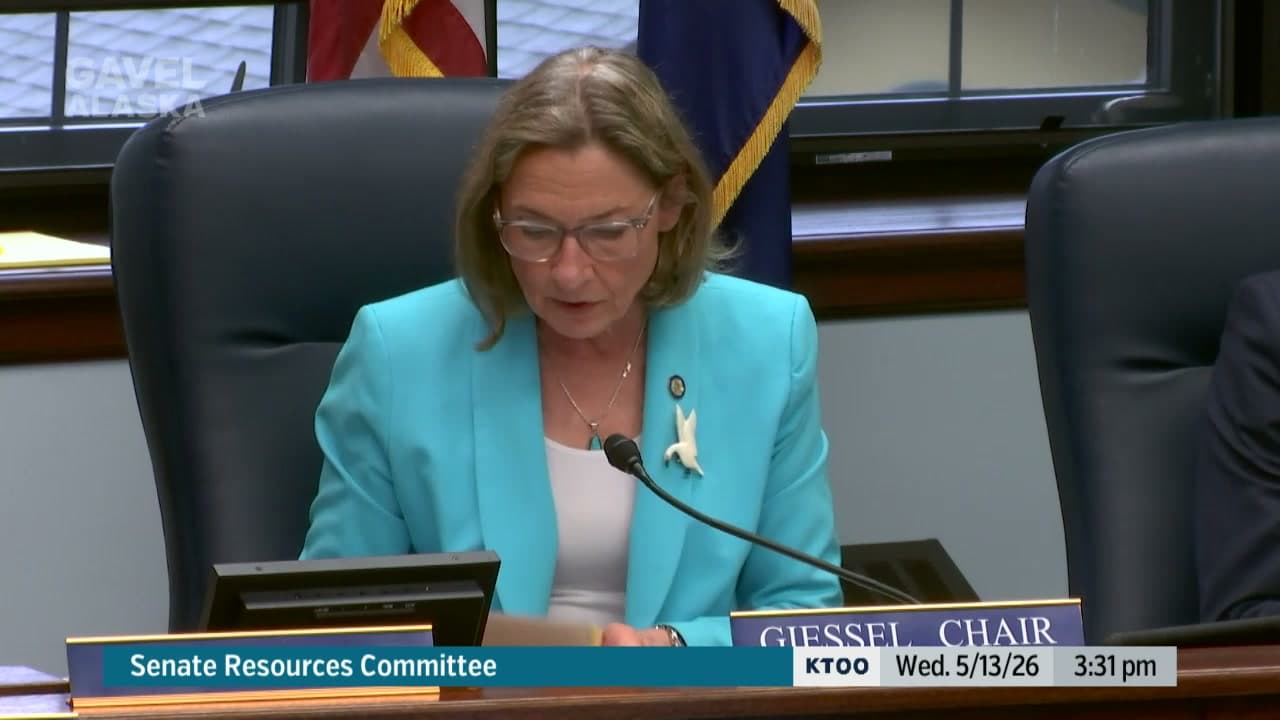
The Alaska Oil and Gas Conservation Commission presented the trade-off to the Senate Resources Committee during the 29th hearing on Senate Bill 280. This was the committee's 30th meeting on the broader gas line topic. Gas cycling would recover approximately 165 million barrels of condensate versus 100 million under a blowdown scenario, commissioners said. The shift matters because AOGCC development materials have long described gas cycling as Point Thomson's preferred development concept, and the field has been producing condensate since April 2016 under that approach.
Alaska News previously reported that the gas tax bill could swing state revenue by hundreds of millions of dollars over the pipeline's life. The Senate panel has been examining LNG project economics and megaproject risks as it weighs changes to Alaska's oil and gas tax structure. Point Thomson, a gas-condensate field 60 miles east of Prudhoe Bay, has been the subject of decades of litigation over development plans. The field holds an estimated 6 trillion cubic feet of natural gas and up to 330 million barrels of condensate, according to current operator estimates. Hilcorp became operator in 2022.
The Condensate Question
"The condensate at Point Thomson is probably the most valuable substance on the North Slope. It is extraordinarily valuable," Senator Bill Wielechowski said during the hearing.
Dave Robie, a senior petroleum engineer with the commission, explained that condensate is liquid hydrocarbons at the surface that exist as gas below ground. When pressure is reduced, the liquids can come out of the gas. Commissioner Greg Wilson added that condensate is a low-density, high-gravity mixture of light hydrocarbon liquids that separates from raw natural gas when pressure and temperature drop below the hydrocarbon dew point.
Point Thomson's condensate yield is relatively lean at about 55 barrels per million cubic feet of gas, Wilson said. Some retrograde condensate fields produce hundreds of barrels per million cubic feet. But even at that yield, the total volume at stake is substantial.
Robie said gas cycling would recover about 165 million barrels of condensate from the field's estimated 330 million barrels in place. However, he noted this figure represents what is technically recoverable and would be economically viable only under the best-case scenario of field parameters, a situation with perhaps a 5 percent chance of occurring. A blowdown scenario would recover roughly 100 million barrels, about two-thirds of what cycling would yield.
The Energy Trade-Off
The commission emphasized that while blowdown sacrifices condensate, it recovers more total energy measured in barrels of oil equivalent. Gas cycling requires massive compression to maintain the reservoir's 10,000 pounds per square inch of pressure, twice the pressure at Prudhoe Bay and among the highest in the world.
"The amount of fuel usage necessary for the gas cycling project to process and recompress the gas so you can re-inject it will actually take more resource on a BOE equivalent out of the reservoir than you would be losing in the condensate from a gas sales project," Robie said.
The existing gas offtake order limits Point Thomson to 1.1 billion cubic feet per day, a rate set in 2015 based on Exxon's application and independent reservoir analysis. The current planned pipeline offtake is about 0.9 billion cubic feet per day. The extra capacity in the order was built in to allow for downtime and makeup production, Robie said.
The commission does not evaluate economics or the value difference between gas and condensate, Wilson said. Its mandate is to maximize ultimate recovery of the overall resource measured in barrels of oil equivalent. On that basis, the gas resource at Point Thomson is three times greater than the condensate resource.
"We do not have economists or anyone on staff to evaluate that sort of thing," Wilson said. "That would be with other agencies."
Reservoir Challenges
The commission outlined several technical challenges that have changed the Point Thomson picture since 2015, when the field's gas offtake order was issued. The current operator, Hilcorp, now estimates the field holds 6 trillion cubic feet of gas rather than the 8 trillion cubic feet Exxon estimated in 2015. The condensate yield has also proven leaner than initial projections.
Most significantly, the reservoir has shown unexpected compaction. The extreme pressure in the reservoir helps maintain open pore space in the rock. When pressure drops, the reservoir compacts, reducing both porosity and permeability and making it harder to move fluids through the formation.
"If you start to drop the pressure in that reservoir, you are going to see compaction within the reservoir, and so your porosity is going to be reduced, and that will adversely affect the deliverability," Wilson said.
The compaction issue also relates to condensate banking, a phenomenon where liquid droplets form and block gas flow when reservoir pressure drops below the dew point. This traps condensate in the reservoir and reduces the ability to produce gas. Maintaining pressure above the dew point is critical to avoid both condensate banking and the loss of condensate, commissioners said.
The commission said it may need to revisit the 2015 gas offtake order for Point Thomson given the new understanding of the field's behavior.
Questions About the Numbers
Wielechowski questioned the commission's figures, citing a PetroTel report prepared for an environmental impact statement a few years ago. That study said gas cycling for 20 years would produce 620 to 850 million stock tank barrels of liquid hydrocarbons versus 210 to 305 million under blowdown.
"Those numbers are wildly different than your numbers," Wielechowski said.
Wilson said he was not familiar with that study but that the commission's calculations are based on the current operator's estimates of gas resource and condensate yield. He said a study commissioned by the Department of Natural Resources before Point Thomson came online projected 500 million barrels of crude oil from the field's oil rim, but that estimate was based on assumptions that would be nearly impossible to meet. The department has backed away from those conclusions, he said.
The commission agreed to provide written answers to Wielechowski's questions comparing condensate and gas recovery under cycling versus blowdown scenarios.
What Happens Next
The Senate Resources Committee will continue hearings on the gas line tax bill. The commission's presentation focused on Point Thomson's role in the proposed Alaska LNG project, which would transport North Slope gas to tidewater for liquefaction and export. The project also includes a spur line to deliver gas to Interior Alaska communities.
The commission said revisiting the offtake order may be warranted based on the field's performance over the past decade and the new understanding of reservoir behavior.
This article is based on a public meeting — SRES-260513-1530 ().
AI-assisted. How we use AI Transcript byLucas Brown
Discussed in
Stay informed. Support what matters.
Free, permanent access to local news you can verify. Subscribe to support Alaska News and go ad-free.
Related Coverage
Senate panel debates gas pipeline tax structure in 26th hearing
Alaska News · 4mo ago
Department of Revenue presents Senate Finance with 25-scenario sensitivity analysis on Alaska LNG fiscal impact
Alaska News · 3mo ago
North Slope has two fields cleared for gas sales, AOGCC tells Senate
Alaska News · 3mo ago
Alaska LNG Tax Bill Stalls as Lawmakers Demand Project Cost Data
Alaska News · 4mo ago
Alaska Senate panel hears gas line bill with $900M annual tax break
Alaska News · 4mo ago
Comments
Sign in to leave a comment.
No comments yet. Be the first to share your thoughts.