AI image
Mat-Su Assembly Sets Hearing on License Plate Reader Ban
Mat-Su Borough residents can testify Tuesday, Sept. 15, on Ordinance 26-106, which would bar the borough from buying, funding or even querying an automated license plate reader. No acquisition of such a system appears among the 1,734 matters filed with the assembly between Jan. 5, 2023, and Sept. 10, 2026.
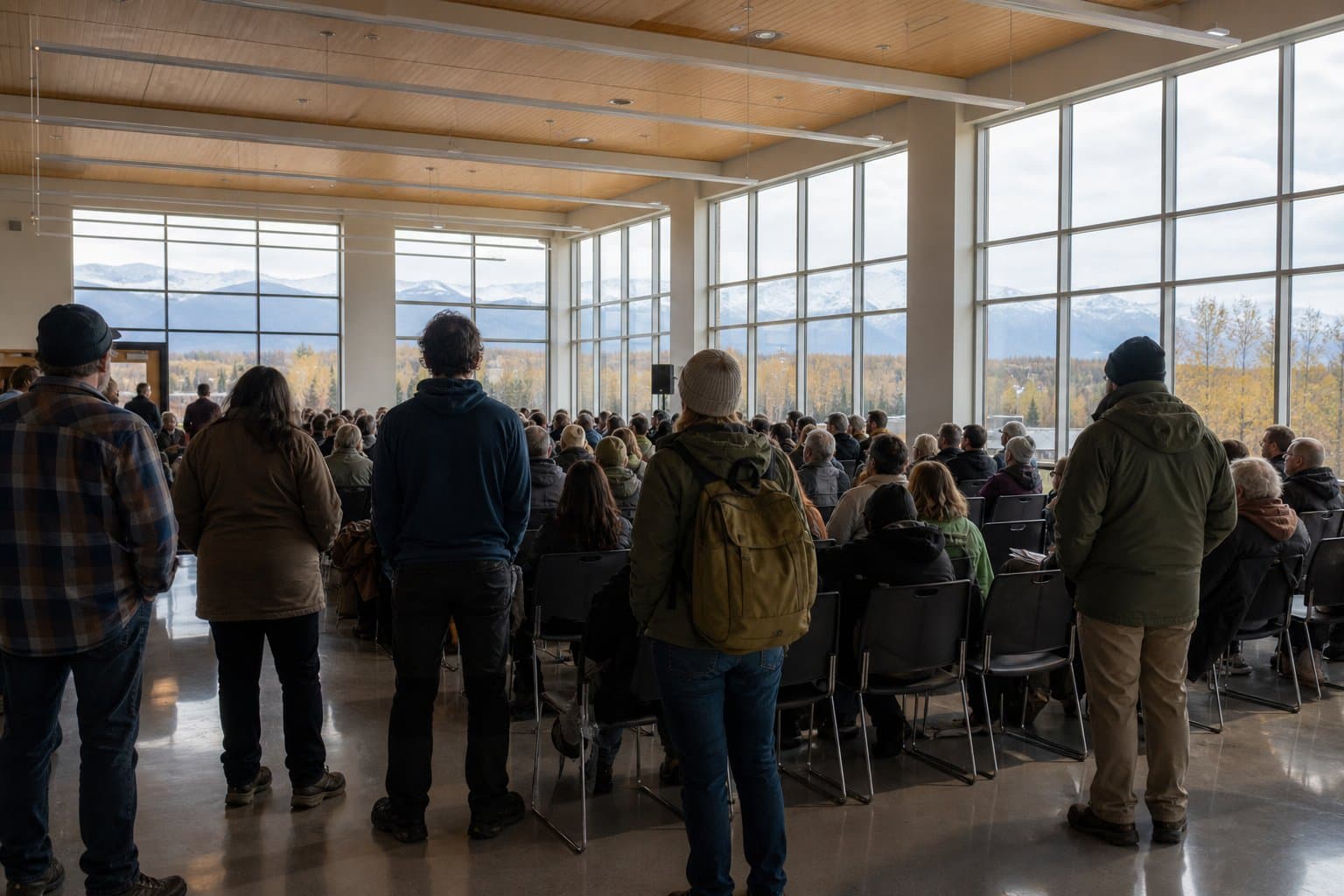
Testimony runs three minutes a speaker at 6 p.m. in the assembly chambers in Palmer, or by telephone on a toll-free number, pressing star three when the mayor calls the hearing.
What the Ordinance Would Prohibit
No borough department, division, employee or agent could acquire, lease, borrow, install, maintain or operate plate reader hardware, software or data collection systems on borough property or under a borough contract. No borough funds, personnel or resources could go toward any contract, memorandum of understanding or partnership involving plate reader data. Agreements signed in violation would be void from the outset. The ban would take effect on adoption.
The widest clause concerns data: the borough could not access, query, upload data to or receive data from any plate reader operator, network, database or private surveillance network, the route by which many local governments encounter the technology.
The ordinance defines a plate reader as one or more high-speed camera units, alone or combined with computer algorithms and optical character recognition, converting images of license plates, vehicle makes, models, colors and unique identifiers into computer-readable data. It says such systems create a permanent tracking record without reasonable suspicion or a warrant, that risks of sharing data with third-party or federal entities outweigh claimed public safety benefits, and that privacy is a fundamental protection under the United States and Alaska constitutions.
No law enforcement agency states a contrary view in the borough records. The national counterargument is on the record elsewhere: the National Institute of Justice reports that plate reader systems "can be used to identify vehicles associated with criminal activity, recover stolen vehicles, and locate wanted persons." Local governments across the country are weighing such claims against the privacy and data-sharing objections pressed by the ACLU and the Electronic Frontier Foundation.
No Record of Borough Ownership
The same search returned two security camera contracts, both for emergency services: $160,104 to Alcan Electrical and Engineering in October 2023 and $225,336 to Raven Electric in September 2024. The titles say security cameras and nothing more. The record establishes no borough acquisition, not that no plate reader operates in the valley.
The borough has no police department. A 2019 ordinance created a Police Powers Task Force to develop up to three prioritized, fiscally reasonable proposals for voters. The task force recommended two: a drug and property crimes task force and a core-area police service area, both non-areawide but including Houston. A late 2018 survey drew 602 responses: 69 percent called crime very serious, 41 percent said they had been a victim, 53 percent said the borough should look into police powers. Deputy Borough Manager George Hays, who chaired the task force, briefed the assembly in June 2024.
Policing is a state job, and the assembly said so the night the ordinance was introduced. On Sept. 1 it adopted a resolution, filed Aug. 18, describing the Alaska State Troopers and Alaska Wildlife Troopers as providing critical law enforcement services throughout the region and directing the manager to develop a facility proposal: a borough-built, borough-owned building on East Bogard Road across from Mat-Su Day School, leased to the state for trooper operations, administrative space, evidence storage and vehicle storage. The state occupies six leased facilities not built for the purpose, at about $475,000 a year plus operating costs.
The ordinance, filed Aug. 19, was introduced Sept. 1 on a motion by Assembly Member Ron Bernier. No record read here connects the two. Its prohibitions reach only borough departments, employees, agents and contractors; troopers and the Wasilla and Palmer police departments are not borough entities, leaving unaddressed what the ban would mean inside a borough-owned building a state agency occupies.
Sponsor, Signatures and What's Missing From the File
Assembly Member Michael Bowles is the sponsor and is quoted nowhere. The memorandum that would carry his reasoning was signed on his behalf by the borough attorney. Eight officials, including the information technology director, signed the routing sheet between Aug. 19 and Aug. 21, none of their positions recorded. The administration's recommendation is procedural: introduce and set for public hearing. Nothing in the file names an incident, proposal or vendor that prompted the ordinance, and no statement from the troopers or the cities appears. Whether the assembly votes Tuesday or amends the measure is not set in the documents.
Source: The Mat-Su Borough has no police department, and no licence plate reader appears anywhere in its legislative record. On Tuesday it holds a hearing on banning them outright ().
AI-assisted. No editor review is on record for this article. Who is accountable.
Stay informed. Support what matters.
Free, permanent access to local news you can verify. Subscribe to support Walter AlaskaNews and go ad-free.
Related Coverage
Mat-Su assembly member proposes borough ban on license plate readers
Alaska News · 2w ago
Ordinance would make police ask before buying surveillance tech
Alaska News · 3w ago
Anchorage Assembly takes up a $599,000 crime center purchase and surveillance limits
Alaska News · 1w ago
Anchorage weighs surveillance rules 11 months after buying the system
Alaska News · 2w ago
Mayor's substitute puts Anchorage's surveillance network before the Assembly Tuesday
Alaska News · 1d ago
Comments
Sign in to leave a comment.
No comments yet. Be the first to share your thoughts.