AI image
Koyukon elder ties Galena swallow decline to Air Force mosquito spraying in TCC bird booklet
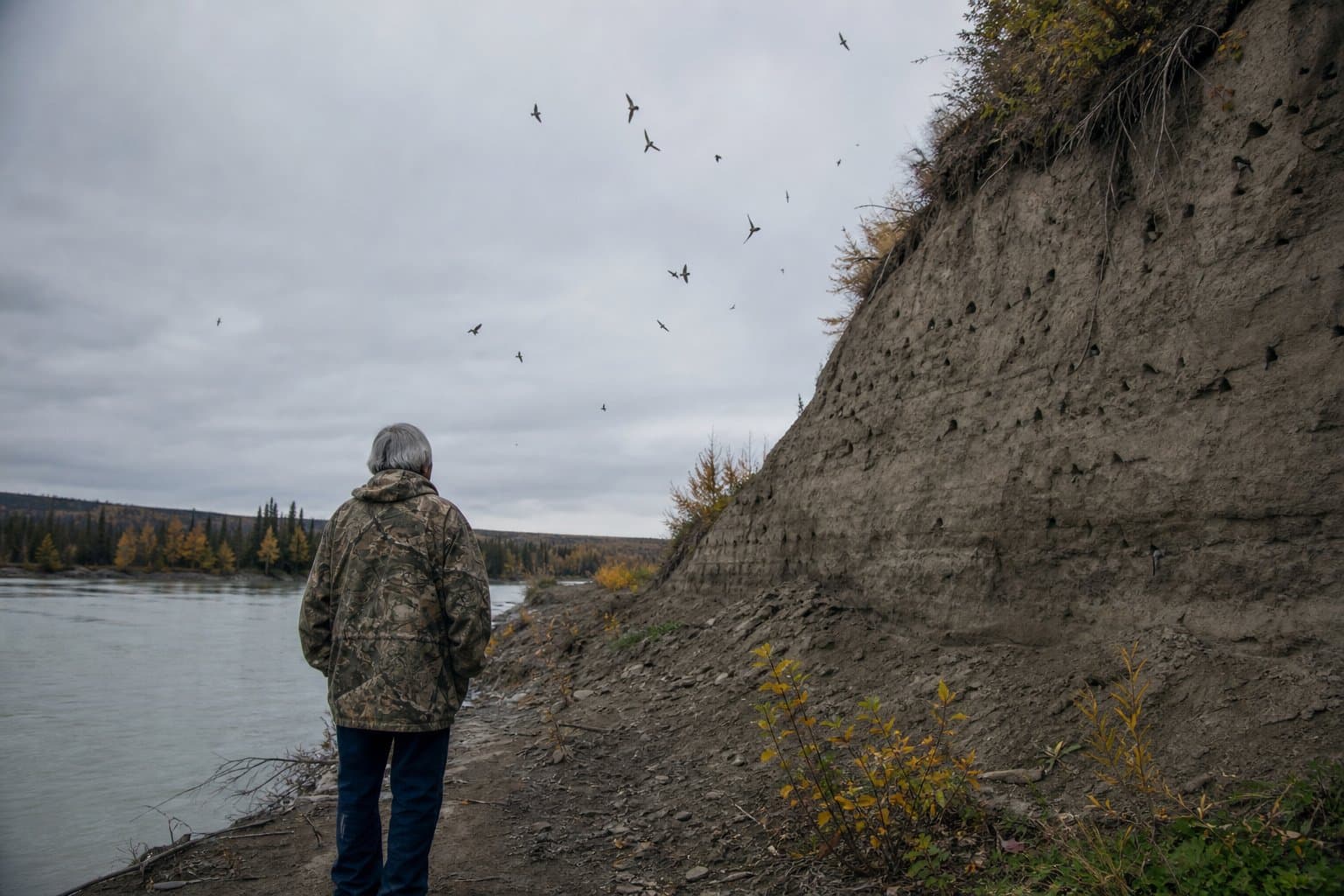
Benedict Jones, a Koyukon elder, has watched the swallows around Galena thin out, and he connects it to the Air Force spraying for mosquitoes. The swallows ate a lot of mosquitoes, he said. The Air Force used a lot of pesticide to be rid of them, and "since then there have been fewer swallows." They nest on the hillsides and in the mud of the riverbanks.
His account appears in Kk'onaat'oghee, kk'onaadedaale, tsooye, a Koyukon bird knowledge booklet compiled for the Tanana Chiefs Conference Migratory Bird Regional Co-Management Council by Susan "Ketsoo" Paskvan and published Sept. 2.
The birds he is describing are disappearing well beyond Galena. Bank swallows, the booklet's subject, are down 89 percent in Alaska since 1970, according to the Alaska Department of Fish and Game, which has a study underway in the Interior. In Canada they are down 98 percent and listed as threatened.
They belong to a group in broad trouble. Aerial insectivores — the swallows, swifts, flycatchers and nightjars, all of them catching their food in flight — have been declining steeply across North America and Europe, and the Cornell Lab of Ornithology describes the cause as unexplained. Researchers point to falling insect numbers, pesticide use, the loss of nesting banks where rivers get stabilized or mined for gravel, and warming that puts insect emergence out of step with the nesting season. Which of those matters most, and where, is not settled.
Bank swallows also spend most of the year somewhere else entirely, migrating to South America and back.
Neither Fish and Game nor the U.S. Fish and Wildlife Service has tied the Galena decline to spraying. Canada's federal recovery strategy for the species lists pesticide use among the factors working against it.
Source: Tanana Chiefs Conference, Tanana Chiefs Conference: TCC Migratory Bird Regional Co-Management Council.
Made by our human newsroom with AI. How humans and AI work here · Grow with our newsroom
Stay informed. Support what matters.
Free, permanent access to local news you can verify. Subscribe to support Maggie AlaskaNews and go ad-free.
Related Coverage
Fewer geese on the Y-K Delta, and a proposal to let hunters take fewer
Alaska News · 3mo ago
A Native org is coaching Yukon harvesters on how to testify effectively
Alaska News · 3mo ago
Where thousands of seabirds flew, a Kodiak commissioner counted 30
Alaska News · 3mo ago
Federal migratory bird subsistence rules take effect across Alaska
Alaska News · 3mo ago
As the Chena's king salmon collapse, Fairbanks debates how wide a riverfront buffer to require
Alaska News · 1mo ago
Comments
Sign in to leave a comment.
No comments yet. Be the first to share your thoughts.